RA FOR ALL...THE ROAD SHOW!

I can come to your library, book club meeting, or conference to talk about how to help your readers find their next good read. Click here for more information including RA for All's EDI Statement and info about WHY I LOVE HORROR.
Showing posts sorted by date for query chew layman. Sort by relevance Show all posts

Wednesday, March 18, 2015

Genre Crossover Suggestions and Resources from the Expert

Megan McArdle, author of the new Readers’ Advisory Guide to Genre Blends, and force behind the very fun and infinitely useful Gentrify Blender [which I featured perviously here], just had a feature article on genre blending and collection development for Library Journal.  Click here to read the article, but since I think it is so important and don’t trust you to click through on your own, I have also reposted it below.

Before I leave it to Megan’s article though, please understand that genre blending is the biggest trend in all adult fiction. Understanding this and learning how to incorporate this new reality into both your collection development and your work with leisure readers is one of the most important issues in popular materials service today. I cannot stress this enough.

Enough of me though. Here is Megan’s article.

**************************************************************

Perfect Pairings | Collection Development: Genre Crossovers

ljx150301webcoldev1
LIBRARIANS LOVE TO categorize things. Mentally (and physically) we adore putting things into neat boxes, so that when we need to find them again they are labeled, tagged, and ready to hand over to a patron. But how do we handle books that don’t fit into those neat little boxes? There seems to be an increasing number of books described in reviews as “genre-bending” or “genre-defying.” Sometimes these titles travel so far outside our usual understanding of genre that we have to stop talking about what category to put them in and let them be their own unique reading experience.
Another boom in publishing today is that books fall not simply into one genre but two, three, or more. From popular literary titles that resist genre categorization, such as the works of Haruki Murakami and Nick Harkaway, to quirky experimental mixes that may only attract a niche audience, the blending trend is growing. One reason these books are gaining in popularity is that publishing seems less obsessed by how a book can be marketed to bookstores. In the past, if it wouldn’t be obvious where to shelve and how to promote a book, publishers were less likely to take a chance on it. With online discovery, the problem of where to shelve a genre-blended book is suddenly less of an ­issue. Books can have multiple niches as part of the metadata, providing alternate paths to discovery. Virtually, a book is shelved nowhere and everywhere, a huge boon for the blended.
COLLECTING & PROMOTING BLENDS
When collecting books that merge or cross genre boundaries, think beyond the small annoyances of where your library will shelve the book or what label will go on the cover. Think about the various audiences that this work might bring together. Every genre has certain appeal characteristics that are associated with it: thrillers are fast-paced, romances are emotional stories with an emphasis on character, historical fiction is all about the setting, etc. When you merge genres, you can gain from those multiple appeal points, combining them in one book and potentially gaining new readers who normally wouldn’t pick up that title. If a book features multiple genres and integrates them in a skillful way, you can promote it to a number of potential audiences. If a title is not moving well in one genre, consider displaying it with another, giving it a second chance to move before weeding it from your collections.
In my recent book The Readers’ Advisory Guide to Genre Blends (ALA Editions; see below, Resources), I walk through the possible combinations and the reasons why they appeal. In this article, I focus on just a few of the most popular blends in publishing right now. No stars (redstar) are noted because there is so much to choose from that I’ve selected just a few of the very best books, new and classic, of each blend, plus a few examples of how blends are used in other formats.
Megan M. McArdle has worked in collection development in public libraries for more than ten years and is currently a collection specialist at the National Library Service for the Blind and Physically Handicapped, Library of Congress, Washington, DC. Her book The Readers’ Advisory Guide to Genre Blends was published by ALA Editions in October 2014. She operates a companion website devoted to genre and genre blends at www.genrify.com
MYSTERY & HISTORICAL FICTION
From almost the beginning of mystery as a genre, there were those authors who thought solving crimes must have been more interesting in the past, and historical mysteries remain hugely popular.
Franklin, Ariana & Samantha Norman. Winter Siege. Bantam. 2014. 359p. ISBN 9780593070611. $25.99; pap. ISBN 9780593070628. $19.99.
The author of the marvelous medieval mysteries about Adelia Aguilar died a few years ago, but here is one final gift from her, a novel completed by her daughter. Although this stand-alone gives readers a detailed look at the political world of the 12th century, the mystery thread of young girl who witnessed the actions of a depraved monk keeps the pages turning.
Harris, C.S. What Angels Fear. Signet. 2006. 432p. ISBN 9780451219718. pap. $7.99; ebk. ISBN 9781101210789.
In Regency England, a young woman is killed on the steps of a church and evidence points to the Viscount Sebastian St. Cyr. The young nobleman will need to draw on skills he learned in the Napoleonic Wars to clear his name and find the real killer. This series will be adored by those who love the Regency period, but the mysteries are always tightly plotted, and there is a romance layer as well. ( LJ 7/05)
FANTASY & MYSTERY
One perennially popular combination is the plot and structure of a mystery with the magical landscape of a fantasy. The crimes here can happen on real-world streets or in epic fantasy landscapes.
Bennett, Robert Jackson. City of Stairs. Crown. 2014. 464p. ISBN 9780804137171. pap. $15; ebk. ISBN 9780804137188.
In the city of Bulikov, the gods are dead and the conquered populace forbidden from talking or writing about their past. Saypuri master spy Shara Thivani comes to Bulikov to investigate the death of a historian and discovers the city’s god might not be as dead as everyone thinks. Complex politics and characters—as well a great puzzler of a mystery—make this an amazing series opener. ( LJ 8/14)
Butcher, Jim. Skin Game. Roc. (Dresden Files, Bk. 15). 2014. 464p. ISBN 9780451464392. $27.95; ebk. ISBN 9780698157897.
The latest in this long-running series gets back to its crime fiction roots when series hero Harry Dresden is trapped into helping with a heist. Butcher finds a way for readers to root for Harry and the crew of criminals he is working with to get away with their caper, as that success seems to be the only way forward for Harry, who has been struggling to adapt to the many recent changes in his life. ( LJ 4/15/14)
ROMANCE & HISTORICAL FICTION
You can find these in your fiction aisles and on your romance spinners. Adding the complication of a historical setting to a romance gives you lots of good reasons that the hero and heroine can’t be together.
Gabaldon, Diana. Outlander. Random. (Outlander, Bk. 1). 1991. 640p. ISBN 9780385302302. $35; pap. ISBN 9780440212560. $9.99; ebk. ISBN 9780440335160.
Claire Randall is vacationing in the Scottish Highlands with her husband when she somehow travels through time to the 17th century. Rescued from British troops by a clan of Highlanders, Claire is forced to create a life in the past—a task made easier by attractive Scotsman Jamie Fraser. Brilliantly rendered details of the time and place for historical fiction fans plus swoon-worthy chemistry are two reasons this has also made an excellent TV adaptation is in its first season on STARZ. ( LJ 8/96)
MacLean, Sarah. Never Judge a Lady by Her Cover. Avon. (Rule of Scoundrels, Bk. 4). 2014. 384p. ISBN 9780062068514. pap. $7.99; ebk. ISBN 9780062065414.
Georgiana has always exploited society’s secrets and kept her own, but when she decides she must wed to give her illegitimate daughter a chance at a different life, she turns to newspaperman Duncan West for help. Although there are rewards for longtime readers of MacLean’s historical romance series, this could easily be enjoyed by anyone who loves watching a woman succeed despite the restrictions of her gender. ( LJ 12/14)
HORROR & THRILLER
Horror is alive and well but often lurks in other categories, sneaking in monsters and unearthly forces by pairing them with page-turning action and suspense and calling these books supernatural thrillers.
Beukes, Lauren. Broken Monsters. Little, Brown. 2014. 448p. ISBN 9780316216821. $26; pap. ISBN 9780316216814. $16; ebk. ISBN 9780316216838.
Against the decaying backdrop of present-day Detroit, a series of horrific crimes appear to be the work of a twisted serial killer. But layered onto the story is a cynical look at the future of journalism and a big dollop of the supernatural. Beukes is a hugely inventive author, never afraid to borrow from whatever genre gets the job done. ( LJ 7/14)
Wellington, David. Positive. Harper Voyager. Apr. 2015. 448p. ISBN 9780062315373. $26.99; ebk. ISBN 9780062315380.
In a world set years after an epidemic wiped out the population and turned millions into zombies, 19-year-old Finn is suspected of carrying the virus. Exiled from his community, he is tattooed as a “Positive” and must make his way in a hostile landscape. His fellow humans are far more dangerous than the zombies in this dark tale that shows there are still interesting stories to tell in the zombie genre.
ljx150301webcoldev2
HISTORICAL FICTION & SF
Future-loving sf and past-worshipping historical fiction seem unlikely to combine, but where they intersect most often is alternative history, a genre that asks the sf question, “What if?” while basking in the landscape of the past. Steampunk is an especially robust segment of this genre blend.
Bear, Elizabeth. Karen Memory. Tor. Feb. 2015. 352p. ISBN 9780765375247. $25.99; ebk. ISBN 9781466846340.
Life in Madame Damnable’s isn’t bad for a working girl in a frontier town, or it wasn’t until Karen got on the wrong side of Peter Bantle—pimp, politician, and possibly murderer. Bear has created a vivid Old West landscape that teems with vice and violence, with marvelous steampunk touches. ( LJ 12/14)
Tregillis, Ian. The Mechanical. Orbit. Mar. 2015. 480p. ISBN 9780316248006. pap. $17; ebk. ISBN 9780316247993.
How might the world have been different if Dutch alchemists had discovered the secret to creating mechanical servants bound to do the bidding of humanity? Berenice is a French spy who believes she can overthrow the Dutch if she can find and control a rogue Clakker. But the mechanical man won’t give up his newly won freedom easily in this fascinating alt-history. ( LJ 12/14)
SF & MYSTERY
Both sf and mysteries appeal to the intellect, asking questions about what the future might bring and why people commit crimes. But no matter how technology or the future changes things, the one constant seems to be murder.
Scalzi, John. Lock In. Tor. 2014. 336p. ISBN 9780765375865. $24.99; pap. ISBN 9780765381323. $8.99; ebk. ISBN 9781466849358.
After a pandemic sweeps the globe, there are millions of survivors left “locked in” to their bodies—fully aware but unable to control their physical selves. Technologies have been developed to help those sufferers, but it looks like someone used that technology to commit murder. As fascinating for its look at how a near-future society might deal with disability as for its twisty crime investigation. ( LJ 7/14)
Winters, Ben H. The Last Policeman. Quirk. 2013. 336p. ISBN 9781594746741. pap. $14.95; ebk. ISBN 9781594745775.
If an asteroid were hurtling toward Earth, guaranteed to destroy everyone on the planet in a few months, what would happen to the concept of law and order? Det. Hank Palace is determined to keep doing his job in a world counting down the days. ( LJ 7/12)
SF & THRILLER
The future can be a scary place and technology almost always has a dark side. That makes the combination of sf and adrenaline genres like thrillers and suspense a natural fit.
Bacigalupi, Paolo. The Water Knife. Knopf. May 2015. 384p. ISBN 9780385352871. $25.95; ebk. ISBN 9780385352895.
Drought and climate change mean that water knives like Angel keep busy protecting the interests of those who want to control the water supply. Angel winds up in parched and dying Phoenix, where his path intersects with that of a journalist and a refugee as they all search for documents that could change the balance of power for the region. ( LJ 2/15/15)
Barry, Max. Lexicon. Penguin. 2013. 400p. ISBN 9781594205385. $26.95; pap. ISBN 9780143125426. $16; ebk. ISBN 9781101604908.
Words have power, and in this pulse-pounding thriller special people called Poets have trained to be able to use words to control others. As the book opens, Wil Parke is kidnapped by two Poets who believe he is the only one who can stop a cataclysmic disaster. ( LJ 5/1/13)
GRAPHIC NOVELS
Layman, John (text) & Rob Guillory (illus.). Chew. Vol. 1: Taster’s Choice. Image. 2009. 128p. ISBN 9781607061595. pap. $9.99.
In this ongoing comics series, Tony Chu is a detective who can get psychic impressions from what he eats (including people). Set in a future where poultry is illegal after a pandemic of bird flu, the series opens with Tony becoming an investigating agent for the FDA. The truly bizarre premise is executed brilliantly; hilarious and gross in equal measure. ( LJ 3/15/10)
Vaughan, Brian K. (text) & Fiona Staples (illus.). Saga. Vol. 1. Image. 2012. 160p. ISBN 9781607066019. pap. $9.99.
Alana and Marko are two soldiers from opposite sides of a galactic war who fall in love and go on the run in this first volume of an ongoing series. While the book works as a poignant love story and an indictment of prejudice, trippy visuals and clever dialog make this Romeo and Juliet space opera a lot of fun as well.
RESOURCES
McArdle, Megan M. Readers’ Advisory Guide to Genre Blends. ALA Editions. 2014. 232p. ISBN 9780838912560. pap. $55; ebk. ISBN 9780838912560.
This recent entry in the ALA Editions “Readers’ Advisory Guide” series focuses on books that blend genres. The book discusses the nature of blended books and the challenges they pose for libraries, includes chapters on all the major genres with examples of blends, and focuses on RA tips for blended books. A companion website with an interactive database of genre blends can be found at blender.genrify.com. (Professional Media, LJ 1/15)
Novelist; www.ebscohost.com/novelist
EBSCO’s invaluable database can help answer readers’ advisory questions. For the reader interested in books that blend genres, the advanced search function can be a wonderful tool, as it includes a genre search field (GN). Simultaneously searching multiple genres can help yield more unusual mixes, and some of the more common (such as historical mystery) get their own designation. 

Friday, December 26, 2014

What I’m Reading: Graphic Novels-- Revival, Chew, and Shadow Hero


The year is winding down and I have 4 more posts [counting today] before I will officially post my top 10 reads of the year for blog perpetuity on 12/31.

Today it’s a quick 3-for-one round up of some graphic novels I enjoyed in the last third of 2014. But please note, I saved these to be reviewed together for a reason; there is a nice progression here.

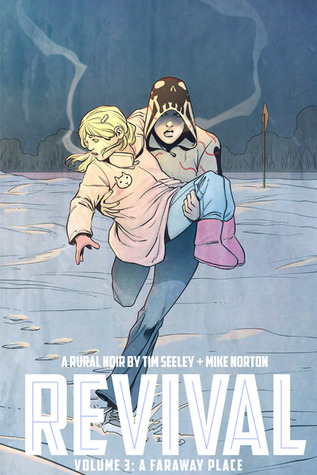
In the heat of August, I read the third volume in a horror graphic novel series that is set in a frozen winter in Wisconsin, Revival Volume Three: A Faraway Place by Tim Seeley and Mike Norton.

I read and reviewed the first 2 volumes on the horror blog here. Please read that review, because the set up and appeal here is still the same [and quite honestly, why would I take the effort to post a review and archive it if you don’t go read it].

Here is how I feel now that we are 17 issues in.  This is a solid, creepy, atmospheric, supernatural crime story.  It is still very dark, with fantastically complex female characters (which in horror is worth pointing out), but I think the authors are still finding their way story wise.

The plot got a bit muddled here in the third compiled volume, but not in a way that I would not continue.  I think we are simply at the point in the plot where a big revelation or a plot twist is coming.  The problem with complex stories told in graphic novels is that we have to wait to wait for more issues to see the entire story arc unfold, and since I read them compiled, I have to wait longer.

However, Revival is still very good.  It is an excellent choice for fans of dark, character driven, supernatural graphic novels.  It is interesting from a psychological standpoint, and is very thought provoking.

By the way, Revival Vol 4 came out this fall. I’ll be reading it soon.

Three Words That Describe This Book: dread, strong female characters, thought provoking.

Readalikes: I posted many for a wide variety of reading tastes here. But to that list I would also add the stories of Edgar Allan Poe.  This series has the same creepy, psychological feel as all of his work.

Another graphic novel series I read [and love] is Chew by John Layman and Rob Guillory.  This summer they released the 4th compiled volume of this dark, dystopic, character driven series.

I saved this review to run with Revival for a few reasons.

  1. The two series are readalikes for each other.
  2. They recently had a cross over issues.
  3. 3. Like Revival, early into the story of Chew I was also feeling like the overall story arc was getting muddled. I knew that the growing pains had to happen, and that I had to be patient while the story was unveiled, but because I loved the set up and where I thought it was moving, I was anxious to get to the meat.

[So, Revival, you are lucky that Chew has turned such a fantastic series because I am staying patient for you.]

Yes, Chew has matured into everything I thought it would and could be.  This is a robust, highly engaging, and delightfully original [without being crazy] series.  The plot, the characters and the art have matured into some of the best in the entire graphic novel industry.

Again, for more setup, I have talked about the story, the art (which I LOVE), and the appeal of both at length here. But without giving away details, just trust me-- if you like non-superhero,  graphic novel series, and don’t mind speculative elements, read Chew. How often do you get fun, interesting, and thought provoking stories in any format?

Three Words That Describe This Book: original story, eccentric characters, dark humor

Readalikes: Click here for a ton of suggestions.  I also think that fans of Jim Butcher’s Dresden Files might also enjoy the supernatural, criminal investigations here. I have had luck giving fans of the Butcher series Chew.

Also, Hellboy is a nice readalike for the dark, at times gruesome, but still darkly humorous storytelling here.  Although the art here in Chew is much brighter, and lightens the dark tone of the series quite a bit. Some Hellboy fans might not enjoy that. But I have noticed that the two supernatural crime series both attract a large number of female readers, for what it is worth.

Now, check out this transition to the third graphic novel [because I did plan this]....

Tony Chu and his entire Asian-American family who are the stars of the popular and award-winning Chew series, owe a lot to the very first [arguably] Asian American character in comics history, The Green Turtle.

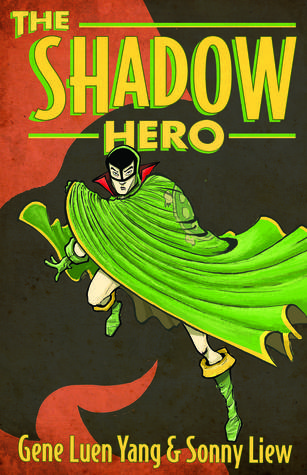
Yes, I said The Green Turtle. What you haven’t heard of this classic 1940s superhero? Don’t worry, you are not alone.  He has largely been lost to history. But thanks to the fabulously talented and multiple award-winning Gene Luen Yang, with help here from Sonny Lieu we can all know learn about The Green Turtle and read his origin story in their graphic novel, The Shadow Hero.

Yang and Liew take the interesting history behind this forgotten superhero and create a YA, coming of age, graphic novel about a 19 year-old, second generation, Chinese American boy in NYC’s Chinatown-- the young man who would become The Green Turtle. While set in the 1940s, this is a very post-modern, 21st Century inspired story as the boy becomes a superhero at the nagging of his overbearing mother.

While the original story/superhero stuff here is fun and interesting, it is the characters, their motivation, and the historical frame that shine here.

After the origin story that is the meat of this volume, Yang has written a history of The Green Turtle and included some of the actual comics.  I found learning about the true story behind The Green Turtle both shocking and interesting.  That part alone is worth a read.

The art here is in the style of classic comics of the era, but in sort of a “wink-wink,” hipster, knowingness sort of way.  They know you know that it is in that style, so they pull back a little and put a tiny bit of a modern spin on it all.  Page through the book and you will see what I mean.

Three Words That Describe This Book: forgotten superhero, historical, Chinese Americans

Readalikes:  Technically, The Shadow Hero is a YA novel, but it clearly appeals to adults who are also interested in the history of comic books. And if you are one of those adults and you haven’t read The Amazing Adventures of Kavalier and Clay by Michael Chabon, you need to go get a copy right now.  This if one of my personal, all-time favorites.

But if you want another Asian-American, graphic novel which is okay for teens to adults, NoveList directed me to Ichiro by Ryan Inzana. [By the way, Novelist also has a great Recommended Reads list on Asian Teen Lives for more titles with this appeal.]

If you want to read other superhero comics, I think the older Superman comics are a great readalike here since this was created in a similar time period.  But in general, any of the original comic book characters from the 1930s and 40s are a good bet here.

Finally, those interested in getting a big picture overview of the history of comic book superheroes should get their hands on one of these two encyclopedias.

Back tomorrow with another review.


Thursday, December 12, 2013

What I'm Reading: Genre Graphic Novels

As I have mentioned a few times during 2013, I have been participating in the Adult Reading Round Table graphic novel genre study all year.  We finished up on December 5th with a meeting about Manga.  I have not shared our notes here on the blog because you need to be a member of ARRT to participate in the genre studies.  However, after we complete an entire genre study, ARRT does post the notes from the genre study meetings on our website.  Click here to see the notes for the previous genre study on Historical Fiction [2011-12].

Back in our October meeting we all read Genre Graphic Novels.  This happened to be an area where I have read a bunch, especially in the Horror section.  For this meeting I read Saga (volumes 1 and 2) by Brain K. Vaughan and Fiona Staples and Richard Stark’s Parker: The Hunter, by Dawyn Cooke and Richard Stark.  I was going to write just about my experience with those books, but as I looked over the notes from the group, I was struck by how useful they were in a larger picture sense.

Since the genre study is now over, I am posting the notes on all of the titles we discussed that day.  If I have reviewed a title in the past on either blog, I have included a link to that review.  I hope you find this helpful.

Also, look for news about the brand new Crime Fiction genre study for 2014-15 being led by ME coming soon.  Although I cannot post the notes for non-member until we finish the genre study, I will be posting the assignments here on the blog so you could read along with us over the next 2 years if you so choose.


ARRT Genre Study: Genre Graphic Novels
Notes

We discussed reading genre graphic novels from two different approaches:

·   Fans of genre prose fiction reading that genre in graphic format
·   Non fans of the genre in prose fiction reading the genre in graphic format
·   Genre graphic novels have a narrative quality that really appealed – more like reading a short story or watching an episode of TV
·    Unlike the Superhero graphic novels, the series had a starting point and some of the series even had an ending point
·    Most all written for adults – contained sex and violence – unlike the Superheroes graphic novels which generally had to appeal to both Teens and Adults

Overall, we agreed that sometimes if you weren’t a fan of the prose genre you could still be a fan of the graphic novel form of the genre.  For the same reasons, some fans of the genre may find their favorite elements lacking in the graphic novel version of the genre.  In particular:

·    Graphic novel genre fiction skips over the slow, long build up to set the place.  Instead it jumps right in and establishes the setting with just a few images.
·    In graphic novel genre fiction the language becomes less primary and important.  So if you read for language and style, you may be less satisfied by graphic novel versions.  Graphic Novels are more likely to appeal to people who like the TV show equivalent which is short and episodic. 
·     However, character is still just as important in graphic novel genre fiction.  If you don’t care about the character, it is hard to get drawn into the story, or series.
·    Speculative Fiction (Science Fiction, Fantasy, and Horror) prose readers are generally more open to trying graphic novels than other genre readers.  So it may be easier to hand sell cross-over formats to this group.  Always remember to put graphic novels on these displays.

 HORROR

·    The fact that the graphic novels are shorter makes them more palatable to people who don’t like being scared.  So it may be easier to interest people who don’t like horror prose fiction in graphic novel versions.
·     Whether in prose or graphic novel, the two most important elements are atmosphere and character
·    The atmosphere has to be established right away, although that may be easier to do quickly with the images and the color palate 
·    If you don’t care about the characters, you won’t care that someone is trying to kill them or threatening them. This is true in graphic novels as well as in prose

 American Vampire, by Scott Snyder, Stephen King, and Rafael Albuquerque
Felt as much like a western as horror, which combines with the short format to make it accessible to people who don’t like horror; Even though the leads are violent, blood thirsty vampires, they have a moral code; Unique in that it has a strong female lead

Locke & Key: Welcome to Lovecraft, by Joe Hill and Gabriel Rodriguez
Wonderful graphics, which really make the horror element; Probably the best horror graphic novel out right now; Series has a definite end point; Lots of imagery and symbolism

The Walking Dead:  Days Gone Bye, by Robert Kirkman and Tony Moore
Zombie apocalypse may not scare everyone, but the gore of killing the zombies might make it more horror; The Post-apocalypse story draws the reader in; Reader really comes to care about the characters and the interactions between them; Almost becomes a soap opera set in a post-apocalyptic world that happens to have zombies as a threat. The most popular graphic novels right now, especially with the TV show tie-in

Revival: You’re Among Friends, by Tim Seeley and Mike Norton
Reminiscent of The Returned  by Jason Mott; Genre blend of horror and crime; Horror and crime; It’s a mystery of why people have come back; Rural noir; The story is eerie, but not really frightening

SCIENCE FICTION/FANTASY

Saga, by Brain K. Vaughan and Fiona Staples
Romeo and Juliet meets Star Wars; Doesn’t take a lot of pages to set up the world and backstory, just jumps right in; Broad appeal across ages and backgrounds; The characters have hope and are likeable; The characters are easy to relate to; The storyline isn’t as dark as a lot of what we’ve discussed; The graphics are beautiful; Along with Walking Dead, the most popular genre graphic novel series right now.

DMZ, by Brian Wood, Riccardo Burchielli, and Brian Azzarello
May appeal to fans of The Walking Dead; Similar Post-Apocalyptic feel, but with parts of America having risen up in a civil war; A photojournalist is the hero reporting from the middle of the war zone

Sandman:  Preludes and Nocturnes, by Neil Gaiman, Sam Kieth, Mike Dringenberg and Malcolm Jones III
Very strong world building, that draws you in and makes you wonder how the everlasting ones will all fit together; Reminds you of Greek mythology; Reminiscent of American Gods; Feels more like reading legends than pure fantasy  

Unwritten:  Tommy Taylor and the Bogus Identity, by Mike Carey and Peter Gross
Reminiscent of Harry Potter; Draws in a lot of literary themes and allusions

Fables:  Legends in Exile, by Bill Willingham, James Jean, and Alex Maleev
Familiar fairy tale characters may make it more accessible to non-fantasy fans; Genre blending mystery element; Grimm and Once Upon a Time TV Shows fans may enjoy the series

ACTION/ADVENTURE

·    Action Adventure novels are read for plot, but without enjoyable characters, people really weren’t enjoying the graphic novels.  Character seemed to still be the most important element in the graphic novel.

The Adventures of Tintin, by Herge
Written for plot; Characters don’t grow or change; Revered in Europe, but less of a following in America; Some of the adventures were dated by their social viewpoints; While originally written for children, may have some themes that aren’t currently considered child-safe

Casanova:  Luxuria, by Matt Fraction and Gabriel Ba
Time Travel elements can make for a confusing plot; A tale of spy and counter spy, but a lot of time jumping and multiple time lines; Humor reminiscent of Burn Notice; Was hard to care about the characters

Scott Pilgrim’s Precious Little Life, by Bryan Lee O’Malley
Hero is a bit of a jerk, so it’s hard to care about the hero (gets easier as series progresses); Secondary characters are much more enjoyable; Crosses a lot of genres; Couldn’t be told as a prose novel, has to be a graphic novel; Great for fans of Ready Player One, by Ernest Cline with a lot of pop culture references; Also for fans of  Big Bang Theory – cool to be nerdy

CRIME

Richard Stark’s Parker:  The Hunter, by Dawyn Cooke and Richard Stark
Graphic novel version of Donald Westlake crime noir novels; The visuals really set the 1960s New York feel; The graphics are very stylized; The story is very predictable, but still enjoyable; The readers who don’t like noir crime novels liked the graphic novel version better because it was faster and the visual descriptions instead of verbal details; The readers who love Richard Stark missed the language that is part of the prose writing

Chew: Taster’s Choice, by John Layman and Rob Guillory
Genre blending crime with science fiction; Has the limiter of the gruesomeness of eating human flesh; So improbable that the humor overcomes the darkness; Appeal of the  procedural aspects; Appeal to apocalyptic fans; Unique world with an interesting setup

Scapled:  Indian Country by Jason Aaron and R. M. Guera
Very violent plus has the bleakness of the Indian reservation; Would definitely appeal to mystery fans; A lot of politics and a lot of backstory; However, the images are dark and hard to distinguish; Could easily be made into a TV show

100 Bullets:  First Shot Last Call, by Brian Azzarello and Eduardo Risso
Interesting setup with a puppet master and a briefcase with a gun and 100 bullets; 100 short setups of different scenarios; Each volume contains multiple vignettes each of a different bullet

Monday, July 29, 2013

Monday Discussion: Book That Make You Laugh

For today's Monday Discussion I found inspiration in a discussion we had back in July of 2010: Books That Make You Laugh.  In that post I mention the Spellman Files mystery series by Lisa Lutz. Since I am currently reading the newest entry in that series, I thought it was a good time to revisit that discussion.

As I was looking back at the 2010 discussion, I found that while some of the books I listed there still make me laugh, I have encountered more titles that made me giggle in the last three years.

Also, humor is such a personal thing. What makes me laugh, will not necessarily make the patron standing in front of me who is asking for a "funny" book laugh too. But, asking as many people as possible for books that they find funny, will help to ensure a wider sense of humor is considered.

So for today's Monday Discussion, let's work together to make a list of the books that make us laugh.

I will go first.  Along with that I listed here, I would also add:

As you can see, my sense of humor is a bit macabre and quirky.  I know not everyone shares this feeling though and for them it is an entirely different type of book that is funny.

So help me build a more well rounded list of funny books.  Throw out some titles of books that make you laugh and together we can hit everyone's funny bone in the right spot.

For past Monday Discussions, click here.

Friday, April 26, 2013

What I'm Reading: Series Round-Up-- Chew Volume 3

As you can see from my reviews of the first two compiled "Omnivore Editions," I am a huge fan of the graphic novel series Chew written by John Layman and drawn by Rob Guillory.

Just what is Chew?  Well you can click here and here to see my posts on Volumes 1 and 2.  I also described the series this way at the PLA 2012 conference:

Welcome to a near future dystopia where a horrible bird flu has killed millions of people, and now, chicken as a food source has been completely outlawed for our own safety.  Or, as we come to question, is that just what the government is telling us? Why? What is the big secret?  Enter Tony Chu, a cibopath, a term that means he can get a psychic impression from whatever he eats.  It also means that if he is willing to eat corpses, he can solve just about any case.  Tony's powers move him to the biggest, baddest government agency in this new world...the FDA!  His job is to stop illegal chicken consumption; however, his powers have created many enemies who are out to get him. Such is the original, dark world of the graphic novel series Chew by John Layman and illustrated by Rob Guillory. This is a dark, character driven story with cliff hangers, shocking plot twists, dark humor, and an extremely interesting frame.  But it is not for the weak stomached.


Since you have had plenty of chances to click here and see the previous reviews,  I am going to move right on in to this third compendium of a year's worth of serial comics.  I felt like this volume brought together all of the strings from the many story lines set up in Volumes 1 and 2 and began knitting the cloth that is the main story of this series.

Let me explain.  Volumes 1 and 2 introduced a ton of quirky characters and set up the world, but it was beginning to feel fractured to me by the end of Volume 2.  I had too many story lines, too many conflicts, too many issues floating around in my head.  Ahh, but I have to give Layman credit.  He knew what he was doing.  Just when I felt the series was getting too busy without going anywhere...BAM!  This compendium was all about taking the loose ends and bringing them into the fold.  We now have one story.

Also, new to Volume 3, Tony has finally been fired by his boss and moved from the FDA to a traffic cop.

The series is still part speculative fiction, part alternate reality, part dystopia, part crime fiction with lots of tongue in cheek humor (see traffic cop comment above) and great, colorful, rich, pictures.  The characters have come a long way too.  They began as merely interesting and quirky, but have now been fleshed out both in drawing and writing.

In fact, now is a good time to mention the illustrator, Guillory.  He has really blossomed in this series. The pictures are beautiful; they add to the story in their vibrancy, playfulness, and detail.  They are useful to moving the story along.  You need to spend time examining the pictures on each page if you want to get the full depth of the story, but they are also so vivid and eye catching that you want to linger.  I see Guillory's talent growing with each book.

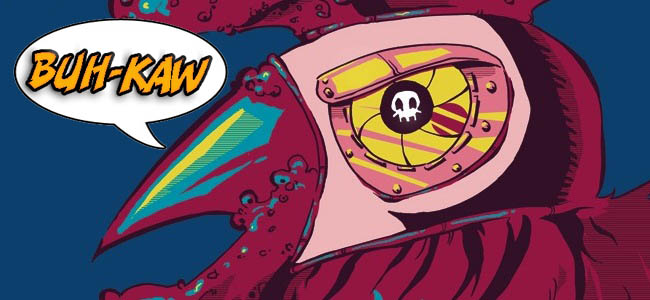
A perfect example of the appeal of this series in writing and art, as I have been trying to describe it, is best seen in the extra standalone comic featuring POYO, a secret agent, assassin, bionic chicken. This issue is included in the Omnivore Edition Volume 3. Here is a picture of POYO.  Again, it fully captures the tone of the series.


In general, the speculative world is also getting rounder.  New powers and details are being added.  I would say this is great time to start the series and read all three volumes. If you are not sure (because I have to admit, the frame is a bit on the odd side) read the first issue in Volume 1.  You will know right away if it is for you or not.  If you like it, you should read all 3 "Omnivore" Compendiums

I should mention a few limiters beyond it being "odd."  The series is a bit gory and gross, I mean, the cibopaths take bites out of dead people to find out who killed them.  There is violence and sex, but I would say of the PG13 variety; there is no nudity, but there are people in lingerie, and there are people being split in two. This volume, while advancing the overall story, also has a solid and complete mystery line of its own which involves Tony being kidnapped for an interesting reason.

This is a series I will be sticking with.  I am hungry (pun intended) for more.

Three Words That Describe This Book: offbeat, great characters, rich illustrations

Readalikes:  I have many readalikes if you click here including novels and graphic novels. But I still have a few new ideas.

The offbeat tone with a alternative reality frame reminds me of Seth Grahame-Smith, specifically Abraham Lincoln Vampire Hunter and Unholy Night.  If you like Layman's crazy story lines, I think Grahame-Smith is a nice compliment.

If you like the mystery angle with an original premise and alternative reality setting, Ben Winter's The Last Policeman is a nice match.

And finally, another graphic novel suggestion is the Astro City series by Kurt Busiek which presents short stories about Astro City and the superheroes and citizens who live there.  It is a compelling series with some mystery aspects, lots of offbeat, dark humor, and a SF, alternative reality frame.

Tuesday, April 3, 2012

What I'm Reading: Chew Volume 2

Back to catching up on my reviews of the books I finished, going on 2 months ago...

Last year I discovered the wonderful world of Chew.  I am not going to rehash the awesome back story to this series, just click through to see.  But know I liked this series enough to include it as the final entry in my PLA presentation.

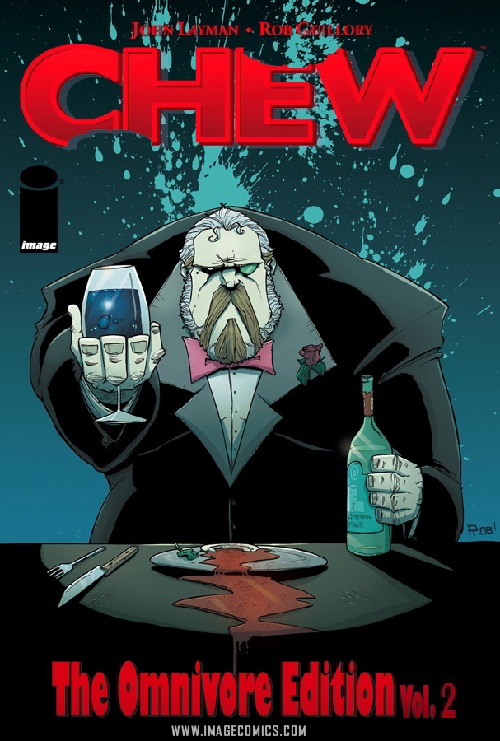
As with most comics series, I wait until the hardbound compilations come out to read them.  So what I am reviewing here is the second 6 issues of the series gathered into The Omnivore Edition, Vol 2.

There is not much different to say from the last volume in terms of appeal (so go read that post if you need to), although I will say that the novelty of the dark fantasy world Layman and Guillory have created has worn off, but I still enjoyed being immersed in it.  That says a lot because I was worried that without the novelty, this series might lose steam.

Like most second books in a series, while the first is mostly set-up, world building, and character development, this second compendium is all about moving the plot forward.  Readers of this blog know I prefer character development to plot advancement, but as a veteran reader, I know I have to get a more plot heavy second volume before I can get more character development in the third installment, so I am willing to wait.

The big change here in Volume 2 is that we meet quite a bit more of Tony' family, in a hilarious Thanksgiving dinner scene.  Especially interesting, we meet his daughter, who as the compendium closes seems to become the key to the advancement of the story.

Tony's twin sister was also a nice addition, especially since she is offered as a contrast to Tony.  Her work with NASA is utilized with the introduction of an alien story line [a turn which I am currently taking a wait and see approach on].

Finally, as you can tell from the cover, we also have the return of Tony's mentor and fellow cibopath Mason Savoy, who went rogue and AWOL in Volume 1.  Savoy's story is told from his pov.  So we have a regular double pov for the first time in this series.  This is also a story arc I am anxious to follow in the 3rd compendium.

I should say that the dark humor and thought provoking near future dystopian setting are still key here.  And the series is still not for the weak stomached.  The quirky characters are original, fun, and definitely add to the story.  And the art is still gorgeous.

This is a series to keep following.  It is perfect for an audience 13 and up, with adults getting a bit more out of the political and social observations than teens.

Three Words That Describe This Book: near future dystopia, eccentric characters, dark humor

Readalikes:  Again, click here for my past suggestions; I had quite a few options.

If you liked the near future dystopian angle, I would also suggest Flashback by Dan Simmons (which I am listening too right now and is also "not quite horror").  In fact, Dan Simmons in general would be a good readalike option.

Other novelists I would suggest for fans of Chew are Cory Doctorow or China Mieville.

In graphic novelists I didn't mention before, I would also suggest Alan Moore, Frank Miller, and Brian K. Vaughan.

Saturday, December 31, 2011

What I'm Reading: Becky's Favorite Books I Read This Year

Here are my Top 10 Favorite Books I Read in 2011, in no particular order. Please use the links provided for my full reviews.


  • Swamplandia! by Karen Russell: the descriptions of the Everglades alone makes it hands down my favorite book this year
  • The Leftovers by Tom Perrotta: a favorite author who keeps surprising me by getting better with each book
  • The Known World by Edward P. Jones: again, I am sorry it took me so long to read this masterpiece.
  • Before I Go To Sleep by S. J. Watson: a better suspense story I did not read this year.


  • The Caretaker of Lorne Field by Dave Zeltserman: I read some great horror this year (click here to see more) but nothing stayed with me more than this one.
  • Centuries of June by Keith Donohue: for its ability to be original AND entertaining
  • Full Dark No Stars by Stephen King: not horror, but these four psychological suspense novellas were riveting and frightening, especially in the excellent audio version I listened to.
I have a few overall comments and observations to make about my reading also:
  • There was no nonfiction on my final top 10. I tried to go back and find something I enjoyed enough to bump one of these novels off, but I could not. I really liked both In the Garden of Beasts by Erik Larson and At Home by Bill Bryson, but I enjoy both authors and expected to enjoy these books.  As a result, my enjoyment did not surprise me as much as it did with the 10 books in the list above.
  • For similar reasoning 2 other novels just missed the cut, Faithful Place by Tana French and Started Early, Took My Dog by Kate Atkinson.
Finally, I always save at least one title from one of the year's best lists to start the next year off with. Example from year's past in this tradition  Await Your Reply (on most of 2009's Best Lists, made mine in 2010), Olive Kitteridge (on most of 2008's Best Lists, made mine in 2009), The Brief Wondrous Life of Oscar Wao (on most of 2007's Best Lists, made mine in 2008).  That is a good track record for this year's selection, The Art of Fielding,  to have to live up to.  I will have a report on it sometime in January, but it will be an entire year before I will know how it pans out in comparison to everything else I read in 2012.
Thank for following me on yet another year of reading.