RA FOR ALL...THE ROAD SHOW!

I can come to your library, book club meeting, or conference to talk about how to help your readers find their next good read. Click here for more information including RA for All's EDI Statement and info about WHY I LOVE HORROR.
Showing posts with label bpl. Show all posts

Thursday, June 18, 2015

BPL Book Discussion: Behind the Beautiful Forevers

This is not your normal installment of my BPL Book Discussion reports because Monday was no normal discussion day.  Monday marked the last time I led the BPL group after 14.5 years. I hope to occasionally return to be a participant in the group, but not for a bit. Also, I will be entering into a new book discussion venture that will be keeping me plenty busy [But that is for another time].

But back to my fabulous ladies [pictured left].  They really outdid themselves to say goodbye.  Not only did they come with snacks, balloons, cards and gifts of beautiful perennials for my garden, but they arranged one of the nicest tributes ever.

Regular readers of the book discussion reports know that I end every discussion with this: "Give me a single word of phrase to define the book." Obviously, the ladies are used to the question. Well, what they did was so perfect.  After our May meeting, one of the participants asked to take my picture.  Sneaky one she is because then she showed up at this discussion with the picture of me blown up in the center of the poster [pictured left].  She gave each participant a pice of paper and asked them to write down a word or phrase to describe me.  She then spent the discussion time writing the words around me in a circle on the poster.  You can see a closeup of what they create for me to the right.


As I had anticipated, it has been much harder to leave my book discussion ladies than the library itself. They are the reason I stayed as long as I did, so this should not have come as a surprise. In fact, they have only reinforced how much I love being a Reader's Advisor and ironically they have also made me realize that I have made the right choice by leaving the BPL to go out to help more libraries and more patrons.

I am so happy to have spent many years exploring hundreds of books with these amazing women.  And although the chapter in my life of leading discussions for them has come to an end, my participation in book clubs will continue. I will still be posting about book discussions here on the blog, including notes of specific discussions I will be leading.

Okay, now back to our regularly scheduled book discussion report.

This month we met to discuss the National Book Award winner, Behind the Beautiful Forevers: Life Death and Hope in a Mumbai Undercity by Katherine Boo.

Here is the publisher’s description:
In this brilliantly written, fast-paced book, based on three years of uncompromising reporting, a bewildering age of global change and inequality is made human.
Annawadi is a makeshift settlement in the shadow of luxury hotels near the Mumbai airport, and as India starts to prosper, Annawadians are electric with hope. Abdul, a reflective and enterprising Muslim teenager, sees “a fortune beyond counting” in the recyclable garbage that richer people throw away. Asha, a woman of formidable wit and deep scars from a childhood in rural poverty, has identified an alternate route to the middle class: political corruption. With a little luck, her sensitive, beautiful daughter—Annawadi’s “most-everything girl”—will soon become its first female college graduate. And even the poorest Annawadians, like Kalu, a fifteen-year-old scrap-metal thief, believe themselves inching closer to the good lives and good times they call “the full enjoy.”  
But then Abdul the garbage sorter is falsely accused in a shocking tragedy; terror and a global recession rock the city; and suppressed tensions over religion, caste, sex, power and economic envy turn brutal. As the tenderest individual hopes intersect with the greatest global truths, the true contours of a competitive age are revealed. And so, too, are the imaginations and courage of the people of Annawadi.  
With intelligence, humor, and deep insight into what connects human beings to one another in an era of tumultuous change, Behind the Beautiful Forevers carries the reader headlong into one of the twenty-first century’s hidden worlds, and into the lives of people impossible to forget. 
Annawadi is a makeshift settlement in the shadow of luxury hotels near the Mumbai airport, and as India starts to prosper, Annawadians are electric with hope. Abdul, a reflective and enterprising Muslim teenager, sees “a fortune beyond counting” in the recyclable garbage that richer people throw away. Asha, a woman of formidable wit and deep scars from a childhood in rural poverty, has identified an alternate route to the middle class: political corruption. With a little luck, her sensitive, beautiful daughter—Annawadi’s “most-everything girl”—will soon become its first female college graduate. And even the poorest Annawadians, like Kalu, a fifteen-year-old scrap-metal thief, believe themselves inching closer to the good lives and good times they call “the full enjoy.”  
But then Abdul the garbage sorter is falsely accused in a shocking tragedy; terror and a global recession rock the city; and suppressed tensions over religion, caste, sex, power and economic envy turn brutal. As the tenderest individual hopes intersect with the greatest global truths, the true contours of a competitive age are revealed. And so, too, are the imaginations and courage of the people of Annawadi. 
With intelligence, humor, and deep insight into what connects human beings to one another in an era of tumultuous change, Behind the Beautiful Forevers carries the reader headlong into one of the twenty-first century’s hidden worlds, and into the lives of people impossible to forget.
For purposes of this write up, the title of the book will be transcribed as BtBFs.

Here are the notes on our discussion:
  • We had exactly the split reaction I was expecting here-- 6 liked, 2 disliked, and 4 so-so.  
  • Liked comments:
    • I had a personal connection to this story because I was in India, in that slum, working with one of the characters, Sister Paulette, in 2008.  Boo’s work was entirely fair and honest from my personal experience.
    • Another participant shared that as a recent college graduate in 1968, she too took a trip to India.  She could clearly remember coming out of the airport down a dirt road filled with beggars. This book brought me right back.
    • I immediately saw everything in my life differently after reading this book. For example, getting water from a sink.  I also looked at the recycling scavengers in my own alley much differently.
    • I enjoyed the style of writing.  I felt like she really knew the people and could relate their story. It was so realistic, almost poetic.  
    • It was written like fiction with characters I could get to know. I enjoyed that.
  • Didn’t like:
    • It was “too much horrible.” And even worse, I can’t do anything about it.  I hate being helpless and not in control. I would rather not know.
    • I found the corruption overwhelming.
    • I couldn’t handle all the children suffering.
  • So-so: 
    • I can’t fault the author for choosing the topic, but there was no relief here. However, I appreciated the very many interesting insights and philosophical comments by the characters.  The people were compelling.
    • I kept waiting for some uplift.
    • That led to a discussion of the fact that it was a true account so she could not manufacture a happy, closed ending.
  • Question: The author claims there is hope in this book. Do you agree?
    • I think there is hope in that she wrote this book.  Doing her piece to help make people aware. That is a hopeful first step.
    • This book gives hope because some who read it will be able to do something and effect change because of it.
    • I am hopeful that education reform will come. The sham that is “education” in India is now exposed.
    • I saw hope in the children. They all played together and helped each other. They are the next generation. They can lead the change.
  • Questions: Are women more free in the slums than in rural India?
    • Asha and Manju have much better, more free lives living in the slum.
    • Although Asha plays the system very deliberately, I found I liked her resilience and resourcefulness.
    • Yes, her simple Indian truth that to pay people off in the beginning is always better than having to wait until you are out of options.
    • She built her own empire using the corrupt system in a smart way.  She was simply working within the rules of her society.
    • She was “street smart.”
    • She reminded me of my Chicago precinct captain. Not very different we all agreed.
  • Question: I stopped the talk of the women for a moment because people were dying to address the blurred sense of right and wrong in this world.
    • Asha is moral because she is doing what she needs to survive and take care of her family.
    • What is right and what is wrong when society is turned upside down? When the government and police are corrupt, what do you do?
    • I wished that Asha would be proud of Manju for wanting to be “better,” but instead Asha celebrated when her daughter started to follow in her own footsteps.
    • One participant shared a story when she made a “wrong” choice when faced with stupid government rules.  She was caring for her dying mother and needed a copy of her mother’s birth certificate.  She had power of attorney but her mother was mentally incapacitated.  The government would not issue the daughter her mother’s birth certificate.  Each time they asked this woman if she was the person in question, she told the truth and said no, I am her daughter. Her request was denied.  After weeks of making calls and playing by the rules, one day she answered YES when they asked if she was the person whose birth certificate was being requested.  She had it in days.  She totally understands how the people in this book make the choice to get results over being in the right and hers was such a small example.  Imagine the life and death situations in this book.
    • This story was a fantastic addition to our discussion and really helped those who were completely disgusted by the corruption and “amoral” behavior to see the story with more compassion.
  • Question: Why did Boo choose to frame her 4 years of research around an event in the middle-- Fatima’s burning.  Boo starts the book at this midpoint and then circles back? Let’s talk about why she made this storytelling choice.
    • The overall theme of the book is that they are surrounded by lies, corruption and poverty with no way out.  Fatima’s burning is a “flashy” way to put a major theme right at the start.
    • As a storytelling technic, she could have chosen any of the people because their lives are so intertwined and also so demonstrative of all of the problems, but Fatima’s burning is attention grabbing. A good center spoke from which the story can branch out.
  • Question: We had a general discussion of the inequality in all societies using this one in particular as a jumping off point.  Here are some of the most interesting comments:
    • The society is so corrupt that the people with the most power are the most corrupt. It keeps feeding itself.
    • One of my favorite insights was when Abdul overheard a police officer talking about not being able to afford the bare necessities for his family. Abdul was shocked.  This opened his eyes to the wider world.
    • Manju had 3 ways she could get out-- find an entrepreneurial niche like Abdul, go with politics and corruption like her mom, or get an education. She chose education, but had no model of someone it worked for.
    • How different is it really than in some of our poorest places in America. These are common issues al over the world; this book just shows an extreme.
    • It is a destitute slum next to a fancy airport. An airport with people from all over the world going in and out each day.  It was a brilliant narrative choice. It is too striking a contrast not to notice.
    • A lot of these issues are because of population.  Overall the world has too many people, but there are cities in India with populations larger than the entire country of Canada.  That is crazy.
    • Back to places where it is bad in America.  Someone shared the work she has done with some of the poorest reservations in South Dakota.  It is not much better there.  They too lack running water for example. Would millions of people read a book about the reservation? It is much harder to face the skeletons in your own closet. Maybe this book will allow others to look at the inequalities closer to home though-- like we are.
  • Question: Let’s talk title
    • The title is literally from the advertisements for tiles on the wall separating the airport from the slum which say “Behind the Beautiful Forever.” So since there are multiple ads in a row, you get the plural.  
    • I liked how the title connects with Fatima’s burning which is central to the story.  A remodel and going out to buy tiles figures prominently in that scene.
    • We also talked about how the title is not capitalized on the cover and what that could mean. One person said she thought it was because we are looking behind the wall at lesser people.  Not capitalizing reinforces that.
  • We had a general conversation on the ending. It was frustrating to many how open it was. We read the last paragraph out loud. We talked about how it closes up the stories of the people in the book and opens up the story as it will continue.
  • Someone else said she didn’t realize this was nonfiction until she got to the end and read the author’s note. “If I knew it was real, I would have read it differently.” She probably would have liked it more.
  • Question: Who had the best life in the book and why?
    • No one wanted to answer this question because all of their lives were so bad, but I made people offer things up.
    • Zehurisia- 2 votes
    • Manju- 2 votes
    • Abdul- 4 vote
    • Asha- 2 votes
    • Sunil- 1 vote
    • Meena- 1 vote, but she clarified because Meena does kill herself.  But this participant felt that she was inspirational in her ability to be philosophical in the face of her terrible life. She had the right idea but couldn’t survive with that idea in her world.
  • Words or phrases to describe this book:
    • ugly
    • makes you see/ opens your eyes
    • corruption
    • frustrating
    • poetic
    • memorable
    • new look at India
    • overwhelming
    • real people
Readalikes: During the discussion someone mentioned that this book is eye opening much like the 1962 publication of The Other America by Michael Harrington.

In that similar vein, the style of writing [compelling yet still journalistic] and the brutal honest truth about the way people on the margins live was reminiscent of Nickel and Dimed: On Not Getting By in America by Barbara Ehrenreich. We read that book in book club many moons ago.

Now these are both American parallels.  Many will want to read more about India. For them I have a plethora of fiction and nonfiction suggestions.

The novel The White Tiger by Aravind Adiga is a compelling story which gives a realistic peek into life as a poor Indian.  It also plays brilliantly with the idea of a twisted sense of morality when living in such a corrupt society, just like BtBFs. With this link you can also see a few more readalikes that I included in my review of The White Tiger, including The Death of Vishnu by Manil Suri.

For a little lighter, but still honest, look into modern India in novel form, I highly suggest the Vish Puri mysteries by Tarquin Hall. 

In terms of nonfiction about slums, NoveList suggests Favela by Janice Perlman about the Rio de Janeiro slums or Shadow Cities by Robert Neuwirth which includes India.

Finally, one person compared BtBFs to when we read Escape from Camp 14 because in both cases she learned something horrible that is going on in her world right now and she is completely powerless to help.  That was very frustrating to her, but she did make an interesting comparison in terms of appeal.  Yes, she did not like the book for that reason, but others may want to read more books that let them know about world problems that are not on their radar as of yet.  This is a great example of one of my favorite training tips-- you can learn just as much about who to suggest a book to from the people who hated it as you can from someone who loves it.

Thursday, June 4, 2015

Goodbye Berwyn...Hello Every Public Library in America

Today marks my official last day as an employee of the Berwyn Public Library [although I will be back on 6/15 to run one last book club].

After 14 years and 11 months there is a lot to say about my tenure, but much of it you can see by reading through the archives of this blog. It is all documented here. The things we have done, the successes, the failures, the displays, book clubs, programs, etc...

But I figured I should at least take a stab at saying goodbye and summing it all up in a single post. I was touched and honored by what one of my board members for the Friends of the Berwyn Library said very succinctly and poignantly in our final meeting on Monday.  She said, and I paraphrase-- I was working at the Berwyn Library when Becky started. I saw her come in as a kid, a new librarian, and I am happy to say she is leaving as a fully evolved woman.

She was exactly right. She summed up my personal and professional life over the last 15 years way more eloquently than I could have.

I started at the BPL a semester  and a half shy of having my MLS. I was 25 years old. I was happily married for only a couple of years and had no children yet. I had only taken 1 class on RA and was about to start my first full time job with a charge of co-creating an entire RA department.

Now, I am about to turn 40, have 2 tweens, have written 2 books, countless articles, and have become an International RA expert who is the one teaching everyone else how to be a Reader’s Advisor. People now turn to me for answers, advice, and guidance!

I know I was there to make all of this happen, but today, as I am forced to look back on these 15 years in their entirety in one sitting, it is all a bit mind blowing. Looking at those previous 2 paragraphs, the only thing that hasn’t changed is the happily married part (thank goodness).

It has not been sunshine and rainbows everyday, but I am nothing but thankful for the opportunity Gail gave me back in July of 2000 [click here for my personal In Memoriam post about Gail and a recounting of those early days] and for each and every day since then.

I knew I would create connections with patrons and work with some great colleagues, but I never anticipated the number of life long friends [both staff AND patrons] I would gain.

So thank you to all who I have ever helped or worked with. Thanks to patrons past, present, and future at the Berwyn Library. This is a community that loves the library, uses the library, and appreciates what the library does for them.

There are some amazing people who work under that roof on Harlem Avenue, people who will still be there after I leave.  The library is entering an exciting time of change, new direction, and planning. Great things are still to come at the Berwyn Public Library.

But, as I said in this post, I have reached the point where my consulting and training through RA for All has grown to be too much to continue to work at a public desk on a regular schedule.

So while I am sad to say goodbye to Berwyn, the good news is I get to start saying hello to everyone else. I am excited that I will have the time to develop the programs and services I have always wanted to do. I have begun to forge some partnerships that will help many more libraries, their staff and their patrons. And, I will have more time to read actual books.

Now if you will excuse me, in true Becky fashion I am putting the continuing education of our profession first and ending my tenure here in Berwyn by leading the next meeting of the ARRT Genre Study-- Psychological Suspense on my final afternoon.  I picked this day to be my last when I gave notice 6+ weeks ago.  What more fitting a way to say goodbye to Berwyn and hello to the next chapter of RA for All than by teaching a class on my favorite genre.

I will be taking tomorrow off from blogging [it seems appropriate], but I will be back on Monday to forge into this brave new world. I can’t wait for you to join me.

Wednesday, May 27, 2015

BPL Book Discussion Schedule: July- December

I may not be at the Berwyn Library to lead the book group after June, but one of the final tasks I promised to complete before leaving was to orchestrate the voting and set the schedule for the July-December books.  Below is the lovely flyer I made with all of the titles, dates and times.

On a side note, I do plan to attend some of the Monday Afternoon group's discussions, just probably not any this summer. If I do attend, I will continue to compile and post notes of our discussions. 


Wednesday, May 20, 2015

BPL Book Club: Saving CeeCee Honeycut

On Monday, we met to discuss Saving CeeCee Honeycutt by Beth Hoffman.  Here is the publisher's description via LitLovers:
Steel Magnolias meets The Help in this Southern debut novel sparkling with humor, heart, and feminine wisdom.
Twelve-year-old CeeCee Honeycutt is in trouble. For years, she has been the caretaker of her psychotic mother, Camille-the tiara-toting, lipstick-smeared laughingstock of an entire town-a woman trapped in her long-ago moment of glory as the 1951 Vidalia Onion Queen. 
But when Camille is hit by a truck and killed, CeeCee is left to fend for herself. To the rescue comes her previously unknown great-aunt, Tootie Caldwell. In her vintage Packard convertible, Tootie whisks CeeCee away to Savannah's perfumed world of prosperity and Southern eccentricity, a world that seems to be run entirely by women. 
From the exotic Miz Thelma Rae Goodpepper, who bathes in her backyard bathtub and uses garden slugs as her secret weapons, to Tootie's all-knowing housekeeper, Oletta Jones, to Violene Hobbs, who entertains a local police officer in her canary-yellow peignoir, the women of Gaston Street keep CeeCee entertained and enthralled for an entire summer.
Laugh-out-loud funny and deeply touching, Beth Hoffman's sparkling debut is, as Kristin Hannah says, "packed full of Southern charm, strong women, wacky humor, and good old-fashioned heart." It is a novel that explores the indomitable strengths of female friendship and gives us the story of a young girl who loses one mother and finds many others.
Here's our discussion notes:

  • 7 people liked this book, 5 were so-so and no one disliked it
  • The liked voters jumped right into the discussion and wanted to share not why they liked it but why they LOVED it.
    • It was funny heartwarming, sad (appropriately); just a good read all around
    • It is easy to read without being fluff.
    • The characters were delightful. It was more about the characters than anything else.
    • Yes, and they weren't just stereotypes. They were believable people.
    • I loved how the author contrasted life up north with CeeCee taking care of her mother with the full life down south.
    • I liked how psychologically realistic the novel was.  She did not get magically better by moving into a big house in GA. She stillhad to work through some serious issues.
  • The so-so people:
    • I was waiting for the other shoe to drop the entire time. It never did. Everything worked itself out perfectly.
    • Aunt Tootie was a bit unbelievably good.
    • It was a nice little story, but it was too predictable.  I always knew what was coming next.
    • I liked the writing, especially the descriptions of nature, but overall it was too much of a Pollyanna story.
    • One participant said she was so-so because she herself lost her mother at 13 and she did not "fall into a bed of roses" like CeeCee.  For her, this book brought back too many bad memories.
    • It was a little too pink and sweet.
    • This was the summer of 1967 in the south yet there is very little about Civil Rights. That bothered me. Why set it in such a pivotal summer then.  Make it a few years earlier and the glaring omission of the huge events happening that same summer would not be an issue to me.
  • Question: How did the author's choice of having CeeCee narrate the story as a 12 yr old in the present tense effect how the novel unfolded?
    • I liked how it was through her eyes as all of this was happening to her. If she were looking back on this life changing summer (like when we read The Round House), it would be a different book.
    • It was a unique point of view.
    • She was very smart for her age, but since she had been caring for her mother and raising herself since she was very young, this was not very surprising.
    • This narrative choice allows us the watch CeeCee change and grieve in real time.
    • I think the narration-- from the eyes of a 12 year old-- is responsible for some of the "fluffiness" of the story. Her life was all about survival before moving the GA. Once there, she can let go of all of her worries. She has never had to only enjoy herself.
    • I liked that we see her inner feelings. We can understand why she is reacting oddly to seemingly normal things.
  • Question: Did you like the ending?  (People started talking about the ending just before this, so I went with the flow and let them run with it.)
    • I loved the ending because it was a beginning.  The first day of the rest of her real life.
    • I wouldn't want to see her in school. We saw her through the hard transition. She will be fine.
    • The book was really set during the summer. The story felt like stringed together vignettes, but summer is like a vignette. The vignettes are ending and life is beginning now. We step away.
    • The book is about her moving forward. As she walks to school, she is leaving us behind.
    • I asked if they would want to catch up with CeeCee's story later in her life? One said no. But a few said yes, after she has grown up a bit more.
  • Question: How did this novel deal with mental illness in the 1960s?
    • The way CeeCee's mom's illness and how it was dealt with was historically accurate. Pills were prescribed, but no one forced her to take them. The Dad got mad that she wouldn't and there was no counseling for the family.
    • They were shunned and made fun of because of the mental illness. No one stepped in to help.
    • Even Aunt Tootie feels badly about not helping earlier, but no one discussed mental illness openly then.
    • Some of us tried to give the Dad a break. He tried the best he could , but that was because of the narrative choice the author made.  CeeCee cannot understand what her Dad is going through. She doesn't know or understand what he is felling and what he did to help.
    • Poor CeeCee only learns about mental illness from the dictionary. Then she worries most of the novel that she will inherit it.
    • The not knowing if her mom killed herself or died by accident is also a tough.
    • The scene at the peach farm, when all of CeeCee's emotions about her mother come to a head was very memorable and believable.
  • Question: What were some of your other favorite characters or scenes that you want to share?
    • Oletta! She was nice, a listener, had great words of wisdom. She and CeeCee helped each other heal-- they were the mother and daughter each had loved and lost.
    • The lunch in the parking space outside the jewelry store was the best.
    • I loved Oletta's friends
    • The nursing home scene!
    • Neighbors- Goodpepper and Hobbs. Just everything about them separate and together.  Hobbs was a woman you loved to hate, but Goodpepper was not all perfect.
    • Overall, I just loved how the southern hospitality was well depicted.
    • As I read this book, I chuckled and laughed despite some of the serious issues here. This is why I liked it so much.
  • Question: What did you think of CeeCee's camera as a literary device?
    • I loved that she is drawn to taking photos.  They are stills in time of her new life. So much has changed for her and she is still processing it all. The photos slow it all down a bit.
    • The bra pictures were great! It shows she isn't perfect. It illustrates some of the anger she had inside her. She took it out on Ms. Hobbs, but she is a villain here anyway. It gave CeeCee some depth and showed some spunk.
    • It was not nice of her but it sure was funny. Very clever.
  • Question: What did you think of the garden party scene?
    • I loved the fight. There were all these women who feel so strongly about everything, it was bound to happen.
    • I like how this beautiful party ended with a brawl and everyone moved on. It was a nice metaphor for where CeeCee came from and where she was now going. Life would not be perfect ever, but even the little battles will be easy to handle now that she is in a safe place.
    • Also, I felt like Ms. Goodpepper and Ms. Hobbs needed this blow up. Their conflict was festering. Now they can move on and have a better relationship.
  • Question: Let's talk title-- Saving CeeCee Honeycutt
    • Saving her for now.
    • Saving her for her future
    • Teaching her to save herself
    • "Saving" is the present participle-- it notes that the saving itself is ongoing and is always happening and will continue to happen. It does not end when the book ends.
    • If it was called "How CeeCee Was Saved" that would be a different book.
    • She is also saving memories for herself at the end of the book, literally in pictures and figuratively in her "life book."
    • I like how who is "saving" her is not identified.  They all are, We all are.
  • Words or phrases to describe this book:
    • "peach of a novel" (from back of paperback)
    • endearing
    • warm and fuzzy
    • rose colored glasses
    • hopeful
    • comfortable
    • great characters
    • southern hospitality
    • memorable scenes
    • vignettes
    • female centered
    • lovely descriptions and metaphors
    • cinematic
    • fresh writing, original phrasing

Readalikes: This novel is the Secret Life of Bees meets Midnight in the Garden of Good and Evil with a heaping tablespoon of Fannie Flagg.

I also agreed with what it said up top in the publisher's description-- the movie Steel Magnolias and the novel, The Help would also be good choices.

This novel also reminded me of Rush Home Road by Lori Lansens (one of my under the radar book club favs) and the Divine Secrets of the Ya-Ya Sisterhood by Rebecca Wells.

Wednesday, May 6, 2015

Do You Want My Job?

No seriously. So you want to be me at the Berwyn Public Library?  Well now you can.  Click here for details and a full job description.

A few weeks ago, I put in my resignation from the BPL effective June 4th [after the next Genre Study meeting].

First, if you are in the genre study, don't panic. I am not leaving ARRT or any of my responsibilities for that group.

Second, the blog is not going anywhere. At the very least it is going to only get better as I will have more time to commit to it.

I am however giving up my place as a regular librarian at a service desk.  For many of you this announcement is not a surprise. For example, as I stated in my 2015 Professional Resolutions in this post back in January:
"2015 happens to also be the year I will turn 40, so as you can imagine, I am spending a lot of time thinking about the next phases of my career. To that end I am recommitting myself to my RA for All consulting and training business. I am almost done with my new logo and I will do a minor redesign and reorganization of this site soon.  But also, I am really working on my offerings and getting my message out. I am hitting a critical point at which I may have to decide between the consulting and the library desk work because doing both may no longer be sustainable without major changes.  But I am also realistic and know this cannot happen overnight. I am giving myself a year to figure it all out. There will be plenty of news and details here on RA for All. One things is for sure, RA for All is not going anywhere." 
I am happy to say the commitment I made to myself to grow my RA for All business of consulting, training, and writing has paid off more quickly than I anticipated.  I currently have too much RA for All work to continue to also work a desk at a library.

I feel very lucky to have been able to work at the BPL for 14 years and 11 months [but who's counting :) ]. I have had the opportunity to build a RA Department from scratch, becoming an International RA expert along the way.

In the coming weeks and months I will be announcing other new projects and ventures on RA for All and Twitter [@RAforAll], including an exciting new service where I can come to your library, spend some time evaluating your service to leisure readers, and help you to get better at assisting your patrons.  I can't wait for the chance to get out there and be in all of your libraries as you work with readers.

But for right now, I am going to wrap up things here at Berwyn and then spend the summer enjoying time with my kids [who are at the tail end of the years where they still want to spend time with me].

So please, if you know someone, or you are someone, with an MLS degree and are committed to providing RA Service, please pass on the job opening.  Also feel free to contact me if you want further details.

I hope only the best for the Library, the staff, and most importantly, our patrons; however, now it is time for me to move on a help other libraries to up their game as they serve adult leisure readers.

Friday, March 27, 2015

Browser's Corner Massive Updates

I have spent all morning updating the Browser's Corner, our BPL blog where you can discover great backlist reading suggestions.

I have been a little bit behind in updating it since having to take it over due to staffing shortages...BUT, your patience is paying off.

I have set the Browser's Corner to run new staff reading recommendations starting back on Wednesday pretty much every week day until April 28th! That's over 20 new posts!

Woo Hoo!

Please remember that there are hundreds of posts, each one a great reading recommendation from one of our staff members. We have contributors from many different departments, with a wide variety of reading tastes, so there truly is something for every reader there.

The site also lists some of our "If you like..." reading lists and the notes from past Book Lover's Club meetings [which means the site has patron recommendations too!].

So thanks for standing-by, but now it is time to go back and visit us at The Browser's Corner.

Thursday, March 26, 2015

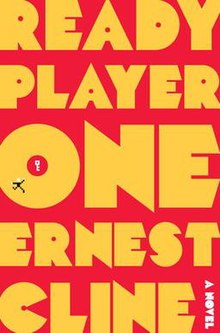
Ready Player One Movie News and Display Ideas

Readers of this blog know that I am a HUGE fan of Ready Player One by Ernest Cline. Click here for all of the times it has been mentioned on RA for All. Not only did I love the book personally, but I dedicated months of my life to working on the 2013 Berwyn Reads which featured the book.

Normally, I go out of my way to avoid the movie versions of books I have loved, but yesterday the movie got a director...Steven Spielberg! Not only can Spielberg make a great SF movie, but he also owned the 1980s and the novel is a love letter to the decade [among many other things; read my review for more]. There is no better choice!

I am so excited and elated that I am scared.  Am I willing to hope that for once, a favorite book will not disappoint me as a movie?  Could this be a To Kill A Mocking Bird moment? We will have to see.

This is all good timing for the fact that I just proofread Betty’s great books to movie annotated list for the new display on the topic that John is preparing for the BPL. In general “book to movie” displays are a great idea to have at your library.  I have readers who come in to read the books before they see the movie and others who come in for the book after.

I am sure you already know this and do it though. Don’t worry, I am not simply writing a post that states the obvious. Keep reading...

Now we happen to have a large books to movie display planned to go up in a few days, but when there is big movie news like this, you can still capitalize on the buzz by putting up a quick display to show your patrons that you are paying attention to the wider book world and anticipating their needs.

So you could use the extensive list of readalike options we prepared for Berwyn Reads and make a Ready Player One movie news quick display, or simply grab a few books off the shelf that are among the better book to movie options, make a quick sign, and display those books on any open space in the library.

The point I am trying to make here is that you don’t need a lot of time or preparation to take advantage of a book related news story that is capturing a large audience. Don’t miss your chance to insert yourselves, the community book experts, into the larger conversation.  Your patrons will notice that you are relevant, on top of the latest news, and that you want to help them find their next good read.  Everybody wins.

Friday, March 20, 2015

BPL Book Discussion: The Hundred-Foot Journey

On Monday, the book group met to discuss Richard Morais' The Hundred-Foot Journey.

Here is the publisher's summary:
That skinny Indian teenager has that mysterious something that comes along once a generation. He is one of those rare chefs who is simply born. He is an artist. 
And so begins the rise of Hassan Haji, the unlikely gourmand who recounts his life’s journey in Richard Morais’s charming novel,The Hundred-Foot Journey. Lively and brimming with the colors, flavors, and scents of the kitchen, The Hundred-Foot Journey is a succulent treat about family, nationality, and the mysteries of good taste. 
Born above his grandfather’s modest restaurant in Mumbai, Hassan first experienced life through intoxicating whiffs of spicy fish curry, trips to the local markets, and gourmet outings with his mother. But when tragedy pushes the family out of India, they console themselves by eating their way around the world, eventually settling in Lumière, a small village in the French Alps. 
The boisterous Haji family takes Lumière by storm. They open an inexpensive Indian restaurant opposite an esteemed French relais—that of the famous chef Madame Mallory—and infuse the sleepy town with the spices of India, transforming the lives of its eccentric villagers and infuriating their celebrated neighbor. Only after Madame Mallory wages culinary war with the immigrant family, does she finally agree to mentor young Hassan, leading him to Paris, the launch of his own restaurant, and a slew of new adventures. 
The Hundred-Foot Journey is about how the hundred-foot distance between a new Indian kitchen and a traditional French one can represent the gulf between different cultures and desires. A testament to the inevitability of destiny, this is a fable for the ages—charming, endearing, and compulsively readable.
Now on to the discussion.

  • We had 8 liked, 0 disliked, and 4 so-so. I should also note, this was the first book in a while which I can remember everyone chiming in during these opening minutes. All 12 of us wanted to have a chance to speak right off the top. That was nice.
  • Liked were effusive in their praise
    • This book was fun, funny and refreshing
    • The characters were GREAT!
    • Yes, I agree. I wanted to hang out with them.
    • I liked how the tone was down to earth even though crazy things were happening.
    • I loved the theme of the mixing of cultures.
    • I liked how it was written. It was not fast, but it was compelling. The story moved.
    • I also liked how it was written, but for a different reason-- it was like a memoir but fiction. I like memoir style.
    • It had serious issues [like anti-immigrant sentiment and persecution] but it still felt gentle. The story dealt with hard issues but with an overall kindness that let you think about the issues without wallowing in the hopelessness of it,.
    • I love food, so I loved the theme of the power of food to bridge gaps and ease tensions.
  • The so-so voters (which included me) chimed in.
    • It was a nice easy read and it was pleasant, but it felt very contrived.
    • I must have changed my "vote" 5 times as I was reading it, from so-so, to disliked, to liked [this person even changed her vote again at the meeting.] In the end, I went with so-so. I do have to say though, the ending was tender and beautiful and made me cry. She then read from some of the final lines of the book.
    • I am so-so because I wanted more of the story, more from some of the characters who had minor roles, and less detail about the elaborate meals and food.
    • Becky's turn. I don't always share my personal thoughts, often I try to just play devil's advocate if it is necessary, but no one expressed my so-so thought-- for me it did not have enough sensory descriptions of the food and smells.  I found I could not taste and smell the food as much as I wanted to. 
  • We talked about the settings:
    • London was their time of mourning. It was grey, they were living in exile.
    • They couldn't start to fully live again until they left London
    • The contrast between the vibrancy of life in Mumbai and the greyness of London was well done.
    • And all of it is contrasted with Lumiere, the place where, ironically, they most fit in.  It was between the other 2.
    • We loved the scenes in India and wish we had more. They remember it with fondness despite the fact that their mother was viciously murdered there, but we agree. Morais is able to make this seeming contradiction clear.
    • Paris was important as a place, but the setting did not become a character as it did for the other locations.
  • This led to us talking about the issue of racism and prejudice in this seemingly light novel.
    • Hassan's mother is burned to death early in the novel because they are Muslim in the majority Hindu India soon after partition [when most Muslim's went to Pakistan].
    • But then the intense anti-foreigner sentiments that come up in Lumiere were more vicious than I anticipated.
    • But there was so much more than the obvious, he's Indian in world of haute cuisine issues. There were so many different levels of prejudice here.
    • Yes, the chefs had prejudices against different types of cooking
    • Hassan's father had his own prejudices.
    • We read a few of Madame Mallory's quotes about "snobs" and related them to this larger issue also.
  • Let's talk title-- The Hundred Foot Journey
    • There are many journeys in this novel. Of course the "hundred-foot" refers to the walk across the street in Lumiere from the Indian restaurant to learning french cooking.
    • Those first 100 feet were the most pivotal because it was Hassan's first apprenticeship in french cooking, but there are many journeys in this novel big and small.
    • We talked about the obvious large journeys-- to London, to Lumiere, to Paris. From poor to rich, etc... 
    • But we decided that the title choice of "hundred-foot" journey forces us to think about how sometimes the smallest journeys can be the most meaningful.  Like the one time Hassan and his mom stop at a French restaurant in India.
    • Small journeys are huge. Mallory's short journey across the street led to her large journey to learn about and trust Hassan's talent.
    • Also, look at Margaret.  She wouldn't go to Paris with Hassan because she didn't want to make a longer journey.  She wanted to stay in Lumiere, but that choice did not work out well for her.
  • Food?-- I just introduced the word as question and let them go. [Sometimes, less really is more]:
    • Food is a character here. Specifically, I loved the "partridge in mourning."
    • The names of the different restaurants added to the food becoming a character.  [I had translated the french restaurant names for them]
    • I loved the description of how Hassan's dad ate food. It was one of the best descriptions in the book.
    • This book made me realize for the first time that French cuisine really is and art. I appreciate it much more now.
    • Yes, I now see haute cuisine as an art form. Like any artist the chefs have to make sacrifices. So much of it though is about power and if that power goes to your head you lose the purity of why you even started doing it.  
  • Hassan:
    • Seeing most of the book through Hassan's eyes was good.  He is an outsider and makes us understand all of the issues.
    • This was a coming of age story for Hassan, but it was coming of age in middle age and moving into mature life.  I enjoyed that.  Too often coming of age stories only feature young people.
    • Yes, it makes the point, a good one I think, that "coming of age" is a life journey.
    • Toward the end, Hassan is looking for ways to bring the simple, the "home," back into his haute cuisine. He is growing still, but coming home while doing it.  That tension is interesting-- growing while looking back.
    • The ending is closed but another journey is about to begin for Hassan.  Now that he has 3 stars he has to keep growing, or he will die [literally and career wise, like his Chef friend].
  • Women in this novel?
    • There are many women in this novel, and most of them bring dignity to the story.
    • This is a male author, writing about a male chef, but it is the women here who see what Hassan can become. The women are the ones who encourage him, and Hassan knows, the women are the one upon whom his success lies.
    • Mom, Mallory, Margaret, Sister.
    • I wanted more about his sister. She was so interesting but we didn't get enough of her.
  • The Movie--a bunch of people had also seen the movie.
    • I didn't see the movie, but I knew Helene Mirren played Mallory and I was annoyed that I could not stop picturing Mirren each time Mallory was described.
    • That is interesting because I did not see the movie or know about it and the descriptions of the character were "un-Mirren" like.
    • We then had a general discussion about whether or not we like to see the movies of books we have enjoyed and how we feel about movies made from books in general. This was a fun and interesting conversation in and of itself.
  • Words that describe this book:
    • fairy tale
    • delicious
    • nourishing
    • picaresque
    • journey
    • engaging
    • likable characters
    • beautiful
    • moving
    • cinematic
    • funny
    • compelling
    • sensual
    • family
    • haute cuisine
    • home
    • believable fictional memoir
Readalikes: There are many directions you could go to offer readalikes here.  I am going to suggest a few.

If you would like another first person narration with a strong sense of place try The Invention of Wings by Sue Monk Kidd.

If you want a culinary read that is light but not without some serious issues try the White House Chef Mysteries by Julie Hyzy.

If you want more Indian set stories with all of the antics but still some underlying serious issues, try the Vish Puri Mysteries by Tarquin Hall.

If you want the  real, no holds barred, look behind the scenes in the world's most famous kitchens try Kitchen Confidential or A Cook's Tour by Anthony Bourdain.

If you want more books that talk about the Michelin process and history try The Michelin Men: Driving and Empire by Herbert Lottman or Burgundy Stars: A Year in the Life of a Great French Restaurant by William Echikson or The Perfectionist: Life and Death in Haute Cuisine by Rudolph Chelminski.

Tuesday, March 10, 2015

Baileys Women’s Prize for Fiction and Women’s History Month In General

March is Women’s History Month.  I did a great display at the BPL of award winning female authors-- in all genres. I have, of course, the literary women but also horror, romance, mystery, historical fiction, graphic novels, suspense, SF, and fantasy...literally every possible genre that gives an award, I have a female author who has won that award representing their genre proudly. Because female authors and genre fiction are both worth your time.

We always do a display for Women’s History Month.  In the past we have done historical women, female mystery authors, or more traditional women’s fiction titles, but this year I really wanted to make a point that in every genre, women are doing fantastic, award winning work; work that is judged to be the BEST against all comers-- men or women.  I also made sure to include diverse women.

I am happy to say, yesterday, I saw a few men grabbing the annotated list and looking through some of the books.  I think this is because all genres are there. The men see the SF or Horror sticker on a book on the “Women’s” display and feel like it is okay for them to stop. Don’t underestimate that. Our display is not all pastels and flowers for this month. It is about good books by female authors that will appeal to all.

So that’s what I am doing to promote female authors at my library.  But something with a much broader reach is the Baliey’s Prize for Women’s Fiction, which released it’s long list last night. To the right, I included their awesome image of the 20 titles stacked up.

Click through for the full list, but I was so happy to see 2 of my favorite reads of 2014, Station Eleven (which got tons of accolades) and the debut The Bees (which deserves more accolades) both on the list.  [Click on the titles for my full reviews of each book].

As you promote female authors at your libraries this month, make sure to promote the Bailey’s Prize and their #ThisBook campaign where people, both famous and regular Janes, can tell them about a book by a woman that has made an impact on their lives.

But even more important than either of these is the fact that this prize, under different names, has been given out continuously since 1996. Click here for a full history and reasoning behind the creation of this award [hint, it has to do with a major award having zero women on its longest back in the early 90s].

With this link you can go back to 1996 and the beginnings of The Bailey’s Women’s Prize for Fiction to find a plethora of award winning suggestions. I cannot stress enough how important archives of awards lists are as an RA tool. These past year’s lists are a rich treasure trove of “sure bet” reading suggestions.  I have this full post on Using Awards Lists As A RA Tool.

But for example in this specific award’s case, using this link, you can see that Bel Canto won in 1992, and also see the entire shortlist of nominees from that year.  Click through and look for yourself, but these are great titles. Books from over a decade ago, a few of which I know off the top of my head that I currently own and can probably find on the shelf today. Books I am confident, again off the top of my head, that I have multiple patrons who would love them right now! Books, I had forgotten about.

Gulp...see even I learn from my own advice.

This archive of past winners and nominees is a wonderful place for you to find backlist gems to suggest to people who want to celebrate Women’s History Month with a book.

But just so you don’t only get one source's opinion, I also found this great list from Off the Shelf, on 11 Essential Reads for Women’s History Month.  From that page:
We are all familiar with Virginia Woolf, Sylvia Plath, Doris Lessing, Simone de Beauvoir, and the contributions they made to feminist literature. But great literature concerning feminist themes is not confined to these classics. Many of our most exciting contemporary literary writers are expanding and complicating our understanding of what it means to be a woman today. Encompassing the thrill, rage, devastation, and range of the female experience, these essential voices should not be ignored.
For the list itself click here.

So that’s my Women’s History Month post [rant?]. I am a big proponent of using the media attention that goes with any “Month” or “Week” celebration to our advantage. Others are talking about it, patrons are aware, that means we should be suggesting books to go with what’s on their minds already. Let the larger media do the hard work of promoting for us.

If you want to share what you are doing for Women’s History Month, leave a comment.

Friday, January 23, 2015

BPL Book Discussion: The Secret Rescue

On Monday we met for the first discussion of 2015.  It was also the 14th Anniversary of my very first BPL Book Discussion. I find it hard to believe, but it is true. The book on tap, The Secret Rescue: An Untold Story of American Nurses and Medics Behind Nazi Lines by Cate Lineberry.

Here is the summary from the publisher:
When 26 Army nurses and medics-part of the 807th Medical Air Evacuation Transport Squadron-boarded a cargo plane for transport in November 1943, they never anticipated the crash landing in Nazi-occupied Albania that would lead to their months-long struggle for survival. A drama that captured the attention of the American public, the group and its flight crew dodged bullets and battled blinding winter storms as they climbed mountains and fought to survive, aided by courageous villagers who risked death at Nazi hands to help them.
Before I get started, please note, there were no prepared questions for this book. I wrote up these questions.  Feel free to use them as long as you credit RA for All. [Details in the questions post.]

I also found this interesting video of Lineberry discussing the book on CSPAN, and this article by her on the history of nurses in the military from The Huffington Post.

Now on to the discussion itself:
  • I was not surprised by our vote totals this month. We have 5 liked [with 2 who LOVED it], 7 so-sos, and only 1 disliked.
  • Most of the so-so votes came from the way the book was written. We actually had quite a bit of back and forth throughout the 90 minutes of discussion [and we filled the entire 90 minutes this month] about the style in which Lineberry told this fascinating story. It was quite polarizing but led to a rich discussion about how nonfiction stories are recounted.  I have compiled the many comments here. This is also the subject of questions 3 and 4 so this issue came up throughout the disccusion:
    • I was genuinely interested in the story, but if it were a novel I would not have tolerated the writing.
    • I wanted to like it, but I felt like I was reading a 200 page long newspaper article. It was too matter of fact and neutral. I wanted more about the survivors feelings.
    • I loved Girls of Atomic City [read for this same group] but this was not written the same way.
    • I prefer more narrative nonfiction, but this book filled a gap in knowledge for me. That was great.
    • I really want a good novelist to get his or her hands on this story and tell it without being restrained by trying to cram in all the facts. I want the feel of this story without fact after fact after fact.
    • I want to see a movie version to get a better sense of the people behind the story. [Note: there is no movie version, she meant hypothetical movie version.]
    • Even though I did not love the info heavy style, it was worth reading to learn all of the interesting stuff.
    • I liked it info heavy. The facts kept coming.
    • I liked how she wrote it. She didn’t try to tell me a story, she simply wanted to neutrally present what happened.
    • I wish it was more like Millard’s River of Doubt, which was adventure and survival with a lot of characters but read more like a griping story.
    • If she had focused on 2 or 3 of the 30 Americans a bit more in-depthly I would have liked it more.
    • But I liked it better than some of the creative nonfiction we have read because it was in between a newspaper and a narrative.
    • This one is my favorite: Lineberry is detached in her writing to reflect the military tone and the medical tone. They both think very pragmatically and attack dangerous and life threatening situations with as little emotion as possible.  She wrote with this tone to show that.
    • She is a journalist and a newspaper is sometimes called “the first draft of history.”  This book is a first draft of this story, of a lost history. She has to get it all down.  Now someone else can take the facts and make a story next.
  • Question: What did you know about medics and Army nurses before this? What did you learn about how their mixed sex squadron functioned? How did the officers, nurses, and enlisted men interact? Were you surprised to find female nurses on front lines at this time? Were you surprised at how strictly they kept rank throughout their ordeal?
    • I was so surprised that they kept their ranks and stayed separate despite barely surviving.
    • My husband was a medic in Korea, and this was very accurate to what he experienced.
    • Keeping their rank and abiding by army rules helped give their chaotic experience structure.
    • I knew there were nurses overseas for America in the army, but I never would have thought they would have ended up behind enemy lines. Just the fact that they were so close to the front lines was surprising.
    • I did not appreciate the condescension by both the Albanians and the Allied soldiers and their constant discussion of how surprised they were by the American nurses' toughness.
    • What about how crazy communication was during WWII? I loved learning about this and seeing what they had to go through to communicate with the outside world from inside Romania. It is amazing that anybody got info to each other and that they were able to be saved.
    • I am still not sure how all 30 of them got out alive. I mean, I know they did, but it seems less probable knowing the details.
  • Question: Did you feel like you now have the “whole story?” Did this book make you question how much we truly know about recent history? Current conflicts and situation?
    • This book made me think long and hard about what I really don't know.
    • It reminded me of that movie Argo.
    • We talked for awhile about how it takes time after an event for the truth to come out. It has to be declassified. But that means that while an event is happening, we never know the "truth." This topic kept us going for awhile and was interesting to discuss, especially as we pondered if we ever truly get the full story about anything.
    • I took away more questions about the world as a whole after reading this book. How many lost stories to history are still classified? How much don’t I know.
    • I was thinking about when and if we will even known what really happened in Vietnam.
    • We ended this conversation by agreeing that the one good thing about all of these "secrets" is that it makes for interesting books later.
  • Question: How did you feel while reading this story? Were you able to experience the parties’ struggle and feel their hunger, pain discomfort, despair, etc..  Were you able to experience the struggle of those who helped them-- the partisans, the British, the OSS officers? Was Lineberry more successful at articulating some points of view and feelings more than others?
    • This book made me eat all of the old food from the back of my fridge and cupboards. I felt so bad for having so much to eat while they were starving.
    • A few of us talked about how cold we felt while reading this book. They were put through extreme temperatures without proper clothing.
    • One lady blurted out, "I would have died." We laughed, but she said she was serious. Even as a young woman, she could not imagine herself making it through this ordeal.
    • This book made me think about my dad's stories of the depression and how they survived.
    • I really felt badly for the Albanians. I thinks she captured their sacrifice well. I felt connected to them in a way I did not to the nurses and medics.
    • I think the way she chose to write the book-- filling it with facts-- negated empathy for the Americans.
    • I disagree-- I felt more connected to the Americans
    • We went back and forth trying to understand why we had these different feelings.
    • I was heartbroken to see the Albanians, who had so little food for themselves, sharing it with the Americans, who then complained about not getting enough food from their hosts; or even worse, complaining about what they did get not being good enough.
  • Question: Any other characters we haven’t mentioned that you want to talk about?
    • I wanted to hear more details about those who rescued them, both the Albanians and the British and American special agents.
    • Stefa was polarizing. One participant did not like or trust him despite the fact that he ultimately paid for helping them with his life.
    • I wanted to hear more about what happened when they got home.
    • The cave guys! "They were hot!" Seriously though, I really wanted to learn more about living and working as spies in those Albanian caves. So cool.
    • I felt like I was learning about the beginnings of the spy agencies.
    • There were too many medics and nurses. With 30, it was impossible to keep track of them. That’s not her fault since it really happened, but still.
    • To manage while I was reading, I left the character names behind me and let Lineberry carry me through the story.
  • Question: Were you drawn more to the survival aspect of the story or the WWII?
    • We split at about 2-1 in favor of WWII.
    • If a teacher had assigned this to me back when I was in school, I would have loved learning about WWII. This was a textured and layered story that hit on so many of the war issues, while still being accurate.
  • Question: Albania? What did you know before hand? What did you learn?
    • We talked about how it was and how it has changed.
    • We felt like it was and is a fractured society with local structures. It holds the people together to survive, but also holds them back to move forward.
  • Question: The title?
    • The use of the word “Secret”was very apt. Secret means something is deliberately kept from others.
    • But by combining it with the word history, it is asking us to think about what we are all living through and be more critical and question what we don’t know. Find the secrets in our history!
    • It is a title that encourages us to dig deeper in our own lives to uncover the secrets.
  • Words that describe this book:
    • survival
    • WWII
    • lost history
    • journalistic
    • resilience
    • illuminating
    • secrets
    • feminine power
    • fractured societies
    • preserving
    • endurance
Readalikes: A few months ago we discussed The Girls of Atomic City and many people found lots of similarities. Specifically, both deal with the forgotten contributions of women during WWII and big secrets kept for national security reasons.

If you liked the combo of WWII and a survival story you will love Unbroken by Laura Hillenbrand or Frozen in Time WWII by Mitchell Zuckoff.

If you want another cold weather survival tale but don’t care about a WWII angle, In the Kingdom of Ice by Hampton Sides (new) and Endurance by Alfred Lansing (old) are great choices

If you just want survival, a recent title that might interest you is Deep Down Dark: The Untold Stories of 33 Men buried in a Chilean Mine, and the Miracle That Set Them Free by Hector Tobar.

As I mentioned above, we compared Lineberry to Candice Millard. Specifically River of Doubt is a very similar story but told more like a narrative while The Secret Rescue is journalistic. Click here for our discussion of River of Doubt and here for Destiny of the Republic.

I also found  user generated lists of books about real nurses and titles identified as "dramatic nonfiction" on Goodreads that some readers may enjoy browsing for more readalike suggestions.

Wednesday, January 7, 2015

BPL Book Club Collection List Updated!

Just a quick note that I did a weeding of less popular titles and an addition of some newer titles to the BPL's Book Discussion Collection.

All of the new books have been processed and are ready for checkout.

Please click through to the full list of available titles on my BPL Book Discussion Collection page but quickly, here is a list of the newest titles with links to our book discussion notes:

Friday, December 19, 2014

BPL Book Discussion: Mr. Penumbra's 24-Hour Bookstore

This month we wrapped up a great year of discussions with a party, a discussion about our discussions, and an actual book discussion of a wonderful treat of a story for book lovers everywhere-- Mr. Penumbra's 24-Hour Bookstore by Robin Sloan.

Here is the publisher's description:
A gleeful and exhilarating tale of global conspiracy, complex code-breaking, high-tech data visualization, young love, rollicking adventure, and the secret to eternal life—mostly set in a hole-in-the-wall San Francisco bookstore. 
The Great Recession has shuffled Clay Jannon out of his life as a San Francisco Web-design drone—and serendipity, sheer curiosity, and the ability to climb a ladder like a monkey has landed him a new gig working the night shift at Mr. Penumbra’s 24-Hour Bookstore. But after just a few days on the job, Clay begins to realize that this store is even more curious than the name suggests. There are only a few customers, but they come in repeatedly and never seem to actually buy anything, instead “checking out” impossibly obscure volumes from strange corners of the store, all according to some elaborate, long-standing arrangement with the gnomic Mr. Penumbra. The store must be a front for something larger, Clay concludes, and soon he’s embarked on a complex analysis of the customers’ behavior and roped his friends into helping to figure out just what’s going on. But once they bring their findings to Mr. Penumbra, it turns out the secrets extend far outside the walls of the bookstore. 
With irresistible brio and dazzling intelligence, Robin Sloan has crafted a literary adventure story for the twenty-first century, evoking both the fairy-tale charm of Haruki Murakami and the enthusiastic novel-of-ideas wizardry of Neal Stephenson or a young Umberto Eco, but with a unique and feisty sensibility that’s rare to the world of literary fiction. Mr. Penumbra’s 24-Hour Bookstore is exactly what it sounds like: an establishment you have to enter and will never want to leave, a modern-day cabinet of wonders ready to give a jolt of energy to every curious reader, no matter the time of day.
On to the discussion, but first, this discussion contains SPOILERS [sorry]:

  • We had 3 outright likes, 0 dislikes, and 10 so-sos, but pretty much every single so-so was leaning toward like.  As we discussed multiple people said they would probably switch to like. Details on why we voted the way we did:
    • I got a little bored in the middle but I really liked the first and final thirds a lot.  There were many seconds to this thought
    • I thought there was too much technology.
    • But I loved that part.  Also Kat, as the lead techie was a fantastic character and such a strong and positive female presence in a male dominated world. 
    • I moved from so-so to like because of the ending. The old and new knowledge coming together to show us a message of the power of friendship across the centuries was beautiful, unexpected, and just awesome.
    • The writing was "a little too cute" for me.
    • But, chimed in another person, Clay is that too cute guy.  He is young and looking for himself, and he is our narrator.
    • I could tell it was a debut novel. 
    • It is such a visual novel; it would make a great movie.
    • Yes, I would love to see the scene when Google is taken down for 3 seconds.
  • Question: What are these characters searching for-- both literally and metaphorically?
    • Manutius-- it was his body in the coffin [or lack of it] that began this search in the 1500s. By the 21st century it is so muddled that as readers we are often muddled and confused.
    • Yes, this might explain why the middle was so hard for me.  It did feel muddled, but maybe that was on purpose. The clarity of the ending felt so good as a reader.
    • Clay walks in as a middle man.  He is a outsider who has friends on both sides of the debate-- the all out techies and those who study things from the past and everyone in the middle.  It is his position in the middle, as someone who has not found himself yet, that makes it possible for him to come in, clear up, and solve this 500 year old mystery.
    • Clay uses old and new knowledge seamlessly. He made people on both sides work together.
    • I loved that he used all of his friends to solve a 500 year old puzzle and in the end the puzzle's answer was that friendship is the key to everything in life.  It made the book so much more poignant that I thought it would be as I was reading it.
    • The ending was a little too happy for me.  But, said someone else, I think it needed the happy ending to prove they all learned the message and could agree to live less on the fringes and extremes and use old and new knowledge together.
    • The search felt so real and important. I was following all of the clues and the adventure literally.  But then, at one point I wrote in my notes-- stop taking everything so literally.
    • Yes, I think the entire story is meant to be an allegory about how we need to pool all of our knowledge as humans-- the old and the new-- and use it to live our lives.  And, it is also an allegory about the power of friendship. You can get more done together than alone.  Look at all of those people trying to break the code alone; for 500 years they were unsuccessful. But together--friends pooling expertise and using old and new knowledge-- succeed.
    • I loved the parallels drawn to the structure of Epic Fantasy novels. Those are always about different creatures coming together to solve some ancient problem.
    • I liked how Mr. Penumbra himself cared the least about the bookstore. He always cared more about the message and the puzzle. Once Manutius' book was decoded, he was fulfilled.
  • Question: Let's talk about the history of old and new printing and books.
    • I loved all the information about the early days of printing. I looked up info on Griffo, Gerritszoon font and Manutius to learn more. All the info in this novel is true. I learned so much.
    • The little touches, sneaking in little inside jokes.  For example, Manutius' printing seal had a dolphin and an anchor and the bar they go to in NYC is named The Dolphin and the Anchor.  There were lots of these examples.  I want to read the book again, now that I know more, and find more of them.
    • I loved how this book provided a history of reading portrayed through the different characters.  From the old ways of the reading room all the way up to ebooks with many in-betweens. 
    • Even audio books are included. Those scenes were great.
    • It is like the author is saying with this book-- Just read! Who cares how.
    • If I had read this book last month instead of this month, it would have been my main present for all of my friends.
    • This is also about the history of movable type since its invention.
    • Could someone from 500 years ago take this book and, if they knew modern English, understand how to read it?  Yes. The technology of printing it has changed, but the action of reading a book has not.  Even an ebook.  If you gave that person the Kindle they could figure it out.  The act of reading a typed book has not changed very much.
    • What about 500 years from now? Well, they could have a way to simply insert an entire book into our brain and give us the info in an instant.  That would be very different...and less fun.
  • Question: What does this novel say about the idea of immortality?
    • Gerritszoon typeface makes Groffo immortal. And, his message is wisdom about the meaning of life.  Interestingly, his message about the importance of friendship is the key to his immortality.  It took a group of friends to solve it, and it took a group to save the book over the centuries.
    • So while no one rose from the grave as the Bound [cult] thought, they are all immortal because of their codex vitae they all left behind.
    • Manutius had to have faith in the technology of movable type to hope that his coded book would survive.
    • We talked about different ways to be immortal. One participant shared how she feels she lives on in the students she taught. Another shared how they pass on traditions from dead relatives to the next generation and share information about the relative who started the tradition. That is a way to be immortal [while actually dead] too.
    • Kat is the character who is interested the most in literally living forever.
    • But even Kat can see that Griffo is immortal in one way and dead in another.
    • Different characters in the book give different views on what it means to be immortal.
  • Question:  Let's talk about the idea of a codex vitae:
    • I love this idea of writing down all that you've learned throughout your life in one book.
    • We compared a codex vitae to journaling.  In our group there were 6 serious journalers. They shared what it means to them to take time to reflect upon their lives on a regular basis.
      • When I journal, I am not always writing about what I learned, but more about my feelings or ideas I have had.
      • If I don't journal my head gets confused. I need to get it out.
    • One participant shared how her Dad wrote a diary most of his life and she has those diaries.  She reads them often. "I have begun to relive his life and integrate it into what I remember as a kid." So cool.
    • One member shared her personal codex vitae: Love Fully, Seek "Truth," Distrust "Truth." Keep on learning. She said the middle parts are borrowed from someone else.
  • Question: What does the title mean?
    • Penumbra refers to an area of partial illumination, or something that serves as a shroud.
    • It is the night-shift people who make all of the difference in the solving of the puzzle (Clay and Moffat and Deckle).
    • Penumbra gives the curious clerks just enough light to shine through the darkness and let them be great.
    • This light is also eternal because it is 24-Hours.
    • Also the answer to the puzzle is eternal.
    • Yet the eternally open, 24-Hour bookstore does close and turn into a climbing gym. Hmmm?
    • Also, our paperback copies glow in the dark.  We had so much fun turning off the lights to sit in the dark and look at them.
  • Final thoughts time:
    • I loved the comment by Kat that we don't have the same brains as we did 1,000 years ago.  We have the same hardware but completely different software.
    • Reading takes you away. When Clay was in the reading room and lost track of time, that is what this book did to me.
    • Sloan did a great job of portraying big ideas, but he also had great small details in here too.
  • Words of phrases to sum up the book:
    • Immortality
    • Friendship
    • Meaning of Life
    • Reading
    • Illuminating
    • Old and new
    • Technology
    • History
    • Thought Provoking
    • Multi-Generational
    • Great Characters
    • Attention to Detail
    • Big Ideas
    • Visual
Readalikes: As you can see from the discussion, this book leads you in so many different, yet equally as interesting locations.  As a result, there are many readalike suggestions to provide.

The very first book I thought of when reading Mr. Penumbra was Ready Player One by Ernest Cline.  Click here for my review of this great book.  Both involve a reluctant hero on a quest to solve a puzzle using a cadre of friends with varying talents to succeed. This would be the best overall readalike.

For those who like the love of books angle here are some good options.

For those who like the technology/cyber angle try:
For those who like the Epic Fantasy angles and parallels drawn here should try:
Finally, a book that came to mind as we discussed [that I shared with the group] is A Brief History of the Dead by Kevin Brockmeier.  This is one of my all time favorite books, and would be of the most interest to those interested in the parts of Mr. Penumbra that deal with immortality.