RA FOR ALL...THE ROAD SHOW!

I can come to your library, book club meeting, or conference to talk about how to help your readers find their next good read. Click here for more information including RA for All's EDI Statement and info about WHY I LOVE HORROR.
Showing posts sorted by relevance for query vish puri. Sort by date Show all posts

Wednesday, August 4, 2010

What I'm Reading: The Case of the Man Who Died Laughing

The Case of the Man Who Died Laughing: From the Files of Vish Puri, Most Private InvestigatorI recently finished the second book in the Vish Puri series by Tarquin Hall entitled, The Case of the Man Who Died Laughing.

I enjoyed the second installment of this smart, funny, cozy with its undercurrent of the contradictions that define modern India.

Much of what I said about the first book, which I read here, is true for the second.

The plot here once again revolves around the new India which is both modern and old fashioned. Here, a man known as "The Guru Buster," who has spent his career trying to dissuade Indians from believing in supernatural spirits and instead trust the truth of science, is murdered in a public park, during his laughing therapy group, by what appears to be a goddess.

Vish Puri is recruited by the police to help solve this murder. Puri, a spiritual man,who also appreciates science. This makes him the perfect person to solve the crime. What ensues is a story much like the first Vish Puri book in which old fashioned, Agatha Christie style detection mixes with new, technology to solve a very complicated case. A case, which also makes an implicit statement about life in India today.

Also, Puri's mummy is back trying to investigate other crimes. This time she ropes Puri's wife into it. Hilarity and some good old fashioned detection both ensue in this secondary storyline. But again, even this sillier story line is laying the foundation to some pretty serious commentary about the contradictions of life in modern India--about how the old ways are co-existing and, at times, clashing with the new ways of the upper middle class.

Appeal: Although Puri is the protagonist, Hall includes the point of view of his mummy, wife, and a few key employees. Hall did this in the first book, and I still like the technique here. It helps add tension, moves the story along, and it lets us see how the other characters feel about Puri.

This is basically a cozy, with eccentric characters and not too much blood. It is all about the characters and the complex case. A reader will only enjoy this book if he or she likes Puri and his idiosyncrasies. This is hard to gauge. I usually describe Puri to a reader, and tell them if it sounds like something they would enjoy, try it. I have yet to have someone who took the book home come back disappointed. This is a great mystery to give to a wide range of mystery fans and even to readers who do not typically like mysteries, since the characters reign supreme here.

It is also important to note that the level of detail into everyday Indian life is incredible here. This is a short, fast paced book, but it is filled to the brim with details. A glossary helps you to decipher some of the Indian lingo too.

Finally, now that the second book is out, I can say that you do not need to read this series in order (at least for now).

Three Word That Describe This Book: India, humorous, character-centered

Readalikes: Here is a link to the numerous times I have suggested this series and mentioned readalikes.  Just click through and you will have many choices for thought-provoking, cozy mysteries with lots of eccentric characters.

For a list of other humorous mysteries click here.

For those who find the setting most appealing, click here for a list of mysteries set in India.

Saturday, July 25, 2009

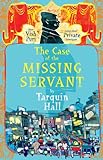
What I'm Reading: The Case of the Missing Servant

I received a pleasant surprise when I picked up The Case of the Missing Servant by Tarquin Hall and was introduced to Vish Puri, a 51 year old accomplished private detective and owner of Delhi's Most Private Investigators Ltd.

I was alerted to this title by the publisher's heavy advertising blitz in a few of the book buyer electronic lists I subscribe to. And, am I glad I picked it up. Puri, is a detective in the classic sense of Sherlock Holmes, but he uses very modern technology to solve this complicated case. I loved how the book was modern and old fashioned, all at the same time, much like the city of Delhi and the country of India itself is portrayed.

Here is the background and plot. Puri, known as Chubby by his family (he is a bit overweight) and Boss by his staff, has a loving wife, a few grown kids, and a very successful detective agency (he has even won an international award for his skills). Mostly, Puri and his staff work for the father's of engaged women to surreptitiously check into the background of the potential husbands. However, when a prosecutor in a different city who is known for going after corrupt political officials is accused of killing his missing servant, Puri and his crew try to clear the good man's name and find the missing servant. Oh, and someone is trying to kill Puri too, but his mom is on that case; Puri is too busy to worry about it.

This is a fast paced mystery with interesting characters that will appeal to fans of old fashioned, Agatha Christie type mysteries; Puri even has a monologue which wraps everything up, explaining the entire case and all of the various motives. But it will also appeal to fans of more modern mysteries. Puri and his crew use a lot of technology in their investigations, and an employee even makes fun of his boss's long wrap up monologue.

Which leads me to another appeal. Although most of the book is from Puri's point of view, his mom (Mummy) who is doing her own investigating throughout the book and a few of Puri's employees have their turn to drive the story through their point of view. This stylistic choice helped to keep the pacing up. By the way, Mummy is a great character. I can't wait to read more with her. VIsh Puri will be back, and I will be waiting to read the next one.

Readalikes: As I mentioned, this novel reminded me of Sherlock Holmes and Agatha Christie mysteries.

Also, check what I had to say about The White Tiger when I read it. Although The Case of the Missing Servant is not as "literary" as The White Tiger, I was surprised by how similar the two books were in terms of theme and overall message about modern India's contradictions. So check this other post for more readalikes about India.

A few other mysteries I would suggest that like The Case of the Missing Servant have a strong sense of place, a modern, old fashionedness, and compelling investigators are:

Wednesday, November 14, 2012

What I'm Reading: Series Roundup

In this review, I am going to write about three 2012 releases in series that I always read.  In this case I will not hash out the appeal for these books/series as the "why" you would enjoy them has remained constant in each series and I have already gone into that in detail.  I will link to the previous reviews with those details and talk about key changes or issues in the newest books.  Finally, I will update any readlaike options.

Here goes...

The Case of the Deadly Butter Chicken is the third book in the Vish Puri modern India set, Private Detective novels by Tarquin Hall.  Please click here to see my reviews of the two previous novels in the series for details.

Again we have the mix of appeal in the eccentric characters, the frame of what is good and bad about modern India, and a satisfying mystery.  In the past I have linked Vish Puri with Flavia de Luce, and although a pudgy, middle aged, Indian private detective in the 21st Century and an 11 year-old, amateur detective/budding chemist in 1951 England do not sound like they are similar at all, I can assure you the appeal in their stories is almost identical.  They both have a fairly cozy mystery, a strong family angle, eccentric characters, and a detailed frame.

The mystery here is very interesting and accessible, even for fans who are new to the series.  The murder involves cricket players and possible game fixing schemes, but as Puri looks into the case, it actually has much more to do with the ongoing hard feelings between India and Pakistan.

This case gets much deeper into Puri and his mother's relationship (always a fun part of the series), as Puri, who had vowed never to set foot in his ancestral home of Pakistan, must cross the border,  In the course of the case, he learns about the difficult secrets his mom has been keeping for her entire life involving the partition of Pakistan and India.

Series Order Issues?  This series continues to be one that is enhanced by reading it in order, but it is by no means a necessity.  Hall gives you enough background on the characters too allow the story to flow whether you know who they are or not. Also, since Puri has been a detective longer than the books have been chronicling his fictional career, Puri frequently refers to cases no reader has ever heard of.  In this case, if the frame of the legacy of partition is of interest to you as a reader, I would jump right in with this installment.

Three Words That Describe This Book:  character driven, India-Pakistan relations, humorous

Readalikes: Again, click here for past readlaikes.  They all still hold. 

With this title in particular, readers might want more information on the conflict between India and Pakistan.  Multiple resources have led me to suggest The Great Partition: The Making of India and Pakistan by Yasmin Khan.

Next up is the newest installment in Jasper Fforde's entertaining and satiric Thursday Next series, The Woman Who Died A Lot (#7).  Click here for the numerous times I have reviewed the other books in the series books and/or talked about Ms. Next here on the blog.

The Woman Who Died A Lot marks a new turn in the series.  We have moved up a bunch of years.  Thursday is now middle-aged and still quite battered from the last installment, One of our Thursdays is Missing, where the real Thursday was missing for most of the book.  Here in the 7th book, Thursday is back in the alternative England of Fforde's creation, but she is not longer in Special Ops, nor is she strong enough to travel into books.  Her new job is as the head of the Swindon Library system, but she is still battling Goliath.  The title of the novel refers to the fact that Goliath has figured out to create Thursday clones.

The plot revolves around the stupidity surplus, smitings by the almighty God who had finally revealed himself to humanity, the disbanding of the time travel service and experiments into the promise of new plots to be found in the DRM (Dark Reading Matter).  Thursday, her husband Landen, kids Tuesday, Friday and Jenny, as well as other familiar characters are all involved.

To the uninitiated this sounds crazy, but to Thursday Next fans, you know that all of these overly satiric, crazy plot lines will all come together in the end, and along the way you will have too many literary references to keep track of.  Also, the end hints that the next will return us all to the book world.

Series Order Issues? This series needs to be read in order.  Issues from as far back as the first book pop up here in book #7.  Interestingly, the 6th book is the least important to have read.  The 3rd and the 6th books take place completely in the book world so those two can be read as stand-alones, but this book, needs the frame of 1, 2, 4 and 5.

Three Words That Describe This Book: metafiction, satire, "punny"

Readalikes:  Click here to get a detailed list of dozens of readalikes for the series.  I would also suggest
 Mr Fox by Helen Oyeyemi for readers who like the whole metafiction thing.


And now for something completely different, the second book in the planned vampire-witch romance/thriller All Souls Trilogy by Deborah Harkness-- Shadow of Night.  If you have not read A Discovery of Witches please click here and read my review.  It will set up this sequel which begins moments after the first book ended.

While we still have the paranormal romance here, Shadow of Night is much more of a historical adventure story.  First, I need to note that there is more sex in this installment.  Personally, I could have done without the multiple, detailed witch/vampire sex scenes (in fact I did do without them; I fast forwarded the audio to get back to the plot).  But, I also recognize that this may enhance the story for others, since this sequel does mover forward more methodically than the first.

I should note that 80% of the novel takes place in 1590 with only a few flashes to the present of the first installment.

The pacing is slowed because of all of the historical detail, which I personally enjoyed.  Also the entire reason they go back to 1590, besides looking for the book known as Ashmole 782, is to allow Diana to learn how to be a witch.  I will not give away the big twist in the confusion over Diana's inability to control her powers, but it is important to note that this plot element adds a huge coming of age theme to the novel.

The focus here is on the historical frame and Diana and Matthew's adventures in the past.  It is more historical fiction than paranormal thriller.

Like the first book, the issues of this novel are resolved, but we are left at a cliff hanger for the next book to begin. Also, while the first book ended with the hope of answers to be found in the past, this novel ends on a more ominous note, one I would liken to The Empire Strikes Back (also a second story in a trilogy).

Speaking of, normally I do not enjoy second books in a trilogy, but in this case, I really enjoyed this novel.  I enjoyed the historical fiction aspects of the novel, the history of witches, and seeing characters from history interacting with Diana and Matthew.

Three Words That Describe This Book:  intricately plotted, Elizabethan setting, coming of age

Series Order Issues?  Here I think the jury is still out.  The story in Shadow of Night is greatly enhanced by having read the first book, but since this installment takes place entirely in the past, readers who are intrigued by stories with an Elizabethan setting but were not interested in the modern day witch-vampire frame of A Discovery of Witches may still want to try Shadow of Night.  However, if you plan to read all three books to get the complete story, you must start with A Discovery of Witches.

Readalikes: Click through to see my original list of readalikes.

I think there is a great appeal in this installment for books about or set in Elizabethan times.  To start I would suggest:

  • The Elizabethans by A.N. Wilson (well reviewed popular history of the era, 2012 publication date; use the link to find more nonfiction options)
  • Voices of Shakespeare's England edited by John A Wagner (collection of primary documents, geared to high school and up)
  • There are many Elizabethan set mysteries, but I chose the Lady Appleton series by Kathy Lynn Emerson because of the setting and the sleuth's job as an herbalist (similar to the witch healers in Harkness' novel)

Also readers might want to reads works by or about of Marlowe or Shakespeare since both are characters here.

Finally, although they are completely different books, I found the time travel aspect, the way it was handled, and the respect for not changing history too much all compatible with 11/22/63 by Stephen King (review soon).

Friday, December 27, 2013

What I’m Reading: Series Round-Up-- The Case of the Love Commandos

Today, I have a very quick review of a quick read.  It is the 4th book in the very fun and informative Vish Puri, India’s Most Private Detective series by Tarquin Hall entitled, The Case of the Love Commandos.

The series is among my favorites for a few reasons.  First, the mysteries have an old fashioned sensibility (think Agatha Christie), but Puri and his crew use all of the modern technologies available to them.  It’s the best of both worlds.

Second, I love the frame, the details of life in modern India. Hall gives a fair assessment of all the triumphs and problems, taking a hard look at Indian society.  The stories are up to date with all of the current issues too.  For example, in this installment, we have a plot involving young people in love who want to marry for love [not through arrangement] AND outside of their caste.  Two big no-nos.  There is a lengthy discussion of the caste system, specifically the Dalit class [the lowest one also known as Untouchables], and trying to discover if the caste system can be supported by DNA evidence.  These are complicated issues.

Third, the characters are great.  Puri is a great literary PI, not just in his skills, but in his quirks and habits too.  I like his crew and his family too, specifically his Mummy who is becoming quite a famous senior citizen PI herself.  Even the bad guys are eccentric here; in fact, the resolution of one of the mysteries is hysterical because of the villain’s disguise.

Finally, these novels are fun.  Because of the first three reasons, I love returning to Puri, his crew and his family. The books have lots of detail, frame, and great characters yet they are still quick reads.  All are about the same length (300 pages) with plenty of white space and dialog.  You can read one in  a few sittings. You laugh, you learn something about modern India, you visit with old friends, a mystery is solved, and justice is served.

There is one specific change in this installment that I would like to note.  Over the first 3 books, Mummy has become more bold in trying to solve Puri’s mysteries and Puri has become more upset about her helping.  Fresh off the success and national press on her help with the last novel, Mummy is bolder and Hall notes this by giving Mummy her own mystery within Puri’s novel.  So for the first time in the series, we actually have 2 full mysteries being investigated and solved in separate cities by Puri and Mummy in one book. They are not related to each other at all.  This sets up more of a conflict between Puri and Mummy.  I can see the conflict brewing.  The next mystery should bring mother and son back together and I can’t wait to see what happens.

Three Words That Describe This Book:  eccentric characters, clever cozy, modern India

Readalikes: I have reviewed every book in this series and offered MANY readalikes over the years.  Please click here to pull them all up.

For this installment in particular, readers may be interested in learning more about the modern Indian caste system and marriage issues. I have some suggestions to get you started.  The first is nonfiction all about the Dalit class and the way they are treated, Untouchables: My Family’s Triumphant Journey out of the Caste System in Modern India by Narendra Jadhav.  If you are interested in the whole world of Indian arranged marriages, click here for fiction and nonfiction options.  Finally, either link in this paragraph will lead you to even more links of books about modern India. Poke around and look for one that piques your specific interest.

Tuesday, May 11, 2010

What I'm Reading: The Weed That Strings The Hangman's Bag

The Weed That Strings the Hangman's Bag: A Flavia de Luce Mystery (Flavia De Luce Mysteries)Last year I couldn't stop raving about Alan Bradley's The Sweetness at the Bottom of the Pie which introduced the world to the fabulous Flavia de Luce, an 11-year-old, poisons loving sleuth in 1950s rural England.

I originally wrote about Flavia in this post, and over on the Browser's Corner I have written this shelf talker about the book:
 In this fresh and intelligent cozy, readers are swept back in time to rural England in 1950. Flavia de Luce, an 11 year-old aspiring chemist with an interest in poisons, finds a man lying in her garden, taking his last breaths. Readers will root for Flavia, who is just old enough to look out for herself but has not yet lost her adventurous spirit, as she investigates this mysterious death and ends up entangled in a decades old rare stamp smuggling ring.
[Oh, and as I promised to reveal in last week, The Sweetness at the Bottom of the Pie was the book I bought for the moms for Mother's Day this year.]

So it should come as no surprise that I was excited to read the next Flavia de Luce mystery which came out last month, The Weed That Strings the Hangman's Bag. And, I am happy to report that I enjoyed the second installment as much, if not more than the first.

It is only a few months later and Flavia still lives with her Dad and two sisters in a dilapidated manor house.  She meets a BBC puppeteer and his assistant who have broken down near the churchyard. Turns out the puppeteer has been here before, but when he is murdered, Flavia needs to reconstruct how and why someone would kill him, digging into the death of a young boy a few years before in the process. The two are tied together by weed and a hanging, but how? Read it for yourself to find out.

A patron and I were talking about the novel and we both agreed that although the appeal of discovering and slowly falling in love with Flavia could not be replicated in this second installment, we did appreciate that Bradley improved in his storytelling here. In the first book, Bradley seemed to have trouble resolving the mystery and had to put Flavia in mortal danger in order to wrap things up. Here Flavia is never in danger, yet she still solves the case. I think that is a sign of Bradley's maturity. The story was just as compelling without me having to worry about Flavia surviving.

It is also worth remembering that Bradley's series is a cozy. Why does this matter? Because a cozy is more about the characters and the frame (setting, time period, chemistry details, etc...) than the mystery. Cozies are appealing without the mystery; the mystery is simply a plot device to let the reader enter a world full of interesting characters and background details. The Weed That Strings the Hangman's Bag is a perfect example of this.

Three Words That Describe This Book: cozy mystery, original, captivating

Readalikes: Following I have re-posted the suggestions I first made for The Sweetness at the Bottom of the Pie, but first here are a few more new suggestions.

As I mentioned here, another new series with a great sleuth and an interesting frame follows Tarquin Hall's Indian PI Vish Puri.  Beginning with The Case of the Missing Servant, Puri, the owner of Delhi's Most Private Investigators Ltd., is a detective in the classic sense of Sherlock Holmes, but he uses very modern technology to solve this complicated case. I loved how the book was modern and old fashioned, all at the same time, much like the city of Delhi and the country of India itself is portrayed.  Click here for my full review of Hall's novel. The next installment of the Puri mysteries is due out in early June.

Besides the suggestions below, I would also suggest the Maisie Dobbs Mysteries by Jacqueline Winspear and the Spellman mysteries by Lisa Lutz (reviews here).

Suggestions from the first time I read a Flavia book (June 2009):
Other cozy mysteries with intriguing and original narrators that may appeal to readers of The Sweetness at the Bottom of the Pie are the mysteries of Bradley's fellow Canadian Louise Penny. Her Three Pines mystery series is set in a small Quebec village. The first is Still Life.
If you liked the original voice and unique setting in Bradley's novel as well as the eccentric characters, you should also try Alexander McCall Smith's No. 1 Ladies Detective Agency series. When I was reading Flavia's story I realized that I hadn't been so taken in by both a narrator and a setting since I had first read Precious Ramotswe's tale of solving problems in Botswana.
For more cozy reading suggestions, visit the Cozy Library.

A few reviews also mentioned how Flavia is reminiscent of Harriet the Spy.

Those who liked this book but want a little more sarcasm (this book has none), I would suggest Confessions of a Teen Sleuth by Chelsea Cain, which is the fictional biography of Nancy Drew.

In terms of nonfiction, readers may want to try these books about stamp collecting, poisons/chemistry, and rural England in the 1950s.

Friday, May 30, 2014

What I’m Reading: The Outsmarting of Criminals

Reviews keep coming...

Earlier this month I read the first book in a new cozy series, The Outsmarting of Criminals: A Mystery featuring Miss Felicity Prim by Steven Rigolosi

I placed this book on hold immediately after reading this review in Library Journal:
/* Starred Review */ After being mugged in New York City, Miss Felicity Prim plans to embark on a new career: "criminaloutsmarting." She is going to do it the cozy way by moving to a small hamlet in Connecticut, where she'll buy a cottage with a garden. All this in Chapter 1! The staff of the doctor's office where she works is distraught when Felicity announces her resignation, especially the doctor, who wants to marry her. She'll have none of this until she tries her new venture, though. Investigating as a concept gets decidedly real when a corpse turns up in her basement (a secret basement, by the way). Det. Ezra Dawes and his team make a valiant effort to keep up with Felicity. Concurrently, Felicity and her sister learn they have a secret half-sister, and thus she has a second case to solve. Mercy! VERDICT This title had me at the cover—all done in Edward Gorey style. The tongue-in-cheek humor Rigolosi showed in his earlier work (Androgynous Murder House Party ) is key to this pitch-perfect mash-up of the greatest traditional/cozy mystery tropes. Similar in tone to Kerry Greenwood's Phryne Fisher series although with a contemporary setting; a pleasure from cover to cover. --Teresa L. Jacobsen (Reviewed March 1, 2014) (Library Journal, vol 139, issue 4, p74)
Between my love of books about books, the fact that I am leading the ARRT Crime Fiction Genre Study, AND that I had just led our 2 hour discussion on cozies a few weeks before, this book was exactly what I needed.

You get the plot and some of the appeal from the review, but let me talk a bit more about WHY someone would enjoy this book.  First, it is adorable.  If you like reading and are someone who gets caught up in books on a regular basis, I mean so caught up in the characters that you forget they ARE NOT REAL [you know you’ve done it]-- this is the book for you.  Felicity is that kind of reader of mystery novels, especially the classics.  But you don’t have to love mysteries to enjoy this series.  Rather, it is that “getting caught up” in a book aspect that is shared here.

This is a mystery about a reader and the books she loves first and foremost. But, it is also a "wink, wink" parody of mystery novels, their plots, and the eccentric characters who live on the small towns of cozy mysteries.  The official term for this type of book about books where the reader is in on the joke is technically called metafiction. In terms of appeal what that  term means is that you, the reader, should expect to have a fun romp in an endearing, engaging, and witty book about a love of books and reading.  The reader is in on all of the jokes, we crave the next plot twist ripped from the classic cannon of mystery fiction, and we can’t wait for what’s still to come.

Now many may find this piling on of all of the inside jokes a bit much.  Not me though.  Warn people that it is an exaggerated, adorable, send up and they can decide if they are interested for themselves. This is a book for which someone’s enjoyment will be highly dependent upon their expectations and mood as they read it.

But it is not all puns and inside jokes.  Rigolosi is a good writer. An example can be seen in his brilliant, “show don’t tell” portrayal of Felicity’s terrible driving. That bit of writing skill is worth reading the book.  It is a great running gag but done in an understated way that I really enjoyed.

The Outsmarting of Criminals is a fast paced, fun, page turner. It is a perfect summer read for all book lovers. And don’t blame me if after you finish the novel you too are thinking about leaving the rat race behind and becoming a cozy amateur detective yourself. Just make sure to buy a house that comes with its very own secret basement.

Three Words That Describe This Book: adorable, witty, eccentric characters 

Readalikes: This series takes everything I love about Bradley’s Flavia de Luce series and Hall’s Vish Puri series and smooshes [I know, not an actual word] them together.  Click here for more on Flavia and here for more on Puri including dozens more readalike options.

But really anything on the ARRT crime fiction genre study list from the April Meeting of Amateur, Cozy, and Humorous mysteries will work as a suggestion here.

This series also reminded me of a backlist, harder to find British mystery series that also is a parody of mystery novels by L.C. Tyler and beginning with The Herring Seller’s Apprentice.  Here is the link to my review of that book and here is the link to the Goodreads info on the whole series.

And finally, the best series for people who love books, reading, and metafiction is Jasper Fforde’s Thursday Next series. I think it should be required reading for book lovers.

More reviews coming over the weekend [especially since I took yesterday off from posting].

Monday, November 15, 2010

Monday Discussion: Series...Fan or Foe?

Many readers love series.  They like that the story continues over many books. They enjoy reading a book with characters they have grown to love.  And finally, I have found many people like series because they know what they are going to get ahead of time.  Trying a new author can mean that you will be disappointed; many readers like the guarentee that a series brings.  It may not be the best book they ever read, but they know what to expect.

On the other hand, there are also readers who do NOT want series.  Why? For these readers there are also many reasons.  Some don't want to get addicted to one series with so much out there to read.  Others simply do no enjoy revisiting the same characters over and over.  Still others are overwhelmed by how many books are in a given series and are afraid if they start, they will never finish, so they just don't start.

As for me, I read a lot of first books in an series. This is so I get a sense of what readers can expect from the author and the series. Think about it from my perspective.  I have to know about as many books as possible.  If I read one Janet Evanovich out of the 16+ in the series, I can understand the basic appeals of the series and be able to suggest it to the appropriate reader, and still red 15 other books by 15 different authors.  I look to reviews to see if a series changes in style and tone over time.  If it does, I may need to read a later book in the series.

I also read only one book in a series quite often because I simply do not have time to read only series.  Again, I need to read a range of books, so I do not have the luxury of reading the same series.

When I do read a series, it is usually for fun and escape.  They make great vacation reads.  Some of the series I try to keep up with are the Spellman Mysteries by Lisa Lutz, The Bookmobile Mysteries by Ian Sansom,  the Vish Puri Mysteries by Tarquin Hall, and any series by Jasper Fforde. (All links are to times I have mentioned these books)

But what about you? For today's Monday discussion, how do you feel about series? What patron behavior in regards to series have you noticed? Do you read series or do you avoid them? Are there some series you are a junkie for? Or, are you baffled by those who live and die by their series reads?

Click here to follow past Monday Discussions.

Monday, July 19, 2010

Monday Discussion: Books That Make You Laugh

Last week I received a link from RA for All reader, Alan, pointing me to his website's list of "50 Novels to Reader When You Need a Good Laugh."

What I liked about this list is how they broke up the books by appeal and/or genre; there is a funny book for just about any genre fan. The list also takes a wide range of humor into consideration. Which leads me to today's Monday Discussion. What do you read when you are looking for a "funny" book?

I realize this is not as easy a question as it sounds. It depends on what kind of laugh you want. I will start with a few of my humor choices and end with another resource to help you get started.

In Nonfiction I love A.J. Jacobs. In his books he basically makes himself the butt of the jokes, as he tries to, for example, live the bible literally, read the entire Encyclopedia Britannica, or outsource his life. I love that I both learn something AND have a good laugh while reading his books.

In fiction, I tend to look toward some of my favorite humorous, cozy mystery series: the Vish Puri series by Tarquin Hall, the Spellmans series by Lisa Lutz, and the Nursery Crime series by Jasper Fforde are three of my favorites in this category.

I also enjoy tongue-in-cheek humor, especially when it comes to horror novels. Breathers: a Zombie's Lament by S.G. Browne (which I wrote about here) and anything by Christopher Moore hits the spot here.

In terms of reliably funny authors, don't forget a great old standby, P. G. Wodehouse, whose Jeeves novels are available at just about every public library and are still funny. In fact, each year since 2000 the Bollinger Everyman Wodehouse Prize has been given out for the best comic writing. Click here for a list of past winners. On an interesting side note, the winner has a pig named after him or her. Now that is funny.

So let me know what gives you the giggles.  Andi f you want to follow past Monday Discussions and the comments, click here.

Tuesday, June 7, 2011

Around the World in 80 Murders: Asia and Southeast Asia

Sleuth your way around the world, explore novel destinations, and help catch a killer as you go…Around the World in 80 Murders

Asia and Southeast Asia

The Interior by Lisa See
Chinese inspector Liu Hulan and her American boyfriend, American attorney David Stark team up for a second mystery. Here Liu travels from Beijing to Da Shui to help an old friend solve the murder of her daughter.  The toy factory she worked in may be responsible for her death.  This is a compelling mystery series, with a touch of romance, which accurately portrays life in modern China.

Eye of the Jade by Diane Wei Liang
After resigning from the Ministry of Public Security, Mei Wang becomes a PI in late 1990s Beijing. This change of career is disgraceful to her family because being a PI is illegal in Beijing.  However, an old family friend gives Mei her first case: track down a jade seal from the Han Dynasty.  The case and family issues collide in this mystery which also contemplates the human rights abuses of the Chinese government.

The Samurai’s Wife by Laura Joh Rowland
In 17th Century Japan in the town that will become Tokyo, Sano Ichiro holds the title of Most Honorable Investigator of Events, Situations, and People.  In this, the fifth title in the series, Sano must get help from his new wife to solve a murder, but the investigation also turns up a plot to overthrow the government. History, intrigue, and suspense meld together perfectly in Rowland’s series.

The Flower Master by Sujata Massey
Amateur sleuth Rei Shimura is a young Japanese American antiques dealer in modern day Tokyo. When her flower arranging teacher is killed and Rei’s Aunt becomes the lead suspect, Rei must try to clear her Aunt’s name.  This series mixes in Japanese culture lessons with the suspense of the mystery.

Bangkok 8 by John Burdett
Bangkok’s only honest police detective searches for the person responsible for the deaths of his partner (a friend from childhood) and an American Marine sergeant killed in his car by a mass of cobras and a giant python.

The Shadow Walker by Michael Walters
In Ulan Bataar, Mongolia, violent crime is relatively unknown. A serial killer has left behind his fourth mutilated corpse with a severed head and limbs this time in a luxurious hotel, so a British CID Inspector is sent to assist in the quest to catch the killer before more people die.

A Corpse in the Koryo by James Church
Inspector O works for the North Korean government. After what appears to be a routine surveillance job, the Inspector starts to realize he may have been set up to fail by his bosses.  Inspector O fights for justice despite his government’s shady dealings.  This is a highly accurate account of life in a secretive country.

The Coroner’s Lunch by Colin Cotterill
In this series debut, it is 1975 and seventy-two year old Dr. Siri Paiboun is named Chief Coroner of Laos by the newly installed Communist government.  His first case begins with the death of the wife of a Party leader and then the bodies of Vietnamese soldiers start surfacing in a lake.  Siri is an eccentric and original investigator.

The Damascened Blade by Barbara Cleverly
Scotland Yard commander Joe Sandilands is in India during the 1920s.  He is trying to take a vacation near the Afghan border when he receives orders to chaperone an American heiress who wants to experience the “real India.”  The two end up at a frontier outpost, a tribal prince is killed, and Sandilands must find the murderer quickly in order to avoid starting a war.

The Case of the Missing Servant by Tarquin Hall
Meet Vish Puri, an accomplished private detective and owner of Delhi’s Most Private Investigators Ltd.  Expect interesting and eccentric characters, and storytelling like Agatha Christie with the addition of current technology. It also explores the contradictions of modern India without sacrificing the playfulness of the story.

Friday, April 1, 2011

What I'm Reading: A Red Herring Without Mustard

A Red Herring Without Mustard: A Flavia de Luce Novel
I am a huge fan of the Flavia de Luce series by Alan Bradley, so it is no surprise that I read the third, and brand new installment, A Red Herring Without Mustard right after it came out.

Briefly here are some excerpts about Flavia and her family from the first time I read a Flavia book here:
If you are looking for a unique and original cozy mystery, I have a suggestion for you. It is 1950 in rural England and Flavia de Luce is an 11 year-old aspiring chemist with an interest in poisons. She lives in a crumbling, country mansion, with her father and two older sisters.
What is most endearing and entertaining about this novel is Flavia's voice. Bradley, was 11 himself in 1950 (so yes, he is a first time novelist in his 70s), and he understands the time period. For example, Flavia cannot just hop on the Internet to look things up; instead, she spends a lot of time in the musty stacks at her local public library. The book obviously won my heart right there.

Flavia is just old enough to look out for herself but her adventurous spirit has not yet been squashed by adulthood. She is still naive enough and her 1950s rural England world is still safe and small enough, that she takes the risks that keep the plot interesting. It would be hard to believe that an 11 year-old today could just slip away for the entire day, ride her bike all around the county, and have no one asking after her. But in the setting Bradley chose, it all seems fine.
This time, Flavia is the veteran of 2 murder mysteries and the police are less willing to indulge her. The story begins with someone who is out to kill a visiting gypsy and moves into an actual murder that is indirectly tied to the gypsy.  Flavia discovers the two victims, one still alive and one very dead.  As a result, the police have their eye on her and explicitly tell her father to keep her at home.  Flavia of course can sneak out no problem.  In fact, her various manners of sneaking out are a huge foreshadowing of things to come.

But the murder investigation is not the chief appeal here.  Like the other two novels in the series, the sense of place is huge. This is small town, rural England, where everyone knows everything about everyone else's business. Flavia is able to move in and out slightly unnoticed because of her age.  People are willing to open up to her, and her excellent hearing and chemical knowledge serve her well.

The characters are also the key to the appeal.  Meeting all of these quirky people and seeing how they are interconnected keeps you reading.  I especially like the family's cook and Dodger, the family's jack-of-all trades, who may be suffering from PTSD from the war, but is the wisest member of the household.

What I most enjoyed about this installment is that we are getting more details about the family's situation.  Flavia's mom died in an accident when Flavia was a baby and all of the family's money was hers.  Due to England's probate laws, since Harriet (the mom) died without a will, the family is now without funds, yet they still live in the large, literally falling apart manor home.  This book gives more details about Harriet and the family situation:  Dodger is packing the family silver to be sold at auction, Flavia's room leaks when it rains, there is an entire underground irrigation system that no one knows about.  You can feel this plot line building toward a more prominent role in future installments.  Much of that is because Flavia is growing up enough to care about what is going on outside her day-to-day existence.  This book introduces a Flavia who is leaving childhood and entering adolescence; a Flavia who wants to understand her family and their problems.

There are too many crazy and quirky characters to recount here.  Bishop's Lacey is one weird town.  But if you are okay with a convoluted mystery and love interesting characters, this is the book for you.  If you are a hard core mystery fan, I would try something more along the lines of P.D. James.

Three Words That Describe This Book:  captivating, quirky, original

Readalikes:  When I reviewed the first 2 books in this series here and here, I suggested the following books:

These series are set all over the map in terms of time and place, but they all share a few key elements with Bradley's series, they are fairly cozy, with serious undertones, they feature extremely quirky and interesting investigators, and they are all very original.

A few new suggestion that I want to offer which also fit this same mold are as follows:
In the past I have also suggested how Flavia is reminiscent of Harriet the Spy. And for those who liked this book but want a little more sarcasm (this book has none), I would suggest Confessions of a Teen Sleuth by Chelsea Cain, which is the fictional biography of Nancy Drew.


Another standalone title that would work for those who enjoyed the precocious narrator is The Selected Works of T. S. Spivet by Reif Larsen.

Tuesday, August 19, 2014

What I’m Reading: World of Trouble

There are very few times in life when you complete a series and it is just perfect.  As I mentioned in a previous Monday Discussion on this blog, this is how I felt about completing Ben H. Winters The Last Policeman Trilogy with the last installment, World of Trouble.

This review of World of Trouble as a novel will be short because to say too much would give away the joy of reading the series.

First, you need to see my reviews of The Last Policeman (book 1) and Countdown City (book 2) for more details.  Click through. I can wait.

Okay, you are back.  All I am going to say about World of Trouble as a book is that the story picks up where Hank left off, leaving his girlfriend at a safe house and headed back out into a world only weeks away from impact with the asteroid that will destroy most, if not all life on Earth.

Hank follows some leads to Ohio where most of the action in this book takes place.  I can tell you that before the asteroid hit the earth, Hank has put all the pieces into place from the last 2 books.  He knows what was going on with his sister, he solves a few other mysteries along the way, and still leaves time to end the novel in a beautiful, heart warming scene as the asteroid streaks across the sky.  It’s just perfect.

For Readers Advisory purposes what you really need to know is how to suggest this now completed trilogy to patrons. Here are a few tips and points on that front.

First, it stays completely true to the tone and focus of the first installment.  This means, Hank gets a bit more seasoned as he is investigating the mystery surrounding his sister, but he is still a bit naive and bubbling until the end.  He also remains endearingly good hearted and good natured despite the fact that the world may be ending any day. You can be sure Hank stays Hank no matter what.

Second, this series although set in a pre-apocalyptic time NEVER moves to post apocalypse.  Do not give this series to people who want to know what happens because of the asteroid!  This is a hard-boiled detective novel, albeit featuring an unexperienced detective, who refuses to accept defeat even as he faces down the end of the world.  He will fight to figure out what happened to his sister and why until the end. He will leave no stone unturned.  He will complete his mission before the deadline. Hank is nothing if not earnest, but Winters will not break our trust.  This is a pre-apocalyptic novel and it stays that way until the end.

But it is also a novel about what choices people make when they know the end of the world is coming.  There is no blue print for how you are supposed to act here.  We meet many, many people who all make different choices.  We see what happens to the country’s infrastructure, institutions, and community as the day of impact comes closer.  This is a lot to take in and makes the trilogy very thought provoking, but not as dark as you would imagine because of Hank’s positive personality.  Seeing these background details evolve over the course of the series is not only very interesting, but it is also a huge factor in why someone would read and enjoy these books. So my RA point here...take the term pre-apocalyptic literally.

Third, this is a great option for mystery fans with an off kilter sense of humor, who enjoy quirky characters, and a first person narration.

Fourth, if you commit to reading the entire trilogy, rest assured, it is extremely well paced.  You can read each book in a few sittings.  It would not be a huge investment in time.  They are also paperback originals, so I will be sending quite a few patrons with all three on vacation in the years to come.

Taking the entire series into consideration, I have been suggesting it to many more readers than before the publication of World of Trouble.  Until I finished the trilogy, I couldn’t be sure that it would  stay true to the mystery part.  I was worried that the gimmick of the asteroid would overtake the true story here.  So now, you can be sure the reader does not need to like apocalyptic fiction in order to enjoy these books; they just need to be okay with the pre-apocalyptic setting and the shadow it casts over the tone.

Three Words That Describe This Book: endearing narrator, pre-apocalypse, thought provoking [same three words I used at the start and they still are the key appeal of this series]

Readalikes:  I have plenty of readalikes listed from when I wrote about the first 2 books here and here.

I think your best readalike options have NOTHING to do with the science fiction aspects or apocalyptic stuff though. I do have those other options listed in the links from previous reviews.   Rather, your focus on readalikes should be for other mystery series with an endearing detective, an off beat sense of humor, and some level of thought provoking issues [in other words, it needs to be a bit more than fluff because there are some serious issues at the foundation of  the story...the end of the world is coming for goodness sake].  Thankfully, this is one of my favorite areas of mysteries.  So here are a few options with links to my reviews:

Thursday, April 14, 2011

What I'm Reading: One of Our Thursdays is Missing

I really enjoy the speculative fiction of Jasper Fforde; in fact, last year, the first book in his new Shades of Grey series made my favorite books I read that year list.  Fforde's newest book (3/11) One of Our Thursdays Is Missing is the sixth book in his series which follows Thursday Next, a member of the literary division of the Special Ops, in an alternative England.  Thursday is able to travel between the real world and the book world.  It is a very complex but not difficult to understand set up, but for those who have never read the series I will tell you that just reading the mechanics of how it all works in the third book, The Well of Lost Plots is one of the most fun reading experiences I have ever had.

Truth be told, I was starting to get bored of the series after the fifth book, Thursday Next: First Among Sequels, but I just love Thursday and the way Fforde writes, so I got One of Our Thursdays is Missing as soon as it came out.  Turns out, I think Fforde was a bit bored too, because this new book is a total reboot of the series. And the result is fabulous.

The book world in this series used to be in the form of a giant library, but when One of Our Thursdays is Missing begins, the book world is in the middle of an upgrade to a new operating system.  The enitre world changes to a geographic format.  Fiction is now an island.  Here is where you can buy the map.  I copied this map and gave it to everyone in RA.  The map alone is worth reading the book.

Since you encounter this map in the books, endpapers, before you get to any text, right away, I knew Fforde was ready to inject something new into the series, and I was ready to follow him.  I am so glad I did.

The plot is also a reboot.  Instead of following the real Thursday Next, our protagonist is the book version of Thursday, who we have met in previous books.  She is a pale imitation, but, as the only real Thursday approved book version of Thursday, she is the only one who is qualified for the job Fforde sets up.  You see, the real Thursday is missing and the book version has to find her.  That is the plot, but the joy of reading the book is in the details.  For those who love the real Thursday, I will warn you, she only makes a small appearance her, but give the book version a chance you will grow to love her too.

Along the way, we not only come to love our new Thursday, but Fforde skewers every genre of fiction, current reading trends (such as vampires) and formula plots.  If you have never read a Thursday Next book, but love reading you could pick this title up and enjoy yourself.  If you just like reading in general and are okay with making fun of yourself, start back at the beginning.  This is a series I give out to many patrons, young and old, male and female, realistic fiction readers to speculative fans.  If you love books, you will be enchanted with Thursday Next.

Appeal:  While there is a suspense/mystery story line to each book, this is a series about characters.  Specifically for this title, character is huge because we are comparing what makes the book Thursday different from the real one.  Book Thursday is a reluctant heroine who must overcome her own insecurities and rise to the occasion. Her robot butler is also a great side-kick.

This is a fast paced book filled with car chases, intrigue, mystery, adventure, and a race against the clock. Each time Thursday conquers one challenge, we have maybe a page or three to recover, and then it is off again.

The satire is also relentless.  Fforde obviously loves books and reading, and his satire is constant but is all in good fun.  This is a book to be enjoyed by those "in the know."  He has too many literary references for anyone to physically count, but if you want to try, go to his website and join the discussion.  My favorite part is when Thursday goes to "Fan Fiction" and is besieged by other Thursdays and too many hobbits to count.

Much of the satire also comes from the metafiction aspects to the novel.  We are reading a series of books about a woman named Thursday Next, but this title is about the book version of the real Thursday, who, is really just a character in a book we read.  Huh?  Right.  So if you like that kind of plot line (personally, I love it), read this book.  If the last few sentences gave you a headache, that's fine, there are plenty of other books to read.  No worries.

These are intricately plotted mysteries, set in an alternative reality, filled with humor and adventure, with a compelling series protagonist who has grown over time.  These are thoughtfully constructed books.  They are not hard to read, but the series is complex and deeply layered.  You can read each book for its own merit and enjoy it, but you can also spend hours, days, ever years, pouring through the extra information.  I fall somewhere in the middle here.  For example, every single Fforde book (no matter the series) has no chapter 13.  Why?  Here's the answer.

If you are a big Fforde fan yourself, why not go to the Fforde Fiesta, an annual event in Swindon (the town where Thursday lives) for "those who like to embrace absurdity."  Here is the official blog for the event.

Three Words to Describe This Book:  metafiction, satirical, compelling

Readalikes: If you like the tongue in cheek, social satire of Fforde, you have to try Terry Pratchett's Discworld series.  I wrote about The Truth here.

If you like the metafiction aspects and/or the literary references that pop up everywhere at any time try Alan Moore's graphic novel series The League of Extraordinary Gentlemen, or Ella Minnow Pea by Mark Dunn.

If you like the humorous tone and a compelling but flawed protagonist try the Spellmans series by Lisa Lutz.

If you like lighter, fast paced mysteries with tons of plot twists, eccentric but lovable characters, and an interesting setting try the Vish Puri mysteries by Tarquin Hall.

For nonfiction fans, I have a few options of books about books and reading to suggest:  A History of Reading by Alberto Manguel, The Professor and the Madman: A Tale of Murder, Insanity, and the Making of the Oxford English Dictionary by Simon Winchester, Maps and Legends: Reading and Writing Along the Borderlands by Michael Chabon, On Writing: A Memoir of the Craft by Stephen King, and Reading Lolita in Tehran: A Memoir in Books by Azar Nafisi.