RA FOR ALL...THE ROAD SHOW!

I can come to your library, book club meeting, or conference to talk about how to help your readers find their next good read. Click here for more information including RA for All's EDI Statement and info about WHY I LOVE HORROR.
Showing posts sorted by relevance for query atkinson. Sort by date Show all posts

Tuesday, May 3, 2011

What I'm Reading: Started Early, Took My Dog

Started Early, Took My Dog: A NovelKate Atkinson is one of my personal sure bet authors.  No matter what she writes, I know I will enjoy it.  What I love about her is that she writes complex, layered stories, but always manages to bring every last thread back together in a smart, interesting, and satisfactory way.  I can sit back and relax when I read an Atkinson book because I trust that she will lead me in the right direction.

Started Early, Took My Dog (herein SETMD) is the latest Atkinson book featuring Jackson Brodie.  Like the first 4, SETMD can be loosely described as a crime novel, but it is more nuanced than that.  Looking back, SETMD also has the same set-up and style as all the Brodie novels:  missing girls, multiple storylines, with one told as flashbacks, with a slow convergence of these plot threads over the course of the book.  And then there is Jackson.  If you don't love Jackson in all of his confused, grumpy, depressed, but clearly trying to be a better person and a better father to his now 2 kids, glory, you will not enjoy these books.

Our fearless leader, Kathy, and I were discussing whether or not you need to read the series in order.  We decided that you could easily enjoy this book for its own merits, but if you really liked it, you would want to go back and re-read the others in order.  For the record, I think When Will There Be Good News? is the best of the 4, but SETMD is very good.

I should also mention that the titles refers to this Emily Dickinson poem. Parts of the poem are reproduced at the novel's end, but the tone and subject of the poem are echoed in Atkinson's book.  Reading the poem first, will put you in the right frame of mind for the novel.

The plot is dependent on the characters here.  At the book's beginning we are introduced to our 3 main windows into the story, overweight, middle aged spinster/retired police officer Tracy, aging actress Tilly, and Jackson.  Atkinson spends time describing the same scene at a British shopping mall from all three of their perspectives.  All three have a connection to "lost" children, but their deeper connection, beyond being in the same place at the same time in the novel's opening, is slowly revealed over the course of the novel.  In the end, they all converge into an extremely climatic scene, but you have to trust Atkinson to get you there.

The pace is standard Atkinson, it starts scattered and slow, but steadily builds.  She gets you wrapped up in the characters and their choices.  We grimace at some choices and cheer for others.  These are real, flawed people who you might not always agree with, but who you always root for.  As the book progresses and the story lines converge (and especially as the plot twists are revealed) the story gains momentum, shifting into a higher gear for the last third.  So as expected, if you allow Atkinson to set the stage and trust her, she will reward you with a great book.

The tone is decidedly darker than the others in the series.  All of these books are based on Jackson's obsession with finding lost girls due to the still unsolved murder of her sister when she was a teenager.  He has just come out of a marriage in which his second wife swindled him of everything and is using the "freedom" this act has allowed him to travel the British countryside.  He is still a PI, but is only working one case for a client in New Zealand.  While at first, it seems like a "happy case" for Jackson, since the lost girl is his client, not the family of a child thought long dead as he usually is working on, he quickly unravels a very dark and disturbing story of stolen children, deception, and murder.

Jackson spends much of the novel brooding about his own loss.  Tracy is caught up in a macabre tale herself, and Tilly is slowly loosing her mind to dementia.  Jackson's skills as a PI are definitely fading with age, but his love for family is growing.  In the end, some good people get away with some morally questionable things, some bad people get what they deserve, and some not as bad people get punished more harshly than they deserve.  Overall, I was satisfied at the book's end, but I would warn readers that it is not a traditionally "happy" ending.  Atkinson has some scathing things to say about human nature.

ON a lighter note, Julia is here a lot more than the last book.  While her and Jackson are no longer romantically involved, she is still is go-to voice of reason.  And now that they have Nathan together, I hope to see a lot more of Julia; that is, if there are more books in the series.

I should also note that Atkinson spends a lot more time than usual on the setting here.  There are wonderful descriptions of the Yorkshire landscape, the abbeys Jackosn finds piece in visiting, the sea, and the woods.  Also the horror maven in me loved the cute references to the vampire loving visitors to Whitby, which is a key town in Dracula.  But in general, there is much more time devoted to landscape here than I remember in past novels in the series.  It was a nice addition.  Turns out Atkinson herself longs for her home of Yorkshire, much like Jackson, now that she lives in Scotland.

Three Words That Describe This Book: character-centered, multiple-story lines, steadily building pace

Readalikes:  Another author who uses a complex, multiple story line plot to great effect is Dan Chaon.  Try Await Your Reply which I described in detail here and here.  The similarity between SETMD and AYR is striking, despite the fact that they share nothing in terms of plot.  It is all about the feel here.

Michael Chabon and Ian McEwan also share Atkinson's complexly layered plot lines, character centered storytelling, and darker themes all leveled a bit by subtle, dark humor.

If you want to read a more traditional mystery series which is similar to Atkinson, I would suggest either Walter Mosely's Easy Rawlins' series (darker, brooding, on the fringes investigator, great sense of place) or Louise Penny (sense of place, character centered, middle aged investigator).  Mosely is much darker than Penny, but both have similar pacing and complexity to Atkinson.  Also, your enjoyment of all three series will hinge on whether or not you want to follow the investigator.

Saturday, May 2, 2009

What I'm Reading: April 2009

I'm a few days behind this month, due to having to read final papers and enter grades in a 48 hour window. But grades are in and here is my report on three of the books I read this month. Interestingly, each book is part of a series.

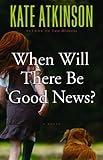
Early in the month I finished listening to the third book in Kate Atkinson's Jackson Brodie series, When Will There Be Good News? What I love about Atkinson is that she assumes the reader is smart. She weaves a story that has many layers and complications, but always bring together every loose end. The pay off is always there in all of her novels, series or standalone.

In this newest book, Atkinson again has Jackson Brodie in Scotland and crossing paths with Louise, a Chief Inspector. (Check the bottom of this post for a report on the second installment in the series, One Good Turn.) However, for the first time in the series, Jackson is not the main focus. The story still turns on girl in trouble, as it always seems to for Jackson. In this case a grown woman, Jo, whose entire family had been slaughtered when she was 6, and her 16 year-old plucky nanny, Reggie. Louise and Jackson get caught up in Reggie's search for Jo, who has vanished. As usual, Jackson ends up in a lot of trouble along the way-- he almost dies in a train crash and is twice mistaken for a serial killer.

As usual, Atkinson's writing captures the true nature of people. Her characters are fully rounded, flawed, and just plain real. Also, this is the third book in the series, and the best so far. That's not just my opinion either, check the reviews. Atkinson has set up more sexual tension (without even a kiss ever being shared) between Jackson and Louise, and has set up Reggie as a character who deserves an entire book of her own.

I have explored readalikes for Atkinson (at the bottom of this post) before. To that list I want to add the Maisie Dobbs mysteries by Jacqueline Winspear. Like Atkinson, Winspear is great at creating full realized characters and her British settings, although historical (between the World Wars) vividly capture the varied landscapes of Great Britain much like Atkinson does in her writing.

Like Atkinson, the genre bending, award-winning suspense series by Stieg Larsson beginning with The Girl With the Dragon Tattoo, pairs a reluctant male investigator with a female investigator. Here there are also decades old crimes to solve and wonderfully drawn characters. The setting, Sweden, is even darker and more foreboding than Atkinson's Scotland.

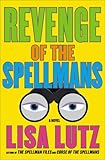
I also read the third book in another series I enjoy, but here humor was the main appeal. Lisa Lutz's Revenge of the Spellmans continues the story of Izzy Spellman, her family of PIs in San Francisco, and her misadventures in life and love. (See this post from 10/07 for more background on the series). As in the 2 previous mysteries, Izzy is surrounded by her eccentric friends and family as she ends up in compromising situations, working on cases she should probably leave alone. The plot details are not too important here but there is court ordered therapy, parked cars moving themselves, PSAT cheating accusations, unwanted house guests, and switched identities just to name a few of the issues that pop-up here (use this link to read about it). Don't try to keep it straight, just pick up any of the books in this series and know that you are in for more humor than mystery, more character than plot, tons of wit and irony, and lots of laughs.

Previously I have said that Lutz is a readalike for Janet Evanovich, but now that she is coming into her own, you may see readers looking for readalikes for Lutz herself. I would suggest Donna Andrews' funny Meg Langslow Mysteries (The first is Murder with Peacocks). Meg is a young, amateur detective, not a PI, but her family is almost as crazy. Like Lutz' Spellman books, Andrews' series has also won many awards and fans.

Finally I read Jonathan Maberry's brand new thriller Patient Zero. I posted about it in detail here, and look to the end for Maberry's own comments on my post and the book. In Patient Zero, we are introduced to Joe Ledger who is, dare I say it, just a hero. I wrote about the plot specifics in the other post, but let me tell you, this is a fast paced, pure terrorism techno-thriller, with shifting points of view (hero and villains), and a happy, resolved ending. Joe Ledger will become a force to be reckoned with as the series continues.

Maberry is better known as a horror writer, but although Patient Zero has zombies, the novel is ultimately an adventure-thriller. The zombies all get killed, and there is no lingering virus to continue the zombie threat into another book. Ledger saved the day and will move on to a new crisis in his next book. I dare say it is farwell to Maberry in the horror world. Do check-out his award-winning Pine Deep horror trilogy though. (I wrote about the first book here).

If Joe Ledger and his exploits with the Department of Military Service are appealing to you, try the Shane Schofield series by Matthew Reilly or anything by James Rollins. Maberry also gives a shout-out to David Morrell in this novel (a charcater is reading a Morrell novel). Morrell is a great readalike option here since both authors sneak a bit of more traditional horror appeal into their thrillers. Fans of Patient Zero should start with Morrell's Creepers.

Tuesday, December 3, 2013

What I'm Reading: Life After Life

As I mentioned last week, the best book I read this year was Life After Life by Kate Atkinson.  In fact, I went so far as to call it a perfect book.  And for me it was, but as you read this review, please keep in mind that Life After Life is an extremely unique story.  It is definitely not a traditional novel with a beginning, middle and end (more on this below), so you need to be careful as to who you give it to.  Yes, I think it is perfect, but I also know for many readers, this book could easily be their least favorite book-- ever.

Let me give you the sound bite set up because, one, it is all you need to say to someone to feel out whether or not this book is for him or her, and two, the sound bite set up is all I am really going to give you on plot. This is NOT a plot dependent story.  In fact, having no set plot is the point of the book.

Okay, Becky sound bite:
A young woman takes a shot at Hitler and dies.  On the next page, the same woman, Ursula, is born stillborn on a snowy night in England in February, 1910. On the next page, the same woman is born again on the same February 1910 evening, but this time, she lives. Life After Life is the story of Ursula’s life as it starts, stops and begins over and over again during the first half of the 20th Century.
Even read slowly, this takes no more than 25 seconds and it describes the entire book and its appeal.

Life After Life has everything I love in a book: interesting well developed characters, a well drawn historical setting, a magical element, and a macabre undertone.  Since Ursula is reborn more times that I can remember, the novel is an interesting mix of historical fiction and alternative history.  We watch the war play out in England and a bit in Germany, with Ursula’s own personal choices making changes to the lives of others.

Because the reader is following the entire story only through Ursula’s eyes, this is a character driven story with a domestic fiction angle as well.  Lots of time is spent describing the domestic details of Ursula’s life.  And because we know much more than Ursula at times, not only because we have seen her live the same scene previously, but also, because we know that historical things like the 1918 Influenza, WWII, The Blitz in London, etc.. are all coming too, that double whammy of knowledge makes this intricately plotted story even more layered.  We have Ursula’s story, laid over history as we know it, laid over the alternative history Ursula creates by making a different choice the next time she is reincarnated. It is a fabulously woven tale in this way.

With all of the starting and stopping of the plot of Ursula’s "life”  the story I am worried people might be thinking this is a hard story to get into.  It was not.  Atkinson develops a nice pattern and reuses key phrases to keep the reader going.  I was hooked after the first 2 dozens pages as Ursula begins to live long enough to have a personality.  Then I fell into rhythm with Atkinson, and I began to compulsively turn the pages to see where both author and character would be taking me next. If the idea of this book intrigues you but you are worried about execution, I will tell you, the deft execution of this seemingly gimmicky plot is what makes it great.

I should also note that there is very little time spent by Ursula worrying about deja vu.  Rather, Atkinson hints at the fact that somewhere deep down, Ursula is aware that “she has been here before,” but that is not the point of the book.  This is not Groundhog Day, where the character is forced to keep reliving his life over until he “gets it right;” rather this is a novel that contemplates the infinite number of ways your life can be lived depending on the choices you make each and every day.  And not just you.  Some of the stories of Ursula’s life are decided by others, such as the many times we see her born and either make it through her first night, or, many times, not due to the choices of others.

Finally, the ending.  I think it is absolutely perfect! What I love about the way Atkinson tells the entire story here is that there is no beginning or end.  We begin as Ursula is taking a shot at Hitler and getting killed herself in the process and we end with the uncertainty of what will become of Ursula now. Will she be reborn again, or is she done?  Who knows.  But we are left with a perfect scene that leaves us content that it doesn’t matter. As far as the book is concerned, the ending came out just right and the story is done.

Now, all this being said, I am wise to that fact that this lack of a beginning and an end will drive some readers crazy. So while I LOVED Life After Life, I readily admit, it is not for everyone.  I hope this review helps you to decide for yourself or your patrons if this novel is worth a try.

Three Words That Describe This Book: intricately plotted, alternative history, thought provoking

Readalikes:  2013 also saw the publication of another intricately plotted and thought provoking story where the main character experiences different version of her life.  That book is The Impossible Lives of Greta Wells by Andrew Sean Greer.

As I described the book on NoveList:
Greta begins the novel devastated by the double deaths of her twin brother and life partner. In order to get over her depression, Greta has electro-shock treatments that send her time-traveling and experiencing life with the two men in different eras.
The Greer book is less convoluted, but if you liked this idea of reliving your life and having a second (or third) try at it, The Impossible Lives of Greta Wells is a good readalike choice.

Other titles that play with the idea of a life lived over again are The Time Traveler’s Wife by Audrey Niffenegger and Replay by Ken Grimwood.

Connie Willis’ epic, award winning, 2 book series that allows historians from the future to come back to England during WWII using time travel-- Blackout and All Clear-- make for a great readalike for those who enjoyed the time period and alternative history aspects of Life and Life.

But most of all, Life after Life reminded me of 11/22/63 by Stephen King.  Click here for my review of this alternative history masterpiece.  Both are intricately plotted, thought provoking, and macabre.  But more importantly, they both have perfect endings.  So many great books are ruined by authors trying to tie everything up, but in Life After Life and 11/22/63 Atkinson and King resist that instinct and just leave us with a perfect final scene.  No, we don’t have all the answers with these endings, but so what, we are content.

Wednesday, January 21, 2009

Book Discussion: Behind the Scenes At the Museum

It is the third week of the month again, and that means it is time for another Berwyn Library Book Discussion report.

This month our group discussed Kate Atkinson's first and award winning novel, Behind the Scenes at the Museum (herein referred to as BTSATM). We had read Case Histories previously, but BTSATM does not share the crime fiction aspects of that novel. BTSATM is a unique family history novel. Our narrator is Ruby Lennox, who begins her story by describing her conception in 1951 and ends her tale with her mother's death in 1992. Ruby is the youngest of George and Bunty's daughters, living above their family Pet Shop in York, England. This is the story of the Lennox family, covering four generations of mothers, their trials and tribulations, their successes and failures. It is a novel full or tragedy and humor; in other words, it reads like real life.

What makes this novel unique and a great choice for book discussion groups is how Atkison relates the Lennox family history. She utilizes "footnotes." Let me explain. The novel is really written in pairs of chapters (and I should warn you, it is best enjoyed by reading the chapter pairs together). First, there is is chapter narrated by Ruby in which she refers to a physical object in the present of the story, which has survived from the family's past. She footnotes this object (such as a rabbit's foot, a button, a family photo). At the conclusion of Ruby's chapter, the reader gets a footnote chapter recounting a time the the family's past which features the footnoted object. These footnotes do not follow in chronological order, as Ruby's chapters do. Instead they move around in time, revealing the stories of Ruby's great-grandmother, grandmother, and mother.

Are you confused yet? The group was a bit confused as they were reading. A few people felt the footnotes were "a little too cute" at first, but once people got used to them, we all agreed they enhanced the plot, giving us a richer story than Ruby could provide alone.

There were literally dozens of characters to keep track of here, and some participants made family trees while they read. This lead to a discussion of why there wasn't a family tree in the book. I offered that maybe Atkinson chose NOT to include one on purpose. Another member agreed saying that a family tree at the beginning of the book would have given the novel "a finishedness" that the journey of reading the book requires to fully appreciate.

I brought up that this novel was accused by the British press of being "anti-family." Our group disagreed. Some families are like this one. Also, the generations of unhappy mothers and wives were more a victim of their times and the choices available to them. We felt this needed to be taken into consideration. In then end though, there is no escaping the fact that Bunty (Ruby's mom) is seriously anti-family; but that does not necessarily make the entire novel so.

I then brought up how BTSATM has been on bestseller lists in 12 countries and almost as many languages, so there must be some universality to it. We talked about how we all know people or families like many found here.

We also noted that large family gatherings were key here. Something extreme happened at all of them, climaxing (pun intended) in George (Ruby's Dad) dying at a family wedding in a compromising position.

The largest portion of our discussion revolved around whether this book was tragic or comic. Without giving too much away, the story of the Lennox family is filled with hardship, but Atkison levels out the tragedy with dark, British humor. For example, Ruby tells us early in the story that the people in her family are "genetically predispositioned towards having accidents," with being run over or blown up among the most common. Some participants thought the humor overpowered the tragedy, while others could not get past the sadness.

We decided that the answer to this question lies in the novel's ending. The book ends with Ruby and her surviving sister living nontraditional lives, but fulfilling and happy ones. In fact, we went back a looked at the nontraditional characters in this novel, and they all appear to be the happiest. It is that hopeful tone at the novel's conclusion, with Ruby carving out a life for herself and her 2 daughters that left us unwilling to classify this book as an all out tragedy.

During this discussion, participants were mentioning readalikes themselves. I was so proud. :)

One member mentioned that Atkinson's humor reminded her of Mark Twain, which was very insightful, since my research showed that one of Atkinson's favorite authors is Twain. Another participant said the story of a family told in the "present" with flashbacks to the past, reminded her of The Divine Secrets of the Ya-Ya Sisterhood by Rebecca Wells, which we read many, many years ago.

In terms of my opinion, I found BTSATM's use of footnotes to trace the history of an object in the story's present very similar to the more recent, and also bestselling, People of the Book by Geraldine Brooks. In 2003, NoveList's book discussion guide for BTSATM also suggests, The Seven Sisters by Margaret Drabble, White Teeth by Zadie Smith, Loverboy by Victoria Redel, The Bookshop by Penelope Fitzgerald and The Orchard on Fire by Shena Mackay.

In terms of nonfiction options. Obviously books about Scotland, York, tracing your family history, dealing with the death of a sibling, and England during WWI and WWII could all be of interest to readers of this novel. Each subject is linked to a list of books for you to peruse if you are interested.

As you can see, BTSATM has a lot to offer anyone who reads it, but overall our group felt that this detail made the book even better to be read AND discussed.

Wednesday, November 11, 2009

What I'm Reading: Stieg Larsson


When The Girl With the Dragon Tattoo (herein TGWTDT) first came out and everyone was telling me how much they loved it, I got my name on the hold list. When the book came and I started reading, I realized that the names of the characters and places, being Swedish words, were too distracting to me, but I also was pretty sure I would love it. I just couldn't love it while struggling to pronounce things. So, I solved the problem by ordering the audio. While I was at it, I placed a hold on the (as of then) yet to be released The Girl Who Played With Fire (herein TGWPWF).

Since I take the discs and upload them into iTunes (where I delete them after 1 listen, thus breaking no copyright laws), I waited to listen to TGWTDT until TGWPWF came out. Now I have just listened to them back-to-back. Although I loved them both, these are dark, violent, and twisted books. Listening to them (or even reading them) back-to-back takes a strong constitution. Even I, queen of dark books, thought I might need a break halfway through TGWPWF. But I continued and now I am desperately awaiting the third book. I have to know what happens next!!!

I don't want to give away too much of the plots, but here are the key details. Our two main protagonists are Mikael Blomkvist, an investigative journalist and Lisbeth Salander, a loner outcast, who may have Asperger syndrome, and is one of the world's best computer hackers. TGWTDT tells their stories in tandem until the two meet up to solve a decades old mystery involving a missing relative of a famous and rich industrialist. TGWTDT focuses much more on Blomkvist which TGWPWF is focused on Lisbeth. The first book leaves some plot threads up in the air (although the mystery itself is resolved), but they are picked up and resolved satisfactorily by the end of TGWPWF.

In both books there are very dangerous and evil people, doing very bad things, sometimes to our heroes. I cannot stress enough how dark and graphically violent these books are. But the plotting is so original and the characters so compelling that I could not put them down.

BTW, Lisbeth is the girl referred to in each book, so now I am wondering about her kicking a hornet's nest...

Appeal: These books are intricately and cunningly plotted, with extremely sympathetic series characters. The two main characters are very flawed individuals, but we, the reader, love them despite their quirks and issues. Readers will love following a subplot into the next book. This series must be read in order. Intriguing and detailed secondary characters are introduced and given a chance to tell the story from their point of view. Like all good suspense novels, we get the villain's point of view, so we know more than the protagonists. This adds to the suspense. We know how bad the danger is before they do. Both books resolve the main mystery but leave other secondary story lines and issues totally open. This is not a problem because there is another book; however, Larsson conceived this as a 10 book series and he died only completing 3. After The Girl Who Kicked the Hornet's Nest comes out next year, we may all be left up in the air. The thought already worries me.

Red Flags: Lots of violence against women, hero and heroine in grave peril, and graphic depictions of sex and rape. Violence and gore throughout.

Readalikes: Larsson's series is a wonderful example of the extremely popular category of Scandinavian suspense and mysteries. All are marked by a dark atmosphere and graphic violence. So why do people like them so much? I think it is because the most successful of these titles have compelling stories with satisfying twists AND great characters. Lisbeth and Mikael are not stereotypical in any way. They feel real; they have depth which one does not often find in suspense and mystery.

Other Scandiavian authors I would suggest if you like Larsson's books are Asa Larsson, Henning Mankell, and Yrsa Sigurdardottir (I am cheating, this is Iceland), all of whom are well represented on American library shelves.

As I was reading both books, I kept thinking about Kate Atkinson's Jackson Brodie suspense books too. Atkinson's books are not anywhere near as graphic, but they are on the darker side and Jackson is often described as the champion of lost and voiceless girls, which reminded me of Lisbeth and Mikael. Atkinson is also great at carefully and cunningly plotting her books so that details from earlier come out to mean quite a bit later on; just like in Larsson's books. Specifically, When Will There Be Good News would be a great readalike here. It is the third in the series, but the best and most like Stieg Larsson. You can easily pick up the series there.

Finally, Irish author Tana French's In the Woods and The Likeness are dark and original suspense stories with a man/woman team. And like Larsson and Atkinson, French's novels have won lots of awards.

Nonfiction options, obviously books about Sweden and Stockholm. But also books about Asperger syndrome, computer hacking, and investigative journalism may also be of interest.

Tuesday, April 23, 2013

What I'm Reading: The Round House

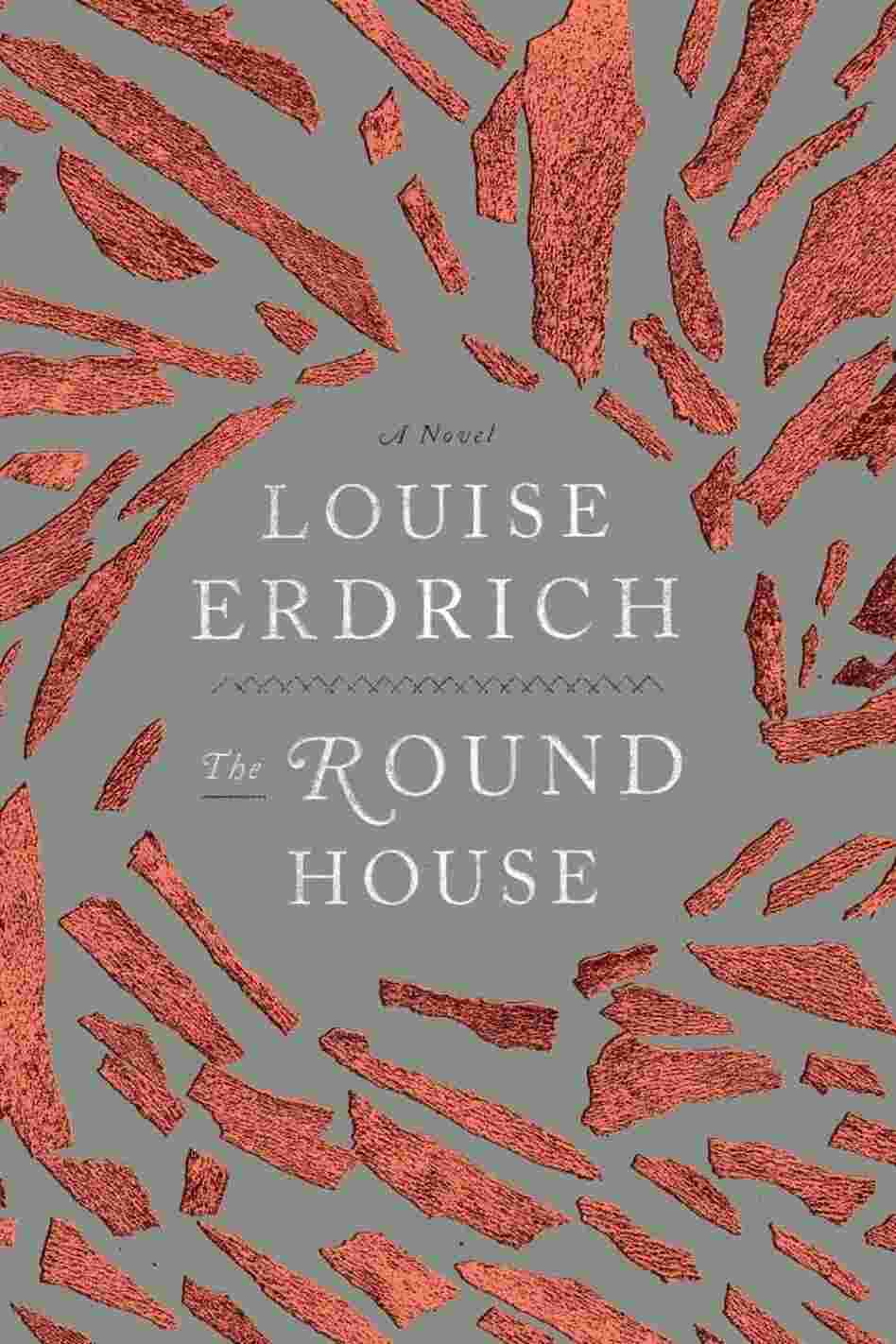
I was doing great on my New Year's resolution to not get behind by more than 3 reviews, until last week when I finished 4 books!  One, was the book discussion, which I have already written up and the other 3 are in the queue (one of which is for the first resolution), but I had a fifth book still awaiting a review, The Round House by Louise Erdrich.  And, with its place on the short list for the Carnegie Medal being announced yesterday combined with my first slip into not sticking to my New Year's resolution, I am stopping the presses on everything else I had planned to do this morning and finally sitting down for long enough to write this review. [But this means I have to get another one done this week, since there are still 3 in line and I am about to finish another book! By the way, these are great problems to have for someone like me.]

First a little back story on how this book ended up in my to-read pile in the first place.  I have always meant to read Erdrich.  Her books, mostly centered on the reservations and/or tribes of the upper plains (mostly North Dakota) have won numerous accolades and awards. She is also an author that shows up as a good reading suggestion based on my own personal reader profile.  I knew this, but I just never seemed to get around to one of her books.  I think it was because I had a handle on what readers I could suggest her to and I had positive feedback from these readers. With so many other books and authors, I felt like I had Erdrich under control without having to read one.

And then last Fall I had a student whose favorite author was Erdrich.  I was even more intrigued because she was from Arkansas, and had no special affinity for North Dakota or Native Americans AND our reading preferences were eerily similar.  During the Fall 2012 semester, Erdrich also won the National Book Award for The Round House.  Use this link to see her acceptance speech.

Okay, these were enough signs that it was time for me to read Erdrich.  I placed the audio on hold in November (the student told me it was especially good, see the end of the review for those details) and waited.  It was quite the popular book, so I didn't get it until February and I listened to it in March.  I happy to report, this book is worth the hype.

Here is a quick plot set-up.  Our narrator is Joe, an Ojibwe Indian of the reservation in North Dakota.  The story is told from his point of view as an adult, who has become a tribal lawyer and judge (just like his father before him) but the entire story takes place during his 13th summer (1988) when his mom is raped. The story is from his perspective looking back on everything that happened that summer  and how it changed his life forever.

To start with my talk of the appeal, or why you would want to read this book, I found the citation by the National Book Foundation to accurately capture this, so I will begin with their words:
"In this haunting, powerful novel, Erdrich tells the story of a family and community nearly undone by violence. Using the quiet, reflective voice of a young boy forced into an early adulthood following a brutal assault on his mother, Erdrich has created an intricately layered novel that not only untangles our nation’s history of moral and judicial failure, but also offers a portrait of a community sustained by its traditions, values, faith, and stories."
I think this sums up everything the novel is about and the over all feel of the story.  It is important to note here that since Joe's dad is the tribal judge, there are interesting scenes where they discuss specific cases as well as the intricacies and contradictions in the justice system, especially when you are dealing with three jurisdictions-- state, federal, and tribal.

Weaved into the mystery/criminal justice story are the stories of Joe's coming of age and tribal life in the late 1980s.

Let's talk about the huge coming of age theme part of the story first.  Joe is telling us his story.  He is looking back, as a well adjusted adult on the pivotal summer of his life and how it changed him forever, making him the man he is now.  Although we might not agree with the choices Joe ultimately makes and upsetting things end up happening, the overall message is that things happened the way they had to.  Joe is obviously at a good point in his life as a adult, despite what transpired that summer.  So while there is sadness here, the book is not depressing, as Joe let's us know throughout the book that he is a happily married, successful adult.

As I mentioned there is also lots of detail about tribal life worked into the story. For example, a huge scene in the story takes place during a tribal ceremony at the Round House of the title. The juxtaposition of the two events (I don't want to give anything away) is amazing.  Actually, I have a better phrase and it describes the entire feel of the book perfectly-- that scene and others throughout the story are beautifully heart-wrenching. The entire book is constructed in a way that has beauty despite the heart-wrenching things that are happening to Joe's family and their community. This is the essence of the novel's appeal to readers.

The mystery aspects of the story, working out who brutally attacked his mother and why keeps this quiet, thoughtful story moving at an engrossing pace. As details unfold, and Joe and his friend Cappy in particular play detective, the reader is compelled to keep reading.  Things move slowly at first, but eventually Joe and Cappy are caught up in a quest for justice that, while chased after with honorable intentions, is not going to end well. As a result, the over all pacing is leisurely, but compelling with action that spirals downhill quickly for the last third of the book.

But one of the things I appreciate most about this novel, was that all of the details brought up in the more leisurely told, detail oriented parts at the beginning of the novel all come into play in its denouement.  Seriously, every detail becomes important.  This is why I feel it deserves all the awards and recognition it is receiving.  Erdrich has managed to write a detailed novel, in which you are richly rewarded for paying attention throughout.  It reminded me of the writing of Kate Atkinson in this way.  As I said in this review of Atkinson's Started Early, Took My Dog:
Kate Atkinson is one of my personal sure bet authors.  No matter what she writes, I know I will enjoy it.  What I love about her is that she writes complex, layered stories, but always manages to bring every last thread back together in a smart, interesting, and satisfactory way.  I can sit back and relax when I read an Atkinson book because I trust that she will lead me in the right direction.
This statement holds true here with Round House too.  I would not say the two books are readalikes per se, but if you appreciate writers who have layered, complex stories in which all the threads are brought around in the end, then yes, they are.

Back to Erdrich's novel.  The Round House is also filled with symbolism, but it's not the "goes over your head" type.  For example, at the novel's open, Joe is removing invasive roots  from the foundation of his home. Not only does this scene open the book but it comes back to Joe's memory a few times throughout the story.  It is clear that we (Joe and the reader) are supposed to see that this is a symbol for the uprooting of his innocence and the beginning of his adult life, as well as a harbinger of the intrusion into the foundation of his family and community that is to come. But you get it without being hit over the head.  All the symbolism is calmly, clearly, and elegantly woven into the story, and since Joe is telling the story in a wistful, looking back over it all tone, he is working out the symbolism himself throughout the story with you as he looks back on that fateful summer.

And, to top all of this amazingness (not a word, I know) off, the ending is worth the ride.  It is not an ending without tears, but it is not devastating.  It is mournful and haunting.  It is as I said above, beautifully heart wrenching, just like the book itself.  Too many books these days are great until the ending.  When I find books that are appropriately and carefully concluded, I like to celebrate them and their creator.

Finally, a note on the audio.  The audiobook is narrated by Native American actor Gary Farmer. I cannot stress enough how much his narration enhanced the book.  First, as a Native American, he understands the cadence of Erdrich's writing and of the narrator's storytelling technique.  He moves slower than I would have reading the print, but that is a good thing here.  He is recounting this pivotal summer in Joe (and the tribe's) life in a way that honors the storytelling traditions of the tribe but also reflects the urgency of the tale we are reading.  This added a level of authenticity to the story, and gave me a better overall immersion into the setting and frame than I would have gotten reading the story in my head, using my White, East-Coast world-view.  Even being a Midwest transplant, it is Chicago I moved to, I have no concept of the open stretch of barren lands that is North Dakota.  The spare, methodical narration, forced me to try to place myself in the story.  I greatly appreciated that. Finally, this is a gripping and heart-wrenching first person narration, told by a grown man of the summer that changed his life.  Having that man tell me the story (yes, I know it is a reader, but it felt like Joe was telling me it), in my ear was very powerful and emotional.

I am very glad I read this novel.  It deserves all of the accolades it has received. More importantly, it is also an example of an accessible award winner.  You can confidently give this book to a wide range of readers.

Three Words That Describe This Book: coming-of age, engrossing, beautifully heart-wrenching

Readalikes: Canada by Richard Ford is a great readalike here. Interestingly, as soon as I finished the book last month, I jotted down this readalike option, and then ironically, both were named as finalists for the Carnegie Medal yesterday.  The books have such a similar feel that I would also say my suggestions of Brady Udall and Leif Enger in my review of Canada also hold true for The Round House.  Click through for details.

I also highly suggest Ivan Doig. His novels of Western Montana have a similar feel.  I wrote the Novelist author description for Doig.  You can go to NoveList for the full statement, but here is the part that rings most true for The Round House in particular:
"A typical Doig Western follows a family as they attempt to settle, live, and prosper in an unforgiving environment. Readers enjoy his lyrical prose, deliberate pacing, and vivid scenery. Doig's books are ultimately hopeful, paying homage to his forebearers. Start with: The Whistling Season."
The above suggestions are all non-Native American readalikes, but some readers are drawn to Erdrich because of the Native American frame.

For those who want both Native American and mystery try the late Tony Hillerman or C.J. Box's Joe Pickett novels both of which are mysteries set in Navajoland.  They deal with issues of Native American life and the justice system on the reservation.

Sherman Alexie is often paired with Erdrich.  Both are the most acclaimed Native American novelists of this era.  While Erdrich is mostly concerned with the Ojibwe of North Dakota (in past and present), Alexie's focus is on the Spokane/Coeur d'Alene tribe of the Pacific Northwest today.  Alexie's work is grittier and more concerned with the assimilation issues facing a tribe in a more populated, urban area, but if your readers want more award winning, Native American fiction after reading Erdrich, Alexie is your best bet. My suggestion as a starting point is his breakout short story collection, The Lone Ranger and Tonto Fistfight in Heaven.  It gives an introduction to his style and tone.

Here is a longer list of books by and/or about Native American from Goodreads.

Finally, that student from last Fall who finally convinced me to try Erdrich wrote this great annotation of another Erdrich title, complete with a few more readalike options.

Friday, April 10, 2015

Library Reads: May 2015

Here is the May list.  Click here for past lists.


May 2015 LibraryReads List

Uprooted-204x300

Uprooted

by Naomi Novik

Published: 5/19/2015 by Del Rey
ISBN: 9780804179034
“A young girl is unexpectedly uprooted from her family and becomes involved in a centuries-old battle with The Wood, a malevolent entity which destroys anyone it touches. Fast-paced, with magic, mystery and romance, Novik’s stand-alone novel is a fairy tale for adults.”
Lucy Lockley, St. Charles City-County Library, St. Peters, MO
CourtofThornsandRoses-196x300

A Court of Thorns and Roses

by Sarah J. Maas

Published: 5/5/2015 by Bloomsbury USA Children’s
ISBN: 9781619634442
“The human world is in peril. Feyre, a semi-literate girl, hunts for her family’s survival. After she kills an enormous wolf, a fierce fey shows up at her doorstep seeking retribution. Feyre is led to beautiful eternal springs, but the journey is not without danger. Maas masterfully pulls the reader into this new dark fantasy series which feels like a mix of fairy tales, from Beauty and the Beast to Tam Lin.”
Jessica C. Williams, Westlake Porter Public Library, Westlake, OH

GodinRuins-194x300

A God in Ruins: A Novel

by Kate Atkinson

Published: 5/5/2015 by Little, Brown and Company
ISBN: 9780316176538
“In A God in Ruins, we become reacquainted with Teddy Todd, the beloved little brother of Ursula from Atkinson’s last book. As with Life After Life, this novel skims back and forth in time, and we see the last half of the 20th century through Ted’s eyes and the eyes of his loved ones. At times funny and at others heartbreaking, Atkinson revels in the beauty and horror of life in all its messiness.”
Jennifer Dayton, Darien Library, Darien, CT

WaterKnife-201x300

The Water Knife: A Novel

by Paolo Bacigalupi

Published: 5/26/2015 by Knopf
ISBN: 9780385352871
“Bacigalupi’s novel looks at the possible struggle for water rights in the southwestern United States. Reading Bacigalupi’s novel made me thankful for the current easy access to clean drinking water, yet fearful for our future. A great read for any fan of dystopian fiction.”
Lindsay Atwood, Chandler Public Library, Chandler, AZ

Knockoff-199x300

The Knockoff: A Novel

by Lucy Sykes and Jo Piazza

Published: 5/19/2015 by Doubleday
ISBN: 9780385539586
“The Knockoff is a digital-age mash-up of old-school movies The Women and All About Eve, set in the Devil Wears Prada world of a high fashion magazine. I absolutely loved this fresh, charming, addictive and ultimately heroic story of 40-something cancer survivor Imogen’s quest to rescue and rebuild her career, despite the machinations of a younger tech-wiz rival.”
Janet Schneider, Bryant Library, Roslyn, NY

EarlyWarning-201x300

Early Warning: A Novel

by Jane Smiley

Published: 4/28/2015 by Knopf
ISBN: 9780307700322
“In the second book of the Langdon trilogy, the Pulitzer Prize winning novelist follows the next generation of the unforgettable Iowa family introduced in Some Luck. Beginning with the death of the patriarch Walter in 1953, Smiley chronicles the social consciousness in America of the 1960s. The book goes up to events in the 1970s and early 1980s that touch each family member in unforeseen ways.”
Jennifer Winberry, Hunterdon County Library, Flemington, NJ

Seveneves-200x300

Seveneves: A Novel

by Neal Stephenson

Published: 5/19/2015 by William Morrow
ISBN: 9780062190376
“Stephenson’s back in fine form with this hard science fiction masterpiece, combining the detail of Cryptonomiconwith the fast-paced action of Reamde. Fans of Anathem will appreciate Stephenson’s speculation about the possibilities of human evolution. This book is a great follow-up for readers who enjoyed the science of Weir’sThe Martian. I heartily recommend Seveneves to SF readers.”
Keith Hayes, Wake County Public Libraries, Cary, NC

GhostFields-198x300

The Ghost Fields

by Elly Griffiths

Published: 5/19/2015 by Houghton Mifflin Harcourt
ISBN: 9780544330146
“Griffiths has written another strong entry in her excellent Ruth Galloway series. Here, Ruth is called in when a World War II plane is excavated, complete with pilot–but the pilot is in the wrong plane. Strong characters combine with an absorbing puzzle to create a hard-to-put-down mystery.”
Beth Mills, New Rochelle Public Library, New Rochelle, NY

OurSoulsatNight-202x300

Our Souls at Night: A Novel

by Kent Haruf

Published: 5/26/2015 by Knopf
ISBN: 9781101875896
“Beautiful, elegant and poignant, this novel is a distilled experience of Haruf’s writing. The story of how two elders attempt to poke at the loneliness and isolation that surrounds them will stick with me for a long time to come. I’m amazed at how Haruf says so much with such spare prose. He will be missed.”
Alison Kastner, Multnomah County Library, Portland, OR

LittleBlackLies-197x300

Little Black Lies

by Sharon Bolton

Published: 5/19/2015 by Minotaur Books
ISBN: 9781250028594
“Set in the Falkland Islands, this novel grabs you from the opening paragraph. A child is missing, and he’s not the first. The incident sets off a chain of events leading to multiple characters confessing to murder. Accustomed to living in an idyllic community, fear and anger escalate among the locals. Bolton has created a page-turner of a story with a surprise ending.”

Friday, July 22, 2011

What I'm Reading: Faithful Place

Faithful Place: A NovelI am very far behind in my reviews of what I have read, so unless something BIG breaks in the RA world (hey, that's a funny thought) over the next week or so, you can expect lots of reviews for the time being here on RA for All.

Back in June I listened to Faithful Place by Tana French.  What I love about French is that she writes dark, literary crime novels that share a lot of the appeal of the popular Nordic Noir, but with more subtle psychological suspense and less in your face violence.  The other thing I enjoy with her books is that they are NOT a series.  Both as a reader and as a librarian, I can have someone pick up any of her three books.  There is no worry about the order here.

Here the plot involves Frank Mackey, the head of the Dublin Undercover unit, who 22 years ago left his family and old life behind, but is forced to return home when the suitcase of Rosie, the girl he had planned to run away with 22 years ago is discovered.  Did she stand Frank up back then as he has thought all this time, or did some harm come to her?  Frank must help solve the case and confront his family; a family he has ignored for two decades. Can he survive, both physically and emotionally, being drawn back into the drama of Faithful Place?

Last year  I read French's debut novel In the Woods, and looking back, I was surprised by how much of what I said about the appeal of that novel applies here too:
In the Woods can best be described as: police procedural meets psychological suspense.  This is a dark book, with an extremely flawed narrator.  Bad things are happening here and even when the crime is "solved," no one is satisfied; in fact, just about everyone involved with the case has been ruined as a result of the investigation.   And the kicker is, you know that it will not end well from the start, but you are so compelled by the complex plot, the interesting, 3-dimensional characters and their interactions that you cannot look away.  I found myself cleaning out a closet, just so I could have 1 hour to myself to listen to this novel. I was completely absorbed by the story, the atmosphere, and the characters.  Even when not much was happening, I needed to keep listening.  It was a bit scary, like an addiction.
That's the thing about French, it is how her books make you feel that is way more important than what happens.  Her books are well plotted police procedurals, but the mysteries are not always solved, and if they are, the bad guy does not always get brought to justice.  You are not quite sure what to expect.  With the number of suspense books I read, this is a huge compliment.  It is no wonder that her books end up on every award and best books list each time she writes a new one.

I also especially enjoy how she includes the politics behind the scenes at police headquarters, class issues (which are huge in these books), violence, especially between family and loved ones, the deep characterizations, and the emotion she brings out in her characters and the reader.

For example, there is an amazing extended scene at a wake in Faithful Place in the middle of the novel that reveals so much about the characters and the story without much happening, as well as an emotionally raw conversation between Frank and his ex-wife toward the end of the book. All of this detail could easily bog down the pacing, but it does not. This novel may be dark, atmospheric, and unsettling, but it is also steadily paced.

In the two books I have read by French, she also uses a case from the past to draw ties to the present.  In both cases, the past case was also connected to the lead investigator.  I found this a compelling plot device in both cases.  The sense of place is also huge.  I could see, smell, and hear the neighborhood of Faithful Place.  I was there with Frank, even though I nave never been to Dublin.

Three Words That Describe This Book: unsettling, psychological suspense, family

Where This Book Took Me (Summer Reading Feature): Working-Class Dublin


Readalikes: Kate Atkinson also has the past intrude upon her literary, atmospheric, crime novels featuring Jackson Brodie.  Fans of French or Atkinson would enjoy the other. Click here to see what I have had to say about Atkinson in the past.

Also, click here for my report, with tons of readalikes from when I read French's first novel, In the Woods.

I also think people who like the unsettling psychological suspense of Peter Abrahams (try, Oblivion) or Ruth Rendell (try, 13 Steps Down) would find enjoyment in French.  But if you like the atmosphere of French but want a little more meat to the police procedural part of the plot, I suggest Tess Gerritsen (try, The Keepsake), C. J. Box (try, Blue Heaven) or John  Lescroart (try, Dead Irish).

Tuesday, December 1, 2015

Library Reads: Best of 2015

It's here. The Library Reads Favorites of the Favorites for 2015 list.  Please click here for all Library Reads lists and for your reminder as to why old lists matter as much as the new ones.

GirlontheTrain-200x300

The Girl on the Train:
A Novel

by Paula Hawkins

Published: 1/13/2015 by Riverhead
ISBN: 9781594633669
“Rachel is a washed-up thirty-something who creates a fantasy about the seemingly perfect couple she sees during her daily train ride into London. When the woman goes missing, Rachel manages to insert herself into the investigation of the woman’s disappearance. In the vein of Gone Girl, this dark psychological thriller is fast-paced and features some very unreliable narrators.”
Andrea Larson, Cook Memorial Public Library, Libertyville, IL
DeadWake-198x300

Dead Wake: The Last Crossing of the Lusitania

by Erik Larson

Published: 3/10/2015 by Crown
ISBN: 9780307408860
“In cinematic terms, this dramatic page-turner is Das Bootmeets Titanic. Larson has a wonderful way of creating a very readable, accessible story of a time, place, and event. We get three sides of the global story–the U-boat commander, British Admiralty and President Wilson–but what really elevates this book are the affecting stories of individual crew and passengers.”
Robert Schnell, Queens Library, Jamaica, NY

RosieEffect-200x300

The Rosie Effect: A Novel

by Graeme Simsion

Published: 12/30/2014 by Simon & Schuster
ISBN: 9781476767314
“Don Tillman and Rosie are back again, and they’ve relocated to New York. Rosie is continuing her studies, while Don is teaching and even adding to his small circle of friends. But when Rosie announces that she is pregnant, Don is once again out of his depth. What follows are crazy situations that could only happen when Don is involved. Funny and heartwarming.”
Catherine Coyne, Mansfield Public Library, Mansfield, MA

the nature of the beastblog

The Nature of the Beast:

A Chief Inspector Gamache Novel

by Louise Penny

Published: 8/25/2015 by Minotaur Books
ISBN: 9781250022080
“Louise Penny set the bar high with her last two books, but she had no trouble clearing it with this one. All our old friends are back in Three Pines where a young boy with a compulsion to tell tall tales tells one true story with disastrous results. But which story is the truth and why is it so threatening? Exquisitely suspenseful, emotionally wrenching and thoroughly satisfying.”
Beth Mills, New Rochelle Public Library, New Rochelle, NY

SpoolofBlueThread-201x300

A Spool of Blue Thread: A Novel

by Anne Tyler

Published: 2/10/2015 by Knopf
ISBN: 9781101874271
“In this book, we come to know three generations of Whitshanks–a family with secrets and memories that are sometimes different than what others observe. The book’s timeline moves back and forth with overlapping stories, just like thread on a spool. Most readers will find themselves in the story. Once again, Tyler has written an enchanting tale.”
Catherine Coyne, Mansfield Public Library, Mansfield, MA

CirclingtheSunblog

Circling the Sun: A Novel

by Paula McLain

Published: 7/28/2015 by Ballantine Books
ISBN: 9780345534187
“I couldn’t stop reading this fascinating portrayal of Beryl Markham, a complex and strong-willed woman who fought to make her way in the world on her terms. McLain paints a captivating portrait of Africa in the 1920s and the life of expats making their home there. Highly, highly recommended.”
Halle Eisenman, Beaufort County Library, Hilton Head, SC

furiously happyblog

Furiously Happy: A Funny Book About Horrible Things

by Jenny Lawson

Published: 9/22/2015 by Flatiron Books
ISBN: 9781250077004
“Lawson’s hilarious memoir is a romp between absurdity and despondency. Passages alternate from ridiculously funny stories of her life to episodes of her sometimes debilitating depression. Lawson embraces living life, rather than merely surviving it. Why be just happy when you can be furiously so? Recommended to fans of David Sedaris and Sloane Crosley.”
PJ Gardiner, Wake County Public Libraries, Raleigh, NC

Little Paris blog

The Little Paris Bookshop: A Novel

by Nina George

Published: 6/23/2015 by Crown
ISBN: 9780553418774
“Quirky and delightful, Nina George’s book focuses on Jean Perdu, owner of the Literary Apothecary, a floating bookshop. When a new tenant in his apartment building sets in motion events that force Jean to re-evaluate his past, he finds himself floating off down the rivers of France in search of lost love, new love, and friends he didn’t know he needed.”
Beth Mills, New Rochelle Public Library, New Rochelle, NY

Kitchensblog

Kitchens of the Great Midwest: A Novel

by J. Ryan Stradal

Published:7/28/2015
by Pamela Dorman Books
ISBN: 9780525429142
“This novel is quirky and colorful. The story revolves around chef Eva Thorvald and the people who influence her life and her cooking. With well-drawn characters and mouthwatering descriptions of meals, Kitchens of the Great Midwest will appeal to readers who like vivid storytelling. Foodies will also enjoy this delicious tale.”
Anbolyn Potter, Chandler Public Library, Chandler, AZ

GodinRuins-194x300

A God in Ruins: A Novel

by Kate Atkinson

Published: 5/5/2015 by Little, Brown and Company
ISBN: 9780316176538
“In A God in Ruins, we become reacquainted with Teddy Todd, the beloved little brother of Ursula from Atkinson’s last book. As with Life After Life, this novel skims back and forth in time, and we see the last half of the 20th century through Ted’s eyes and the eyes of his loved ones. At times funny and at others heartbreaking, Atkinson revels in the beauty and horror of life in all its messiness.”
Jennifer Dayton, Darien Library, Darien, CT