RA FOR ALL...THE ROAD SHOW!

I can come to your library, book club meeting, or conference to talk about how to help your readers find their next good read. Click here for more information including RA for All's EDI Statement and info about WHY I LOVE HORROR.
Showing posts sorted by date for query Candice Millard. Sort by relevance Show all posts

Thursday, February 6, 2020

The ARRT Nonfiction Genre Study Begins


Later today I will attend the first meeting of the 2 year, ARRT Narrative Nonfiction Genre Study. While the notes of every discussion will be made available to all, I wanted to share today's introductory assignment and some of my preparation today.

Before we begin with the newest study, a quick reminder that the main page for all of ARRT's genre studies, current and past, goes back to 2011-12. The most recent Genre Study on Romance just finished up in December of 2019 and is an excellent, up to date resource for that genre. You an use ARRT's current or former Genre Studies as a guide to organize your own.

Now on to Narrative Nonfiction. Click here to access the full schedule with dates and locations. Assignments and notes are added as they become available. 

Here is how the organizer have divide up the huge collection of genres that Narrative Nonfiction encompasses. Note, biographies and memoirs are not a category because they will be specifically considered within each category:
  • Welcome Meeting 
  • Social Issues 
  • Let’s Make Something: Food, Crafts, Arts, Decorating 
  • Pop Culture, Sports, Entertainment 
  • Global Issues: Beyond America 
  • Travel and Adventure 
  • Crime 
  • History, War, Politics 
  • Improvement: Personal or Professional 
  • Nature, Science, Health 
  • Current Events/Trending Topics 
  • Wrap-Up
And it all begins today with this assignment:
Welcome Meeting
February 6, 2020, 2-4 PM
Lisle Library District
Here is the assignment:
For our first meeting we’ll discuss the outline of the genre study and how we will tackle narrative nonfiction. For your assignment:
  • Bring one “Sure Bet” nonfiction book. When you have someone who says they have to read a nonfiction book (against their will), what book do you find they end up enjoying? Be prepared to discuss why you think this book appeals broadly to many readers.
  • Please read a narrative nonfiction book that appeals to your sense of humor. Since humor is so hard to define, you are just looking for a book that makes you laugh. If you can’t find one, bring an example of a book that failed and why it failed to make you laugh.
I have my notes ready to answer both questions, but I am more excited to see what everyone else in attendance has to say because that is the best part of any Genre Study. It is through the group discussion of the topic, the sharing of different opinions, the crowd sourced lists and notes we create [and share here, for free, after every meeting for all to use to improve their service] where the real learning happens.

So bookmark the Narrative Nonfiction Genre Study homepage, use it to train yourself, or to organize your own genre study. Follow along. I will be alerting my readers when new notes are available.

Finally, here is a quick teaser of the authors and titles [with links] that I will be mentioning for each bullet point above:

Tuesday, September 4, 2018

New Content by Me Available on NoveList Including Inclusive Lists of Book Discussion Titles

NoveList recently uploaded SIX new pieces by me that are book discussion group related. I wanted to alert all of my readers to them here on the blog whether you subscribe to NoveList or not for a couple of reasons:
  1. If you subscribe, I want you to know how to access the info I will be summarizing below.
  2. If you don’t subscribe, I want you to at least have access to the bare minimum of information that can help you and encourage you to contact me privately for more if you want it.
The first piece was my second in the Book Discussion First Aid series on NoveList. Here is the title  of the article and the intro:
Book Discussion First Aid: Try Something New 
Book discussion groups are a lot of fun… until they aren't. Anyone who has led a group for more than a few years knows exactly what I mean. After 18 years of facilitating book discussion groups and helping others to improve theirs, I have a few tips to share on how to re-energize your book club. 
I have broken up these "new" ideas into four general areas. Determine which gets the best response and keep the others in reserve because you don't want to try everything I mention here at once.  Shaking things up a little is good, an earthquake is bad.
If you want to access this article, use the “Especially For” tab at the top, then choose "Readers' Advisory.” If you scroll to the bottom you will see the section for "Book Clubs.” I have included a screen shot of that section and have added an arrow on where you should click, “Book Group Innovators.” Clicking on "Book Discussion First Aid" will only bring up my first piece [which is also good, but not new]. You can scroll through all of the excellent “Book Group Innovators” content but it loaded most recent first, meaning right now, my article is at the top.

If you are not a subscriber, and would like some more information on this article, contact me.

The next 5 pieces are lists of six books each. I proposed the idea of these lists to my editor, Krista. There weren’t really any “Grab and Go” list options for book club leaders. I offered to come up with 5 lists of 6 books to get things going. I came up with a theme for each list and then provided 6 inclusive titles with original annotations.

I demanded of myself that each list was inclusive both from a diversity standpoint, but also a genre and one too. I want these lists to help actual book groups have access to lists of possible titles that are not the ones everyone is doing or suggesting.

I hope to do 5 more lists this month and then we will see how it goes from there.

In terms of finding these lists on NoveList, if you are a subscriber, simply search any of the titles listed below and under the “Lists and Articles” tab in that title’s record you will have access to the full list containing this title. That access will include my annotation. So for example, when you search  The Wangs Vs The World, as seen in this screen shot, under “Readers’ Advisory” you will see the list title, “Happy Discussable Books for Adult Book Groups,” and it will pull up the entire list of 6 titles for you.


Here on the blog, below, I have provided the name of the list and my description of what I intended in making that list as well as the titles included. My annotations for each title on NoveList mention specific discussion points and/or reasons why I included the title, but at least those of you without a subscription can see the titles I included.

I am very proud of this new content and know it will help you help readers both those who are in a book group [yours or their own] and simply those who are looking for a good read. If you have an idea for a themed list you would like me to create, contact me and let me know. I will be doing as many of these as I have ideas for in the coming months.

Great Middle Grade Reads for Adult Book Groups
Many adult book discussion group give YA titles a try, but today’s middle grade level is also a great resource for a book club that wants to try something different. This list of six recent titles are award winning, compelling, thought provoking, and fun to read. They will lead toward dynamic and issue driven discussions that will inspire, surprise and delight even the most high-brow groups.
  • Gaiman, Neil. The Graveyard Book
  • Ryan, Pam Munoz. Echo
  • Reynolds, Jason. As Brave As You
  • Palacio, R.J. Wonder
  • Kelly, Erin Entrada.  Hello Universe
  • Applegate, Katherine.  Wishtree
Happy Discussable Books
You do not have to break down in a weeping pile of despair in order to have things to discuss in book club. While these books do not eschew serious issues, all end in a heartwarming fashion with the characters in a much better place than when the story began.
  • Simonson, Helen.  Major Pettigrew’s Last Stand
  • Stuart, Julia. The Tower, the Zoo and the Tortoise
  • Chang, Jade. The Wangs vs. the World
  • Hoang, Helen. Kiss Quotient
  • Jonasson, Jonas.  The 100-Year-Old Man Who Climbed Out the Window and Disappeared
  • Ajayi, Luvvie. I’m Judging You: The Do Better Manual
Short Discussable Titles
I am not sure when it was decided that a book needed to be able to fill in as a doorstop in order to be considered book club worthy. Here is a list of books, each made up of fewer than 250 pages, but all containing enough ideas  to fuel any length discussion from start to finish.
  • Jiles, Paulette. News of the World
  • Morrison, Toni The Bluest Eye
  • Mankell, Henning. Italian Shoes
  • Moore, Wes.  The Other Wes Moore: The Story of One Name and Two Fates
  • Clement, Jennifer. Prayers for the Stolen
  • Jackson, Shirley.  We Have Always Lived in the Castle
Nonfiction for Fiction Book Clubs
Many groups that focus on fiction want to give nonfiction a try but are wary that they will have to sacrifice a narrative in the process. The following six titles present true occurrences in a style that puts storytelling at the forefront while still dispensing truth.
  • Millard, Candice.  River of Doubt: Theodore Roosevelt's Darkest Journey
  • Moore, Kate.  The Radium Girls: The Dark Story of America’s Shining Women
  • Gordon-Reed, Annette.  Hemingses of Monticello: An American Family
  • Tolan, Sandy.  The Lemon Tree: An Arab, a Jew, and the Heart of the Middle East
  • Bechdel, Alison.  Fun Home: A Family Tragicomic
  • Obmascik, Mark. The Big Year: A Tale of Man, Nature, and A Fowl Obsession
Off the Radar Gems
Is your group done with reading all of the new, trendy book club group titles? There are plenty of discussable reads lurking just under the book club radar, that will surprise and inspire, not to mention provide plenty of fodder for the group discussion.
  • Lansens, Lori.  Rush Home Road
  • Jones, Edward P. The Known World
  • Dennis-Benn, Nicole.  Here Comes the Sun
  • Henirquez, Cristina.  The Book of Unknown Americans
  • Sa'dawi, Ahmad.  Frankenstein in Baghdad
  • Jones, Stephen Graham.  Mongrels

Monday, May 22, 2017

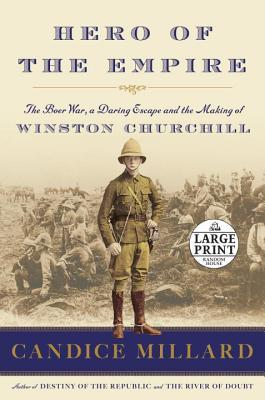
What I’m Reading: Hero of the Empire

Hero of the Empire: The Boer War, a Daring Escape, and the Making of Winston Churchill
It’s Monday, but until I catch up on my personal reading reviews, there is no Call to Action for anyone! You can read past ones here though.

I know I also promised to pair all of my upcoming reviews and this is a review of only 1 book, but that is because I want to pair this review of Candice Millard's Hero of the Empire: The Boer War, a Daring Escape, and the Making of Winston Churchill with her other 2 books. Why? Because her body of work, taken together illustrates on of the principles of RA service that I am constantly hitting home-- people are looking to match books based on their particular feel, not based on the plot, or to but it another way, we need to make our matches based on appeal NOT subject heading. With Nonfiction this becomes more tricky so I am using this review to hammer that point home. I will explain more below, but first here is the summary:
At age twenty-four, Winston Churchill was utterly convinced it was his destiny to become prime minister of England one day, despite the fact he had just lost his first election campaign for Parliament. He believed that to achieve his goal he must do something spectacular on the battlefield. Despite deliberately putting himself in extreme danger as a British Army officer in colonial wars in India and Sudan, and as a journalist covering a Cuban uprising against the Spanish, glory and fame had eluded him.  
Churchill arrived in South Africa in 1899, valet and crates of vintage wine in tow, there to cover the brutal colonial war the British were fighting with Boer rebels. But just two weeks after his arrival, the soldiers he was accompanying on an armored train were ambushed, and Churchill was taken prisoner. Remarkably, he pulled off a daring escape--but then had to traverse hundreds of miles of enemy territory, alone, with nothing but a crumpled wad of cash, four slabs of chocolate, and his wits to guide him.  
The story of his escape is incredible enough, but then Churchill enlisted, returned to South Africa, fought in several battles, and ultimately liberated the men with whom he had been imprisoned.  
Churchill would later remark that this period, -could I have seen my future, was to lay the foundations of my later life.- Millard spins an epic story of bravery, savagery, and chance encounters with a cast of historical characters--including Rudyard Kipling, Lord Kitchener, and Mohandas Gandhi--with whom he would later share the world stage. But Hero of the Empire is more than an adventure story, for the lessons Churchill took from the Boer War would profoundly affect 20th century history.
Appeal: Let’s start with the appeal of Winston Churchill before we move into Millard’s own appeal as a writer. I will admit to being both a Millard fan, and after my New Year's trip to London and visiting the Churchill War Rooms [by the way one of the best museums I have ever been to, and I have been to hundreds at this point], a Churchill fan. [In my 14 year old daughter's word, "He was a savage."] However even if you were not a fan of either before reading this book, you will be after.

Churchill was a dynamic man from the start of his life. Yes we know of his bravery and leadership during WWII, but the picture of this man who was arrogant and egotistical but also kind; who was brilliant, rich and privileged, but also brave; a man who always put service to his country first. To see all of these complications in one short volume was not only informative, but it was fun to read. 

We saw the man who became the legend here. That was fun in and of itself.

But as you cab see I am already moving beyond the subject of the story and am hinting at the biggest appeal, how Millard writes her books. 

Here is a comment about Millard's writing style from notes on my book group's discussion of River of Doubt in 2008.
Everyone agreed that Millard's writing style was excellent. One member mentioned how much she liked the "slice of life" narrative device. Too many times, she explained, great people's lives are "shoe-horned" into a book; here, she enjoyed how much we learned about Roosevelt through this one event in his life. The shorter time frame allowed for more depth into the character of the man himself.
This is why I enjoy all of her books but this is also why she it takes her so long to write each one. She takes a moment in time surrounding a seminal event in a “great man’s” life and tells the complete story around that moment. She gives you the context from every possible angle, pulling in side stories that you think might not mean anything, but with her 360 degree approach to historical research-- they most certainly do matter. But through all of this detail, Millard still manages to create a book that moves briskly. The story and it’s “characters” take over. Her hand in the story disappears. Of course I know she is writing it, but she does so in a way where the action and the actors take control and lead us, the reader through the book. We have fun and learn quite a bit but without any artifice of the author putting herself in the way. She stops back and lets history both teach and entertain on its own.

In this specific case, pairing this great man with a writing style that looked at just a moment in his life AND add to it all of the other things I learned about while being treated to an exciting adventure story, was highly satisfying. You cannot deny the adventure here. Look we know Churchill will not die. We know he makes it, but it is still an exciting tale of war, daring escape, and dangerous travels to freedom. You are on the edge of your seat waiting to see him get to safety.

Millard also taught me about the Boer War, the diamond industry, British colonial politics at the turn of the 20th Century, and the roots of modern South African. In the process, I now see some of the major world events of the 20th Century in a more nuanced and informed light. Yes I had fun reading this book and I learned quite a bit about a lot of things, things that actually have relevance to my life. Millard did that with the way she writes. That bolded line, that’s how you hand sell any Millard book. It is the soundbite review you say to a potential reader before going further. For many patrons, that one sentence might be all it takes.

For more about Millard's other books, click here for more by me on The River of Doubt and here for my review of Destiny of the Republic and here for the book discussion report on that title too. 

The overall point I want to make here is that while Churchill will be a draw for some readers, many who didn’t know much about him, will still love this book for the way it makes history come alive, the way it connects things you didn’t think mattered to your own life, and the way Millard captures you and happily takes you on a historical journal with her. 

Note on the Audio Narration: Hero of the Empire was narrated by the incomparable Simon Vance. For many that will be enough for them to listen; however, here is the AudioFile review [via NoveList] with a bit more appeal detail: 
Simon Vance's full-throttle narration is one of the many delights in this rousing biography of Winston Churchill's youthful escapades in the Boer War. Yes, the future statesman WAS a colossal egoist blessed with complete self-confidence, but, trust me, he was also funny, smart, talented, brave, good-hearted, and an all-together boon companion. He's also lucky in Vance, who reads the future statesman's boastful letters home with a straight face, which allows the audience to laugh, and with just the right hint of the Churchillian timbre. His interpretations of others, including Boer soldiers, Brits of all classes, and the odd American are equally well shaded. And when the adventure breaks out, as it often does, he breathlessly dodges bullets with the best of them. A.C.S. Winner of AudioFile Earphones Award  AudioFile 2016, Portland, Maine

Three Words That Describe This Book: Slice of Life biography, Compelling, Richly Detailed

Readalikes: In my previous mentions of Millard, I made these suggestions of other writers who take a similar approach to history as she does:


But with this title in particular, I couldn’t stop thinking about Susan Orlean. Any of her books really, but in particular The Orchid Thief. The way both women capture something I didn’t think I cared about and write what is a compelling adventure story filled with danger, drama, and lots of history and facts, it’s all just fascinating and fun. I feel like a more informed human citizen after reading these authors, but I also feel little guilty that I had so much fun while I learned.

Of course some may want to also read more about the Boer War or Churchill and for those I have left a link to a book on Goodreads to get your started. But I would venture that most who read and enjoy Millard, will want to read all of her books and others who write like her, regardless of the subject matter.

Monday, February 15, 2016

Happy Presidents' Day: A RA for All Reading List


Since I hold a BA in American Studies, this is a topic I greatly enjoy. I even took a class in college called, "The American Presidency" during a Presidential election year which was also the first year I could vote ['96].

But I am not alone in enjoying books on Presidents. As the current Presidential race moves forward, you will have many patrons looking for Presidential reading options. So while we shine a spotlight on past American Presidents today, keep this link saved for the several months, as it will make for a good suggestion list for the foreseeable future.

Here are some of my favorite books about American Presidents.  Most of the links go to reviews or book discussion reports here on RA for All. And each post has plenty of readalike options too. But please note, these are not your typical Presidential biography suggestions; those you can find pretty easily using traditional reference techniques. RA for All is about taking the leisure reading suggestions beyond the most basic steps.

  • Candice Millard is THE BEST. I wish she could write faster.  Here is a link to the book discussion I led on River of Doubt: Theodore Roosevelt's Darkest Journey. And here is the link to the book discussion report for Destiny of the Republic which also includes a link to the review I wrote the first time I read this book.  Her new book is coming out in September, but she is moving her focus across the Atlantic as it will be about Winston Churchill.
  • Assassination Vacation by Sarah Vowell may have a witty tone, but it takes a very serious look at the factors and events that led up to the first three American Presidential Assassinations.
  • James Swanson's Manhunt: the 12-day Chase for Lincoln's Killer was my book club's all time favorite book. They even proclaimed their love for it publicly when they were featured in the Chicago Tribune.
  • Stephen King's 11/22/63 is one of my all time favorite books.  Plus, it is a TV miniseries now, so there is interest.  It is especially great on audio.
  • Erik Larson's Dead Wake from last year had a very interesting side plot about President Wilson. I learned quite a bit more about him than I was anticipating [in a good way].
  • One of my favorite novels about the life of an American President, one that I read pre-blog and still hand out regularly is Sally Hemmings by Barbara Chase-Riboud. It is an older title, and most strikingly, it was written before it was an accepted fact that Thomas Jefferson had children with Hemmings. Chase-Riboud took a lot of flack for writing this book. It is historically accurate AND a moving read. Here is an annotation I wrote back in 2007 promoting this book during Women's History Month:
    • Sally Hemings was Martha Jefferson’s half sister and eventually the mistress of Martha’s husband, Thomas Jefferson.  This novel recreates life in 19th century Virginia and depicts its slavery, miscegenation, denial, and hypocrisy, by recreating the life of Hemings and her children by Jefferson.  Chase-Ribould’s narrative shows Hemings as a complicated woman in a loving relationship, at a tumultuous time in America.

Wednesday, November 18, 2015

What I’m Reading: The Gilded Age in Fiction-- Same Frame, Two Different Reading Experiences

This Fall I read two new books with the exact same setting-- The Gilded Age in New York City [1870-1900]. However, beyond the shared frame, these books have very little else in common in terms of traditional appeal factors.

I am grouping them together here because for some people, frame is very important. They will read anything with a specific frame.  So as not to repeat myself, I have a much longer piece on that issue here. For those people, I am making sure to put the frame in my "three words" for both books.

Now for others, frame is the not an important issue.  Instead pacing or storyline or character etc... is what makes a great read for them.  However, we may be tempted to match books when their frame is as similar as these two’s happen to be. You see “Gilded Age” listed for both and you might be tempted to think the books are readalikes for one and other, yet that may not be the case at all.

In fact, if you search either of these books on NoveList, the other appears in the readalike bar on the right.  Interestingly, they are computer, not people, created matches based on the shared genre, time period, and place. I do not disagree with this, as I said above, these three frames may be all someone needs to enjoy both books, but this reinforces what I am trying to do here-- suss out the nuances that matter. Because while I liked both, I clearly enjoyed one more than the other AND I have not suggested both to the same reader yet.

To that end these reviews are meant to illustrate the give and take inherent in this issue.  Both are very well executed novels that will appeal to a wide range of readers, but at their core’s these novels have a very different feel.

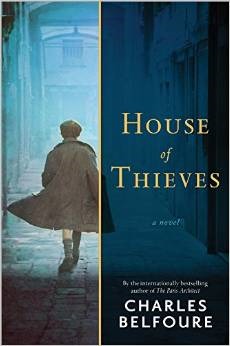
First up, the historical thriller, House of Thieves by Charles Belfoure.

At it’s essence this is the story of how a good, solid man turns to a life of crime, while still staying likable and good in our eyes.

Here is a tiny bit of set up.  It’s 1886 and the rich are VERY rich and the poor, very poor. NYC is run by respected crime bosses. They are criminals yes, but they also among the city's largest arts and political donors. They truly run the city. Our villain is Kent, a crime boss and his crew. Our “hero,” John Cross, is an architect for the very rich. But his son has a gambling problem. To resolve the large debt, Kent wants Cross to use his connections and knowledge to help him rob the homes of NYC’s richest residents.

But why you will like this book is how Belfoure writes it. What is so great here is how he managed to write a novel convincingly and accurately set in its historical time, while telling the story in a way today’s audiences like. He nailed both the historical and the thriller aspects.

For historical fiction fans, the novel has all the details of the time and place. It has a lot of information about being an architect to the rich at this time. And it has amazing descriptions of some spectacular homes. The streets, people, and places come alive.

And while I love historical details, sometimes, historical thrillers move to slow for me. I don’t know why I don’t mind it with regular historicals and do with thrillers, but I do and from our discussions in the crime fiction genre study and from my work with readers, I know I am not alone there [*cough cough* The Alienist]. But Belfoure has managed to use modern techniques like short chapters, fluid point of view shifts, and powerful action scenes to ratchet up the suspense and pacing.

Here are two examples that occur in the first 30 pages to illustrate what I am talking about.

First, the novel opens with an awesome bank robbery and explosion scene that then moves to the perspective of the crime bosses who are watching the scene unfold. The details set the historic tone, but the scene served the same purpose that today’s prologues in suspense novels do. We were thrown right into the middle of the story and are excited to keep reading to see what is going on and how our story will fit into this world.

And second [one of my favorite moments in the beginning of a book in a long time], at around page 30, we see the beginning of the day in a rich home. One of the things the wealthy of this time had were ice boxes. They were built into the side of the house with a door that opened to the outside so literal huge blocks of ice could be delivered to keep things in the ice box cold.  Well, what if you opened your ice box to find...A FROZEN SEVERED HEAD! That was pretty great.  Let’s you know this is not your typical historical thriller.

This novel is under 400 pages and has a moderate cast of characters who all get frequent turns to narrate with fluid and fast paced shifts in the point of view [the entire Cross clan, even the little 10 year old brother has a chance to narrate-- and that was good], yet it is moments like the two above throughout the story that keep the pacing high.

There is also social commentary and flashy fun here [a climax is at the top of the under construction Statue of Liberty!]. But what I loved the most was the ending. The decision Cross and his wife make about how they will live the rest of their lives after the ordeal under Kent’s thumb is over is what takes this book from good to awesome.

Three Words That Describe This Book: flashy fun, suspenseful, Gilded Age

Readalikes: I thought about Pete Hamil and his novel North River while reading this.  You can go to my review of North River, which also has readalikes [fiction and nonfiction]. The time period is different though (1934).

I also think the historical thrillers of Matthew Pearl are a good option here.  Both authors write compelling, historical thrillers with a solid amount of detail.  With Pearl the professional setting is usually book based. I have read a few of them.

But the nuanced characters and their surprising decisions reminded me more of the suspense novels of today.  Belfoure has much in common [protagonist wise] with Gillian Flynn or Tana French. I think House of Thieves is a great option for fans of those popular, literary, psychological suspense writer who want a bit more action and don’t mind the historical setting.

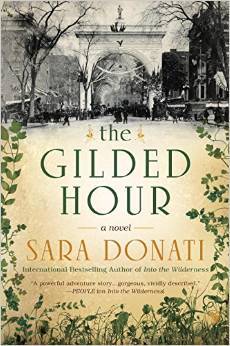
Next up is the medical framed, women’s lives, historical by Sara Donati, The Gilded Hour.

Here the date is 1883 and again we are in NYC. The story is about the forgotten people of this time.  It is about racial injustice, the suppression of women, medical advancements, and fertility issues.

Our main characters are two women, cousins, one who is half black, who are trying to provide birth control to women and how they were prosecuted by a real life Postal Inspector (who had a ton of political and legal power) and his crusade to suppress vice [The Comstock Act].

Okay first big difference here, the pacing. This is a 700 page, traditional historical. It moves at a much more methodical pace but one that is appropriate to the type of book; it is a pace that fans of a thick historical will expect and enjoy.

You know it will be a complex, historical because the families and major characters are listed in the front two pages and those who are real are noted. The novel also incorporates newspaper articles, telegraphs, and letters as a narrative device to keep up an authentic tone, as opposed to House of Thieves above, where things get a bit outrageous [but super fun] at times.  Again, same setting but two different readers.

This is a great read for people interested in the history of medicine, women's history [especially women in medicine], women's lives, and/or a history of women's health issues. There is a strong romance element here too.

There is suspense with the postal inspector trying to catch our heroes. There are many people [of all sexes and races] who help them along the way.  Things get tense and threatening but the overall story is not about the crime angle, it is more the issues I listed in the previous paragraph.


Three Words That Describe This Books: history of medicine, character centered, Gilded Age

Readalikes: The most obvious readalike is a TV series-- The Knick-- which I have written about at length with readalikes here.

Donati also mentioned the wonderful Destiny of the Republic by Candice Millard which I read here, for people who want more history of medicine detail from this era. I agree.

Another author who is similar to Donati is Jennifer Donnelly. Both write historicals featuring women and their lives with strong romance elemnts.  Interestingly, Donnelly has a very similar historical novel about social conscious female doctors, The Winter Rose.

Finally, a book I read which had a very similar feel, although is set in Brooklyn in 1700s and follows a woman who runs a gin still is Brookland by Emily Barton.  I highly suggest this for fans of a book like The Gilded Hour. You can click on the title for my full review.

Friday, January 23, 2015

BPL Book Discussion: The Secret Rescue

On Monday we met for the first discussion of 2015.  It was also the 14th Anniversary of my very first BPL Book Discussion. I find it hard to believe, but it is true. The book on tap, The Secret Rescue: An Untold Story of American Nurses and Medics Behind Nazi Lines by Cate Lineberry.

Here is the summary from the publisher:
When 26 Army nurses and medics-part of the 807th Medical Air Evacuation Transport Squadron-boarded a cargo plane for transport in November 1943, they never anticipated the crash landing in Nazi-occupied Albania that would lead to their months-long struggle for survival. A drama that captured the attention of the American public, the group and its flight crew dodged bullets and battled blinding winter storms as they climbed mountains and fought to survive, aided by courageous villagers who risked death at Nazi hands to help them.
Before I get started, please note, there were no prepared questions for this book. I wrote up these questions.  Feel free to use them as long as you credit RA for All. [Details in the questions post.]

I also found this interesting video of Lineberry discussing the book on CSPAN, and this article by her on the history of nurses in the military from The Huffington Post.

Now on to the discussion itself:
  • I was not surprised by our vote totals this month. We have 5 liked [with 2 who LOVED it], 7 so-sos, and only 1 disliked.
  • Most of the so-so votes came from the way the book was written. We actually had quite a bit of back and forth throughout the 90 minutes of discussion [and we filled the entire 90 minutes this month] about the style in which Lineberry told this fascinating story. It was quite polarizing but led to a rich discussion about how nonfiction stories are recounted.  I have compiled the many comments here. This is also the subject of questions 3 and 4 so this issue came up throughout the disccusion:
    • I was genuinely interested in the story, but if it were a novel I would not have tolerated the writing.
    • I wanted to like it, but I felt like I was reading a 200 page long newspaper article. It was too matter of fact and neutral. I wanted more about the survivors feelings.
    • I loved Girls of Atomic City [read for this same group] but this was not written the same way.
    • I prefer more narrative nonfiction, but this book filled a gap in knowledge for me. That was great.
    • I really want a good novelist to get his or her hands on this story and tell it without being restrained by trying to cram in all the facts. I want the feel of this story without fact after fact after fact.
    • I want to see a movie version to get a better sense of the people behind the story. [Note: there is no movie version, she meant hypothetical movie version.]
    • Even though I did not love the info heavy style, it was worth reading to learn all of the interesting stuff.
    • I liked it info heavy. The facts kept coming.
    • I liked how she wrote it. She didn’t try to tell me a story, she simply wanted to neutrally present what happened.
    • I wish it was more like Millard’s River of Doubt, which was adventure and survival with a lot of characters but read more like a griping story.
    • If she had focused on 2 or 3 of the 30 Americans a bit more in-depthly I would have liked it more.
    • But I liked it better than some of the creative nonfiction we have read because it was in between a newspaper and a narrative.
    • This one is my favorite: Lineberry is detached in her writing to reflect the military tone and the medical tone. They both think very pragmatically and attack dangerous and life threatening situations with as little emotion as possible.  She wrote with this tone to show that.
    • She is a journalist and a newspaper is sometimes called “the first draft of history.”  This book is a first draft of this story, of a lost history. She has to get it all down.  Now someone else can take the facts and make a story next.
  • Question: What did you know about medics and Army nurses before this? What did you learn about how their mixed sex squadron functioned? How did the officers, nurses, and enlisted men interact? Were you surprised to find female nurses on front lines at this time? Were you surprised at how strictly they kept rank throughout their ordeal?
    • I was so surprised that they kept their ranks and stayed separate despite barely surviving.
    • My husband was a medic in Korea, and this was very accurate to what he experienced.
    • Keeping their rank and abiding by army rules helped give their chaotic experience structure.
    • I knew there were nurses overseas for America in the army, but I never would have thought they would have ended up behind enemy lines. Just the fact that they were so close to the front lines was surprising.
    • I did not appreciate the condescension by both the Albanians and the Allied soldiers and their constant discussion of how surprised they were by the American nurses' toughness.
    • What about how crazy communication was during WWII? I loved learning about this and seeing what they had to go through to communicate with the outside world from inside Romania. It is amazing that anybody got info to each other and that they were able to be saved.
    • I am still not sure how all 30 of them got out alive. I mean, I know they did, but it seems less probable knowing the details.
  • Question: Did you feel like you now have the “whole story?” Did this book make you question how much we truly know about recent history? Current conflicts and situation?
    • This book made me think long and hard about what I really don't know.
    • It reminded me of that movie Argo.
    • We talked for awhile about how it takes time after an event for the truth to come out. It has to be declassified. But that means that while an event is happening, we never know the "truth." This topic kept us going for awhile and was interesting to discuss, especially as we pondered if we ever truly get the full story about anything.
    • I took away more questions about the world as a whole after reading this book. How many lost stories to history are still classified? How much don’t I know.
    • I was thinking about when and if we will even known what really happened in Vietnam.
    • We ended this conversation by agreeing that the one good thing about all of these "secrets" is that it makes for interesting books later.
  • Question: How did you feel while reading this story? Were you able to experience the parties’ struggle and feel their hunger, pain discomfort, despair, etc..  Were you able to experience the struggle of those who helped them-- the partisans, the British, the OSS officers? Was Lineberry more successful at articulating some points of view and feelings more than others?
    • This book made me eat all of the old food from the back of my fridge and cupboards. I felt so bad for having so much to eat while they were starving.
    • A few of us talked about how cold we felt while reading this book. They were put through extreme temperatures without proper clothing.
    • One lady blurted out, "I would have died." We laughed, but she said she was serious. Even as a young woman, she could not imagine herself making it through this ordeal.
    • This book made me think about my dad's stories of the depression and how they survived.
    • I really felt badly for the Albanians. I thinks she captured their sacrifice well. I felt connected to them in a way I did not to the nurses and medics.
    • I think the way she chose to write the book-- filling it with facts-- negated empathy for the Americans.
    • I disagree-- I felt more connected to the Americans
    • We went back and forth trying to understand why we had these different feelings.
    • I was heartbroken to see the Albanians, who had so little food for themselves, sharing it with the Americans, who then complained about not getting enough food from their hosts; or even worse, complaining about what they did get not being good enough.
  • Question: Any other characters we haven’t mentioned that you want to talk about?
    • I wanted to hear more details about those who rescued them, both the Albanians and the British and American special agents.
    • Stefa was polarizing. One participant did not like or trust him despite the fact that he ultimately paid for helping them with his life.
    • I wanted to hear more about what happened when they got home.
    • The cave guys! "They were hot!" Seriously though, I really wanted to learn more about living and working as spies in those Albanian caves. So cool.
    • I felt like I was learning about the beginnings of the spy agencies.
    • There were too many medics and nurses. With 30, it was impossible to keep track of them. That’s not her fault since it really happened, but still.
    • To manage while I was reading, I left the character names behind me and let Lineberry carry me through the story.
  • Question: Were you drawn more to the survival aspect of the story or the WWII?
    • We split at about 2-1 in favor of WWII.
    • If a teacher had assigned this to me back when I was in school, I would have loved learning about WWII. This was a textured and layered story that hit on so many of the war issues, while still being accurate.
  • Question: Albania? What did you know before hand? What did you learn?
    • We talked about how it was and how it has changed.
    • We felt like it was and is a fractured society with local structures. It holds the people together to survive, but also holds them back to move forward.
  • Question: The title?
    • The use of the word “Secret”was very apt. Secret means something is deliberately kept from others.
    • But by combining it with the word history, it is asking us to think about what we are all living through and be more critical and question what we don’t know. Find the secrets in our history!
    • It is a title that encourages us to dig deeper in our own lives to uncover the secrets.
  • Words that describe this book:
    • survival
    • WWII
    • lost history
    • journalistic
    • resilience
    • illuminating
    • secrets
    • feminine power
    • fractured societies
    • preserving
    • endurance
Readalikes: A few months ago we discussed The Girls of Atomic City and many people found lots of similarities. Specifically, both deal with the forgotten contributions of women during WWII and big secrets kept for national security reasons.

If you liked the combo of WWII and a survival story you will love Unbroken by Laura Hillenbrand or Frozen in Time WWII by Mitchell Zuckoff.

If you want another cold weather survival tale but don’t care about a WWII angle, In the Kingdom of Ice by Hampton Sides (new) and Endurance by Alfred Lansing (old) are great choices

If you just want survival, a recent title that might interest you is Deep Down Dark: The Untold Stories of 33 Men buried in a Chilean Mine, and the Miracle That Set Them Free by Hector Tobar.

As I mentioned above, we compared Lineberry to Candice Millard. Specifically River of Doubt is a very similar story but told more like a narrative while The Secret Rescue is journalistic. Click here for our discussion of River of Doubt and here for Destiny of the Republic.

I also found  user generated lists of books about real nurses and titles identified as "dramatic nonfiction" on Goodreads that some readers may enjoy browsing for more readalike suggestions.

Wednesday, January 21, 2015

Book Discussion Questions for The Secret Rescue

On Monday, my group met to discuss The Secret Rescue: An Untold Story of American Nurses and Medics Behind Nazi Lines by Cate Lineberry. I am working on the book discussion report post, but I wanted to let people know that I could not locate prepared questions for this book.

So, I created my own questions, but I wanted to get them up in a separate post so that they will be picked up by search engines more easily than if I embedded them in the post on the discussion itself.

They are posted below. Feel free to use them, but please cite RA for All and this permalink if you do.
________________________________________

The Secret Rescue: An Untold Story of American Nurses and Medics Behind Nazi Lines by Cate Lineberry

(Questions by Becky Spratford with some guidance from LitLovers)

  1. We have read many books about WWII and others about “survival.” How does The Secret Rescue compare to those books? Is it a WWII book or a survival book? If you had to describe this book to someone, which subject heading would you pick out as the primary one for this story?

  1. Albania in 1943-44 was an unknown political and cultural landscape to the Allies. What did you learn about this country, its customs, politics, and traditions by reading this book? What does Lineberry think about the Albanian people themselves and/or our interaction with them? How does she feel about the Partisans and the BK, and how do her feelings influence how she tells the story? Do you feel like you know anything about Albania today? Does this book help you understand that region of the world better?

  1. Lineberry employed a comprehensive research strategy to write this book using government documents, personal recollections of those involved, interviews of survivors and their family members, trips overseas, etc…  Her research choices influence the style in which she chooses to tell the story of these events. Did you enjoy reading this as a narrative story or did you enjoy the learning aspects more?

  1. How did you experience this story? Were you engaged immediately, or did it take you a while to “get into it.” Compare Linberry’s style with Candice Millard who we have read twice. Both teach us about history we did not know, but write with different styles.

  1. How did you feel while reading this story? Were you able to experience the parties’ struggle and feel their hunger, pain discomfort, despair, etc..  Were you able to experience the struggle of those who helped them-- the partisans, the British, the OSS officers? Was Lineberry more successful at articulating some points of view and feelings more than others?

  1. What did you know about medics and Army nurses before this? What did you learn about how their mixed sex squadron functioned? How did the officers, nurses, and enlisted men interact? Were you surprised to find female nurses on front lines at this time? Were you surprised at how strictly they kept rank throughout their ordeal?

  1. What does Lineberry want us to take away from this story? Is she doing more than simply asking us to learn about “lost” history?

  1. Let’s talk “characters.” There are many people here-- the 30 stranded service people plus the dozens who helped them.  Were their any who you would like to discuss [for better or worse]? Or, were there so many people here that you felt you did not have the time to get to know anyone well enough?

  1. Were you surprised that all 30 made it out alive? Why do you think that is? But not everyone involved survived the ordeal? Who made the biggest sacrifice so that these 30 could make it home alive?

  1. Did you feel like you now have the “whole story?” Did this book make you question how much we truly know about recent history? Current conflicts and situation?

Wednesday, January 7, 2015

BPL Book Club Collection List Updated!

Just a quick note that I did a weeding of less popular titles and an addition of some newer titles to the BPL's Book Discussion Collection.

All of the new books have been processed and are ready for checkout.

Please click through to the full list of available titles on my BPL Book Discussion Collection page but quickly, here is a list of the newest titles with links to our book discussion notes: