RA FOR ALL...THE ROAD SHOW!

I can come to your library, book club meeting, or conference to talk about how to help your readers find their next good read. Click here for more information including RA for All's EDI Statement and info about WHY I LOVE HORROR.
Showing posts sorted by relevance for query north river. Sort by date Show all posts

Wednesday, June 17, 2009

BPL Book Discussion: North River

This week at BPL we discussed Pete Hamill's North River. I also wrote about reading this novel in June of 2008 here.

Pete Hamill is an accomplished, if not quite bestselling author, who tends to write literary fiction that captures the people and character of New York City.

North River follows Dr. Delaney, the local doctor in Greenwich Village during the Depression. He is an injured WWII vet, serving the poor and dealing with the disappearance of his wife. Delaney has been limping through life, not fully living, until his only child, Grace, abandons her almost 3 year old son Carlito on his doorstep. Delaney also saves the life of his WWII buddy, turned Italian mobster friend and gets himself mixed up in a mob war. Into this chaos enters Rose, an illegal, Sicilian immigrant, who is hired to care for Carlito and keep house. Her solidity and love of life, help to change the Delaney home forever.

This is a slice of life story about the growth of Delaney. As a Jersey girl myself, I loved the 1930s, NYC setting, and found the happy (but let me say, very open) ending refreshing in a work of literary fiction. Don't get me wrong, there are some dark issues like mafia, suicide, prostitution, poverty, and domestic abuse, which are all explored in this novel. However, overall, Delaney's story is life affirming.

And it is with this point that our discussion began. The entire group loved how this book felt "old fashioned," not just because it was about a simpler time, but also because it was a novel with substance that was "easy to read," "fluid," and "straightforward." (The quoted terms were all used by the participants to describe this novel.)
We also talked a great deal about Hamill's use of words. People read out passages with descriptions they enjoyed. We talked about how well Hamill captured Carlito's 3 year-old voice. He is young and did not know English. Delaney's observations of how he learns to build sentences (noting his first uses of adjectives and verbs) as well as Hamill's dialog for the boy, were striking to us. Hamill is known for his ability to capture people and describe places evoking all five of the readers senses, and our group noticed this right away.

Despite the fact that this novel was written by a man, the participants were quite impressed with how Hamill described Rose. One participant thought he did such a great job describing the food and cooking smells that she had to double check the author's name to make sure it wasn't a female writer. This led another group member to comment on Delaney's dreams. She also felt that including dreams was a bit more feminine. We were in agreement that this novel would be a great choice for groups that tend to only read women writers but want to try a male author.

North River also centers around the grandfather/grandson relationship which my group enjoyed, although here they thought Hamill's maleness shone through. As mothers and grandmothers, the participants felt that Carlito adjusted a little too fast for their taste. Others were appalled that Delaney agrees to give custody of Carilto back to his daughter, the mother who abandoned him, so easily. And a few others though Delaney himself made the transistion from being "numb" to having a full household a bit too smoothly. However, these were all minor complaints. No one thought that any of this took away from the novel as a whole.

There is some moral ambiguity in this novel too. Delaney tends to injured people in the neighborhood who are victims of domestic abuse and severely injured Chinese prostitutes, but never reports any crimes to the police. The largest issue, however, is Delaney's involvement in a mob war. First he saves his war buddy, who is one of the local mob bosses, after a botched assassination attempt. For his work, Delaney accepts $5,000 in cash from the mobster. He then is targeted by the rival mob boss, Frankie Botts. After caring for Frankie's sick mother, Delaney is no longer in mortal danger. Yet, when his war buddy returns and makes it clear that Frankie will be dead shortly, Delaney does not alert the police or Botts. He questions himself when a mob war breaks out all over the city. He could have stopped it, but chose not to.

We discussed these moral ambiguities. However, we agreed that Hamill built up Delaney as the caregiver to the community; the only doctor they had. He needed to take care of these forgotten people, and since no one could really pay him, taking the $5,000 from a mobster was a no-brainer. He had a kid to take care of now. And, for the same reasons he could not get involved in their mob issues.

The only other mild criticism our group had was that the ending was a bit too neat. Things seemed to wrap-up perfectly. Although, again, the characters and setting we so richly described that we all were okay with the happy, if still slightly open, ending.

One last amusing anecdote from our group. I used these Reading Group Guides discussion questions to lead the group. Question 12 states:

One presence in this novel has in fact vanished: the big city political machine. Such machines were often corrupt but did play important roles in urban life --- for example, in handling the arrival of immigrants in large numbers. Are there any lessons here for today’s world?
Okay, note to the writers of these questions....we live in Chicagoland and the big political machine is still HUGE here. Those people need to see Mayor Daley in action some time. I mean the guy wanted to close an airport, and when no one would let him, he brought in some bulldozers in the middle of the night to dig up the runway. And he will get us the Olympics, I am sure of it. Without his political machine, we would have no chance.


Readalikes:
During the discussion, participants mentioned that this book reminded them of A Tree Grows in Brooklyn by Betty Smith and The Godfather by Mario Puzo.
Those who liked North River for its historical description of local politics may also want to try William Kennedy's novels of Albany politics. Ironweed is the best of the lot and takes place in a similar time frame.

Richard Russo also writes about the evolution of mature men very well. Try Straight Man which follows a middle aged college professor who is humorously stumbling through absurd situations. Although it has more blatant humor than North River, at its heart, Straight Man is about its main character's growth.

The "Five Points" history of NYC plays a big role in creating the mood and setting for this novel. Those who want to know more about the history of that era should either check out the book The Gangs of New York : an Informal History of the Underworld by Herbert Ashbury or view the Martin Scorsese film The Gangs of New York (2002).

For those who liked the New York City setting I would suggest the novel, Empire Rising by Thomas Kelly or these books about the history of NYC.

The next meeting of our group is on Monday, July 20th at 2pm when we will be discussing Joan Didion's memoir, The Year of Magical Thinking.

Monday, June 30, 2008

What I'm Reading: June 2008

As a Readers' Advisor I try to read at least one book from each major genre each year. To aid me in my quest for well-roundedness, we have a reading standards form for our department at the BPL which gives me handy spaces into which I can type the titles and mark my progress. Why tell you all of this? Because this month I read my Western as well as a cozy Mystery, and a Literary Fiction.

I found Ryder of the Hills by Robert J. Horton while reading reviews in Booklist. Turns out that Horton was quite prolific back in the early years of the twentieth century, earning 5 cents a word for his works (just like Max Brand). This specific story was originally serialized in a western magazine back in 1927, and was just re-released by Five Star this year. This novel begins as the story of Jess Sneed, a rancher, gunslinger, and just generally feared, but principled outlaw. While visiting town, Sneed is present when a miner dies in an accidental fall. Sneed takes the rancher's teenage son, Ted Ryder, into his home. Sneed and his ranch partner, Lucy Ware, raise Ryder as a rancher, not letting him know of Sneed's bad side. The plot ultimately shifts to become Ryder's story. It is a story about Ted's coming-of-age, as well as a story of the taming of the West. It is a Western in the mode of the popular HBO series, Deadwood.

Readers who like traditional westerns should definitely give Horton a try. Five Star will be re-issuing a few more of his books in the coming months. Those new to Westerns should also try Max Brand, Zane Grey and especially the all time best Western (IMO) Louis L'Amour's Hondo. Elmer Kelton is also another good bet for those who are looking for an author who is still writing.

After many years of having Pete Hamil on my to-read list, I finally listened to North River. Hamil tends to write literary fiction, with a historical nod, that capture the people and character of New York City. North River follows Dr. Delaney, the local doctor in Greenwhich Village during the Depression. He is an injured WWII vet, serving the poor and dealing with the disappearance of his wife. Delaney has been limping through life, not fully living, until his only child, Grace, abandons her almost 3 year old son Carlito on his doorstep. Delaney also saves the life of his WWII buddy, turned Italian mobster friend and gets himself mixed up in a mob war. Into this chaos enters Rose, an illegal, Sicilian immigrant, who is hired to care for Carlito and keep house. Her solidity and love of life, help to change the Delaney home forever.

This is a slice of life story about the growth of Delaney. As a Jersey girl myself, I loved the 1930s, NYC setting, and found the happy (but let me say, very open) ending refreshing in a work of literary fiction. Don't get me wrong, there are some dark issues like mafia, suicide, prostitution, poverty, and domestic abuse, which are all explored in this novel. However, overall, Delaney's story is positive and refreshing.

Those who liked North River and its local politics may want to try William Kennedy's novels of Albany politics. Ironweed is the best of the lot and takes place in a similar time frame. Richard Russo also writes about the evolution of mature men very well. Try Straight Man which follows a middle aged college professor who is humorously stumbling through absurd situations. Although is has more blatant humor than North River, at its heart, Straight Man is about its main character's growth. Finally, the "Five Points" history of NYC plays a big role in creating the mood and setting for this novel. Those who want to know more about the history of that era should either check out the book The Gangs of New York : an Informal History of the Underworld by Herbert Ashbury or view the Martin Scorsese film The Gangs of New York (2002).

I also read the funny and cozy British mystery, The Case of the Missing Books by Ian Sansom. This is the first in Sansom's Mobile Library Mysteries. The reader is introduced to British Librarian, Israel Armstrong who is chubby, clumsy, Jewish (remember we are in Ireland) and a vegetarian. Israel accepts a job in Tumdrum, Northern Ireland to be the head Librarian. When he arrives, the library building is closed and he has been reassigned to drive a bookmobile. Next problem...there are no books. They are all missing and no one seems to want to help him locate them.

The Case of the Missing Books is more a novel in the Garrison Keillor style of Lake Wobegon Days than a mystery. Israel is a lovable character and a champion of the public library system. He is an outsider in a tight knit community, who by the novel's conclusion finds the books and, more importantly, earns the locals' respect.

Besides Keillor, Sansom's novel reminded me of some of Roddy Doyle's less serious works, such as The Commitments, The Snapper, and The Van. Alan Bennett's The Uncommon Reader (discussed on this blog) and The Camel Bookmobile by Masha Hamilton are also good bets for fans of Israel.

Wednesday, November 18, 2015

What I’m Reading: The Gilded Age in Fiction-- Same Frame, Two Different Reading Experiences

This Fall I read two new books with the exact same setting-- The Gilded Age in New York City [1870-1900]. However, beyond the shared frame, these books have very little else in common in terms of traditional appeal factors.

I am grouping them together here because for some people, frame is very important. They will read anything with a specific frame.  So as not to repeat myself, I have a much longer piece on that issue here. For those people, I am making sure to put the frame in my "three words" for both books.

Now for others, frame is the not an important issue.  Instead pacing or storyline or character etc... is what makes a great read for them.  However, we may be tempted to match books when their frame is as similar as these two’s happen to be. You see “Gilded Age” listed for both and you might be tempted to think the books are readalikes for one and other, yet that may not be the case at all.

In fact, if you search either of these books on NoveList, the other appears in the readalike bar on the right.  Interestingly, they are computer, not people, created matches based on the shared genre, time period, and place. I do not disagree with this, as I said above, these three frames may be all someone needs to enjoy both books, but this reinforces what I am trying to do here-- suss out the nuances that matter. Because while I liked both, I clearly enjoyed one more than the other AND I have not suggested both to the same reader yet.

To that end these reviews are meant to illustrate the give and take inherent in this issue.  Both are very well executed novels that will appeal to a wide range of readers, but at their core’s these novels have a very different feel.

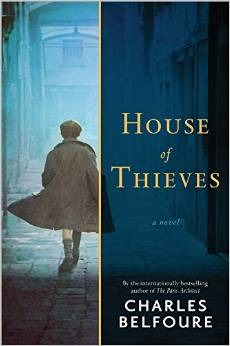
First up, the historical thriller, House of Thieves by Charles Belfoure.

At it’s essence this is the story of how a good, solid man turns to a life of crime, while still staying likable and good in our eyes.

Here is a tiny bit of set up.  It’s 1886 and the rich are VERY rich and the poor, very poor. NYC is run by respected crime bosses. They are criminals yes, but they also among the city's largest arts and political donors. They truly run the city. Our villain is Kent, a crime boss and his crew. Our “hero,” John Cross, is an architect for the very rich. But his son has a gambling problem. To resolve the large debt, Kent wants Cross to use his connections and knowledge to help him rob the homes of NYC’s richest residents.

But why you will like this book is how Belfoure writes it. What is so great here is how he managed to write a novel convincingly and accurately set in its historical time, while telling the story in a way today’s audiences like. He nailed both the historical and the thriller aspects.

For historical fiction fans, the novel has all the details of the time and place. It has a lot of information about being an architect to the rich at this time. And it has amazing descriptions of some spectacular homes. The streets, people, and places come alive.

And while I love historical details, sometimes, historical thrillers move to slow for me. I don’t know why I don’t mind it with regular historicals and do with thrillers, but I do and from our discussions in the crime fiction genre study and from my work with readers, I know I am not alone there [*cough cough* The Alienist]. But Belfoure has managed to use modern techniques like short chapters, fluid point of view shifts, and powerful action scenes to ratchet up the suspense and pacing.

Here are two examples that occur in the first 30 pages to illustrate what I am talking about.

First, the novel opens with an awesome bank robbery and explosion scene that then moves to the perspective of the crime bosses who are watching the scene unfold. The details set the historic tone, but the scene served the same purpose that today’s prologues in suspense novels do. We were thrown right into the middle of the story and are excited to keep reading to see what is going on and how our story will fit into this world.

And second [one of my favorite moments in the beginning of a book in a long time], at around page 30, we see the beginning of the day in a rich home. One of the things the wealthy of this time had were ice boxes. They were built into the side of the house with a door that opened to the outside so literal huge blocks of ice could be delivered to keep things in the ice box cold.  Well, what if you opened your ice box to find...A FROZEN SEVERED HEAD! That was pretty great.  Let’s you know this is not your typical historical thriller.

This novel is under 400 pages and has a moderate cast of characters who all get frequent turns to narrate with fluid and fast paced shifts in the point of view [the entire Cross clan, even the little 10 year old brother has a chance to narrate-- and that was good], yet it is moments like the two above throughout the story that keep the pacing high.

There is also social commentary and flashy fun here [a climax is at the top of the under construction Statue of Liberty!]. But what I loved the most was the ending. The decision Cross and his wife make about how they will live the rest of their lives after the ordeal under Kent’s thumb is over is what takes this book from good to awesome.

Three Words That Describe This Book: flashy fun, suspenseful, Gilded Age

Readalikes: I thought about Pete Hamil and his novel North River while reading this.  You can go to my review of North River, which also has readalikes [fiction and nonfiction]. The time period is different though (1934).

I also think the historical thrillers of Matthew Pearl are a good option here.  Both authors write compelling, historical thrillers with a solid amount of detail.  With Pearl the professional setting is usually book based. I have read a few of them.

But the nuanced characters and their surprising decisions reminded me more of the suspense novels of today.  Belfoure has much in common [protagonist wise] with Gillian Flynn or Tana French. I think House of Thieves is a great option for fans of those popular, literary, psychological suspense writer who want a bit more action and don’t mind the historical setting.

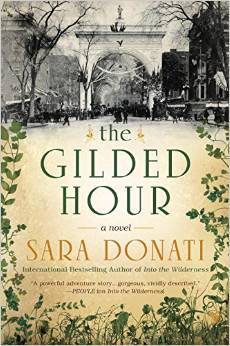
Next up is the medical framed, women’s lives, historical by Sara Donati, The Gilded Hour.

Here the date is 1883 and again we are in NYC. The story is about the forgotten people of this time.  It is about racial injustice, the suppression of women, medical advancements, and fertility issues.

Our main characters are two women, cousins, one who is half black, who are trying to provide birth control to women and how they were prosecuted by a real life Postal Inspector (who had a ton of political and legal power) and his crusade to suppress vice [The Comstock Act].

Okay first big difference here, the pacing. This is a 700 page, traditional historical. It moves at a much more methodical pace but one that is appropriate to the type of book; it is a pace that fans of a thick historical will expect and enjoy.

You know it will be a complex, historical because the families and major characters are listed in the front two pages and those who are real are noted. The novel also incorporates newspaper articles, telegraphs, and letters as a narrative device to keep up an authentic tone, as opposed to House of Thieves above, where things get a bit outrageous [but super fun] at times.  Again, same setting but two different readers.

This is a great read for people interested in the history of medicine, women's history [especially women in medicine], women's lives, and/or a history of women's health issues. There is a strong romance element here too.

There is suspense with the postal inspector trying to catch our heroes. There are many people [of all sexes and races] who help them along the way.  Things get tense and threatening but the overall story is not about the crime angle, it is more the issues I listed in the previous paragraph.


Three Words That Describe This Books: history of medicine, character centered, Gilded Age

Readalikes: The most obvious readalike is a TV series-- The Knick-- which I have written about at length with readalikes here.

Donati also mentioned the wonderful Destiny of the Republic by Candice Millard which I read here, for people who want more history of medicine detail from this era. I agree.

Another author who is similar to Donati is Jennifer Donnelly. Both write historicals featuring women and their lives with strong romance elemnts.  Interestingly, Donnelly has a very similar historical novel about social conscious female doctors, The Winter Rose.

Finally, a book I read which had a very similar feel, although is set in Brooklyn in 1700s and follows a woman who runs a gin still is Brookland by Emily Barton.  I highly suggest this for fans of a book like The Gilded Hour. You can click on the title for my full review.

Thursday, January 20, 2011

BPL Book Discussion: The Fortunate Pilgrim

The Fortunate PilgrimAs I mentioned here, my group kicked off the 2011 BPL Book Discussions with The Fortunate Pilgrim by Mario Puzo earlier this week.

This meeting also marked the 10th Anniversary of my book club at the BPL.  We started with 2 people and me, and we now fill the room each month (15-20 people), with those 2 original ladies still making most of the discussions.

Originally published in 1965, The Fortunate Pilgrim is the tale of Lucia Angeluzzi-Corbo and her family as she lives in the Italian tenements of NYC from the years just before the Depression into WWII.  It is a immigrant story, but it is also a personal one, as Puzo has noted.  It is the fictionalized story of Puzo's own mother, her strength, and filial love despite great obstacles.  It was also only his second novel, written before any of the Godfather novels which made him a household name.

We had a dynamic discussion of this novel, the highlights of which I will list:
  • About 2/3 of the group absolutely loved this novel while the remaining third felt it was "so-so." 
  • We began talking in depth about this novel as an example of a universal immigrant story.  One participant said she knew from the summary that she would love the book because she enjoys the social history aspect of immigrant stories.  She went on to note how each wave of immigrant goes through the same thing. This led to some great sharing by the group about their family immigrant stories. We talked about the language and customs, the strength in the family, and the sacrifices of the older generations for the success of the younger that all immigrant groups share.
  • I steered the conversation toward today and asked how the immigrant situation is different today. We isolated some big differences.  First, the entire country's standard of living is much higher now than it was in the pre-WWII years.  Immigrants know they are poor and  there is a stigma with this.  In the novel, the space between the rich and the poor is much smaller.  Also we talked about how immigrants do not always stop in the urban centers anymore.  The tenements in The Fortunate Pilgrim served as a support network and community of people from the old country; however, quite often immigrants today go straight to the isolated suburbs.  They cannot create a safe community right away.  Finally, in Lucia's time, the mother stayed home and kept an iron grip on the family, knew everything the children were doing, and was there to control everything; however, now often both mother and father of immigrant families must go to work right away, leaving the kids to flounder in their new land.
  • We moved on to Puzo's writing style.  First, it is important to note that most of the group had not read Puzo before, but all were familiar with The Godfather at least through the movies.  The most striking think about the style of this book is its details.  Puzo spends the vast majority of his time writing about the minutiae of daily life.  We read about the women gathering in the summer evenings, the games the children play, the domestic details, but we get very little detail on the major events: the weddings, deaths, funerals, etc... At the same time the point of view skips around constantly and each chapter reads like a separate vignette.  While some participants did not like the fact that the intense level of details was not uniform, others speculated that since Puzo based this on his own recollections of his childhood that it made sense that he focused on the domestic details, as it would have been what he most remembered.  Another participant said she usually does not like when a book skips around in its point of view, but the intense domestic details created a center that held the entire story together for her.
  • Characters were discussed throughout and at length. Here are some comments I want to share.  One participant talked about how the women of the tenement were a "Greek chorus" to her. Octavia, the eldest daughter was a "truth teller;" she was strong, her mother's right hand; she sacrificed herself but was never upset about it.  We were mixed on whether or not Vinnie committed suicide.  We saw Larry as "making it," in the the legitimate side of the mob.  We also loved his scenes which open the novel, as he rode the horse in front of the train.  It was called "extraordinary" by someone, and all agreed that it drew you into the the world of the story quickly. And finally, Gino who escapes.  We felt he was the "Puzo" character.  We especially liked the scene where he "flies;" it really foreshadowed the freedom he found by joining the army later in the novel.
  • On the other hand, one participant felt the overwhelming level of detail overshadowed the characters.  She wanted less detail about life and more about how Lucia kept going.  Others chimed in that at the time of the novel's writing (1965) people did not talk about their feelings as much.  You just did what you needed to survive and took each thing as it came at you.
  • We discussed the title and how Lucia, despite her hardships and losses, ends the book quite "fortunate."  The family's goal from the start was to leave the tenements and buy a home on Long Island and as the book ends, they are moving into that house.  This is not a story without great loss, troubles, and obstacles, but overall, Puzo knows his family was among the most fortunate of the time and he carries this tone into the title of his novel.
  • I just mentioned the ending.  The feelings about this ending were mixed among the group.  People were happy that the family (what was left of it) made it to Long Island, but many wished there was more about what happened when they moved.  We talked about how Lucia became a pilgrim again by leaving her close knit community and beginning a new journey in Long Island.
  • We ended by talking about the overall tone of the novel.  Phrases that were thrown out were as varied as hopeful, depressing, struggles of a family, survival, and family obligation.
  • A participant had the last word with the following statement which I feel sums up the book well, "none of us would be here if someone did not have the courage to go at it alone."
Readalikes:  We compared The Fortunate Pilgrim with our discussions of 2 other stories of immigrants in NYC, Brooklyn by Colm Toibin and North River by Pete Hamill.  The later also deals directly with issues of Italian immigrants.  Check their respective posts for more readalikes too.

Obviously their are thousands of American immigrant experience novels out there, but a few others that I would suggest for book clubs are The Namesake by Jhumpa Lahiri, The Joy Luck Club by Amy Tan, and How the Garcia Girls Lost Their Accents by Julia Alvarez.  While Brooklyn and North River are very similar to The Fortunate Pilgrim in time frame and both deal with European immigrants, these three titles hit at a more varied immigrant experience.  However, together, these 5 suggestions show how despite their difference of origin, their immigrant stories are more similar than different.

With this novel's focus on food and its tenement setting, I would also suggest the nonfiction title 97 Orchard: An Edible History of Five Immigrant Families in One New York Tenement by Jane Ziegelman.  Here, Ziegelman looks at a similar setting and time frame of 5 different nationalities of immigrants.  It would be a great choice for readers of Puzo's novel who are looking for a completely true account.

Monday, June 15, 2009

25 Ways for Libraries to Support Book Clubs

Today is book discussion day at BPL and as part of my preparation for this afternoon's discussion, I was checking out Booklist Online's blog about book groups, Book Group Buzz.

Earlier in the month, Neil Hollands attended Book Expo in NYC and came back with lots of new ideas for book groups. Check out her post on 25 ways your library can support book clubs. I especially like her idea of scheduling time to meet with other area book club leaders to see how you (the library) can support their endeavors. Also, sharing ideas with these other leaders can only help you make your library sponsored groups better.

Look for my post about our discussion of North River by Pete Hamill later in the week.

Monday, February 14, 2011

Monday Discussion: Valentine's Day

Well, it's Valentine's Day so you know what is coming from the Monday Discussion today...we are talking about romance!

I am fairly neutral on the whole Valentine's Day thing.  I go out with my husband on dates regularly, so I am not driven to overpay for a date on February 14th every year, but I do get my kids a small gift and we all exchange cards. I did cut their cucumber slices into heart shapes today too.

But no matter how you personally feel about Valentine's Day, your patrons will be coming in looking for books about love.  Are you ready?  We have this display up with both contemporary and historical romance options.  (Keep scrolling and you will see our Black History Month display list too).

Now, not everyone likes every genre.  In fact, truth be told, I am not a big romance fan myself.  However, if I had to pick some authors I would say that I do enjoy Julia Quinn's historical romances and Susan Elizabeth Phillips' contemporary ones.  What I like about the work of both authors is the humor they add to their stories.

Just because I don't like romance though doesn't mean I don't like a little bit of love in my stories, I just tend to like getting it more from women's lives and relationship books or literary fiction.  Some books which contained a love story which I found touching were, Water for Elephants, North River, Dream When You're Feeling Blue, and The Red Tent.

So today, even of you do not like the specific genre of romance, what do you like to read when you are in the mood for love?

Also, over on RA for All: Horror, I posted a touching zombie love song.


If you want to follow past Monday Discussions, use this link.

Saturday, December 20, 2008

Best Books I Read in 2008

In honor of all of the best lists I have been posting, I present my second annual list of the ten best books I read this year, in my opinion of course. I will list the books with genre and month read, but they really are in no particular preference order.

The Graveyard Book by Neil Gaiman (youth) 12/08
The Good Thief by Hannah Tinti (historical fiction) 10/08
Fun Home by Allison Bechdel (graphic novel/memoir) 9/08
The Brief Wondrous Life of Oscar Wao (literary fiction) 5/08
Dangerous Laughter by Steven Millhauser (short stories) 4/08
The Lemon Tree by Sandy Tolan (nonfiction) 4/08
The Uncommon Reader by Allan Bennett (literary fiction) 1/08
A Thousand Splendid Suns by Khaled Hosseini (literary fiction) 1/08
City of Thieves by David Benioff (historical fiction) 10/08
North River by Pete Hamil (historical fiction) 6/08

To see everything I read and considered for this list, click here. And for those who are interested, here is last year's list.

A few comments on this year's top ten. First, I was surprised that only two nonfiction titles made the cut this year since I read 11 total. Second, only 1/2 of these books came out in 2008, which is a great reminder of the almost infinite back list of titles available at your local public library. Finally, if I had to pick a favorite book I read this year, I think it would be The Good Thief by Tinti because it was fun to read and though provoking (use the link above to read the details of how I felt about it.) I am not alone on liking this novel though, Tinti's work has already been honored on many of the year's best lists, including the NYT's Notable Books List and a Borders Original Voices nomination.

Let me know what you read this past year that really stuck with you. Happy Holidays! Here's to more great reading in 2009.

Sunday, November 30, 2008

What I'm Reading: November 2008

This month I will write about four of the book I read, a dystopian science fiction, historical fiction, women's lives, and another book in one of my favorite cozy mystery series.

I finally read Australian Max Barry's 2003 classic satire on consumerism and the Americanization of the world, Jennifer Government. This is a classic dystopian imagining of the future where the world is split up into the "American" countries and all others. The government is very weak; companies are in charge of everything. The lead character works for the government, hence her name. Her daughter goes to a Mattel run public school. The plot hinges around a marketing plan by John Nike (he works for Nike), which involves killing customers to create more buzz about a popular shoe. Things spiral and John hatches a plan to literally take over the world, and only Jennifer can stop him.

There is much humor, satire and pure entertainment in this novel. It is not a readalike for works like Orwell's 1984 which is much denser and more preachy than Barry's novel. That is not to disparage what Barry does in his novels or on his very popular website. His works are entertaining and thought-provoking with a young sensibility that appeals to generations X, Y, and Z. While overall, I enjoyed this novel and would continue to suggest it to others, I do agree with the customer reviews that felt the ending was a bit lackluster, but the middle makes up for it.

There are many authors who share Barry's humor, eye for satire, and youthful sensibility. Most notably, I would like to point out Max Brooks' political satire/zombie novel World War Z. Also anything by Cory Doctorow would appeal to fans of Jennifer Government; try the YA novel Little Brother or his adult story collection, Overclocked: Stories of the Future Present. Another author whose work would appeal to Barry fans is Chuck Palahniuk. He is most famous for Fight Club, but really any of his novels would work as a readalike here. Finally, Alan Moore's graphic novels V for Vendetta or The Watchmen are also good bets.

In terms of Nonfiction readalikes, there are many books about global capitalism and American corporations. Three of the most popular to get you started are, The Silent Takeover: Global Capitalism and the Death of Democracy by Noreena Hertz, Colossus: How the Corporation Changed America by Jack Beatty and the best seller by Naomi Klein, The Shock Doctrine: the Rise of Disaster Capitalism.

I also read another historical fiction by Peter Hamil this month, Forever. This is another book which came off of the bottom of my to-read list (2003), and like Jennifer Government above, I am quite happy that I finally got to it. Forever begins in Ireland in 1741 with the story of the Celtic O'Connor family and moves to New York City as Cormac, the now orphaned son of the family, has followed his father's murderer to seek revenge. On the way, Cormac befriends Kongo, an African slave. Once he is established in NYC, Cormac becomes involved in the African and Irish fight for equality over taking the city, culminating in a huge rebellion. It turns out Kongo is a shaman and he grants Cormac immortality in payment for his true friendship. This immortality has caveats (he can never leave the island of Manhattan) and Cormac is told how to complete his journey and pass into the spirit world in the future. The story then follows Cormac through key points in NYC history up until the days immediately after 9/11. This is a sweeping epic history of NYC, a lyrical story with a large magical realism component, and a love story all rolled into one novel. Please note, however, this novel has a completely open ending, which may or may not matter to you as a reader.

Like most Hamill books, Forever is as much about New York City as it is about the characters he creates. In fact, click here to read my post about North River. Besides the readalikes listed there, I would add Raymond Feist's Faerie Tale, another popular Celtic Fantasy novel with a New York setting written by a proven storyteller. Michael Cunningham's Specimen Days would also be a good readalike, both for setting and the fantasy elements. If you want a book about the NYC area in the revolutionary period, you could also try Brookland by Emily Barton.

In terms of Nonfiction, click here to run a search of books about the history of New York City, there are many ranging from coffee table books, to narrative histories. Ditto for Irish history. Click here to run a search for those titles.

The Time of My Life by Allison Winn Scotch is also a work of magical realism, but without the historical setting of Hamill's work. Scotch's book caught my eye while I reading reviews; I had not read a chick-lit in a while and the plot summary intrigued me. Here are the details: Jillian is a stay-at-home-mom in Westchester, NY and a former advertising executive. She is experiencing dissatisfaction with her life, her marriage, and her "job." Upon hearing that the boyfriend she left to marry her husband was finally getting married himself, Jillian starts to think of what her life would have been if she had taken a different path. And then, while receiving a massage, Jillian is transported back 7 years, to have a second chance at her life. What follows is a heart-warming, bittersweet, and ultimately redemptive story about the choices modern women have, the sacrifices that come with loving someone, and a look at what is truly important in life.

Although, The Time of My Life tackles some serious issues, it is firmly grounded in the chick-lit subgenre of women's lives and relationships stories. For a similar work, but with a bit more sophistication and depth, try The Time Traveler's Wife by Audrey Niffenegger. If you liked Scotch's mommy issue take on chick-lit, you would probably enjoy the works of Jennifer Weiner (try Goodnight Nobody for similar themes). There is also Ayelet Waldman's Mommy Track Mysteries series.

Nonfiction titles that might be of interest would include Time Travel in Einstein's Universe: The Physical Possibilities of Travel Through Time by J. Richard Gott, This Is How We Do It: The Working Mothers' Manifesto by Carol Evans, and Where Did I Go?: The Personal Chronicle of a Sahm (Stay at Home Mom), as she shares her fulfilling, frustrating and often comical journey from Womanhood to Motherhood by B. Wylde.

Finally, I read the latest installment in Ian Sansom's bookmobile mysteries this month, The Book Stops Here. Click here to read my other postings about this series and to see readalikes. I think I liked this title the best in the series so far because we finally get to see Israel back in London and interacting with his mother, who it appears will be coming back to Ireland with him and joining the series. Anyway, it was a great, light, escapist read, and I will continue to suggest this cozy mystery series to all fans of public libraries everywhere.

Wednesday, June 8, 2016

Pre-Pub Alert: Becky’s BEA Galley Favs Part 2 of 2


Let’s get right back into the discussion of the books I am excited out. Six more today in part 2.

From one of America’s most important writers, Perfume River is an exquisite novel that examines family ties and the legacy of the Vietnam War through the portrait of a single North Florida family. 
Robert Quinlan is a seventy-year-old historian, teaching at Florida State University, where his wife Darla is also tenured. Their marriage, forged in the fervor of anti-Vietnam-war protests, now bears the fractures of time, both personal and historical, with the couple trapped in an existence of morning coffee and solitary jogging and separate offices. For Robert and Darla, the cracks remain under the surface, whereas the divisions in Robert’s own family are more apparent: he has almost no relationship with his brother Jimmy, who became estranged from the family as the Vietnam War intensified. Robert and Jimmy’s father, a veteran of WWII, is coming to the end of his life, and aftershocks of war ripple across their lives once again, when Jimmy refuses to appear at his father’s bedside. And an unstable homeless man whom Robert at first takes to be a fellow Vietnam veteran turns out to have a deep impact not just on Robert, but on his entire family.
So before BEA I knew who Robert Olen Butler was because he had won the Pulitzer, that meant I knew I had to buy his books for my library. But I didn’t know anything else.  After listening to him talk about his life, his work, and this upcoming book, I am sad I didn’t pay more attention to him previously.

He spoke at length about the Vietnam War and how it effected him personally but also many others. He also talked about how literature is “the art form of human longing,” with brilliance and elegance. Finally, he said in this new novel one of the big questions he is trying to answer is “who is our own and who is the other.” This alone is the reason many patrons would and should read this book.

Everyone sitting around me was blown away by him. One of my friends even tweeted at the event:

I second that. Don't just order the book, read it.

The Underground Railroad by Colson Whitehead [September 2016]:
Cora is a slave on a cotton plantation in Georgia. Life is hellish for all slaves, but Cora is an outcast even among her fellow Africans, and she is coming into womanhood; even greater pain awaits. Caesar, a recent arrival from Virginia, tells her of the Underground Railroad and they plot their escape.
Like Gulliver, Cora encounters different worlds on each leg of her journey...Whitehead brilliantly recreates the unique terrors of black life in pre-Civil War America. The Underground Railroad is at once a kinetic adventure tale of one woman's ferocious will to escape the horrors of bondage, and a shattering, powerful meditation on the history we all share.
Look, I know you know Colson Whitehead is great. Personally, I am a huge fan of Zone One. This new title is getting great buzz.  Whitehead was on a panel and here are a few things he shared with the group:
  • With regards to the violence in his book, Colson Whitehead took inspiration for the tone (matter of fact) from slave narratives.
  • "It's very disappointing when you discover as a kid that [the Underground Railroad] not a subway.
I am excited to read this book because Whitehead is one of the few writers who is able to write wonderful stories without ever allowing himself to be pigeon-holed. He is a rare treat for library workers, a literary fiction writer who is accessible to all. I also think he is a good example of what I wrote about at length in this post-- just because an author is of a different race than the patron in front of you, doesn't mean you should be hesitant to suggest that author.

From 2 known quantities to a new voice that I am excited about....

The Mortifications by Derek Palacio [October 2016]:
Derek Palacio’s stunning, mythic novel marks the arrival of a fresh voice and a new chapter in the history of 21st century Cuban-American literature. 
In 1980, a rural Cuban family is torn apart during the Mariel Boatlift. Uxbal Encarnación—father, husband, political insurgent—refuses to leave behind the revolutionary ideals and lush tomato farms of his sun-soaked homeland. His wife Soledad takes young Isabel and Ulises hostage and flees with them to America, leaving behind Uxbal for the promise of a better life. But instead of settling with fellow Cuban immigrants in Miami’s familiar heat, Soledad pushes further north into the stark, wintry landscape of Hartford, Connecticut. There, in the long shadow of their estranged patriarch, now just a distant memory, the exiled mother and her children begin a process of growth and transformation. 
Each struggles and flourishes in their own way: Isabel, spiritually hungry and desperate for higher purpose, finds herself tethered to death and the dying in uncanny ways. Ulises is bookish and awkwardly tall, like his father, whose memory haunts and shapes the boy's thoughts and desires. Presiding over them both is Soledad. Once consumed by her love for her husband, she begins a tempestuous new relationship with a Dutch tobacco farmer. But just as the Encarnacións begin to cultivate their strange new way of life, Cuba calls them back. Uxbal is alive, and waiting. 
Breathtaking, soulful, and profound, The Mortifications is an intoxicating family saga and a timely, urgent expression of longing for one's true homeland. 
I knew nothing about this author or this title before I went to Library Journal Day of Dialog.  This is why you go people. To find out about titles that you might have missed.

Here are some of my notes as to why I was excited about this book:

  • For fans of Zadie Smith, Rachel Kushner, Marlon James and Junot Diaz. These are very popular authors for lit fiction readers.
  • Sweeping family saga-- also VERY POPULAR
  • Portrait of what it is like to be an immigrant in America! and a refugee-- current events!
I put this title after Whitehead to reiterate the point I made above about suggesting good "diverse" books to people not of the same heritage of the diverse author. Again, I have many, many examples and thoughts in this post, but the point is, this is a good book for the public library, general audience, no matter who they are or where they live. Order it.

Today Will Be Different by Maria Semple [October 2016]:
Eleanor knows she's a mess. But today, she will tackle the little things. She will shower and get dressed. She will have her poetry and yoga lessons after dropping off her son, Timby. She won't swear. She will initiate sex with her husband, Joe. But before she can put her modest plan into action-life happens. Today, it turns out, is the day Timby has decided to fake sick to weasel his way into his mother's company. It's also the day Joe has chosen to tell his office-but not Eleanor-that he's on vacation. Just when it seems like things can't go more awry, an encounter with a former colleague produces a graphic memoir whose dramatic tale threatens to reveal a buried family secret.  
TODAY WILL BE DIFFERENT is a hilarious, heart-filled story about reinvention, sisterhood, and how sometimes it takes facing up to our former selves to truly begin living.
Not much more to say here than....heads up, Semple will have a new book. I included this more as a reminder as to what a great backlist option Where's You Go Bernadette? is, especially for people looking for a beach read that is funny, quirky, and compelling.

Now for the biggest surprise for me personally-- a nonfiction book about math!

How to Bake Pi: An Edible Explanation of the Mathematics of Mathematics by Dr. Eugenia Cheng [Out Now]:
What is math? How exactly does it work? And what do three siblings trying to share a cake have to do with it? In How to Bake Pi, math professor Eugenia Cheng provides an accessible introduction to the logic and beauty of mathematics, powered, unexpectedly, by insights from the kitchen: we learn, for example, how the béchamel in a lasagna can be a lot like the number 5, and why making a good custard proves that math is easy but life is hard. Of course, it’s not all cooking; we’ll also run the New York and Chicago marathons, pay visits to Cinderella and Lewis Carroll, and even get to the bottom of a tomato’s identity as a vegetable. This is not the math of our high school classes: mathematics, Cheng shows us, is less about numbers and formulas and more about how we know, believe, and understand anything, including whether our brother took too much cake. 
At the heart of How to Bake Pi is Cheng’s work on category theory—a cutting-edge “mathematics of mathematics.” Cheng combines her theory work with her enthusiasm for cooking both to shed new light on the fundamentals of mathematics and to give readers a tour of a vast territory no popular book on math has explored before. Lively, funny, and clear, How to Bake Pi will dazzle the initiated while amusing and enlightening even the most hardened math-phobe.
Talk about diverse reads.  Look, I have always appreciated reading books by people with a different world view, but I have not been so great about reading books about topics that do not interest me. I took so many notes when she was talking.  Not only did she make math seem approachable, but she also was hilarious. Here is just a small sampling of the things she said:

  • Eugenia Cheng talking about her book How to Bake Pi. Telling us we can do math. I am starting to believe her.
  • People will not realize they are learning math while they read-- Cheng
  • "Math is not just about numbers, it's about thinking logically about things."
  • Most people like food more than math, so she combined them to make math seem more approachable.
  • We all want to take a math class with Dr. Cheng now.
  • My kids love math. I need to read this book to understand why.
  • She poked fun at the "grumpy old" mathematicians who will complain that her book has no theorems. So what?- Cheng
  • She's even drafted theorems about hard hard it is to lose weight. Math can be used for everything.
  • Listening to Dr. Cheng talk about math makes it seem like I am missing a big party by not being engaged by math.
That's just a sampling of the notes I took. This book and its author made me realize that a book I might have dismissed for myself is actually a perfect read for me. Sure, this is a great general nonfiction purchase for all libraries, but I learned something about myself as a reader through her talk; I learned that making sure I read "diverse" books goes beyond the identity of the author. I need to consider more topics too. Something I think might not be "for me." might be just perfect if I only drop my preconceived notions.

Last but definitely not least-- Lincoln in the Bardo by George Saunders [February 2017]:
The captivating first novel by the best-selling, National Book Award nominee George Saunders, about Abraham Lincoln and the death of his eleven year old son, Willie, at the dawn of the Civil War 
On February 22, 1862, two days after his death, Willie Lincoln was laid to rest in a marble crypt in a Georgetown cemetery. That very night, shattered by grief, Abraham Lincoln arrives at the cemetery under cover of darkness and visits the crypt, alone, to spend time with his son’s body. Set over the course of that one night and populated by ghosts of the recently passed and the long dead, Lincoln in the Bardo is a thrilling exploration of death, grief, the powers of good and evil, a novel - in its form and voice - completely unlike anything you have read before. It is also, in the end, an exploration of the deeper meaning and possibilities of life, written as only George Saunders can: with humor, pathos, and grace.
Yes, the short story master, Saunders has written a novel.  I saw him speak about it at a dinner during BEA.  I was touched by how honest he was about how difficult writing this novel was for him.  He worked on it for years and despite his enormous success with stories, he still struggled. He had to tell this story in novel form though. He out it aside many times before completing it.

That's my very abbreviated look at only 11 of the general interest galleys I was most excited about after BEA. There will be a genre related post of upcoming titles coming tomorrow.

Tuesday, December 20, 2011

Trending: Rural Noir [including a bonus Take 10]

Brian W, wrote a very original and interesting paper about an emerging genre, which he is calling "Rural Noir." From Brian's paper with his permission:

“Rural noir” is a somewhat difficult genre to define precisely. I have also seen it referred to as “Appalachian noir,” but I opted for the more general name because the settings of these books vary; not all of them are set in Appalachia, although a few are. These books tell dark and gritty stories, often involving crime and violence, about characters in rural settings and desperate circumstances. The characters are generally either working-class or impoverished, and their environment is typically characterized by all-consuming destitution, immorality and violence. There is a high degree of variation with respect to storyline and pacing; these books can be fast-paced and suspenseful, or they can be more deliberate with a greater emphasis on description; or, perhaps most likely, they can exist in a middle ground incorporating both suspenseful storytelling and character-based deliberation.
In contrast to the bleakness in tone and plot, the prose style of these novels is often beautifully descriptive and lyrical. Indeed, I believe it is this very contrast that lies at the heart of the genre’s appeal. These authors imbue their desolate rural settings and morally bankrupt characters with grace and poignancy simply by virtue of their delicate, intricate language. This is why the target audience for these books represents a crossover between readers of literary fiction and readers of tough crime fiction or noir. These books do not necessarily conform to the conventions of traditional “noir”—for instance, they are rarely mysteries or detective stories—but the noir label is appropriate because of the books’ intensely bleak worldviews and focus on criminal activity.
Despite the harshness, these books often contain a central character who endeavors to escape his or her bleak environment, or at least gain some measure of justice or peace within it. Here, emphasis is often placed on vengeance or survival tactics. These struggles—sometimes tied to coming-of-age stories—introduce an element of hope, the possibility that the protagonist can survive the trials of his or her dismal surroundings and emerge with dignity and future intact.
 Brian goes on to talk about the ten books he chose to compile into a book talk.  His goal was for these ten books to serve as an introduction to the genre.  Again in  Brian's words:
Rural noir is a relatively new genre that has been gaining traction very recently. Eight of the ten books on this booklist were published between 2005 and 2011; three of those (Once Upon a River, The Devil All the Time, and Crimes in Southern Indiana) were all released within the past six months. The other two (Dogs of God and A Single Shot) came out in the ‘90s, and can be considered precursors to the current proliferation of the genre, although they are both considered excellent examples of rural noir. The currency of this genre is one reason why librarians and patrons could both benefit from a spotlighting of rural noir, especially considering that none of these books are major bestsellers or widely read despite the genre’s increasingly hip standing
I was both impressed and intrigued by Brian's paper and wanted to make sure you were all aware of this big trend.  I would also like to thank him for letting me share it with all of you.  From Winter's Bone the book AND movie to the popularity of the the TV show Justified, Rural Noir is definitely an emerging genre which needs to be on your radar.


So here is Brian's ten book list of Rural Noir with appeal based annotations.


Winter’s Bone by Daniel Woodrell (2006) 
Set in a tough Ozarks community where seemingly everyone has criminal ties to the meth trade, this novel follows teenage girl Ree Dolly as she tries to locate her missing father. The appeal of this book lies in the contrast between Woodrell’s lyrical language and the bleak, harsh realism of the setting and characters, as well as the suspense-generating plot structure. Ree’s resilience and bravery in the face of her hellish circumstances gives the reader a ray of hope .

Once Upon a River by Bonnie Jo Campbell (2011)
Set in rural Michigan, this novel follows sixteen-year-old Margo Crane as she fends for herself on a perilous river journey in search of her lost mother. The prose is simple, but Campbell emphasizes the details of how Margo survives on her own. Gritty violence is balanced with tender emotion. Fans of Winter’s Bone who enjoyed that book’s strong young heroine, journey structure, and rural grit should seek out this novel.

Serena by Ron Rash (2008)
Set in the North Carolina mountains in 1929, this novel follows a married couple who attempt to start a timber empire, but their greed leads to murder. Beautiful descriptions of the natural Appalachian landscape butt heads with the brutality of the violence committed by the characters, particularly anti-heroine Serena, who has been compared to such evil women of literature as Lady Macbeth.

Dogs of God by Pinckney Benedict (1994)
Set in rural West Virginia, this thriller revolves around a backwoods drug lord named Tannhauser, a young boxer named Goody, and the grotesque lowlifes they encounter. Benedict etches these characters through multiple points of view, and lays on the Appalachian atmosphere thickly. 

Rain Gods by James Lee Burke (2009)
Hackberry Holland, the new sheriff of a small Texas border town, investigates the murder of nine prostitutes and finds himself in a cat-and-mouse game with a preacher turned serial killer. The prose is lyrical and thoughtful but the book has the pacing of a thriller, and the tone is gritty and dark. It is also character-centered, with psychology of both the sheriff and the killer.

The Devil All the Time by Donald Ray Pollock (2011)
Set in rural Ohio and West Virginia, this novel follows a group of violent characters from the 1940s through the 1960s. The style is blunt and plain, the story is engrossing, and the numerous characters are well-drawn and memorable despite the book’s brevity; Pollock treats even the worst of them with empathy and compassion. At the center of the book is another coming-of-age protagonist fighting to escape (or at least find justice in) this bleak landscape.

Go With Me by Castle Freeman (2008)
In Vermont hill country, a young woman named Lillian is menaced by local villain Blackway, and enlists the help of an old mill proprietor and his Greek Chorus-like companions to fight back. The book is suspenseful and gritty, but also has a playful sense of humor that is not usually present in these books.

A Single Shot by Matthew F. Jones (1996)
Set in an unnamed mountain town, this novel follows John Moon, a poacher who accidentally shoots a teenage girl and pockets the $100,000 he finds on her; it turns out the girl was linked to a couple of criminals, who come looking for the money. This book may be the most intense and frightening on this list.  It has detailed descriptions and the protagonist is complex.

Crimes in Southern Indiana  by Frank Bill (2011)
A short story collection set in southern Indiana (as the title indicates). Each gritty story focuses on violent men struggling to find solutions to the messes of their lives. The tone is despairing and bleak; the desperate, blue-collar characters are complex; the style is terse and hard-boiled. Some of the characters recur in different stories.

No Country for Old Men by Cormac McCarthy (2005)
Set in the Southwest, McCarthy’s novel—the inspiration for the Oscar-winning film by the Coen brothers—follows Texan man Llewellyn Moss as he steals a stash of money and heroin he finds on a dead man. A local sheriff and a psychotic hired killer enter the mix as McCarthy meditates on violence and the nature of good and evil. Gritty, lyrical, stylistically complex.