RA FOR ALL...THE ROAD SHOW!

I can come to your library, book club meeting, or conference to talk about how to help your readers find their next good read. Click here for more information including RA for All's EDI Statement and info about WHY I LOVE HORROR.
Showing posts sorted by relevance for query "Book DIscussion Report". Sort by date Show all posts

Friday, July 31, 2015

ARRT Book Discussion Report: The Book of Unknown Americans [Featuring the Author!]

As I mentioned here back in June, the hardest part of leaving my library job was leaving the book group. But as I also said in that post, the end of my time with the BPL group was not going to be the end of me leading book clubs, and it would especially not be the end of me blogging about specific book groups.

Today is the start of a new kind of book discussion report here on RA for All and it comes with its own website.  [Yes that means I am now up to being the webmaster of 4 sites].

Introducing the ARRT Literary Book Discussion and Leadership Training site. From that page:

The Adult Reading Round Table, a group dedicated to developing reader's advisory skills and promoting reading for pleasure through public libraries in the Chicago area, provides all members access to our quarterly [4x a year] literary book discussion and leadership training. 
We give library book discussion leaders the chance to sit back and enjoy being discussion participants while also offering a forum for sharing questions and practical solutions to the problems and concerns of book group leaders. This “nuts and bolts” training session is offered at the end of each discussion. 
Both the traditional book discussion and the leadership training session will be moderated by a member of the ARRT Steering Committee. Dates, times, locations, and titles will be assigned approximately 10 weeks in advance. Members will be notified by email. If you are a member and wish to attend the discussion, you must register in advance [details in the email] and secure your own copy of the book. 
With a rotating cast of leaders, titles, and locations, we hope our members can find a discussion that fits their schedule.
Now, while coming to the actual discussion requires membership, we are offering the website, including the notes of our discussions for everyone through the site-- for free.

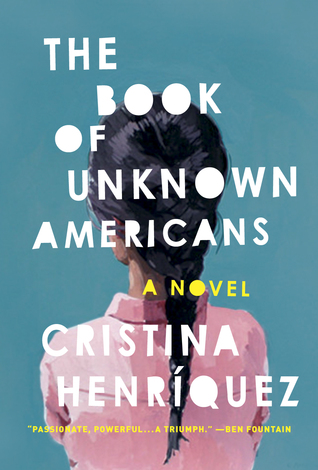
And our most recent discussion of The Book of Unknown Americans by Cristina Henriquez contains something extra special.


The topic for the leadership training portion of the discussion was about how to involve authors in your book discussions, and Ms. Henriquez herself joined us for that part of the discussion.

So head over to the ARRT site where you will find a link to the notes of the book discussion and a separate link to the leadership training portion of the discussion with Ms. Henriquez.

The notes are in a manner similar to the way I did them for the BPL group. It simply requires a click or two to get at them now.

***If you are finding this post more than a few months after its initial publication [July 2015], please use this link to access our archive.

Thursday, October 8, 2015

Book Discussion Report: The Winter People

On Tuesday I led a book discussion for book discussion leaders at the RAILS HQ in Burr Ridge, including 2 brave souls participating via video conference.

Our book was The Winter People by Jennifer McMahon. From the publisher:
A simmering literary thriller about ghostly secrets, dark choices, and the unbreakable bond between mothers and daughters . . . sometimes too unbreakable. 
West Hall, Vermont, has always been a town of strange disappearances and old legends. The most mysterious is that of Sara Harrison Shea, who, in 1908, was found dead in the field behind her house just months after the tragic death of her daughter, Gertie. Now, in present day, nineteen-year-old Ruthie lives in Sara's farmhouse with her mother, Alice, and her younger sister, Fawn.  
Alice has always insisted that they live off the grid, a decision that suddenly proves perilous when Ruthie wakes up one morning to find that Alice has vanished without a trace. Searching for clues, she is startled to find a copy of Sara Harrison Shea's diary hidden beneath the floorboards of her mother's bedroom.  
As Ruthie gets sucked deeper into the mystery of Sara's fate, she discovers that she's not the only person who's desperately looking for someone that they've lost. But she may be the only one who can stop history from repeating itself. 
Before I start the report on the discussion, I have a few comments.

First, this was a training for book discussion leaders so at times throughout the discussion I paused the discussion itself to make general observations about what was happening and what we could learn as leaders from it.

Second, while I tried to capture that ongoing discussion in my notes, some of it was missed. I have tried to include it here. So then this report is both a report on the discussion itself and a few of the leadership training topics and issues that were brought up. I am going to try to represent the training issues in this color so that the people who use these reports to help guide a discussion on the same book with their library can filter them out. I thought about separating the 2 different tracks, but when I did that, the context of the training tips were lost. So sorry in advance for the occasional schizophrenia of this post, but it is all worthwhile information to share.

Third, I tired to build the training portion of this talk off of the webinars I presented for RAILS last month. So as not to repeat myself both in the training yesterday and in today’s report, I ask that you refer to the video archive of my Recharge Your Book Club webinar for further training tips and tricks.

Now we can get to the discussion notes, but please note they do contain SPOILERS:
  • I started the discussion by explaining to the group why-- from our position as book group leaders-- The Winter People was chosen for today.
    • I picked this book very deliberately. First, I wanted something creepy because it was October.  But second, and more importantly, I wanted to pick a title that had genre tendencies while still having enough to discuss.
    • In this case, The Winter People hits at some of the biggest genres and genre blends right now too: literary, historical, thriller, psychological suspense, supernatural-- all rolled into one.
    • And then at the end of the discussion I had a question about picking books for a group that only likes genre reads. I referred back to these opening statements and my webinar where I talk about what makes a good book discussion book. I told the group you can find genre-ish reads that can still be discussable. Educate your group on what makes a good book discussion book and let them know that you are trying to find genre options that fit the bill.
  • Now on to the Becky Book Club traditional start. Votes on Liked, Disliked, and So-so for the book at hand:
    • 8 likes, 1 dislike, and 4 so-so
    • Although later in the discussion, one participant said, oh-no I think discussing this book has moved me from liked to so-so.  I assured her this was fantastic, if counterintuitive.  The changing of an opinion about how a specific reader feels about the book, whether that change is positive or negative, is a sign that you are having a dynamic and worthwhile discussion. It can only happen if you have delved further into the discussable parts of the book and have strayed from simply rehashing what has happened.
    • I started with the one brave disliked to start off the conversation, allowing the minority to speak:
      • As I was reading it, I enjoyed it, but I found the conclusion to be reminiscent of other creepy stories like the classic The Monkey’s Paw. It just felt a bit trite to me at the end.
      • Becky countered this by saying but maybe it is an homage to the types of stories and is playing with the familiarity of them. Just as it plays with the concept of a “strong woman” and gives us “strong women” who we are drawn to, but who make “bad" choices (more on this topic later)
      • She countered with-- I thought the women made bad choices. I was mad at them.
      • Becky pointed out here and multiple other times that when fictional characters make readers feel real emotion, the writer has done a great job, and it is a good sign that this is a good book discussion title.
    • The liked and so-sos threw out a few more initial comments:
      • I liked the setting, the creepy atmosphere, the historical setting, the flipping back and forth in time and between characters...
      • Becky stopped the group and explained how she was writing all of these “liked” areas down to go back to later and ask specific questions about. Gathering these “off the top of the head” comments at the start is a great way to know where you, the leader, should steer the conversation.
      • I liked the part of the story set in the past more than the present.
      • I liked the present more than the past 
      • This is situation a gold-mine for the discussion leader to exploit later. It will lead to a great back and forth.
      • I too was a bit disappointed in the ending. I felt bad for Ruthie. Now she is never getting out of her life in VT. I was sad that she was at peace with that fact too.
      • The first page grabbed me. What is going on here? What is this diary? Who are these people?
      • I loved how this book was anchored by strong women, but they were not your stereotypical strong women of most books. They were nurturing but not in any traditional way. They were caring for a murderous monster.
    • Since the strong women of the book were starting to dominate the opening comments, I steered the conversation by asking everyone to talk about their favorite character. This line of questioning went back and forth for a while:
      • Katherine was brought up first. Someone was drawn to her and her art. We talked about how she was interesting because she lost a child, but her immediate pain was over losing her husband.
      • Sara-- our historical character, the mother of Gertie, and the one responsible for turning her into a Sleeper-- had a few “fans” in the group.
      • Our biggest Sara fan felt she was the strongest of all the women. This person felt her loss of Gertie the most intensely.
      • But, said another, I thought Alice was stronger than Sara. She took on the "Gertie" problem without being related to the monster. I also didn't like Sara as much because once Gertie was born she shut out her husband.
      • Speaking of, what does the book say about marriage since all the husband in this book die.
      • I thought Ruthie was the strongest-- her upbringing helps her to be strong. She never even considered calling the police when Alice went missing because she was raised to be self reliant.
      • Ruthie is naive for 19 about the world, but very self reliant
  • The discussion started to move into the way the story is told:
    • 1908 was key for Sara's story.  It was the beginning of the new century when things would change for women, but yet, still limited roles.
    • The way the multiple storylines and time frames unfold is confusing at first, but it did keep the creepy mysterious vibe strong.
    • If this story was told in a straight forward fashion, it would probably have been less creepy. Definitely less mysterious.
    • The historical parts drove the narrative for me. I knew something bad was going to happen.
    • I loved Ruthie's present story the most! She was my favorite, yet I found myself reading her portions faster because the present felt safe to me. It was my modern world. The cold, old times were scary.
    • I like stories that go back and forth in time as a rule. This one was well done.
    • Diary entires specifically are used to tell the historic part of the story. I liked that it was diary entries because I felt like I was in Sara's head. There was more tension because a diary is more honest. Also I felt how much worse the loss of Gertie was than the horror of the monster she became.
    • I thought the diary was written in a little too detached of a voice.  At times I felt like the author was imposing herself on Sara.
    • At times with all the back and forth and multiple storylines, I felt like this novel was trying to cram too many stories into one book.
    • I liked this about the novel. It was like a tapestry. You think the tapestry is done, but then the artist introduced a new color and you see so much more. It was also compact and complicated just like Katherine's dioramas. 
    • Again like my note above, this book was great for starting multiple discussions where 2 people were on complete opposite sides of an issue. This was great and makes it easy for you, the leader.
  • There is a big theme of obsession here:
    • Martin is obsessed with Sara
    • Sara is obsessed with Gertie
    • Candace is obsessed with Ruthie
    • Alice is so obsessed with Gertie that she risks her children's safety. 
    • Auntie is obsessed with vengeance
    • Katherine has a ton of obsessions.
    • We talked a bit about what it means. One thing we came up with was that all of these people had huge losses in their lives, losses they never properly dealt with. Obsession is a consequence of that.
  • Auntie!
    • We talked about her a bit.
    • Self sufficient in a time when for women, that was taken as a bad thing
    • Sara's dad tried to kill her but she takes it out on kids.
    • She holds the key to the supernatural in this story.
    • I think it was interesting that she is the only character driven by vengeance and she starts the entire story rolling.
    • I wanted more Auntie, less Katherine.
    • I wanted Auntie to break the mold more. She turned into more of a stereotypical witch. I wished she could have been more.
  • The setting! This was brought up at the start, but I finally had time to bring it up again.
    • It was great. Cold, isolated, Vermont, off the grid.
    • It would be much harder to hide a monster child-zombie-vampire creature in NYC, for example.  It was hard enough in Vermont.
    • The setting is a character in this novel. 
    • The Devil's Hand as a place is a physical manifestation of Gertie and Sara's deed of awakening her.
    • The old house felt like a character to me.  It is strong and has nooks and crannies that hold its secrets.
    • I couldn't read this book in a room with a closet!
    • The setting added so much atmosphere. It acted as a shortcut for the author to create that creepy feeling faster. That was a good thing.
  • I took this question one step further and asked how the past of your place effects your present, even if it has nothing to do with you.
    • This led us to talk about places like Selma or Birmingham where even today you live with its history every day.
    • Someone brought up a great local example-- Crestwood, IL
    • This was a productive line of discussion and moved us beyond the text.
  • What is Fawn's role in the story?
    • She is 6. Gertie was 6, Katherine's son was 6 when he died.  666. YIKES!
    • Wait, Candace's son is 6 too.  Phew.
    • Oh, and Sara's brother was 6 when killed.
    • Yikes, now we were worried for Fawn.
    • Fawn is not related to Sara as Ruthie is, but she still seems to have a connection to Gertie. Why?
      • Age
      • animal connection: Gertie is a fox, Fawn is named for an animal.
  • Title time. Who are The Winter People?
    • The obvious answer is "The Sleepers are."
    • Vermonters are too
    • Those who create Sleepers and care for them are because everyone who cares for Gertie is always preparing for "winter." They can never enjoy the present.
  • There are three endings here. We talked a bit about how we felt about each
    • Ruthie is first: 
      • She is coming to terms with her place as Gertie's next caretaker.
      • How dare Alice do this to her!
      • This is so terrible. It plays off the idea that no matter what women will always be forced to be held back to care for children.
      • Ruthie was going to get out, but now stuck with Gertie.
      • She did find purpose for the first time with Gertie though.
    • Katherine is second:
      • She closes the door on her finished diorama. This could be her closure on her loss but....
      • It is hinted that she was successful in awakening the dead Gary.
      • Will they awaken Austin too?
      • Will they have 7 days of bliss and closure together? Many people said YES.
      • Becky shot them all down with her evil mind though. Seriously, I said, no one else in the book has had success bringing back a sleeper and using it for closure, why would Katherine?!?
      • Katherine is turning into Sara. She has been sucked into the Sara trap.
      • Katherine will repeat?
      • Katherine's chance at closure was when she finished the diorama. She should have left that door closed.
    • Sara is third:
      • A diary page from 1939 when Sara is still alive but living in the world of the undead, caring for Gertie.
      • Heartbreaking and sad
      • It reiterates what we saw with Katherine a page before-- the cycle will never be broken.
      • Makes us sadder for Ruthie's fate, and the fate of her children.
    • Despite the progressively sadder endings, we did not feel sad after reading this book.  Interesting.
  • The rest of the discussion was about leadership issues
  • We talked about listening to a book for a discussion.
    • Having someone who listened to it adds another avenue of questioning and discussion for the group.
    • I can't listen if leading because I need to be able to flip back and forth in the print
    • Sometimes I listen when leading because it is easier to schedule my time.  Often I am rushing through the book the day before. If I have the audio, I know exactly how much time I have left in the book and I can schedule enough time to finish it at the right pace.
  • I had a question about questions. I referred her to the webinar. But I also held up my print out of the publisher questions for this book. I had taken the main themes of some of the questions and reworded them. I also had some written in questions. Plus I had a few I crossed out as we went along.
Readalikes: The Winter People is great example of titles I call, Horror for the Squeamish. They are creepy with outright supernatural elements at times and just a hint of it for others.  Click here for an older list I made of some of these books.

Other books I have read which this book specifically reminded me of with quick “whys” and links to full reviews are:
  • Burial Rites by Hannah Kent [both are atmospheric, with a strong sense of place-- a cold place, and both deal with strong women who are forced into bad situations.]
  • The Stolen Child by Keith Donohue [creepy, non-human children, sense of place]
  • The Darkling by R.K. Chesterton [creepy, kids in peril, weird notion of nurturing]
  • The Thirteenth Tale by Diane Setterfield [creepy family history, strong sense of place]
  • Her Fearful Symmetry by Audrey Niffenegger [ghosts, family history, dark]
  • The Snow Child by Eowyn Ivey [cold, child in woods, atmospheric]
These books would all also make for a good book discussion

NoveList had some great suggestions from a different perspective:
  • The Woman in Black by Susan Hill: In the best of the gothic tradition, these shivery ghost stories feature creepy locations, dark family secrets, and mysteries that are better left unsolved. Both novels are literary, with an oppressive atmosphere and a slowly building sense of dread. -- Jessica Zellers
    • Becky comment: a good readalike, but not the best choice for a book discussion
  • The Night Strangers by Chris
    Bohjalian: 
    Atmospheric, creepy, and compelling, these intricately plotted novels of psychological suspense focus on families coping with grief and guilt as they investigate the history of their New England homes. Both haunting tales unfold through multiple perspectives, slowly unearthing long-buried secrets. -- Gillian Speace
    • Becky comment: a great author for dynamic book discussions in general
  • A Dark Matter by Peter Straub: Dark deeds committed in the past haunt participants (and their families) in the present-day in these creepy, intricately plotted psychological suspense stories spiced with hints of the supernatural. Both describe events, including occult rites and paranormal phenomena, from multiple perspectives. -- Gillian Speace
    • Becky comment: this is a classic horror novel that is much more violent than The Winter People. Great readalike for those who wanted more chills and scares, but probably not a great general book discussion choice.
There are a few more good ones if you visit NoveList.

Tuesday, May 9, 2017

Book Discussion Report: The Yiddish Policemen’s Union for ARRT

Okay before I get to the report of the latest book discussion and announce the next one, as you can see we got a NEW LOGO!

We loved how well our branding was going with the newer ARRT Logo that we thought we should also brand our 2 main programs-- the Book Club Study and the Genre Study. While these programs require that you be a member of ARRT to attend in person, for both studies we offer the notes for free.  With more and more of you using them around the world to help train your staff, we figured we should give each a unique logo to help identify them, but still firmly root them within the confines of the ARRT main logo. [Below and to the right]

I will unveil the Genre Study logo when those notes are ready. Although if you can’t wait, click here.

Also, as I mentioned here, today I met with Elizabeth and started handing over the administrative duties of the Book Club Study to her. We began with her updating the website. It felt good to start passing the baton for all the reasons I mentioned here. I promised Elizabeth I would continue to help her over the next year, but I am already feeling good about leaving her in the lead position. She will be great. Now to find who will supplant me as #2.

Okay now to the info you are actually reading for...

On May 3, the ARRT Book Club Study met to discuss The Yiddish Policemen’s Union by Michael Chabon.
 
CLICK HERE for the notes on the discussion of the book.

As always, discussion of the book included a nuts-and-bolts session devoted to sharing practical solutions to the problems and concerns of book discussion leaders.

The Leadership Topic, led by Bill Stephens, was about how to both recruit new members and retain old ones. 

CLICK HERE for the notes on the Leadership Topic Discussion.

That’s the discussion that was. Both were excellent. For the book discussion part, it was amazing how relevant Chabon’s 2007 title still was. And, kudos to Bill for handling what he called “the impossible question.” He inspired a very helpful discussion on this tricky and frustrating topic. Use the links above for all the details.

Moving on:

Please join us for a discussion of Dream Land: The True Tale of America's Opiate Epidemic by Sam Quinones led by Melissa Stoeger:

 .
In fascinating detail, Sam Quinones chronicles how, over the past 15 years, enterprising sugar cane farmers in a small county on the west coast of Mexico created a unique distribution system that brought black tar heroin—the cheapest, most addictive form of the opiate, 2 to 3 times purer than its white powder cousin—to the veins of people across the United States. Communities where heroin had never been seen before—from Charlotte, NC and Huntington, WVA, to Salt Lake City and Portland, OR—were overrun with it. Local police and residents were stunned. How could heroin, long considered a drug found only in the dense, urban environments along the East Coast, and trafficked into the United States by enormous Colombian drug cartels, be so incredibly ubiquitous in the American heartland? Who was bringing it here, and perhaps more importantly, why were so many townspeople suddenly eager for the comparatively cheap high it offered? 
With the same dramatic drive of El Narco and Methland, Sam Quinones weaves together two classic tales of American capitalism: The stories of young men in Mexico, independent of the drug cartels, in search of their own American Dream via the fast and enormous profits of trafficking cheap black-tar heroin to America’s rural and suburban addicts; and that of Purdue Pharma in Stamford, Connecticut, determined to corner the market on pain with its new and expensive miracle drug, Oxycontin; extremely addictive in its own right. Quinones illuminates just how these two stories fit together as cause and effect: hooked on costly Oxycontin, American addicts were lured to much cheaper black tar heroin and its powerful and dangerous long-lasting high. Embroiled alongside the suppliers and buyers are DEA agents, local, small-town sheriffs, and the US attorney from eastern Virginia whose case against Purdue Pharma and Oxycontin made him an enemy of the Bush-era Justice Department, ultimately stalling and destroying his career in public service.

Dreamland is a scathing and incendiary account of drug culture and addiction spreading to every part of the American landscape. 

Dreamland is a scathing and incendiary account of drug culture and addiction spreading to every part of the American landscape. 

The discussion will be held:
Monday, August 7th
2-4 pm
For RSVP details, click here

Please arrange to obtain your own copy of the book for the discussion

As always, discussion of the book includes a nuts-and-bolts session devoted to sharing practical solutions to the problems and concerns of book discussion leaders.

The Leadership Topic, led by Elizabeth Hopkins, will be about how to discuss Nonfiction titles. Please come ready to share your successes and failures in this area so we can all help each other. Also, remember that you can always bring any problems or concerns you have with your group, no matter the topic, so we can all help each other.

Full details on this up coming discussion as well as the archives of notes on past discussions are on the Book Club Study homepage. You can also visit the Book Club Study section of the ARRT website to access our Pinterest board of every book we have ever discussed.

Tuesday, September 26, 2017

One Book One Garden-- The Sequel

Back in March, I led the first ever One Book One Garden book discussion at the Chicago Botanic Garden. We read The Invention of Nature by Andrea Wulf. Click here for all of the details on that book and our discussion.
Well, I will be back to reprise my role as the moderator of this awesome series with a discussion of Lab Girl by Hope Jahren in November.
While you have to be able to physically get to the Chicago Botanic Garden in order to participate, this  event is open to anyone and it is free.  
If you are not a regular visitor to the garden but you love discussing books, now is your chance to visit for free.
For those of you who live far away, don’t worry, I will post my handouts and the discussion report soon after the event. 
But also, for every reader of my blog, no matter where you may reside, I hope you look at this series as an inspiration to help you to rethink your own book discussions. I was  energized by leading a discussion of people who don’t normally participate in book discussions. They brought a different energy and focus that made me rethink the purpose of book discussions-- in a good way.
Working with the dedicated and enthusiastic staff for the Lenhardt Library also has made me more aware of the wide range of partnership opportunities that are out there which we do not take proper advantage of. For example, does your town have a small, niche museum or even a historical society? What about a senior center? Most have at least one of these things. But are you partnering with them to have book discussions? Have you reached out to work with them on programming? Why not? You have two unique groups of users who may not use the other's services, but both of you can benefit from bringing these groups together for a shared event. A book discussion is an easy bridge. It’s something everyone can relate to. 
So join us if you can, but if not, use this post to rethink how and where you offer book discussions. Reach out to other groups who might love to have this opportunity to have a book discussion with their patrons but don’t even know where to begin to make it happen. Be that bridge and they will remember you helped them get started. No one says you have to lead them forever, just let them know you are there to help and see what happens.
Join us for a discussion of Fulbright Award-winning geobiologist Hope Jahren's book, Lab Girl.
Hope Jahren

One Book One Garden

Tuesday, November 14, 2017
6:30 – 8:30 p.m.
Lenhardt Library
Free; preregistration required
Join us for the second installment of our new program, One Book One Garden—a book discussion at the Lenhardt Library.
Our featured book is Fulbright Award-winning geobiologist Hope Jahren's Lab Girl.
In her widely-acclaimed debut memoir, published in 2016, Jahren traces her life through stories from her childhood days growing up in rural Minnesota to her years of college, graduate school, and building three laboratories for studying trees, flowers, seeds, and soil. Growing up, Jahren found a sense of sanctuary and purpose in her father’s lab at the local community college where he taught physics and earth science. Her passion is plants and she intersperses her own stories with a fresh look at plants that will forever change how you see the natural world.
Author Cheryl Strayed notes, “Lab Girl made me look at trees differently. It compelled me to ponder the astonishing grace and gumption of a seed. Perhaps most important, it introduced me to an inspiring woman—a scientist so passionate about her work I felt myself vividly with her on every page. This is a smart, enthralling, and winning debut.”
Selections from the Lenhardt Library’s Rare Book Collection will be available for viewing during the program.
Our discussion will be led by reader’s advisor, Becky Spratford, who trains library staff all over the world to match books with readers and lead book discussions. Please register early as space is limited.
Copies of Lab Girl are available for purchase in the Garden Shop. Members may also check out a copy of Lab Girl from Lenhardt Library.

Thursday, November 5, 2015

Book Discussion Report: Before You Know Kindness

On October 28th, Ted Balcom led a discussion of Before You Know Kindness by Chris Bohjalian at Arlington Heights Memorial Library.

This ambitious and multi-layered novel by the bestselling author of Midwives examines wildly divisive issues in today's America.  On a balmy July night in New Hampshire a shot rings out in a garden, and a man falls to the ground, terribly wounded.  The wounded man is animal rights activist Spencer McCullough, and the shot that hit him was fired -- accidentally? -- by his adolescent daughter Charlotte.  Critics praised the "emotional heft" that Bohjalian gives to the novel, and also noted the author's "spellbinding storytelling skill.

You can access the notes on our discussion of the book here.

Before the discussion of the book, the group tackled the Leadership topic of best practices for choosing which books your group will discuss.

You can access the notes on our discussion of the Leadership topic here.

We have also announced the next book discussion and leadership topic set for February 17, 2016 here.  It’s a good one and will give you a clue as to the next genre study topic too. That won’t be officially announced until December 3rd, but you know, teasers are fun

All of these links go to the FANTASTIC and USEFUL ARRT Literary Book Discussion and Leadership Training website where you can find notes on this discussion and previous discussions.

While you need to be a member to attend the discussions, ANYONE, ANYWHERE can access the notes of both the book discussion itself and the separate Leadership Topic Discussion.

I am taking the lead by coordinating this program for ARRT for the next year and have made it my goal to turn this into a valuable resource for ALL book discussion leaders-- wherever you may roam. 

While there is the most value in attending and participating in the discussions as they happen, we realize that not even all of our local members can make it every time, let alone others out there going at it alone providing book discussions in their communities with little or no support in other parts of the country [or world].

At the very least, you can use the notes from both our discussions of the books themselves and the portion dedicated to topics concerning book discussion leaders, to help you as you lead book discussions wherever you are.

Finally, a very special thank to Elizabeth, Assistant Head of Adult Services at Lisle Public Library for a big assist with the notes during this last meeting.

Wednesday, May 3, 2017

ARRT Book Club Study: Yiddish Policemen’s Union is Today But This Post Is Only Tangentially About That

As I mentioned last month here, our next meeting of the ARRT Book Club Study is today and we are discussing The Yiddish Policemen’s Union.

Today I want to touch on a few issues regarding this meeting today and very little of it has to do with the book at hand. Rather, I thought I would use this opportunity to write about a few different things dealing with how and why we run the Book Club Study program.

But first, I want to mention how much fun re-reading this book was for me.  This was one of the best books I read in 2007! I listened to it this time to freshen up my memory, but as I did, I was trying to think back to the person I was when I read this book ten years ago. Honestly it seems like a lifetime ago-- for me and for the world and for our country.

Although I did not write up a new list of readalikes for this discussion, I did run a search of the blog to see when and where I used this Chabon novel as a readalike since 2007. You can click here to see all of the posts, but some titles that appeared were the Last Detective series by Ben Winters, The City and the City by China Mieville, and Motherless Brooklyn by Jonathan Lethem. Click through for details on all of those titles.

Now back to the ARRT Book Club Study in general.

First of all, we run this book club study as both a training and a support group for book discussion leaders.  I feel very strongly that book club leaders need a place where they can not only get a chance to be a book club participant but also, have a place where they have a chance to complain and commiserate about their groups. For a more nuanced explanation of this point, click here to read my article on the topic from Booklist from December 2015.

But second, and more importantly, this group is my baby. I took our old, flagging, literary book discussion program and, with the help and support of the entire Steering Committee, not only completely changed what we were doing, but also reinvigorated it in the process. It has been rewarding and fun...

...but, now that I have done all the work and feel ownership of the program, I think it is the perfect time to let it go.

WHAT?!? I know that is what many of you are thinking right now. But hear me out.

I have loved creating this new discussion group about book discussion groups, but I also know that the energy I have expended is running low. I have plenty of people here in the organization who are hungry to take over what I revamped and run with it in their own direction. This is also paired with the fact that we are now getting a good core group that makes it to every meeting with a nice rotation of new people coming in and out.

Over the rest of this year, I will be slowly handing off the administrative duties of the Book Club Study to Elizabeth, a fellow Steering Committee member and a former student. She is more than ready to be in charge and I will happily step aside and be her #2. Not only does the organization need me to pass on this program which I revived to someone else, but I need it too. I am getting too busy to run this and it needs the attention it deserves. It is in good hands, yes, but Elizabeth will also be able to lead us into the future. My time to lead is past; I need to step aside.

Like I said, this post is only tangentially about our discussion today, but having the discussion means we will soon have notes on both the discussion of the book and the leadership discussion topic. I will let you know here on the blog when those are live.

But I think this point of letting things go once we get them off the ground is one which many of us need to tackle. I am hoping that my experience will help others to see the good that would come from cross training at a minimum, but also letting go and allowing others to take “your” thing to new places. Because it’s actually not yours, even if it feels that way, it belongs to everyone for whom you created it.

I will still be a member of the Book Club Study for the foreseeable future, and I will continue to update this blog with news and notes, but at least for the next few months, I will also report on the transition. I will be frank and honest about my feelings and actions. I hope it helps others both with their book groups and with any other programs they may want [or need] to hand off.

But until then,  I should tell you that the next discussion will be: Dream Land: The True Tale of America's Opiate Epidemic by Sam Quinones Monday, August 7th from 2-4 pm at Deerfield Public Library and the leadership topic will be about how leading a book discussion on nonfiction is different from fiction. 
Tuesday, July 19, 2016

Under the Radar Book Discussion Books

Tomorrow, the Adult Reading Round Table's Literary Book Discussion and Leadership Training will be meeting in Batavia to discuss The Sisters Brothers.  Here is my post about this wonderful book from back in 2011 when I first read it.

But today, I want to talk about the Leadership Topic designated for this meeting.

From the ARRT book discussion site:
As always, discussion of the book includes a nuts-and-bolts session devoted to sharing practical solutions to the problems and concerns of book discussion leaders.
The Leadership Training Discussion, led by Elizabeth Hopkins, will offer participants a chance to share their favorite under the radar book discussion gems.  Please come ready to book talk a title or two that worked really well with your group. Try to focus on less obvious choices.  We will turn the notes into a Library Aware bibliography that everyone can share with their book groups.  Also, feel free to bring questions about specific titles you might want to try but aren't sure about to see if anyone has tried them already.
I will not be able to make this meeting tomorrow, so today I am contributing a title to list we are trying to make to help every book club leader.

As my under the radar title, I want to suggest The Ghost Map by Steven Johnson. You can click here for my full book discussion report, but I also made it easy for you [and for tomorrow's notetaker] and have attached it below.

Look for the full crowd sourced list of under the radar book discussion titles that worked surprisingly well coming in August.

__________________________________________

THURSDAY, AUGUST 23, 2012

BPL Book Discussion: The Ghost Map

Monday we met and had an engaging, interesting, and I would even venture to say a bit raucous, discussion of Steven Johnson's 2006 bestseller and award winning The Ghost Map.  Here is the official summary from the publisher:
"This is a story with four protagonists: a deadly bacterium, a vast city, and two gifted but very different men.” So begins Steven Johnson’s multi-layered account of the 1854 London cholera epidemic. London was just emerging as one of the first modern cities in the world, but it lacked the public health infrastructure to support its exploding population. As a result, the city became the perfect breeding ground for a deadly disease. Rising up against the dogma of the scientific community, two men, Dr. John Snow and Reverend Henry Whitehead, attempted to put a stop to the epidemic, and in doing so revolutionized the way we think of the spread of disease, the nature of scientific inquiry, and the rise of the modern city.
So yes, we had a great discussion about sewage and poop.  I was a bit worried before we started, so I made a conscious effort to get the uncomfortable stuff out of the way from the start.  I began by saying, "I know we usually start by asking who liked, disliked, and was so-so on the book, but I realize no one is going to admit to liking a book about poop, so I will change the question to who found the book interesting, not interesting enough to get over that it is about poop, or so-so."

This did a lot to alleviate the discomfort a few people had when they came in.  I diffused the situation with humor and a direct acknowledgement of the subject matter.  If you discuss this book, even of you are okay with talking about poop in public (I'm all good, my hubby is a doctor; poop is tame for our house), don't underestimate how uncomfortable others may be.  Cut it off at the pass.

Now on to the discussion:

  • We had 9 Interestings and 5 so-so, but not a single person raised their hand for not interesting.  People had different parts that they enjoyed more than others.  Many cited how much they enjoyed the history of science angle.  One person got specific and said she really liked following the discovery process.  Another group of people said what most intrigued them was how Johnson probed into why people hang on to a wrong idea for so long, and how John Snow worked tirelessly to change their minds.
  • One of my favorite comments of the entire discussion came from the participant who said that this book reminded her that "clean water is a gift."
  • We talked at length about how Johnson structured the book. This will come up frequently as I recount our discussion.  The first issue that came up about this was that there were a few people who disliked the opening chapter.  This chapter was all about the way the sanitation was handled by different people who worked in the underclasses in Victorian England.  There was a lot of detail about how poop was scooped and recycled/disposed of (to put it succinctly).  Those who really enjoyed the epidemiology part of the book, said they just needed to get past this part.
  • In general John structures the book in a narrative style. He is telling us the story of as I quoted above, "...a deadly bacterium, a vast city, and two gifted but very different men.”  This is not a linear story. As a result, they are a lot of "side stories" or tangents that Johnson goes off on for longer periods of time before eventually making his way back to Snow and Rev Whitehead (the two gifted men).  Some people were turned off by this wandering style, but a few others loved it. One participant said, "the way he told the story was exactly how my brain works; moving around and following the different leads and questions before going back to the main point."
  • The cholera bacteria itself is also a character here.  One woman summed it up perfectly. She started talking about how it attacked the body.  As she was going into some of the graphic details, she cringed a bit.  I asked her if it bothered her.  She straightened up and said, "Oh no.  It was gross, but it was great!."  We all liked learning how bacteria alone are nothing, but how when they come together, they get a group intelligence. We know all know how they use us to live, but when the cholera bacteria kills us, they too die, unless they can get back in the water supply to find a new intestine.
  • We talked about John Snow.  Below, I have a link to a large online archive of his work, and there I learned how he is not known in the normal world, but among doctors and medical workers, he is considered the best doctor ever.  We talked about why Snow was the man to finally convince the world that things we could not see in the water were causing cholera, not a bad smell.  Here are some things that were said:
    • he was curious
    • the ultimate researcher
    • cared about people
    • very skilled and studied every kind of medicine
    • lower class origins so was willing to go into the homes of the poor
    • was willing to look elsewhere for answers
    • He was more than a doctor: he was a physician, one of the first anesthesiologists, a statistician, an anthropologists, a sociologist, an epidemiologist, a map maker, a public health worker.
    • While Farr made a map of the deaths from cholera, Snow used the data and his work on the street level to make that death map into a ghost map.  It was about the people and how they lived rather than just statistics about where and when they died.  This was key to finding the index case and proving how the cholrea got from one baby's dirty diaper into the entire water supply for one neighborhood.
    • He was courageous: it takes courage to fight those with all the money and power, but Snow did it
    • We decided Snow was like a third party candidate would be today; this led us on a side tangent (Johnson would have been proud) on how much we need a third party candidate with Snow's qualities today. Someone who would allow us to look at the whole picture from a bird's eye view, just as he did with this cholera outbreak.
    • We decided that Bill Gates is like Snow.  He has the time, money, brains, and influence to tackle similar issues.  Right now, Gates is working on clean water issues in Africa.
  • This book is an emotional roller coaster ride, noted one person. We know Snow will win out and people will conquer cholera, making it safe to live in cities as a species for the first time in history, but the trip to get there was emotional.  Many of us were extremely touched by the discussions of entire families suffering and dying together behind closed doors.  But we also decided that the 8 days chronicled in this book really did change the world forever.  At least the suffering was all worth it.  But as a counter point, you could not relax while reading this book.  That comment really struck a chord with a majority of the group.  While everyone found the book interesting and are very glad they read it, very few enjoyed the reading experience in the traditional sit back and read a good book way. 
  • Back to the style for a second.  Not only are there a lot of side stories here, but a few people commented on how there is a lot of repetition.  Johnson hammers the same points over and over again.  One person said, "It was like my husband talking to me." I refocused the group and asked them to consider that maybe Johnson was repetitive for a reason.  In general I find that when something about the style bothers the group, if I ask them to consider why the author made this style choice and get them to stop thinking about whether they liked it or not, I can squeeze some discussion out of them beyond, "I didn't like that part." It was suggested that maybe he used repetition to underscore how meticulously Snow had to build his case against the miasma theory.  Johnson wore us down to show how hard it was to knock the prevailing theory down.
  • The last 2 sections (conclusion and epilogue) brought out a lot of negativity.  Multiple people asked where the editor was here.  The problem is that the tone changes.  The book proper ends with summing up the work of Snow and then a comment about how there is a still a pub on the same spot from that fateful summer, only it has been renamed The John Snow.  But then the conclusion and epilogue are, as one person put it, Johnson up on a soapbox. We liked how he made the case for living in cities as the best way for people to live: it is cheaper, greener, and safer.  We loved learning about how NYC's 311 helps them to collect data about how New Yorker's live. But then he gets into terrorism.  The best way someone put it was that the narrative shift was very jarring.  The book went from carefully constructed narrative to soapbox preaching.  Even when we agreed with him, we did not appreciate the style. We understood that he wanted to make the connection to today, but we felt he had already done that.
  • Instead, we decided we would have liked more about how people still hang on to ideas that are wrong and how we can convince people to change their minds.  Snow was an information manager.  Someone mentioned how today we are only at the beginning of "The Information Age" and we would have liked to see Johnson talk about that more. He only grazed the surface of that issue.
  • By the way, we wanted more detailed examples of Snow's maps.  You can see them online here, but in the book would have been good.  The one map we get is fuzzy and has very little detail.
At the end of the book, Johnson points the reader to a webiste hosted by UCLA's school of public health that is deidcated to John Snow's life and times.  Click here to access it.

Readalikes:  NoveList suggests some good readalikes for The Ghost Map in its book discussion guide.  They include but are not limited to:
You can access the "why" each of these books works by going to NoveList through your local public library.

I think these books represent a nice range of readalike option.  To these I wanted to add some other nonfiction that shares no subjects in common, but all are authors who combine science and history and write their books with an engaging style:
I have also read a few historical novels which are engaging but also teach you something interesting and different:
Finally, the last section of The Ghost Map has a lot about today's squatter cities with their similar structure to Victorian England.  One of this year's consensus best books addresses this issue directly, Behind the Beautiful Forevers: Life, Death and Hope in a Mumbai Undercity by Katherine Boo.  It makes a great 21st Century companion read to Johnson's Victorian set work.

Thursday, April 11, 2013

Reading A Year Without Autumn For a School Book Club

During February and March I was part of a team of 3 moms who led a weekly, lunchtime school book discussion for 5th grade girls (a group that included my own daughter).  Our book was A Year Without Autumn by Liz Kessler.  Like all my book discussion reports, I will begin with the publisher's summary:

The author of the best-selling Emily Windsnap series spins a gripping tale about a girl who stumbles into the future--and must change its course to save a friendship. 
Jenni Green's family vacation has finally arrived! Even though she has to deal with her annoying little brother, her slightly overbearing dad, and her very pregnant mom, she gets to spend a week with her bestest friend in the world, Autumn. But twelve-year-old Jenni's world turns upside down when she takes an old elevator to visit Autumn and discovers that everything has changed: not only is her friend in a different condo, but tragedy has struck Autumn's family, Jenni's mother has had her baby, and everyone is a year older. When Jenni realizes that the elevator caused her to skip a whole year, she tries to go back, but soon finds that fixing things won't be as easy as pressing a button. How can she alter the past and keep her family and Autumn's from falling apart? With honesty and insight, Liz Kessler explores how the bonds of family and friendship can endure through time.
I initially agreed to help lead this club because they were having trouble finding people to help and they knew I was a librarian, so they reached out to me.  Due to my work schedule though, I could not commit to more than 2 meetings, but as it turned out, that was enough.

The group ran 8 weeks, during which the girls were asked to read 2 chapters a week. The discussion would be about those 2 chapters specifically, and, as the discussion went on, we could relate the current chapters to what we had already read.  Also, we were asked to make sure the girls made predictions at the end of each meeting as to what would happen next in the story.  So it was very important for people not to read ahead.  This was no easy request however, as the book was very compelling, but overall the girls honored this rule.

I led a middle discussion and the final discussion. I chose to do the last one on purpose, as this is where I knew my skills would be the most useful, although as you will see in #3 below, I am now okay leading a discussion of part of a book.

Since I only led 2 of the meetings, and we read bits of the book at a time, I am not going to walk you through our discussions in detail as I do for my monthly discussions, rather, I am going to use this post to share with you 3 important things I learned by being a part of this book club.  These 3 things are concepts and skills I can now take to improve my own book group.

  1. It recharged my batteries.  While I was in working with the girls, I was also creating a brand new "Re-Charge Your Book Club" webinar for a library system in the Kansas City Metro Area.  So while I was methodically going through my strategies for reinvigorating an adult book group in the doldrums, I was experiencing these 10 and 11 year old girls pure joy at getting to discuss this book.  There were times girls were literally jumping out of their chairs to have the chance to talk.  They were invested in characters and situations with all of their hearts.  I would ask them pretty detailed questions about characters' motivations and they would jump at the chance to share their thoughts.  One other thing I loved about them was that they were quick to make a judgement but then after listening to their classmates, they were also easily willing to rethink that initial opinion.  They were open minded and curious, a perfect combination for a fruitful book discussion.  For me, it was so great to see a group so eager to discuss, so eager to share ideas with each other, and so eager to learn from one and other.  I now saw that the key that re-charging any long time adult group, or long time adult book club leader, is to recapture that pure joy in the discussion itself; the discovery of new ideas, the joy of the story, and the sharing of the book and how it makes us feel.  It is that simple.  Get the group back to the "why" they got together in the first place and you improve the entire experience for everyone.  This became the heart of my brand new webinar, and now I can share this with a larger audience.
  2. It got me to rethink what questions need to be asked.  When you can only ask questions about part of a book, you really need to think about what needs to be discussed much more closely.  I created questions that were much more focused and pointed for this club.  For example, we spent a lot of time talking about the characters in detail. Not just if we liked them or not, but how they were portrayed, why they were in the story, etc...  I asked about specific phrasing, plot devices, and smaller events.  This allowed us to focus on why the author created the story and what her intentions were in much more detail than when I am discussing an entire book at once.  The girls were really drawn to these questions and considered them in the weeks that followed too.  I then took this experience with me when I led my March book club at the BPL.  I think you can even see the benefits in my report here.  We really focused in more than usual and people responded well to it.
  3. It got me to consider taking a book in pieces.  This was a strange experience for me.  I had never discussed a book in pieces.  Now, I would never be able to meet weekly with my group and discuss only a few chapters at a time, but we do have a hard and fast 400 page limit rule in the BPL book club.  We never waiver from it.  But there have been times when people have wanted to discuss a longer book, most notable with John Adams. I said no outright without considering an alternative.  Well, do I feel stupid now because we easily could have broken it up into 2 larger chunks and had a great discussion.  So now when someone asks for a longer book, I will consider offering it as a 2 month option.  And I think doing that will allow my group to reap some of the benefits in numbers 1 and 2 as well.
As a final note, during the last meeting all 3 parents were there and I saw how wonderfully this book could work for a mother-daughter book discussion.  There is enough here for adults-- such as the nature of friendships and whether or not you would go to the future to see yourself and your life if you could-- and these topics are especially ripe for a multi-generational discussion.

But what I am most happy about with this experience is that I can say in all honesty that I learned from the girls as much as they learned from me.

Tuesday, July 29, 2014

August 2014 Issue of NoveList News Featuring Me

Click here to access the entire August 2014 issue of NoveList’s RA news.  Along with a very useful article on how to bed use Tumblr at your library, there is this article by me on Book Discussion First Aid: Reassessing Your Group Dynamics.

I have reposted the article below, but the entire issue is worth a look.  Also, you do not need to be a NoveList subscriber to get this monthly newsletter.  I think it is worth it even when I don’t have an article.  [heehee]

For the lazy bunch, I have reposted my article below.  But first, I have an interesting anecdote to share from book club yesterday.

We met a week late due to my vacation [report on the actual discussion will be up later this week], and a new member joined us.  After we were done she said, “I go to another book club at a different library and this book club was NOTHING like that one.” [her emphasis]

I was nervous because I had no idea if that was a positive or negative statement.  So I said, “Well, I am a unique leader, so....”

She interrupted, “Oh, don’t worry. Yours was much better.”

Phew.

I guess I have our group dynamic figured out.  Read my article here or posted below to help assess your group dynamic and see if you can improve it.

+++++++++++++++++++++++++++++++++++++++++

Book Discussion First Aid: Reassessing Your Group Dynamics

by Becky Spratford

*This article originally appeared in the August 2014 issue of RA News.*

Every book discussion group has its ups and downs, and I have found that the longer a group has been together, the longer the down swings seem to last.  As readers become more comfortable with each other it is easy to fall into bad habits that can drag group discussions down. It is the group's dynamic -- how the group works together [or not] as they discuss the books -- that is frequently to blame So, before you worry that your book choices are making meetings dull, figure out whether or not the group's dynamic is the real issue.  

Several years ago, I noticed that our discussions were becoming...difficult. There was no easy flow of conversation and ideas. One or two people dominated the conversation and participants were not open-minded to the opinions of others. We were having trouble getting deeper than comments such as, "I liked the book!" The lack of give and take in our discussions was upsetting to everyone.  We wanted to get together to have fun and vibrant discussions, but somewhere between our desires and our reality we were missing a critical step.

I found inspiration from my children's elementary school. At the start of each school year, each homeroom teacher and their students work together to develop behavioral norms for the coming year.  Because everyone contributes to the rules, everyone knows up front what is expected of them, of their peers, and of their teacher.  When there are issues, they have a group-created plan for dealing with it. The children were more responsive to correction since their misbehavior was in direct violation of a rule they played a hand in creating.

With that in mind, I initiated a discussion about our group norms. I acknowledged that as the leader I was ultimately responsible for the success and failure of the group, but I wanted to initiate a discussion on our group dynamic, where we could talk openly and freely about how we wanted our discussions to proceed.

Using the school model as a guide, we created two sets of norms: their expectations for me, as the leader; and their expectations for one another, as discussion participants. Having this open discussion about the group also got us out of our book discussion rut.  Everyone had something to add, ideas were flowing freely, and when we finally discussed the book itself, we all felt as if a huge weight had been lifted from our shoulders and had the best book discussion of the year.
This is what my group drafted:


Leader Norms:


  • Read the entire books
  • Gather information to help enhance the discussion
  • Be prepared to offer counter opinions -- even if they differ from your own
  • Be prepared to begin new lines of discussion when necessary
  • Do not let one person monopolize the discussion
  • Be willing and prepared to take control of the group, firmly but respectfully

Group Norms:

  • Make your best effort to complete the book
  • Come ready to both share AND listen
  • Be ready to back up your opinions with the "Why"
  • Self-censor
  • Have a great time -- if you stop enjoying it, let the leader know


You'll notice that these norms are easy to follow: they emphasize common sense and basic courtesy, and require minimal effort. The tools the group needed to keep the discussions flowing smoothly are also embedded in them; we have a clear set of shared rules to refer to as we handle any difficult situations.
For example, if someone dominates the discussion, I can gently remind them that we have agreed to "share AND listen."  And if things devolve further, I can always invoke the norm they have empowered me with: "Be willing and prepared to take control of the group, firmly but respectfully." I once actually dealt with a difficult participant in the heat of a discussion by standing up and literally saying, "It is now time for me to be firm, but respectful." Not only did it defuse the uncomfortable situation, but it made us all giggle, check ourselves, and regain composure.

The second point I want to stress about these norms is that you cannot expect them to work in a vacuum. My group revisits our norms at our December holiday party each year, to talk about what works and what we'd like to change. (in fact, the norms you see above are the product of 5 years of fine tuning!)  I print out copies for everyone and we have an open discussion about our norms while we are enjoying a yummy pot luck lunch. We talk about how we did following them as a group and as individuals over the previous twelve months.  We suggest modifications and vote on our norms for the next calendar year. It's a chance for the whole group to think about how we interact, both the good and the bad. Keeping the process responsive is part of what keeps the group invested in following the norms they set.

Responsive norms will produce results. Norms that you create and never revisit won't.  You need to be engaged in a discussion about the group, its dynamics, what is both working AND failing if you want to keep your discussions viable and fun.

Taking a hard look at your group's dynamic and seriously questioning how you are functioning will go a long way toward improving all of your discussions. It may seem daunting at the outset, but feel free to use this article as an icebreaker to get the conversation going. As I have seen from experience, once you begin discussing the group dynamic, it may be hard to get everyone to stop participating.  But isn't that why you are engaging in this conversation -- to recharge the energy and the give and take of a good discussion? Try it out with your group, and let us know how it went.