RA FOR ALL...THE ROAD SHOW!

I can come to your library, book club meeting, or conference to talk about how to help your readers find their next good read. Click here for more information including RA for All's EDI Statement and info about WHY I LOVE HORROR.
Showing posts sorted by relevance for query matthew pearl. Sort by date Show all posts

Monday, June 29, 2009

What I'm Reading: The Last Dickens

I thought it was just me, but here in America we seem to be on a Dickens kick. I just finished Matthew Pearl's latest, The Last Dickens and I am in the process of listening to the 24 discs that make up Dan Simmons, Drood.

There have also been the PBS Masterpiece reworkings of Dickens' Tales. I also looked back at my blog over the past 12 months and saw that Dickens had come up frequently. All I have to say is that somebody has been doing some great subliminal Dickens' marketing.

But on to the book at hand, Matthew Pearl's The Last Dickens. I have read all three of Pearl's books. His newest has a more convincing mystery than Poe Shadow and is less bloody than The Dante Club. But like both of his previous books, The Last Dickens is chocked full of historical facts and people. In fact, at the end of the book, Pearl lists which characters were based on real people and which were made up for the narrative's sake.

Here is the basic plot. James Osgood, the American publisher for Dickens' work is waiting for the 6th installment of Dickens' latest novel, The Mystery of Edwin Drood, to arrive. He sends his right hand man to the dock to await the manuscript, but the young man mysteriously dies on the way back to the office. Was it murder? A nefarious foreigner is also introduced as chasing down the manuscript.

A few days later, Dickens dies; thus leaving his last work unfinished forever. Osgood and and a young divorcee from his office, Rebecca, travel to England to try and unravel the mystery surrounding Dickens' death and his mysterious last novel. Like any amateur detective novel, Osgood is in for more than he bargained and mortal danger, high speed horse and carriage races, and burning buildings await him on his journey. Their adventures and inquiries make up one of the two main story lines.

The second storyline takes place 3 years previously, during Dickens' last American tour. James Osgood was a part of this tour, but it is Dickens' young bodyguard Tom Branagan, through whom we see the story here. The two story lines do merge in the "present" of the book in a satisfactory way.

The Last Dickens was published in 2009, but is written as if it were a novel of 1870. So to those reviewers who complain that the villain's need to explain himself at the end is a bit much, I say that's how it would have been in a crime novel in 1870. That is why I enjoyed this novel. It was very much about the time while also mimicking it. It is even written in 6 "installments," just as the real publication of The Mystery of Edwn Drood was. And much like installment published novels of the era, Pearl ends each installment with a cliff hanger, but begins the next with the other storyline, alternating until the two collide and the novel moves briskly toward a conclusion. Again, just like most novels in the late 19th Century. As a reader who appreciates the history of leisure reading, I loved this aspect.

Without giving the ending away, I do have to mention some of the complaints about it. This is a work of historical fiction. Historical fiction needs to stay true to history. History stands than The Mystery of Edwin Drood went unfinished. This book needed to end with an unfinished book. However, The Last Dickens is also a mystery. And here our mystery involves what the finished book would contain. So, Pearl needed to have Osgood find the manuscript to have a satisfactory resolution to the mystery, but then he still needed to have it lost somehow, preserving the true historical outcome.

Personally, As I was getting closer to the end and Osgood had discovered that the last 6 installments were probably out there, I was getting worried that he would find them. Once he did locat ethe pages, I appreciated that rather exaggerated way in whcih they were lost forever. But really, I think it is a matter of taste; you will either like the ending or think it is a cop out.

Readalikes: There are so many options here. First and foremost is the other current book about Dickens' and his last work, Drood by Dan Simmons. Also, many are going to want to read The Mystery of Edwin Drood for themselves. Here is a link to all of Dickens work while we are at it.

Some critics have called The Mystery of Edwin Drood the first modern crime novel. Some other books that compete for that title are Moonstone by Wilkie Collins and The Dupin Tales by Poe (this edition has an introduction by Mattew Pearl).

Other similar titles would be the novels Ghostwalk by Rebecca Stott and The Good Thief by Hannah Tinti, both of which I have read and written about here and here.

Similar nonfiction readalikes would be The Professor and the Madman by Simon Winchester, The Lost City of Z : a Tale of Deadly Obsession in the Amazon by David Grann, and The Suspicions of Mr. Whicher by Kate Summerscale.

Thursday, August 27, 2009

What I'm Reading: Drood


As I mentioned here, I have been on a Dickens kick, and I think I am all Dickensed out after listening to Dan Simmons' Drood, a 24-disc, opus about Dickens' last few years, narrated by his friend and collaborator, Wilkie Collins. I don't want to give the wrong impression. I liked this book, but even too much of a good thing can become bad.

This book is hard to classify. It is historical fiction, with supernatural, and thriller elements. Like he did in The Terror, Simmons has drawn heavily upon historical documents, including many of Dickens' letters to friends and family here. However, all letters to Dickens' it is noted, were burned by the author himself. The novel blends facts- including those surrounding the mystery of Dickens' last unfinished work, The Mystery of Edwin Drood, the life of Dickens and his family, the life of Wilkie Collins', the work the two authors did together and separately, and life in their world- with invented and supernatural elements such as the ghosts who haunt Wilkie Collins and an underground world of evil minions controlled through mesmerism.

This is a long book (784 pages), and its pace varies. Most of the pacing depends on our narrator's mood. Simmons portrays Collins' as a self-centered but troubled man. We read at Collins' whim; we are subject to his moods and digressions--all of which adds an interesting dimension to the book. While there are exciting chapters of adventures into tunnels under London, there are also long recreated conversations between Collins and Dickens which contemplate the state of literature at the time. There are long passages of what is basically literary criticism balanced by faster paced scenes in which Wilkie is literally battling his ghosts. There is even a bit of psychoanalysis of Dickens by Wilkie Collins in this novel.

That leads me to another big appeal, Wilkie is our narrator, but also a fascinating character himself; in fact I found him more interesting than Dickens.

Overall I enjoyed this book, it had a little bit of everything I like in a book: it was historically detailed, it had an unreliable narrator, it was dark and macabre, and it had a literary background. However, at almost 800 pages, this book is not for every reader and it does get a bit bloated and long winded at times. For the reader who finds Drood intriguing but too long, I would try to equally as well researched and much tighter The Last Dickens (which is detailed below).

Readalikes: As I mentioned, this book is very similar to Matthew Pearl's The Last Dickens which I read here and you can click through to see many readalikes. These will all appeal to readers of Drood.

I will (and have) suggested Pearl's title to more readers than Simmons', although not because one is "better" than the other. Rather, Pearl's title will just appeal to a wider range of readers.

Drood did make me want to more about the peculiar Wilkie Collins, so here is a link to his Amazon page.

Getting away from the Dickens/Collins angel, readers who enjoy literary, historical and macabre tomes like The Historian by Elizabeth Kostova or the shorter The Thirteenth Tale by Diane Setterfield (which I also read here) will also find Drood to their liking.

Finally a more modern book with a very similar feel, pacing, and length to Drood is Special Topics in Calamity Physics by Marisha Pessl (which I also read here).

Wednesday, November 18, 2015

What I’m Reading: The Gilded Age in Fiction-- Same Frame, Two Different Reading Experiences

This Fall I read two new books with the exact same setting-- The Gilded Age in New York City [1870-1900]. However, beyond the shared frame, these books have very little else in common in terms of traditional appeal factors.

I am grouping them together here because for some people, frame is very important. They will read anything with a specific frame.  So as not to repeat myself, I have a much longer piece on that issue here. For those people, I am making sure to put the frame in my "three words" for both books.

Now for others, frame is the not an important issue.  Instead pacing or storyline or character etc... is what makes a great read for them.  However, we may be tempted to match books when their frame is as similar as these two’s happen to be. You see “Gilded Age” listed for both and you might be tempted to think the books are readalikes for one and other, yet that may not be the case at all.

In fact, if you search either of these books on NoveList, the other appears in the readalike bar on the right.  Interestingly, they are computer, not people, created matches based on the shared genre, time period, and place. I do not disagree with this, as I said above, these three frames may be all someone needs to enjoy both books, but this reinforces what I am trying to do here-- suss out the nuances that matter. Because while I liked both, I clearly enjoyed one more than the other AND I have not suggested both to the same reader yet.

To that end these reviews are meant to illustrate the give and take inherent in this issue.  Both are very well executed novels that will appeal to a wide range of readers, but at their core’s these novels have a very different feel.

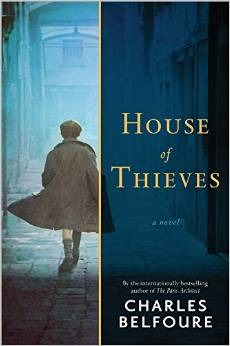
First up, the historical thriller, House of Thieves by Charles Belfoure.

At it’s essence this is the story of how a good, solid man turns to a life of crime, while still staying likable and good in our eyes.

Here is a tiny bit of set up.  It’s 1886 and the rich are VERY rich and the poor, very poor. NYC is run by respected crime bosses. They are criminals yes, but they also among the city's largest arts and political donors. They truly run the city. Our villain is Kent, a crime boss and his crew. Our “hero,” John Cross, is an architect for the very rich. But his son has a gambling problem. To resolve the large debt, Kent wants Cross to use his connections and knowledge to help him rob the homes of NYC’s richest residents.

But why you will like this book is how Belfoure writes it. What is so great here is how he managed to write a novel convincingly and accurately set in its historical time, while telling the story in a way today’s audiences like. He nailed both the historical and the thriller aspects.

For historical fiction fans, the novel has all the details of the time and place. It has a lot of information about being an architect to the rich at this time. And it has amazing descriptions of some spectacular homes. The streets, people, and places come alive.

And while I love historical details, sometimes, historical thrillers move to slow for me. I don’t know why I don’t mind it with regular historicals and do with thrillers, but I do and from our discussions in the crime fiction genre study and from my work with readers, I know I am not alone there [*cough cough* The Alienist]. But Belfoure has managed to use modern techniques like short chapters, fluid point of view shifts, and powerful action scenes to ratchet up the suspense and pacing.

Here are two examples that occur in the first 30 pages to illustrate what I am talking about.

First, the novel opens with an awesome bank robbery and explosion scene that then moves to the perspective of the crime bosses who are watching the scene unfold. The details set the historic tone, but the scene served the same purpose that today’s prologues in suspense novels do. We were thrown right into the middle of the story and are excited to keep reading to see what is going on and how our story will fit into this world.

And second [one of my favorite moments in the beginning of a book in a long time], at around page 30, we see the beginning of the day in a rich home. One of the things the wealthy of this time had were ice boxes. They were built into the side of the house with a door that opened to the outside so literal huge blocks of ice could be delivered to keep things in the ice box cold.  Well, what if you opened your ice box to find...A FROZEN SEVERED HEAD! That was pretty great.  Let’s you know this is not your typical historical thriller.

This novel is under 400 pages and has a moderate cast of characters who all get frequent turns to narrate with fluid and fast paced shifts in the point of view [the entire Cross clan, even the little 10 year old brother has a chance to narrate-- and that was good], yet it is moments like the two above throughout the story that keep the pacing high.

There is also social commentary and flashy fun here [a climax is at the top of the under construction Statue of Liberty!]. But what I loved the most was the ending. The decision Cross and his wife make about how they will live the rest of their lives after the ordeal under Kent’s thumb is over is what takes this book from good to awesome.

Three Words That Describe This Book: flashy fun, suspenseful, Gilded Age

Readalikes: I thought about Pete Hamil and his novel North River while reading this.  You can go to my review of North River, which also has readalikes [fiction and nonfiction]. The time period is different though (1934).

I also think the historical thrillers of Matthew Pearl are a good option here.  Both authors write compelling, historical thrillers with a solid amount of detail.  With Pearl the professional setting is usually book based. I have read a few of them.

But the nuanced characters and their surprising decisions reminded me more of the suspense novels of today.  Belfoure has much in common [protagonist wise] with Gillian Flynn or Tana French. I think House of Thieves is a great option for fans of those popular, literary, psychological suspense writer who want a bit more action and don’t mind the historical setting.

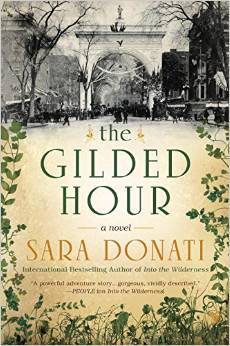
Next up is the medical framed, women’s lives, historical by Sara Donati, The Gilded Hour.

Here the date is 1883 and again we are in NYC. The story is about the forgotten people of this time.  It is about racial injustice, the suppression of women, medical advancements, and fertility issues.

Our main characters are two women, cousins, one who is half black, who are trying to provide birth control to women and how they were prosecuted by a real life Postal Inspector (who had a ton of political and legal power) and his crusade to suppress vice [The Comstock Act].

Okay first big difference here, the pacing. This is a 700 page, traditional historical. It moves at a much more methodical pace but one that is appropriate to the type of book; it is a pace that fans of a thick historical will expect and enjoy.

You know it will be a complex, historical because the families and major characters are listed in the front two pages and those who are real are noted. The novel also incorporates newspaper articles, telegraphs, and letters as a narrative device to keep up an authentic tone, as opposed to House of Thieves above, where things get a bit outrageous [but super fun] at times.  Again, same setting but two different readers.

This is a great read for people interested in the history of medicine, women's history [especially women in medicine], women's lives, and/or a history of women's health issues. There is a strong romance element here too.

There is suspense with the postal inspector trying to catch our heroes. There are many people [of all sexes and races] who help them along the way.  Things get tense and threatening but the overall story is not about the crime angle, it is more the issues I listed in the previous paragraph.


Three Words That Describe This Books: history of medicine, character centered, Gilded Age

Readalikes: The most obvious readalike is a TV series-- The Knick-- which I have written about at length with readalikes here.

Donati also mentioned the wonderful Destiny of the Republic by Candice Millard which I read here, for people who want more history of medicine detail from this era. I agree.

Another author who is similar to Donati is Jennifer Donnelly. Both write historicals featuring women and their lives with strong romance elemnts.  Interestingly, Donnelly has a very similar historical novel about social conscious female doctors, The Winter Rose.

Finally, a book I read which had a very similar feel, although is set in Brooklyn in 1700s and follows a woman who runs a gin still is Brookland by Emily Barton.  I highly suggest this for fans of a book like The Gilded Hour. You can click on the title for my full review.

Thursday, January 27, 2011

What I'm Reading: At Home

At Home: A Short History of Private LifeAt Home is the latest book by Bill Bryson.  It came out late in 2010, and I got to it as soon as possible.  Bill Bryson is not only one of my personal go-to authors, but he is also one of my sure bets for any reader who wants a "good read."  Bryson is also a sure bet in audio when he reads his books.  Generally, I avoid authors who read their work, but Bryson is a huge exception to this rule.  The personal tone he adds to his texts translate well when he reads them.  Also, due to his lifetime of traveling and years of living abroad, Bryson has an interesting accent that I find charming.

At Home is a unique work.  Bryson uses the rural English home which his family now lives in as the basis for a sweeping look at "private life."  He uses the home, originally built as a parsonage in 1851, as his literal guide.  The chapters are arranged around rooms and the outdoor space of the home.  Using his personal home as a starting point, he tells the history of how homes were constructed, how rooms were placed, and what life was like during the 19th century (mostly) in these homes.  But in true Bryson fashion, he does not stay within the confines of the home, and the book sprawls into nooks and crannies as far flung as Darwin's family tree, the discovery of bacteria, and English religious history, and that's just the tip of the iceberg.

Appeal: This is a book for people who like to see how seemingly small things are interconnected.  In this case the personal and intimate home and how it was changed by and changed society.  He throws facts at us at one after the other, leaving little time to recover before the next round comes.  But he is playful and humorous.  The reader is encourage to just hang on and enjoy the ride.  It is the details, Bryson's easy going style, and the shear mass of facts that readers love about Bryson.  All of that is here in At Home.

Three Words That Describe This Book:  history, casual, fun

Readalikes: At Home is very much like the microhistories of Mark Kurlansky and Simon Winchester.  All of these authors take something small and show its influence on the entirety of history. Specifically, At Home reminded me of Kurlansky's The Big Oyster.  Both are grounded in the 19th century, both have a focus on food (Bryson's chapters on the kitchen and the dining room were the most memorable to me), and both sprawl a bit far from their centers at time.  If you do not like gobs and gobs of details that could go off on 5 page tangents, do not read Bryson, Kurlansky, or Winchester. Speaking of those tangents, they work very well in the audio format also.

Bryson's ability to teach without preaching, combined with his ability to wow the reader with tons of interesting facts without seeming like a know-it-all (basically his casual but informative tone) is also reminiscent of Tony Horwitz.  Try A Voyage Long and Strange.

Bryson is also funny.  His sense of humor comes through as he describes how we have chosen to build our homes and live in them.  For example, Bryson tells us how the dining room used to be nowhere near the kitchen.  This is odd, but he raises it to humorous by then describing the great lengths people went through to get their food to table while it was still hot.  Indoor rail cars, anyone?  This ability to be informative, humorous, and, at times, irreverent, can also be seen in the nonfiction of Sarah Vowell(Assassination Vacation) and Mary Roach (Stiff).

Fiction suggestions are tough.  Like much of what Bryson writes, At Home is a book that will appeal to many readers, but for so many different reasons.  In my opinion, fiction writers who have a similar quirky and  humorous tone to Bryson, who like to cram a lot of information about history, time and or place into their novels, and who also tend to appeal to a wide range of readers are Jasper Fforde (fantasy), Connie Willis (science fiction), and Matthew Pearl (mystery).

Finally, I have seen Bryson compared to Mark Twain in a few different places.  I can really see that.  Try A Connecticut Yankee in King Arthur's Court for its similar time period and sense of humor.

Tuesday, September 11, 2012

Literary Guide to the NFL Season

I am a huge fan of the NFL.  I own season tickets to the Bears, I grew up going to most of the NY Giants' home and took a yearly sojourn to Philly for the Giants-Eagles game.  I own a Eli Manning jersey...and wear it a lot! I play fantasy football and am in 2 weekly picks pools.

So you get the point.  I love the NFL.  But, there I days when I feel like my love of football clashes with my obsession with literature and reading.  But the people over at the Page Turners blog (NY Daily News) have helped me to reconcile my two seemingly diametrically opposed loves, with a great essay analyzing the literature that best defines each team.  Use the linked title below to see the original post with pictures, or just read the text copy below.

But first a 2 bits on analysis here:
  1. Their overall point is one I love: there will only be one team with a happy ending, but after the season, each team will have a good story to tell.
  2. What a great way to branch out the concept of readalikes too.  Here are readalikes for you favorite sports team.  Brilliant.  And I thought I was inventive for offering book readalikes for TV shows.

Nerds and Neanderthals: A literary guide to the 2012 NFL season

America makes a clear distinction between bookish types and football types. The Nerd vs. Neanderthal dichotomy is a cornerstone of American culture (at least in American culture as presented in high school TV shows).  
But the truth is that football and literature do not occupy separate realms. As any fan knows, football is driven by drama of the game. Each week’s contests are served up with a mythological importance: Epic battles between the forces of good and evil; tales of impossible redemption colliding with heartbreaking falls from grace; traitors conspiring in the shadows of egomaniacal tyrants. And all of that is just on the New York Jets. 
So to help you make sense of this upcoming season, here is a literary guide to the 2012 NFL season, wherein we identify some of the most compelling storylines and narratives from each team and its literary equivalent.  While only one team’s season will have a truly happy ending  —every team will emerge with a few good stories to tell.  
 AFC East

Buffalo Bills: Tired of wallowing in mediocrity, the Bills have decided to throw caution to the wind.  They’ve opened up their wallets and are looking to a large man (DE Mario Williams) to show them the way to a happier life.
Literary Equivalent: "Zorba the Greek" (Nikos Kazantzakis)

Miami Dolphins: The Dolphins are the stars of the NFL reality show, "Hard Knocks." Will they be able to ignore the intense scrutiny of the camera and focus on their craft? Or will these highly-trained professionals succumb to the drama and allow their art to be compromised?
Literary Equivalent: "My Name is Red" (Orhan Pamuk) 
New England Patriots: A misanthropic genius (Bill Belichick) continually tinkers with his team, mixing and matching discarded parts into a fearsome juggernaut. Will his experimenting give birth to a breakthrough or an imperfect monster that ultimately leads to heartbreak?
Literary Equivalent: "Frankenstein" (Mary Shelley)

New York Jets: In the absence of true leadership, a culture arises that values bravado over all other virtues. This volatile mix of personalities must resist a descent into anarchy and choose between two imperfect leaders (Mark Sanchez and Tim Tebow) before they tear themselves apart.
Literary Equivalent: "Lord of the Flies" (William Golding)

AFC North

Baltimore Ravens: After years of striking fear in the hearts of men, is this the season that the great Baltimorean (Ray Lewis) finally meets his end?
Literary Equivalent: "The Poe Shadow" (Matthew Pearl)

Cincinnati Bengals: Pinning their hopes to an unproven but charismatic redhead (Andy Dalton), this swarthy crew hopes he has what it takes to lead them to glory.
Literary Equivalent: "The Long Ships" (Frans Bengtsson)

Cleveland Browns: As a Cleveland fan, you had better learn to love the pain.
Literary Equivalent: "Fifty Shades of Grey" (E.L. James)

Pittsburgh Steelers: Led by a man with a reputation as a headhunter (James Harrison), the Steelers play with the ruthless aggression of a bygone era. But has the world moved on and made their violent style obsolete?
Literary Equivalent: "Blood Meridian" (Cormac McCarthy)

AFC South

Houston Texans: Despite making their first ever playoff appearance, the Texans lost several key contributors on both offense and defense and begin the season with nothing but questions.
Literary Equivalent: "The Interrogative Mood" (Padgett Powell)

Jacksonville Jaguars: Compact but powerful, Maurice Jones-Drew packs a concise punch while toiling in relative obscurity.
Literary Equivalent: "The Collected Stories of Lydia Davis" (Lydia Davis)

Indianapolis Colts: Against a backdrop dripping with nostalgia, the team must learn to move on from their rich past. With a lot of (Andrew) luck, they just might be able to carve out their own place in the world.
Literary Equivalent: "The Joy Luck Club" (Amy Tan)

Tennessee Titans: In the world of fantasy (football), Chris Johnson had no equal… until reality came crashing down on him last season. Can he regain his footing in the fantasy realm and scramble his way back into our good graces?
Literary Equivalent: "The Talented Mr. Ripley" (Patricia Highsmith)

AFC West
Denver Broncos: Searching for a more beautiful brand of football, John Elway becomes infatuated with the talented Peyton Manning. In a vain attempt to hold on the glories of his youth, Manning strikes a deal with Elway in an attempt to retain his youth and delay the inevitable march of time.
Literary Equivalent: "The Picture of Dorian Gray" (Oscar Wilde)

Kansas City Chiefs:  Last year everything seemed to go wrong for Kansas City (particularly losing young stars Jamaal Charles and Eric Berry for the season), and yet they managed to come out on the other side, if not better, then tougher. Now the team must regroup and find the strength to keep pushing despite past heartbreak.
Literary Equivalent: "Play It As It Lays" (Joan Didion)

Oakland Raiders: This season will be played in the shadow of departed owner Al Davis, a hard-living Californian who notoriously bypassed prudence in favor of speed (Exhibit A: Darius Heyward-Bey).  As the team races on, will Davis’s legacy be one of triumphant ecstasy or wasted potential?
Literary Equivalent: "Less Than Zero" (Brett Easton Ellis)

San Diego Chargers: The team said goodbye to two legends during the off-season (Junior Seau and LaDainian Tomlinson). Will they be able to cope and do they have the key to unlocking playoff success and leaving their painful past behind?
Literary Equivalent: "Extremely Loud and Incredibly Close" (Jonathan Safran Foer)

NFC East

Dallas Cowboys: Are they an offensive juggernaut on the cusp of breaking through? An overrated glamour team with no guts? A mediocre team elevated by the grace of being in a high profile market? This team looks different from every perspective, and you're never quite sure which account is accurate.
Literary Equivalent: "Rashomon and Other Stories" (Ryunosuke Akutagawa)

New York Giants: Once again, the G-men are Masters of the Universe —  but can they maintain their perch at the top?
Literary Equivalent: "Bonfire of the Vanities" (Tom Wolfe)

Philadelphia Eagles: Everything seemed to be going their way, but the Eagles found themselves in a rut for most of last season. Will breaking up with Asante Samuel and starting a promising new relationship with DeMeco Ryans be enough for the team to recapture its mojo?
Literary Equivalent: "How Stella Got Her Groove Back" (Terry McMillan)

Washington Redskins: With this team there always seems to be magic in the air--at least during the summertime. Will the arrival of the enchanting Robert Griffin III be enough to finally turn their off season dreams into reality or will Washington fans eventually awake, disillusioned and unsatisfied?
Literary Equivalent: "A Midsummer Night’s Dream" (William Shakespeare)

NFC North

Chicago Bears: Under former offensive coordinator Mike Martz, the Bears strayed from its lunch pail roots and experimented with a more aesthetically pleasing brand of offensive football — with mixed results. Now the team looks to get back to the basics, going for substance over style with the realization that when it comes to football, beauty really is in the eye of the beholder.
Literary Equivalent: "On Beauty" (Zadie Smith)

Detroit Lions: The sharp rise from league embarrassment to “it” team has left team this struggling with a major identity crisis. Are they loveable upstarts or menacing bullies? Following an off-season featuring multiple arrests, this team has a lot of soul searching ahead of them if they have any hope of establishing an identity for themselves.
Literary Equivalent: "The Namesake" (Jhumpa Lahiri)

Green Bay Packers: Motivated by his humble beginnings (an embarrassing drop in the 2005 NFL Draft), Aaron Rodgers has climbed to such great heights that anything short of a Super Bowl is considered as a disappointment.
Literary Equivalent: "Great Expectations" (Charles Dickens)
 Minnesota Vikings: Recovering from a devastating leg injury, star running back Adrian Peterson must hold depression at bay if he has any hope of regaining his previous form.
Literary Equivalent: "Slow Man" (J.M. Coetzee)


NFC South

Atlanta Falcons: Last year, GM Thomas Dmitroff gave up a king’s ransom for the right to draft wide receiver Julio Jones, hoping that his rare combination of speed and power would put the Falcons over the top. After a promising but inconsistent rookie season, Jones is out to realize his potential and prove that he is the right fit for this team.
Literary Equivalent: "The Missing Piece" (Shel Silverstein)

Carolina Panthers: In his record-breaking rookie reason, quarterback Cam Newton displayed superhuman abilities, not only with his rocket arm, but with his uncanny ability to escape tricky situations. With his tenacious sidekick (Steve Smith) by his side, the unlikely duo is determined to take the team to new heights and change NFL landscape.
Literary Equivalent: "The Amazing Adventures of Kavalier & Clay" (Michael Chabon)

New Orleans Saints: After a tumultuous off season heavy with suspensions and fines (including a year-long ban for head coach Sean Payton), New Orleans fans will spend most of their season resentful and sending angry missives to NFL Commissioner Roger Goodell and other authority figures; letters that will probably never even be read.
Literary Equivalent: "Herzog" (Saul Bellow)

Tampa Bay Buccaneers: The Bucs have put together an intriguing cast of characters, but the question remains: Do they have the skill to successfully weave the different parts together into a cohesive whole?
Literary Equivalent: "A Visit from the Goon Squad" (Jennifer Egan)

NFC West

Arizona Cardinals: Since entering the league, Larry Fitzgerald has been one of the league’s greatest wide receivers and one of its consummate professionals. But since QB Kurt Warner’s retirement, his world has become a truly desolate place. With such scant signs of life around him, Fitzgerald can’t help but feel desperately alone on the football field.
Literary Equivalent: "Zone One" (Colson Whitehead)

St. Louis Rams: Despite a successful track record, head coach Jeff Fischer was unceremoniously dismissed from his position with Tennessee. Known for his disarming nature and straight- forward approach, Fischer will bring a new sincerity to a program that is in desperate need of a fresh perspective.
Literary Equivalent: "No One Belongs Here More Than You" (Miranda July)

San Francisco 49ers: Always the controversial figure, the enigmatic Randy Moss has been largely villainized in the court of public opinion. This is his last chance to prove that the stories aren’t true, that he has been misunderstood this whole time. It also wouldn’t hurt his cause if he could prove that he can still fly down the field.
Literary Equivalent: "Wicked" (Gregory Maguire)

Seattle Seahawks: Unable to find his perfect man, the likeable but unlucky Pete Carroll decided to take a chance on Russell Wilson — despite his obvious shortcomings. Will Wilson turn out to be the Mr. Right with whom Carroll can spend the rest of his life season?
Literary Equivalent: "Bridget Jones’s Diary" (Helen Fielding)

Monday, July 8, 2013

Monday Discussion: Summer Vacation Inside Fiction

With summer vacation talk heating up around here the Book Riot's post entitled, "Summer Travel: The Top 5 Places I’d Go If Fiction Were Open to Tourists" really caught my attention, enough that I thought I would ask you all the same question.

If you could take your summer vacation in a fictional world, where would you go? In the post, Jeanette lists some good ones like Harry Potter's world or George R. R. Martin's Song of Ice and Fire setting.

But what about you?

I'll go first, I have to say that I would love to visit the George Lucas created universe of Star Wars for a time. Just to get to travel through space and meet many different aliens. I wouldn't want to be a part of the intergalactic struggle of good vs. evil though. I just want to experience it

As I have mentioned on the blog many times before, I am also a fan of the mid-Nineteenth Century as a setting for my fiction and nonfiction. Any novel set during this era would be a way for me to time travel to this exciting time. So maybe a Dickens novel, or better yet, 2 books I read with a Dickens theme and setting which I loved were The Last Dickens by Matthew Pearl and Drood by Dan Simmons. But really anything set in the mid to late 19th Century in America or England would be a good fictional vacation destination for me.

Now it is your turn.

For today's return of the Monday Discussion, just as Jeannette asks here, where would you go if fiction were open to tourists.

For past Monday Discussions click here.

Tuesday, June 2, 2015

All ALA RA Programs In One Post Courtesy of RA Rundown

One of my MUST visit sites each and every week is The Reader’s Advisor Online Blog and their weekly RA Rundown [and it is not just because Sarah and Cindy link back here a lot, although they do, so thanks guys.]

Each and every one of you should begin your week with this column.  It breaks down all the books that are new to the best seller list, key titles that will be coming out in the coming week, and compiles all of the interesting links and CE opportunities that they compiled in the previous week. There is so much great [and fun] information packed into one concise and well organized post.

It is an easy place to get a ton of extremely useful and timely information and digest it quickly.

This week is a great example.  Cindy and Sarah have gone through the entire schedule for ALA Annual (less than 1 month away) and have organized all of the RA related programming in one place for all of us. They have put it in chronological order and have provided links to the program descriptions.

If you serve adult leisure readers and are going to ALA, use this list as part of your pre-conference planning.

Below I have reposted all of the info, but here is the direct link back to the column.  And add the Reader’s Advisor Online Blog to your MUST read list every week. It will be the most useful 5 minutes you spend at the start of every week.

_____________________________________________

ALA Annual Preview: RA-Related Programs
All programs listed at local San Francisco time. Please let us know if we missed something.

  • Friday, June 26, 2015 – 5:30pm to 7:00pm – Meet the Authors (various publisher booths)
  • Friday, June 26, 8–10 p.m. – The Michael L. Printz Program and Reception(tickets required)
  • Saturday, June 27, 8:30–9:30 a.m. – Gloria Steinem
  • Saturday, June 27, 2015 – 8:30am to 10:00am – AAP/Library Reads Book-A-Licious Breakfast with Anthony Marra, Celeste Ng, Stacy Schiff and others; Email Becca at bworthington@publishers.org to request an invitation.
  • Saturday, June 27, 2015 – 8:30am to 10:00am – Bookmobile Saturday – Bringing Service Beyond the Library’s Walls
  • Saturday, June 27, 2015 – 8:30am to 10:00am – HarperCollins Adult Book Buzz
  • Saturday, June 27, 2015 – 9:00am to 5:00pm – Meet the Authors
  • Saturday, June 27, 10:30 – 11:30 a.m. – Haifaa al-Mansour
  • Saturday, June 27, 10:30 – 11:30 a.m. – Zombies, and Vampires, and Spooks – Oh My!
  • Saturday, June 27, 2015 – 10:30am to 11:30am – Next Chapter Book Club: A Community-based Model for Engaging People with Disabilities
  • Saturday, June 27, 2015 – 10:30am to 11:30am – Reading into the Future: Tips and Tools for Staying on Top of the Book World
  • Saturday, June 27, 2015 – 10:30am to 12:00pm – Poster Session: Digital vs. Print: Reading Comprehension and the Future of the Book
  • Saturday, June 27, 2015 – 11:30am to 12:00pm – Not Another Sad Gay Love Story: LGBTQ+ Romances for your Library
  • Saturday, June 27, noon – 1:00 p.m. – Sarah Vowell
  • Saturday, June 27, 2015 – 1:00pm to 2:00pm – Reading Club Management: A New Solution
  • Saturday, June 27, 2015 – 1:00pm to 2:30pm – Beyond Tintin: Collecting European Comics in the U.S.
  • Saturday, June 27, 2015 – 1:00pm to 2:30pm – The History and Evolving Acceptance of Collecting LGBT Materials in Libraries
  • Saturday, June 27, 2015 – 1:00pm to 2:30pm – Unknown Knowns and Known Unknowns: How Speculative Fiction Gets Technological Innovation Right and Wrong
  • Saturday, June 27, 2015 – 1:00pm to 2:30pm – Welcome to Night Vale and Libraries—The Role of Librarians in the Podcast and Forthcoming Novel
  • Saturday, June 27, 2015 – 1:00pm to 2:30pm – Whacking the Weeds in the Library: Deaccessioning Print and Digital Materials in the 21st Century and Beyond
  • Saturday, June 27, 2015 – 2:00pm to 3:00pm – The Sounds of Romance in the Library-The Art of Narrating Audiobooks from Bonnet Busters to Bodice Rippers and Beyond
  • Saturday, June 27, 3:30 – 4:30 p.m. – Nick Offerman
  • Saturday, June 27, 2015 – 1:00pm to 5:30pm – Amazing Audiobooks for Young Adults
  • Saturday, June 27, 2015 – 1:30pm – 2:15pm – Beyond Print — Audiobooks, Braille, & Large Print
  • Saturday, June 27, 2015 – 4:00pm to 4:45pm – Girls Like Fart Jokes & Boys Have Feelings: Beyond Gendered Reader’s Advisory
  • Saturday, June 27, 2015 – 4:30pm to 6:00pm – Beyond Genre, moderated by Barbara Hoffert
  • Saturday, June 27, 2015 – 6:00pm to 8:30pm – The 17th Annual International Latino Book Awards
  • Saturday, June 27, 8–10 p.m. Carnegie Medals for Excellence in Fiction and Nonfiction hosted by Kareem Abdul-Jabbar (tickets required)
  • Saturday, June 27, 9 a.m.–5 p.m. & Sunday, June 28, 9 a.m.–4 p.m. – Banned Books Readout Booth (be part of the video)
  • Sunday, June 28, 7–9:30 a.m. – The Coretta Scott King Book Awards Breakfast(tickets required)
  • Sunday, June 28, 2015 – 8:00am to 10:00am – Literary Tastes Breakfast with Authors
  • Sunday, June 28, 2015 – 8:30am to 9:30am – Soon to Be Famous Author Project – How to Make It Happen
  • Sunday, June 28, 9–10 a.m. – YALSA’s YA Author Coffee Klatch (tickets required)
  • Sunday, June 28, 9:00a.m. – 4:00 p.m. – Meet the Authors
  • Sunday, June 28, 10:30-11:30 a.m. – Alex Awards
  • Sunday, June 28, 2015 – 10:30am to 11:30am – To Merge or Not to Merge? The Present and Future of Library Service Desks
  • Sunday, June 28, 2015 – 12:30pm to 2:00pm – Put the “YOU” in YouTube: Video Booktalks for San Diego Public Library’s Read and Ride Program
  • Sunday, June 28, 1–2 p.m. – United for Libraries’ First Author, First Book
  • Sunday, June 28, 2015 – 1:00pm to 2:00pm – Conversation with Congressman John Lewis and Andrew Aydin on March Book Two
  • Sunday, June 28, 2015 – 1:00pm to 2:00pm – One Book, One Community: A Model for Building Bridges and Bringing Authors and Resources to Underserved Schools
  • Sunday, June 28, 2015 – 1:00pm to 2:30pm – Lemony Snicket
  • Sunday, June 28, 2015 – 3:00pm to 4:00pm – We Need Diverse Books (WNDB) Presents: How to Move from Talk to Action
  • Sunday, June 28, 2015 – 4:30pm to 5:30pm – Sub-Librarians Scion of the Baker Street Irregulars
  • Sunday, June 28, 2015 – 4:30pm to 5:30pm – Marie Lu Chats With 8 Young Adult Debuts
  • Sunday, June 28, 5:30–11 p.m. – Newbery-Caldecott-Wilder Awards Banquet(tickets required)
  • Monday, June 29, 8:30–9:30 a.m. – From Cover to Screen—Books to Movies
  • Monday, June 29, 2015 – 8:30am to 10:00am – What Drives Collection Assessment? The “Why” That Brings You to “How”
  • Monday, June 29, 2015 – 9:00am to 1:00pm – Meet the Authors
  • Monday, June 29, 2015 – 9:00am to 10:00am – Booklist’s Read ‘n Rave
  • Monday, June 29, 10:30–11:30 a.m. – Edwidge Danticat
  • Monday, June 29, 2015 – 10:30am to 11:30am – Graphic Novel Petting Zoo
  • Monday, June 29, 2015 – 10:30am to 11:30am – Putting Your Patrons in the Driver’s Seat: Assessing the Value of On-Demand Streaming Video
  • Monday, June 29, 2015 – 10:30am to 11:30am – AAP/LibraryReads Mystery Authors’ Panel
  • Monday, June 29, 10:30 a.m.–noon – ALCTS President’s Program: Three Short Stories about Deep Reading in the Digital Age
  • Monday, June 29, 2015 – 11:30am to 12:00pm – Tough Books for Tough Teens
  • Monday, June 29, noon – 1:00 p.m. – Sonia Manzano
  • Monday, June 29, 2015 – 1:00pm to 2:30pm – Diverse Books Need Us: Half of All Banned Books Are by Authors of Color
  • Monday, June 29, 2–4 p.m. – United for Libraries’ Gala Author Tea with Adriana ­Trigiani, Matthew Pearl, Paula McLain, B. A. Shapiro, Sarah ­Pekkanen, and John Katzenbach. (Tickets required.)


  • In the Exhibit Hall: Look for The PopTop Stage, focusing on romance, diversity, mystery, and more, GraphiCon, ALA’s mini-ComicCon inside Annual, ALA Play, the Graphic Novel Stage, and the biggest Artist Alley yet. Also, Book Buzz Theater, where publishers talk about their new titles. Plus, Exhibit Floor Sunday, where a free continental breakfast will be served from 9:30–10:30 a.m. and exhibitors will offer special giveaways, signings, and ARCs throughout the day.
  • Thursday, August 23, 2012

    BPL Book Discussion: The Ghost Map

    Monday we met and had an engaging, interesting, and I would even venture to say a bit raucous, discussion of Steven Johnson's 2006 bestseller and award winning The Ghost Map.  Here is the official summary from the publisher:
    "This is a story with four protagonists: a deadly bacterium, a vast city, and two gifted but very different men.” So begins Steven Johnson’s multi-layered account of the 1854 London cholera epidemic. London was just emerging as one of the first modern cities in the world, but it lacked the public health infrastructure to support its exploding population. As a result, the city became the perfect breeding ground for a deadly disease. Rising up against the dogma of the scientific community, two men, Dr. John Snow and Reverend Henry Whitehead, attempted to put a stop to the epidemic, and in doing so revolutionized the way we think of the spread of disease, the nature of scientific inquiry, and the rise of the modern city.
    So yes, we had a great discussion about sewage and poop.  I was a bit worried before we started, so I made a conscious effort to get the uncomfortable stuff out of the way from the start.  I began by saying, "I know we usually start by asking who liked, disliked, and was so-so on the book, but I realize no one is going to admit to liking a book about poop, so I will change the question to who found the book interesting, not interesting enough to get over that it is about poop, or so-so."

    This did a lot to alleviate the discomfort a few people had when they came in.  I diffused the situation with humor and a direct acknowledgement of the subject matter.  If you discuss this book, even of you are okay with talking about poop in public (I'm all good, my hubby is a doctor; poop is tame for our house), don't underestimate how uncomfortable others may be.  Cut it off at the pass.

    Now on to the discussion:

    • We had 9 Interestings and 5 so-so, but not a single person raised their hand for not interesting.  People had different parts that they enjoyed more than others.  Many cited how much they enjoyed the history of science angle.  One person got specific and said she really liked following the discovery process.  Another group of people said what most intrigued them was how Johnson probed into why people hang on to a wrong idea for so long, and how John Snow worked tirelessly to change their minds.
    • One of my favorite comments of the entire discussion came from the participant who said that this book reminded her that "clean water is a gift."
    • We talked at length about how Johnson structured the book. This will come up frequently as I recount our discussion.  The first issue that came up about this was that there were a few people who disliked the opening chapter.  This chapter was all about the way the sanitation was handled by different people who worked in the underclasses in Victorian England.  There was a lot of detail about how poop was scooped and recycled/disposed of (to put it succinctly).  Those who really enjoyed the epidemiology part of the book, said they just needed to get past this part.
    • In general John structures the book in a narrative style. He is telling us the story of as I quoted above, "...a deadly bacterium, a vast city, and two gifted but very different men.”  This is not a linear story. As a result, they are a lot of "side stories" or tangents that Johnson goes off on for longer periods of time before eventually making his way back to Snow and Rev Whitehead (the two gifted men).  Some people were turned off by this wandering style, but a few others loved it. One participant said, "the way he told the story was exactly how my brain works; moving around and following the different leads and questions before going back to the main point."
    • The cholera bacteria itself is also a character here.  One woman summed it up perfectly. She started talking about how it attacked the body.  As she was going into some of the graphic details, she cringed a bit.  I asked her if it bothered her.  She straightened up and said, "Oh no.  It was gross, but it was great!."  We all liked learning how bacteria alone are nothing, but how when they come together, they get a group intelligence. We know all know how they use us to live, but when the cholera bacteria kills us, they too die, unless they can get back in the water supply to find a new intestine.
    • We talked about John Snow.  Below, I have a link to a large online archive of his work, and there I learned how he is not known in the normal world, but among doctors and medical workers, he is considered the best doctor ever.  We talked about why Snow was the man to finally convince the world that things we could not see in the water were causing cholera, not a bad smell.  Here are some things that were said:
      • he was curious
      • the ultimate researcher
      • cared about people
      • very skilled and studied every kind of medicine
      • lower class origins so was willing to go into the homes of the poor
      • was willing to look elsewhere for answers
      • He was more than a doctor: he was a physician, one of the first anesthesiologists, a statistician, an anthropologists, a sociologist, an epidemiologist, a map maker, a public health worker.
      • While Farr made a map of the deaths from cholera, Snow used the data and his work on the street level to make that death map into a ghost map.  It was about the people and how they lived rather than just statistics about where and when they died.  This was key to finding the index case and proving how the cholrea got from one baby's dirty diaper into the entire water supply for one neighborhood.
      • He was courageous: it takes courage to fight those with all the money and power, but Snow did it
      • We decided Snow was like a third party candidate would be today; this led us on a side tangent (Johnson would have been proud) on how much we need a third party candidate with Snow's qualities today. Someone who would allow us to look at the whole picture from a bird's eye view, just as he did with this cholera outbreak.
      • We decided that Bill Gates is like Snow.  He has the time, money, brains, and influence to tackle similar issues.  Right now, Gates is working on clean water issues in Africa.
    • This book is an emotional roller coaster ride, noted one person. We know Snow will win out and people will conquer cholera, making it safe to live in cities as a species for the first time in history, but the trip to get there was emotional.  Many of us were extremely touched by the discussions of entire families suffering and dying together behind closed doors.  But we also decided that the 8 days chronicled in this book really did change the world forever.  At least the suffering was all worth it.  But as a counter point, you could not relax while reading this book.  That comment really struck a chord with a majority of the group.  While everyone found the book interesting and are very glad they read it, very few enjoyed the reading experience in the traditional sit back and read a good book way. 
    • Back to the style for a second.  Not only are there a lot of side stories here, but a few people commented on how there is a lot of repetition.  Johnson hammers the same points over and over again.  One person said, "It was like my husband talking to me." I refocused the group and asked them to consider that maybe Johnson was repetitive for a reason.  In general I find that when something about the style bothers the group, if I ask them to consider why the author made this style choice and get them to stop thinking about whether they liked it or not, I can squeeze some discussion out of them beyond, "I didn't like that part." It was suggested that maybe he used repetition to underscore how meticulously Snow had to build his case against the miasma theory.  Johnson wore us down to show how hard it was to knock the prevailing theory down.
    • The last 2 sections (conclusion and epilogue) brought out a lot of negativity.  Multiple people asked where the editor was here.  The problem is that the tone changes.  The book proper ends with summing up the work of Snow and then a comment about how there is a still a pub on the same spot from that fateful summer, only it has been renamed The John Snow.  But then the conclusion and epilogue are, as one person put it, Johnson up on a soapbox. We liked how he made the case for living in cities as the best way for people to live: it is cheaper, greener, and safer.  We loved learning about how NYC's 311 helps them to collect data about how New Yorker's live. But then he gets into terrorism.  The best way someone put it was that the narrative shift was very jarring.  The book went from carefully constructed narrative to soapbox preaching.  Even when we agreed with him, we did not appreciate the style. We understood that he wanted to make the connection to today, but we felt he had already done that.
    • Instead, we decided we would have liked more about how people still hang on to ideas that are wrong and how we can convince people to change their minds.  Snow was an information manager.  Someone mentioned how today we are only at the beginning of "The Information Age" and we would have liked to see Johnson talk about that more. He only grazed the surface of that issue.
    • By the way, we wanted more detailed examples of Snow's maps.  You can see them online here, but in the book would have been good.  The one map we get is fuzzy and has very little detail.
    At the end of the book, Johnson points the reader to a webiste hosted by UCLA's school of public health that is deidcated to John Snow's life and times.  Click here to access it.

    Readalikes:  NoveList suggests some good readalikes for The Ghost Map in its book discussion guide.  They include but are not limited to:
    You can access the "why" each of these books works by going to NoveList through your local public library.

    I think these books represent a nice range of readalike option.  To these I wanted to add some other nonfiction that shares no subjects in common, but all are authors who combine science and history and write their books with an engaging style:
    I have also read a few historical novels which are engaging but also teach you something interesting and different:
    Finally, the last section of The Ghost Map has a lot about today's squatter cities with their similar structure to Victorian England.  One of this year's consensus best books addresses this issue directly, Behind the Beautiful Forevers: Life, Death and Hope in a Mumbai Undercity by Katherine Boo.  It makes a great 21st Century companion read to Johnson's Victorian set work.

    Tuesday, July 19, 2016

    Under the Radar Book Discussion Books

    Tomorrow, the Adult Reading Round Table's Literary Book Discussion and Leadership Training will be meeting in Batavia to discuss The Sisters Brothers.  Here is my post about this wonderful book from back in 2011 when I first read it.

    But today, I want to talk about the Leadership Topic designated for this meeting.

    From the ARRT book discussion site:
    As always, discussion of the book includes a nuts-and-bolts session devoted to sharing practical solutions to the problems and concerns of book discussion leaders.
    The Leadership Training Discussion, led by Elizabeth Hopkins, will offer participants a chance to share their favorite under the radar book discussion gems.  Please come ready to book talk a title or two that worked really well with your group. Try to focus on less obvious choices.  We will turn the notes into a Library Aware bibliography that everyone can share with their book groups.  Also, feel free to bring questions about specific titles you might want to try but aren't sure about to see if anyone has tried them already.
    I will not be able to make this meeting tomorrow, so today I am contributing a title to list we are trying to make to help every book club leader.

    As my under the radar title, I want to suggest The Ghost Map by Steven Johnson. You can click here for my full book discussion report, but I also made it easy for you [and for tomorrow's notetaker] and have attached it below.

    Look for the full crowd sourced list of under the radar book discussion titles that worked surprisingly well coming in August.

    __________________________________________

    THURSDAY, AUGUST 23, 2012

    BPL Book Discussion: The Ghost Map

    Monday we met and had an engaging, interesting, and I would even venture to say a bit raucous, discussion of Steven Johnson's 2006 bestseller and award winning The Ghost Map.  Here is the official summary from the publisher:
    "This is a story with four protagonists: a deadly bacterium, a vast city, and two gifted but very different men.” So begins Steven Johnson’s multi-layered account of the 1854 London cholera epidemic. London was just emerging as one of the first modern cities in the world, but it lacked the public health infrastructure to support its exploding population. As a result, the city became the perfect breeding ground for a deadly disease. Rising up against the dogma of the scientific community, two men, Dr. John Snow and Reverend Henry Whitehead, attempted to put a stop to the epidemic, and in doing so revolutionized the way we think of the spread of disease, the nature of scientific inquiry, and the rise of the modern city.
    So yes, we had a great discussion about sewage and poop.  I was a bit worried before we started, so I made a conscious effort to get the uncomfortable stuff out of the way from the start.  I began by saying, "I know we usually start by asking who liked, disliked, and was so-so on the book, but I realize no one is going to admit to liking a book about poop, so I will change the question to who found the book interesting, not interesting enough to get over that it is about poop, or so-so."

    This did a lot to alleviate the discomfort a few people had when they came in.  I diffused the situation with humor and a direct acknowledgement of the subject matter.  If you discuss this book, even of you are okay with talking about poop in public (I'm all good, my hubby is a doctor; poop is tame for our house), don't underestimate how uncomfortable others may be.  Cut it off at the pass.

    Now on to the discussion:

    • We had 9 Interestings and 5 so-so, but not a single person raised their hand for not interesting.  People had different parts that they enjoyed more than others.  Many cited how much they enjoyed the history of science angle.  One person got specific and said she really liked following the discovery process.  Another group of people said what most intrigued them was how Johnson probed into why people hang on to a wrong idea for so long, and how John Snow worked tirelessly to change their minds.
    • One of my favorite comments of the entire discussion came from the participant who said that this book reminded her that "clean water is a gift."
    • We talked at length about how Johnson structured the book. This will come up frequently as I recount our discussion.  The first issue that came up about this was that there were a few people who disliked the opening chapter.  This chapter was all about the way the sanitation was handled by different people who worked in the underclasses in Victorian England.  There was a lot of detail about how poop was scooped and recycled/disposed of (to put it succinctly).  Those who really enjoyed the epidemiology part of the book, said they just needed to get past this part.
    • In general John structures the book in a narrative style. He is telling us the story of as I quoted above, "...a deadly bacterium, a vast city, and two gifted but very different men.”  This is not a linear story. As a result, they are a lot of "side stories" or tangents that Johnson goes off on for longer periods of time before eventually making his way back to Snow and Rev Whitehead (the two gifted men).  Some people were turned off by this wandering style, but a few others loved it. One participant said, "the way he told the story was exactly how my brain works; moving around and following the different leads and questions before going back to the main point."
    • The cholera bacteria itself is also a character here.  One woman summed it up perfectly. She started talking about how it attacked the body.  As she was going into some of the graphic details, she cringed a bit.  I asked her if it bothered her.  She straightened up and said, "Oh no.  It was gross, but it was great!."  We all liked learning how bacteria alone are nothing, but how when they come together, they get a group intelligence. We know all know how they use us to live, but when the cholera bacteria kills us, they too die, unless they can get back in the water supply to find a new intestine.
    • We talked about John Snow.  Below, I have a link to a large online archive of his work, and there I learned how he is not known in the normal world, but among doctors and medical workers, he is considered the best doctor ever.  We talked about why Snow was the man to finally convince the world that things we could not see in the water were causing cholera, not a bad smell.  Here are some things that were said:
      • he was curious
      • the ultimate researcher
      • cared about people
      • very skilled and studied every kind of medicine
      • lower class origins so was willing to go into the homes of the poor
      • was willing to look elsewhere for answers
      • He was more than a doctor: he was a physician, one of the first anesthesiologists, a statistician, an anthropologists, a sociologist, an epidemiologist, a map maker, a public health worker.
      • While Farr made a map of the deaths from cholera, Snow used the data and his work on the street level to make that death map into a ghost map.  It was about the people and how they lived rather than just statistics about where and when they died.  This was key to finding the index case and proving how the cholrea got from one baby's dirty diaper into the entire water supply for one neighborhood.
      • He was courageous: it takes courage to fight those with all the money and power, but Snow did it
      • We decided Snow was like a third party candidate would be today; this led us on a side tangent (Johnson would have been proud) on how much we need a third party candidate with Snow's qualities today. Someone who would allow us to look at the whole picture from a bird's eye view, just as he did with this cholera outbreak.
      • We decided that Bill Gates is like Snow.  He has the time, money, brains, and influence to tackle similar issues.  Right now, Gates is working on clean water issues in Africa.
    • This book is an emotional roller coaster ride, noted one person. We know Snow will win out and people will conquer cholera, making it safe to live in cities as a species for the first time in history, but the trip to get there was emotional.  Many of us were extremely touched by the discussions of entire families suffering and dying together behind closed doors.  But we also decided that the 8 days chronicled in this book really did change the world forever.  At least the suffering was all worth it.  But as a counter point, you could not relax while reading this book.  That comment really struck a chord with a majority of the group.  While everyone found the book interesting and are very glad they read it, very few enjoyed the reading experience in the traditional sit back and read a good book way. 
    • Back to the style for a second.  Not only are there a lot of side stories here, but a few people commented on how there is a lot of repetition.  Johnson hammers the same points over and over again.  One person said, "It was like my husband talking to me." I refocused the group and asked them to consider that maybe Johnson was repetitive for a reason.  In general I find that when something about the style bothers the group, if I ask them to consider why the author made this style choice and get them to stop thinking about whether they liked it or not, I can squeeze some discussion out of them beyond, "I didn't like that part." It was suggested that maybe he used repetition to underscore how meticulously Snow had to build his case against the miasma theory.  Johnson wore us down to show how hard it was to knock the prevailing theory down.
    • The last 2 sections (conclusion and epilogue) brought out a lot of negativity.  Multiple people asked where the editor was here.  The problem is that the tone changes.  The book proper ends with summing up the work of Snow and then a comment about how there is a still a pub on the same spot from that fateful summer, only it has been renamed The John Snow.  But then the conclusion and epilogue are, as one person put it, Johnson up on a soapbox. We liked how he made the case for living in cities as the best way for people to live: it is cheaper, greener, and safer.  We loved learning about how NYC's 311 helps them to collect data about how New Yorker's live. But then he gets into terrorism.  The best way someone put it was that the narrative shift was very jarring.  The book went from carefully constructed narrative to soapbox preaching.  Even when we agreed with him, we did not appreciate the style. We understood that he wanted to make the connection to today, but we felt he had already done that.
    • Instead, we decided we would have liked more about how people still hang on to ideas that are wrong and how we can convince people to change their minds.  Snow was an information manager.  Someone mentioned how today we are only at the beginning of "The Information Age" and we would have liked to see Johnson talk about that more. He only grazed the surface of that issue.
    • By the way, we wanted more detailed examples of Snow's maps.  You can see them online here, but in the book would have been good.  The one map we get is fuzzy and has very little detail.
    At the end of the book, Johnson points the reader to a webiste hosted by UCLA's school of public health that is deidcated to John Snow's life and times.  Click here to access it.

    Readalikes:  NoveList suggests some good readalikes for The Ghost Map in its book discussion guide.  They include but are not limited to:
    You can access the "why" each of these books works by going to NoveList through your local public library.

    I think these books represent a nice range of readalike option.  To these I wanted to add some other nonfiction that shares no subjects in common, but all are authors who combine science and history and write their books with an engaging style:
    I have also read a few historical novels which are engaging but also teach you something interesting and different:
    Finally, the last section of The Ghost Map has a lot about today's squatter cities with their similar structure to Victorian England.  One of this year's consensus best books addresses this issue directly, Behind the Beautiful Forevers: Life, Death and Hope in a Mumbai Undercity by Katherine Boo.  It makes a great 21st Century companion read to Johnson's Victorian set work.