I can come to your library, book club meeting, or conference to talk about how to help your readers find their next good read. Click here for more information including RA for All's EDI Statement and info about WHY I LOVE HORROR.
I have no idea what happened, but finally, the One Book, One Chicago pick is cool. It only took 10 years. As announced here this week, Chicago will be reading Neverwhere by Neil Gaiman.
As I have mentioned here many times before, Neil Gaiman is one of my favorite authors. It is a great choice for the One Book, One Chicago program for many reasons. First, the book is urban. It is set in London and is all about the hidden world under the busy city streets. Chicagoans will be able to relate to the urban issues, but also, the idea of a complex system of underground tunnels, an understanding of which is key to the suspension of disbelief needed to enjoy this novel, is not foreign to us.
Second, Gaiman now lives in Wisconsin. He comes to Chicago frequently, he is very involved with the ALA and comics industry, and will probably be very willing to participate in the program. Author participation is key to the success of the program.
Third, this selection will draw younger readers into the program willingly. Yes, younger readers participated with To Kill A Mocking Bird, but that was more because they had to. Neverwhere, is appropriate for a teen audience, has a young protagonist, and is by an author deemed cool enough for young readers to pick up on their own. More importantly than attracting teens, Gaiman will attract 20-35 year olds, often the hardest demographic to get into the library (especially if they don't have children who they are bringing in regularly).
Fourth, Neverwhere is a challenging book. It has grit and realism mixed with fantasy. It asks tough questions about the choices we make with our lives. It is a story about a journey, about right vs wrong, and about finding yourself. Readers will have to take a hard look at their own lives and choices. I love it.
Fifth, Gaiman has an awesome website where he discusses his own work and larger issues in the world of reading and comics. I hope the program works with him to create web content. Gaiman has always been ahead of the curve in terms of a web presence. I hope the committee uses his expertise to enhance people's virtual experience with the program.
Finally, Neil Gaiman is a great author. He is one of the only writers out there today who has managed to write solid and entertaining stories for all ages, from picture books to adults. He has created one of the most imaginative and challenging graphic novel series ever with The Sandman. American Gods is one of the best "great American novels" I have ever read. He may be originally from England, but he has become one of our American treasures.
Welcome to the 2012 Author Death Brackets where some of the Berwyn Public Library’s most popular, living authors will participate in a virtual battle to see who comes out alive to claim the title as the favorite (and toughest) author among our patrons. There are 4 categories of 8 authors paired against each other, with the winner of each bracket squaring off in a final four battle.
The Death Brackets are to be taken with a sense of humor. The library does not condone violence or wish bad things upon these authors. We do, however, hope to lighten the tense election atmosphere by electing our own sole survivor.
Round One: 4 Battles Stephen King vs. Dean Koontz The first battle is a doozy, pitting two of the most popular horror authors against each other. While Koontz continues to write creepy bestsellers, King rules the charts with horror novels, science fiction, graphic novels, and short stories, and that is just in the last 2 years. With this slight upper hand, King turns dirty. Knowing that Koontz recently wrote a memoir about his dog, King kidnaps the canine, and kicks a distraught Koontz while he’s down for a swift victory. Winner: King
Jim Butcher vs. China Mieville Butcher’s Harry Dresden is a wizard living in Chicago, keeping us all safe from the seedy, supernatural underbelly. On the other hand, Mieville writes complex, layered, and interesting speculative stories that challenge readers to rethink the idea of genre constraints. But in the end, Butcher has the home court advantage, and his supernatural friends easily help him take down the more metaphorical Mieville. Winner: Butcher
Orson Scott Card vs. Neil Gaiman These two genre giants are honored to meet each other for battle and spend the opening rounds paying homage to each other’s genius. The longevity of Card’s Ender Wiggins series in particular puts him in a good offensive position, but in the end, Gaiman’s darker themes allow him to fight dirty. And when he pulls out his Newbery Medal, Card is forced to concede. Winner: Gaiman
George R. R. Martin vs. Jasper Fforde Fforde’s literary based fantasy series is extremely popular with patrons. Fforde brings his best weapon, the pun, to arm himself in battle, but the juggernaut that is Martin and his epic The Song of Ice and Fire series filled with deceit, violence, incest, and even zombies, pauses for just a moment to laugh at the first pun and then cuts Fforde down with one swing of the sword. Winner: Martin
******************************************************************** Round Two: 2 Battles Stephen King vs. Jim Butcher Butcher knows he has a difficult task ahead of him, going up against one of America’s greatest living storytellers, but the wizard Dresden has some dark magic up his sleeve. Too bad King has a monster of his own to counter attack everything Dresden throws at him. After weakening Dresden with an evil clown and a vampire, King finally brings him down in a wall of flames courtesy of his first creation, Carrie. Winner: King
Neil Gaiman vs. George R.R. Martin To counteract the literary might of the Newbery Medal, Martin sends the evil child king Joffrey out to the battlefield. Gaiman has a stable of bestselling creatures of his own, from superheroes to Norse Gods, but none of them are as desperate for power as the Martin characters battling for the Iron Throne. As prolific as Gaiman is the sheer number of brutal, blood thirsty, characters in Martin’s epic series overwhelms Gaiman, burying him and his Newbery in a fetid pile of bodies. Winner: Martin
**************************************************************** Round Three: 1 Battle Stephen King vs. George R.R. Martin Martin is feeling confident as his popular books and TV series are reigning supreme, but King is a grizzled veteran who has been at the top of the best seller charts for decades. The cocky Martin tries to put King away in the first round by releasing the dragons. But King, the horror master, sends out his full stable of evil beings to keep Martin tied up while he slips away to travel in time, back to the second before the battle begins, and attacks Martin from behind, ultimately ending this fight before it even began. Speculative Winner: King
2701 S. Harlem Ave
Berwyn, IL 60402 708.795.8000 x 3005 Berwynlibrary.org
This month I read a favorite author, a natural history title, and a holiday offering.
I read The Graveyard Book by Neil Gaiman as soon as I could get my hands on it. He is one of my favorite authors, but if anything, that makes me more critical. Luckily, he did not disappoint since The Graveyard Book made my top ten for the year. This new title aimed at "middle readers," was awesome. Our story begins rather gruesomely for a "children's book." An assassin, Jack, is climbing the stairs of an old home, carrying a knife that has already killed 4 members of the family, leaving only the baby boy in the attic left to be murdered. However, the toddler has escaped out the back door and into a nearby historic graveyard, now turned nature park. The boy's newly dead parents ask for the resident ghosts to protect the boy, and so begins the boy's life as the only living resident in the graveyard. Renamed, Nobody (Bod for short) the boy is raised by Mr and Mrs Owens and cared for by a guardian who can come and go from the graveyard, providing Bod with food, clothes, books, and contact with the outside world.
Although the story first appears to be a simple tale of Bod's interesting life, there is a larger story involving a secret society of assassins and Bod's mythic place in their world. Like all of Gaiman's works, there are richly drawn characters, beautiful descriptions, and a constant comparison between the living world and the fantasy world lurking just beneath the surface, specifically those that can travel between the two. This is a fast read, but it will also leave you thinking about its issues and themes for many days after its completion.
Although the book itself tells one continuous story, in true children's literature fashion, each chapter is almost its own self contained "story." This novel also contains wonderful illustrations by long-time Gaiman collaborator, Dave McKean. I also highly suggest checking out Gaiman's web site.
The most obvious readalike here is The Jungle Book by Rudyard Kipling. Bod's story of being raised in a graveyard by ghosts until he must rejoin the world of the living is a clever (and twisted) retelling of Kipling's classic story. Robin McKinley also writes fantasy for young adults which appeals to adults. Her narrative style, although not as blatantly horror laced as Gaiman's, is still clever and twisted enough to appeal to Gaiman fans. Try Beauty, her retelling for Beauty and the Beast.
A few days after visiting The Field Museum of Natural History with my kids, I began listening to A Short History of Nearly Everything by Bill Bryson. This is a great example of perfect timing; this book quickly discussed many of the things I saw at the museum. Everything is a short overview, as the title implies. Bryson takes the history of earth and picks interesting points to elaborate on. One of my favorite stories was about Yellowstone. Apparently, the geysers there are actually part of a huge inverted volcano that could blow at anytime, wiping out all life on earth. Scary stuff! Actually, this is Bryson's overall theme, the pure luck that we are here on earth at all, and swiftness with which we could all be annihilated.
Bryson mentions many scientists and writers throughout his book, but two would specifically appeal to fans of this book: Stephen Jay Gould and/or John McPhee. Newton plays a small part in Bryson's history, and I kept thinking of RebeccaSott'sGhostwalk which I read in September. It is fiction, but features Newton and his life story. Really, I think any historical fiction about science and scientists would work as a readalike here too. Pick your interest and look for titles. Here is the link for the 100 booksA Short History of Nealry Everything cites to get you started.
The title pretty much tells you what you need to know about the plot. If you like Dickens, A Christmas Carol, or just Christmas in general, this was a great title to read in the days leading up to Christmas. I do not know if it would hold up as well read in June though. Personally, I was so inspired by this book that I went out and bought multiple copies to give out as gifts.
But my favorite suggestion to people who are saying "been there, done that," about A Christmas Carol, is to read Jacob Marley's Christmas Carol by Tom Mula, based on the author's one-man show following Marley as he tries to save Scrooge's soul. Even the most jaded reader will enjoy this holiday offering.
Again, a review from a book I read in July. But hey, I am gathering all the spooky [but not all out horror] book reviews together this month.
The Ocean at the End of the Lane by Neil Gaiman was his first adult tale in a while. It is more like novella length, but has everything you would expect from Gaiman.
The work is framed as a remembrance. A middle aged man has come home to bury his last living parent, and while visiting the neighborhood where he grew up, the man remembers the odd family of women at the end of the lane, the Hempstock's. Specifically, he remembers one specific summer when the discovery of a dead man in his car, down at the end of the lane, leads him to meeting Lettie Hempstock, the youngest member of the family.
The 3 Hempstock women, who appear to be grandmother, mother, and daughter tell our narrator tales of the pond on their property, which Lettie claims is really a never ending ocean. This begins his entry into their world which operates on a different plane than the one he knew before.
I don't want to give away what happens because this is a short, yet extremely well plotted and rich novella. Gaiman has created a tale that you need to experience. It is a book that envelopes you (in a good way). So below, I will talk about the appeal.
Overall, this work is dark fantasy, not horror, despite one terrific scene at the climax of the book that is very close to horror. It is mythical and mystical, atmospheric and dreamlike, menacing and dark, but ultimately redeeming. Think a Hans Christen Anderson or Grimm's fairy tales, but aimed at an Adult audience.
This leads me to a disagreement I have with most reviews of this book. Many people have said that The Ocean at the End of the Lane is really more a YA book because it recounts a year when the protagonist was a kid himself. I COMPLETELY DISAGREE. I will explain in a slight rant now...
Begin rant:
The entire book is framed as being told from adulthood as a reminiscence on the day of his parent's funeral. The reason he is thinking back on the Hempstock women is because he is longing for those magical days of childhood. This is not a book for someone who is still a child. It is for adults to make them remember what was good about childhood and its imagination. We often need to recapture that as we grow up. That loss of a belief in something magical is a tragedy in adult life...all adult life. Books like these are a reminder. But that overall point is lost on a child or teen reading the book. Only an adult can appreciate the loss at the heart of this novella. Only someone who has begun their own family and started their adult life will understand the bittersweet tone. Only an adult will appreciate the revelation at the end of this book; the twist that explains it all.
A perfect example to drive my opinion home is the classic Shel Silverstein book, The Giving Tree. Think about how a child reads this book and how an adult reads it. That explains the point I am trying to make here. It is a completely different story to an adult than it is to a child.
Okay, rant over. Thank you for indulging me.
Three Words That Describe This Book: mystical, bittersweet, atmospheric
Readalikes: As I already said, think The Giving Tree here; the two stories are perfect readalikes. But a few more adult fiction options are:
The Snow Child by Eowyn Ivey. Why? Click here for the full review of the book with readalikes, but for the lazy ones out there my "Three Words" from that review are : retold fairy tales, strong sense of place, dreamlike
Swamplandia! by Karen Russell. Same deal as above; click here; "Three Words" are: slice-of-life, sense of place, quirky
Joyland by Stephen King which I just reviewed here. It has a similar ton,e but the Gaiman is much more magical and mystical. "Three Words" on Joyland are: nostalgic, fast paced, creepy crime fiction
Ocean at the End of the Lane reminded me of Something Wicked This Way Comes by Ray Bradbury, although the Bradbury work has a more sinister tone.
The award winning Among Others by Jo Walton would make a nice suggestion. It revolves around childhood, magic, and family secrets.
This tale reminded me of the very best by my trio of "slightly askew" authors: Millhauser, Donohue, and Brockmeier. Click on their names for more from me on each of them.
This webblog is the brainchild of Ann VanderMeer and Jeff VanderMeer. Ann has served as editor of Weird Tales and with Jeff co-edited such anthologies as The New Weird, the ebook antho series ODD?, and the just-released The Weird: A Compendium of Strange & Dark Stories (Atlantic/Corvus). Jeff is an award-winning writer of weird fiction whose last novel, Finch, was a finalist for the World Fantasy Award and the Nebula Award.
This site is meant to be an ongoing exploration into all facets of the weird, in all of its many forms — a kind of non-denominational approach that appreciates Lovecraft but also Kafka, Angela Carter and Clark Ashton Smith, Shirley Jackson and Fritz Leiber — along with the next generation of weird writers and international weird. The emphasis will be on nonfiction on writers and particular books, but we will also run features on weird art, music, and film, as well as occasional fiction.
I feel like they read my mind. "Weird" really gets at the heart of why I liked the books that I do. To help get things kicked off, The Weird Fiction Review interviewed the king of "weird," Neil Gaiman. Here is a direct link to the interview and below is an excerpt from the interview where Gaiman talks about why people are drawn to weird stories:
WFR: What do you think is the appeal of weird fiction generally? Gaiman: For me it’s like a visit to a strange place — a holiday in unearthly beauty and oddness, from which you may not always safely return. WFR: Do you see a difference between “horror” and “the weird” and “the gothic”, and does it matter to you as either a writer or reader? Gaiman: I think of Horror as a section of a bookshop, gothic as a type of book that ended, truly, with Northhanger Abbey, and The Weird as an attempt to unify whatever it was that Robert Aickman did, that Edward Gorey did — using the tools of horror to delight and transform. But I could be full of it. And no, it doesn’t matter.
There is no question that the #1 trend in all adult fiction is that genres are blending. This is not a new trend; in fact, I have been teaching it for years, but it is reaching the tipping point.
But what does that mean for us as we work with readers? Do we need to abandon “genre” as we work with readers? No, we just have to understand that genre is a tool. Tools help us but they need us to use them in order to “fix” things. Tools do not do the work themselves, they need a knowledgable user. Learn the tool and you can use it to it’s full potential.
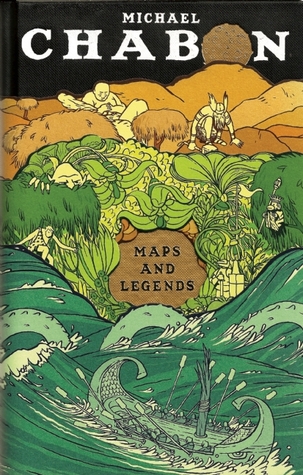
Earlier this year I did a talk entitled “Working With Genre Fiction Readers,” in which I addressed this genre blending predicament head on. In that presentation I talk about my favorite essay on this topic, Michael Chabon’s “Trickster in a Suit of Lights,” from the first chapter in his book Maps and Legends. The quick summary of this essay is that the very best literature happens on the “borderlands” where genres blend and merge.
I spend a lot of of my time trying to help library staff understand what makes a genre, a genre because in learning this you will be able to better navigate this spaces between them. This rich space is where more and more of the books we are matching up to our patrons’ tastes are operating within.
The first thing to remember..and think of yourself here... is that readers do not only read genre fiction. Even the biggest mystery fan in the world reads authors in suspense once in a while. While many horror readers love psychological suspense and dark fantasy.
Readers may not even classify themselves as a reader of a genre. As you work with them, you might realize they have genre preferences, but if they are not offering to label the books they like on their own, don’t do it for them. Keep the information and your suspicions to yourself and use them to help you tackle the problem at hand...finding this reader a book.
It is equally as important to remember while authors are definitely much more cognizant of genre, they are also not constrained by it. In fact, the conversation between Gaiman and Ishiguro, linked above, hits this point exactly. These two writers use genre liberally, but also nontraditionally, to craft universally accepted, award winning works of Literary Fiction. We can learn a lot from them, both about how to be a reader of today’s fiction and how to better help our patrons find their next good read.
Look, it is not as if genres are surrounded by electric fences and the writers and readers have to get zapped in order to cross genres. Neither is there a war zone between genres. You laugh, but I always worry when I teach genre specifics on the blog on in a webinar that you will all lose sight of this important fact. It is important to understand the specifics of genres, but only if you use this information as your guidebook to help you navigate through the RA transaction NOT as a law which if broken will put you in jail.
So let’s take our example from Chabon, Gaiman, and Ishiguro. Genre is helpful to start our conversations with readers. It gives us a jumping off point, but due to the nature of fiction today, we cannot allow ourselves to be constrained by it.
Also, the expert in this area of genre blending in our public library worldview of the issue is Megan McArdle, who literally wrote the book on the topic. You should also go to her blog, Genrify, and check out her book for a more detailed discussion on this topic.
In the current issue of Booklist, I have two star reviews of horror titles. One is the brand new Stephen King and Richard Chizmar novella that even I was surprised was so great, but the second was a total surprise-- a debut novel, by Andy Davidson, that knocked me off my feet. The King, that one your patrons will probably grab and inhale in one sitting on their own, but the Davidson...buy it, hand it out, even read it yourself. Trust me. This is one a wide range of people will enjoy.
As usual, I am including the full text of my draft review which always has a little more than ends up in the magazine plus the three words and such that I always include in my reviews.
Gwendy’s Button Box.
King, Stephen (author) and Richard Chizmar (author). May 2017. 168p. Cemetery Dance, hardcover, $25 (9781587676109). First published May 1, 2017 (Booklist).
The fictional town of Castle Rock, Maine is known around the world for the strange things that always seem to happen there. It has been a while since King let his imagination wander back to this beloved location, but with the help of award-winning author, Chizmar, Castle Rock is not only back, but it has returned to reveal one of its best secrets yet. Beginning in the summer of 1974, we meet Gwendy as she climbs 305 Suicide Steps to the top of Castle View to find a man in a dark suit and hat waiting patiently for her on a bench. He has something to give her, something beautiful but sinister, something magical but dangerous: the Button Box. It dispenses valuable coins and amazing chocolate treats, but its buttons can also be used to cause world-wide devastation, and Gwendy is now charged with keeping the box safe for the foreseeable future. What follows is a novella, told in a tone that is both sweet and ominous, of Gwendy’s coming of age. From a plump twelve year old to a college graduate, her time as the steward of the box is filled with its share of utter happiness and crushing sorrow. It moves quickly, as life does during these seminal years for us all, but where this novella shines is in the universal questions it asks of the reader. How much of any of our lives is of our own doing versus being a result of intervention from an unseen force? And, how much power do any of us have to save the world, or conversely, destroy it? Readers will eagerly devour this thought provoking and satisfying tale, even as it leaves them unsettled in its wake. Like The Ocean at the End of the Lane by Gaiman or Every Heart a Doorway by McGuire, this is dark fantasy storytelling at its best, regardless of length.
YA Statement: Like all of King’s works, there will be teens clamoring to read this novella. With its teenaged protagonist and thought provoking issues around growing up and finding yourself, this is an excellent option.
Further Appeal: Look, I’m not going to lie, I was cautious when reading this. Would it be as good as people were expecting? The answer is yes! I am actually surprised by how much I really loved it considering I started this novella daring the pages to impress me.
I know you don’t need me to hand sell this title to patrons, but you CAN use it to hand other titles to people, books they would never know about without your help. To help you, help them I have many readalikes linked through in the review above and below in my “Readalikes" section. So your marching orders are to use this title’s popularity to spread the word about other great reads. Three Words That Describe This Book: coming of age, dark (yet also sweet), nostalgic
Readalikes: I mention two other novella readalikes above by Gaiman and McGuire. Both are great options and the links I added go to the reviews I wrote with more readalikes. Click through above, especially with the Gaiman. The list of readalikes to Ocean at the End of the Lane works perfectly here too. All of the readalikes are novels, but they are not long and all move fairly briskly.
Another shorter title that is a tad bit more weird fiction than straight horror, but will appeal to people who like the thought-provoking story, coming of age themes, and open-ended nature of this novella is This Census-Taker by China Mieville. Like Gwendy and her magic box, here our young protagonist possesses darkly powerful keys.
Finally, if your patrons like this novella, they HAVE to read Chizmar’s novella found at the end of his most recent collection A Long December. The novella gives the title to the whole collection. You can read more about what I have to say about that novella here. Many may question how much Chizmar wrote in Gwendy’s Button Box, but if you have read A Long December, you won’t have any doubts as you can clearly see his skilled hand in this collaboration.
It is 1980 and the US is still reeling from the effects of the Vietnam War, especially in the harsh landscape of rural Texas. Travis is not a good man, he even wears a black hat. Haunted by his violent past, he takes it out on the women he meets. But one night, a strange, pale skinned girl leaves him bloodied and weak in his own trailer only to awaken with an inability to tolerate daylight and a strange and overpowering hunger. When widow Annabelle and her ten year old son Sandy, see the trailer in the parking lot of their long empty roadside motel, she offers the sickly cowboy some work around the place in exchange for his board. The three lonely souls soon strike up an awkward friendship, but not for long because a veteran Texas Ranger is following the trail of dead girls that leads right up to Travis’ doorstep, and no one, not even Travis, understands the monster they are truly up against. The shifting point of view smoothly moves between the major players, allowing the reader to sympathize with all, even the most evil ones. But this is not your typical vampire novel, rather it is actually a lyrical western, with a large dose of psychological suspense. Everyone has a secret here and no one is completely innocent. It is a story dripping with atmosphere, a hauntingly dark, yet oddly beautiful debut with wide appeal, where the plot and the characters play with your mind, and the pacing is like the harsh landscape, a slow but riveting burn. This is one that readers won’t easily forget after turning the final page. Hand it often to fans of literary, psychological suspense with a strong sense of place who don’t mind a subtle touch of the supernatural, and especially target fans of the film Hell or High Water and the novels of Cormac McCarthy or Stephen Graham Jones
Further Appeal: This book was amazing from the first page. First of all, talk about a flawed protagonist, Travis wears a black hat for goodness sake. The unease in this book starts from the dead, lifeless girl on page one and only builds from there; it is intense. The characters are all complicated and flawed. The setting is rendered perfectly-- both the beauty and savagery of the landscape and the time period [post Vietnam War]. And the whole vampire thing is so subtle. I normally dislike vampire stories, but for this one, it works perfectly both as a metaphor AND literally. But what is the most striking thing about this book it the lyrical beauty of its language. This is a book you can give out to readers who read for language. Over the years I have found that there are a lot of those readers. They don’t care as much about plot or other appeals as long as the language itself captures them. I was a little sad when I finished this book because I think I read the best debut horror book I will read all year and it is was only March when I finished it. Expect me to bring this one up A LOT in the coming months.
Finally, it is important to note that the Western is having a moment once again, but it is in this reimagined way. Pay attention to that because it is trend that is still on an upward trajectory.
Three Words That Describe This Book: lyrical, haunting, atmospheric
Readalikes: Seriously, if you could stuff Cormac McCarthy into Stephen Graham Jones- mix the old Texas master with one of the up and coming ones and have that newly created author write a book- you would get this novel. Mongrels by Jones and either No Country for Old Men OR The Road by McCarthy [depending on your personal preferences with storyline] are where you should begin. Mentioning No Country for Old Men which is also a very good movie, brings me back to the fact that in the review I give a watch alike. This book is more similar to Hell or High Water than any book I have ever read. The setting of that Oscar nominated movie is more contemporary, yes, but otherwise the feel, characterizations, and bleak beauty are all there. I hand sold this title to best selling horror author Jeff Strand based on this comparison alone. Finally, if you want a Southern Gothic classic that also has a monster storyline, but one that is not the crux of the story, try the often forgotten, but absolutely AMAZING The Reapers are the Angels by Alden Bell. It’s set in the aftermath of a zombie apocalypse, but the zombies are not why you read this novel.
The good news is you don't just have to take my word for it. A crew taped the entire thing and will be making a video to go up on Library Journal.com shortly. I will pass on the link when it is available.
The event went well enough, that Kathy and I are considering seeking out future author appearances (if the conditions are right) for the BPL. I'll keep you posted.
But back to the real world today, and for many of my friends and fellow librarians that means traveling to New Orleans for the ALA National Conference. I know two people who are stuck in airports right this minute.
Although I will not be there myself, I have been before and know that a successful conference requires planning. For what it is worth, I will share my advice today. Also, if you are not attending, remember, many of the presenters make their presentations available online for anyone to access. Next week, I will highlight some of these.
Here is the direct link to the website for the conference.
Please make sure to give yourself at least 2 separate times (preferably on 2 different days) to go through the exhibits. The exhibit area is huge, but useful. Talk to the vendors, you may learn a lot. Also, stop at the booths of the smaller presses. They are more willing to chat, and you will learn about books you may be missing. I have made some great contacts this way.
Yes some big authors will be there signing books, but ask yourself, is my time best spent standing in line for 2 hours to shake Neil Gaiman's hand, or should I use that time to go to a program and/or see more of the exhibits. This is the exact choice I was faced with at ALA in Chicago. I love Neil Gaiman, but I did not wait in line. Instead, I did go to see more exhibits, and with a huge number of people in line for Gaiman, I got a lot more done with smaller crowds.
Try a program that is just outside your area of experience. I always go to at least one Reference based program. Not only am I exposed to something new, these tangential program often allow me to look at my RA service from a different perspective. It helps you to think outside of the box and reassess your services from another angel. Try it.
Finally, if I had to pick one "not to miss" program, it would be Readers' Advisory Research & Trends Forum: What We Learn From Our Readers: A conversation with Nancy Pearl and Catherine Sheldrick Ross, moderated by Joyce Saricks. Click here for details. Joyce will also be accepting the Margaret Monroe Award on Sunday.
If you are going, have a great time. My cousin just graduated from library school and is making her first trip. ALA Annual is tiring but fun. Every library worker should have a chance to go once in their career.
This is a great list. Thanks to everyone who contributed. And thanks for helping me to remind everyone that an older book can still be a great read!
Now on to the best book you read with a 2011 copyright.
I just went through my Shelfari to look at my highest rated books, and two books clearly stood out, one I will save for another person who I know is posting it today. The other is Swamplandia! by Karen Russell. My full review is here, but I have also included an excerpt below:
This novel's sense of place is the next big appeal. Russell nails the descriptions here. I could feel, see, smell and hear the Everglades. She meticulously describes the islands, the waterways, the vegetation, the animals, the humidity....everything. I felt like I was there. It is beautiful and secluded, but also sinister and creepy. She relayed that dichotomy perfectly. It almost made me want to visit.
Okay, now it is your turn. What is the best 2011 released title you read this year? I will recap next week when I will be asking what books you are most looking forward to in 2012.
I love Chris Ware. Everything he does is wonderful. He really is brilliant. He also lives just up the street from the BPL in Oak Park, IL.
Yesterday, WBEZ posted this video of reporter Allison Cuddy's tour of Ware's home on their blog. He has an amazing collection of Gasoline Alley memorabilia, and is just an all around good guy.
Ware invited WBEZ into his home to help promote this weekend's Chicago Comic and Entertainment Expo at McCormick Place. The Expo is open to the Public today, April 17 from 10-7 and tomorrow, April 18 from 10-5.
Here is the list of who will be appearing. We are talking big names in graphic novels including Ware, pure text authors, and even Carrie Fisher and the guy who play Chewbacca!
Neil Gaiman,the award-winning author of novels, films, and comics including the epoch-changing graphic novel series The Sandman,will take the stage for a benefit appearance on behalf of the Comic Book Legal Defense Fund at the Chicago Comic and Entertainment Expo (C2E2). An "Evening with Neil Gaiman", a paid, ticketed event, will take place on Saturday night, April 17 at 7 PM in the Arie Crown Theater at McCormick Place in Chicago, IL. 100% of the proceeds will go to benefit the First Amendment legal work of the Comic Book Legal Defense Fund.
Tickets are still available.
I hate that it is 2010 and the comics industry is still fighting for their right to publish what they want. But they are...constantly! If you cannot make the dinner, please consider giving to The Comic Book Legal Defense Fund.
I feel like this is the week of trends. Earlier this week over on the horror blog, I posted about the surge in production of horror audio books, and today I NEED to tell you all about the importance of adding novellas to your library collections because not only are they becoming one of the hottest trends in publishing today, but they are also featuring some of the best stories.
Let's start with a tiny bit of background. Novellas have been a vibrant and popular form of story telling especially in the speculative genres of Science Fiction, Fantasy, and Horror. for a good while However, even though these 150ish page volumes were popular with readers, libraries rarely bought them for their collections. The argument always was that we don't have enough money to buy every novella, no matter how good, so let's not buy any. Plus, the argument went, those authors who were the best at the form, normally moved into novels, so we would be able to add these authors to our collections when their novels came out. I will not lie, I often came to these conclusions over my 15 years of buying fiction at a public library, even when it came to horror, and there I knew better because I had read some amazing stuff.
My point is, we all did it.
But, in 2013 Neil Gaiman released the fantastic novella, The Ocean at the End of the Lane [link goes to my review] and you would have been hard pressed to find any American library that did NOT order this. It was a huge hit. And it was 100% a novella.
And don't think publishers and authors weren't paying attention to that moment. Case in point- James Patterson's widely popular BookShots with the tag line: "Life moves fast--books should too. Pulse-pounding thrillers under $5 and 150 pages or less."
At first, libraries were debating whether or not they should buy and carry these novellas. Patterson is one of the top circulating authors for all libraries, and demand proved to be too much not to stock them. You can now find many Patterson novellas at your local public library. So no more saying we don't buy novellas in general for libraries. We have all violated this with either the Gaiman or Patterson titles. Every single one of us.
Now proof number three that novellas are not only worth our collection dollars because they are popular, but also, because they are really good. Yesterday, the 2017 Hugo Finalists were announced and I was surprised that I had not only read three of the titles in the novella category, but I had LOVED them all. And I read them on my own, not because I "had" to. Below is the list with links to my reviews where appropriate:
I think the reason novellas are trending has a lot to do with the eBook revolution. It has been widely shown that increased readership of eBooks has led people to read more just in general, in any format. People don't care how long something is anymore. Now that they are back into the reading for fun habit, people are looking for good stories, and more of them. Novellas are long enough to give readers the detail and character development they crave without sacrificing a swift pace.
The problem is with us--libraries. We are behind in this trend. We need to get over the blanket "no novellas policy," and stop only making concessions for the biggest name authors. We are missing out on some amazing stories, and the trend will keep building.
Now if you will excuse me, I am off to write a review for Booklist of the next huge novella hit, Gwendy's Button Box by Stephen King and Richard Chizmar. It will become further proof of all I said here as I will be giving it a whole hearted star review. It is up there with the Gaiman and McGuire stories as an excellent dark fantasy tale regardless of length.
Don't miss out on this trend. Not only do readers want more novellas, but authors are giving us excellent options to choose from. Why not try one to see for yourself?
This week our group met to discuss The Stolen Child by Keith Donohue. This debut novel was a huge hit when it came out it 2006. The Stolen Child was inspired by this Yeats poem that tempts a child from home, and has been described as mystical, a dark fairy tale, a bedtime story for adults, and a classic tale of leaving childhood and searching for your identity.
I have used this novel on many displays. Here is a modified version of the annotations I have used in the past:
At age 7, Henry Day is kidnapped by a pack of hobgoblins who replace him with one of their own.The chapters alternate between the experiences of human Henry and hobgoblin Henry.Neither Henry feels content in his life, and both are losing a grip on their true pasts.Their concurrent struggle to find where they came from lead the two Henrys to finally meet decades later. Although the ending of this magical novel is open, both Henrys do come to terms with who they have been, who they are, and who they will be.
The Stolen Child is a great choice for adults who want to try something with a touch of fantasy, but is still grounded in reality. It is especially appealing to readers who like Neil Gaiman, Audrey Niffennegger, and Gregory Maguire, but don't read much other fantasy. Trust me there are a lot of these people, and for them, we have a Fantasy for Beginners list which I created posted on the BPL website. I am always searching for new fantasy titles for non-fantasy readers.
Now on to our discussion. This was the first blatant fantasy book we tried as a group. I was a bit worried because as a group, these women prefer realistic stories. As we began, it was clear they were a bit uncomfortable with the fantasy elements. One of the participants put it best when she said, "Once I suspended reality, it was okay." Another said, although each Henry's story was not based in reality, they each felt "real" for that character. In other words, Donohue created a convincing place in which hobgoblins and people could realistically be living side-by-side.
No matter the opinion of the group on the fantasy aspects, they all agreed that the writing was amazing and his imagination "awed" one group member. Specifically, people liked how he intertwined with double, alternating stories without blatantly having each scene told from the two Henrys perspectives. Their stories overlapped at times, but there were many connections and references to objects, events or characters that the reader had to piece together. We all enjoyed discovering where things overlapped.
We discussed the 2 huge themes of "doubles" and "memory" in The Stolen Child at length. People also liked that each of the 12 faeries had their own personality, and even though their names seemed out of "Star Wars," as one participant put it, they were easy to distinguish and "get to know."
One of our lines of discussion centered on why the changelings world was falling apart. We talked about the encroachment of the suburbs on the forest, but then moved to talking about their destruction as a symbol of human "advancement." We modern Americans do not believe in magic as much anymore. We are too rational to have time for the superstitions of our parents and the old world. We then discussed the popularity of Halloween in America (It is now the 2nd most popular holiday in America behind Christmas), and thought that maybe it is so popular because it is our only chance to explore magic and superstition today.
We also talked about whether or not The Stolen Child is the "fairy tale for adults," that the publisher markets it to be, and if so, what is its moral. We decided there were 2 morals. First, to try to look at the world with a child's point of view from time to time. Second, remember to add a touch of fantasy into your adult life.
Of course I had to ask, who is the "stolen child" of the title; since3 it is singular, I forced people to only pick one child. Some said, Aniday (the faerie Henry) since he is literally stolen and is forced to stay a child. Some said, Gustav/Henry because his childhood was stolen and he got to relive it as an adult. But overall we decided the answer was us, the adult readers. We are each the "stolen child" because our childhood is gone; it cannot be relived and we may have lost its lessons.
That being said, this is not a depressing book, in fact, the two main characters meet towards the end and feel that they have forgiven each other. They have also each "written" their story as a confession to the woman they love, and that is another sign that they have come to terms with their lives and can move forward.
Appeal: mystical fiction, debut novel, dark fairy tale, doubles/twins, doppelgangers, changelings (hobgoblins), myths and legends, 2 points of view, history and details of the growth of the suburbs in the mid-20th century, details about music both classical and popular, families, domestic fiction, identity issues, magical realism, thought provoking, coming of age, blurring of good and evil, alienation, identity, genealogy, bedtime stories for adults, lost/missing children, wild children, impostors, secret identity, coping and loss, belonging, parallel universe, literary fantasy, open ending.
Readalikes: The Stolen Child has so many appeals to match that I have a huge list of fiction readalikes. I am going to list them as I instruct my students to do readalikes; I will list the book and give a few key terms as to why I feel the books match. See the appeal terms above also.
All books by Gregory Maguire (dark fairy tales, retelling of familiar stories)
Dr. Jekyll and Mr. Hyde by Robert Lewis Stevenson (doppelgangers, magical realism, gritty)
The Lovely Bones by Alice Sebold (debut novel, lost children, magical realism, coping and loss parallel universe, multiple narrators)
Droodby Dan Simmons (doppelgangers, magical realism)
The Graveyard Book by Neil Gaiman (magical realism, lost child, parallel universe)
American Gods by Neil Gaiman (folklore and legend, bedtime stories for adults, parallel universe)
Kafka on the Shore by HarukiMurakami (lost children, magical realism, coming of age)
The Thirteenth Tale by Diane Setterfield (twins, fairy tale for adults, literary, secret identity)
Her Fearful Symmetry by Audrey Niffenegger (twins, magical realism, literary fantasy, supernatural)
The Jungle Book by Rudyard Kipling ("wild child," coming of age without human family)
The Confessions of Max Tivioli by Andrew Sean Greer (coming of age, identity, magical realism)
You Remind Me of Me by Dan Chaon (three people's stories, memory, mythical)
The Wild Things by David Eggers (lost children, mystical fiction, coming of age)
Peter Pan by J.M. Barrie (magical realism, forever a child, fairy tale)
The Book of Lost Things by John Connolly (child narrator, parallel world, dark fairy tale)
Post-Birthday World by Lionel Shriver (2 stories told side-by-side, magical realism)
You can see why this book makes for a great discussion. There are so many other books it reminded the participants of. Even though reading fantasy was new and different for them, there were many familiar links we could make together.
Becky Spratford [MLIS] is a Librarian in Illinois specializing in serving patrons ages 13 and up. She trains library staff all over the world on how to match books with readers through the local public library. She runs the critically acclaimed RA training blog RA for All, writes reviews for Booklist and a Horror review column for Library Journal. Becky has been an elected Library Trustee and a former Board member for both the Reaching Across Illinois Library System and the Illinois Library Association. Known for her work with Horror readers. Becky is the author of three text books for library workers and the Locus Award nominated and Bram Stoker Award winning Why I Love Horror [Saga Press, 2025]. Becky was named one of the Chicago Tribune’s Chicagoans of the Year in 2025. She is on the Shirley Jackson Award Advisory Board and is a proud member of the Horror Writers Association, currently serving as the Association’s Secretary and Co-Chair of their Libraries Committee. You can follow Becky on Bluesky @raforall.bsky.social.

 I have no idea what happened, but finally, the One Book, One Chicago pick is cool. It only took 10 years. As announced here this week, Chicago will be reading Neverwhere
 by Neil Gaiman.
 , but that was more because they had to. Neverwhere, is appropriate for a teen audience, has a young protagonist, and is by an author deemed cool enough for young readers to pick up on their own. More importantly than attracting teens, Gaiman will attract 20-35 year olds, often the hardest demographic to get into the library (especially if they don't have children who they are bringing in regularly).
 is a great author. He is one of the only writers out there today who has managed to write solid and entertaining stories for all ages, from picture books to adults. He has created one of the most imaginative and challenging graphic novel series ever with The Sandman