RA FOR ALL...THE ROAD SHOW!

I can come to your library, book club meeting, or conference to talk about how to help your readers find their next good read. Click here for more information including RA for All's EDI Statement and info about WHY I LOVE HORROR.
Showing posts sorted by relevance for query gone girl. Sort by date Show all posts

Friday, May 23, 2014

Gone Girl Back at #1-- Readalikes For You

Two years after it came out, Gone Girl is finally in paperback, and of course, it went straight to #1 again. So it is back on the high demand holds list again.

Readers of this blog know that Flynn came to the BPL just as Gone Girl first hit number one, so we are HUGE Flynn fans here-- both staff and patrons.

Today, I have compiled a list of resources to help your Flynn fans to find similar reads.

This should help you to help readers as Gone Girl love is back in earnest.

[Click here to see our final Death Bracket match between Stephen King and Gillian Flynn].

Tuesday, June 19, 2012

Help Me Interview Gillian Flynn and Gone Girl Literary References

We are down to a handful of spots to see Gillian Flynn at the Berwyn Library.  I will be interviewing her.  I am working on a list of questions, as is the head of the BPL's writer's group, but I would love to hear what you want me to ask Flynn on July 11th at 7pm.

So now is your chance.  For the rest of the week I will be collecting your questions.  I hope to include readers' questions in my interview as long as they are appropriate.  If I use your question, I will note you in the interview.

You can leave questions in the comments, or email me.

In the mean time we are so happy to see that Gone Girl debuted at #2 on The New York Times Best Seller List.

In all the Gone Girl love, including my review, I found something fun to share.  Galley Cat ran a post of book references in the novel. Here is the link and below I have copied the list.  Enjoy.

We’ve rounded up our five favorite book references in the thriller, building a spoiler-free library for anybody who wishes they could keep reading Gone Girl
1. The Great Gatsby by F. Scott Fitzgerald Gone Girlquote: “My dating life seems to rotate around three types of men: preppy Ivy Leaguers who believe they’re characters in a Fitzgerald novel; slick Wall Streeters with money signs in their eyes, their ears, their mouths; and sensitive smart-boys who are so self-aware that everything feels like a joke.”
2. Tom Sawyer (free eBook link) by Mark TwainGone Girl quote: “He talks to me in his river-wavy Missouri accent; he was born and raised outside of Hannibal, the boyhood home of Mark Twain, the inspiration for Tom Sawyer.”
3. The Wind-Up Bird Chronicle by Haruki MurakamiGone Girl quote: “She’d made a grim figure on the Fiji beach during our two-week honeymoon, battling her way through a million mystical pages of The Wind-Up Bird Chronicle, casting pissy glances at me as I devoured thriller after thriller.”
4. The Martian Chronicles by Ray Bradbury Gone Girl quote: “She is reading The Martian Chronicles by Ray Bradbury. A sci-fi girl … ‘Good book,’ I toss over to her, a harmless conversational beach ball.”
5. Something Wicked This Way Comes by Ray Bradbury: ‘Guess what [he found] for me?’ [she] says. ‘Another book by the Martian Chronicle guy.’ ‘Ray Bradburrow,’ [he] says. Bradbury, I think. ‘Yeah, right. Something Wicked This Way Comes,’ [she] says. ‘It’s good.’

Thursday, August 6, 2026

NYT Ranks the 50 Best Thrillers of the Century so Far (and I was honored to be one of the experts they asked)

You might have seen that the New York Times Books Section released a list of the 50 Best Thrillers of the 21st Century So Far. I have a gift link available for you here

Back in May I opened an email from the NYT inviting me to participate. It came with my own personalized survey link. It was a great honor and a lot of fun, but I am not surprised that Gone Girl came in at #1. It was my top pick too. 

Before we talk about this list more, I need to take everyone back to 2012 when Gone Girl came out. I was one of the first people to read this book. I had met Gillian through an event my library hosted with Karin Slaughter. She got me an early copy of Gone Girl and I said to her-- I loved this book, but I am not sure American readers are ready to hate everyone in a book. Thankfully I was wrong. 

Before it was released, we set up a one on one interview with her and me at the Berwyn Public Library (where I worked). You can still watch baby Gillian and baby Becky do this interview here on the Berwyn Public Library's YouTube channel. This interview is so old, it was back when YouTube limited free accounts to 15 mins per video max. Such fun memories. My kids were 10 and 7 back then! It was so long ago.

That interview ended up being on the exact day Gone Girl hit the bestseller list and changed Gillian's life and well, everything about the psychological suspense genre forever- and in ways we haven't seen since Hitchcock. 

Anyone who was working in publishing or working with readers in any way in 2012 understood what happened. The Psychological thriller changes from being driven by men and serial killer characters like Hannibal Lecter to the female driven, domestic suspense, fueled by the unreliable narrator that we have now. 

So, when I got the email and my private survey link to be a part of this NYT list, I knew immediately that Gone Girl was on my list. I also included Girl with the Dragon Tattoo, My Sister, the Serial Killer, SA Cosby ( I can't remember which title I submitted), 11/22/62, and In the Woods among others. I say among others because I really don't remember my full list. It was due around StokerCon and I figured it out on paper and then entered it before I left and threw the paper out.

When you go to the list (gift link), you will see this header:

As voted on by 291 crime novelists, editors, booksellers, librarians and other book lovers. See how their ballots stack up.

I may not have my list of books highlighted here like my pals Stephen Graham Jones, Victor LaValle, and Daniel Kraus, but I want everyone to know they did care about us librarians. They are not just saying they asked us, I know they did. I am thankful for that.

I also want to note that every title has some readalike options. 

Get this list ready for your patrons, make lists online in in your buildings. Everyone will be talking about this for at least the next few weeks. Oh and go add some more copies of Gone Girl right now. 

And thanks to the NYT for including me in the creation of this fun list.

Monday, September 18, 2017

Understanding the Complex Appeal of "Girl” Thrillers

Look, I know you are all sick of books being called the next Gone Girl or the next Girl on the Train, and we could all use a break from the word “girl" in the title, but I also want to caution you all to not get so caught up in being sick of this trend that you lose sight of the fact that it is still a trend and patrons still absolutely love these books.

Seriously, it is still a huge trend, but often we are too busy poo-pooing the trend still being here that we forget to keep the patron’s experience in mind. There are reasons beyond the word “girl” appearing in the title that keep bringing people back to these titles again and again. We have to keep asking ourselves that question-- Why do readers continue to love these stories?

The reasons of course, differ for each reader, but when a trend stays around this long [it’s been 5 years and 3 months since Gone Girl first came out], there are still people coming to it with fresh eyes all of the time.  We need to stop being “too cool for school” for a few moments and remember that if this is what readers want, we need to help them find more they will enjoy, and we need to do it without rolling our eyes.

Thanks to my friend and colleague, Stephen Sposato, I read this article last week in Bustle entitled, “Why Do We Love To Read “Girl” Thrillers So Much? Experts Day It’s About More Than Suspense.”

The article is excellent and well researched. Many librarians were consulted to try to figure out why these books have such staying power. Conclusions such as the way the story is told and how these books serve as a bell ringer of the scary times we live in, were only a couple among many insightful appeal assessments. The article also talks at length about how not new this trend is.

Read it now. I promise it is worth the 10 minutes it will take you. Not only will it allow you to look at a trend you are sick of with fresh eyes so that you regain that enthusiasm to help a reader looking for more of these books, but also I bet many of you will be inspired to run out and create fresh readalike lists and displays featuring the “Girl” books that just last week you thought, “If I never see one of these books again it will be too soon.”

I hope you also take this one trend example of how important it is for us to hold back our judgement when it comes to our patrons. We may be sick of a trend because we see it from start to finish, but patrons come to us with a completely different background and context. They are only looking for a good book, a good story, one featuring the things they like. They don’t need our judgment and baggage.

The entire “Girl” trend, its staying power, and our attitude about it should be a warning. Trends like this keep us in business people. No one can afford to buy all of these books, but yet, everyone can’t stop reading them. Seems like a sweet spot which we fit into perfectly. Let’s embrace our place in the giant “Girl” machine.

Tuesday, June 5, 2012

What I'm Reading: Gone Girl

Unless you are living under a rock, you know that Gone Girl by Gillian Flynn comes out today!  I was lucky enough to read it back in March as I was planning Flynn's visit here to the BPL.  

I knew right away that this book had something special. As I have mentioned in my past reviews of Flynn's first 2 novels (here and here) she is one of the current masters of psychological suspense in the tradition of such greats as Alfred Hitchcock, Patricia Highsmith, and Shirley Jackson.  For those unsure of what I mean by psychological suspense, here is how I  it for the forthcoming ARRT Popular Fiction Workbook (available in early 2013 on NoveList):
Psychological suspense refers to books which put an uneasy atmosphere at the forefront, producing a chill in the reader; however, as opposed to horror, the fear and anxiety comes from very real sources because the monsters in psychological suspense are flesh and blood individuals who are frighteningly real, not speculative. These are books filled with serial killers, stalkers, and evil masterminds. They play with the psyches of their victims and the reader. Tension in these novels builds, the atmosphere is nightmarish, the chills do not let up, and the plot resolutions are disturbing and unclear. These are fairly literary novels filled with darkness, plot twists, and obsession.
Flynn's new book stands as the perfect illustration of this definition.  Let me be clear here.  This book is suspenseful, but not in the traditional fast paced sense.  It is still highly literary, with a lot details that are necessary for the first 150 pages, but boy when that twist comes (and it is a big one) those details pay off.

I can't give you more than the set up though because it will ruin everything.

Nick and Amy are married.  They are going through a difficult time.  They both lost their jobs, and moved from NYC to rural Missouri, Nick's hometown, to help care for his ailing mother. But as the book opens it is their 5th anniversary.  Except, that day, Amy goes missing and Nick is the prime suspect.

The book is in three parts.  In part 1, the pov alternates between Nick in the present and Amy's diary.  After this first part, there is a huge twist.  The alternating povs continues throughout the novel.  It creates a great he said-she said banter as the suspense builds relentlessly in parts 2 and 3. 

The twists keep coming.  They are believable, but shocking.  This is an important point to make about the book.  There is no hero here.  Nick is an admittedly flawed narrator who does himself no favors.  Amy is...well I won't say...but she is not someone you would want to be friends with.   But for a book that is going to be mainstream, I was surprised by how dark and twisted it was.  Don't get me wrong, personally, I love that about it, but I have patrons who might be unnerved by it.  Again though, being unnerved is the entire point.

If you want to read a smart, thought provoking, dark look at a marriage gone terribly wrong, read Gone Girl.  It begins with a slow build, that pays off with a second half that left me up late turning the pages and gasping with surprise.

This is one of the best books I have read in a long time.

Three Words That Describe This Book: twisted, shifting points of view, uneasy atmosphere

Readalikes:  First, go to my review of Dark Places to see a lengthy discussion of Flynn readalike options.

But specifically, as I mentioned above, this book really reminded me of a Hitchcock movie.  Also Amy is the closest character I have seen to the creepy, planned evil of Highsmith's Ripley character.

I also think Gone Girl is similar to Kate Atkinson's Jackson Brodie suspense stories.  Both are slower paced than their genre mates, filled with details that pay off in the end, and have a literary style.  Click here to bring up my posts which mention Atkison.

Congrats to Flynn on an amazing book. And don't forget to sign up to meet her at the BPL on 7/11.

Thursday, March 5, 2015

Gone Girl Reading Map

A few days ago, our old friend Christi, who has done a great job serving readers at the Naperville Public Library since her halcyon days as a BPL intern, got in touch to share her newly completed Gone Girl Reading Map.

Since I recently gave my popular Bridging the Physical-Virtual Divide talk where I mention reading maps, and specifically the article Christi and I wrote together for NoveList about how to create them (links on slide 17), I thought this was perfect timing to share her new map.

Here is a screen shot of the front page as well as a link to the actual map itself.

Click here for access to the reading map
Personally, I love all of Christi's reading maps.  One of the things she does best is create a template for the maps in general and then manipulates the look and content to fit each book.  When she was our intern, she set up the template and made us a bunch of maps. Our staff then each made one to add to the collection.  Here is the link to those maps plus some maps by other former students.

But this map specifically has a tab I love... "Caution, Spoilers!"  Gone Girl is all about the devious plot twists. Its appeal lies in how you feel about them.  She had to address them for fans who have read the book/seen the movie, loved it, and want more, but she also needs to keep it "spoiler-free" for the five people who don't know yet.  Clearly labelling that section was a great idea.  Plus the page itself has some great whole collection/outside the box reading and research suggestions.

And, of course I have to mention that under "The Author" tab, you can watch me interview Flynn back in 2012.

If you want to know more about Reading Maps, let me know and I can get you in touch with Christi.

Wednesday, January 27, 2016

What I’m Reading: Beside Myself

I heard about Beside Myself by Ann Morgan back in the Fall as part of one of the 2016 book previews arranged by the publishers and put it on hold immediately. [Thanks "On-Order" catalog records]

Here is the publisher's summary [which gives a very good set up in terms of the bare bones plot AND sets the ominous tone perfectly]:
Beside Myself is a literary thriller about identical twins, Ellie and Helen, who swap places aged six. At first it is just a game, but then Ellie refuses to swap back. Forced into her new identity, Helen develops a host of behavioural problems, delinquency and chronic instability. With their lives diverging sharply, one twin headed for stardom and the other locked in a spiral of addiction and mental illness, how will the deception ever be uncovered? Exploring questions of identity, selfhood, and how other people's expectations affect human behavior, this novel is as gripping as it is psychologically complex. 
Here’s what you need to know to tell patrons about the appeal of this novel.

The story is told in two alternating voices. The first is Helen from age six moving forward in time. The second is told by adult Ellie (who is really Helen) in the present moving forward from when Helen (who is really Ellie) has been in a terrible accident. The chapters are short and fast paced, switching back and forth every other chapter without anything to mark the shifts.

If you think that sounds confusing, you are correct, but it is also AWESOME.

Yes you need to pay attention here. Not only is it confusing because Helen is Ellie and Ellie is Helen, but the time frame is constantly shifting. It is purposely disorienting. And as a reader of a lot of psychological suspense, I am grateful for this. The way this novel is written and structured adds to the book's appeal. The swirling, twisting, spinning plot adds to the tension and anxiety of the story as well as underlining the issues of identity at the story's core.

You cannot escape the tension, ominous tone, and identity confusion even for a second. And it is that tension that lies at the heart of why people enjoy psychological suspense. Nicely done.

Even though you have to pay attention, the writing is so effortless and the narrative voice so compelling that the novel still moves briskly. You want to keep turning the pages to see what did or will happen. You can read this book in a sitting or two.

Besides Ellie and Helen, there are other family characters here including the mom, stepdad, half brother, a husband to one of the sisters and their daughter. Every character in this story is flawed. No one escapes unscathed. This also adds to the unease and tension Morgan means for you to feel.

There is also a great, evil twist at the end. I got angry at the character who admitted to the twist in a way I haven’t felt since reading Gone Girl or even Atonement.

This book will make you question the concept of familial love. It will make you look askance at your parents, siblings, and spouse. Talk about extreme unease. In fact, more than anything this is a book about the tone and mood. Everything that happens leads back to the tension. If you cannot handle serious psychological suspense, this one is not for you. Me? I love it.

Three Words That Describe This Book: extremely tense, intricately plotted, flawed characters

Readalikes: As I read Beside Myself I wrote down a few notes about readalikes.  The style of writing with the back and forth points of view and timeline with the unreliable narrator, and the narrative voice was definitely reminiscent of Girl on the Train, but the intense menace, unease, and identity issues here are also important. In those ways, I think this novel is more similar to Before I Go To Sleep. Use the links I provided to my reviews for these two titles to find a few more readalike options.

Besides Myself is also a great option for people on the long waiting list for the about to be released The Girl in the Red Coat by Kate Hamer. Both are British, psychological suspense tales that involve “missing” children and a back and forth story telling style.

And I know the comparison is overused, but in this case, Gone Girl is an excellent option. Between the tension, intricate plot, many flawed characters and big twists all framed by an intense family drama, fans of Flynn’s blockbuster will find much to enjoy here.

Sunday, November 24, 2013

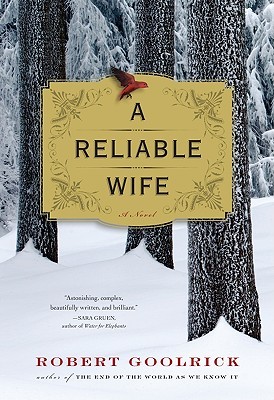
BPL Book Discussion: A Reliable Wife

Last Monday we met to discuss A Reliable Wife by Robert Goolrick, a very popular book club choice.  Here is the publisher's summary:

Rural Wisconsin, 1909. In the bitter cold, Ralph Truitt, a successful businessman, stands alone on a train platform waiting for the woman who answered his newspaper advertisement for "a reliable wife." But when Catherine Land steps off the train from Chicago, she's not the "simple, honest woman" that Ralph is expecting. She is both complex and devious, haunted by a terrible past and motivated by greed.
Her plan is simple: she will win this man's devotion, and then, ever so slowly, she will poison him and leave Wisconsin a wealthy widow. What she has not counted on, though, is that Truitt — a passionate man with his own dark secrets —has plans of his own for his new wife. Isolated on a remote estate and imprisoned by relentless snow, the story of Ralph and Catherine unfolds in unimaginable ways.
With echoes of Wuthering Heights and Rebecca, Robert Goolrick's intoxicating debut novel delivers a classic tale of suspenseful seduction, set in a world that seems to have gone temporarily off its axis.
 Now before I begin our discussion report, I do want to say a few things about the book.  It is a historical, psychological thriller with lots of sex and violence.  Actually, it has lots of lust paired with actual sex. My ladies were fine with it, as you will see, but I would say this is not a great choice for more sensitive groups. I think this book is best described as a train wreck.  We actually said this in the discussion.  You know you should stop being involved, but you literally cannot look away. It was my kind of book for sure and we had a great discussion, but The Art of Racing in the Rain this is not.

On to the discussion:

  • 8 liked the book, 5 disliked, and 2 were so-so
  • Those who liked the book:
    • I was hooked by page 15
    • I enjoyed the overall themes of love and whether or not we can rewrite the past.
    • I was prepared to dislike this book, but I got hooked early and found the moral ambiguity of the story utterly fascinating.
    • It felt real.
    • The settings, both the dead of winter in upper Wisconsin and the glitz of St. Louis, were engulfing.
    • I loved the way he brought in the plot twists into the storyline--brilliant!
    • I liked that the public library was Catherine’s refuge from her tough life.
  • Those who disliked the book:
    • I don’t know why I disliked it, I just did.
    • The characters were nasty, devious, and disgusting. I couldn’t relate to them, but even worse, I did not like them.
    • It was too sad
    • There was no morality
    • I don’t like when men write about women
    • I couldn’t sympathize
  • [I broke in with that last comment because you are not supposed to sympathize with these characters; you are simply meant to observe them; therefore if you disliked the book for this reason, that just means it is not the book for you. I tried to use this as a chance to have the participants think about their own reading preferences.]
  • Those who were so-so:
    • I liked the book, especially the first scene on the train platform. But I got tired of his descriptions at times, and felt they often went on a page too long.
    • I couldn’t empathize, which I usually need to like a book, but I had to keep reading to see what happened.
  • Question: Who is the real Catherine Land and do we ever see her?
    • There were so many lies pled on top of each other here, it was hard to keep them straight.  I had no idea what to believe.
    • I think at the book’s end she became her true self.
    • After she decided to stop poisoning Ralph she revealed her true self.
    • Seeing her with her sister; that was the real Catherine to me.
    • It was interesting to see how different Catherine was with Antonio vs when she was with Ralph.  We become the people we are based on who are are with at the time.  I see it with myself; I act differently with different people.
    • Ralph brings something good out of Catherine even though he is not all good himself.
    • I am not sure about Catherine.  Her main motivation was to find love and money. She found it, but is that the “real” Catherine now, or just the satisfied Catherine.
    • I am concerned more about what kind of mother she will be.
  • Question: Is there hope at the end of the book?
    • The ending was well written.  All three of the main characters are extremely flawed, all three are responsible for the death of Antonio, even Antonio himself.  Interestingly, he is the only one who refused to change, so he died and Catherine and Ralph lived.  I think that says there is hope for those who are willing to change.
    • I agree.  Catherine and Ralph are willing to solider on and find a way despite the horrors and difficulties of their lives.
    • Ralph accepts her even though he knew all about Catherine and Antonio.  It reminded me of Pretty Woman and that is a hopeful story.
  • Some general comments that came as this line of questioning petered out that I wanted to share:
    • All three characters wanted their cake and to eat it too.
    • Catherine saved Ralph (even though she was also the one killing him with poison) but she could not save Antonio.
    • Ralph and Catherine both appreciate true beauty, Antonio appreciates the facade.
  • Question: Why does Ralph allow himself to be poisoned?
    • He cannot punish himself enough for what happened to his first wife. He felt he deserved what was coming to him.
    • He punished himself with forced celibacy and by isolating himself.  It wasn’t enough to bring him absolution.
    • His mother wrecked him from the start. He was doomed.
    • Catherine is the one who realizes that he deserves a second chance.
    • Catherine was not a good person but she was also not a murderer.
  • Catherine and Alice
    • This was a foreshadowing of Antonio’s demise.  Catherine couldn’t save her sister, so why would Antonio be different?
    • There are many parallels between Alice and Antonio and they go deeper than the first letter of their names.
    • Catherine tried to give Alice a good life, but it wasn’t enough.
    • Catherine’s experience with Alice’s death was very similar to Ralph’s experience with Emilia’s death.
  • Catherine’s Secret Garden
    • This a a raw book, it is down and dirty, but a garden has beauty and needs nurturing. The garden was a sign that spring was coming, both the season, and the spring of Catherine’s life.
    • The book ends with spring and with Catherine pregnant with Ralph’s baby.
    • Her dreams of the secret garden gives her purpose.
    • The garden is a sign of hope in the story.  Catherine is pregnant, the house is filling up with more servants.
    • The end is cold but now without threat because spring is just around the corner.  Catherine and Ralph had threatened each other but now they come together.
    • I liked the line, “Living takes time.”
  • People still wanted to talk about the ending more
    • I thought the ending seemed too happy for the book.
    • I disagree. I felt troubled and uneasy about the fact that it seemed so happy.  After everything they have been through it can’t be that easy.
    • I liked the ending because I liked Catherine and Ralph together.  They were not bad people deep down, they just had bad things happen to them.  All of their secrets and lies came out in the end and they still accepted each other.
    • The crazy and bad lies were all in their way, now they are gone.
    • But, this also seems like Ralph’s story with his first wife starting all over again...maybe?
    • Well, unlike Ralph and Emilia, Catherine is willing to work for the garden and life.  Emilia was not, so maybe this time the story will have a happy ending.
  • Does Catherine live up to Ralph’s definition of a “reliable wife?”
    • Yes: 8 people, the rest abstained because were not sure.  We had one definitive no, “not according to my definition.”
    • I think she is reliable because she saves Ralph’s life: literally and figuratively.  
    • Catherine is probably the most honest person in the book.
    • Someone read her letter to Ralph from page 12 where she is lying about her life as a missionary’s daughter, but if you go back to the same letter we think is a lie after you finish the entire book, she is actually revealing her true self.
    • He wanted someone just to be there but he got so much more.
    • They were each other’s problems but also ended up solving each other’s problems.
  • What’s with Catherine and Antonio as a couple?
    • It was very shocking to find out that they knew each other.
    • Did they love each other? Yes Catherine loved him, and Antonio did love her in his own way.
    • I don’t think they loved each other but they were useful to each other.  Catherine taught Antonio how to be a proper gentleman and he made Catherine feel younger.
  • Exaggerations in the book
    • Everything in this book was exaggerated.  The wealth of Ralph, the setting, the sex.  But it helped to remind us that we were not supposed to relate to the characters.
    • There were many.  We listed some:
      • Mrs Larsen’s cooking
      • the weather
      • accident at the beginning of the book.
      • also the ending accident that caused Antonio’s death
      • life in St. Louis
      • sex
      • madness
      • wealth
  • There are many side stories about madness and violence throughout the book.  Why?
    • It highlighted the cruelty and madness in all of their lives
    • Catherine and Ralph are the “last men standing.”
    • These vignettes grounded the story and made it more believable.  
    • These side stories also mirror the troubles in Catherine and Ralph’s life.  In both cases these problems are no one’s fault but everyone is responsible.
    • Isolation is a huge theme here and the vignettes emphasize that.
  • Final Comments
    • Forgive each other and you can move forward.  You forgive yourself and accept who you are and you can live.
    • Ralph’s last words echo this, “such things happen.” He is accepting and moving on.
    • So much lust in this book.  Lust for people, things, and power.
    • Nothing is clear cut here at all.
    • Interesting because Catherine hates “middles.”  She loves beginnings and endings but can’t stand the middle.  This entire book is forcing Catherine and us to deal with the ambiguity of the middle.
    • I enjoyed the contrast between city and rural life at that time.  Life was hard for everyone then.
  • We always end with words or phrases to describe the book:
    • hopeful
    • erotic
    • historical suspense
    • throughout provoking
    • ambiguous
    • cold
    • selfish
    • exaggeration
    • compelling
    • unsympathetic characters
    • dysfunctional family
    • sad
    • self revealing: as I was reading about these people I thought about myself and my own past mistakes.

Readalikes: As we mentioned above, the key to whether or not you would enjoy this book lies in this basic fact-- you are meant to observe the characters more than relate to them.  No one comes out of this story "the good guy." These are deeply flawed and scarred people who are willing to stay married despite it all, but as many of us said, so, what we couldn't stop reading to find out what happened.

Talking about the book this way, I would make a perfect readalike suggestion this way: A Reliable Wife is a historical version of Gone Girl by Gillian Flynn.  Seriously.  If you liked Gone Girl, this book will appeal to you. You can also click here for my review of Gone Girl where you will find other readalike suggestions.  In fact, I went back to my Gone Girl review and found that I used these 3 words to describe the book: "twisted, shifting points of view, uneasy atmosphere," and these also perfectly apply to A Reliable Wife.

Roz Reisner on NoveList offers two really great suggestions:
  • A Prayer for the Dying by Stewart O'Nan: "Readers who enjoyed the shivery psychological suspense of A Reliable Wife may also like this novel, set in a small town during a diphtheria epidemic. Both novels are set in late 19th century Wisconsin and focus on characters with dark secrets."
  • Secrets of Eden by Chris Bohjalian: "Secrets of Eden also explores the dark side of a marriage in a small town and the third party whose presence is a catalyst for trouble. Bohjalian's characters are also not what they seem and will keep the reader guessing their motivations."
These are great suggestions of popular titles also worthy of being read for a discussion group.

Another title I would add to Roz's suggestions which is also a psychological thriller that is compelling and revolved around familial deception is The Expats by Chris Pavone [which has been on my to-read list for awhile now].

If you want to know more about the place and time, Goolrick suggests reading Wisconsin Death Trip by Michael Lesy, which has become quite a cult classic.

Finally, this novel plays homage to many classic Gothic stories.  The similarities to Rebecca are too numerous to ignore.  Wuthering Heights and The Secret Garden are also echoed in the story.  And a newer Gothic tale which revolves around family dysfunction and a plot twist filled story with unreliable narrators and deeply flawed protagonists is The Thirteenth Tale by Diane Setterfield.  Any of these titles is a good choice.

Monday, November 7, 2016

RA for All: Call to Action-- LISTEN!

The Call to Action is back after the October hiatus, and today’s post while not about the election tomorrow at all, is actually inspired by it. Today, I want to firmly remind everyone out there to LISTEN. Of course I mean as we are helping patrons, but I think it is a good reminder to all of us, for all of our interactions, with everyone we meet.

But, this is a blog about library workers helping leisure readers find materials in our buildings, so I will leave the bigger picture implications to the side for now and move into our specifics.

One of the biggest problems library workers have as they help leisure patrons look for their next good read is that we don’t actually hear what is being asked for because none of us are being active listeners.

We ask patrons to tell us about a good book they have read recently and as soon as they mention the title, our brains run off to start thinking of readalike options. We stop listening when they utter a title and don’t continue to have a CONVERSATION where we listen to the patrons explain WHY they enjoyed the book. We run off to make connection based on our version of that title, or even another patron’s [who we may have helped at a previous point in time] version. But that reader, in front of you, talking to you, has so much to teach you about their version of the book-- what it meant to them, why it was a good fit, and what else they would enjoy. When you stop actively listening at the mention of a title, you stop doing your job.

I see this happen all of the time. Someone says they liked The Girl on the Train. If you stop listening, you might run off to find this reader as many female driven psychological suspense stories as possible. But if instead, you had stopped to listen to this specific reader [as I discuss here], you will see that it is the compelling narration that the reader really enjoyed. In fact, this example reader loved that she didn’t even think about solving the mystery in the novel while she was reading it because she was having so much fun following Rachel. She even described this dark, gritty book as beautiful [again, click here for more details on this patron interaction].

Now this added information is a huge clue as to what titles the reader may also enjoy that goes much deeper into her specific reasons for enjoying the book, but I would have missed this clue if I had stopped actively listening after she uttered “The Girl on the Train,” and assumed I knew what she wanted.

How can we get better as listening during the RA Conversation? Well, I like to focus on the words the patron is using and then repeat those words back to him or her. This shows that I am understanding what he or she is saying to me. It also helps me to actively listen because I have a job to do-- repeat key words back.

Once I think I have a handle on it, I try a suggestion I am pretty sure this person has read, to gauge how I am doing.  In this case, I did NOT ask if she had read Gone Girl because that does not have a likable, unreliable narrator; Flynn's are unreliable, yes, but not likable at all.

Instead I asked if she had read Before I Go To Sleep by S J Watson- another compelling, narrator driven suspense story where the narrator herself is unreliable but extremely likable. [Click here for details on that title.] She had read it and loved it.

Now you may think I just struck out there by suggestion a book she has already read, but I am here today to tell you the opposite is true. I just won big time! I gained this patron’s trust immediately because I just proved to her that I “got her.” I truly listened to her and understood why she like The Girl on the Train. Now that I had gained her trust and proved that I cared enough to listen, we were able to have a deeper conversation about what she was truly looking for in a good book. We were able to move beyond simply throwing titles back and forth and talked about what she was looking for. It turned out she was also interested in how The Girl on the Train also makes a statement about how people today get wrapped up in, even obsessed with, the tragedy of others.

So, I took all of the knowledge I gained by listening and I eventually suggested two books that are mentioned in this post, The Bones of You by Debbie Howells and The Truth About the Harry Quebert Affair by Joel Dicker. You can click through to read more details, but the point here is that neither of these titles is one that you would normally find on the standard The Girl on the Train cookie cutter readalike lists.

Don’t get me wrong, those lists are great for passive RA or for when we are in a hurry. But when we are engaging our patrons in a face to face RA conversation, they deserve more. We need to listen.

Tuesday, August 5, 2025

What I'm Reading: August 2025 Issue More Reviews

I have 5 reviews in the August 2025 issue of Booklist. I am breaking them up into 2 posts. Yesterday I had the three starred reviews of three very different books (novel, stories, nonfiction). Today I have 2 more reviews from this issue, both are by up and coming writers who you MUST keep your eye on.

But first, a reminder that these posts are my draft reviews with added appeal info including my three words.

Book cover for Her Wicked Roots by Tanya Pell
Her Wicked Roots

By Tanya Pell

Aug. 2025. 352p. Gallery, $29  (9781668087299); e-book (9781668087312)
REVIEW. First published August 2025 (Booklist).

Cordelia (Cordi) is on the run from the city orphanage, on her way into the country, to the last place her older brother was living before his letters abruptly stopped, in Pell’s original, creepy and queer retelling of Hawthorne's, “Rappaccini’s Daughter.” When Cordi arrives, everyone denies having known her brother. Desperate for answers, Cordi gets a job at Edenfield, home of botanist Lady Evangeline, a lush but disconcerting estate, a place she knows her brother visited. The all female staff pray to the “garden,” while the Lady’s mysterious daughters, Primrose and Briar, seemingly full of life, are kept locked away, the servants who tend to them forced to wear masks and gloves. Readers follow Cordi as she unravels layers of poisonous secrets, searches for her brother, and falls in love with Briar. Will Edenfield be the place where Cordi can finally thrive or will she be called to the garden? For fans of Tripping Arcadia by Mayquist or Mexican Gothic by Moreno-Garcia, featuring a Gone Girl-esque twist that will plant this story’s wicked roots deep into readers' souls.

Three Words That Describe This Book: retelling, botanical horror, Gothic 


Further Appeal:  This one was a solid 4 out of 5 until I got to the ending and then it shot up to a 4.5. 

I have so many spoiler notes on the ending that I WILL NOT SHARE here. You will have to read it. I did settle on that line in the review about a "Gone Girl-esque twist." I actually told Pell about this review and that line when I saw her at StokerCon and she totally agreed. I was worried it was too spoilery but she thought it was perfect!


As I said above this is a queer Retelling of Rappaccini’s Daughter by Hawthorne. Whil you don't need to know the details of that original to enjoy this story, I did want to share the basics of that story here. It is about Giacomo Rappaccini, a medical researcher in Padua who grows a garden of poisonous plants. He brings up his daughter to tend the plants, and she becomes resistant to the poisons, but in the process she herself becomes poisonous to others.


Botanical horror is hot! I need to let you all know this if you do not. Keep an eye on this subgenre. Plants can be very deadly and a variety of authors use that underlying dread and danger to tell a great story. But this is more than the poisonous plants and the daughters Lady Evangeline created to be poisonous as well. The horror here also comes from the traditional Gothic story with a great modern ending.


For this book we are in England, Victorian times (when the original Hawthorne was written). Cordelia is an orphan on the run from the city where she has lived in the home her whole life. She is trying to find her brother who went away and was sending letters....until they stopped.

She ends up in the town where he last lived but the family he worked for won't admit he was there. She finds the grand, lush, and secretive estate-- Edenfield where clues have led her to find that her brother might have worked at. She asks for work and they take her on.


Well, as you can imagine this grand, secretive house, that everyone in town is scared of is....well creepy is the nicest thing you can say. Again, no spoilers because this is a retelling of Rappaccini’s Daughter-- so we know the botanical horrors-- that the Lady is into poisons and we are not surprised when Cordi (her nickname) is asked to mask and glove up to help[ tend to the Lady's daughters-- for you see-- they have been made poisonous by their mother.


There are chants and prayers to the garden-- which they thank for giving them "all." Cordi is new and not privy to all the rules and backstory so the reader must investigate with her. She may have had a rough life before Edenfield, but she is still very naive as she never lived outside the walls of an orphanage.


Men are forbidden, and straight out hated, by Lady Evangeline and the other female workers. The townsfolk stay far away. It is very creepy. But also beautiful and lush. The story unfolds like a myth in many ways and a thriller in others. Cordi's unreliableness is because of lack of info but is she being taken advantage of? How evil is Lady Evangeline? Is she just a protective mother and a brilliant scientist? Where is her brother? Cordi keeps finding clues that he was there at one point.

Even if you don't know the original story this is a retelling for, the book is solid. That is a key factor when assessing a retelling. It has to stand on its own but also add something to the original. This absolutely does. 

The word wicked in the title is well placed here. Actually, the title itself is pretty great after you finish the book. This one packs a nice surprise and I am excited to read more from Pell in the future. 

Readalikes: I mention a botanical, queer horror title and Mexican Gothic above. I have read both. This is a great Gothic in the mold that came after SMG's subgenre redefining work. Anyone who likes her reimagining of the Gothic, bit also keeps the story in its time and place but giving the female protagonist a bit more agency and not making it "all in her head." And titles that have actual supernatural monsters alongside the human ones.

Specifically, I thought of Midnight Rooms by Coles when I read this. It has the same traditional Gothic meets consensual sex storyline and both a built on a family secret and our protagonist not having all the info about the real secret.


More botanical horror that readers might enjoy can be found here or here.


Book cover of Galloway's Gospel by Sam Rebelein
Galloway’s Gospel
By Sam Rebelein
Sept. 2025. 384p. Morrow, $30  (9780063423954); e-book (9780063423992)
REVIEW. First published August 2025 (Booklist).

Rebelein’s (Edenville) third book in his Renfield County mythos (connected but can be read in any order) sets loose imaginative humour and unrelenting dread on a cult themed horror novel. Told in 2 timelines, narrated by 2 Rachels– Galloway and Durwood– readers know from the terror-inducing opening that something very dangerous has escaped through a previously collapsed tunnel. Teenager Galloway, bored in her history 2009 class, makes doodles about a lost American colony where a pig eats her teacher’s arm and poops out flowers. In 2019, Durwood, a member of the X-Files-esque Renfield County Guard, is trying to solve the mystery of what happened ten years ago when Galloway and her disciples sowed a path of death and destruction before sealing themselves off from the rest of the world. As the two timelines collide, Rebelein organically morphs the attention grabbing, comic aspects of the story into a nuanced, compelling, and thought-provoking tale of terror that will linger with readers. For fans of Kiste’s The Haunting of Velkwood and Khaw’s The Library at Hellebore.

Three Words That Describe This Book: cults, connected world, X Files vibes


Further Appeal: 
Like Edenville-- this is bonkers in all the right ways. Unrelenting dread because we know what is coming. Also, imaginative monsters -- both human and supernatural. Compellingly paced especially with the dual timelines switching back and forth. Well formed characters as well. 

This is the story of 2 Rachels. Rachel Galloway in 2009 and Rachel Durwood in 2019. Their last names are used to keep them apart.


Galloway is a bored HS student whose doodles about a made up lost colony become a prophecy and create a cult that before they sealed themselves off form the rest of the world (physically) caused a lot of death in Burnskidde (a town at the edge of Renfield County). The cult involved her doodles coming to life-- pigs that when someone sacrifices a piece of themselves poop out a plant of whatever that person wants or bats that eat "bad flesh" and turn it into animals  for example. The believers survived a fog that killed many and have been living and surviving through their pigs, bats, and more.


In 2019, Durwood who works for the Renfield County Guard is drawn into the cult after one of her fellow Guard members goes in and tries to escape but is killed. He leaves enough notes for Durwood to make it through the recently opened tunnel that connects the two worlds.


As the two timelines collide, Rebelein brings the 2 stories together organically. The "bonkers" parts from 2009 start to make sense in the world he has created. As readers go through it is less bonkers and more thought-provoking-- which was clearly his point. Grab your attention at the start and make you read to see how he is going to put it all together. Really it is a very imaginative and original story.


The investigative, X Files parts, in Durwood's timeline will draw new readers to Renfield County for sure. 


There are tethers to Edenville and The Poorly Made here. Meaning all three books are tethered to each other but the great part here is, you can read them in any order. Rebelein gives you the lore you need for each book to make it makes sense. It is there and seamlessly incorporated into the story. 


Previously I have said that Rebelein's Renfield County books are reminiscent of Lovecraft Country and Josh Malerman's Goblin universe. But what I like about Rebelein's stories is that while everything is in a shared world and each story build on the overall world, each book is unique. So while Edenville was more Cosmic Horror, and The Poorly Made stories were more Folk Horror-- building the history and lore of the place over a longer time frame and also entrenching some of the monsters of the mythos into the land itself-- this one is a horror novel about cults with serious X Files vibes. I thought of completely different readalikes. 


That is very good and says a lot about Rebelein as a writer-- that he can connect everything effortlessly and they are all unique. It also means each book will bring in new readers.


Readalikes: I had a whole list but I had to settle on two for the review. Those two together give you a full sense of everything in this book. Also just above I mentioned Lovecraft Country and Josh Malerman's Goblin universe. Also, another book I just reviewed in Booklist-- 8114 by Hull works very well here too.