RA FOR ALL...THE ROAD SHOW!

I can come to your library, book club meeting, or conference to talk about how to help your readers find their next good read. Click here for more information including RA for All's EDI Statement and info about WHY I LOVE HORROR.
Showing posts sorted by relevance for query locke and key. Sort by date Show all posts

Monday, October 8, 2012

What I'm Reading: Locke and Key 5-- Clockworks


This is a cross post with RA for All: Horror.  The BPL is closed today and I am hanging with the kids. Please enjoy.

I have great love for the Locke and Key series by Joe Hill and Gabriel Rodriguez.  Click here to access my horror review index and read detailed reviews of the first four installments in the series.

I am all in on this series.  In fact, I went as far to proclaim national library conference back in March:
While there are physically more series, some of the best horror writing in general, series or not, is happening in the format of the graphic novel.  This has a bit to do with the fact that horror lends itself nicely to the visual form; you can say a lot with pictures in horror.  However, it is not only the fact that these works are illustrated that makes them better.  I have been finding that the most interesting characters and the richest story lines are coming out in the comic format.  I am not alone in this opinion.  Take for example the most recent Eisner Awards for the entire comics industry and click here to see that Joe Hill won for best overall writer of any comic, for his horror series, Locke and Key.  In my opinion, there really isn't a better horror series, in any format, right now than Locke and Key.
Now to Clockworks specifically.  This is the fifth installment in the series, and as Joe Hill announced, there will one more cycle of comics to be bound as the hardcover, Omega next year and then a 7th installment compiling all of the side, historical stories of the Locke family and their history with the keys (some of which I have bought on my own at my local comics store and read already).

Speaking of, that is what Clockworks focuses on--the history.  When we left the Locke family in the 4th volume: Keys to the Kingdom, Zack/Dodge has possessed the youngest Locke, Bode, although no one knows that; they all think they killed Zack/Dodge.  But Clockworks does not advance that story line at all.  Instead, Hill introduces a key that opens an old clock.  The clock takes the 2 older Locke children, Tyler and Kinsey, back to the past.  Interestingly, the clock only goes up to 1999, so the kids cannot see their future, which of course was their first instinct.

So as readers we not only go back with the kids to the start of it all, in the 1770s, but we also go back just one generation.  The story focuses on Ben and Miranda Locke (Tyler, Kinsey, and Bode's parents) in their own time.  The clockworks key allows all of us to see why Dodge turned bad, why Ben and Miranda ended up together, how the keys moved into the next generation, and why Tyler and Kinsey are running out of time to stop the insanity on and for all.

With Clockworks Locke and Key continues to be the very best horror series in any print format.  With this 5th book, Hill concentrates on character development.  By going into Ben and Miranda's story not only do we get valuable information about these key characters, but the story is advanced.  It takes a lot of discipline as a writer to hold off on many of the key details this long into a series.  But now, with only 6 chapters to go, the characters have all been given further depth AND the stage has been set for an epic showdown between the Locke kids and some seriously evil magic.

Locke and Key is also excellent because the story is not predictable.  Joe Hill is THE BEST horror writer today and this series solidifies that.  He adds things to his story lines that are unpredictable but not out of left field. Hill is able to honor the tropes of horror while adding his new spin. The main theme of the entire series is as old the horror genre--the seduction of evil magic.  Even though you want to use it for good, very bad comes when you unleash an evil power. We are used to this story line, but the way Hill executes it is unique and original.

Finally, as good as Hill's stories are, Rodriguez's art is amazing.  He is able to convey emotion in his drawings.  When you are dealing with supernatural elements, it is easy to go over the top, but his art is restrained, much like a good horror story.  We get enough to keep us unsettled throughout, and then he gives us the payoff at the big action moments with bright, complex drawings with enough gore to portray the horror, but nothing too gross.  I also love the way he has portrayed Kinsey's fear throughout the series.  These creatures come into play in this installment.  Which brings me back to Hill's awesome character development.  He is so good at writing complex characters, that even a main character's fear is a memorable character.

Three Words to Describe This Book:  compelling, complex characters, unsettling

Readalikes: You can use this link to see the numerous read alike options that I have given for this series in the past.  I have mostly given graphic novel suggestions, but today I want to offer suggestions for people who really like that the story is happening in both the present and the past.  So here are some other compelling, unsettling, and character centered novels that tell a story in 2 time periods.  All links are to reviews if available:

Thursday, March 27, 2014

What I’m Reading: Graphic Novel Round-Up

In the past few months I have a read a few graphic novels, and I will quickly review them all here. It’s Spring Cleaning Super-Sized!

The first title is a compilation of info graphics about graphic novels entitled, Super Graphic: A Visual Guide to the Comic Book Universe by Tim Leong.  Some of the infographics are specific to a certain series and others are more general.  For example, you can see a graphic depiction of the the Marvel Universe, a history of Manga in visual form, or a graph charting the sadness scale of Chris Ware all in one book.  It is a fun and novel way to look at the world of comics and is the perfect read for fans of any graphic novels  and comics as well as a great choice for librarians who want to learn more about the history of the format.


This is a book best digested in pieces, not all at once.  I was fasciated by the infographics every time I cracked the book open, but they were each chocked full of so much information that after  reading a few, my head was spinning and I needed a break.  But then, when I returned back to the book, I was again enthralled for awhile. This was a constant cyle for me.

This book was especially enjoyable because I had spent much of 2013 engaged in the ARRT Graphic Novel Genre Study.  Super Graphics felt like a combination recap/pop quiz.

I highly suggest this book for anyone who works with comics and graphic novel readers. Since the scope here is huge, no one is enough of an expert in every area of every type of graphic novel to not find something new and/or interesting here.
Three Words That Describe This Book:  fascinating, huge scope, intensely visual

Readalikes: This is easy.  I suggest you take a look at Super Graphics and try NOT to find a suggestion for further reading.

But for people more interested in Infographics than the comics world, try The Best American Infographics series, edited by Gareth Cook and now in its second year.

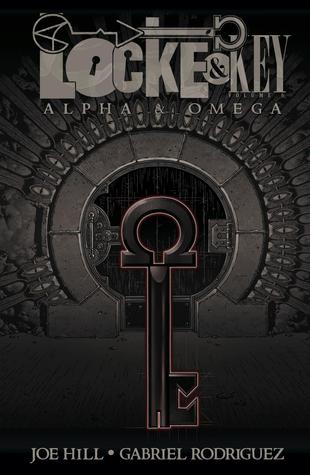
Much like my review earlier in the week on the 6th book in the Flavia de Luce series, I also recently read the 6th, but in this case FINAL, installment in my absolute favorite horror series by Joe Hill and Gabriel Rodriguez, Locke and Key. The final compilation is titled Alpha & Omega.

The Locke and Key story can be recapped in full by looking at my reviews of the first five volumes here.

I will say that this final compendium of the last 6 individual comics brings the story to a satisfying conclusion for horror fans.  Joe Hill, always willing to work within the constraints of the horror genre while at the same time actively pushing its boundaries [see Horns and NOS4A2 for example].  The result here is the PERFECT horror ending.

There is an uneasy build to the fast approaching the final battle...on PROM night!  Remember our main characters are teenagers here, plus that allows Hill to throw in a funny, and not too subtle, Carrie reference.  While most of the good guys ultimately triumph over the bad guys Hill leaves a VERY SUBTLE hint of the evil still lurking within the Locke family.  In fact, I went back to give the panel another look.  It is before the final battle, but it very clearly sets up great feelings of unease.  While it appears the Locke’s have won, the reader still has an uneasy feeling that it could all repeat for yet another generation.  Well done Hill.  And just like with NOS4A2, if you are not a careful reader, you may miss it, and missing it changes the entire tone of either work.  Just when horror fans think they have seen it all, Hill is still able to put a small twist into the story.

As Hill promised, the conclusion to the multi-generational battle here does not end without some tears, but overall, the family is in a better place than they were when the series began.  most importantly, Tyler is able to work to the unresolved issues he had with his dad who was murdered as the first book opened.

I have been proclaiming for years, that Locke and Key was not only the best graphic novel series out there, but also the best horror series available. Now that it has completed its run, I am gad to see I was not proven wrong.

Three Words That Describe This Book: compelling, unsettling, complex characters.

Readalikes: Again, I have many options listed here, but with the Locke and Key saga coming to an end, I need to find a new dark graphic novel series to be obsessed with.

Last year I found two newer series to love and I think they share enough with Locke and Key to be solid readalike suggestions. Use the links provided for details.

  • Revival by Tim Seeley and illustrated by Mike Norton
  • Saga by Brian K. Vaughan and Fiona Staples
And now from supernatural horror, to real life horror,  The Great War: July 1, 1916: the First Day of the Battle of the Somme by Joe Sacco. From the publisher:
Launched on July 1, 1916, the Battle of the Somme has come to epitomize the madness of the First World War. Almost 20,000 British soldiers were killed and another 40,000 were wounded that first day, and there were more than one million casualties by the time the offensive halted. In The Great War, acclaimed cartoon journalist Joe Sacco depicts the events of that day in an extraordinary, 24-foot- long panorama: from General Douglas Haig and the massive artillery positions behind the trench lines to the legions of soldiers going “over the top” and getting cut down in no-man’s-land, to the tens of thousands of wounded soldiers retreating and the dead being buried en masse. Printed on fine accordion-fold paper and packaged in a deluxe slipcase with a 16-page booklet, The Great War is a landmark in Sacco’s illustrious career and allows us to see the War to End All Wars as we’ve never seen it before.
As described above, this item is made up of 2 distinct parts. Both pieces slide into a sturdy cardboard sleeve. We have been circulating this item with no problems as of yet. I included the above photo rather than the traditional cover so that you could see what this work looks like.

Sacco has drawn a panorama of the first 24 hours of WWI’s epic Battle of the Somme, using 1 foot to depict each hour.  This graphic novel is one giant picture, drawn in great details using only black, white, and shades of grey.  The detail is amazing, moving, heartbreaking, and educational.  In the 16 page booklet, Sacco has an artist’s note where he explains why and how he created this book, while journalist and historian Adam Hochschild wrote a succinct and educational essay on the Battle itself, placing the graphic novel in a larger perspective.

If you are unfamiliar with Sacco’s previous work, let me fill you in quickly by explaining that he is the undisputed king of modern war comics.  He is a graphic journalist.  His most complete and best work is Palestine, which won the American Book Award and started an entirely new form of journalism.

Since 2014 is the 100 year Anniversary of the start of WWI, many books are coming out on the topic, but I would venture that none will be as heart wrenching and moving as this one.  The pictures are deceptively simple, but taken together en mass, reading this is an overwhelming experience.  Seeing soldiers injured and killed, bombs exploding, life in the trenches, all of this only in simple black and white strokes is somehow worse than if it was in full technicolor.  While large moments like troops charging, and entire regiments preparing are clear, it was in the smaller moments, drawn with loving detail that got me.  A single solider, back to the reader, reliving himself against a building; men sitting around a camp fire; a single bandaged solider waiting for medical attention.  If you had no opinion of feelings about WWI before now, read this book and you will begin to grasp the horror of the Great War.

Three Words That Describe This Book: heartbreaking, informative, thought provoking

Readalikes:  There are a few ways to go here.  Click here for a list of the most popular books tagged World War I on Goodreads.  I like the sampling there.

If you want to read about the Battle of the Somme in prose, try the extremely well received The First of July by Elizabeth Speller which came out right at the end of 2013.

Finally for more graphic journalists try:

Saturday, October 31, 2009

What I'm Reading Halloween Edition: The Unseen, Castaways, and Locke and Key

Happy Halloween! To help readers new to horror, I have prepared this report on 3 different horror books I have read in the last few months. One is bloodless but will totally freak you out, one is a solid example of the best of today's paperback horror, and one is a horror graphic novel. These books combined with my Horror 2009 reports represent a snap shot of what readers can expect from the horror genre right now. I hope you had a fun and safe Halloween.


Perennial Bram Stoker winner Alexandra Sokoloff's newest supernatural thriller is called, The Unseen. This book may be "bloodless," but the foreboding, dark, and oppressive atmosphere begins with the first sentence as the protagonist is reliving a horrific premonition. Sokoloff, a master of creating an unsettling atmosphere in all of her books, is at her finest here. She begins dark and uneasy, and although the mood fluctuates throughout the novel, we, the reader, never feel settled.

Sokoloff is very popular at the Berwyn Public Library and when I met Sokoloff at the Sisters in Crime booth at ALA annual she was kind enough to have her agent send me a copy of The Unseen.

Here's the realistically spooky plot: In the 1960s, researchers and students from the Duke University Parapsychology Lab went to study poltergeists in a haunted house. No one returned unscathed. Today, Professor Laurel MacDonald and three others return to the haunted home in the hopes of getting some answers, but are they prepared for what they will find? Are you?

Because the Parapsychology Lab was actually a real part of Duke University, this novel is even freakier. Once they get to the house, I dare you to stop reading. Like all great horror novels, the conflict is resolved, but the ghosts are not even close to being vanquished. Sokoloff's monsters are never seen, but the havoc their wreck is felt by all.

Readalikes: Another new horror book with a similar plot is The House of Lost Souls by F. G. Cottam. I would also suggest The Physick Book of Deliverance Dane by Katherine Howe, The Red Tree by Caitlin Kiernan, anything by Sarah Langan, The Haunting of Hill House by Shirley Jackson, and these nonfiction books that mention Duke's Parapsychology Lab and zener cards. Sokoloff has a nice bibliography, as well as a list of what is true and what is fiction, at the end of the novel.

Now for something a little bloodier, Brian Keene's Castaways. Here is the plot... A television crew and contestants in a Survivor-esque reality show are literally caught in a fight for their lives-- the island they have been left on is populated by an indigenous tribe of bloodthirsty monsters! Castaways is a grisly page-turner.

The reality TV slant in this novel is genius! The contestants are on an uninhabited island and a cyclone is approaching. All but three crew members are evacuated and the contestants are left alone to ride out the storm. That is when the horrors begin. This is a bloody book, but Keene's ability to add humor and his well enough described band of characters makes this novel a good choice for a wide audience. As a warning I should say there are a few brutal rape scenes, but they are necessary to the plot. And even though many, many people die and are torn limb from limb (literally), our main characters make it out alive and live happily ever after. Although, I dare you not to be rooting for the monsters to get a certain Welsh contestant.

Readalikes: Keene is one of the best and most reliable paperback horror writers today. Castaways was written as a tribute to Richard Laymon, so he is a great place to begin readalike suggestions. Although a bit darker, The Ruins by Scott Smith is also very similar to Castaways. Novels by Gary Braunbeck, Robert Dunbar, and Jonathan Maberry's Pine Deep Trilogy are also good suggestions here.

Finally, as I mentioned here, I read the second graphic novel in Joe Hill and Gabriel Rodriguez's Locke and Key series, Head Games. Head Games continues the trails of the Locke family as they are stalked by an evil spirit who wants access to the magic keys hidden in their ancestral home. In the first installment, which I wrote about here, the key opened a door which "killed" he who used the key, allowing him or her to float as a ghost above everyone, unseen. After a time, the ghost would return to reanimate his or her body.

As cool as that sounds, the main key discovered in this installment is better; it literally opens your head. The Locke children open each other's heads, cram in homework and remove horrible memories. However, their unknown supernatural stalker is getting closer; in fact, he is in the form of what they think is their best friend. Terrible things continue to happen to the Locke family, and I can't stop turning the pages.

Rodriguez's drawings are both beautiful and unsettling, sometimes at the same time. Joe Hill has written another compelling story and we are even treated to a bit of foreshadowing as to what keys may be found next. This is a clever, original, and unsettling graphic novel. There is blood, violence, and heartbreaking murders here; but the story is compelling and the Locke kids themselves will keep even a more timid reader turning the pages.

Because this is a graphic novel, more squeamish readers should proceed with caution. Reading a horror novel is one thing, looking at the story in an illustrated form is quite another.

Readalikes: The graphic novels of Hill's father's Dark Tower books make for a good suggestion here. Also anything by Neil Gaiman from Sandman to The Graveyard Book (and everything in between) would work for fans of the Lock and Key Series. Also try Alan Moore and Frank Miller in graphic novels, and Bentley Little, Robert McCammon, or Peter Straub in novels.

Remember to check our all of my posts labeled horror to find more hair raising reads.

Thursday, October 13, 2011

What I'm Reading: Locke and Key: Keys to the Kingdom

Today is a cross post with RA for All Horror's 31 Days of Horror series:

Locke & Key Volume 4: Keys to the Kingdom HCAnyone who reads either of my blogs know that I am a huge Joe Hill fan.  In the new book, I outright proclaim him as the 21st Century King of Horror.  Here is what I have said about Hill on NoveList:
Joe Hill writes novels, short stories, and graphic novels. His work features extremely flawed but genuinely likable protagonists who are forced to confront their dark sides as they battle evil. A Hill tale also sets the stage with a menacing atmosphere from the first lines. Readers are also drawn to Joe Hill because he mines their modern lives for fear. Hill captivates readers with this ability to use the best of the time-tested horror traditions while injecting a shot of the new to keep things freshly frightening.
 Recently I read the newest entry in his Locke and Key series, Keys to the Kingdom. Keys to the Kingdom also garnered Hill a 2011 Eisner Award for Best Writer.

Here is the gist of the series.  It follows the three Locke children as they deal with their father’s murder, their alcoholic mother, and a supernatural being who is stalking them. These are typical 21st Century American kids; they listen to iPods and text each other, but they also live in a creepy, isolated, old house, filled with keys that can do magical and dangerous things. While they live in modern times, the feud between their family and the supernatural being out to collect all of the keys and destroy them has been going on for generations.

Click here to access my horror review index which includes my reports on the first three entries in the series including readalike options.


Specifically, Keys to the Kingdom continues where we left off, with the Locke children using the keys they have found to battle a force out to destroy them however, in this installment the kids finally figure out that the physical manifestation of this force is masquerading as their best friend. The kids also begin turning on each other throughout the course of the book.  The biggest key of them all is in play and causing problems, and things turn much, much darker.

This books packs a punch.  It also takes a drastic and absolutely terrifying turn in the final pages.  I was shocked and got chills.  This is a big deal because at this point, it takes quite a bit to shock me.
As usual, the illustrations by Gabriel Rodriguez are gorgeous. The drawings and the over all visual feel of Keys to the Kingdom has a darker palate that also underscores the overall change in the series' tone.  The wonder and awe that marked the start of the series as the kids discovered the power of the keys, best illustrated in Vol 2: Head Games, is gone.  The rich and colorful drawings that accompanied that volume are replaced by grays, black, and lots of red blood.  But it makes sense because the burden of the keys and the peril faced by the Locke family are all building to a climax.  The illustrations perfectly reflect the overall feel of the book.

As I was reading Keys to the Kingdom, I was not enjoying it as much as the first 3.  It felt plot heavy for the first 2/3's.  But when I finished it, I totally  understood what Hill was doing.  He purposely ropes you into complacency thinking that nothing new is going to happen and then...BAM!...everything we knew and counted on is changed...for the worse.  It was brilliant and shocking.  This is horror storytelling at its best. I loved it.

I cannot stress enough how much darker the series has become.  Yes, it has always been a horror series, but you always felt that good would win out in the end.  After Keys to the Kingdom, I am not so sure about that anymore.  For me, this is fine.  It actually will add to my enjoyment as I continue to read the series, but for some readers, it may be a bit too much to take.

Three Words That Describe This Book: dark, compelling, unsettling

Readalikes:  Specifically for Joe Hill, I suggest the following in the new book:
Fans of Hill’s writing who want to read more may also enjoy the horror novels of Jonathan Maberry, Stephen King, and Peter Straub, who are also highlighted in this chapter.  These horror authors all write character centered horror that is rooted in the reader’s real-life experiences.  The chilling suspense of Tom Piccirilli is also a great choice for Hill readers.  Piccirilli began as a horror writer and has continued to keep a supernatural element in his works.  Like Hill, Piccirilli has flawed but sympathetic protagonists, placed in frightening situations, with modern details.  Another whole collection option for Hill fans is the psychological suspense of Peter Abrahams.  Like Hill, Abrahams excels at leading his protagonist into a bad situation, while readers squirm as they watch it all spin out of control.  The ultimate question with both of these authors is whether or not the protagonist will make it out alive. It is important to note here that both Piccirilli and Abrahams are NOT horror authors, but they would still greatly appeal to fans of Hill.
In my review of the 3rd book, Crown of Shadows I said:
The graphic novels of Hill's father's Dark Tower books make for a good suggestion here. Also anything by Neil Gaiman from Sandman to The Graveyard Book (and everything in between) would work for fans of the Lock and Key Series. Also try Alan Moore and Frank Miller in graphic novels, and Bentley Little, Robert McCammon, or Peter Straub in novels.
I would also suggest the new graphic novel series, American Vampire by Scott Snyder, Stephen King and Rafael Albuquereque (which I will review in  a few days), Jonathan Maberry's Pine Deep Trilogy, or Leopoldo Gout's Ghost Radio. All three of these suggestions are original horror stories which push at the edges of horror conventions to extremely successful results.
For more graphic novel options that are original, dark, and compelling, I would also suggest that you try the Chew series of graphic novels which follow Tony Chu, a detective with the power to receive psychic impressions from whatever he eats or the Y Last Man series of gns by Brian K. Vaughan set in a time when a plague of unknown origin kills every mammal with a Y chromosome, Yorick Brown discovers that he is the only male left and embarks on a transcontinental journey to discover why.

Friday, October 12, 2012

Erin Morgenstern--The Day After

So last night Erin Morgenstern and I had a very fun conversation in front of about 300 library patrons from the Fox Valley.  As promised, I have a short report on how it went.
  • I am happy to say Erin is a delightful person.  She is engaging, interesting, and fun.  She truly loves answering questions and interacting with fans.  She mentioned multiple times how crazy her life has become, but was so happy to be in the position she is.  She was also a good sport, pulling 6 winners of a free copy of the book on stage.
  • Her mom is a school librarian! 
  • The Night Circus won the Alex Award from the ALA.  This is an award given out to books which were written for adults but have "special appeal" to teens. When we were back stage waiting to go on, I told her it was my favorite award.  She said, "Oh, I have a good story about that. Ask me when we are out there."  So I did.  She said, when she began writing seriously, she thought she wanted to write to a YA audience but was having trouble doing it.  Then she read John Connolly's The Book of Lost Things and loved it.  She noticed in the back that it won the Alex Award.  After reading a description of the award she said to herself, "That's what I want to do."  With the Alex Award in the back of her mind, she wrote The Night Circus. I found her story about the influence the award had on her as an author very uplifting, but also, it was an affirmation of all of the hard work the ALA award committees do (on a volunteer basis).  Authors pay attention.  Thanks for the nod of support Erin.
  • She shared that she writes in bursts.  She does not sit down every day and write.  She will work on her larger pieces for days or weeks at a time, writing constantly.  She then puts it away and goes back to what she wrote with fresh eyes a bit later.  She does however, regularly write short flash fiction pieces to go with the photographs a Chicago based friend of hers takes. You can see the pictures and read the pieces on her blog here. 
  • The movie version of The Night Circus is moving along. The executive producer of the Harry Potter movies has been hired to oversee it, Erin will be seeing a screen play soon, and the people involved want to honor the book and her wishes.  She is optimistic it will go well.
  • An audience member who had listened to The Night Circus wanted her to talk about that a bit.  Jim Dale, narrator of the entire Harry Potter series and famous Broadway actor, did the audio version.  Erin was there one of the days of taping and watched in disbelief as the famous Jim Dale was reading her book.  At this point, she noted, the book had not come out yet, and she was still finding it hard to believe anyone was going to read it.  She reported that Dale basically records the book in one take, reading 3 pages at a time.  They then go back and fix any lines that were not perfect to drop in later, and then he moves to the next 3 pages.  As he was reading, he stumbled over a character name, turned to Erin and said, jokingly, "Why did you name her Tsukiko? It is so hard to say"  She felt so bad.  She told him she never dreamed he would have to say it.
  • People ask her all the time if she thinks magic exists.  To this she says, magic exists if you believe that magic is when the extraordinary happens.  "How can I not believe in that?  Look it my life now."
  • She shared that she is currently working on a project that (as of now) is best described as a "Noir version of Alice in Wonderland." Sounds like a great book to me.
On a side note, the readers' advisor in me could not let her go without giving her a reading suggestion.  I told her I thought she would love the Locke and Key series by Joe Hill.  She told me it was in her to-read pile, and now, after I book talked it to her, she would move it to the top of the list.  Her hesitation came from the fact that she likes to wait until a series is complete before beginning it.  I told her Locke and Key will be done in a year, so if she started now, she would not be left hanging for long. 

As I said last night, those of us in libraries greatly appreciate when authors come to support us.  It means a lot.  Thanks to Erin Morgenstern for agreeing to be interviewed and for staying late to sign a ton of books.  And thanks to Fox Valley Reads for asking me to be a part of a wonderful night.

Saturday, January 31, 2009

What I'm Reading: January 2009

This month I read a horror graphic novel, a title by a favorite literary fiction author, and a novel that disappointed me a bit.

I will begin with Joe Hill's newest work, Locke & Key: Welcome to Love Craft a horror graphic novel, illustrated by Gabriel Rodriguez. This is the first of a planned series following the Locke family's return to their ancestral home in New England after the murder of their father. This is no ordinary home, however. There are doors that when opened have you drop dead and turn into a ghost (you don't stay dead) and a demon itching to be set free in an abandoned well. The illustrations are beautiful, but graphic. Hill's story mostly follows the 3 Locke children (a grade school boy and teen aged boy and girl). Thus, the story is both about the children's grief, coming-of-age issues and the evil force stalking the entire family. In true horror fashion, the conflict is resolved, but the evil lives on, in this case taking the form of a teenage boy who has befriended the Locke kids. This is a satisfyingly creepy read.

For readalikes, you could try the graphic novel versions of Hill's Dad's (Stephen King) Dark Tower series. Neil Gaiman's Sandman series of graphic novels would also be a good choice here. In terms of novels, Gaiman's The Graveyard Book or Neverwhere, both combine the supernatural evil element with a coming-of-age story much like Locke & Key. The works of Bentley Little are also a good bet for those who enjoy the popular "small town horror" subgenre. For those interested in horror in general, here is a link to my previous posts on what is new in the world of horror.

I have had Richard Russo's Bridge of Sighs loaded on my computer awaiting listening for about a year now, but I was daunted by its length. However, once I started listening, I was hooked. I should warn you that Russo is one of my favorite authors to begin with though. Bridge of Sighs recounts the life of Lou C. Lynch (known as "Lucy") in Thomaston, NY. Thomaston, like many Russo settings, is a former manufacturing town, looking at hard times, in upstate NY. The novel follows the stories of Lucy, his wife Sarah, and his best friend Bobby beginning in the present and weaving in and out of the past, recounting their stories from childhood to middle age. It is the story of a town, of family, of friendship, of art (Sarah and Bobby both become artists, although with completely different trajectories) and the meaning of each of these things. Like all Russo novels, Bridge of Sighs seems like a simple novel recounting the life of a few characters, but when it is all said and done, you have learned a lot about all people and yourself throughout the course of the novel.

Authors who are similar to the award winning Russo are Richard Ford, especially his Frank Bascombe trilogy, Anne Tyler, and Michael Chabon (try Wonder Boys). Each of these authors uses their novels to examine the human condition and a specific town much like Russo. Those also interested in Venice (where Bobby lives as an adult and where the Bridge of Sighs is) can click on the link for reading suggestions.

Finally, I want to share a more disappointing reading experience. For a few months I have had Beginners Greek by James Collins on my to-read list based on its glowing reviews. It was touted as using all of the chick-lit conventions only in a "unique" way. Well, I finally read it, and I disagree. I think this book was seen as "unique" only because a man wrote what is normally seen as a women's book. The whole story revolves around a couple that keeps missing each other; every time they should get together, something else stands in their way. There are many side plots about the other characters and their love lives. Everything ties up way too neatly and the foreshadowing is too blatant.


If you want to read some good chick-lit, try The Time of My Life (scroll down the post to read about what I thought about it) by Allison Winn Scotch, the novels of Jennifer Weiner or Sarah Bird. Also, Kristin Gore's political, chick-lit is unique and well written. I wish some of these good female writers of stories of women's lives and relationships would get as good reviews as this weak offering by a man.

Enough ranting, that's the month that was.

Wednesday, July 8, 2015

What I’m Reading: Graphic Novel Roundup

So far behind on reviews, but without a desk to man anymore, I have no more excuses to not catch up.

Today here are 3 very different but all very well done graphic novels.  Before I get to the specifics here, I want to point out that while I greatly enjoyed all 3, I would bet there are very few people who would also like all three.  They are very different-- different genres, different artistic style, different tone, and different pacing.  So just because they are all graphic novels or just because they are in this one review or even just because I liked all 3, please note that I am not saying they are in any way readalikes for one and other.  Each review will comment on who the book would best appeal to AND will include its own title specific readalike options.

Enough preamble, on to the reviews...

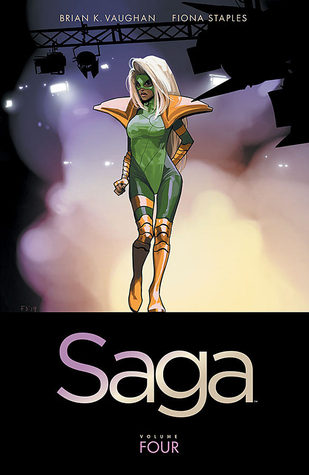
I am not alone in my love for Brian K. Vaughan and Fiona Staples and their exemplary Saga series.

As I first described it in this post:
Saga, by Brain K. Vaughan and Fiona Staples.  Romeo and Juliet meets Star Wars; Doesn’t take a lot of pages to set up the world and backstory, just jumps right in; Broad appeal across ages and backgrounds; The characters have hope and are likeable; The characters are easy to relate to; The storyline isn’t as dark as a lot of what we’ve discussed; The graphics are beautiful; Along with Walking Dead, the most popular genre graphic novel series right now.
That’s the basics, but here is more about the appeal and the art from my most recent review of Volume 3:
... In fact, what is most remarkable about this series is how well rounded it is. Saga is deserving of all of the accolades and awards it has been receiving. It combines an interesting and compelling plot with wonderful characters, and has great art work. It is clear and crisp.  The pictures and color choices reflect the tone as appropriate; sometimes beautiful happy things are happening, while others times evil, divesting, and dark actions are occurring-- the art helps to differentiate the tone. I would even go so far as to describe the art as beautiful, even when it is illustrating events themselves that are not pretty.
All of these comments still hold true about the story and the art; however, what is different here is that in Volume 4, the overall story has taken a MUCH DARKER turn [which is fine with me, but could be hard on some readers].  Our narrator--baby Hazel-- is aging.  She is a kid now; not a baby swaddled in blankets. She has a personality, can speak for herself, is making her own relationships with people. Her existence can no longer be denied, and the war that is ravaging this world has been kicked up a notch (actually more like 5 notches, but not spoiling the big twist here). So has everything else.  While this has always been a gritty, and at times violent and sexually explicit series, all of it is dialed up now.  It is not gratuitous though.  In fact, it is entirely appropriate given the change in tone.

The world created in Saga is one that fans don’t ever want to leave.  Vaughan and Staples draw you under their spell and hold you hostage while you read. Each time I complete a new volume, I am sad that there is not another page to turn.  That is the overall appeal of this series. You can’t look away from the art because it is colorful, detailed, full of emotion, and simply beautiful (even when the pictures are detecting awful things). And then there is the complex, intriguing, and compelling story itself.

It is a tale “as old as time.” Star-crossed lovers, war, trying to keep a marriage and family together in the midst of strife and conflict, etc..., but Vaughan and Staples still manage to keep it all feeling fresh. With a cast of nuanced characters (good, bad, and in-between), an exotic, yet still very familiar, space setting, and a storyline which is dramatic, sweeping, and moving (without being maudlin), this is an engaging series for a wide range of adult readers.

Much like the praise I give the Locke and Key series for being the very best example of horror storytelling right now regardless of format, I feel similarly about Saga but for Science Fiction. It is the very best example of what a SF story should be and do, it just happens to be in a graphic novel format.

Three Words That Describe This Book: dramatic, nuanced characters, compelling

Readalikes: You can find my past readalike suggestions for this series here.

The dramatic and intricate plotting, large cast of characters, and a story that intertwines war and family all remind me greatly of George R R Martin, however, the pacing is NOT a match for his book series.  Rather, I would say Saga is a great choice for fans of the Game of Thrones TV show who think the books are too slow.

Two other science fiction authors who are writing the very best of today’s SF and also capture the appeal of Saga are John Scalzi and Ann Leckie.  Try Redshirts or Ancillary Justice.

[On a side note, these are the 2 readalike suggestions I referred to in yesterday’s post. I used the most current Locus Recommended Reading List to identify these because I was looking for other examples of today’s best speculative fiction that would appeal to a wide audience. I am quite familiar with both of these authors and titles but I needed the resource to jog my memory.]

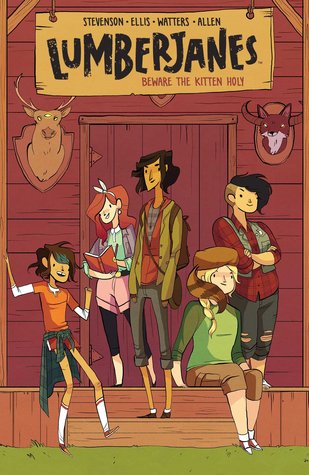
Now for something completely different, the YA, girl power , summer camp comic, Lumberjanes by Noelle Stevenson with art by Grace Ellis, Shannon Watters, and Brooke A. Allen.

Lumberjanes  is set at a girl scout summer camp and features five female best friends.  It is fun, but it is also intelligent.

First I want to talk about how the comic is organized and the art and then I will move into why it is so great. The comics are loosely framed around the various badges that the girls need to earn.  However, as they are doing traditional badge earning exercises, they also uncover a supernatural force that may be up to nefarious things deep in the woods. But our Lumberjanes are up for the challenges both real and supernatural.

As a result of this frame choice, the storyline is not always continuous as we move from badge adventure to badge adventure, and it gets a bit fantastical at times. However it works well for a few reasons.  One, it adds suspense. We are not sure what is coming next and are being primed to expect anything. Two, it keeps the pace very fast. We are not bogged down by every moment of their lives at camp, just the key adventures, yet there is enough banter about other stuff that we get a sense of the overall experience they are having.  And three, it mimics the entire sleep away camp experience.  I went to YMCA camp for a few years as a teen and the memories are just like the way this comic is written-- snippets of the most interesting things we did, somme may be a bit embellished, all strung together without much filler in between.

The art is bright, spunky (like the girls), and in a color palate that matches the natural setting.  It is accessible art that appears childish at first glance, but has a level of sophistication and detail that is revealed upon closer reading.  Fans of graphic novels in general will appreciate the technical skill here much like fans of Saga do.  I also love how each girl’s personality is enhanced by the way she is drawn.  The art tells us so much about who each of these young women are. The very best graphic novels use the words and the art to tell the story. Lumberjanes is not an exception here.

Now I want to move into why so many critics and readers LOVE this series, myself included, and that comes from the overall appeal of the story and its message.

It is girl power without trying to pander to the girls and young women it is written for.  I am often upset by “feminist” stories that try too hard to promote girl power.  We need  positive and strong role models for young women; I understand this greatly as the mother of a 13 year old daughter, but many of the options fall way too short.

Not in Lumberjanes though. Here, these young women are simply their awesome selves. They are the best of friends who are also completely different and unique from one and other-- and that in and of itself sends a powerful message to young women. But the important thing here is that they just ARE. The authors and illustrators are not hitting us over the head with this point. It is refreshing.

Also, there is no “love storyline.” There is no boy to make the girls feel better about themselves because he likes them.  In fact, there is one vignette where they meet the boys campers, and....well you need to read it for yourself.  Again, the best word to describe it is “refreshing."

The comic is also very smart and slightly subversive--both which I love for myself and my teenage daughter. A small example is how the girls use expletives like: “What in the Joan Jett are you doing?!”; “Holy bell hooks!”; and “Where the Phillis Wheatley were you?” 

This book will appeal to 7th graders through high school and the moms of kids this age. It will also appeal to anyone who has ever been a scout or gone to sleep away camp.

Three Words That Describe This Book: fun, witty, refreshing

Readalikes:  Lumberjanes is a great option for older kids who started with Babymouse and then moved on to Raina Telgemeier and now want something more.

Goodreads has this list of recommended reads for fans of Lumberjanes; a list which includes many girl friendly comics.

In terms of novels, these are harder to find.  As I mentioned above, too many YA novels that try to be empowering to young women, just try too hard.  They are not as effortless as Lumberjanes. I have had to earn finding these readalikes because this was not easy.  Most books featuring best friends, spunky female leads, and NO love relationships are only found in middle grade novels.  That is sad! I know lots of girls (my daughter is one) who crave this type of story and read at a high level.  I have had to go to adult books appropriate to a YA audience here.  Again, that is sad!  So here are 2 suggestions I think would work (you can click through for my longer review of these books):
Okay, last one. The Thrilling Adventures of Lovelace and Babbage: The (Mostly) True story of the First Computer written and Illustrated by Sydney Padua.

Just about the only thing this graphic novel shares with Lumberjanes is the “girl power” angle.  Seriously, nothing else at all is the same here.

Same with Saga. All the two share is a loose “science fiction” genre grouping.

Since this review compilation is getting long, and this book is quite complex (and I was running a program all afternoon), let me share with you the publisher’s description before I get to my comments:
THE THRILLING ADVENTURES OF LOVELACE AND BABBAGE . . . in which Sydney Padua transforms one of the most compelling scientific collaborations into a hilarious series of adventures. 
Meet Victorian London’s most dynamic duo: Charles Babbage, the unrealized inventor of the computer, and his accomplice, Ada, Countess of Lovelace, the peculiar protoprogrammer and daughter of Lord Byron. When Lovelace translated a description of Babbage’s plans for an enormous mechanical calculating machine in 1842, she added annotations three times longer than the original work. Her footnotes contained the first appearance of the general computing theory, a hundred years before an actual computer was built. Sadly, Lovelace died of cancer a decade after publishing the paper, and Babbage never built any of his machines. 
But do not despair! The Thrilling Adventures of Lovelace and Babbage presents a rollicking alternate reality in which Lovelace and Babbage dobuild the Difference Engine and then use it to build runaway economic models, battle the scourge of spelling errors, explore the wilder realms of mathematics, and, of course, fight crime—for the sake of both London and science. Complete with extensive footnotes that rival those penned by Lovelace herself, historical curiosities, and never-before-seen diagrams of Babbage’s mechanical, steam-powered computer, The Thrilling Adventures of Lovelace and Babbage is wonderfully whimsical, utterly unusual, and, above all, entirely irresistible.
Lovelace and Babbage is a complex fiction/nonfiction, prose/comic hybrid.  It is quite experimental both literally and figuratively.  Literally because Padua devotes much of the space in this steampunk graphic novel to prose and combines an alternative history story with all of the actual history in great, well researched detail (in the form of copious appendices and endnotes).  Figuratively this is experimental because the great machine she is depicting in all of its whirling gears and steam power glory was only an experimentally hypothesized computer.  There is no way to know if it would have ever worked.

I also love how Padua not only supposes an earlier coming of the computer, but she also pokes fun at how we use this amazing machine today. For example, Queen Victoria likes cat pics.  There is a lot of that witty, knowing glance humor here.

The art is black and white which works to enhance that it is set in the past, but that does not mean it is simple.  Rather, with no color Padua gives us amazingly intricate pictures of a fantastical machine that could have been the first computer ever built if only... Color would have ruined the overall tone.

I should note that this is a methodically paced story.  While each chapter has a new adventure (hence the title), the aforementioned detailed notes slow the adventures down, even if you do not read every single word (Which is a personal preference issue here, you do not need to read all the words in order to enjoy this book.) But rather than seeing this slower pace as a negative [as I have seen some reviewers say], I think it was deliberate. Padua is slowing the story down to remind us how ponderous and difficult this "analytical engine” would be to use even if it had existed in the 1800s.

One final note, with its Victorian setting (a Becky frame preference), I was going to like this book no mater what.

Three Words That Describe This Book: steampunk, fiction/nonfiction hybrid, experimental

Readalikes: Although this is technically a graphic novel, I think the first level of appeal here is that this novel is steampunk through and through.  What is steampunk you ask? From the Goodreads page on the subgenere:
"Steampunk is a subgenre of speculative fiction, usually set in an anachronistic Victorian or quasi-Victorian alternate history setting. It could be described by the slogan "What the past would look like if the future had happened sooner." It includes fiction with science fiction, fantasy or horror themes. "
For more steampunk suggestions, click here. Also, here is my review of Boneshaker by Cherie Priest, a steampunk zombie novel.

For a more literal readalike combo of alternative history and comic books try Marvel 1602 by Neil Gaiman.

Friday, October 23, 2009

Horror 2009: Part 1


Due to my reputation as a horror maven, I get many requests to compile lists of the best horror books. Although I pass on some through this site throughout the course of the year, I try to post an annual list which coincides with my work for the October display at the BPL.

This year, I am taking this list rather seriously since I am also in the research stages of working on the second edition of my horror book for the American Library Association. I also have the added benefit of now being a member of the Horror Writers Association.

This has been a year dominated by non-horror vampire books like the Twilight series and the Sookie Stackhouse series, and a few very high profile horror titles such as The Strain by director Guillermo del Toro and the Jane Austen horror remakes Pride and Prejudice and Zombies and Sense and Sensibility and Sea Monsters, just to name a few.

The popularity of these titles with a general audience has been exciting, but there are also many horror titles that deserve more press. This time of year is when people pay the most attention, so here is the first of three posts in the coming days that will highlight some great horror reads, publishers, and resources.

As part of my regular promotion of our displays at the BPL, I posted my Horror display annotations here.

The books I included had a few requirements. I could only list 10, they had to have come out in 2009, and we had to own them at BPL. I also wanted to focus on some of the non-bestselling authors who are popular at Berwyn. Again the list can be found here, but here are the books I included:
Please note, this year, I included at least 1 readalike for each book. Use the link to take a look at what I have to say about each title to see if you would enjoy them.

Now on to some of the big name releases right now. Of course, everyone is excited for the new Stephen King, Under the Dome, which is coming out on November 10. Under the Dome follows the residents in a small town in Maine after an unexplained force field blocks them off from the rest of the world. This book is getting a lot of press both because it is part of these current book price wars and because it is Stephen King! Seriously though, this one man has captured the imagination of our entire country. People who do not read horror, love his books. No matter in which genre you try to place his works, Stephen King is one of our national treasures. Don't believe me, click here or here.

Besides giving us some wonderful books to read, the next best thing Stephen King has given the world is his son, Joe Hill. Hill has only written a few books, but each has won him critical praise, awards, and millions of fans. He has been working on a horror graphic novel series called Locke and Key with the artist Gabriel Rodriguez. I read the first one, Welcome to Lovecraft and wrote about it here. The next installment, Head Games, came out a few weeks ago and is even more creepy and unsettling than the first. Although I will write in detail about this book on this blog in a few days, I wanted to leave you with this quote from the introduction by Warren Ellis, "...these comics are really remarkably good, among the best written comics I have seen in the last two years..."

I also wanted to remind you that the first official sequel to Dracula has just been published. Co-authored by a Stoker relative, Dracula The Un-Dead is based on Bram Stoker's handwritten notes and follows Jonathan and Mina's son. The reviews are so-so, but it is worth mentioning.

In the next Horror 2009 post I will write about some other lesser known 2009 titles that are worth your time and highlight the key horror publishers. Part three will focus on horror resources. I will also have a special 3 book What I'm Reading post highlighting three recent horror releases.

Monday, January 13, 2014

Monday Discussion: The Books You Are Most Looking Forward to in 2014

Last week is was reading resolutions.  This week we are in preview mode.  The end of the year best lists are done and it is time to look forward into 2014.

RA Online began keeping track of the major 2014 preview lists at this link. So I started looking through the various lists myself and found a few titles that I am quite excited about.

First I will start with 2 books that come out in February that I have been not so patiently waiting for-- Wiley Cash's follow up the his brilliant A Land More Kind Than Home entitled This Dark Road to Mercy and the conclusion of Joe Hill's masterful Locke and Key series, Alpha and Omega.  For the Cash, I had no choice but to wait, but on the Locke and Key, I could have followed the 6 issues that made up the final bound volume as they came out, but I knew I would be happier if I read the final arc all at once as I have read the previous 5 volumes. I am hearing that my patience on both will be worth the wait.

For a longer term view point, the third book in Deborah Harkness' series which began with A Discovery of Witches is coming out in July, Ernest Cline's Armada is set for October, and I am intrigued by the Colson Whitehead nonfiction book of his time in the pro-poker circuit coming in May.

Now it is your turn. For today's Monday Discussion, what books are you most excited about for 2014?

For past Monday Discussions, click here.

Sunday, October 25, 2009

Horror 2009: Part 3

Let's get right to it. You want some more great horror suggestions, right? Here are more titles I think are worth a read. All were published in 2009, all links go to Amazon, and all annotations are modified from the product descriptions on Amazon. I have added some of my own comments in red. Click through to read more about these novels and story collections, and don't forget to also look here where I have original annotations and readalikes for 10 more 2009 titles. For all of my Horror year-in-review posts, click here.

Cursed by Jeremy Shipp
You are: 1) Nick 2) cursed 3) afraid all the time That's because: a) someone or b) something is after you with a vengeance. Even with the help of other cursed people, you don't stand a chance because you're all, you know, cursed. That means you and everyone you know will: 1) suffer 2) die 3) amuse your tormentor That is, unless you figure out how to manipulate the person behind this and turn their power against them. Check your list a second time because they're probably on it. The only thing left to do is scratch them off. (realistically creepy)
The Shore by Robert Dunbar
In this sequel to the popular The Pines, as a winter storm grips the coastal town of Edgeharbor, a series of horrible murders terrorizes the residents. A young policewoman and a mysterious stranger are all that stand between the tiny town and an ancient evil. (Great small town horror)
His Father's Son by Bentley Little
Steve Nye's quiet life takes an unexpected turn when he receives a call from his mother. His father attacked her and has been committed to an asylum. The doctor says he's suffering from dementia. But Steve's father seems so calm, clear-eyed, and lucid when he whispers, "I killed her". Is it simply symptom of his father's delusion and madness? If only Steve were so lucky... (good new title by the man Stephen King has called, "the horror poet laureate.")
Flesh by Richard Laymon
No one in town has ever seen anything like it; a slimy, mobile tube of glistening yellow flesh with dull, staring eyes and an obscene, probing mouth. But the real horror is not what it looks like, or what it does when it invades your flesh - but what it makes you do to others. (Richard Laymon may be dead himself, but new scares keep being released upon us; bloody.)
Far, Dark Fields by Gary Braunbeck
Veteran horrormeister Braunbeck breaks literary rules by the handful in his latest dark fantasy yarn, which makes reference to 2007's Mr. Hands and 2008's Coffin County without exactly being a sequel. When a high school student goes on an inexplicable shooting spree, it stirs a host of memories for unassuming suburban English teacher Geoff Conover. Returning to Cedar Hill, Ohio, the town he left as an infant after surviving another mass killing, Geoff comes to realize that his personal mysteries are inextricably bound to his birthplace. (Great for fans and new readers alike.)
Children of Chaos by Greg Gifune
In a torrential downpour, Phil, Jamie and Martin-three teenage boys-encounter a strange and enigmatic man covered in horrible scars who will change their lives, their destinies and the very fate of their souls forever. When their encounter mistakenly leads to murder, they realize this eerie stranger may not have been a man at all, but something much more... Thirty years later the boys-now men-lead tormented lives filled with horrifying memories of the scarred man and what they did all those years ago in the rain. There will be only one chance for redemption, one chance for salvation, and one chance to stop the rise of an antichrist's bloody quest for demonic power. (For the demonic horror fans.)
Audrey's Door by Sarah Langan
Built on the Upper West Side, the elegant Breviary claims a regal history. But despite 14B's astonishingly low rental price, the recent tragedy within its walls has frightened away all potential tenants . . . except for Audrey Lucas. No stranger to tragedy at thirty-two—a survivor of a fatherless childhood and a mother's hopeless dementia— Audrey is obsessively determined to make her own way in a city that often strangles the weak. But is it something otherworldly or Audrey's own increasing instability that's to blame for the dark visions that haunt her . . . and for the voice that demands that she build a door? A door it would be true madness to open . . . (A reliable writer of dark fiction; great creepy atmosphere.)
Benjamin's Parasite by Jeff Strand
At any given moment, the human body contains millions of parasites. This is the story of just one. A really, really nasty one. Benjamin Wilson was having a lousy month even before the stomach pains began. Now everything is changing. His body is being affected in some very unpleasant ways. The biggest change is that he has a bunch of evil and/or psychotic people trying to hunt him down to acquire the parasite. His only hope is Julie, a gorgeous bounty hunter who may or may not have Benjamin's best interests in mind, and who may or may not be competent enough to help him anyway. Jeff Strand delivers his most outrageous adventure yet-an over-the-top mix of gruesome body horror and a wacky road trip comedy.(For the Humorous Horror fan)
The Glister by John Burnside
Since George Lister’s chemical plant closed down, Innertown has been a shadow of its former self. In the woods that once teemed with life, strange sickly plants grow. Homes that were once happy are threatened by a mysterious illness. Here, a young boy named Leonard and his friends exist in a state of confusion and despair, as every year or so a boy from their school vanishes after venturing into the poisoned woods. Without conclusive evidence of foul play, the authorities consider the boys to be runaways. The town policeman suspects otherwise but, paralyzed with fear, he does nothing. And so it is up to the children who remain to take action. (The Glister was picked by Amazon.com as one of the best of the month for March 2009.)
The House of Lost Souls by F.G. Cottham

Just weeks after four students cross the threshold of the derelict Fischer House, one of them has committed suicide and the other three are descending into madness. Nick Mason’s sister is one of them. To save her, Nick must join ranks with Paul Seaton—the only person to have visited the house and survive. But Paul is a troubled man, haunted by otherworldly visions that even now threaten his sanity. Desperate, Nick forces Paul to go back into the past, to the secret journal of beautiful photographer Pandora Gibson-Hoare and a debauched gathering in the 1920s, and to the dark legacy of Klaus Fischer—master of the unspeakable crime and demonic proceedings that have haunted the mansion for decades. (Mentioned here by me as a readalike for The Unseen; also good for Shirley Jackson fans.)

Quarantined by Joe McKinney
The citizens of San Antonio, Texas are threatened with extermination by a terrifying outbreak of the flu. Quarantined by the military to contain the virus, the city is in a desperate struggle to survive. Inside the quarantine walls, Detective Lily Harris is working burial statistics duty at the Scar, San Antonio's mass graveyard, when she finds a murder victim hidden amongst the plague dead. But Lily's investigation into the young woman's death soon takes a frightening turn as yet another strain of the deadly flu virus surfaces, and now Lily finds herself caught up in a conspiracy orchestrated by a corrupt local government intent on hiding the news from the world and fighting a population threatening to boil over into revolt. (For the Swine Flu obsessed reader; timely)

Short Story Collections: Horror is alive and thriving in the short story form. For many readers, it is considered the best format for the genre. See for yourself.
Unhappy Endings by Brian Keene
Two-time Stoker-winner Keene includes 19 stories, many of which were previously only available in limited edition collections or numbered editions of his novels, in his gleefully gory fourth collection. These stories range from a violent, post-apocalyptic novella to quiet, supernatural human-dramas. (A good collection of one author's works.)
Monstrous: 20 Tales of Giant Creature Terror edited by Ryan Thomas
Move over King Kong, there are new monsters in town! Giant beetles, towering crustaceans, gargantuan felines and massive underwater beasts, to name just a few. Think you've got what it takes to survive their attacks? Then open this baby up, and join today's hottest authors as they show us the true power of Mother Nature's creatures. With enough fangs, pincers and blood to keep you up all night, we promise you won't look at creepy crawlies the same way again. (For fans of B-movies and mutant animal horror.)
Midnight Walk edited by Lisa Morton
This collection presents 14 tales of terror and suspense by 14 different authors. This is a great collection on its own, with a stories for just about every horror fan. More important to note, this is the first release from Darkhouse Publishing, "a collective of writers, editors, and booksellers dedicated to publishing quality horror and speculative dark fiction." Look to this collection to find the next big horror writers. (annotation by me)
Dark Delicacies III: Haunted edited by Del Howison and Jeff Gelb
A stellar cast of horror writers comprise this third entry in the Dark Delicacies anthology series. These twenty-one short works will examine and lay bare all the ways in which we are haunted—both literally and figuratively. With a new novella from David Morrell and a short story Chuck Palahniuk is writing as a teaching class on his blog, interest in this anthology will prove that the third time is no trick and all treat! (This collection contains works by more well-known horror writers.)

Horror 2009: Part 4 will appear on Monday, when I will be featuring my favorite horror resources.

And later in the week look for my What I'm Reading report on The Unseen, Castaways, and Locke and Key: Head Games.