RA FOR ALL...THE ROAD SHOW!

I can come to your library, book club meeting, or conference to talk about how to help your readers find their next good read. Click here for more information including RA for All's EDI Statement and info about WHY I LOVE HORROR.
Showing posts sorted by relevance for query nicole krauss. Sort by date Show all posts

Friday, February 4, 2011

What I'm Reading: The History of Love

The History of LoveI recently re-read one of my favorite backlist titles, The History of Love by Nicole Krauss for an ARRT book discussion which I led.  I am not going to talk about the discussion here, but if you are interested in some of what we discussed, Ted Balcom had this post on Book Group Buzz about our discussion.

The History of Love is a book about a book, but it is also a novel about people and their relationships with one and other.  It is also a novel deeply influenced by great loss, while still managing to feel hopeful.

The most striking thing about this novel is its construction.  There are four narrators, each with a distinct style.  Their chapters begin with a symbol to identify who will be talking.  Our narrators are Leo Gursky, an elderly Holocaust survivor and the most memorable of the bunch, Alma Singer, a 15 year old girl whose father died when she was younger, her brother Bird who thinks he may be the messiah, and a third person omniscient narrator who is telling the story of Zvi Litvinoff, the author of a novel entitled, The History of Love.

The 2 most prominent voices are Leo and Alma.  Leo especially is the the heart and soul of the book.  When Krauss takes over his voice, I cannot help compulsively turning the pages.  His tragic story of love lost due to war, his desire to get the novel he wrote in his youth, The History of Love, back on the page, and his heartbreaking-funny desire to not be invisible is the heart of the book.

Notice I keep mentioning a book called, "The History of Love."  Alma is named after its main character and her mother is engaged in a translation of the Spanish version during the novel also.  It is the lynch pin that holds the story together, this novel of Leo's love for the first Alma.  We even get passages from the work throughout Krauss' novel.  The novel and its effect on the characters is the key reason someone will like this book (or not).

Further appeals include the book about a book plot which many readers (myself included) enjoy; the post-WWII Jewish experience, stories about writers, adolescent narrators, elderly narrators, stories about dealing with the loss of a loved one, unreliable narrator, literary fiction with a puzzle to solve, an open but resolved ending, a steady pace, a sad tone which evolves into hopefulness as the novel progresses.

Three Words That Describe This Book: alternating narrators, books about books, love

Readalikes:  Krauss' husband, Jonathan Safran Foer, released a wonderful book within weeks of The History of Love.  Entitled Extremely Loud and Incredibly Close, Foer's work is eerily similar to Krauss'.  Both books have alternating narrations with a young child who has recently lost a parent and an older Holocaust survivor.  They also both involved a puzzle that has to be solved by both the reader and the characters. ELaIC is one of my favorite books; in fact, I would say it has the best book ending ever.

Geraldine Brook's People of the Book is also a good choice.  In this historical fiction thriller, a rare books expert is given the task to restore the Sarajevo Haggadah, an ancient Jewish text that has survived despite the many wars and conflicts that tried to destroy it.  As the rare books expert works in the presnt, she uncovers clues to the past.  These clues take the story into that past.  Like The History of Love, it has a complex structure, a book about a book element, and a young woman with family issues.

Other books that have WWII and book about a book themes are Shadows of the Wind by Carlos Ruiz Zafron and The Book Thief by Mark Zusak.  These are also popular book club suggestions.

Finally, I have two suggestions with no Jewish or WWII connection that I think are great readalike options here.  The Last Samurai by Helen Dewitt follows a young British boy, who is obsessed with the film Seven Samurai, uses the lessons he has learned from the film to go on a quest to find out the identity of his father.  Ghostwalk by Rebecca Stott is the story of a Newton scholar who becomes obsessed with the book she is finishing.  The tone is more sinister here though.  I reviewed Ghostwalk here.

I will be discussing this title with my students again next month, so look for a report on our discussion then.

Wednesday, March 23, 2011

Book Discussion Class Tonight

Tonight is the class where I teach the students how to plan and implement a book discussion group at their library.  We are discussing The History of Love by Nicole Krauss.  I have talked about this book before here.

I have two versions of my book discussion training.  This one is the 3 hour version where I give a detailed lecture about the entire process of running a book club, beginning with the intention to do it through to actually leading a discussion.  The second half is a discussion itself.

What I like about this method for the students is that we can take time to discussion the theory but then we get to see it in action.  I also remind the students that attending this class means that you can say on your resume that you have been trained in running book discussions.  And, they can also say that they have participated in a professionally led discussion.  Also, I highly suggest that when students go out into the real world and lead a discussion with patrons that they use the book we did in class because then they have an idea of how it will go.  I did this back in January of 2001, leading 3 people in a discussion of A Lesson Before Dying by Ernest Gaines, which was the book I did with Ted Balcom when I was a student in GSLIS 763 back in the last century.
I also do training for book club participants, whether they meet in the library or not.  This is aimed toward book groups who have lost their mojo.  Called, Recharge Your Book Club, you can access the handouts and resource sheets here.  This presentation focuses more on how to re-establish ground rules to make the actual discussion more fun.  It also includes tips on picking better books.  Tip #1, do not let the randomly assigned leader choose their favorite book.  Click here for more.

One of my favorite book discussion resources is Lit Lovers.  Recently, I found 2, new to me, pages on their very useful site:


Lit Lovers encourages you to share their resources as long as you tell people where you got them, which I have done.

Check out my handouts too and let me know if you have book club tips and tricks to share.

Wednesday, April 26, 2017

Why Diversity Matters As Exhibited by Granta's Best Young American Novelists

Every 10 years, the prestigious British literary magazine, Granta releases a list of the best American novelists under 40. They have just released their third list which includes 21 authors. You can see all of them here. The list also includes the author of one of my favorite books I read last year.

I am not going to waste your time by reprinting the list [click through for that] because there is a more important point I want to make about this list-- IT HAS ALWAYS BEEN DIVERSE; even before it was "cool" to be diverse. But more than that, THIS HISTORY OF INCLUDING DIVERSE VOICES MATTERS!

One of my most memorable book memories happened because of the release of the first Granta list. In honor of that list, there was an event in Chicago where I got to see a very young Sherman Alexie and Elizabeth McCracken both do a reading because they were one that list. McCracken was a pioneer in the current trend of mixing elements of horror and dread into literary fiction. And Alexie! I can't even imagine being a Readers Advisor without him.

I live in an area with few Native Americans, yet many of his books, especially The Absolutely True Diary of a Part-Time Indian, have been among my go-to suggestions for any reader looking for a good read for my entire career. From my first days as a librarians back in the summer of 2000, until today, both of those authors became among my top suggestions for those just looking for "a good read." Without that Granta list and seeing them read, I don't know if  I would have known about those authors so early.

At the time, [late 90s], I did not think anything of Alexie being Native American. He was an amazing writer. But, looking back, I guess it was a big deal. Most of those lists were mostly filled with white men.

The announcement of this new list illustrates that like America itself, the landscape our best young novelists is diverse, but it made me remember back to that first list.  [By the way, in between, the second list included Jonathan Safran Foer, Nicole Krauss, Akhil Sharma, Anthony Doerr, Nell Freudenberger, Gary Shteyngart and Yiyun Li among others.]

But I digress. The point I am trying to make by sharing this story about me 20 years ago is that all this talk about making sure we include diverse authors in everything is 100% true. As someone who always made sure to read diversely [I even made my students read at least 1 book from an under represented community the entire time I taught; it was to get them in the habit for after they left my oversight], I still would not have known about Alexie so early if he wasn't included.

That is a testament to Granta. Kudos to them for leading the way by identifying the best authors across the full spectrum of the American experience. And thank you from this librarian, today, and back in the days before I was even in library school, for showing me the best authors and allowing me to share their stories with readers.

Thursday, May 30, 2013

While You Wait-- And The Mountains Echoed

The two big books of the month are now out and both have long holds queues.  Dan Brown's Inferno is a bit easier to find readalikes for as his brand of intellectual, historical, adventure thriller has been often duplicated.  Also, at the BPL we already have this list of Dan Brown readalikes posted online and available in print at the library.

Khaled Hosseini is a bit harder to match with suggestions while people wait for And The Mountains Echoed.  Hosseini crafts moving, character centered tales, with a strong emotional pull and a setting or frame in Afghanistan.  Some people read his books because of their Afghanistan frame, but many who were first drawn to him because of that current events frame have learned to love his storytelling style.

I have read both of Hosseini's previous titles, but only A Thousand Splendid Suns was read since the blog began.  Here is what I had to say about that title in March of 2008:
I also listened to the popular A Thousand Splendid Suns by Khaled Hosseini. Hosseini's follow-up to The Kite Runner tells to stories of two women, Miriam and Laila, as they live through three decades of war in Afghanistan. With his second novel, Hosseini has shown that he is an excellent storyteller who is here to stay. I especially enjoyed the detailed history lesson which this book provided. Mostly, I was riveted by the two women, their voices, and their stories. 
Those who like Hosseini's setting of Afghanistan should also try the current nonfiction best seller Three Cups of Tea: One Man's Mission to Promote Peace...One School at a Time by Greg Mortenson or the fiction title The Swallows of Kabul by Yasmina Khadra. Those who enjoyed learning about the history of Afghanistan may also want to delve into the Iranian Revolution (a neighbor of Afghanistan). Here I suggest The Complete Persepolis by Marjane Satrapi. In this accessible graphic novel, Satrapi tells her personal story of living through war and Islamic revolution in Iran. Much of her story resonates with that of Miriam and Laila's. Finally, those readers who found the women's friendship against all odds very appealing, I suggest Snow Flower and the Secret Fan by Lisa See. Although this novel takes place in China, the laotongrelationship between the two main characters has many similarities with Hosseini's novel.
Since Hosseini does not write quickly, people are literally clamoring for And the Mountains Echoed.  The reviews are also fabulous, pushing demand even higher. People want this book right now, and you are the one that has to tell them that they are not going to get it.

But look on the bright side.  Times like this are when you have a chance to shine.  Yes you will have to take the patron's hold for And the Mountains Echoed, but look at all of the other books that are sitting on your shelves just waiting to be read by someone at this very moment. You have the perfect opportunity to show these patrons another great title they can read while they wait. Do not let this captive audience leave without even offering to give them a title to read now.

That's where I come in.  Besides the titles I mentioned above and other books with a Afghanistan frame, here are some titles that are also intricately plotted stories, told with lyrical language, characters you care about, and a reflective tone.  Again, these are NOT your typical Middle East set suggestions.  Most importantly, these books will be on the shelf.  Links are to my reviews where possible:

There is no reason for your patrons to leave unsatisfied when they come in hoping to get a copy of And the Mountains Echoed because there is always another book they will like somewhere else in the stacks.

Feel free to add your own readalike suggestions in the comments.

Wednesday, December 14, 2011

World Book Night Titles Announced!

I have only mentioned it briefly before this, but April 23, 2012 is World Book Night.  From their official website:
World Book Night is an annual celebration designed to spread a love of reading and books. To be held in the U.S. as well as the U.K. and Ireland on April 23, 2012. It will see tens of thousands of people go out into their communities to spread the joy and love of reading by giving out free World Book Night paperbacks.
Yesterday, the organizers released the 30 books that will be offered for giveaway in the United States.  They are (in alphabetical by author):
  • The Absolutely True Diary of a Part-Time Indian by Sherman Alexie (Little, Brown Books for Young Readers)
  • Wintergirls by Laurie Halse Anderson (Speak)
  • I Know Why the Caged Bird Sings by Maya Angelou (Ballantine)
  • Friday Night Lights by H.G. Bissinger (Da Capo)
  • Kindred by Octavia E. Butler (Beacon Press)
  • Ender’s Game by Orson Scott Card (Tor)
  • Little Bee by Chris Cleave (Simon & Schuster)
  • The Hunger Games by Suzanne Collins (Scholastic)
  • Blood Work by Michael Connelly (Grand Central)
  • The Brief Wondrous Life of Oscar Wao by Junot Díaz (Riverhead); a Spanish-language edition, La breve y maravillosa vida de Óscar Wao (Vintage Espanol), will also be made available.
  • Because of Winn-Dixie by Kate DiCamillo (Candlewick)
  • Zeitoun by Dave Eggers (Vintage)
  • Peace Like a River by Leif Enger (Grove Atlantic)
  • A Reliable Wife by Robert Goolrick (Algonquin)
  • Q Is for Quarry by Sue Grafton (Berkley)
  • The Kite Runner by Khaled Hosseini (Riverhead)
  • A Prayer for Owen Meany by John Irving (Ballantine)
  • The Stand by Stephen King (Anchor)
  • The Poisonwood Bible by Barbara Kingsolver (Perennial)
  • The History of Love by Nicole Krauss (W.W. Norton)
  • The Namesake by Jhumpa Lahiri (Mariner)
  • The Things They Carried by Tim O’Brien (Mariner)
  • Bel Canto by Ann Patchett (Perennial)
  • My Sister's Keeper by Jodi Picoult (Atria)
  • Housekeeping by Marilynne Robinson (Picador)
  • The Lovely Bones by Alice Sebold (Back Bay)
  • The Immortal Life of Henrietta Lacks by Rebecca Skloot (Broadway)
  • Just Kids by Patti Smith (Ecco)
  • The Glass Castle by Jeannette Walls (Scribner)
  • The Book Thief by Markus Zusak (Knopf Books for Young Readers)
Click here to read more about how the books were chosen.

Readers of RA for All, it is time for us to unite! I would love for you all to participate in some way.   Anyone can sign up to be a book giver.  If you work at a library or school, the organizers ask that you simply note that in your comments field.  Click here to start the process.  You will be allowed to choose your top three titles and will have to explain why you want to be a part of the this wonderful event.  But honestly, if you chose to read RA for All, that explanation should be easy for you.

I just signed the BPL up to be a giver.  Please join us in this wonderful global event to celebrate the power of reading.  They are trying to get 500,000 people signed up to give away a million free books by February 1, and all you have to do it click here to be a part of it all.

I have started a new tag, "world book night" under which I will be compiling any news about this event in the coming months. 

Monday, September 15, 2008

Book Discussion: The Thirteenth Tale

This month my group read The Thirteenth Tale by Diane Setterfield. I read this book last year when it first came out and wrote this annotation for one of my displays:

"Vida Winter is England’s most popular and most mysterious author. As she faces her own mortality, Winter is finally willing to divulge her biggest secrets and chooses Margaret Lea, a rare bookseller, to be her biographer. As Winter’s life story is slowly unraveled, Lea gets caught up in the tale of ghosts, lies, and half-truths and is forced to come to terms with some of her own family secrets. The Thirteenth Tale is a modern take on the Gothic ghost stories of yore."

This novel is in the tradition of Wuthering Heights, Jane Eyre, and Rebecca. It has all of the elements of a Gothic tale, including some incredible coincidences, outrageous family situations, and lots and lots of secrets.

Our discussion was lively. In fact, when we finished one of the participants mentioned how we should have taped the conversation as an example of what a great book discussion is.

Despite the shift in genre for us as a group, all but three people really liked the book, and the three hold outs, were mixed. Comments made at the start included a few people noting how "clever" the book was, how much thought went into it, and how "different" it was. One person talked about how she felt that it had the feel of an updated version of an older book. Still another said it almost felt like it was spoofing the Gothic genre. And finally, another person said that it had so many twists and turns, secrets and lies, details and over the top characters, that if it had not been so well done, it could have just as easily been a disaster.

The beautiful writing, especially those passages which talk about reading and storytelling were commented upon. In fact, I think we read from this novel, sharing our favorite lines, more than usual. We talked about the role of books and stories in this novel, the "dangers" of reading, and how all of the houses in this novel reflect their inhabitants.

Everyone loved the book within a book, within a book, storyline. We talked a lot about that category of books and compared this novel to Atonement by Ian McEwan, which this group had read previously. We spent a good deal of time playing around with the idea that there was Vida's story and Margaret's story, and then the overall biography that Margaret ended up producing, but not publishing, which also happened to be the book in our hands now (published), and finally, how all of it is simply a single book written by Setterfield. You can see how this led to much discussion. It was fun though. So fun in fact, that one participant noted how this illustrated how Setterfield told this entire tale in such a playful way. This woman felt that Setterfield was writing more for herself than for her audience and this woman appreciated this as a reader.

The novel also lends itself to a discussion of biography versus storytelling. Margaret insists they are different, Vida claims they are one and the same. We discussed how different and surprisingly similar the two pursuits are, especially as illustrated in this novel. Margaret wants Vida to tell her life story with the beginning at the beginning, the middle in the middle, and the end at the end. However, it cannot be told that way. Our life stories do not begin with our births. Setterfield does a nice job setting up this discussion by having the most important piece of Vida's life story, the fire at Angelfield, which happened when she was a young girl, finally revealed near the end of the book. To further underscore this point, one of my participants pointed out that Margaret then titles one of the last chapters of her biography of Ms. Winter, "Beginnings." This revealed much about Margaret's own transformation throughout the book too.

Another discussion thread I want to point out here has a SPOILER ALERT attached to it so I left it for last. Please skip to the readalikes if you do not want to know about a major plot twist. The fire at Angelfield reveals the truth, that there were three girls, not two, and only two survive the fire. Although Vida tried to save Emmeline and leave Adeline to perish, it is not ever clear which of the two girls actually survived. We had a spirited conversation debating this point and people were able to use the text to back their claims. In the end we were satisfied that Setterfield left enough clues for either answer to be correct and we can think what we want.

Readalikes: There are many suggestions one could make for readers who enjoyed The Thirteenth Tale. People who like the book, within a book, within a book frame can try Atonement (as mentioned above), Snow by Orhan Pamuk and The History of Love by Nicole Krauss.

Besides the Gothic tales listed at the start of this post, Henry James' The Turn of the Screw is also referred to in the text, and The Stolen Child by Keith Donohue is a newer book with a Gothic feel involving changelings and children. I have found success passing the latter book on to patrons who enjoyed The Thirteenth Tale

There is also an entire other category of novels that deal with bookstore owners and real life dramas. Two popular and well received works are The Club Dumas, a thriller by Arturo Perez-Reverte, and another popular book discussion title, The Shadow of the Wind by Carlos Ruiz Zafon.

For those readers interested in learning more about the Gothic literary tradition try this link to the book The History of Gothic Fiction. This book and the other titles found on this page will get you started.

Wednesday, June 28, 2017

Full ALA Annual Read N Rave List With Bonus Advice On How To Make This List Work For You RIGHT NOW

Today, as promised here in my longer report on the titles I "Raved" at ALA Annual, is the full post from Booklist on what all 5 of us discussed.

The event was hosted by Rebecca Vnuk, editor for Collection Management and Library Outreach at Booklist.

I think we did a fantastic job working together to provide a wide range of books for all kinds of readers.

Keep these books on your radar because we all think they will have traction with library patrons. But even better for right this minute, are the previous Read N Rave program lists. Many of those titles are books you already have on the shelf. They are a year or two old, so they could use a push right now. It is easy to use the newest list to create interest in these back list gems which are still awesome reads.

Here's what you do, step by step:

  1. Pull up the 20172016, 2015 Read N Rave lists.
  2. Use the 2017 list to do pre-ordering and/or pass on to those who do order.
  3. Make a display about librarians picks. Print out, the cover for the upcoming books we suggest and put a "coming soon" tag on them. Then in the display (or on a list that you put in the library or online...or all of the above) put books from the previous 2 years lists that you do own.
  4. And....you have a quickly put together but awesome display of backlist gems that also let's people know what new books are coming. The display will be diverse in every way. You will have multiple genres, varied voices, and nonfiction. And all of the titles are library worker approved!
  5.  Not required-- you can make this display interactive by asking patrons to fill out a slip of paper answering the question, "What upcoming books are you most excited about?"
  6. Everyone finds a good read.

I can't wait to hear form some of you who give this a try.

Below is this year's list replicated from Booklist Reader--

Annual Conference Read n’ Rave Report, 2017
Booklist and the Association of American Publishers convened another well-attended Read ‘n’ Rave at this year’s ALA Annual Conference. Modeled after the popular Shout ‘n’ Share panels that take place at the end of Book Expo every year, the program brings together a panel of collection development librarians who roam the exhibit aisles in search of galleys that should be on your radar.
The latest panel included Stephen Sposato, Manager of Content Curation and Reader’s Advisory at the Chicago Public Library, Erin Downey Howerton, Children’s Manager at the Wichita Public Library, Kaite Mediatore Stover, Director of Reader’s Services for the Kansas City (MO) Public Library,  Magan Szwarek, Head of Reference at the Schaumburg Township District Library, and Becky Spratford, a Reader’s Advisory consultant who blogs regularly on all things books and library-land at http://raforall.blogspot.com.
To follow are their choices, linked to their Booklist reviews when possible.

Erin Downey Howerton
Autonomous, by Annalee Newitz
The Belles, by Dhonielle Clayton
The Black Painting, by Neil Olson
Jane, Unlimited, by Kristin Cashore
The Last Mrs. Parrish, by Liv Constantine
Lies She Told, by Cate Holahan
Little & Lion, by Brandy Colbert
The Long Count, by J. M. Gulvin
Plague Land, by Alex Scarrow
Rez Rebel, by Melanie Florence
Spliced, by Jon McGoran

Stephen Sposato
Bluebird, Bluebird, by Attica Locke
Bunk: The Rise of Hoaxes, Humbug, Plagiarists, Phonies, Post-Facts, and Fake News, by Kevin Young
The Child Finder, by Rene Denfeld
The Ghosts of Langley: Into the CIA’s Heart of Darkness, by John Prados
A Kind of Freedom, by Margaret Wilkerson Sexton
The Ninth Hour, by Alice McDermott
Quackery: A Brief History of the Worst Ways to Cure Everything, by Lydia Kang
Sing, Unburied, Sing, by Jesmyn Ward
We Are All Shipwrecks: A Memoir, by Kelly Hrey Carlisle
The Talented Ribkins, by Ladee Hubbard

Becky Spratford
An American Marriage, by Tayari Jones
The City of Brass, by S. A. Chakrsborty
Creatures of Will & Temper, by Molly Tanzer
In the Valley of the Sun, by Andy Davidson
The Last Ballad, by Wiley Cash
My Absolute Darling, by Gabriel Talent
The New Annotated Frankenstein, by Mary Shelley
Paperbacks from Hell, by Grady Hendrix
Strange Weather, by Joe Hill


Kaite Stover
An American Marriage, by Tayari Jones
Bookshops, by Jorge Carrion Biblioasis
Caroline, by Sarah Miller
Class Mom, by Laurie Gelman
Cuz, by Danielle Allen
Dear Fahrenheit 451, by Annie Spence
Futchi Perf, by Kevi Czap
Heating & Cooling, by Beth Ann Fennelly
In the Cage, by Kevin Hardcastle
Island of Point Nemo, by Jean-Marie Blas de Robles
Musnet, by Kickliy
Red Clocks, by Leni Zumas
Santa’s Husband, by Daniel Kibblesmith, illustrated by A.P. Quatch
Sourdough, by Robin Sloan
Tell Me How it Ends, by Valeria Luiselli
The Woman in the Window, by A.J. Finn
The World of Laura Ingalls Wilder, by Marta McDowell

Magan Szwarek
The Burning Girl, by Claire Messud
Eternal Life, by Dara Horn
Forest Dark, by Nicole Krauss
From Here to Eternity: Traveling the World to Find the Good Death, by Caitlin Doughty
Future Home of the Living God, by Louise Erdrich
Nomadland: Surviving American in the Twenty-first Century, by Jessica Bruder
Seven Days of Us, by Francesca Hornak

Monday, July 14, 2014

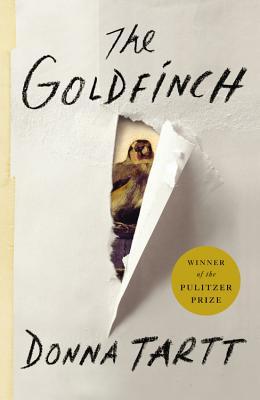
What I'm Reading: The Goldfinch

On June 29th at ALA Annual, The Goldfinch by Donna Tartt won the 2014 Andrew Carnegie Medal for Excellence in Fiction this is in addition to the 2014 Pulitzer Prize for Fiction it had already won.

I listened to this novel way back in the early days of 2014, and have been putting off a review since so many others have written so much about it. Also, I am still figuring out who to suggest this book to and in which format-- beyond the obvious patrons who love to read the best reviewed books of the year and/or major award winners. But those readers are easy to appease with lists of nominees and winners. So, in this review I am going to work through how you suggest this book and to whom.

The first thing I have to say about this book is that you should NOT read it for the plot.  Here is that official plot summary:
It begins with a boy. Theo Decker, a thirteen-year-old New Yorker, miraculously survives an accident that kills his mother. Abandoned by his father, Theo is taken in by the family of a wealthy friend. Bewildered by his strange new home on Park Avenue, disturbed by schoolmates who don't know how to talk to him, and tormented above all by his unbearable longing for his mother, he clings to one thing that reminds him of her: a small, mysteriously captivating painting that ultimately draws Theo into the underworld of art.
As an adult, Theo moves silkily between the drawing rooms of the rich and the dusty labyrinth of an antiques store where he works. He is alienated and in love-and at the center of a narrowing, ever more dangerous circle.
The Goldfinch is a novel of shocking narrative energy and power. It combines unforgettably vivid characters, mesmerizing language, and breathtaking suspense, while plumbing with a philosopher's calm the deepest mysteries of love, identity, and art. It is a beautiful, stay-up-all-night and tell-all-your-friends triumph, an old-fashioned story of loss and obsession, survival and self-invention, and the ruthless machinations of fate.
First off, this summary does not tell you one of the most important aspects of this novel-- how the story is told.  Theo is telling this story as an adult who has made it through a very difficult childhood.  The entire novel is Theo talking directly to you, the reader, and recounting it all with the benefit of hindsight.  This means that there are MANY moments [some of them lightening fast] of foreshadowing. If you pay close attention, Tartt’s pay off is worth it.  You remember a small aside and then 200 pages later, you get your “ah-ha” moment. The novel opens with Theo in a hotel room in Amsterdam, obviously hiding from law enforcement and in some kind of distress, but it takes 600+ pages for the reader to get to Theo’s present and know why he is there and what is happening.

Which brings me to my second point.  This is a 771 page book.  Although parts of it move at the “stay-up-all-night” pace that is referred to by the publisher above, other long sections are deliberately slowed down.  For example, the summary does not mention Theo’s high school years in Las Vegas living with his father and where he meets a key friend who proves vital to the novel’s crazy, thriller-esque conclusion. This vast middle of the novel is frustratingly slow, even monotonous at times. You want Theo to get out of this bad situation and figure out what matters.  But, brilliantly, that is Tartt’s point here.  This is a bad time for Theo too. His life is monotonous and going down a terrible path, but it is all necessary to get Theo to where Tartt is moving him.  The development of foreclosed upon homes in the middle of the desert, the absent, to the point of criminal neglect, parents, the loss of moral center, and the overall melancholy of Theo’s life needs to creep by at an unbearably slow pace for the reader to even experience a portion of Theo’s internal pain and struggles.  Because if we can't grasp the depth of his sorrow and turmoil, the rest of the book doesn’t make any sense.

Now, having explained that, you can better understand why this novel may not be for every reader. However, I do think that the audio greatly improves enjoyment here. loved listening to this book.  I would have HATED reading it though; in fact, I am pretty sure I would have given up.  This dichotomy needs to be explored.

The Goldfinch fits neatly into the category of the type of audiobook I most enjoy [click here for that info], but it is not just me who enjoyed the narration.  David Pittunarration won two Audies.  One for Best Solo Narration-Male and one for Best Literary Fiction. Pittu made this slower, intricately plotted novel compelling and engaging.  Pittu became Theo.  I was always longing to return to Theo and hear his story because of Pittu’s brilliance in bringing Theo to life.

Other appeal factors to note: this is a true character driven novel and Theo is not always a likable character.  He is sympathetic, but makes bad choices all of the time.  In the end, he has learned his lesson and is taking responsibility for some of his actions. But if you do note care for Theo’s plight you will not like this book.

The tone was a favorite of mine-- haunting and melancholy with an oppressive atmosphere that never lets up.  But again, we are talking 800 pages of this.  Some readers will be overwhelmed by the oppressiveness for that long.  While the ending is positive, it is not joyous or celebratory.  So you get this heavy atmosphere, for a marathon amount of time, and in the end all you really feel is a sigh of relief. Now me, I loved it, but I know I am not the norm here.

As you can also tell from the plot summary and my additions, this is a richly detailed and intricately plotted novel.  It has a detailed frame set around art, art crimes, and the antiques world.  Many people who enjoy these frames will be drawn to The Goldfinch. In fact, I found this frame fascinating. The picture itself, the one titled The Goldfinch, is the link that connects everything that happens in the novel.  If you are not interested in the painting, its meaning to the characters, and its fate, you will not like this book.

Overall The Goldfinch is impressive.  It is intricately plotted, lyrical at times, extremely thought provoking, and technically masterful.  It probably deserves all of its awards; however, and despite the fact that I enjoyed reading it personally, I do not think it will stand up over time as a classic work of American literature.

My advice is to suggest it to audiobook fans who want a literary fiction story that they can spend time with.  If someone is looking to read the book, warn them that it will be heavy and take time.  Maybe show them this review so they can decide for themselves.

Three Words That Describe This Book: atmospheric, coming of age, psychological

Readalikes: Click here for the readalikes that RUSA provided for all of the Carnegie Medal finalists.
Of these I have read Extremely Loud and Incredibly Close by Jonathan Safran Foer and I completely agree. The two novels share quite a bit.  Click here for mentions of ELaIC on this blog including many readalikes.

NoveList also had a great suggestion of Tell the Wolves I’m Home by Carol Rifka which I read and reviewed here.  Said Kim Burton, "Although The Goldfinch is more leisurely and literary than Tell the Wolves, both are atmospheric, lyrical coming-of-age novels that follow the experiences of a grieving teen who receives an unexpected gift from among their lost loved one's belongings.” I especially second this suggestion if you liked the idea of The Goldfinch but felt it needed some editing for a swifter pace.

For people who like novels about missing works of art, crime, and the art world would also enjoy The Flanders Panel by Arturo Perez-Reverte.

Authors who are very similar to Tartt (and ironically also take forever to write books, but when they finish them, they are always worth your time, if not the best book you read that year) are Marisha Pessl and Nicole Krauss.  Links go to the times I have written reviews or mentioned these authors. But for specific matches to The Goldfinch, I would suggest Special Topics in Calamity Physics and The History of Love.  Both are literary coming-of-age stories with misfit main characters who have to find their way through loss without traditional adult assistance.

Finally, for a totally outside of the box recommendation, if you enjoyed The Goldfinch for its atmospheric, haunting and melancholy tone, but wanted this experience in a more condensed and lyrical package, I highly suggest The Reapers Are the Angels by Alden Bell.  Click through and read my review for details.  There are zombies in this suggestion, but it is NOT a horror book.  Trust me. It is one of the most hauntingly beautiful coming-of-age stories I have ever read.