RA FOR ALL...THE ROAD SHOW!

I can come to your library, book club meeting, or conference to talk about how to help your readers find their next good read. Click here for more information including RA for All's EDI Statement and info about WHY I LOVE HORROR.
Showing posts sorted by relevance for query pine deep. Sort by date Show all posts

Tuesday, September 30, 2008

What I'm Reading: September 2008

This month I want to begin with one of the best books I have read in a long time Alison Bechdel's graphic novel Funhome. In this memoir that made many “best” lists in 2006, well known, cult comic artist, Bechdel, recounts her childhood in rural Pennsylvania, her struggle to come out as a lesbian, and her father’s refusal to acknowledge his own homosexuality. This is a moving portrait of a family in turmoil, yet Bechdel also conveys the complexities of her extremely close relationship with her father.

I don't want to give away too much of the "plot," but I was touched by Bechdel's honesty. She was able to look back critically at herself and her family, while also drawing parallels to larger historical events, such as Nixon's resignation. I only want to add that the last panel was so beautiful and moving that I actually teared up.

Other acclaimed graphic novel memoirs with a coming-of-age theme are Blankets by Craig Thompson, Persepolis by Marjane Satrapi, and Epileptic by David B. There are also many other coming out stories, both fiction and nonfiction. The Gay, Lesbian, Bisexual, and Transgendered Roundtable of the American Library Association has lists posted here for teens and here for adults (Stonewall Awards). Also I read Hero by Perry Moore this year and wrote about it at the end of this post; I think it would be a good suggestion since it combines superheroes and gay themes.

I also listened to Rebecca Stott's Ghostwalk this month. I have to admit that I had originally tried to read this book when it first came out, but I could not get into it. When I saw it was coming out in paperback, I gave it another try, in audio this time. The plot is very complicated. Ghostwalk is part literary fiction, part historical fiction, and part psychological suspense with a supernatural element. The story is told by Lydia Brooke, a writer who is hired by her former lover to finish his murdered mother's manuscript on Isaac Newton. Stott is a historian and it shows. The books takes much of its plot from the life and times of Isaac Newton and 17th Century Cambridge life. The pacing of this work, like most psychological suspense, is mixed; it has a slow build up, but unravels quickly at the end. The ending, although a twist, was not shocking.

I initially wanted to read this book now because I thought it would go well alongside my book discussion title for this month, The Thirteenth Tale. After finishing Ghostwalk, I think those who like the Gothic feel of Stott's work, but were not huge fans of the Newton and Alchemy stuff should try Setterfield's novel. Both novels also employ the book within a book within a book style which many readers enjoy. Those who enjoy literary psychological suspense in general, would also enjoy the work of Carol Goodman and Patricia Highsmith's older, but still a great read, Ripley series. Parts of this book felt like a Twilight Zone episode, especially as Lydia is being stalked by a ghost from the 17th Century, so maybe that's a place to send fans too. Edgar Allen Poe's stories also have a similar feel to Ghostwalk. Finally, many will want to read a biography of Newton after reading this novel and at this link you can see a range of books, by Newton and about Newton, fiction and nonfiction.

Finally, in preparation for October, I finally read Jonathan Maberry's award winning Ghost Road Blues. I had read parts of it, but never got to it cover to cover. The worst thing I can say about this awesome horror novel is that now I HAVE to read the next two in the series because it is really one story in three books. I am hooked as many of my patrons have been. Here is an annotation I wrote about the novel when it first won the Bram Stoker:

Thirty years ago, the citizens of Pine Deep, PA killed a serial killer known as the Reaper. Since then, the town has seen peace and fame as the most haunted town in America. While getting ready for their annual Halloween festival, a new supernatural evil lurks on the outskirts of town, waiting to finish what the Reaper began.

What makes Ghost Road Blues so interesting is its mix of a serial killer story with a supernatural, supremely evil monster. Add to the mix, some scary followers of this monster, and a motley crew of heroes (including another ghost) out to save themselves and their town. The characters are very well fleshed out in the 400 pages of this book, so I can only imagine the character development gets even deeper in the next two books of the trilogy. This first part ends with a calm in the storm of havoc that is about to descend upon Pine Deep. How can you not go out and read Dead Man's Song immediately?

This is horror, so there is violence, blood, gore, and a general uncomfortable feeling penetrating the entire book. Ghost Road Blues reminded me of Bentley Little in that it was mid-range blood and guts horror, where everyday people are forced to battle a terrible evil in the suburbs. The revenge seeking ghost aspect is reminiscent of Joe Hill's Heart-Shaped Box. I have other horror suggestions through this link. Jonathan Maberry also has many nonfiction books about the world of the macabre.

Friday, June 10, 2016

Summer Reading Suggestion-- What I'm Reading: Pressure

Today a PERFECT summer reading option for fans of action and scares.  I gave this book a star review in the current issue of Booklist.


Pressure

Keene, Brian (author).

June 2016. 288p. St. Martin’s/Thomas Dunne, hardcover, $25.99 (9781250071347)
REVIEW.  First published June 1, 2016 (Booklist).


There is a reason Brian Keene is among the most popular, pulp horror writers of this century, but with most of his 40+ books available only in paperback, his work is not always collected by libraries. Well, now is the time to change that with this compelling, crowd-pleasing, hardcover release. Carrie Anderson, a champion free diver turned scientist, is part of a team trying to find out why the Indian Ocean floor is suddenly collapsing. After numerous mechanical glitches, Carrie plunges into the depths, sans equipment, to try to figure out why, but what she encounters is a monster so fearsome and so intent on destroying every creature in its path that it makes Jaws look like a guppy. In the open ocean, Carrie is in a swim for her life, but back on shore, things aren’t much better as an evil corporation and its murderous henchmen, have an invested interest in hiding the truth. Will Carrie and her team be able to stop both types of monsters and save the world from an ecological disaster before they become victims too? Keene’s winning formula of pairing a cast of strong characters who emotionally engage the reader from page one, with his fast-paced yet detailed action scenes that include some of the best descriptions of the dismemberment of bodies in all fiction, is on full view here. Don’t just suggest to horror readers [although Keene does include a few fun, insider references for genre fans]. Pressure is a perfect beach read for fans of Michael Crichton, Mira Grant, or Preston and Child, that is, if you dare to take this book anywhere near an open body of water.

Further Appeal Notes: I had a post about Brian Keene and his work on behalf of midlist authors a few weeks ago here.

Three Words That Describe This Book: fast paced, detailed action sequences, interesting frame

Readalikes:  I listed 4 above in the review, but only Jaws is ocean monster specific.  If you want more sea monsters stories try Steve Alten.

I would also like to double down on my Michael Crichton suggestion. [That suggestion works both ways.]

If you want more solid, pulp horror, read Jonathan Janz or Jonathan Maberry’s Pine Deep Trilogy (starts with Ghost Road Blues)

Friday, July 18, 2008

Horror Reading List Fall 2007-Fall 2008

I had a request from a colleague for a list of the better horror authors and books from last fall up to this fall. She was looking for information about some of the lesser known authors. So, I figured, I should share the list with everyone.

First though, I thought I would mention Monster Librarian. This is a wonderful resources for horror readers and the librarians who help them. I especially enjoy the up coming horror fiction releases list, the horror fiction news blog, and Book Ends, a section with special lists and essays. For full disclosure, my book is listed on this site.

Anyway, on to the list of the lesser known (aka not Joe Hill, Stephen King etc..) good horror reads from Fall 2007-2008 [IMO]:

Sarah Langan is the best female horror novelist right now. The Missing is her latest and it won this year's Bram Stoker for best novel.

Jonathan Maberry has just completed his trilogy (which began with Ghost Road Blues) with the May publication of Bad Moon Rising. All three take place at the Pine Deep, PA Halloween festival. I started a few patrons on the trilogy and they were counting down until the publication of the last book. All are only out in paperback.

If you are looking for something meatier, more philosophical, but very, very evil at the same time, Gary Braunbeck is for you. His latest is Coffin County (5/08) and it is scary and violent with an evil, twist ending.

I also really like Tom Piccirilli quite a bit. His most recent publication is The Cold Spot (4/08). You can tell, Piccirilli is well respected because many reviews have begun calling his books thrillers instead of horror, but don't be deceived by the marketing, this is visceral storytelling. It should also be noted that Piccirilli has also provided a story to the Hellboy franchise of graphic novels.

Michael Laimo is a great choice for those like religious horror. His latest is Fires Rising(2/08). And fans of Laimo always point out the gore, violence and action in his novels. Laimo never runs our of adjectives.

Brian Keene broke onto the scene in 2003 with The Rising. This zombie tale was a huge hit with horror fans (who are by the way, extremely discriminating and tough on writers). A sequel, City of the Dead, soon followed, and now Keene has given fans more with The Rising: Selected Scenes from the End of the World (6/08). Here, in 32 short stories, Keene revisits the world he created, gives fans more back story, brings back old characters and introduces new ones. Keene also has a new full length novel coming out on July 29th called Ghost Walk.

If you like your horror with an current events twist, you could try the slightly campy Daemon (4/08) by Harry Shannon. I do want to stress here that "campy" does not mean bad to horror readers. This is a good novel with a knowing nod to the great B-movies of the past.

And for the future:
Bentley Little is one of my favorites. He has a new book due this August called The Academy. While at the end of September, Joe Hill is also back with an illustrated novel called Locke & Key.

Saturday, October 31, 2009

What I'm Reading Halloween Edition: The Unseen, Castaways, and Locke and Key

Happy Halloween! To help readers new to horror, I have prepared this report on 3 different horror books I have read in the last few months. One is bloodless but will totally freak you out, one is a solid example of the best of today's paperback horror, and one is a horror graphic novel. These books combined with my Horror 2009 reports represent a snap shot of what readers can expect from the horror genre right now. I hope you had a fun and safe Halloween.


Perennial Bram Stoker winner Alexandra Sokoloff's newest supernatural thriller is called, The Unseen. This book may be "bloodless," but the foreboding, dark, and oppressive atmosphere begins with the first sentence as the protagonist is reliving a horrific premonition. Sokoloff, a master of creating an unsettling atmosphere in all of her books, is at her finest here. She begins dark and uneasy, and although the mood fluctuates throughout the novel, we, the reader, never feel settled.

Sokoloff is very popular at the Berwyn Public Library and when I met Sokoloff at the Sisters in Crime booth at ALA annual she was kind enough to have her agent send me a copy of The Unseen.

Here's the realistically spooky plot: In the 1960s, researchers and students from the Duke University Parapsychology Lab went to study poltergeists in a haunted house. No one returned unscathed. Today, Professor Laurel MacDonald and three others return to the haunted home in the hopes of getting some answers, but are they prepared for what they will find? Are you?

Because the Parapsychology Lab was actually a real part of Duke University, this novel is even freakier. Once they get to the house, I dare you to stop reading. Like all great horror novels, the conflict is resolved, but the ghosts are not even close to being vanquished. Sokoloff's monsters are never seen, but the havoc their wreck is felt by all.

Readalikes: Another new horror book with a similar plot is The House of Lost Souls by F. G. Cottam. I would also suggest The Physick Book of Deliverance Dane by Katherine Howe, The Red Tree by Caitlin Kiernan, anything by Sarah Langan, The Haunting of Hill House by Shirley Jackson, and these nonfiction books that mention Duke's Parapsychology Lab and zener cards. Sokoloff has a nice bibliography, as well as a list of what is true and what is fiction, at the end of the novel.

Now for something a little bloodier, Brian Keene's Castaways. Here is the plot... A television crew and contestants in a Survivor-esque reality show are literally caught in a fight for their lives-- the island they have been left on is populated by an indigenous tribe of bloodthirsty monsters! Castaways is a grisly page-turner.

The reality TV slant in this novel is genius! The contestants are on an uninhabited island and a cyclone is approaching. All but three crew members are evacuated and the contestants are left alone to ride out the storm. That is when the horrors begin. This is a bloody book, but Keene's ability to add humor and his well enough described band of characters makes this novel a good choice for a wide audience. As a warning I should say there are a few brutal rape scenes, but they are necessary to the plot. And even though many, many people die and are torn limb from limb (literally), our main characters make it out alive and live happily ever after. Although, I dare you not to be rooting for the monsters to get a certain Welsh contestant.

Readalikes: Keene is one of the best and most reliable paperback horror writers today. Castaways was written as a tribute to Richard Laymon, so he is a great place to begin readalike suggestions. Although a bit darker, The Ruins by Scott Smith is also very similar to Castaways. Novels by Gary Braunbeck, Robert Dunbar, and Jonathan Maberry's Pine Deep Trilogy are also good suggestions here.

Finally, as I mentioned here, I read the second graphic novel in Joe Hill and Gabriel Rodriguez's Locke and Key series, Head Games. Head Games continues the trails of the Locke family as they are stalked by an evil spirit who wants access to the magic keys hidden in their ancestral home. In the first installment, which I wrote about here, the key opened a door which "killed" he who used the key, allowing him or her to float as a ghost above everyone, unseen. After a time, the ghost would return to reanimate his or her body.

As cool as that sounds, the main key discovered in this installment is better; it literally opens your head. The Locke children open each other's heads, cram in homework and remove horrible memories. However, their unknown supernatural stalker is getting closer; in fact, he is in the form of what they think is their best friend. Terrible things continue to happen to the Locke family, and I can't stop turning the pages.

Rodriguez's drawings are both beautiful and unsettling, sometimes at the same time. Joe Hill has written another compelling story and we are even treated to a bit of foreshadowing as to what keys may be found next. This is a clever, original, and unsettling graphic novel. There is blood, violence, and heartbreaking murders here; but the story is compelling and the Locke kids themselves will keep even a more timid reader turning the pages.

Because this is a graphic novel, more squeamish readers should proceed with caution. Reading a horror novel is one thing, looking at the story in an illustrated form is quite another.

Readalikes: The graphic novels of Hill's father's Dark Tower books make for a good suggestion here. Also anything by Neil Gaiman from Sandman to The Graveyard Book (and everything in between) would work for fans of the Lock and Key Series. Also try Alan Moore and Frank Miller in graphic novels, and Bentley Little, Robert McCammon, or Peter Straub in novels.

Remember to check our all of my posts labeled horror to find more hair raising reads.

Tuesday, March 23, 2010

What I'm Reading: Horns

 
Recently I finished the most recent Joe Hill book, Horns. Now that he is a bestselling author and can (sorta) come out of his father's shadow (Stephen King), Hill is more willing to talk about himself in interviews.  Here is a good one from Time.

Now that I am done, I definitely think Horns is a horror book, but it is a slightly new breed, as I will explain in a bit, and I am wondering if it will start a trend.  Okay, wait-- I am getting ahead of myself. Let's start with the plot.

Horns begins with our hero, Ig, waking up, hung over, with horns literally growing out of his head. It is about a year after his girlfriend was raped and murdered, a crime for which he was blamed, but never prosecuted. Turns out these horns have given Ig devilish powers.  Basically every single person he comes into contact with cannot help but tell him all of their deepest secrets. And, when he touches them, he can see all the bad things they have done in their pasts.

You can imagine this makes for some interesting storytelling. Ig learns that just about everyone he knows believes he is guilty. Except, that he also learns who really killed his girlfriend. Here is where the story strays. We get lots of flashbacks to Ig's childhood, all which builds up details which explains the murder. We also start to get a bit of the killers point of view.

When we get back to present day Ig, he is living in the woods, calling together minions of snakes, and waiting to do battle with his girlfriend's killer. There is also an interlude of time warping which was interesting, but a bit forced. The ending is nonstop action and like most horror books, the story is resolved happily but the supernatural evil is not gone for good.

Overall, this was a highly entertaining read. The flashbacks were a bit slow for me, but compelling enough that I kept going. In the end, I had a thoroughly enjoyable reading experience.


Is this book a supernatural thriller or horror? I have thought about this a lot. I am going to go with horror. Why? Because even though Ig is the protagonist of the story, he is still a very scary dude. You are rooting for him, but at a distance.You would not want to meet him on any street, day or night. He defeats his very evil, totally human enemy, but he is still the devil; he can still breathe fire; and he is only building in strength. The entire book is unsettling and chilling. You never really have a chance to breathe easy while reading it. Which is not a bad thing.

So the next question I have is, will Horns change the way horror novels are written? Will the hero begin to be someone/thing that we are as drawn to as we are afraid of? Generally, in a horror novel, the supernatural evil being is the obvious bad guy that our human protagonists fight against. What Hill has done, in terms of horror fiction, is very new. We will have to wait to see if it changes the genre at all though.

Other appeals: There are many detailed and interesting secondary characters here. This is pure small town horror. There is very little sex or violence, for the genre. You do get flashbacks and multiple points of view (hero and villain). The pace is swift and compelling in the present day story line, but a bit slower in the flashbacks. It is as if the present day moves at thriller pace, while the flashbacks move at literary fiction pace. Both are appropriate to their part of the story, but some readers may not like the shift in pacing.

The language is conversational and unembellished. There are funny inside jokes that refer to current popular culture, Hill's last novel, and his father's hatred of cell phones which fans will enjoy. The tone is bleak; bad things keep happening to Ig, and everyone around him holds on to very bad secrets. You might ask if anyone in your life is truly good after finishing this book. Turning into the devil isn't such a bad idea in this town. Finally, the ending is resolved but open.

Three Word to Decribe This Book: devil, storytelling-horror, character-centered

Readalikes: First of all, if you haven't read Hill's debut Heart-Shaped Box or his even better (in my opinion) collection of stories, 20th Century Ghosts, run out to the library right now and get them.

Hill's writing is reminiscent of his father's early work. I would suggest The Shining specifically.  I also think Hill's stories and novels are very similar to the award-winning Pine Deep horror trilogy by Jonathan Maberry. I wrote about the first title, Ghost Road Blues, at the end of this post.

Peter Straub (try Ghost Story) and Bentley Little (try The Mailman)  are also good choices for story-telling horror fans. These authors and those titles specifically have a wide appeal.

For writers who are a little less horrific, I would suggest Dan Simmons and Charlie Huston. Both have the dark humor, irony, and not so nice protagonists that mark Hill's work. Both are also on the edge of horror without completely crossing over the line into the darkness.

Saturday, May 2, 2009

What I'm Reading: April 2009

I'm a few days behind this month, due to having to read final papers and enter grades in a 48 hour window. But grades are in and here is my report on three of the books I read this month. Interestingly, each book is part of a series.

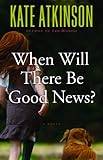
Early in the month I finished listening to the third book in Kate Atkinson's Jackson Brodie series, When Will There Be Good News? What I love about Atkinson is that she assumes the reader is smart. She weaves a story that has many layers and complications, but always bring together every loose end. The pay off is always there in all of her novels, series or standalone.

In this newest book, Atkinson again has Jackson Brodie in Scotland and crossing paths with Louise, a Chief Inspector. (Check the bottom of this post for a report on the second installment in the series, One Good Turn.) However, for the first time in the series, Jackson is not the main focus. The story still turns on girl in trouble, as it always seems to for Jackson. In this case a grown woman, Jo, whose entire family had been slaughtered when she was 6, and her 16 year-old plucky nanny, Reggie. Louise and Jackson get caught up in Reggie's search for Jo, who has vanished. As usual, Jackson ends up in a lot of trouble along the way-- he almost dies in a train crash and is twice mistaken for a serial killer.

As usual, Atkinson's writing captures the true nature of people. Her characters are fully rounded, flawed, and just plain real. Also, this is the third book in the series, and the best so far. That's not just my opinion either, check the reviews. Atkinson has set up more sexual tension (without even a kiss ever being shared) between Jackson and Louise, and has set up Reggie as a character who deserves an entire book of her own.

I have explored readalikes for Atkinson (at the bottom of this post) before. To that list I want to add the Maisie Dobbs mysteries by Jacqueline Winspear. Like Atkinson, Winspear is great at creating full realized characters and her British settings, although historical (between the World Wars) vividly capture the varied landscapes of Great Britain much like Atkinson does in her writing.

Like Atkinson, the genre bending, award-winning suspense series by Stieg Larsson beginning with The Girl With the Dragon Tattoo, pairs a reluctant male investigator with a female investigator. Here there are also decades old crimes to solve and wonderfully drawn characters. The setting, Sweden, is even darker and more foreboding than Atkinson's Scotland.

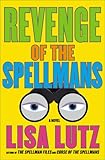
I also read the third book in another series I enjoy, but here humor was the main appeal. Lisa Lutz's Revenge of the Spellmans continues the story of Izzy Spellman, her family of PIs in San Francisco, and her misadventures in life and love. (See this post from 10/07 for more background on the series). As in the 2 previous mysteries, Izzy is surrounded by her eccentric friends and family as she ends up in compromising situations, working on cases she should probably leave alone. The plot details are not too important here but there is court ordered therapy, parked cars moving themselves, PSAT cheating accusations, unwanted house guests, and switched identities just to name a few of the issues that pop-up here (use this link to read about it). Don't try to keep it straight, just pick up any of the books in this series and know that you are in for more humor than mystery, more character than plot, tons of wit and irony, and lots of laughs.

Previously I have said that Lutz is a readalike for Janet Evanovich, but now that she is coming into her own, you may see readers looking for readalikes for Lutz herself. I would suggest Donna Andrews' funny Meg Langslow Mysteries (The first is Murder with Peacocks). Meg is a young, amateur detective, not a PI, but her family is almost as crazy. Like Lutz' Spellman books, Andrews' series has also won many awards and fans.

Finally I read Jonathan Maberry's brand new thriller Patient Zero. I posted about it in detail here, and look to the end for Maberry's own comments on my post and the book. In Patient Zero, we are introduced to Joe Ledger who is, dare I say it, just a hero. I wrote about the plot specifics in the other post, but let me tell you, this is a fast paced, pure terrorism techno-thriller, with shifting points of view (hero and villains), and a happy, resolved ending. Joe Ledger will become a force to be reckoned with as the series continues.

Maberry is better known as a horror writer, but although Patient Zero has zombies, the novel is ultimately an adventure-thriller. The zombies all get killed, and there is no lingering virus to continue the zombie threat into another book. Ledger saved the day and will move on to a new crisis in his next book. I dare say it is farwell to Maberry in the horror world. Do check-out his award-winning Pine Deep horror trilogy though. (I wrote about the first book here).

If Joe Ledger and his exploits with the Department of Military Service are appealing to you, try the Shane Schofield series by Matthew Reilly or anything by James Rollins. Maberry also gives a shout-out to David Morrell in this novel (a charcater is reading a Morrell novel). Morrell is a great readalike option here since both authors sneak a bit of more traditional horror appeal into their thrillers. Fans of Patient Zero should start with Morrell's Creepers.

Friday, December 2, 2016

What I’m Reading: Haven and The Burning World

I have two horror reviews in the 12/1/16 issue of Booklist. Both received stars, although I want to point out the second one here is shockingly good and it’s a DEBUT!!! Finally, both are great options for teens as well as adults.

Please note, most of the other titles in these reviews link to more reviews by me. Click through for even more information and/or readalike options.

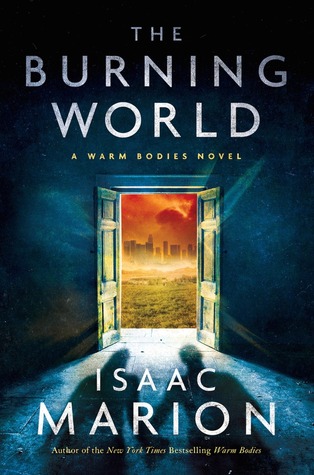
The Burning World by Isaac Marion
Feb. 2017. 512p. Atria/Emily Bestler, hardcover, $27  (9781476799711); e-book, $9.99  (9781476799735)First published December 1, 2016 (Booklist).

In 2011, Marion released Warm Bodies, a refreshingly unique post-apocalyptic zombie novel. It told the love story of R, a recovering zombie, and Julie, a human girl. It’s popularity led to a movie and a clamoring for Marion to release a sequel. But it was clear that in order to continue R and Julie’s story, Marion would have to deepen the world building and characters, so he went back and wrote a prequel, The New Hunger (2013). Now, Marion has finally returned with that much desired sequel, The Burning World, and his efforts at laying a more stable groundwork behind the Warm Bodies world made it worth the wait. R and Julie are still helping recovering zombies rejoin the slowly healing world, but a new threat flies in, a corporate entity known as Axiom, with henchmen, secrecy, and violent domination on their minds. R, Julie and their friends, including an Axiom employee, end up on the run. What follows is a cross country journey to discover the truth behind Axiom and just how much of humanity is left out there, but along the way, our heroes also begin to understand more about themselves, their personal pasts, and how they each fit into the story of the end of the world. With exciting action sequences, intriguing new characters, and a much more epic scale to the story, The Burning World will leave readers satisfied but eagerly anticipating book four. Suggest to fans of epic horror with a science fiction tilt like Justin Cronin’s The Passage trilogy or Mira Grant’s Newsflesh series.

YA Statement- With a full cadre of “new adult” heroes trying to save the world while also looking for just how they fit into it, teens will find much to continue enjoying in this series.

Further Appeal: Okay, let’s be honest, Marion could have phoned it in here. But I really want to give him credit for going back and writing the prequel first to build up the foundation of the world and then move to the sequel to the enormously popular Warm Bodies

The Burning World moves the story away from its narrow scope, literally and figuratively which is a big change, but I think a good one.

Also, this novel introduces familial love back into the story through a few different characters. This makes sense as the characters are shifting from survival mode to actively trying to rebuild society.

Three Words That Describe This Book: exciting action, epic scope, moving

Readalikes: Other apocalyptic but non-zombie titles that readers may also enjoy include:

  • Station Eleven by Emily St. John Mandel because like The Burning World, we see flashbacks to how the world was destroyed and see a moving portrait of how people are trying to piece it back together.
  • The Age of Miracles by Karen Thompson Walker because like The Burning World we see the apocalyptic event through the eyes through a young person. In this case, the full weight of the apocalypse hasn't taken hold yet, but it is coming. 

Haven by Tomy Deady
Dec. 2016. 504p. Cemetery Dance, hardcover, $40  (9781587675133)First published December 1, 2016 (Booklist).

In 1961, the small town of Haven, Massachusetts was terrorized by a series of child murders. When a local, disfigured, young man, Paul Greymore was put in jail, on shaky evidence, for the murders, the residents of Haven thought they could go back to a peaceful life. However, in the unseasonably warm spring of 1978, 17 years later, Paul has been released, is reconnecting with those who believe in his innocence like the local Priest, a young neighbor named Denny, and his best friend Billy, when the strange killings start happening again. Some old grudges are leading the police chief to target Paul, but the evidence clearly points to something evil and monstrous lurking in the caves and lake in the town’s forest. Paul and Denny lead a ragtag group of unlikely heroes, heroes with as serious things to overcome in their personal lives as they do with the human and supernatural threats endangering their community. With compelling characters (both good and evil), a shifting narration that keeps the story moving, a slowly unveiled, but relentlessly building sense of dread, a recently unearthed and devastating secret from the past, and breathless action sequences, Haven is a well crafted example of what is best about horror today, and this is only Deady’s first novel. While obviously for fans of Stranger Things and classic, 1980s, small town horror by those like King or Straub, don’t let the novel’s setting keep you looking in the past. There is a 21st Century perspective behind this tale similar to Jonathan Maberry’s award-winning Pine Deep Trilogy or Jonathan Janz’ Children of the Dark. Hand out freely to anyone looking for a solid scare.

YA Statement- With strong coming of age themes and young, outcast heroes leading the charge against the monster and town bullies, Haven is the perfect choice for teens looking for a bit complexity to go with their chills.

Further Appeal: I just want to reiterate how good this novel was. I had everything you want from an old fashioned horror novel, yet it didn’t feel dated. This is a debut novel that I want to make sure libraries order and hand out to patrons who love any of the authors I mentioned above. They will not be disappointed.

Three Words That Describe This Book: sense of dread, shifting pov, compelling characters

Readlaikes: Besides the many I crammed into the review, I would also suggest this to your fans of Paul Tremblay, especially Disappearance at Devil’s Rock and Hex by Thomas Olde Heuvelt.

Thursday, October 13, 2011

What I'm Reading: Locke and Key: Keys to the Kingdom

Today is a cross post with RA for All Horror's 31 Days of Horror series:

Locke & Key Volume 4: Keys to the Kingdom HCAnyone who reads either of my blogs know that I am a huge Joe Hill fan.  In the new book, I outright proclaim him as the 21st Century King of Horror.  Here is what I have said about Hill on NoveList:
Joe Hill writes novels, short stories, and graphic novels. His work features extremely flawed but genuinely likable protagonists who are forced to confront their dark sides as they battle evil. A Hill tale also sets the stage with a menacing atmosphere from the first lines. Readers are also drawn to Joe Hill because he mines their modern lives for fear. Hill captivates readers with this ability to use the best of the time-tested horror traditions while injecting a shot of the new to keep things freshly frightening.
 Recently I read the newest entry in his Locke and Key series, Keys to the Kingdom. Keys to the Kingdom also garnered Hill a 2011 Eisner Award for Best Writer.

Here is the gist of the series.  It follows the three Locke children as they deal with their father’s murder, their alcoholic mother, and a supernatural being who is stalking them. These are typical 21st Century American kids; they listen to iPods and text each other, but they also live in a creepy, isolated, old house, filled with keys that can do magical and dangerous things. While they live in modern times, the feud between their family and the supernatural being out to collect all of the keys and destroy them has been going on for generations.

Click here to access my horror review index which includes my reports on the first three entries in the series including readalike options.


Specifically, Keys to the Kingdom continues where we left off, with the Locke children using the keys they have found to battle a force out to destroy them however, in this installment the kids finally figure out that the physical manifestation of this force is masquerading as their best friend. The kids also begin turning on each other throughout the course of the book.  The biggest key of them all is in play and causing problems, and things turn much, much darker.

This books packs a punch.  It also takes a drastic and absolutely terrifying turn in the final pages.  I was shocked and got chills.  This is a big deal because at this point, it takes quite a bit to shock me.
As usual, the illustrations by Gabriel Rodriguez are gorgeous. The drawings and the over all visual feel of Keys to the Kingdom has a darker palate that also underscores the overall change in the series' tone.  The wonder and awe that marked the start of the series as the kids discovered the power of the keys, best illustrated in Vol 2: Head Games, is gone.  The rich and colorful drawings that accompanied that volume are replaced by grays, black, and lots of red blood.  But it makes sense because the burden of the keys and the peril faced by the Locke family are all building to a climax.  The illustrations perfectly reflect the overall feel of the book.

As I was reading Keys to the Kingdom, I was not enjoying it as much as the first 3.  It felt plot heavy for the first 2/3's.  But when I finished it, I totally  understood what Hill was doing.  He purposely ropes you into complacency thinking that nothing new is going to happen and then...BAM!...everything we knew and counted on is changed...for the worse.  It was brilliant and shocking.  This is horror storytelling at its best. I loved it.

I cannot stress enough how much darker the series has become.  Yes, it has always been a horror series, but you always felt that good would win out in the end.  After Keys to the Kingdom, I am not so sure about that anymore.  For me, this is fine.  It actually will add to my enjoyment as I continue to read the series, but for some readers, it may be a bit too much to take.

Three Words That Describe This Book: dark, compelling, unsettling

Readalikes:  Specifically for Joe Hill, I suggest the following in the new book:
Fans of Hill’s writing who want to read more may also enjoy the horror novels of Jonathan Maberry, Stephen King, and Peter Straub, who are also highlighted in this chapter.  These horror authors all write character centered horror that is rooted in the reader’s real-life experiences.  The chilling suspense of Tom Piccirilli is also a great choice for Hill readers.  Piccirilli began as a horror writer and has continued to keep a supernatural element in his works.  Like Hill, Piccirilli has flawed but sympathetic protagonists, placed in frightening situations, with modern details.  Another whole collection option for Hill fans is the psychological suspense of Peter Abrahams.  Like Hill, Abrahams excels at leading his protagonist into a bad situation, while readers squirm as they watch it all spin out of control.  The ultimate question with both of these authors is whether or not the protagonist will make it out alive. It is important to note here that both Piccirilli and Abrahams are NOT horror authors, but they would still greatly appeal to fans of Hill.
In my review of the 3rd book, Crown of Shadows I said:
The graphic novels of Hill's father's Dark Tower books make for a good suggestion here. Also anything by Neil Gaiman from Sandman to The Graveyard Book (and everything in between) would work for fans of the Lock and Key Series. Also try Alan Moore and Frank Miller in graphic novels, and Bentley Little, Robert McCammon, or Peter Straub in novels.
I would also suggest the new graphic novel series, American Vampire by Scott Snyder, Stephen King and Rafael Albuquereque (which I will review in  a few days), Jonathan Maberry's Pine Deep Trilogy, or Leopoldo Gout's Ghost Radio. All three of these suggestions are original horror stories which push at the edges of horror conventions to extremely successful results.
For more graphic novel options that are original, dark, and compelling, I would also suggest that you try the Chew series of graphic novels which follow Tony Chu, a detective with the power to receive psychic impressions from whatever he eats or the Y Last Man series of gns by Brian K. Vaughan set in a time when a plague of unknown origin kills every mammal with a Y chromosome, Yorick Brown discovers that he is the only male left and embarks on a transcontinental journey to discover why.

Tuesday, June 4, 2013

What I'm Reading: NOS4A2

As you all know, I LOVE Joe Hill.  Click here to see some of the love.  I even went so far as to proclaim his as the new "King of Horror" in my book.  Look when you publish your love of a writer in a book, that people have to pay for, that is some serious love. Well, after reading his brand new, huge (just under 700 pages), horror opus NOS4A2, I can honestly say I made the right call.

While Joe Hill's previous novels have been a bit of a genre blend, NOS4A2 is pure horror.  And it is brilliantly executed at that.

Here is a brief overview.  The story is focused around the villain, Charlie Manx and the hero, Victoria McQueen, aka Vic.  The book bounces around in time, although each section is clearly marked, but the point is the eventual epic battle between Vic and Manx.  Vic and Manx are among the few people out in the world who have access to the "inscape."  It is described by Maggie, an Iowa librarian who also has an inscape thusly:
“Everyone lives in two worlds,” Maggie said, speaking in an absent-minded way while she studied her letters. “There’s the real world, with all its annoying facts and rules. In the real world there are things that are true and things that aren’t. Mostly the real world s-s-s-suh-sucks. But everyone also lives in the world inside their own head. An inscape, a world of thought. In a world made of thought—in an inscape--every idea is a fact. Emotions are as real as gravity. Dreams are as powerful as history. Creative people, like writers, and Henry Rollins, spend a lot of their time hanging out in their thoughtworld. S-s-strong creatives, though, can use a knife to cut the stitches between the two worlds, can bring them together. Your bike. My tiles. Those are our knives.”
Manx's inscape is a world called Christmasland.  For over 100 years he has been driving his 1938 Rolls Royce Wraith with the license plate NOS4A2 and collecting children he thinks are in an abusive family situation, kidnapping them, killing the problem parent, and taking them to Christmasland. There he preserves them outside of time in a world run by children where every day is Christmas. On the trip, he sucks out their youth to preserve himself.  Manx is a very bad dude.

Vic's inscape is a bridge that appears when she needs to find something.  As a teen, she finds Manx and manages to be the only child to ever escape from him. But having an inscape and accessing it takes a toll on the health and sanity of those who experience it.

This idea of the inscape is weaved into the novel in a very convincing fashion. I believed these worlds between reality and what is in our heads were really just below the surface of all people.  The inscapes felt chillingly real.  As a result, NOS4A2 has a very strong world building appeal.  It did remind me of the setting Hill created in Horns, where I was totally buying the fact that Ig could be turning into the devil.  Click here for details

That's the set up; what follows then is all about Manx and Vic and their inevitable final show down.  This is an epic story of good vs. evil.  Well, Vic is not all good.  She has some serious flaws, but her heart is in the right place.

This is also a long book and there are parts during the middle where some people say it drags a bit.  I disagree because while there are definitely parts that move faster than others, everything that happens in the book is there for a reason.  It all pays off in the end.

Further appeal considerations:  As usual, Hill is a master at setting up the unease from the very first lines.  The prologue is perfect.  We are introduced to Manx in a horribly tense and terrifying moment in a hospital.  But lots of thriller and horror writers can write a scary prologue, Hill is great because he keeps the unease going throughout the entire novel.  Besides the traditional ways of setting up unease by having sections in which the time frame abruptly switches and with a fluid shifting of points of view, he also does AWESOME thing like having some chapters end mid-sentence and leave you hanging, only to find the sentence completed in the title of the next chapter.  Talk about unease.

And, the entire idea of Christmasland as an evil place is so unsettling.  It plays with all of your preconceived notions of the innocence of Christmas and adds a level of dread to the book that is very satisfying.

And, please, please, please read every single page of this book, including after the acknowledgements in the "Notes on the Type."  The story does not end until the last page with text on it.  That was one of the coolest things I ever experienced in reading a novel.  The shock of finding the ending after I thought the ending was already behind me was great.  It was so clever and fun by Hill to do this, but now, no one can ever do it again without being accused of copying him.

Speaking of the ending, this is true modern horror.  No one is safe and the evil cannot be completely vanquished. 

NOS4A2 also features excellent secondary characters, a well rounded female protagonist who does not want or need anyone to come to her rescue, and plenty of action scenes.

Read this book if you like PG 13 rated horror or thrillers.  This is a great summer read, especially on a hot day as the climax happens in the chilly world of Christmasland.  There is action, drama, compelling characters, evil villains, and a satisfying conclusion. Don't be surprised if you find yourself, as I did, ignoring everyone and everything in your life to follow Vic on her quest to vanquish the seemingly immortal Manx.

The few short days I spent reading NOS4A2 was one of the best reading experiences I have had in a while.

Three Words That Describe This Book: suspenseful, original, chillingly real

Readalikes: NOS4A2 is a classic horror story.  Joe Hill said he felt like he was earning his thesis in horror by writing this novel.  I think he gets an A+.  So some of the readalikes here are some other benchmark horror titles.

Classic, fat horror book Stephen King titles will appeal here.  I would especially suggest It which also takes childhood fun (a clown) and makes it terrifying.  Also, the town from It, Derry Maine is mentioned in passing in NOS4A2; that is a fun aside in the story for those in the know.

Jonathan Maberry's classic horror Pine Deep Trilogy is in 3 books but is actually one giant story.  Click here to read more about that awesome tale or terror.  It shares many appeal factors with NOS4A2 including the strong characterization, the chillingly real storyline, and the solid world building of the supernatural invading the regular world.

The more Hill writes, the more he seems to be a better readalike for Neil Gaiman.  Both writers create anxious atmospheres and dark fantasy worlds with thought provoking plots using a literary fiction writing style.  If you loved American Gods or The Graveyard Book you will enjoy NOS4A2.

Neverland by Douglass Clegg is a horror classic that also deals with family dynamics and has a child narrator (Vic's son plays a huge part in the Hill novel).  This is an older title (early 90s) but it still stands up to today's readers.

Probably the best all around readalike for NOS4A2 is the Ramsey Campbell classic horror novel, Silent Children.  Here a man, like Manx, decides it is his job to take children away from their imperfect parents.

Kin by Kealan Patrick Burke which I reviewed here is about a girl who is abducted and raped, but it is also about the family that kidnapped her.  Click here for more.  Kin is a bit more violent than NOS4A2 but they are both emotionally wrenching and give us a peak into the evil soul of humanity.

Finally a readalike I was not previously familiar with-- Florence and Giles by John Harding.  I found this one while poking around on NoveList for other books that are also described as creepy and suspenseful with the subjects of good vs evil and supernatural. Florence and Giles is well liked on Goodreads, has neglected children, a troubled female protagonist, and a New England setting.  It has a 19th Century setting a a more Gothic tone, but I figure it is worth a try.

Monday, January 29, 2018

What I’m Reading: Savage Woods, Plus Bonus News You Can Use


TodayI have a review of a book that came out last Fall that is a NOT TO MISS option for fans of supernatural thrillers with a strong female protagonists- otherwise known as dozens of your regular patrons.

The book is Savage Woods by Mary SanGiovanni and before I get to the review, I wanted to share a few things about SanGiovanni that are relevant to you the average public library worker- some of which provide you with CE opportunities [both in person and virtual].
  1. She publishes with Kensington Books, a smaller publisher with a huge library foothold. You may only know them for their romance and thrillers, but click here to see their [growing] horror line. SanGiovanni is under contract for a few more novels with them, including a series-- which we know in library land is music to many of our patrons ears.
  2. SanGiovanni has been writing Lovercraftian, cosmic horror since the early 2000s. She has won awards and critical acclaim, she’s even been called “The Queen of Cosmic Horror.” She was doing this well before the current Lovecraftian revolution and had to deal with the sexism in the subgenre way before those who Lovecraft disparaged in his own life started outright challenging him, his fans, and his work. [For more on that trend click here for my booktalk on the topic.]
  3. Speaking of her place in the cosmic horror world, SanGiovanni just launched a new podcast where she talks about cosmic horror, what it is, why it is appealing to readers, and its history. It is called Cosmic Shenanigans. This is a must listen for all library workers because cosmic horror is exploding right now and most of us don’t understand it fully. In the first episode SanGiovanni talks about the characteristics of the subgenre. She said something during that 30 minute episode that really stuck with me. Paraphrasing her-- cosmic horror’s appeal is that there is something out there in the universe that is so huge and evil that we are simply its playthings. We are so insignificant and that is terrifying. I never thought of the subgenre's appeal that way, but it completely opens me up to suggesting it to a wider range of readers now.
  4. SanGiovanni and Thunderstorm Books recently announced here [36 minute mark] that she will have an imprint of special edition horror titles called “Tempest.” The Tempest imprint will be limited edition novellas by female horror authors that SanGiovanni hand picks. Now I know that libraries do not buy limited edition titles, but many of Thunderstorm’s limited edition original books get picked up by other publishers in paperback and go one to be quite popular [click here for a recent example]. Authors that SanGiovanni identifies, will become names we are going to need to know going forward. She promises to gather women and diverse ones at that. I can’t wait.
  5. Speaking of women in horror, Mary has a famous and eloquent essay about what it means to be a woman in horror. She has given me permission to post it before. Here is the link.
  6. For all of the reasons above and because SanGiovanni has “been there done that" in horror publishing, I asked her to moderate a panel a StokerCon 2018 featuring new authors that I wanted library workers to know about. I picked the authors, but SanGiovanni graciously and eagerly agreed to moderate. She will be able to share her wisdom with these new authors [3 out of 4 are women because women writing horror is one of the biggest trends in the genre right now] and she is well equipped to know what questions to ask these young writers.

So thats why you all need to know about Mary SanGiovanni and what you can learn from her knowledge. Below is a librarian focused review of Savage Woods. Feel free to borrow it to booktalk the title to potential readers. Call your Kensington rep to make sure you get all of her books too.

The Pine Barrens in southern New Jersey is a known haunted place. Sightings of ghosts, beasts, and creatures have been documented by visitors for generations. But put this deeply haunted wood in the hands of Bram Stoker nominated horror author and NJ native Mary SanGiovanni’s hands and the fear reaches out from between the trees and grabs hold of the reader. Savage Woods [Kensington 2017] opens in a Lovecraftian style, with the unveiling of the ancient spirits that rule a particular 600 acre section of these woods known as Nilhollow. This area of the Pine Barrens is avoided by locals who know better, but when Julia is run off the road by her abusive ex and escapes into the woods, the police are forced to enter, against their better judgement, to try to find her. What follows is a terrifying and gripping thriller, a race through the woods, where the good guys are forced to battle evils both human and supernatural. There is plenty of fast paced action, edge of your seat suspense, and awesome bloody death and dismemberment scenes, but there is also a surprising beauty in the language used to describe the forest. The trees become a character here, in fact, the wood itself maybe the most compelling, complex, and intriguing character in the novel. Readers will root for Julia to find safety, they will hang on the twists and turns of the plot, but this story will stay with them after it is all over because of the trees. Readers seeking out bloody tales of ancient evil where the woods come into play will be happy you pointed them in SanGiovanni’s direction as will current fans of titles like Children of the Dark by Jonathan Janz or The Devil Crept In by Ania Alhborn.

Further Appeal: SanGiovanni is the reigning queen of cosmic horror. Her deep affection for and skill for crafting tales in the tradition of this type of horror, as is most associated with Lovecraft, is clear here. That is a huge appeal of the book. It is cosmic horror but from a female pov. Not only will cosmic horror fans like it, but I think you can introduce female readers to this subgenre with this novel. They would like cosmic horror if they knew more about it than the “bro” culture who have been running it for decades have allowed to be put out there. Authors like SanGiovanni, LaValle and the others I mention in this booktalk, are a great place to start.

Also, horror set in the woods, where the woods themselves bring the fear is a huge appeal factor. There are a number of books where this trope is used. Even in books where the woods are not the focus, the woods are creepy. Send horror fans who feel the fear in the trees to this book ASAP.

The female driven, suspense with supernatural horror, strong characters, and a decent amount of gore aspects will be very popular appeal match areas here.

Three Words That Describe This Book: suspense, cosmic horror, fast paced

Readalikes: I mention two recent titles above, but horror set in the woods, is a huge appeal factor which you can match for more readlaikes.

Also, don’t underestimate the appeal here for people who want a strong female protagonist with an intensely suspenseful thriller storyline, but are sick and tired of the “girl” books. They need the suspense, blood, and action up about 4 notches but without sacrificing the strong characters and solid writing. Obviously they have to be okay with the cosmic horror frame, but fans of intense female led thrillers like those by Lisa Jackson, Sarah Pinborough, and Nicci French should give SanGiovanni a try.