RA FOR ALL...THE ROAD SHOW!

I can come to your library, book club meeting, or conference to talk about how to help your readers find their next good read. Click here for more information including RA for All's EDI Statement and info about WHY I LOVE HORROR.
Showing posts sorted by relevance for query watership down. Sort by date Show all posts

Friday, December 18, 2009

What I'm Reading: Firmin

After hearing from multiple sources about Firmin: Adventures of a Metropolitan Lowlife by Sam Savage, I added it to my "to-read list;" however, I was not impressed, and I though I would be.  Look at this review from Booklist:
In Savage's darkly comic debut, the titular metropolitan lowlife is a rat, albeit one with lofty literary ambitions. The runt of 13 siblings spawned in the basement of a shambolic Boston bookshop, Firmin survives his lean first weeks by munching on the edges of books. He quickly develops a predilection for actually reading them, too. Soon he's perusing everything from Joyce to compendiums of dirty jokes and even developing a secret fondness for the bookshop's owner, Norman. Tutored by a sign-language book, Firmin tries to communicate with Norman and his human brethren with predictably disastrous results until an obscure science fiction author, who writes about rats and lives above the bookshop, takes him in as a pet. There Firmin enjoys a brief respite of security, writing odes in his head and dreaming of glory, until the wrecking ball threatens the decaying neighborhood. Blending philosophy and abundant literary references with originality, Savage crafts a small comic gem about the costs and rewards of literary illusions.
So, I should have loved this book.  It is darkly comic, it has the speculative element of an anthropomorphic animal, and it is all about books and reading; all things I love.  So if the appeals all fit my tastes why didn't this book work for me?

This is a good opportunity to talk about using only appeal to match a book with a reader.  Even though I preach about the superiority of matching the right book to the right reader when you focus on appeal, there are no guarantees.  This is why I always tell patrons that while I think the book I am giving them is a good suggestion for them based on their likes, they still may not enjoy it.  What I say excatly is, "If you find you aren't enjoying the book, close it up and bring it back. We can find you something else; just look at all the books we have waiting for you." I also remind them that we don't ever check to see if they have finished a book, so feel free to not finish it.

So why didn't I like this book.  Well, although it had the good appeal matches for me that I mentioned above, I was turned off by all of the digressions the narrator makes.  Firmin, the rat is narrating the book, but he is too scattered for me.  It took more than half of the book for him to find focus.  Also, the book was too snarky; it was as if the author was trying to hard to be dark and unfocused so as to be cool.  It felt forced to me.

Also, I did not care about Firmin or the humans be befriended. Without caring about them or their plight, I could not get into the book.  This is a character driven book, but I did not enjoy the charcaters.  I usually don't need to sympathize with the main character in order to like a book.  That was not the problem.  I just did not care to be bothered.  The characters did not grad my attention and demand to be followed through the story.

I think I can put Firmin in the same category as Captain Freedom, which I also did not enjoy (click here and scroll down to see what I had to say).  Both have too many references and are too obviously ironic for me. However, since ever reader reads a different version of the same book, I know there are many other readers for whom this book struck the perfect chord,  Click here and here to see what some of these Firmin-lovers have to say.

Readalikes:  On the other hand, there are books similar to Firmin which I did enjoy. If you want to read a book about people/animal interactions, from the animal's perspective, in an urban environment, with a darkly comic tone, I think The Roaches Have No King by Daniel Evan Weiss is an oldie but goody.  I loved this book.  It is very similar to Firmin in theory, but in practice, I enjoyed it much more. I still give this "dustie" out to readers.

Christopher Moore is a great example of an author who successfully crafts darkly comic, urban stories with speculative elements.  Try A Dirty Job.

And don't forget the king of all anthropomorphic novels, Watership Down.  If you have never read it, put down Firmin and pick it up instead.  Contrary to popular belief, Watership Down is not a kid's book; it is a very adult cautionary tale.

Monday, October 13, 2008

Take Ten: Columbus Day Readalikes

In honor of the spirit of exploration we celebrated today, I would like to suggest a few books with unlikely adventurers. All of these books and annotations are taken from my Shelfari shelf which you can access with this link, or at any time on the right column of this blog. Call it an impromptu "Take Ten," in no particular order.

Watership Down by Richard Adams
Fiver senses the impending disaster about to befall his community and convinces a small band to leave the safety of home and run away. Hazel, the leader, takes the group on an Exodus like journey to the promised land of Watership Down. Hazel, Fiver and their band are no ordinary pilgrims, however. They are rabbits and the reader is drawn into their world of warrens, rabbit folk-lore, and complex politics while following them on their dangerous journey. The result is a moving tale of survival and adventure, no matter the species.

The Stolen Child by Keith Donohue
At age 7, Henry Day is kidnapped by a pack of hobgoblins who replace him with one of their own. The chapters alternate between the experiences of human Henry and hobgoblin Henry. Neither Henry feels content in his life, and both are losing a grip on their true pasts. Their concurrent struggle to find where they came from lead the two Henrys to finally meet decades later.

Neverwhere by Neil Gaiman
Richard Mayhew is your average young Londoner, until he stops to help a young homeless girl he finds on the street. This chance encounter leads Richard into “London Below,” a dark and magical parallel city under the familiar streets of his hometown. Before he can return to the world above, Richard must battle monsters and henchmen, visit with a fallen angel, and find his own inner strength.

The Brief History of the Dead by Kevin Brockmeier
A deadly virus is quickly killing off everyone on Earth, and Laura Byrd, a researcher in Antarctica is apparently the last person left alive. This apocalyptic story alternates between Laura’s struggle for survival and an alternate universe called “the city,” populated by the dead who still are remembered by those living on Earth. This compelling and original tale is chilling and thought provoking.

Girl in Landscape by Jonathan Lethem
13 year old Pella Marsh and her family flee a post-apocalyptic Brooklyn to become settlers on a new planet. The previous inhabitants of this planet were a highly evolved alien race which used viruses to alter the planet. To add to the tension, Pella’s father, a politician, clashes with another settler about the type of society they want to establish. Although the novel takes place in outer space, the story feels more like a classic Western than Science Fiction. Told through Pella’s eyes, this is a tale about the loss of innocence and the trials of being a pioneer.

Gulliver's Travels by Jonathan Swift
In this classic novel, 18th Century, explorer Lemuel Gulliver, encounters Lilliputians, giants, scientists, philosophers, and brutes in five different worlds. Swift used each encounter to skewer his contemporaries, but 300 years later, his insight into human behavior and hypocrisy is still surprisingly fresh.

Ender's Game by Orson Scott Card
At age 6, Ender Wiggins is identified as the “last hope” to defeat the alien race set upon the destruction of the Earth and all of its inhabitants. Sent to a special military training school in space, Ender leaves his family behind and begins an intensive training involving team building and simulated war games. The reader follows both Ender’s trials at living on his own and his family’s story of dealing with the increasingly difficult political situation back on Earth. Ender’s Game is a moving coming-of-age tale with a science fiction twist.

How I Live Now by Meg Rosoff
Daisy is a disaffected, motherless, NYC tough girl who is sent to live at her Aunt's English Country Estate. The twist here is that a World War is beginning and eventually, Daisy and her cousins are left to fend for themselves without any communication with the outside world. The story that follows has some violence, but is very realistic. You will be emotionally affected by this novel. Up against terrible odds, Daisy learns what really matters in life and the reader is treated to a fairly happy ending.

Water for Elephants by Sara Gruen
Water for Elephants is the story of Jacob Jankowski, a ninety-something year old nursing home patient. The novel is his reminiscence of his life in a depression era circus, specifically his coming-of-age as a man and as a veterinarian. The story follows Jacob as he learns of the indignities of circus life and the intense desperation of the Great Depression. We follow Jacob as he falls in love with a performer, tries to save her from an abusive husband, and fights for the rights of the circus workers and animals. But it is with the introduction of Rosie, an elephant, that the story blossoms into something special.

Ines of My Soul by Isabel Allende
This historically accurate novel relates the true story of the Spanish conquerors of Chile in the 1500s. Ines Suarez narrates the book in her old age, as a memoir being told to her daughter, Isabel. Ines began her life as a seamstress in Spain, but became the first Gobernadora of Chile. Ines relates the trials and jubilation, the hard times and the wonderful moments of establishing Santiago, Chile. Most of the novel is taken up with the story of Ines and her lover, Pedro Valdivia, the war hero, and their bloody struggles with the indigenous people of Chile. This is the story of Ines’ life, a chronicle of the founding of Chile, a comment on the price of “discovering” the New World, and a tale of the power of love.

As a side note, my library was closed today. My adventures led me and my two school-aged children to see Beverley Hills Chihuahua and explore a suburban pumpkin farm. Not nearly as memorable as "discovering" the New World (or slaughtering indigenous people) but a fun day off nonetheless.

Friday, June 19, 2015

Great Adult Reads Featuring Animals: A List and a RA Training Exercise

Later this morning my son will complete his 2 week theater camp with a performance of Doctor Doolittle Jr.  Over the last 2 weeks, we have talked a lot about the books upon which the production is based. It sadden and shamed me that my voracious reader son was not even aware of this series [so 100% my fault]. But besides talking about this series, for the last 2 weeks we have had numerous discussions about other books featuring animals which he has enjoyed.

Then at yesterday’s ARRT Steering committee two comments came up about books featuring animals.  One, had to do with whether or not a book featured violence towards animals. [On a side note, this is one of the most common limiters for adults and their leisure reading. In my experience, violence to animals trumps any violence (even to children) or sex restrictions]. The other was someone recommending H is for Hawk by Helen Macdonald, as she prefaced her recommendation with he words, “And I don’t even necessarily like Hawks, but I loved this book.”

And then again, this week marks the 100th Anniversary of the Battle of Waterloo.  On my dresser is the ARC of a debut novel, The Sage of Waterloo by Leona Francombe that tells the story of this epic battle through the eyes of the rabbits that live on the farm where the battle took place. I will be reading it soon.

This is all a roundabout way to say, although I thought I was the only one with animal books on the brain due to living and breathing Dr. Doolittle all week, I am not alone.  Adults love reading about animals as much as kids do.

Animals are a great example of a specific frame that many readers enjoy but do not always articulate.  As I wrote in a recent article for NoveList on this topic:
"I have found that there are some specific frames that I enjoy in my leisure reading. For example, as a transplanted but proud Jersey girl, I will read just about any book if it is set in New Jersey. I also love books with circuses, ones set on college campuses, titles with a Civil War background but which do not focus on the battles, and books with baseball in them. I will read any type of book in which these subjects appear -- fiction or nonfiction. Nine times out of ten, I will end up loving the book, even if it is not a genre or writing style I would normally enjoy. I can go against my appeal preferences if these frames are present because their presence in the story in and of themselves gives me great enjoyment."
In my experience, I have found this last statement to be very true of a large number of patrons when it comes to animals.

So, here are some of the books I had read and reviewed on this blog which feature animals prominently. Click on the link to read about the specific appeal of each book because they are from a very wide range of genre, tone, and style. However, don’t forget that for some people, just the fact that animals are at the center of these books may be all a reader needs to enjoy all of these books.

The act of just gathering a list of these widely differing titles united only by their shared frame has been a great exercise for me.  You should try it too.  Just think about books you know about or have read that fit this category too. Or, do it for any category by frame, not just animals.  It really helps to get the RA recommendation juices going.  Trying to to only match for example, The Sage of Waterloo and Watership Down because they both have rabbit narrators is okay RA service for your patron.  But considering The Art of Racing in the Rain or Dog On It, which feature dog narrators is great RA service. Different animal, but very similar storytelling techniques.

If nothing else, just reading this list will encourage you to think outside the box as you suggest books to patrons, books they may never have found on their own, books they may love.  That is the power you hold; the power to enrich someone’s life with a great read. What a great job we all have.

Books where animals are narrators:
Art of Racing in the Rain by Garth Stein
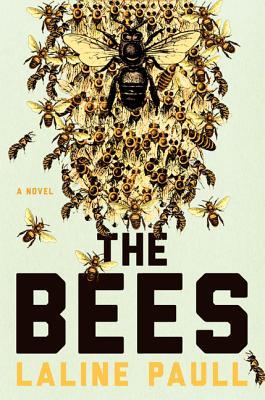
The Bees by Laline Paull
Watership Down by Richard Adams
Dog On It by Spencer Quinn (first in a series of mysteries)

Books which feature animals prominently
Seabiscuit by Laura Hillenbrand [nf]
The Big Year by Mark Obmascik [nf]
American Buffalo by Steven Rinella [nf]
Water for Elephants by Sarah Gruen
Life of Pi by Yann Martel
The Madman’s Daughter by Megan Shepherd (YA novel based on the Isle of Dr. Moreau)
His Majesty’s Dragons by Naomi Novik

Tuesday, May 27, 2014

What I'm Reading: The Bees

Okay, I am officially overwhelmed by how far behind in reviews I am.  So, I now have a self inflicted blogging punishment-- I will only post reviews until I am caught up. To jump start myself, I am going with the book I finished this weekend and will be talking about at tonight's Book Lovers Club, The Bees by Laline Paull.

I first became aware of this title because it was featured on the May 2014 Library Reads list:
“This book is set entirely in a beehive, but the novel and its characters are so beautifully rendered that it could have been set anywhere. Societal codes and social mores combine with the ancient behavior rituals of bees, bringing forth a remarkable story that is sure to be a book club favorite.”
—Ilene Lefkowitz, Denville Public Library, Denville, NJ
I agree with the above statement completely.  But my sound bite review is-- The Bees is a fascinating look at life inside a bee hive in the tradition of Watership Down meets Divergent.

Literally.  It is just like the wonderful world created by Richard Adams in his classic story of what life is really like in a rabbit warren. Instead, here you see what happens in a bee hive from the social hierarchy, to the day to day living, to the fighting (outside enemies and among themselves) in this female driven world.

The Divergent part comes in to play in that the entire story is from the perspective of  Flora 717, a divergent bee. She is born of the lowest kin, a Flora-- the waste removal kin, but she is different; in fact, she is almost killed at birth because she is deviant.

What follows is Flora’s tale. We see the hive and how it functions through the eyes of this rare bee who is able to move throughout the complicated strata of the bee world.  This is a female driven story in what is a female driven culture. What I liked about this is that it had the full range of female characters from heroes to villains, from strong to weak, but it was all done without an "in-your-face girl power" that I tend to find annoying in both fiction and nonfiction.  As a result, men and women can enjoy this book.

You also don’t really need to know a lot about bees to enjoy the novel because Flora is learning how to be a bee herself over the course of the novel.  This is her story, through her eyes. We learn with her about how the work is divided, how they survive, how they fight, and how they pollinate our flowers and crops for us.  We see the negative effects of humans on the world of bees (and all nature), but again without a heavy hand. Paull is simply letting Flora live and through her fascinating life, we can’t help put be forced to pause and contemplate things in our world like the environment, to war, to different forms of government.

The bees have a mantra to keep them all in line, “Accept, Obey, and Serve.” They repeat it over and over.  They serve the Queen, the only female (in a hive full of them) who may breed.  Juts this scant bit of information hints at the vast thought provoking questions at the heart of this novel.

While the novel is thought provoking, it is also briskly paced-- which is not always the case with all thought provoking tales.  Flora lives a year and the book is barely over 300 pages. Things move here.  Each time there is a lull, we get action, violence, adventure...something happens to keep the story moving and the reader turning the pages.

But the action all builds purposely.  This is an extremely well plotted tale with everything that happens to Flora 717, everything she observes, everything that she does-- all of it ends up mattering in the end. I was satisfied that the ride Paull took me on was both fun and worth my time.

I should note that humans do appear although they only speak in the prologue and epilogue.  In these quick appearances (4 pages max), we learn quite a bit about the man who kept the bees in Fora 717’s hive for many generations of bees.  In fact, I found the ending of Flora 717’s story and the closure of the human side of the story right after make for an extremely satisfying double ending.

I am someone who praises authors for when they know how to end their stories.  This may be Paull’s first novel, but she has nailed a just about perfect story from start to finish. This would be a great summer reading option, especially is read outside near flowers.

The Bees is a great choice for readers from high school up. I think teenagers would learn quite a bit about world politics and government as it stands in the 21st Century by reading this book.  The Bees is a product of its time, just as Animal Farm is of its time.

Finally, one of the things I loved about this story is that is complete in one volume. This is the story of Flora 717 from her birth to her death.  Unlike many of the dystopian fiction novels today, but very much like the classic stand alone titles, The Bees is NOT a series. I really enjoyed that about it, but others may be disappointed that it is a one shot.

Three Words That Describe the Book: dystopian, anthropomorphism, fascinating

Readalikes: As I mentioned above, this is Watership Down meets Divergent-- totally a perfect read for someone who finds that statement intriguing.

Other thought provoking dystopian stories that it reminded me of:
  • Animal Farm by George Orwell   (I think The Bees is actually a better choice to get at some of the same ideas for today's students.)
  • The Handmaids Tale by Margaret Atwood (Dystopian, breeding issues, strong woman with opposition views who changes a society)
  • Fahrenheit 451 by Ray Bradbury (I can’t say why other than it just had a similar feel to me; the regular hero who has divergent views and tries to change society)
For books in which bugs and their society stand in for human civilization I found 2 suggestions from NoveList: Empire in Black and Gold by Adrian Tchaikovsky and Empire of the Ants by Bernard Werber.
This is a perfect read for anyone who likes classic dystopian fiction.  For more of these titles click here for the Goodreads portal to all things dystopian.

Wednesday, July 8, 2026

What I'm Reading: The July 2026 Issue of Booklist-- Second Set of Three Reviews

I have 6 reviews debuting in Booklist this month. Three are starred, tand hree more are glowing reviews in the magazine itself.

I am breaking up the reviews into 2 posts. Yesterday, I featured the three starred reviews. Today I have the 3 remaining reviews in alphabetical order by author. As usual, I will include my draft review with bonus appeal and readalike content.

Book cover for Blacktail by Scott Hawkins. Click on the image for more details.

Blacktail

Scott Hawkins

Sept. 2026. 272p. Crown, $29  (9798217089963)

First published July 2026 (Booklist).


Ten years after the publication of The Library of Mount Char, Hawkins is back with another original and riveting, horror-fantasy hybrid, but this time, featuring animal narrators. After Blacktail, a young wolf, watches humans destroy everything he holds dear, word of his strength, anger, and blood-thirsty actions reach Old Kitty Mother, a feline witch whose power and influence extend around the world. She channels Blacktail's unique gifts, sending him on a quest to reconnect the animal world with their Forest God, who has forsaken them. This is eco-horror at its most primal and visceral. The various animal narrators make it very clear not only how horrible humans are, but also show how far they are all willing to go to get their revenge. Hawkins pulls no punches, and at times, Blacktail's violent choices are intensely discomfiting. However, this is also a mythical journey following a flawed but sympathetic loner hero who meets new creatures along his way, hears their stories, before moving on toward his destiny. Fans of Adam’s Watership Down who can handle the blood thirsty vengeance in Malerman’s Pearl will devour this one.

Three Words That Describe This Book: animal point of view, dark fantasy quest/journey, nature is not happy with us


Further Appeal: First things first, this is not The Library at Mount Char, it is very different but it is also very good. It is lyrical and fairytale/mystical. But it is also practical in many ways.

Blacktail a wolf who is out for revenge against all humans is the main narrator. He is not the only narrator, but he is the main one. No humans get the pov, only animals.

This book makes us humans look VERY bad. All of us. And Hawkins meters out judgement and punishment on all humans through Blacktail and there is no mercy. None. I cannot stress this enough. Even humans who we readers think don't deserve to die, will be brutally hunted by Blacktail. Animals are hunted too, but it all makes sense through Blacktail's world view-- which is very clear to readers.

To see him react to seeing "car" kill animals and leave them on the pavement -- killing just for fun and not a reasons. To see the way he looks at houses, people's impact on the land. His reaction to pets who he calls slaves. How the animal work interacts and communicates and the sprits and witches that bind them all. It is riveting and original.

I also loved that Hawkins uses Blacktail's journey to break the story into vignettes. Each of his stops/passing theough a new territory, gives readers the chance to meet new animal characters. The rhythm of this keeps the story moving a a good pace.

There is one "good human" here and kudos to Hawkins for sticking with the POV and Blacktail's sense of right and wrong because wow is it uncomfortable for the human reader. 

Seething with rage and seeking vengeance -- appetite for revenge not satiated, only growing. This is a violent, in your face revenge novel. 

The storytelling has a mystical/dark fairy tale feel.

Further Readalikes: The two above capture this story well, but I also thought about Lord of the Rings as well. Frodo's quest seems impossible but it is dire and many will help or hurt him along the way. 


And I do think that Daniel Mason’s North Woods is a good comp. The vignette nature of the story and its riveting storytelling that is compelling even though you wouldn’t call it fast. This was a similar reading experience, but WAY MORE BLOOD here though. 

Next up is...

Book cover of Incarnate by Alma Katsu. Click on the image for more info.
Incarnate 
By Alma Katsu

Sept. 2026. 288p. Putnam, $29  (9798217177707)

First published July 2026 (Booklist).

Katsu (Fiend) returns with a modern retelling of The Picture of Dorian Gray that hits very close to home. Dorothy lands her dream job with an AI meets motion capture effects company, but her destructive need to be popular rears its head when she illegally accesses their servers to create the gorgeous influencer, Isabella, passing her off as a real person. Her work gets a few likes before attracting the attention of someone offering to make all of her dreams come true, for an unnamed price. Dorothy agrees and her life changes overnight, as her world quickly goes to unimaginable heights before spiraling out of control leading to horrors that pile upon horrors. Uncomfortable at every turn (including gnarly body horror), the real terror here comes when readers inevitably interrogate their own social media choices. Think the film The Substance, but with more substance. For readers who enjoy Faustian bargains like All's Well by Awad or We Sold Our Souls by Hendrix as well as the AI implications explored by Tingle in Bury Your Gays.

Three Words That Describe This Book: retelling, squirm inducing, deal with the devil

Further Appeal:  The marketing on this one is correct. This is a retelling of the Picture of Dorian Gray by Wilde but for this exact moment. This was VERY well done. I can imagine how this book will make you feel (really uncomfortable because you see yourself in it and also terrified) is how Wilde's book made people feel at its time.

This book is so uncomfortable to read for so many reasons. Dorothy (our MC and narrator) is clearly making the wrong choices. We know from the prologue that she has some evil tendencies, but OH MY GOD does she make bad choices. And then we watch her continue to make bad choices, they are spiraling, and yet, as readers, we cannot look away. We fell her joy as she gets more and more followers. We know that there is a supernatural force behind it all though. This is revealed at the beginning of her journey to create the perfect influencer-- Isabella. She has to agree to some force that clearly has access to everything she is doing, even her thoughts-- she has to agree that she will pay a further price to have all the glory.

As Dorothy goes deeper and deeper into her deep fake of Isabella, things get bad. Yes she makes bad choices and chooses to lie cheat and steal to get the technology she needs. Yes she throws away an amazing opportunity to be not he ground floor of a VR company. Yes she compromises all of her relationships-- work, friends, family. Yes she makes a faustian deal with an unknown but powerful demon. All of these choices make the reader squirm with discomfort. But then, about halfway through-- after you are invested in Dorothy (you know she is not someone you should trust and like, but also you can't stop watching her, which is discomfiting on its own) Katsu take everything up an other notch. I will not give it away because WOW it is gross and fascinating, but it is also what takes the story from a scary cautionary retelling to a wholly original and stand alone horror novel for our times. And written by someone who was a national security analyst looking at the horror and harm social media could cause back in the days before anyone else was looking at it.


This book move quickly and yet it does not feel rushed. I kept turning the pages and was hooked. Then I looked up and I was like, wait...75 pages just went by when I blinked. 

There is body horror here -- VERY EFFECTIVELY USED body horror. Think the movie The Substance. But full disclosure, unlike the movie, this book has a satisfying ending that closes the loop of the story here and leave the horror itself open ended. And in fact, the last lines of this book are chilling and a little too real. So well done there. 

Further Readalikes: As I said above this is for readers who like faustian bargains. People who enjoyed Bury Your Gays by Tingle will also like this one-- the way it seriously tackles the horror of AI while still being a satisfying horror novel. And for influencer horror try youthjuice by Sathue.


Book cover of Picture of You by Josh Malerman. Click on the image for more info.

Pictures of You
By Josh Malerman
Sept. 2026. 288p. Del Rey, $28  (9780593723159)
First published July 2026 (Booklist).
The immense power the artist holds, creating pieces that make people experience very real feelings (good, bad, or ugly) is explored in horrific fashion by bestselling author Malerman. Emily and Jack are celebrating their six month anniversary with a trip to a small vacation town on Lake Michigan. After a night out, they wake up disoriented. But it is clearly more than a hangover because Emily has been trapped in a painting while Jack is alone in their hotel room, with no trace of Emily. Malerman frames this short novel, with tight writing and intense narrative control, drawing out maximum tension by shifting point of view in alternating chapters. Just as readers get important information from one character, they switch to another, squirming with discomfort, helplessly held hostage, watching as it all spirals out of control, but loving every minute of it. For readers who enjoy evil, twisted psychological suspense like Sharp Objects by Flynn and art horror that probes the potential, visceral, and destructive power of art like in Black Flame by Felker-Martin.

Three Words That Describe This book: art horror, oppressive tension, psychological suspense


Further Appeal: The set up is all you need to know, the story reveals itself from the framing (word choice is important) and the way Malerman delivers it. That is why you will want to read it.


The set up-- a couple is on vacation on Lake Michigan, after a night of drinking they both wake up "hung over" and disoriented, but maybe it is more than a hang over because Emily went from being out to waking up trapped in a painting and being held hostage by an unhinged artist and Jack woke up alone in the hotel room, with both phones and no trace of Emily.


A great set up-- you want to read it. Awesome work there. Again, the way Malerman tells it, also increases your enjoyment. 


We have multiple points of view here. Emily and Jack yes, but others are added as we go. Chapters alternate. Readers get information from one character and then we switch to another and we overlap in the time frame and get a little more. Back and forth. 


The writing is tight. The pacing perfectly controlled to draw out maximum tension. You will squirm with that tension, but in a good way. Watching this spiral out of control, knowing just a little bit more than the characters, but not nearly as much as you want. Held hostage waiting for it all to resolve, but loving every minute of the feeling.


And when the tension is released and the story is closed, Malerman leaves you with just enough unease because readers will be thinking about the power of ART to make people not just feel real feelings but act in real ways. Ways that can be positive or negative. And that is the lingering horror that will not go away.


This one will make you literally beg for the tension to end-- and yet that is a lie because you are reading it for just that reason.


Fans of Malerman will love the easter eggs to his other work here. He is very good about connecting all of his books without making it look like he is trying to. Also, people new to Malerman don't feel like they missed something either.


Further Appeal: Really any intense psychological suspense/horror, I also would suggest Sarah Pinborough in general and We Live Here Now specifically. And any art horror. Click here to access a few reddit discussions about these books.


Back tomorrow with 2 reviews from June that were almost lost in the ether of Becky's review queue.

Monday, March 2, 2015

Monday Discussion: Sure Bets to Booktalk in the Stacks

I am getting excited to debut my brand new booktalking program with Maine State Library tomorrow morning.  One of the topics I will be talking about at length is how to prepare yourself for booktalking in the stacks with patrons.

But I want to get the conversation kick-started a day early here on the Monday Discussion because one of my biggest tips for being ready when the opportunity for impromptu booktalks arises is to have a stable of sure bet titles in your head.

These would be books that:

  1. you have found from experience appeal to a wide audience
  2. you feel comfortable talking about concisely and enticingly
  3. are at least a few years old (backlist titles), so that there is a higher probability that they are on the shelf.
So what are your current sure-bet favs to hand-sell to patrons as you encounter them in the stacks; patrons that you might not have time to properly enter a formal RA conversation with.

I'll go first. Here are my current favs that I am book talking to patrons regularly.  I have included my opening line, sound-bite, that I use to gauge their initial interest [if they look uninterested, I move on the the next book and sound bite quickly]. The titles here are also linked to my full review for the book.
  • The Golem and the Jini by Helene Wecker-- This is a typical immigrant tale set at the turn of the 20th Century in NYC except for the fact that the protagonists are anything but typical. Both are from their home country's folklore: a Jewish Golem and a Arab/Christian Jinni (genie).
  • The Housekeeper and the Professor by Yoko Ogawa-- A housekeeper is hired to care for a mathematician whose memory, because of an accident years before, only lasts for 81 minutes. Now imagine these two people building a true and beautiful friendship under such trying conditions.
  • Silver Sparrow by Tayari Jones One man in Atlanta has 2 families, but he does not tell us his tale, rather it is through the eyes of his 2 teenage daughters, one who knows about the other family, and one who does not, that we experience the story.
  • The Bees by Laline Paull-- Divergent meets Watership Down only with bees! (This is all you need to say on this one; either they will grab it from you or make a disgusted face; you will know immediately)
  • The Sisters Brothers by Patrick DeWitt-- It is a cross between the movies O Brother, Where Art Thou and  No Country for Old Men. Two brothers with the last name Sisters are hit men for hire in Gold Rush CA.
Now it's your turn.  Feel free to use my sound bites and reviews to help you, but I would also love for you to contribute to the list. For today's Monday Discussion, give me a title or two, ones that are your go-to, hand-selling options when you encounter patrons looking for a good read. The more titles that we compile together, the better off we all are.

For past Monday Discussions, click here.