RA FOR ALL...THE ROAD SHOW!

I can come to your library, book club meeting, or conference to talk about how to help your readers find their next good read. Click here for more information including RA for All's EDI Statement and info about WHY I LOVE HORROR.
Showing posts sorted by date for query tarquin. Sort by relevance Show all posts

Friday, December 14, 2018

Library Reads: January 2019

Today is Library Reads day and that means three things here on RA for All:
  1. I post the list and tag it “Library Reads” so that you can easily pull up every single list with one click.
  2. I can remind you that even though the newest list is always fun to see, it is the older lists where you can find AWESOME, sure bet suggestions for patrons that will be on your shelf to actually hand to them right now. The best thing about Library Reads is the compound interest it is earning. We now have hundreds and hundreds of titles worth suggesting right at our fingertips.
  3. You have no excuse not to hand sell any Library Reads titles because there is a book talk right there in the list in the form of the annotation one of your colleagues wrote for you. All you have to say to your patron is, “such and such library worker in blank state thought this was a great read,” and then you read what he or she said.
    So get out there and suggest a good read to someone today. I don’t care what list or resource you use to find the suggestion, just start suggesting books.

    Also, please remember to click here for my Library Reads 101 recap for everything you need to know about how to participate. And click here to see a database of eligible diverse titles sorted by month.

    ********************************************

    January 2019 LibraryReads

    Don’t miss the January 2019 Hall of Fame Winners! Scroll down or visit the Hall of Fame page.

    Once Upon a River:

    A Novel

    by Diane Setterfield

    Published: 12/4/2018 by Atria/Emily Bestler Books
    ISBN: 9780743298070
    “A wonderfully dark and mysterious read. Something happens one stormy winter solstice evening that triggers a chain of events that changes the lives of all the main characters. Moody and mystical. For readers who love gothic fiction like The Death of Mrs. Westaway and The Clockmaker’s Daughter. ”
    Melanie Liechty, Logan Library, Logan, UT 

    An Anonymous Girl

    by Greer Hendricks & Sarah Pekkanen

    Published: 1/8/2019 by St. Martin’s Press
    ISBN: 9781250133731
    “Struggling to stay afloat with a job as a makeup artist, Jessica signs up for a study, thinking she will earn some easy money. After the first two parts of the study, she gets invited to the professor’s house for more questions and more compensation. Fans of psychological thrillers won’t want to miss this one as Jessica is a compelling character and the novel will keep you reading long into the night.”
    Annice Sevett, Albert Lea Public Library, Albert Lea, MN 

    The Au Pair

    by Emma Rous

    Published: 1/8/2019 by Berkley
    ISBN: 9780440000457
    “After giving birth to Seraphine and her twin brother Danny, their mother throws herself from a cliff. 25 years later, Seraphine finds a picture that makes her question everything she thought she knew about her childhood. For fans of compelling suspense novels and family secrets.”
    Selena Swink, Lake Public Library, Lake, MS

    The Current: A Novel

    by Tim Johnston

    Published: 1/22/2019 by Algonquin Books
    ISBN: 9781616206772
    “When two girls, trapped in a RAV4, fall into an icy river one dies and the other barely survives. Unanswered questions and old accusations resurface as the small Minnesota town recalls another incident ten years earlier where a girl died in the same river. For readers who love small town suspense.”
    Shellie Taylor, Iredell County Public Library, Statesville, NC

    The Dreamers: A Novel

    by Karen Thompson Walker

    Published: 1/15/2019 by Random House
    ISBN: 9780812994162
    “A virus appears in the small town of Santa Lora that causes its victims to fall into a deep sleep from which they cannot wake up. While this story is about a pandemic apocalypse, it also reminds us of our humanity and how we are all connected. For fans of The Country of Ice Cream Star and The Water Knife.”
    Cari Dubiel, Twinsburg Public Library, Twinsburg, OH 

    My Favorite Half-Night Stand

    by Christina Lauren

    Published: 12/4/2018 by Gallery Books
    ISBN: 9781501197406
    “Another delightful contemporary rom-com from the author of Josh and Hazel’s Guide to Not Dating. Millie and her four male friends decide to jump into the pool of online dating together. When Millie matches with one of the friends, chaos ensues. For fans of The Kiss Quotient and The Wedding Date.”
    Kelsey Hudson, Middleton Public Library, Middleton, WI

    The Red Address Book

    by Sofia Lundberg

    Published: 1/8/2019 by Houghton Mifflin Harcourt
    ISBN: 9781328473011
    “A ninety-six-year-old Swedish woman reflects on her life, paging through a long-kept address book. A compelling, charming, and ultimately heartwarming read. For fans of Lillian Boxfish Takes a Walk and The Japanese Lover.”
    Brenda O’Brien, Woodridge Public Library, Woodridge, IL 

    The Suspect

    by Fiona Barton

    Published: 1/22/2019 by Berkley
    ISBN: 9781101990513
    “Reporter Kate Waters pursues the story of two 18-year-olds who have gone missing in Thailand. The case takes a turn when the main suspect is Kate’s estranged son. For fans of twisty psychological suspense.”
    Jennifer Winberry, Hunterdon County Library, Flemington, NJ 

    Unmarriageable: A Novel

    by Soniah Kamal

    Published: 1/15/2019 by Ballantine Books
    ISBN: 9781524799717
    “A thoroughly enjoyable retelling of Pride and Prejudice set in modern-day Pakistan. The characters, storyline, and dialogue are true to the original while being completely fresh. For readers who enjoy a comedy of manners.”
    Kristen Gramer, Lewes Public Library, Lewes, DE 

    Watching You: A Novel

    by Lisa Jewell

    Published: 12/26/2018 by Atria Books
    ISBN: 9781501190070
    “Set in an upscale English neighborhood where everyone knows everyone and someone is always watching. When one of the residents is found murdered, the police investigation turns up long buried secrets. Told from multiple viewpoints and alternating between past and present.”
    Cyndi Larsen, Avon Free Public Library, Avon, CT

    The Golden Tresses of the Dead: A Flavia de Luce Novel

    by Alan Bradley

    Published: 1/22/2019 by Delacorte Press
    ISBN: 9780345540027
    “Follow the delightful hijinks of the precocious Flavia and her faithful Dogger as they take on their first case as private investigators. Although this is the 10th Flavia de Luce adventure, it is one of those rare mysteries you don’t have to read in series order.”
    Abby Hardison, Rowan Public Library, Salisbury, NC 
    Readalikes:
    Home Sweet Homicide by Craig Rice
    Rabbit Cake by Annie Hartnett
    The Case of the Missing Servant by Tarquin Hall
    The Case of the Missing Bookmobile by Ian Sansom

    In An Absent Dream

    by Seanan McGuire

    Published: 1/8/2019 by Tor.com
    ISBN: 9780765399298
    “Young Katherine stumbles into the Goblin Market, where order, friendship, and belonging carry a high price. The latest novella in the Wayward Children series shines just as bright as its kin, as McGuire spins a tale infused with mist-covered magic and sharp and creative storytelling.”
    Sharon Layburn, South Huntington Public Library,Huntington Station, NY
    Readalikes:
    The Ocean at the End of the Lane by Neil Gaiman
    The Icarus Girl by Helen Oyeyemi
    Among Others by Jo Walton
    The Book of Lost Things by John Connelly

    The Only Woman in the Room: A Novel

    by Marie Benedict

    Published: 1/8/2018 by Sourcebooks Landmark
    ISBN: 9781492666868
    “A fascinating look at a famous movie star with an unexpected past: Hedy Lamarr, the Austria-born screen siren who was also a brilliant inventor. Brisk pacing and atmospheric scenes of pre-World War II Europe round out this intriguing work of historical fiction.”
    Alissa Williams, Morton Public Library, Morton, IL
    Readalikes:
    The Paris Wife by Paula McLain
    The Secret Life of Violet Grant by Beatriz Williams
    Marlene by C.W. Gortner
    The Race for Paris by Meg Waite Clayton

    The Winter of the Witch: A Novel

    by Katherine Arden

    Published: 1/8/2018 by Del Rey
    ISBN: 9781101885994
    “In this magnificent conclusion to the Winternight historical fantasy trilogy, Vasya risks everything to ensure that both medieval Russias–human and fey–can continue to live together. Exciting, moving, and beautifully written, this is a story readers will savor.”
    Beth Mills, New Rochelle Public Library, New Rochelle, NY
    Readalikes:
    Spinning Silver by Naomi Novik
    The Winged Histories by Sofia Samatar
    Deathlesss by Catherynne M. Valente
    The City of Brass by S.A. Chakraborty

    Thursday, June 18, 2015

    BPL Book Discussion: Behind the Beautiful Forevers

    This is not your normal installment of my BPL Book Discussion reports because Monday was no normal discussion day.  Monday marked the last time I led the BPL group after 14.5 years. I hope to occasionally return to be a participant in the group, but not for a bit. Also, I will be entering into a new book discussion venture that will be keeping me plenty busy [But that is for another time].

    But back to my fabulous ladies [pictured left].  They really outdid themselves to say goodbye.  Not only did they come with snacks, balloons, cards and gifts of beautiful perennials for my garden, but they arranged one of the nicest tributes ever.

    Regular readers of the book discussion reports know that I end every discussion with this: "Give me a single word of phrase to define the book." Obviously, the ladies are used to the question. Well, what they did was so perfect.  After our May meeting, one of the participants asked to take my picture.  Sneaky one she is because then she showed up at this discussion with the picture of me blown up in the center of the poster [pictured left].  She gave each participant a pice of paper and asked them to write down a word or phrase to describe me.  She then spent the discussion time writing the words around me in a circle on the poster.  You can see a closeup of what they create for me to the right.


    As I had anticipated, it has been much harder to leave my book discussion ladies than the library itself. They are the reason I stayed as long as I did, so this should not have come as a surprise. In fact, they have only reinforced how much I love being a Reader's Advisor and ironically they have also made me realize that I have made the right choice by leaving the BPL to go out to help more libraries and more patrons.

    I am so happy to have spent many years exploring hundreds of books with these amazing women.  And although the chapter in my life of leading discussions for them has come to an end, my participation in book clubs will continue. I will still be posting about book discussions here on the blog, including notes of specific discussions I will be leading.

    Okay, now back to our regularly scheduled book discussion report.

    This month we met to discuss the National Book Award winner, Behind the Beautiful Forevers: Life Death and Hope in a Mumbai Undercity by Katherine Boo.

    Here is the publisher’s description:
    In this brilliantly written, fast-paced book, based on three years of uncompromising reporting, a bewildering age of global change and inequality is made human.
    Annawadi is a makeshift settlement in the shadow of luxury hotels near the Mumbai airport, and as India starts to prosper, Annawadians are electric with hope. Abdul, a reflective and enterprising Muslim teenager, sees “a fortune beyond counting” in the recyclable garbage that richer people throw away. Asha, a woman of formidable wit and deep scars from a childhood in rural poverty, has identified an alternate route to the middle class: political corruption. With a little luck, her sensitive, beautiful daughter—Annawadi’s “most-everything girl”—will soon become its first female college graduate. And even the poorest Annawadians, like Kalu, a fifteen-year-old scrap-metal thief, believe themselves inching closer to the good lives and good times they call “the full enjoy.”  
    But then Abdul the garbage sorter is falsely accused in a shocking tragedy; terror and a global recession rock the city; and suppressed tensions over religion, caste, sex, power and economic envy turn brutal. As the tenderest individual hopes intersect with the greatest global truths, the true contours of a competitive age are revealed. And so, too, are the imaginations and courage of the people of Annawadi.  
    With intelligence, humor, and deep insight into what connects human beings to one another in an era of tumultuous change, Behind the Beautiful Forevers carries the reader headlong into one of the twenty-first century’s hidden worlds, and into the lives of people impossible to forget. 
    Annawadi is a makeshift settlement in the shadow of luxury hotels near the Mumbai airport, and as India starts to prosper, Annawadians are electric with hope. Abdul, a reflective and enterprising Muslim teenager, sees “a fortune beyond counting” in the recyclable garbage that richer people throw away. Asha, a woman of formidable wit and deep scars from a childhood in rural poverty, has identified an alternate route to the middle class: political corruption. With a little luck, her sensitive, beautiful daughter—Annawadi’s “most-everything girl”—will soon become its first female college graduate. And even the poorest Annawadians, like Kalu, a fifteen-year-old scrap-metal thief, believe themselves inching closer to the good lives and good times they call “the full enjoy.”  
    But then Abdul the garbage sorter is falsely accused in a shocking tragedy; terror and a global recession rock the city; and suppressed tensions over religion, caste, sex, power and economic envy turn brutal. As the tenderest individual hopes intersect with the greatest global truths, the true contours of a competitive age are revealed. And so, too, are the imaginations and courage of the people of Annawadi. 
    With intelligence, humor, and deep insight into what connects human beings to one another in an era of tumultuous change, Behind the Beautiful Forevers carries the reader headlong into one of the twenty-first century’s hidden worlds, and into the lives of people impossible to forget.
    For purposes of this write up, the title of the book will be transcribed as BtBFs.

    Here are the notes on our discussion:
    • We had exactly the split reaction I was expecting here-- 6 liked, 2 disliked, and 4 so-so.  
    • Liked comments:
      • I had a personal connection to this story because I was in India, in that slum, working with one of the characters, Sister Paulette, in 2008.  Boo’s work was entirely fair and honest from my personal experience.
      • Another participant shared that as a recent college graduate in 1968, she too took a trip to India.  She could clearly remember coming out of the airport down a dirt road filled with beggars. This book brought me right back.
      • I immediately saw everything in my life differently after reading this book. For example, getting water from a sink.  I also looked at the recycling scavengers in my own alley much differently.
      • I enjoyed the style of writing.  I felt like she really knew the people and could relate their story. It was so realistic, almost poetic.  
      • It was written like fiction with characters I could get to know. I enjoyed that.
    • Didn’t like:
      • It was “too much horrible.” And even worse, I can’t do anything about it.  I hate being helpless and not in control. I would rather not know.
      • I found the corruption overwhelming.
      • I couldn’t handle all the children suffering.
    • So-so: 
      • I can’t fault the author for choosing the topic, but there was no relief here. However, I appreciated the very many interesting insights and philosophical comments by the characters.  The people were compelling.
      • I kept waiting for some uplift.
      • That led to a discussion of the fact that it was a true account so she could not manufacture a happy, closed ending.
    • Question: The author claims there is hope in this book. Do you agree?
      • I think there is hope in that she wrote this book.  Doing her piece to help make people aware. That is a hopeful first step.
      • This book gives hope because some who read it will be able to do something and effect change because of it.
      • I am hopeful that education reform will come. The sham that is “education” in India is now exposed.
      • I saw hope in the children. They all played together and helped each other. They are the next generation. They can lead the change.
    • Questions: Are women more free in the slums than in rural India?
      • Asha and Manju have much better, more free lives living in the slum.
      • Although Asha plays the system very deliberately, I found I liked her resilience and resourcefulness.
      • Yes, her simple Indian truth that to pay people off in the beginning is always better than having to wait until you are out of options.
      • She built her own empire using the corrupt system in a smart way.  She was simply working within the rules of her society.
      • She was “street smart.”
      • She reminded me of my Chicago precinct captain. Not very different we all agreed.
    • Question: I stopped the talk of the women for a moment because people were dying to address the blurred sense of right and wrong in this world.
      • Asha is moral because she is doing what she needs to survive and take care of her family.
      • What is right and what is wrong when society is turned upside down? When the government and police are corrupt, what do you do?
      • I wished that Asha would be proud of Manju for wanting to be “better,” but instead Asha celebrated when her daughter started to follow in her own footsteps.
      • One participant shared a story when she made a “wrong” choice when faced with stupid government rules.  She was caring for her dying mother and needed a copy of her mother’s birth certificate.  She had power of attorney but her mother was mentally incapacitated.  The government would not issue the daughter her mother’s birth certificate.  Each time they asked this woman if she was the person in question, she told the truth and said no, I am her daughter. Her request was denied.  After weeks of making calls and playing by the rules, one day she answered YES when they asked if she was the person whose birth certificate was being requested.  She had it in days.  She totally understands how the people in this book make the choice to get results over being in the right and hers was such a small example.  Imagine the life and death situations in this book.
      • This story was a fantastic addition to our discussion and really helped those who were completely disgusted by the corruption and “amoral” behavior to see the story with more compassion.
    • Question: Why did Boo choose to frame her 4 years of research around an event in the middle-- Fatima’s burning.  Boo starts the book at this midpoint and then circles back? Let’s talk about why she made this storytelling choice.
      • The overall theme of the book is that they are surrounded by lies, corruption and poverty with no way out.  Fatima’s burning is a “flashy” way to put a major theme right at the start.
      • As a storytelling technic, she could have chosen any of the people because their lives are so intertwined and also so demonstrative of all of the problems, but Fatima’s burning is attention grabbing. A good center spoke from which the story can branch out.
    • Question: We had a general discussion of the inequality in all societies using this one in particular as a jumping off point.  Here are some of the most interesting comments:
      • The society is so corrupt that the people with the most power are the most corrupt. It keeps feeding itself.
      • One of my favorite insights was when Abdul overheard a police officer talking about not being able to afford the bare necessities for his family. Abdul was shocked.  This opened his eyes to the wider world.
      • Manju had 3 ways she could get out-- find an entrepreneurial niche like Abdul, go with politics and corruption like her mom, or get an education. She chose education, but had no model of someone it worked for.
      • How different is it really than in some of our poorest places in America. These are common issues al over the world; this book just shows an extreme.
      • It is a destitute slum next to a fancy airport. An airport with people from all over the world going in and out each day.  It was a brilliant narrative choice. It is too striking a contrast not to notice.
      • A lot of these issues are because of population.  Overall the world has too many people, but there are cities in India with populations larger than the entire country of Canada.  That is crazy.
      • Back to places where it is bad in America.  Someone shared the work she has done with some of the poorest reservations in South Dakota.  It is not much better there.  They too lack running water for example. Would millions of people read a book about the reservation? It is much harder to face the skeletons in your own closet. Maybe this book will allow others to look at the inequalities closer to home though-- like we are.
    • Question: Let’s talk title
      • The title is literally from the advertisements for tiles on the wall separating the airport from the slum which say “Behind the Beautiful Forever.” So since there are multiple ads in a row, you get the plural.  
      • I liked how the title connects with Fatima’s burning which is central to the story.  A remodel and going out to buy tiles figures prominently in that scene.
      • We also talked about how the title is not capitalized on the cover and what that could mean. One person said she thought it was because we are looking behind the wall at lesser people.  Not capitalizing reinforces that.
    • We had a general conversation on the ending. It was frustrating to many how open it was. We read the last paragraph out loud. We talked about how it closes up the stories of the people in the book and opens up the story as it will continue.
    • Someone else said she didn’t realize this was nonfiction until she got to the end and read the author’s note. “If I knew it was real, I would have read it differently.” She probably would have liked it more.
    • Question: Who had the best life in the book and why?
      • No one wanted to answer this question because all of their lives were so bad, but I made people offer things up.
      • Zehurisia- 2 votes
      • Manju- 2 votes
      • Abdul- 4 vote
      • Asha- 2 votes
      • Sunil- 1 vote
      • Meena- 1 vote, but she clarified because Meena does kill herself.  But this participant felt that she was inspirational in her ability to be philosophical in the face of her terrible life. She had the right idea but couldn’t survive with that idea in her world.
    • Words or phrases to describe this book:
      • ugly
      • makes you see/ opens your eyes
      • corruption
      • frustrating
      • poetic
      • memorable
      • new look at India
      • overwhelming
      • real people
    Readalikes: During the discussion someone mentioned that this book is eye opening much like the 1962 publication of The Other America by Michael Harrington.

    In that similar vein, the style of writing [compelling yet still journalistic] and the brutal honest truth about the way people on the margins live was reminiscent of Nickel and Dimed: On Not Getting By in America by Barbara Ehrenreich. We read that book in book club many moons ago.

    Now these are both American parallels.  Many will want to read more about India. For them I have a plethora of fiction and nonfiction suggestions.

    The novel The White Tiger by Aravind Adiga is a compelling story which gives a realistic peek into life as a poor Indian.  It also plays brilliantly with the idea of a twisted sense of morality when living in such a corrupt society, just like BtBFs. With this link you can also see a few more readalikes that I included in my review of The White Tiger, including The Death of Vishnu by Manil Suri.

    For a little lighter, but still honest, look into modern India in novel form, I highly suggest the Vish Puri mysteries by Tarquin Hall. 

    In terms of nonfiction about slums, NoveList suggests Favela by Janice Perlman about the Rio de Janeiro slums or Shadow Cities by Robert Neuwirth which includes India.

    Finally, one person compared BtBFs to when we read Escape from Camp 14 because in both cases she learned something horrible that is going on in her world right now and she is completely powerless to help.  That was very frustrating to her, but she did make an interesting comparison in terms of appeal.  Yes, she did not like the book for that reason, but others may want to read more books that let them know about world problems that are not on their radar as of yet.  This is a great example of one of my favorite training tips-- you can learn just as much about who to suggest a book to from the people who hated it as you can from someone who loves it.

    Monday, April 13, 2015

    Monday Discussion: National Library Week Edition

    Happy National Library Week, or as we here in the near West Chicago suburbs are calling it...conversion week! Yes, our consortia of "of 77 public, special, and academic libraries with a combined collection of 1.4 million unique titles and 7.9 million volumes that grows larger every day." is being converted as we speak. Right. This. Minute.

    We are all very anxious and excited to get going tomorrow, but today, for the start of National Library Week, we are in more of a holding pattern.

    So I thought it was a good day to make the Monday Discussion about the back list!

    Since I knew today would be a day I could not place holds, I mentally prepared a list of backlist titles that I was pretty sure were going to be on the shelf; titles I could give out today to people so that they could go home with a good read in their hands.

    Even though this is a one day thing, I thought I would use the opportunity to pick the collective RA brain for some of your favorite backlist titles.  I have done this as a Monday Discussion in the past and have gotten great suggestions, so...let's do it again!

    For today's purposes, I am defining backlist as having no earlier than a 2013 publication date.

    I'll go first.

    In the forthcoming April 15, 2015 issue of Library Journal, I am the guest writer for Neal Wyatt's The Reader's Shelf column in honor of "Halfway to Halloween."  In that column I focused on all backlist horror titles.  Here is the list of titles I included. You will have to wait for the magazine for the annotations:

    • The Keep by Jennifer Egan
    • Castaways by Brian Keene
    • Mayhem by Sarah Pinborough
    • Rot and Ruin by Jonathan Maberry
    • Locke and Key: Welcome to Lovecraft by Joe Hill, illustrated by Gabriel Rodriguez
    • The Ruins by Scott Smith
    Here are a few more backlist titles I have been hand selling to people recently. The links go to my initial reviews:
    I could keep going, but that's not the point. It is not a lecture but a discussion. I want to add your voices to the list.

    Please add your backlist favs in the comments.

    For past Monday Discussions, click here.

    Friday, March 20, 2015

    BPL Book Discussion: The Hundred-Foot Journey

    On Monday, the book group met to discuss Richard Morais' The Hundred-Foot Journey.

    Here is the publisher's summary:
    That skinny Indian teenager has that mysterious something that comes along once a generation. He is one of those rare chefs who is simply born. He is an artist. 
    And so begins the rise of Hassan Haji, the unlikely gourmand who recounts his life’s journey in Richard Morais’s charming novel,The Hundred-Foot Journey. Lively and brimming with the colors, flavors, and scents of the kitchen, The Hundred-Foot Journey is a succulent treat about family, nationality, and the mysteries of good taste. 
    Born above his grandfather’s modest restaurant in Mumbai, Hassan first experienced life through intoxicating whiffs of spicy fish curry, trips to the local markets, and gourmet outings with his mother. But when tragedy pushes the family out of India, they console themselves by eating their way around the world, eventually settling in Lumière, a small village in the French Alps. 
    The boisterous Haji family takes Lumière by storm. They open an inexpensive Indian restaurant opposite an esteemed French relais—that of the famous chef Madame Mallory—and infuse the sleepy town with the spices of India, transforming the lives of its eccentric villagers and infuriating their celebrated neighbor. Only after Madame Mallory wages culinary war with the immigrant family, does she finally agree to mentor young Hassan, leading him to Paris, the launch of his own restaurant, and a slew of new adventures. 
    The Hundred-Foot Journey is about how the hundred-foot distance between a new Indian kitchen and a traditional French one can represent the gulf between different cultures and desires. A testament to the inevitability of destiny, this is a fable for the ages—charming, endearing, and compulsively readable.
    Now on to the discussion.

    • We had 8 liked, 0 disliked, and 4 so-so. I should also note, this was the first book in a while which I can remember everyone chiming in during these opening minutes. All 12 of us wanted to have a chance to speak right off the top. That was nice.
    • Liked were effusive in their praise
      • This book was fun, funny and refreshing
      • The characters were GREAT!
      • Yes, I agree. I wanted to hang out with them.
      • I liked how the tone was down to earth even though crazy things were happening.
      • I loved the theme of the mixing of cultures.
      • I liked how it was written. It was not fast, but it was compelling. The story moved.
      • I also liked how it was written, but for a different reason-- it was like a memoir but fiction. I like memoir style.
      • It had serious issues [like anti-immigrant sentiment and persecution] but it still felt gentle. The story dealt with hard issues but with an overall kindness that let you think about the issues without wallowing in the hopelessness of it,.
      • I love food, so I loved the theme of the power of food to bridge gaps and ease tensions.
    • The so-so voters (which included me) chimed in.
      • It was a nice easy read and it was pleasant, but it felt very contrived.
      • I must have changed my "vote" 5 times as I was reading it, from so-so, to disliked, to liked [this person even changed her vote again at the meeting.] In the end, I went with so-so. I do have to say though, the ending was tender and beautiful and made me cry. She then read from some of the final lines of the book.
      • I am so-so because I wanted more of the story, more from some of the characters who had minor roles, and less detail about the elaborate meals and food.
      • Becky's turn. I don't always share my personal thoughts, often I try to just play devil's advocate if it is necessary, but no one expressed my so-so thought-- for me it did not have enough sensory descriptions of the food and smells.  I found I could not taste and smell the food as much as I wanted to. 
    • We talked about the settings:
      • London was their time of mourning. It was grey, they were living in exile.
      • They couldn't start to fully live again until they left London
      • The contrast between the vibrancy of life in Mumbai and the greyness of London was well done.
      • And all of it is contrasted with Lumiere, the place where, ironically, they most fit in.  It was between the other 2.
      • We loved the scenes in India and wish we had more. They remember it with fondness despite the fact that their mother was viciously murdered there, but we agree. Morais is able to make this seeming contradiction clear.
      • Paris was important as a place, but the setting did not become a character as it did for the other locations.
    • This led to us talking about the issue of racism and prejudice in this seemingly light novel.
      • Hassan's mother is burned to death early in the novel because they are Muslim in the majority Hindu India soon after partition [when most Muslim's went to Pakistan].
      • But then the intense anti-foreigner sentiments that come up in Lumiere were more vicious than I anticipated.
      • But there was so much more than the obvious, he's Indian in world of haute cuisine issues. There were so many different levels of prejudice here.
      • Yes, the chefs had prejudices against different types of cooking
      • Hassan's father had his own prejudices.
      • We read a few of Madame Mallory's quotes about "snobs" and related them to this larger issue also.
    • Let's talk title-- The Hundred Foot Journey
      • There are many journeys in this novel. Of course the "hundred-foot" refers to the walk across the street in Lumiere from the Indian restaurant to learning french cooking.
      • Those first 100 feet were the most pivotal because it was Hassan's first apprenticeship in french cooking, but there are many journeys in this novel big and small.
      • We talked about the obvious large journeys-- to London, to Lumiere, to Paris. From poor to rich, etc... 
      • But we decided that the title choice of "hundred-foot" journey forces us to think about how sometimes the smallest journeys can be the most meaningful.  Like the one time Hassan and his mom stop at a French restaurant in India.
      • Small journeys are huge. Mallory's short journey across the street led to her large journey to learn about and trust Hassan's talent.
      • Also, look at Margaret.  She wouldn't go to Paris with Hassan because she didn't want to make a longer journey.  She wanted to stay in Lumiere, but that choice did not work out well for her.
    • Food?-- I just introduced the word as question and let them go. [Sometimes, less really is more]:
      • Food is a character here. Specifically, I loved the "partridge in mourning."
      • The names of the different restaurants added to the food becoming a character.  [I had translated the french restaurant names for them]
      • I loved the description of how Hassan's dad ate food. It was one of the best descriptions in the book.
      • This book made me realize for the first time that French cuisine really is and art. I appreciate it much more now.
      • Yes, I now see haute cuisine as an art form. Like any artist the chefs have to make sacrifices. So much of it though is about power and if that power goes to your head you lose the purity of why you even started doing it.  
    • Hassan:
      • Seeing most of the book through Hassan's eyes was good.  He is an outsider and makes us understand all of the issues.
      • This was a coming of age story for Hassan, but it was coming of age in middle age and moving into mature life.  I enjoyed that.  Too often coming of age stories only feature young people.
      • Yes, it makes the point, a good one I think, that "coming of age" is a life journey.
      • Toward the end, Hassan is looking for ways to bring the simple, the "home," back into his haute cuisine. He is growing still, but coming home while doing it.  That tension is interesting-- growing while looking back.
      • The ending is closed but another journey is about to begin for Hassan.  Now that he has 3 stars he has to keep growing, or he will die [literally and career wise, like his Chef friend].
    • Women in this novel?
      • There are many women in this novel, and most of them bring dignity to the story.
      • This is a male author, writing about a male chef, but it is the women here who see what Hassan can become. The women are the ones who encourage him, and Hassan knows, the women are the one upon whom his success lies.
      • Mom, Mallory, Margaret, Sister.
      • I wanted more about his sister. She was so interesting but we didn't get enough of her.
    • The Movie--a bunch of people had also seen the movie.
      • I didn't see the movie, but I knew Helene Mirren played Mallory and I was annoyed that I could not stop picturing Mirren each time Mallory was described.
      • That is interesting because I did not see the movie or know about it and the descriptions of the character were "un-Mirren" like.
      • We then had a general discussion about whether or not we like to see the movies of books we have enjoyed and how we feel about movies made from books in general. This was a fun and interesting conversation in and of itself.
    • Words that describe this book:
      • fairy tale
      • delicious
      • nourishing
      • picaresque
      • journey
      • engaging
      • likable characters
      • beautiful
      • moving
      • cinematic
      • funny
      • compelling
      • sensual
      • family
      • haute cuisine
      • home
      • believable fictional memoir
    Readalikes: There are many directions you could go to offer readalikes here.  I am going to suggest a few.

    If you would like another first person narration with a strong sense of place try The Invention of Wings by Sue Monk Kidd.

    If you want a culinary read that is light but not without some serious issues try the White House Chef Mysteries by Julie Hyzy.

    If you want more Indian set stories with all of the antics but still some underlying serious issues, try the Vish Puri Mysteries by Tarquin Hall.

    If you want the  real, no holds barred, look behind the scenes in the world's most famous kitchens try Kitchen Confidential or A Cook's Tour by Anthony Bourdain.

    If you want more books that talk about the Michelin process and history try The Michelin Men: Driving and Empire by Herbert Lottman or Burgundy Stars: A Year in the Life of a Great French Restaurant by William Echikson or The Perfectionist: Life and Death in Haute Cuisine by Rudolph Chelminski.

    Tuesday, August 19, 2014

    What I’m Reading: World of Trouble

    There are very few times in life when you complete a series and it is just perfect.  As I mentioned in a previous Monday Discussion on this blog, this is how I felt about completing Ben H. Winters The Last Policeman Trilogy with the last installment, World of Trouble.

    This review of World of Trouble as a novel will be short because to say too much would give away the joy of reading the series.

    First, you need to see my reviews of The Last Policeman (book 1) and Countdown City (book 2) for more details.  Click through. I can wait.

    Okay, you are back.  All I am going to say about World of Trouble as a book is that the story picks up where Hank left off, leaving his girlfriend at a safe house and headed back out into a world only weeks away from impact with the asteroid that will destroy most, if not all life on Earth.

    Hank follows some leads to Ohio where most of the action in this book takes place.  I can tell you that before the asteroid hit the earth, Hank has put all the pieces into place from the last 2 books.  He knows what was going on with his sister, he solves a few other mysteries along the way, and still leaves time to end the novel in a beautiful, heart warming scene as the asteroid streaks across the sky.  It’s just perfect.

    For Readers Advisory purposes what you really need to know is how to suggest this now completed trilogy to patrons. Here are a few tips and points on that front.

    First, it stays completely true to the tone and focus of the first installment.  This means, Hank gets a bit more seasoned as he is investigating the mystery surrounding his sister, but he is still a bit naive and bubbling until the end.  He also remains endearingly good hearted and good natured despite the fact that the world may be ending any day. You can be sure Hank stays Hank no matter what.

    Second, this series although set in a pre-apocalyptic time NEVER moves to post apocalypse.  Do not give this series to people who want to know what happens because of the asteroid!  This is a hard-boiled detective novel, albeit featuring an unexperienced detective, who refuses to accept defeat even as he faces down the end of the world.  He will fight to figure out what happened to his sister and why until the end. He will leave no stone unturned.  He will complete his mission before the deadline. Hank is nothing if not earnest, but Winters will not break our trust.  This is a pre-apocalyptic novel and it stays that way until the end.

    But it is also a novel about what choices people make when they know the end of the world is coming.  There is no blue print for how you are supposed to act here.  We meet many, many people who all make different choices.  We see what happens to the country’s infrastructure, institutions, and community as the day of impact comes closer.  This is a lot to take in and makes the trilogy very thought provoking, but not as dark as you would imagine because of Hank’s positive personality.  Seeing these background details evolve over the course of the series is not only very interesting, but it is also a huge factor in why someone would read and enjoy these books. So my RA point here...take the term pre-apocalyptic literally.

    Third, this is a great option for mystery fans with an off kilter sense of humor, who enjoy quirky characters, and a first person narration.

    Fourth, if you commit to reading the entire trilogy, rest assured, it is extremely well paced.  You can read each book in a few sittings.  It would not be a huge investment in time.  They are also paperback originals, so I will be sending quite a few patrons with all three on vacation in the years to come.

    Taking the entire series into consideration, I have been suggesting it to many more readers than before the publication of World of Trouble.  Until I finished the trilogy, I couldn’t be sure that it would  stay true to the mystery part.  I was worried that the gimmick of the asteroid would overtake the true story here.  So now, you can be sure the reader does not need to like apocalyptic fiction in order to enjoy these books; they just need to be okay with the pre-apocalyptic setting and the shadow it casts over the tone.

    Three Words That Describe This Book: endearing narrator, pre-apocalypse, thought provoking [same three words I used at the start and they still are the key appeal of this series]

    Readalikes:  I have plenty of readalikes listed from when I wrote about the first 2 books here and here.

    I think your best readalike options have NOTHING to do with the science fiction aspects or apocalyptic stuff though. I do have those other options listed in the links from previous reviews.   Rather, your focus on readalikes should be for other mystery series with an endearing detective, an off beat sense of humor, and some level of thought provoking issues [in other words, it needs to be a bit more than fluff because there are some serious issues at the foundation of  the story...the end of the world is coming for goodness sake].  Thankfully, this is one of my favorite areas of mysteries.  So here are a few options with links to my reviews:

    Friday, December 27, 2013

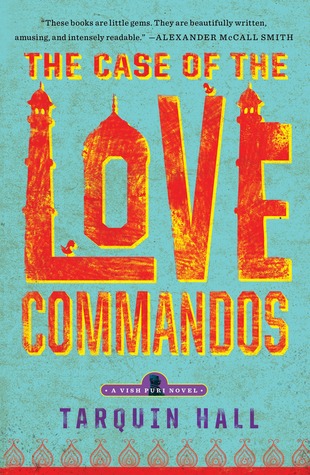
    What I’m Reading: Series Round-Up-- The Case of the Love Commandos

    Today, I have a very quick review of a quick read.  It is the 4th book in the very fun and informative Vish Puri, India’s Most Private Detective series by Tarquin Hall entitled, The Case of the Love Commandos.

    The series is among my favorites for a few reasons.  First, the mysteries have an old fashioned sensibility (think Agatha Christie), but Puri and his crew use all of the modern technologies available to them.  It’s the best of both worlds.

    Second, I love the frame, the details of life in modern India. Hall gives a fair assessment of all the triumphs and problems, taking a hard look at Indian society.  The stories are up to date with all of the current issues too.  For example, in this installment, we have a plot involving young people in love who want to marry for love [not through arrangement] AND outside of their caste.  Two big no-nos.  There is a lengthy discussion of the caste system, specifically the Dalit class [the lowest one also known as Untouchables], and trying to discover if the caste system can be supported by DNA evidence.  These are complicated issues.

    Third, the characters are great.  Puri is a great literary PI, not just in his skills, but in his quirks and habits too.  I like his crew and his family too, specifically his Mummy who is becoming quite a famous senior citizen PI herself.  Even the bad guys are eccentric here; in fact, the resolution of one of the mysteries is hysterical because of the villain’s disguise.

    Finally, these novels are fun.  Because of the first three reasons, I love returning to Puri, his crew and his family. The books have lots of detail, frame, and great characters yet they are still quick reads.  All are about the same length (300 pages) with plenty of white space and dialog.  You can read one in  a few sittings. You laugh, you learn something about modern India, you visit with old friends, a mystery is solved, and justice is served.

    There is one specific change in this installment that I would like to note.  Over the first 3 books, Mummy has become more bold in trying to solve Puri’s mysteries and Puri has become more upset about her helping.  Fresh off the success and national press on her help with the last novel, Mummy is bolder and Hall notes this by giving Mummy her own mystery within Puri’s novel.  So for the first time in the series, we actually have 2 full mysteries being investigated and solved in separate cities by Puri and Mummy in one book. They are not related to each other at all.  This sets up more of a conflict between Puri and Mummy.  I can see the conflict brewing.  The next mystery should bring mother and son back together and I can’t wait to see what happens.

    Three Words That Describe This Book:  eccentric characters, clever cozy, modern India

    Readalikes: I have reviewed every book in this series and offered MANY readalikes over the years.  Please click here to pull them all up.

    For this installment in particular, readers may be interested in learning more about the modern Indian caste system and marriage issues. I have some suggestions to get you started.  The first is nonfiction all about the Dalit class and the way they are treated, Untouchables: My Family’s Triumphant Journey out of the Caste System in Modern India by Narendra Jadhav.  If you are interested in the whole world of Indian arranged marriages, click here for fiction and nonfiction options.  Finally, either link in this paragraph will lead you to even more links of books about modern India. Poke around and look for one that piques your specific interest.

    Wednesday, November 14, 2012

    What I'm Reading: Series Roundup

    In this review, I am going to write about three 2012 releases in series that I always read.  In this case I will not hash out the appeal for these books/series as the "why" you would enjoy them has remained constant in each series and I have already gone into that in detail.  I will link to the previous reviews with those details and talk about key changes or issues in the newest books.  Finally, I will update any readlaike options.

    Here goes...

    The Case of the Deadly Butter Chicken is the third book in the Vish Puri modern India set, Private Detective novels by Tarquin Hall.  Please click here to see my reviews of the two previous novels in the series for details.

    Again we have the mix of appeal in the eccentric characters, the frame of what is good and bad about modern India, and a satisfying mystery.  In the past I have linked Vish Puri with Flavia de Luce, and although a pudgy, middle aged, Indian private detective in the 21st Century and an 11 year-old, amateur detective/budding chemist in 1951 England do not sound like they are similar at all, I can assure you the appeal in their stories is almost identical.  They both have a fairly cozy mystery, a strong family angle, eccentric characters, and a detailed frame.

    The mystery here is very interesting and accessible, even for fans who are new to the series.  The murder involves cricket players and possible game fixing schemes, but as Puri looks into the case, it actually has much more to do with the ongoing hard feelings between India and Pakistan.

    This case gets much deeper into Puri and his mother's relationship (always a fun part of the series), as Puri, who had vowed never to set foot in his ancestral home of Pakistan, must cross the border,  In the course of the case, he learns about the difficult secrets his mom has been keeping for her entire life involving the partition of Pakistan and India.

    Series Order Issues?  This series continues to be one that is enhanced by reading it in order, but it is by no means a necessity.  Hall gives you enough background on the characters too allow the story to flow whether you know who they are or not. Also, since Puri has been a detective longer than the books have been chronicling his fictional career, Puri frequently refers to cases no reader has ever heard of.  In this case, if the frame of the legacy of partition is of interest to you as a reader, I would jump right in with this installment.

    Three Words That Describe This Book:  character driven, India-Pakistan relations, humorous

    Readalikes: Again, click here for past readlaikes.  They all still hold. 

    With this title in particular, readers might want more information on the conflict between India and Pakistan.  Multiple resources have led me to suggest The Great Partition: The Making of India and Pakistan by Yasmin Khan.

    Next up is the newest installment in Jasper Fforde's entertaining and satiric Thursday Next series, The Woman Who Died A Lot (#7).  Click here for the numerous times I have reviewed the other books in the series books and/or talked about Ms. Next here on the blog.

    The Woman Who Died A Lot marks a new turn in the series.  We have moved up a bunch of years.  Thursday is now middle-aged and still quite battered from the last installment, One of our Thursdays is Missing, where the real Thursday was missing for most of the book.  Here in the 7th book, Thursday is back in the alternative England of Fforde's creation, but she is not longer in Special Ops, nor is she strong enough to travel into books.  Her new job is as the head of the Swindon Library system, but she is still battling Goliath.  The title of the novel refers to the fact that Goliath has figured out to create Thursday clones.

    The plot revolves around the stupidity surplus, smitings by the almighty God who had finally revealed himself to humanity, the disbanding of the time travel service and experiments into the promise of new plots to be found in the DRM (Dark Reading Matter).  Thursday, her husband Landen, kids Tuesday, Friday and Jenny, as well as other familiar characters are all involved.

    To the uninitiated this sounds crazy, but to Thursday Next fans, you know that all of these overly satiric, crazy plot lines will all come together in the end, and along the way you will have too many literary references to keep track of.  Also, the end hints that the next will return us all to the book world.

    Series Order Issues? This series needs to be read in order.  Issues from as far back as the first book pop up here in book #7.  Interestingly, the 6th book is the least important to have read.  The 3rd and the 6th books take place completely in the book world so those two can be read as stand-alones, but this book, needs the frame of 1, 2, 4 and 5.

    Three Words That Describe This Book: metafiction, satire, "punny"

    Readalikes:  Click here to get a detailed list of dozens of readalikes for the series.  I would also suggest
     Mr Fox by Helen Oyeyemi for readers who like the whole metafiction thing.


    And now for something completely different, the second book in the planned vampire-witch romance/thriller All Souls Trilogy by Deborah Harkness-- Shadow of Night.  If you have not read A Discovery of Witches please click here and read my review.  It will set up this sequel which begins moments after the first book ended.

    While we still have the paranormal romance here, Shadow of Night is much more of a historical adventure story.  First, I need to note that there is more sex in this installment.  Personally, I could have done without the multiple, detailed witch/vampire sex scenes (in fact I did do without them; I fast forwarded the audio to get back to the plot).  But, I also recognize that this may enhance the story for others, since this sequel does mover forward more methodically than the first.

    I should note that 80% of the novel takes place in 1590 with only a few flashes to the present of the first installment.

    The pacing is slowed because of all of the historical detail, which I personally enjoyed.  Also the entire reason they go back to 1590, besides looking for the book known as Ashmole 782, is to allow Diana to learn how to be a witch.  I will not give away the big twist in the confusion over Diana's inability to control her powers, but it is important to note that this plot element adds a huge coming of age theme to the novel.

    The focus here is on the historical frame and Diana and Matthew's adventures in the past.  It is more historical fiction than paranormal thriller.

    Like the first book, the issues of this novel are resolved, but we are left at a cliff hanger for the next book to begin. Also, while the first book ended with the hope of answers to be found in the past, this novel ends on a more ominous note, one I would liken to The Empire Strikes Back (also a second story in a trilogy).

    Speaking of, normally I do not enjoy second books in a trilogy, but in this case, I really enjoyed this novel.  I enjoyed the historical fiction aspects of the novel, the history of witches, and seeing characters from history interacting with Diana and Matthew.

    Three Words That Describe This Book:  intricately plotted, Elizabethan setting, coming of age

    Series Order Issues?  Here I think the jury is still out.  The story in Shadow of Night is greatly enhanced by having read the first book, but since this installment takes place entirely in the past, readers who are intrigued by stories with an Elizabethan setting but were not interested in the modern day witch-vampire frame of A Discovery of Witches may still want to try Shadow of Night.  However, if you plan to read all three books to get the complete story, you must start with A Discovery of Witches.

    Readalikes: Click through to see my original list of readalikes.

    I think there is a great appeal in this installment for books about or set in Elizabethan times.  To start I would suggest:

    • The Elizabethans by A.N. Wilson (well reviewed popular history of the era, 2012 publication date; use the link to find more nonfiction options)
    • Voices of Shakespeare's England edited by John A Wagner (collection of primary documents, geared to high school and up)
    • There are many Elizabethan set mysteries, but I chose the Lady Appleton series by Kathy Lynn Emerson because of the setting and the sleuth's job as an herbalist (similar to the witch healers in Harkness' novel)

    Also readers might want to reads works by or about of Marlowe or Shakespeare since both are characters here.

    Finally, although they are completely different books, I found the time travel aspect, the way it was handled, and the respect for not changing history too much all compatible with 11/22/63 by Stephen King (review soon).