Another month has ended and if you were reading this blog this month you could see I read a wide range of books.
I will begin talking about Steven Millhauser's newest short story collection, Dangerous Laughter. Millhauser is a master of the macabre short story. He has won the Pulitzer Prize and is one of my absolute favorite writers. This collection would serve as a good introduction to Millhauser's work. My two favorite stories in this collection also highlight what Millhauser does best in all his work, show how human ambition can become misdirected, morphing into a grotesque situation. "In the Reign of Harad IV," tells the story of a miniaturist working for an ancient king, who strives to create replicas of the castle and its furniture so small that he ends up in madness working in the realm of the invisible. "The Tower," imagines a community who worked for generations to build a tower that could reach heaven. Millhauser loves writing short stories, and his adoration for the form shines through in this collection. It is simply fun to read.
Many authors try to capture Millhauser's mix of playfulness and serious commentary about human ambition, however, nothing is exactly the same. Two short story collections are worth mentioning, Joe Hill's 20th Century Ghosts, and Elizabeth McCracken's Here's Your Hat, What's Your Hurry both come close to capturing the mood and tone of Dangerous Laughter. For those looking for a novel with similar appeal, Kevin Brockmeier's The Brief History of the Dead in which the story alternates between heaven and an earth which is quickly being depopulated by a virus, would be a good bet.
Not too far down the macabre path, I also finally got around to listening to the outrageously popular Darkly Dreaming Dexter by Jeff Lindsay this month. For those of you who are unfamiliar with Dexter, he is a serial killer who kills serial killers. He works for the Miami Police as a blood splatter analyst. This book read like a fairly grotesque episode of Law and Order. However, Dexter himself is what makes these books stand out. He is frank with the reader, often breaking from the narration of the plot to "talk" directly to the reader. It is very engaging and works extremely well on audio.
The Dexter books (there are now 3 plus the Showtime TV series) are considered psychological suspense, a genre that is gaining in popularity. A few other suggestions similar to Lindsay's style and level of gore (which is high) would be Chelsea Cain's more traditional serial killer story Heartsick, and Jeff Povey's darkly comic spoof of the same story in The Serial Killers Club.
Now for something completely different, I read another favorite author's newest offering this month, but this time it is in the Women's Lives and Relationship's category. Jennifer Weiner returns to the character that started her career in Good in Bed, Cannie Shapiro, with Certain Girls. It is 12 years later and Cannie's prematurely born daughter, Joy, is preparing for her Bat Mitzvah and going through the traditional angst of pre-teendom. The story alternates chapters between Joy and Cannie's point of view. I could not put this book down. I thoroughly enjoyed each voice and was caught up in the story. It sounds cliche, but I really did go through a full range of emotions reading this novel; I would laugh out loud and weep, depending on the situation. The ending is much like that of Good in Bed, resolved, but open enough for Weiner to revisit the characters again sometime in the future.
I have written a readalike article on Weiner for NoveList and here, on this blog, I posted these authors to try if you like her. Another addition I would add to that list is Lolly Winston.
Showing posts sorted by relevance for query Millhauser. Sort by date Show all posts
Showing posts sorted by relevance for query Millhauser. Sort by date Show all posts
Friday, May 2, 2008


Wednesday, March 9, 2011
Readalike Authors Reviewing Each Other
Anyone who has read this blog for even a few days knows that the RA's bread and butter is trying to boil down the main appeal of an author for a specific reader and then try to match the "why" that specific reader likes a book with another book. You cannot match subjects headings. You need to match the feel of the book. The reason that a specific patron likes that specific book or author needs to be matched with another specific book or author. [For more on appeal, click here for one of my early blog posts where I define appeal and how the RA uses it.]
This is not easy to do. I basically spend the entire semester trying to reinforce this point to the graduate students. By the end, 99% get it. But it takes practice and work. You not only have to read a lot of books, but you have to read a lot ABOUT books and why people like them (or don't like them). Even after 10.5 years of being a readers' advisor, I can tell you there are days when I am not sure I am succeeding. I make a suggestion to a patron and then wonder if I made the right suggestion. It is not a science, but an art. There is no right answer.
And then there are days like yesterday, when I felt like a rock star. I subscribe to the Washington Post's RSS feed for their book coverage. Upon reading through the posts yesterday I found this review of Kevin Brockmeier's Illumination by Keith Donohue
 . In his review, Donohue also mentions that Brockmeier's work is reminiscent of Steven Millhauser.
I was giddy with joy. I literally cheered out loud. Why? These are three authors I always link and often suggest as readalikes to my patrons. Full disclosure though, they also happen to be three of my favorite authors, and not just because Donohue has commented on this blog before. Brockmeier's The Brief History of the Dead , is one of my all-time favorite books. I still find myself thinking about this book, 4 years later. And you can see my long standing Millhauser love by clicking here.
Why I was particularly happy to see Donohue's review is that authors like Brockmeier, Donohue, and Millhauser, are very hard to suggest readalikes for. It is because they do not write traditional genre fiction. You could categorize them all as literary fiction, but that would not hit at their appeal. They all have a level of fantasy in their work. It is a bit more speculative than magical realism, but not really straight fantasy. They also all use their speculative elements to raise thought provoking questions about our world and the choices we make. If you laid out the plot summaries of they work side-by-side, however, you would not be able to see any similarity between their books. Their similarity lies in the tone, mood, characterizations, and style of their work. Things that are harder to assess.
I was happy to see Donohue reviewing one of his readlaikes author and mentioning Steven Millhauser. It made me feel like my work was validated. So, this leads me to share one of my secret weapons on finding readalikes. When you are stumped, look for author blurbs. As seen with the Donohue review of Brockmeier, authors often review or offer official sound bite blurbs to others who write similarly. The point is to draw interest in their own work (in this case, Donohue wants to remind fans of Brockmeier that Donohue himself has a new book, Centuries of June, coming out in May), and to point their own readers to another good writer who they may also enjoy.
Using the author blurb as a readalike resource is not mainstream RA practice, but I have never claimed to be in the mainstream. Over the years, I have found it to be a great option and have passed this opinion on to 13 semesters worth of library students and hundreds of librarians throughout the Midwest who have attended my training sessions.
But where can you find these author blurbs? I have three main resources.
This is not easy to do. I basically spend the entire semester trying to reinforce this point to the graduate students. By the end, 99% get it. But it takes practice and work. You not only have to read a lot of books, but you have to read a lot ABOUT books and why people like them (or don't like them). Even after 10.5 years of being a readers' advisor, I can tell you there are days when I am not sure I am succeeding. I make a suggestion to a patron and then wonder if I made the right suggestion. It is not a science, but an art. There is no right answer.
And then there are days like yesterday, when I felt like a rock star. I subscribe to the Washington Post's RSS feed for their book coverage. Upon reading through the posts yesterday I found this review of Kevin Brockmeier's Illumination
by Keith Donohue. In his review, Donohue also mentions that Brockmeier's work is reminiscent of Steven Millhauser.I was giddy with joy. I literally cheered out loud. Why? These are three authors I always link and often suggest as readalikes to my patrons. Full disclosure though, they also happen to be three of my favorite authors, and not just because Donohue has commented on this blog before. Brockmeier's The Brief History of the Dead
, is one of my all-time favorite books. I still find myself thinking about this book, 4 years later. And you can see my long standing Millhauser love by clicking here.Why I was particularly happy to see Donohue's review is that authors like Brockmeier, Donohue, and Millhauser, are very hard to suggest readalikes for. It is because they do not write traditional genre fiction. You could categorize them all as literary fiction, but that would not hit at their appeal. They all have a level of fantasy in their work. It is a bit more speculative than magical realism, but not really straight fantasy. They also all use their speculative elements to raise thought provoking questions about our world and the choices we make. If you laid out the plot summaries of they work side-by-side, however, you would not be able to see any similarity between their books. Their similarity lies in the tone, mood, characterizations, and style of their work. Things that are harder to assess.
I was happy to see Donohue reviewing one of his readlaikes author and mentioning Steven Millhauser. It made me feel like my work was validated. So, this leads me to share one of my secret weapons on finding readalikes. When you are stumped, look for author blurbs. As seen with the Donohue review of Brockmeier, authors often review or offer official sound bite blurbs to others who write similarly. The point is to draw interest in their own work (in this case, Donohue wants to remind fans of Brockmeier that Donohue himself has a new book, Centuries of June, coming out in May), and to point their own readers to another good writer who they may also enjoy.
Using the author blurb as a readalike resource is not mainstream RA practice, but I have never claimed to be in the mainstream. Over the years, I have found it to be a great option and have passed this opinion on to 13 semesters worth of library students and hundreds of librarians throughout the Midwest who have attended my training sessions.
But where can you find these author blurbs? I have three main resources.
- The books themselves: When a reader really likes an author or a specific book, get the physical book in your hand and look at who gave blurbs to it on the back. In this Internet driven age, even librarians often forget that there is a lot to be gained by holding a physical book in our hands.
- Fantastic Fiction: This is one of my favorite resources in general, but particularly, they catalog author blurbs at the end of an author's entry. Click here for Michael Chabon's entry and scroll to "Michael Chabon Recommends" at the end.
- Amazon: Many Amazon fiction entries now come with reviews by other authors (for the same reasons I mentioned Donohue wrote the one above). Also, many times you can read the blurbs from the back of the physical book on Amazon by clicking on "See all Editorial Reviews. Click here to see what I mean on the entry for The Passage by Justin Cronin, and click here for the blurbs.
So, go on out there and suggest a book based on an author blurb and let me know how it goes.
Friday, May 10, 2013
What I'm Reading: Vampires in the Lemon Grove
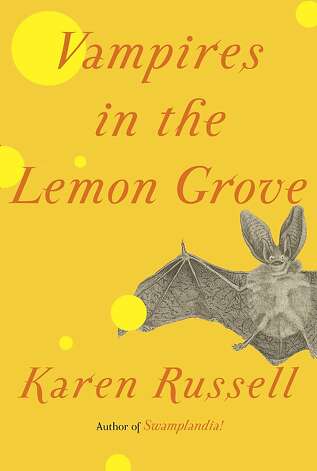
VitLG was awesome. Each story grabbed on to me, shook me around a bit, and let me go, a little unsteady on my feet, but excited to see what the next story had in store.
But I am getting a little ahead of myself. VitLG is a book of 8 short stories. They are all on the "things are not as they seem" side, but for different reasons. They range from funny to scary to just plain odd, but each one is thought provoking. But before I go into more of the appeal detail, I found this great review by Jenny on Goodreads where she very quickly summarizes each story:
- Vampires in the Lemon Grove - two ancient vampires try to satiate their desires by eating lemons
- Reeling for the Empire - human silkworms
- The Seagull Army Descends on Strong Beach, 1979 - maybe the seagulls are the only ones really paying attention
- Proving Up - starts as a struggling farm family story, ends in a ... i can't even.... *shiver*
- The Barn at the End of Our Term - dead presidents alive in horses' bodies (actual presidents, not the band)... this one made me laugh more than any of the others.
- Dougbert Shackleton's Rules of Antarctic Tailgating - Sometimes you're the whale, but you're probably usually the krill.
- The New Veterans - PTSD, massage, tattoos, and what is healing, exactly?
- The Graveless Doll of Eric Mutis - I couldn't decide what I thought of this one. It did have the only bit I marked, because it is about a librarian: "I think we needed that librarian to follow us around the hallways for every minute of every school day, reading us her story of our lives, her fine script of who we were."
You can go to Jenny's blog for more of her reviews. I think she has parsed down each story into the soundbite of what it is about and why you would like it. If you click through to her full review you can also see that she provided a readalike for each story.
Most of the stories are on the creepier side, which I personally love, but the range is from pure out terror-- like in the AMAZING "Proving Up" which begins as a tale of the American frontier and slowly builds an uneasy atmosphere to an all our horror ending [loved it]-- to seemingly silly-- like in the story of Antarctic tailgating where our narrator risks life and limb to root for the krill to beat the killer whale. I say seemingly silly because the story's glib tone and structure hide a larger issue of the fate of the underdog in real life.
But I think the story that best summed up the entire book for me was "Reeling for the Empire." It had a darker tone and an original premise-- poor Japanese girls being taken from their homes to make silk in a factory but in reality they were being turned into silk worms. So it also had speculative elements. It was a thought provoking, coming of age story that made you really think about how much say you have on your place in the work.
A combination of some of these things can be found in most of the stories, but in "Reeling for the Empire," they are all in one place. I get the marketing decision to put the first story as the title since it is provocative and Vampires sell books, but "Reeling" is the anchor story here.
The best way to describe the overall feel of this book is-- slightly askew. It is a reality that seems true but something is off. And when you are confronted with this askew picture, it makes you think about how and why things are the way they are. This is what the stories is VitLG do to the reader.
For me as a reader, this is the perfect kind of story. I think "slightly askew" will replace "macabre" as my new sound bite description of my personal reader profile.
On a side note, I have been reading books of connected short stories recently (click here for details) so this was a change for me. Since each story was a complete piece on its own, I was able to read this book in chunks, which fit my reading needs at that time. I was able to read a bit and then take a break to prepare for the March book club, I was able to read a bit more and then leave it at home while I went on Spring Break where I read a novel, and I was able to pick it right back up and finish after returning. So that is another appeal of this book, the ability to read it piecemeal in the midst of a million distractions and still enjoy it.
Three Words That Describe This Book: stories, thought provoking, slightly askew
Readalikes: As I was reading VitLG, especially during "Reeling for the Empire," I could not stop thinking about my all time favorite "slightly askew" short story writer, Steven Millhauser. Then this led me to thinking about other writers like Millhauser who I enjoy: Kevin Brockmeier and Keith Donohue. Back in 2011, I had this post talking about all three writers and their style:
Why I was particularly happy to see Donohue's review is that authors like Brockmeier, Donohue, and Millhauser, are very hard to suggest readalikes for. It is because they do not write traditional genre fiction. You could categorize them all as literary fiction, but that would not hit at their appeal. They all have a level of fantasy in their work. It is a bit more speculative than magical realism, but not really straight fantasy. They also all use their speculative elements to raise thought provoking questions about our world and the choices we make. If you laid out the plot summaries of they work side-by-side, however, you would not be able to see any similarity between their books. Their similarity lies in the tone, mood, characterizations, and style of their work. Things that are harder to assess.
Russell is very similar to these three writers.
A female short story writer whose tone and feel comes close to Russell's is the Japanese writer Yoko Ogawa. She also crafts "slightly askew" short stories and novels. Her most recent collection is Revenge, which I have been meaning to read. A few years ago I did read The Housekeeper and the Professor, a story which has stayed with me to this day. Its unsettling premise of a man whose memory is on a 80 minute loop. That's right, his memory only lasts 80 minutes. Intriguing odd, and slightly askew, right?
I would also suggest the 4 novella length stories that make up Stephen King's Full Dark, No Stars. Click here for my review.
Have a great weekend and a nice Mother's Day
Tuesday, August 31, 2010
Other Great American Novels: Franzen Readalikes
Jonathan Franzen's new novel Freedom comes out today and everyone is talking about how it is the perfect example of the Great American Novel. I will let you know what I think soon, as it is sitting in front of me as I type this.
The holds lists are long and, being a good RA librarian, I am prepared with readalikes to hold you over while you wait. Back in 2006 I made a list entitled "Great American Novels...With a Twist." Reprinted below, these are 10 great options for those of you to read while you wait. All should be available at your local library. Enjoy.
comes out today and everyone is talking about how it is the perfect example of the Great American Novel. I will let you know what I think soon, as it is sitting in front of me as I type this.The holds lists are long and, being a good RA librarian, I am prepared with readalikes to hold you over while you wait. Back in 2006 I made a list entitled "Great American Novels...With a Twist." Reprinted below, these are 10 great options for those of you to read while you wait. All should be available at your local library. Enjoy.
Take Ten:
“Great American Novels”…With a Twist
The following 10 novels tackle large issues of recent American history as their stories unfold. What makes these books different is the twist, or hook, which the author uses to provide a unique glimpse at the American Experience. These books offer a little something for everyone and all are critically acclaimed.
Chabon, Michael. The Amazing Adventures of Kavalier and Clay
It is 1939 in New York City
Cunningham, Michael. The Hours
In an homage to Virginia Woolf, Cunningham tells the tale of the lives of three women at three different times in history. These interconnected novellas are told in alternating chapters. The reader is introduced first to Clarissa, a present day NYC publisher, dubbed “Mrs. Dalloway” by her friends. Clarissa is planning a party for her friend, a poet who is dying of AIDS. We then see Virginia Woolf as she is struggling to write her masterpiece, Mrs. Dalloway, and contemplating suicide. Finally Laura, a 1949 LA housewife enters the story. She is an overwhelmed, pregnant mother of a young child, struggling to find meaning in her life. Cunningham’s complex style is rewarding in that it reveals the three separate stories in a way that highlights the connections between the women while commenting on the place of women in society over the course of the 20th Century. His writing style also consciously echoes that of Woolf’s. The Hours won the 1999 Pulitzer Prize for Fiction and PEN/Faulkner Award
DeLillo, Don. Underworld
It is October 3, 1951 and at the Polo Grounds, Bobby Thomson hits “the shot heard round the world,” while half way around the world, the Soviets test their first atomic bomb. The story then jumps to 1992 in the American desert where Nick Shay, a waste analyst who now owns that famous baseball, reunites with a former lover, Kara Sax. DeLillo uses the two stories that of the fate of the ball, told from beginning to end and that of Shay and Sax, told from the end to the beginning, interweaving real historical characters, to create a web of interconnected experiences that recounts the shared experience of all Americans in Cold War America
Doctrow, E.L. Ragtime
In this classic novel of America New York
Franzen, Jonathan. The Corrections
The Corrections comments on the state of the American family at the end of the twentieth century by describing the lives of the various members of the Lambert family. Albert, the patriarch is battling Parkinson’s disease in a Midwestern town, living in the family home and being cared for by his wife, Enid. Gary Philadelphia Eastern Europe involved in an Internet fraud. The story follows the family as they deal with Albert’s worsening health and struggle to stay physically and emotionally linked in a fast paced and self involved world. Franzen frequently employs the use of flashback to tell the tale of the Lambert’s in their younger years to serve as a contrast to the present day. The Corrections won the 2001 National Book Award.
Gaiman, Neil. American Gods
When Shadow is released from prison, he accepts a job from an odd, omnipresent man named Wednesday who claims to be a God from the “old country” living in America
Lethem, Jonathan. The Fortress of Solitude
It is the 1970s and Dylan Ebdus is the only white kid in a Brooklyn neighborhood of black and brown families. When his hippie mother insists on sending Dylan to public school, he becomes the target of every bully. Dylan’s unlikely friendship with his neighbor Mingus, the black son of a once famous singer who is now a cocaine addict, forms the backbone of the story. The two boys’ paths diverge over time as Dylan grows up to be a music journalist, and Mingus ends up behind bars. Dylan’s story allows the reader to follow the fate on one neighborhood over a thirty year period, leading to commentary on the larger issues of gentrification, the development of soul music, the beginnings of graffiti, and the crack epidemic.
McCracken, Elizabeth. Niagara Falls All Over Again
In this fiction memoir, Mose Sharp, recounts his life: a childhood in Des Moines , a career in vaudeville, his transition into a movie star, finally ending with his old age in Hollywood America Niagara Falls All Over Again may have its focus in the Hollywood glare, but it is also a novel about friendship, family, and popular culture in 20th century America
Millhauser, Stephen. Martin Dressler: The Tale of an American Dreamer
In this macabre tale, Millhauser follows the life of entrepreneur Martin Dressler as he rises from cigar shop clerk to hotel magnate in the waning years of the 19th Century in New York City. Dressler’s outrageous imagination and desire to create a hotel that thinks will become “a world within the world, rivaling the world,” and ultimately replacing the real world, is doomed for failure. The descriptions of the floors Dressler creates in his Grand Cosmo hotel are jawdropping; floors contain entire forests, amusement parks, rugged mountainsides, etc… However, in recounting this outrageous historical story, MIllhauser is making very grounded statements about contemporary America’s over consumption, decadence, and obsession with possessing newest gadgets. Martin Dressler won the 1997 Pulitzer Prize for Fiction.
Roth, Philip. The Plot Against America
Imagine a world where American hero and known anti-Semite, Charles Lindberg, easily defeats FDR in the 1940 Presidential election with a platform of making peace with Hitler. In this alternate history, Roth follows a Jewish family (the Roth’s of Newark , NJ ) through their struggles of living in an America America
Tuesday, April 13, 2010
Readalikes for The Brief Wondrous Life of Oscar Wao

 Later today, I will be hosting a book discussion of The Brief Wondrous Life of Oscar Wao
 by Junot Diaz winner of the 2008 Pulitzer Prize for Fiction. The discussion is part of the work I do for the Adult Reading Round Table. This quarterly book discussion is a chance for librarians to participate in a discussion rather than only leading them. We will discuss the book and discuss the discussion. It is a chance for librarians to exchange information about what is working and not working in their groups.
I chose the Diaz book for 2 reasons. The first is that is won the Pulitzer Prize and I knew that the discussion would be right around the time this year's winner would be announced. Also the ARRT membership asked for us to offer "multicultural" titles this year, and this novel with its NJ and Dominican Republic settings and its liberal use of spanglish, fit the bill. And on a selfish note, I wanted an excuse to read it again.
I will have a short report on what we discussed later this week, but today I wanted to focus on the readalike suggestions. Since The Brief Wondrous Life of Oscar Wao is such a unique book, there are a lot of places you can go for readalikes.
In an excellent book discussion guide for the novel, NoveList contributor Michael Jenkins suggests the following titles for further reading:
- Caramelo
by Sandra Cisneros
- A Thousand Splendid Suns
by Khaled Hosseini
- The Impressionist
by Hari Kunzru
- Bless Me, Ultima
by Rudolfo Anaya
- Breath, Eyes, Memory
by Edwidge Danticat
- The Sound and the Fury
by William Faulkner
In the past, I have suggested this:
First, even though the novel makes fun of it, In the Time of Butterflies by Julia Alvarez, would be a great read for those wanting to know more about the reign of Trujillo and the Dominican diaspora. But really the book most like Diaz's novel is Jonathan Lethem's Fortress of Solitude. It has the same coming-of-age themes, a New York area setting, multicultural issues, and artists. The writing is also similarly non-traditional, yet accessible. Of course, I would also be remiss if I did not mention the numerous references to The Lord of the Rings Trilogy throughout Oscar Wao.To these suggestions I would also add, Edwin Mullhouse
 by Steven Millhauser. Like Oscar's story, this is a fictional memoir of a writer who died young, told by an acquaintance. Millhauser uses magical realism throughout all of his work just like Diaz. Also The Feast of the Goat
 by Mario Vargos Llosa is mention in BWLoOW and is a great fictional account of Trujillo's regime.
Oscar himself would have loved io9, the online guide to everything a speculative genre loving nerd could dream of.
After reading this book, many people are interested in learning more about the history of the Dominican Republic in relation to Diaz' book. For those readers, I would suggest the following nonfiction:
- Black Behind the Ears: Dominican Racial Identity from Museums to Beauty Shops
by Ginetta E. B.Candelario (The characters in Diaz's book talk a lot about their identity as Domincians)
- Muddy Cup: A Dominican Family Comes of Age in a New America
by Barbara Fischkin (read a true account of a DR immigrant family in NYC)
- The Last Playboy: The High Life of Porfirio Rubirosa
by Shawn Levy (a real life person mentioned in the novel a few times)
- Something to Declare
by Julia Alvarez (the Dominican Writer's memoir)
- The Dominican Republic: A National History
by by Frank Moya Pons (the best reviewed and selling overall general history of the DR; but use this link for the entire bestseller list of DR nonfiction)
Tuesday, January 21, 2014
What I’m Reading: Bellman and Black

I will start by saying that Bellman & Black was good, but it was not as enchanting as The Thirteenth Tale. In some ways, however it was better. B&B is a more sophisticated story that leaves more open to the imagination; it is more atmospheric, and less about the twisting plot as it unfolds.
B&B is most simply described as the story of one man as he looks back at his life. William Bellman lives in rural England in the late 19th Century (disclaimer, Becky's favorite time setting). William begins his story back at what he can now see as the most important event of his life, the day he killed a rook with a slingshot. The book then goes on to recount how William rises up the chain of command in his Uncle's cloth mill, how he makes great improvements in the processing and dyeing of cloth, and how he find happiness at home and work. He is on his way to a charmed life, so it seems.
But then things start going horribly wrong, and most of the people William cares for die horrible deaths. Each time he is at a funeral (and he goes to many), he sees a mysterious man in black. William can't get this man out of his mind.
That is the first half of the book. The second half follows what happens after he makes a deal with the man in black to stop the death and starts an upscale funeral business called Bellman & Black. The story then follows the creation of this intricate and opulent business. No detail about this amazing business is spared.
In fact, that brings up some of the important appeal factors here. There is a lot of historical detail throughout this book. I liked it, but overall it could slow the pacing of the book down to an unbearable point for plot driven readers.The novel is methodically paced with lots of detail about how cloth is made and how a business is built and expands. Fans of historical fiction from this era will enjoy this book because of the detail. But while the plot moved slowly at times, the book was compelling because of the frame, detail, and Gothic underpinnings which created suspense and dread. This entire package easily carried this reader through the novel.
The subtitle of this book is "a ghost story;" while it is an appropriate subtitle, it may throw some readers off. This is not a ghost story where an obvious haunting takes place, rather, there is a specter or dread, the unidentified "man in black," who is the force driving Bellman, propelling the story, and keeping us turning the pages. He never shouts boo; in fact, he never speaks. But his darkness is always floating just under the surface and neither Bellman nor the reader can shake him. And unlike a more traditional, horror based ghost story, there isn't that moment of reckoning where Bellman and Black battle it out.
The story just fizzles out, which is so awesomely creepy. I have read some comments in which readers are upset by the lack of an ending, but I thought it was perfect. Bellman cannot live forever, none of us can live forever, but the rooks, they will always be here. In fact, throughout the book there are quotes from the rooks. They are taunting Bellman, and the reader. It is creepy cool in a subtle way that sneaks up on you. I loved this inclusion. The rooks are always there and present throughout the story, heck, through time they have always been there. They are not going away.
The entire book is subtle. The haunting is subtle, the story is subtle, the dread creeps up on you subtly. That's why I said at the beginning that B&B is not as enchanting as The Thirteenth Tale. That novel takes the reader by the hand and obviously leads us. The ride we go one is very satisfying, but we are passive. The narrator is fairly passive as she records Vida's words. We are all being manipulated by Vida Winter as she tells us the story she wants to tell us in the order she wants to reveal it.
So, some readers may be disappointed in B&B because it is the exact opposite. We are not as seduced by Bellman as we are by Winter. Instead we are treated to an atmospheric, macabre tale that haunts us. We observe William's life. We see his early success and then all of his personal failures. We see him become obsessed by the darkness of the stranger in black. We see what it does to him, how it slowly changes him. The darkness and despair creep up on all of us. It is subtle, but fantastic, which is why I also said in the opening of this post that in some ways, B&B is better. It is less enchanting, but overall it is a more accomplished and sophisticated method of storytelling.
I think anyone who is suggesting B&B to readers who have read and loved The Thirteenth Tale need to understand and communicate this difference.
Three Words That Describe This Book: macabre, atmospheric, subtle
Readalikes: A perfect readalike here is Her Fearful Symmetry by Audrey Niffenegger, for two reasons. First both are dark, Gothic novels which focus on the funeral industry. Second, and more importantly, see what I said about Her Fearful Symmetry in my review which is almost exactly what I communicated above about Setterfield's two books:
Recently I devoured Audrey Niffenegger's new novel, Her Fearful Symmetry. I was nervous before I began because I really enjoyedThe Time Traveler's Wife and the new book was getting mixed reviews. Well, I am happy to report that I actually enjoyed Her Fearful Symmetry (herein, HFS) even more than The Time Traveler’s Wife (herein, TTW).
The reason I enjoyed the newer novel more and others disagree has to do with the difference in the appeal of each novel. The overall tones of these novels are on opposite ends of the spectrum. TTW is a love story with a science fiction element and a heart-warming ending. (click here to read my full report on TTW).
On the other hand, HFS is a dark ghost story about deep family secrets with seriously twisted characters and an unsettling ending. I loved it! But this huge shift in tone, mood, and storyline focus can easily explain why fans of the more heartwarming TTW were disappointed. Whereas Claire and Henry in TTW are good, well meaning, loving people, the main characters in HFS are manipulative, selfish, and mean.The second half of B&B also reminded me of one of my all time favorites, Martin Dressler: The Tale of an American Dreamer by Steven Millhauser. As I posted on The Browsers Corner:
Millhauser follows the life of entrepreneur Martin Dressler as he rises from cigar shop clerk to hotel magnate in the 19th Century in New York City. Dressler’s outrageous imagination and desire to create a hotel that will be “a world within the world, rivaling the world,” and ultimately replacing the real world, is doomed for failure.If you enjoyed the second half of B&B you will LOVE this suggestion.
Finally, for a more outside of the box readalike, I would suggest the graphic novel Sailor Twain by Mark Siegel. Click through to my review for the full details, but it is interesting to note that I thought of the connection between these books as I was reading B&B and jotted it down. Later, when I went back to write this review I was happy to see The Thirteenth Tale and Her Fearful Symmetry listed in my Sailor Twain review as readalikes.
Saturday, December 20, 2008
Best Books I Read in 2008
In honor of all of the best lists I have been posting, I present my second annual list of the ten best books I read this year, in my opinion of course. I will list the books with genre and month read, but they really are in no particular preference order.
The Graveyard Book by Neil Gaiman (youth) 12/08
The Good Thief by Hannah Tinti (historical fiction) 10/08
Fun Home by Allison Bechdel (graphic novel/memoir) 9/08
The Brief Wondrous Life of Oscar Wao (literary fiction) 5/08
Dangerous Laughter by Steven Millhauser (short stories) 4/08
The Lemon Tree by Sandy Tolan (nonfiction) 4/08
The Uncommon Reader by Allan Bennett (literary fiction) 1/08
A Thousand Splendid Suns by Khaled Hosseini (literary fiction) 1/08
City of Thieves by David Benioff (historical fiction) 10/08
North River by Pete Hamil (historical fiction) 6/08
To see everything I read and considered for this list, click here. And for those who are interested, here is last year's list.
A few comments on this year's top ten. First, I was surprised that only two nonfiction titles made the cut this year since I read 11 total. Second, only 1/2 of these books came out in 2008, which is a great reminder of the almost infinite back list of titles available at your local public library. Finally, if I had to pick a favorite book I read this year, I think it would be The Good Thief by Tinti because it was fun to read and though provoking (use the link above to read the details of how I felt about it.) I am not alone on liking this novel though, Tinti's work has already been honored on many of the year's best lists, including the NYT's Notable Books List and a Borders Original Voices nomination.
Let me know what you read this past year that really stuck with you. Happy Holidays! Here's to more great reading in 2009.
The Graveyard Book by Neil Gaiman (youth) 12/08
The Good Thief by Hannah Tinti (historical fiction) 10/08
Fun Home by Allison Bechdel (graphic novel/memoir) 9/08
The Brief Wondrous Life of Oscar Wao (literary fiction) 5/08
Dangerous Laughter by Steven Millhauser (short stories) 4/08
The Lemon Tree by Sandy Tolan (nonfiction) 4/08
The Uncommon Reader by Allan Bennett (literary fiction) 1/08
A Thousand Splendid Suns by Khaled Hosseini (literary fiction) 1/08
City of Thieves by David Benioff (historical fiction) 10/08
North River by Pete Hamil (historical fiction) 6/08
To see everything I read and considered for this list, click here. And for those who are interested, here is last year's list.
A few comments on this year's top ten. First, I was surprised that only two nonfiction titles made the cut this year since I read 11 total. Second, only 1/2 of these books came out in 2008, which is a great reminder of the almost infinite back list of titles available at your local public library. Finally, if I had to pick a favorite book I read this year, I think it would be The Good Thief by Tinti because it was fun to read and though provoking (use the link above to read the details of how I felt about it.) I am not alone on liking this novel though, Tinti's work has already been honored on many of the year's best lists, including the NYT's Notable Books List and a Borders Original Voices nomination.
Let me know what you read this past year that really stuck with you. Happy Holidays! Here's to more great reading in 2009.
Monday, June 28, 2010
Monday Discussion: Favorite Short Story Collections
Last week I started a new feature here on RA for All and now I am calling it the Monday Discussion.
Last week I posed the question of what 1 book you would suggest to an eighth, going into ninth grader. Click here to see the post and the discussion. The staff at the BPL did a great job adding to the conversation. They will get involved every week, but so can you.
This week, I was thinking about short story collections since I am reading the deliciously evil and twisted collection These Children Who Come At You With Knives and Other Fairy Tales by Jim Knipfel. I also just bought my husband the brand new collection edited by Neil Gaiman, called simply Stories
 .
.
I happen to enjoy short story collections myself, but I am always having trouble finding resources to identify good story collections for my patrons. There are very few resources for Short Story RA out there. So, using the collective brain of our wonderful BPL staff, and you, the blog readers, I thought we would compile a list of our favorite short story collections.
First a note: at the BPL, we do not note if a book is a collection of stories in the catalog, but we do put a big "Short Stories" stickers on the book itself.
Here are some ideas from Lit Lists to start us off:
20th Century Ghost by Joe Hill
Any collection by Steven Millhauser, Lorrie Moore, or Alice Munro
Olive Kittridge by Elizabeth Strout (which I read here)
Different Seasons by Stephen King

But my all-time favorite short story collection is still Twice Told Tales by Nathaniel Hawthorne
Now it is your turn. What are your favorite short story collections?
Also, click here to view past Monday Discussions.
Last week I posed the question of what 1 book you would suggest to an eighth, going into ninth grader. Click here to see the post and the discussion. The staff at the BPL did a great job adding to the conversation. They will get involved every week, but so can you.
This week, I was thinking about short story collections since I am reading the deliciously evil and twisted collection These Children Who Come At You With Knives and Other Fairy Tales
by Jim Knipfel. I also just bought my husband the brand new collection edited by Neil Gaiman, called simply Stories.I happen to enjoy short story collections myself, but I am always having trouble finding resources to identify good story collections for my patrons. There are very few resources for Short Story RA out there. So, using the collective brain of our wonderful BPL staff, and you, the blog readers, I thought we would compile a list of our favorite short story collections.
First a note: at the BPL, we do not note if a book is a collection of stories in the catalog, but we do put a big "Short Stories" stickers on the book itself.
Here are some ideas from Lit Lists to start us off:
- The Ten Best Short Story Collections of the 00's
- Author Jay McInerney's Favorite Stories
- Five Must Read Story Collections
- Author Alison MacLeod's Top 10 Short Stories
20th Century Ghost
by Joe HillAny collection by Steven Millhauser
, Lorrie Moore, or Alice MunroOlive Kittridge
by Elizabeth Strout (which I read here)Different Seasons
by Stephen KingBut my all-time favorite short story collection is still Twice Told Tales
by Nathaniel HawthorneNow it is your turn. What are your favorite short story collections?
Also, click here to view past Monday Discussions.
Thursday, May 19, 2016
What I’m Reading: But You Scared Me The Most
 My most recent Booklist Review [draft version]:
But You Scared Me the Most and Other Stories by John Manderino
June 2016. 224p. Academy Chicago, paperback, $14.99 (9781613734759). First published May 15, 2016 (Booklist).
What would happen if you took all the familiar things that scared you as a child-- ghosts, mummies, vampires, Bigfoot!-- but looked at them with your adult eye? They would be darker and more bizarre than you could have ever imagined as a youth, much like Manderino’s 26 witty, and inventive tales that turn traditional horror tropes on their head. These short, surprising, and thought provoking stories that stay with you after you finish each, but also compel you to read the next one immediately. Like in “Wolfman and Janice” when a wife helps control her werewolf husband by talking to him about golf, or “Bob and Todd” in which a hitchhiker may or may not be in a car with a man who just killed his wife. And it’s not just horror tropes that Manderino probes with his macabre sensibility, familiar characters like Nancy Drew, Dorothy from the Wizard of Oz, and even Barbie and Ken are prominently featured in their own dark and twisted tales. But it is in “Jamey’s Sister,” where Manderino shines, giving us a moving and heartbreaking story of the havoc real life monsters can play on a family as a young girl writes a letter to the monster who she blames for her soldier brother’s death-- The President. This is a solid collection of weird fiction and bizarre fables for fans of Kelly Link or Stephen Graham Jones.
Further Appeal Comments: These stories are short, and since they are not connected, you can pick this collection up and put it down easily. As I was reading the entire book, I marked the stories as to how successful I thought they were. The ones I highlight here are among the best and most interesting, but there are others which are just as good but for which I did not have room to write about. Out of 26, only 2 or 3 fell completely flat with me. That is an excellent ration.
But, I do want to stress that these are weird, creepy stories. They are not gross-out or jump- scare frightening at all. They are all macabre and unsettling without gore. It’s all atmosphere. And they are tightly plotted, compelling, and feature strong characters. This last point is important because with some of the stories coming in at only 3 or 4 pages, it is quite a feat for Manderino to so quickly create such well rounded characters.
The unease and tension rule these tales. You know right away that things are not what they seem and are probably not going to end well. They are not sad or tragic though. Just dark and thought provoking.
Three Words That Describe This Book: unease, macabre, strong characterization
Readalikes: The stories of Kelly Link and Stephen Graham Jones mentioned above are excellent readalikes. While I was reading Manderino’s collection, I also thought about the multiple author collection from 2014, The New Black edited by Richard Thomas. Click here for details.
More established and well known authors who I have blogged about a lot who would work as a readalike here are Stephen Millhauser and Keith Donohue. I particularly thought about Donohue’s Centuries of June.
Friday, August 12, 2016
What I'm Reading: Booklist's Horror Spotlight Issue
In the August 2016 issue of Booklist I had three reviews and 1 online only review. I know there are still three more turned in reviews in the pipeline for the September issues and I have another stack piled up here at home to read.
The haunting season is coming fast. Time to get ordering. Also a quick note, I will not add extra readalikes to these reviews because I have a ton in the review, but I will pull out my three words and I have added links to authors and such.
 A Long December
STAR REVIEW!
Chizmar may not be a name readers know, but they certainly know the names of those he has published in his 27 year career running the award-winning Cemetery Dance Publications- Stephen King, Justin Cronin, Joe R Lansdale and Gillian Flynn to name only a few. This huge collection of 35 tales spans Chizmar’s entire career offering a wide range of genres from crime to dark fantasy to horror. Some pieces, published previously are included as is, while others have been reworked, and still others were never available before now, but all are subtly terrifying tales of normal lives that are completely upended by circumstance beyond anyone’s control. Chizmar’s stories are united by the feelings they produce, dread, anxiety, and suspense, but more remarkable is how they are presented with a poignancy and underlying sweetness that cannot be ignore like in the eponymous novella where the protagonist wakes up to police surrounding his neighbor and best friend’s home because that man is a serial killer. How can you process that? It’s well past time to let the man behind so many other great stories have a chance to wow readers with his own chilling words. This is a must read for fans of intense tales where psychological suspense and horror overlap like in the novels of Peter Straub, Scott Smith, or Adam Nevill.
Three Words That Describe This Book: suspense, stories, chilling
 The Motion of Puppets
by Keith Donohue
Oct. 2016. 272p. illus. Picador, hardcover, $26 (9781250057181); e-book (9781250057211).
First published August, 2016 (Booklist).
STAR REVIEW!
Donohue [The Stolen Child, The Boy Who Drew Monsters] has written a masterpiece of psychological horror that will change the way you look at puppets forever. Kay, a performer in the cirque and her new husband, Theo, a French professor in New York, are spending the summer in the old portion of Quebec City while Kay performs and Theo translates the biography of the artist and pioneering photographer of motion, Eadweard Muybridge [whose macabre yet intriguing life adds wonderful depth to the novel]. After a late post-show dinner, Kay walking home alone, frightened and disoriented, enters an old toy store which was surprisingly unlocked, only to find herself transformed into a puppet and held prisoner in the back of the shop, where all the puppets can come alive between midnight and dawn. What follows is each of their tales, told in alternating points of view. Theo desperately searching for his vanished beloved begins to find connections to the old toy shop but is having trouble believing those who say the puppets may be alive; meanwhile Kay is slowly forgetting the human world she came from and is embracing her life as a puppet with her new friends. Time may be running out for Theo to locate Kay and convince her to come back to him. Intricately plotted, absorbing, dark, and suspenseful, this is a moving, modern story set in what could feel like a fairy tale world, but is actually terrifyingly realistic. It is a tale of true love, missing persons, and the beauty of the mechanics of motion all wrapped up in one awesome creeptastic package. Give this to readers who love creepy doll stories like those in Ellen Datlow’s award winning The Doll Collection, as well as any fans of Neil Gaiman, Steven Millhauser, or Elizabeth McCracken.
Three Words That Describe This Book: askew, macabre, compelling
 Last Train from Perdition [I Travel By Night, Book Two]
by Robert McCammon
Oct. 2016. 184p. Subterranean, hardcover, $35 (9781596067387).
First published August, 2016 (Booklist).
Horror legend Robert McCammon is back with book two in his highly entertaining, vampire western series. Trevor Lawson, a reluctant vampire and his human sidekick, sharpshooter Ann Remington, are still on the hunt for LaRouge, the woman who turned Lawson into a vampire during the Civil War and kidnapped Ann’s father and sister, in the hopes that killing her will allow Lawson to become human again. While they search, Lawson takes discreet, dangerous jobs with the business motto, “All Matters Handled.” It’s now 1886 and a new job takes the pair from New Orleans to the frontier town of Perdition, MT to rescue a wealthy young man from a band of outlaws. Lawson tries to extricate the man without violence, but between the outlaws and the vampire Dark Society, it appears a peaceful getaway is not going to be an option. This thrilling story culminates with a fantastic battle scene on a train where unlikely alliances are formed, adding a new wrinkle to Lawson’s quest for freedom from his vampiric curse. No need to have read the first book as the necessary details are supplied without sacrificing the pace. Clear a couple hours because you will want to devour this in one sitting. And while there are no new additions to vampire lore here, you will be having too much fun to care. This is perfect for fans of the TV series Deadwood and the award winning American Vampire graphic novel series by Scott Snyder.
Genre Note: This is clearly equal parts western and horror. That is a huge appeal that cannot be underestimated. It does both genres VERY well.
Three Words That Describe This Book: vampires, plot driven, the old west
 Zombie Gold
by John L. Lansdale
Aug. 2016. 202p. Short Scary Tales, hardcover, $29.95 (9781909640641).
First published July 21, 2016 (Booklist Online).
YA: Teens will love watching Chris and Will make their way through time, struggling to survive in the 1860s and battling the zombies who have crossed into the 21st Century.
Genre Note: More time travel/historical fiction blend than horror so will still be a great suggestion for Civil War era fans.
Three Words That Describe This Book: time travel, coming of age, Civil War
The haunting season is coming fast. Time to get ordering. Also a quick note, I will not add extra readalikes to these reviews because I have a ton in the review, but I will pull out my three words and I have added links to authors and such.
 A Long December
By Richard Chizmar
Oct. 2016. 520p. Subterranean, hardcover, $40 (9781596067936).
First published August, 2016 (Booklist).
Oct. 2016. 520p. Subterranean, hardcover, $40 (9781596067936).
First published August, 2016 (Booklist).
STAR REVIEW!
Chizmar may not be a name readers know, but they certainly know the names of those he has published in his 27 year career running the award-winning Cemetery Dance Publications- Stephen King, Justin Cronin, Joe R Lansdale and Gillian Flynn to name only a few. This huge collection of 35 tales spans Chizmar’s entire career offering a wide range of genres from crime to dark fantasy to horror. Some pieces, published previously are included as is, while others have been reworked, and still others were never available before now, but all are subtly terrifying tales of normal lives that are completely upended by circumstance beyond anyone’s control. Chizmar’s stories are united by the feelings they produce, dread, anxiety, and suspense, but more remarkable is how they are presented with a poignancy and underlying sweetness that cannot be ignore like in the eponymous novella where the protagonist wakes up to police surrounding his neighbor and best friend’s home because that man is a serial killer. How can you process that? It’s well past time to let the man behind so many other great stories have a chance to wow readers with his own chilling words. This is a must read for fans of intense tales where psychological suspense and horror overlap like in the novels of Peter Straub, Scott Smith, or Adam Nevill.
Three Words That Describe This Book: suspense, stories, chilling
 The Motion of Puppets
by Keith Donohue
Oct. 2016. 272p. illus. Picador, hardcover, $26 (9781250057181); e-book (9781250057211).
First published August, 2016 (Booklist).
Donohue [The Stolen Child, The Boy Who Drew Monsters] has written a masterpiece of psychological horror that will change the way you look at puppets forever. Kay, a performer in the cirque and her new husband, Theo, a French professor in New York, are spending the summer in the old portion of Quebec City while Kay performs and Theo translates the biography of the artist and pioneering photographer of motion, Eadweard Muybridge [whose macabre yet intriguing life adds wonderful depth to the novel]. After a late post-show dinner, Kay walking home alone, frightened and disoriented, enters an old toy store which was surprisingly unlocked, only to find herself transformed into a puppet and held prisoner in the back of the shop, where all the puppets can come alive between midnight and dawn. What follows is each of their tales, told in alternating points of view. Theo desperately searching for his vanished beloved begins to find connections to the old toy shop but is having trouble believing those who say the puppets may be alive; meanwhile Kay is slowly forgetting the human world she came from and is embracing her life as a puppet with her new friends. Time may be running out for Theo to locate Kay and convince her to come back to him. Intricately plotted, absorbing, dark, and suspenseful, this is a moving, modern story set in what could feel like a fairy tale world, but is actually terrifyingly realistic. It is a tale of true love, missing persons, and the beauty of the mechanics of motion all wrapped up in one awesome creeptastic package. Give this to readers who love creepy doll stories like those in Ellen Datlow’s award winning The Doll Collection, as well as any fans of Neil Gaiman, Steven Millhauser, or Elizabeth McCracken.
Three Words That Describe This Book: askew, macabre, compelling
 Last Train from Perdition [I Travel By Night, Book Two]
by Robert McCammon
Oct. 2016. 184p. Subterranean, hardcover, $35 (9781596067387).
First published August, 2016 (Booklist).
Genre Note: This is clearly equal parts western and horror. That is a huge appeal that cannot be underestimated. It does both genres VERY well.
Three Words That Describe This Book: vampires, plot driven, the old west
 Zombie Gold
by John L. Lansdale
Aug. 2016. 202p. Short Scary Tales, hardcover, $29.95 (9781909640641).
First published July 21, 2016 (Booklist Online).
Chris and Will are your average, modern day 20-somethings. Chirs’ family has owned the Flying G Ranch for generations and Will is a college student and Civil War history buff who is working the ranch for the summer. The boys strike-out alone, to the local mountain, named for Ernest Kaman a Civil War soldier turned gold robber, whose band of thieves is said to still haunt the isolated area. But they aren’t ghosts...they’re zombies, stuck on the mountain, protecting their plunder. Chris and Will escape the zombies but end up being transported to 1863, only miles away from the impending battle of Gettysburg. Chris and Will are thrown into a much bigger adventure than they bargained for trying to explain themselves, avoid being forced to enlist in the army, and dodging the constant bloodshed. Their only hope to return to the 21st Century is to find Kaman and follow him back to the mountain as he steals the gold. Can they make it back in time and will it be before the zombies wreak havoc on those searching for the missing boys? Zombie Gold is an entertaining, well paced science fiction-historical-horror blend with resourceful protagonists and a solid cast of secondary characters. While this will obviously appeal to fans of the weird western, Hell’s Bounty that Lansdale co-wrote with his brother, bestselling author Joe R. Lansdale, fans of Jonathan Maberry should also give this a try.
YA: Teens will love watching Chris and Will make their way through time, struggling to survive in the 1860s and battling the zombies who have crossed into the 21st Century.
Genre Note: More time travel/historical fiction blend than horror so will still be a great suggestion for Civil War era fans.
Three Words That Describe This Book: time travel, coming of age, Civil War
Subscribe to:
Posts (Atom)