RA FOR ALL...THE ROAD SHOW!

I can come to your library, book club meeting, or conference to talk about how to help your readers find their next good read. Click here for more information including RA for All's EDI Statement and info about WHY I LOVE HORROR.
Showing posts sorted by relevance for query olive kitteridge. Sort by date Show all posts

Thursday, November 19, 2009

BPL Book Discussion: Olive Kitteridge


This past Monday, my ladies and I met at the BPL to discuss Olive Kitterridge, the winner of the 2009 Pulitzer Prize, by Elizabeth Strout. I read this book about 9 months ago for the first time and this is an excerpt from what I said about it then:
Olive Kitteridge is the story of the eponymous woman. She is a retired middle school teacher in a small town in coastal Maine. Olive has a husband and one distant son, she is crotchety and probably suffers from untreated depression. Sounds like fun, huh? It is though because what makes this story so engrossing, goes way beyond who Olive is. Strout's choice to reveal Olive through connected stories, all told from different points of view (including Olive's) gives the reader a unique experience. We learn about Olive, her family, and her town. We get intimate portraits of many of the inhabitants of Crosby, Maine. And although Olive is an abrasive woman, at the conclusion of the 13th story, the reader sees her finally moving toward an
understanding of herself and what her behavior means to those around her.
Click here for my full report including some readalikes (I will have a few more at the end of this post.)

On to our discussion. I began with the following quote from Strout (which I got from the NoveList book discussion guide for the book)
I don't have a stake in whether people like Olive. Some people have told me they absolutely love her, and some people have said they can't stand her but they're still very drawn to the book. ...I hope that even if they have a negative response to much of Olive's behavior, they are maybe still drawn into this humanity that is underneath all of her action(s).
I then immediately asked the group, "Did you like Olive?" The most common response was, "yes and no." Some comments were that Olive was real, she was like actual people the participants knew. Stories were shared of friends and family who are "just like Olive."

More general comments about Olive:
  • she irratated people, but they saw her humanity
  • she had falshes of true compassion and caring
  • she was opinionated and brusque, but still fragile
  • Olive was the best representation of older people that my group of (mostly) senior citizens had read
  • ...and my favorite: Olive had a shell around her; for us to get through we need the views of all the townspeople.
This last comment led us to discuss the format. Strout wrote Olive Kitteridge as 13 linked stories. For the most part it alternates back and forth between stories where Olive is the main character and those where she is more peripheral. These "periphery" stories range from Olive being a participant in the story, to barely making it into a crowd scene, to not being there at all, but mentioned by a character.

The group was mixed about the format. A few participants don't like short stories, so they were turned off from the start. But others liked how it was "a different way of writing." They enjoyed how Olive's character was developed through other people's eyes. We all were happy for the portrait it painted of the town of Crosby, Maine. Without the story format and the shifting points of view, we would have only had a story about Olive. Instead we also got a story about a town and its residents over time.

But no matter the opinion on the format, surprisingly, everyone enjoyed the experience of getting to know Olive and Crosby, Maine.

We also spent time discussing Olive relationship with Henry (her husband), Christopher (her son), and Jack, her "friend" at the end of the book.

I ended the discussion by going through the "non-Olive" stories and giving people a chance to comment on them. A few led to a couple of comments, but it was clear that, as a group, we were more drawn to the Olive stories.

We ended as someone said that this whole book is about life as an experience. We take the good and the bad and it makes a life. Well said.

Readalikes: As I mentioned above, I read this book earlier this year and if you click here, you can see some readalikes. To that list I would add Winesburg, Ohio by Sherwood Anderson for those who want to read another novel in stories; any book of stories by Alice Munro, who is both one of the best short story writers today and one of Strout's favorite authors; any book by fellow Pulitzer Prize winner Oscar Hijuelos, whose novels about Cuban Americans have an episodic feel, and are about both individual people and a larger community, like Olive Kitteridge.

Sunday, March 1, 2009

What I'm Reading: February 2009

Even though it was a short month, I still have five books I want to share.

Olive Kitteridge by Elizabeth Strout made it onto many best lists for 2008. After hearing Melissa Bank talk about how much she loved it on NPR, I put my name on the reserves list at BPL. Although I figured I would like this novel-in-stories after reading many reviews, it was Banks' personal reflection on her experience reading Strout's book that really drew me to it.

Olive Kitteridge is the story of the eponymous woman. She is a retired middle school teacher in a small town in coastal Maine. Olive has a husband and one distant son, she is crotchety and probably suffers from untreated depression. Sounds like fun, huh? It is though because what makes this story so engrossing, goes way beyond who Olive is. Strout's choice to reveal Olive through connected stories, all told from different points of view (including Olive's) gives the reader a unique experience. We learn about Olive, her family, and her town. We get intimate portraits of many of the inhabitants of Crosby, Maine. And although Olive is an abrasive woman, at the conclusion of the 13th story, the reader sees her finally moving toward an understanding of herself and what her behavior means to those around her.

Readers who enjoyed the "novel-in-stories" frame of Olive Kitteridge may also enjoy Joann Kobin's Woman Made of Sand which details the life of a husband and wife and their children through interconnected stories or Melissa Bank's own novel made of up interrelated stories showing one woman's path to independence, The Girl's Guide to Hunting and Fishing.

There are some readers who may enjoy the message of Olive Kitteridge but are turned off by the "novel-in-stories" format. For those readers, I would suggest The Corrections by Jonathan Franzen which recounts, in much more detail than Strout's work, a dysfunctional family struggling to have one last Christmas together.

Finally, some readers may want more information on stroke victims and/or depression after reading this novel, so I would suggest these two basic primers available easily in my library system: 100 Questions and Answers About Stroke by Kinan K. Hreib and The Mindful Way Through Depression: Freeing Yourself From Chronic Unhappiness by Mark Williams.

This month I also picked up the graphic novel, Castle Waiting by Linda Medley. This volume is a collection of comics which begins with a retelling of Sleeping Beauty and evolves into a modern fable about an abandoned castle and its eccentric inhabitants. Many reviews say that this work is a "feminist fairy tale." I don't know if I agree, but it does use the fairy tale format to tell the story of strong, independent women who do not need to be saved, instead saving themselves with the help of wonderful friends. I was completely engrossed by this graphic novel and could not put it down for the few hours it took me to read it.

I do have to warn readers though that although the ending resolves the major plot points, overall, the end has an very open feel. I still had many questions about the characters and situations that were evolving throughout the book. Some readers may be turned off by this. But on the plus side, this graphic novel is completely acceptable for adults and young adults.

Jane Yolen wrote a wonderful introduction in my edition of Castle Waiting, and I would highly suggest any of her novels to readers who enjoyed this graphic novel. Try Yolen's own unique retelling of Sleeping Beauty as a holocaust survivor's tale in Briar Rose. I also thought of Robin McKinley's numerous retold fairy tale novels as I was reading Medley's book. Try Rose Daughter, McKinley's retelling of Beauty and the Beast. I also really like Just Ella, an after-the-happily-ever-after retelling of Cinderella by Margaret Peterson Haddix. Finally, don't forget about The Princess Bride either the movie or the novel by William Goldman.

In terms of other graphic novels which I would suggest to readers of Castle Waiting there is the popular Bone series by Jeff Smith beginning with Out From Boneville or Fables: 1001 Nights of Snowfall by Bill Willingham which according to NoveList, "(P)resents the back stories of storybook and nursery rhyme characters who live side-by-side with humans."

In keeping with the speculative fiction theme, I also read the highly acclaimed and award winning horror novel, Sharp Teeth by Toby Barlow. And, like Olive Kitteridge, Sharp Teeth has an interesting style; it is a novel-in-verse. Barlow's novel is an inventive mix of horror, traditional noir, and epic poetry, all rolled into one entertaining, but bloody novel. Make no mistake, this is first and foremost a werewolf story, so there is plenty of sex and gore, but it is still fine for Young Adults as none of it is too graphic. In fact, Sharp Teeth won a 2008 Alex Award for best adult fiction to suggest for teens.


The story goes that in the seedy underbelly of LA there are three competing packs of werewolves fighting for supremacy and seeking revenge for past injustices. Connecting the packs and their separate, yet converging story lines, is Detective Peabody, who is investigating some suspicious murders which are somehow connected to dogs. The free verse is unsettling at first, but ultimately it enhances the chaos of the plot. As someone who reads and writes about a lot of horror, I appreciated this novel's originality.

There are many werewolf stories, but two that are the most like Sharp Teeth in having a darker, less romantic tone, are Ravenous by Ray Garton, which also takes place in California and puts a modern spin on the legend of the werewolf or Fool Moon by Jim Butcher which takes place in Chicago and has both werewolves and investigative elements. Also, those who enjoy this type of "neo-horror" which spins a new urban riff on the old horror legends, you cannot miss Christopher Moore. Try You Suck, which is a modern vampire tale.

Sharp Teeth is as much about forlorn and seedy L.A. is as it is about werewolves; so I would also suggest the Harry Bosch mystery novels of Michael Connelly (The first is The Black Echo). Connelly's LA is a forlorn city where people go in search of their dreams, only to have them violently squashed.

For those who like their supernatural beings a little more docile, I also listened to Laura Goff's Gothic novel The Monsters of Templeton. Willie Upton returns to her home town of Templeton to recover from a disastrous relationship with her graduate professor. Willie, is a direct descendant (on both sides!?!) of the town's founder. Here Templeton is a stand-in for Cooperstown, NY complete with a James Fenimore Cooper stand-in and a "baseball history museum." But Templeton has something the real Cooperstown does not, a sea-monster, long a part of town folklore, rising to the surface of the lake, dead, in the opening pages of the novel. What follows is a complex novel in which Willie searches through the town's historical documents for the identity of her father. Goff has the dead speak, giving them entire chapters of monologue, and she incorporates some of Cooper's more famous characters into the story.


The Monsters of Templeton is a modern take on an old fashioned Gothic novel. There are ghosts, monsters, and dark family secrets, but this is not a horror novel, as the publisher has tried to market it. This is literary fiction with speculative elements. The "monsters" are there to enhance the story, they are never threatening.

Readers of this novel may want to read some of Cooper's novels and/or histories of the Baseball Hall of Fame. But in terms of readalikes matched by the overall appeal of The Monsters of Templeton, I would suggest 3 novels: The Thirteenth Tale by Diane Setterfield which is a Gothic novel that also recounts a twisted family history (click here to see my take on this novel); Special Topics in Calamity Physics by Marisha Pessl in which a Yale Freshman (with a narrative voice eerily similar to Willie's) recounts her life history as if it were a class in Western Literature including her interesting family history and the death of a high school teacher (again, click here to see my take); and The Stolen Child by Keith Donohue which is a magical tale of a 7 year-old who is kidnapped by a pack hobgoblins to be replaced by one of them. It is the story of the two boys' experiences and their concurrent struggle to find where they came from.

Finally, I also listened to Jonathan Tropper's How to Talk to a Widower this month. This is the story of 29 year-old Doug, whose life has stood still in the two years since his wife died in a plane crash. The novel concerns how Doug finally begins to rejoin the world as a fully functioning human being, but it is not easy. This book is humorous and serious. Doug must deal with the anger and disappointment of his dead wife's teenager son, his sister's marriage to a guy she met at his wife's funeral, his stroke victim dad, and wacky twin sister. He has to accept a future in which his happiness could someday become a direct result of his wife's death.

Tropper's novel is most similar to anything by Jennifer Weiner, especially Certain Girls (which I read in April 2008). Weiner deals with many of the same issues using a combination of humor and seriousness. Even though Tropper's tone and storyline is reminiscent of Weiner's, many male readers may be turned off by her novel's pastel colored covers. For these readers I would suggest Tony Parson's trilogy of novels beginning with Man and Boy. Here after the protagonist has a one-night stand, his wife leaves him and their four-year-old son for a new job in Japan. Like Doug, the protagonist here is alternately wry and sad, as he moves forward with his life.

Finally, for those that were interested in a novel that looks at the grieving process of a young widow with humor and seriousness there is Lolly Winston's Good Grief, as well as this extensive list of nonfiction for those left widowed at a young age.

Thursday, June 12, 2014

BPL Book Club Collection Update

Yesterday, Kathy finished going through the BPL Book Discussion collection circulation statistics and we made the final decisions about which books would stay, which newer titles from the second half of 2013 would be added, and which titles would go.

You can use this link which also lives [always and forever] in the right gutter of the blog titled “BPL Book Discussion Collection.”  The document notes when it was last updated too.

I wasn’t going to do a whole post on this update but then 2 things happened.

First, yesterday, Kathy and I had an interesting experience sorting through the circulation statistics.  We were SHOCKED by how popular the books are.

Here’s a quick run down of what this collection is.  We have spindles with multiple copies of all of these titles right near the RA desk.  Since the two of us have read and led a discussion on every single title AND the staff has heard us talk about them at length AND I have posts to full book discussion reports on each title (see document for individual links), this collection is the best place for us to send readers who can tell us nothing more than that they want a good read.

It is easy to browse and there are always multiple copies available. These are also tested titles since we only add those books for which we both had a good discussion. They are also all in paperback which many people prefer, especially in the summer.

Plus, we got on that whole "putting out multiple copies of the same title like a bookstore does” bandwagon years ago with this collection.  [Click here and go to slides 46 and 47 to see what I am talking about.] The hot trend is to merchandise your collection by showcasing multiple copies at one “point of purchase” area.  We have been seeing the benefits of this for a long time now.

All of these facts add up to our surprise to find that every single title circulated in 2014! We are only in month 6 of that year by the way.  Now, we do have between 5 and 10 copies of each title.  Some circulated 1 copy once in the last 6 months, but others circulated every copy once!

The RA staff is not only using this “sure bet” area to book talk titles to patrons, but it seems that patrons are also finding it on their own.  And while I was sad to lose these titles in the book discussion collection, 
  • The Particular Sadness of Lemon Cake by Aimee Bender
  • Olive Kitteridge by Elizabeth Strout 
  • Digging to America by Anne Tyler
  • Madonnas of Leningrad by Debra Dean
  • The Guernsey Literary and Potato Peel Pie Society by Mary Ann Shaffer
  • Major Pettigrew’s Last Stand by Helen Simonson
I am happy to add these:
  • Quiet:  The Power of Introverts in a World That Can’t Stop Talking by Susan Cain
  • Orange is the New Black by Piper Kerman
  • Please Look After Mom by Kyung-Sook Shin
  • A Reliable Wife by Robert Goolrick
  • Ready Player One by Ernest Cline
On a side note, we did take a few of the deleted copies from the book club collection and added them to the general fiction collection so we still own multiple copies of these titles (Like Olive Kitteridge which will be an HBO miniseries soon). 

The second reason I was inspired to write an entire post on our book club collection update came this morning when I had a text from a friend. It came in two parts.  Part 1 was about what time my son was going to her house to play with her son before soccer practice.  Part 2 was a plea for help with her book club and their lousy choices.  Ha! welcome to my world.  Playdates and book advice all in one text.  Hey, it is just like I always say in my talks, when you are a RA librarian, you become the book expert in your community.  You can never escape it. But you will never see me complaining about being asked about books when I am “off the clock."

I told her to check out the various links here, here, here, and here on my blog, but then as the boys were playing, we stood in her driveway later on and talked about the group, what they have already read, and what titles I thought might be a good fit for them.  They are in an interesting position because although they do a great job of actually discussing the book, they are a fairly new group.  As a result, they are still finding their way together.

All of this reminds me...I haven’t done one of these in a while, but if you are looking to reach out to your neighborhood book groups in your community, I have a program where I come to your library  and will give a training to local book groups about how to improve their discussions.  I can do a straight up lecture or more of a Q & A.  I also can tie it in to any services you provide to these groups.  I am currently booking for Fall 2014 and Winter 2015 appearances, so let me know if you are interested: bspratford[at]hotmail[dot]com or on Twitter @RAforAll.

So the uniting theme of this post...libraries can turn their work with book clubs into wonderful RA opportunities on many fronts.

Monday, June 26, 2017

RA for All Roadshow Hits ALA: Read N Rave Panel

Today from 10:30-11:30 I was a part of Rebecca Vnuk’s Booklist Read N Rave panel.  For all of the titles that were Raved and by whom, you can go to this post from Booklist Reader. Together we gave you some great books.

Each panelist had 10 minutes to Rave to the audience about the books from the conference which we are most excited about. Below are nine titles and that I Raved with way more information about them than I gave in my 10 minutes.

My nine titles break down nicely into three distinct categories. 5 books getting a full rave, 3 teasers on upcoming titles which I will be reviewing in Booklist, and 1 book that is already out, but I am still talking about it. I wanted to talk about it so much, I orchestrated a giveaway with the publisher so the book would be on the floor and therefore eligible to be Raved.

Also, in true Becky fashion, all 9 of my books are dark and have complicated protagonists [yes even the NF as I will explain], but you know what, some of us love that. Give me steadily building dread, oppressive atmosphere, and total devastation over rainbows and sparkles any day. Don’t judge me and I won’t judge you. Besides, we’ve all got our quirks.

Enough preamble, let’s do this.

Five Books That I Gave the Full Rave Treatment:


The City of Brass


Hardcover, 528 pages
Expected publication: November 14th 2017 by Harper Voyager

The City of Brass is a debut, historical, epic fantasy novel. I was drawn to this title because- well look at the gorgeous cover, but also because it was offered as a good choice for fans of The Golem and the Jinni, and as that link shows, I love that book. 

The set up-- Nahri is a young woman, con artist, making her living on the crowded streets of 18th Century Cairo by providing “magic” to her rich customers-- fortune telling, healing, etc... Except one day, while performing an “exorcism” she accidentally summons a djinn warrior. And so begins a story you think you know-- disadvantaged young adult stumbles into a magical world where they have so much more power than they ever knew and are the key to saving that fantasy world.  

That’s what I thought at least, but what followed was a spellbinding story, with beautiful prose, adventure, magic, political intrigue, and even some romance. Yes, it has the requisite world building, and the frame, based on the mythology and fairy tales of the djinn from Arab culture [which by the way was well research and authentic; I checked into it], but it was a story that simply grabbed me and wouldn’t let go. Seriously, watch out if you start it, it is not a short book, but you may not be able to stop reading it. Clear your schedules.

Yes you can suggest this for fans of "Arabian Nights”-esque stories like Alif the Unseen by G. Willow Wilson, but if you limit your hand selling of this title to those readers only, you will miss a lot of readers who will LOVE this book. 

This is a book for people who want to get caught up in a detailed fantasy world based in established fairy tales, like those who loved Uprooted by Novik. 

But beyond the fairy tale frame, The City of Brass will also bring readers back to other magical titles that caught them up in their webs and held them breathlessly captive while reading, and then longing for more after they finished, like Jonathan Strange & Mr Norrell and The Night Circus [which as a side note, is still one of the most popular posts on my blog- it’s accessed multiple times each month.]

The only reason you wouldn’t pick this book up is because it appears to be the first in a series and waiting for another book would make you angry. 

Three Words That Describe This Book: Captivating, Fairy Tale Frame, Great Characters 

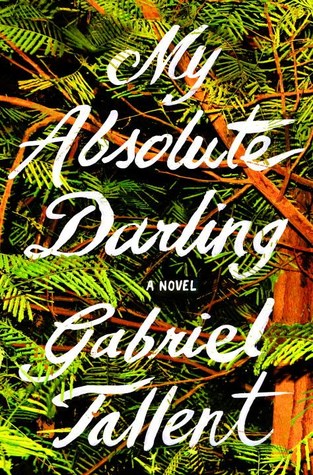
My Absolute Darling

Hardcover, 432 pages
Expected publication: August 29th 2017 by Riverhead Books 

Keeping with the debut theme and also with a very strong sense of place, but decidedly NOT fantasy in any way is My Absolute Darling. In fact, I was given this book as the answer to this questions I asked PRH rep Robert, “What’s the darkest book you are going to have at ALA?” He brought the question to the entire team.

So t everyone at PRH I say, “Touché. Job well done.” Let me start with a warning here-- this book is DARK, like seriously, realistically dark. But, it is also beautiful.

Here is the quick set up, Turtle is 14 and lives with her survivalist father in Northern CA. Her mother is dead. Her father, may love her, but he is brutal. I cannot stress this enough. There is physical and emotional abuse here. Turtle spends much of her time roaming the miles of unspoiled wilderness of the woods, creeks, and islands near her home. She knows no other way of life. She lives under the rules and oppressive world views of her father. Her only interactions with people are in school, and well, you know how middle school can be, so that’s not the best either.

But, when Turtle befriends Jacob, a high school boy who lives a fairly normal life, she begins to see that she has a choice to live differently. Thus begins Turtle’s journey. Using the survival skills her father has been teaching her for her entire life, Turtle goes on a journey to save herself. It is gripping, dangerous, and harrowing. The story is suspenseful as we are intimately engaged in Turtle’s struggle. But she is 14, so all her choices are not the ones we would make.

This book is as close as you are going to get to a horror novel without ANY supernatural interference [like a super intense horror novel],  but what sets it apart from other brutal stories of terrible childhoods is the beauty of the writing. The passages describing the natural world are worth the price of admission. And, Turtle is an inspiration.

I will admit right now, this book is not for everyone. There are many trigger warning here, and Tallent pulls no punches. He does not use metaphors when it comes to the brutality and terror of Turtle’s life. However, if you are a reader that can move past that, I promise you that at its core, this is a beautiful and inspirational story that will stay with you for years to come.

Readalikes would include A Land More Kind Than Home by Wiley Cash and The Bluest Eye by Toni Morrison. If you don’t mind a little bit of speculative, I also think The Road by Cormac McCarthy or Never Let Me Go by Kazou Ishiguro would work. All have a disturbing tone, a character centered storyline and lyrical language.

Three Words That Describe This Book: Coming of Age, Strong Sense of Place, Heartbreakingly Beautiful


The Last Ballad: A Novel

384 pages
Expected publication: October 3rd 2017 by William Morrow
Speaking of Wiley Cash, his third book is coming out in October and it is a departure from the southern Gothic influenced psychological suspense he has written before it. Now, I know Cash is a no brainer add for public libraries at this point, but I wanted to include it today because while it is excellent you are going to need to let patrons know how it is different from his other novels.

In fact, I was considering not Raving it today because he is so popular and you don’t need me to tell you to buy it, but here is what pushed me over the edge....Wiley Cash left me a voice mail. He saw on Goodreads that I had already read The Last Ballad and given it 5 stars. He followed the links to my blog [I’m a Goodreads author], saw that I was a librarian, found my cell number [it’s listed here so libraries can contact me to hire me], and called me.

Yes that’s right, Wiley Cash was stalking me. But to be fair, he both admitted to it and apologized for it in the first seconds of the almost 2 minute voicemail he left me. Well, of course I called him back. He wanted me to know that he wrote most of this book in a library because he and his wife had moved in with her parents while they were looking for a new house. He couldn’t write there and went to the library. He is also very worried about this novel because it is so different and he really hopes people like it.

Well, after chatting for a few minutes I told him that he just won himself a spot on my limited list because he was so sweet. I also told him librarians will love his story! And, the few I have told already do.

But back to the book- The Last Ballad. This is seemingly the story, set in 1929, of one poor, uneducated, 28 year old woman- Ella May Wiggins- who works the night shift at American Mill No. 2 in North Carolina. We know from the very early pages that Ella May is not going to live for much longer because Ella May is a real person. She joined the organizer trying to unite the poor white workers; in fact, Ella May was not only fighting those in power to try to unionize the white factory workers, she was also involved in trying to make the poor white workers accept the poor black workers into the unions too.  

Despite the fact that we know she will die before the book is done, and make no mistake that darkness and sadness penetrates the book, as I read, I couldn’t stop turning the pages and hoping that somehow she would make it through. That the poverty and oppression would end-- I know it does not, it still has not, but I still hoped as I read. Such is the brilliance of Cash’s writing.

So the publisher suggests Ron Rash’ Serena, Denis Lehane’s The Given Day, and films like Norma Rae and Silkwood as read/watch alike. I agree but I would also like to add the Pulitzer Prize winning, linked story collection, Olive Kitteridge by Elizabeth Strout to the list. The Last Ballad is told in a  similar fashion to Olive Kitteridge, with Ella May only having the POV for a few of the chapters. In most of the  chapters the story is told from those who have come into contact with Ella May. Some only for a moment, but that encounter effects them greatly. This stylistic storytelling choice is what elevates this novel from a good story about an ordinary woman who made her mark on history [a popular subgenre today] to an excellent book about the fight for equality and dignity for all.

I would also suggest this to people who have enjoyed recent books like, Hillbilly Elegy or White Trash. Here we have historical fiction, well researched but fiction, on the same topic. Speaking of, Cash also told me that the finished copy of the book will include an appendix essay about the real Ella May.


This book may be set in 1929 but it shows us the roots of our current social turmoil and upheaval. It illustrates issues and concerns of right now, from racism to workers rights to police brutality to the 1% vs the 99%- all by telling the story of one forgotten woman’s life through her eyes yes, but also those around her, in one compelling, emotional, and fascinating book.


Three Words That Describe This Book: Multiple POVs, Historical but Timely, Character Centered

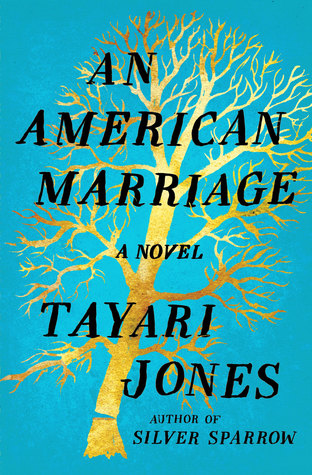
An American Marriage

Hardcover, 320 pages
Expected publication: February 6th 2018 by Algonquin Books
Jones’ last novel, Silver Sparrow is one of my all time favorites. I still regularly hand sell it to readers, and it came out 6 years ago! When I saw she finally was going to have a new book, I knew I needed to get my hands on it as early as possible. 

Like Silver Sparrow, An American Marriage is set in Atlanta and like Silver Sparrow it has a provocative setup-- Celestial and Roy are a couple in love and on the rise, but soon after they are married, Roy is convicted and sent to prison for a crime Celestial knows he didn’t commit-- for 12 years. How does your life and love continue from there.

Celestial turns to Andre, Roy’s best friend for help. After 5 years, Roy’s conviction is overturned and poof...he is free and ready to join his old life. But can he? Is that life still there? 

But seriously, what would you do if this happened to you? That question alone and how these characters deal with it would make this a good book. But what makes it great are the characters and the fact that Jones allows them each a chance to tell the story. She writes eloquently but through the characters. We watch their lives unfold with a truth and complication that feels real and without the melodrama that would creep in if Jodi Picoult or Nicholas Sparks told this story. And by the way, that is not a judgmental statement. Melodrama is a style of storytelling that has its place for the right reader, but this is not the kind of book that is, even though if you just knew the story line it may sound that way.

This book reminded me more of The Mothers by Britt Bennett. Both are character- centered novels that deal with serious issues in an honest way [The Mothers takes on abortion] set in African American communities. But as I said above about The City of Brass, you do the biggest disservice to your patrons if you only suggest “black books” as readalikes because this a book about characters, issues and relationships, period.


To that end I would also highly suggest Tell the Wolves I’m Home by Carol Rifka or The Round House by Louise Erdrich- neither of which is a “black book.”


Three Words That Describe This Book: Multiple POVs, Character Centered, Honest

Paperbacks from Hell: A History of Horror Fiction from the '70s and '80s
Paperback, 256 pages
Expected publication: September 19th 2017 by Quirk Books

Paperbacks From Hell: A History of Horror Fiction From The 70s and 80s is exactly what the title says it is, but it is also so much more. 

Like Hendrix’s fiction, this nonfiction book has the snarky humor, but you can also not deny his true, undead love for these books.

Broken up into categories based on subgenre [similar to ones I use in my book], Hendrix looks at the best paperback books and authors from this era in chapters on, for example vampires, demonic possession, and deadly animals. Yes he provides the crazy covers but he also gives biographies of authors from the still well known to the barely known ever. There are discussions of the books, their appeal and summaries. There is a huge index. It is exhaustive. But it is so fun to read.

Anyone who has ever read a horror paperback will find something here to enjoy. Like Hendrix, who openly shares his younger self’s obsession with these books, books he only first opened because of their covers, many of us have read a book or two [or in my case a hundred] found within these pages and we loved it! The affection Hendrix has for the topic-- the “trashy” books that turned him into a critically acclaimed novelist-- bleeds through [pun intended]. In fact, after you read this book, you too will accept that these books are no less worthy because they blatantly intended to scare readers- or at least that’s what Hendrix [and I] hopes.

This book pairs nicely with Stephen King’s 1980s nonfiction masterpiece advocating for the importance and the universal appeal of horror- Danse Macabre, a book all of your libraries own. Of course any of the hundreds of books mentioned within the pages of Paperbacks from Hell could be sought out by your patrons.

Three Words That Describe This Book: Fun, Books About Books, Eye-Opening

Three Titles I Teased About Upcoming Raves:

In the Fall, I will have full reviews of these three books in Booklist. I didn’t want to waste my limited Rave time talking about them, since you can read my “Raves” in the magazine soon, but just a quick heads up about why you need to pre-order these titles ASAP.

Creatures of Will and Temper by Molly Tanzer [November 2017]. John Joseph Adams Books from HMH. From the imprint’s landing page:
Led by John Joseph Adams, the acclaimed short fiction editor and series editor of The Best American Science Fiction and Fantasy, John Joseph Adams Books is dedicated to publishing best-selling and award-winning science fiction and fantasy from a diverse range of voices, both new and established—fiction that is literary and accessible, sometimes experimental, and always full of a sense of wonder.
In this one fencing, demons, and upper crust Victorian society collide. I am very excited to dive into this one after the conference. Horror authors in particular have been buzzing about it already.

Strange Weather by Joe Hill is coming out in October. It is a collection of 4 novellas. So already we have two reasons to love this book-- Joe Hill and novellas.  As I mentioned back in April, novellas are hot right now, and Joe Hill well, he is great. Just preorder it. My full review will be in the August 1st issue of Booklist which is the Science Fiction, Fantasy, Horror Spotlight issues.

Speaking of that issue, I will also have a review of The New Annotated Frankenstein and an interview with the editor, Leslie Klinger. You may think this book is the least “sexy” of the ones I mentioned today, but you are wrong. I will let you read the review and interview to see why, but for now, you need to know that this is a book to order because 2018 marks the 200th Anniversary of this novel, written by a teenage girl, which birthed both the horror and science fiction genres. For more information, visit Arizona State University’s Frankenstein Bicentennial Project.

One Title That is Already Out and I Have Already Raved:

In The Valley of the Sun by Andy Davidson is a book that I loved. You can read my full review but here are my-- Three Words That Describe This Book: lyrical, haunting, atmospheric.

I wanted to Rave this book even though it came out in early June because it is THAT good, but its is from from a smaller press so I want to make sure I give it all the attention it deserves. The rules to mention something in this presentation were that the book much be on the exhibit floor. So.....I talked to Skyhorse and they have not only put the book out on the floor, but they also made 25 hardcover copies available to folks who came to this program. I handed out tickets, and the first 25 who turned them in at booth 3131 got a copy...for FREE!

Buy this book. It is amazing. You will thank me later.

And now, time for a breath. [Exhales]

Of course I did not say all of this in my ten minutes during the program. This post has a lot more detail. Also you can go to Booklist Reader for a list of all of the titles.


Finally, I “Raved” 15 more titles that were at the conference in this post on Friday. So in total that’s 24 titles coming soon that I think are worth your time.

I will be back tomorrow with more ALA Annual wrap up posts including wrap ups by others.

Monday, December 10, 2012

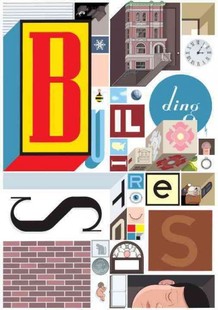
What I'm Reading: Building Stories

Believe the hype.  Building Stories by Chris Ware is on just about every best list for 2012.  Here is what I turned into Kathy to be included in my post for the Browsers' Corner Best of 2012 (coming later this month):
In an age where eBooks seem to be taking over, Chris Ware has created a story that can only be experienced in print form. Building Stories is one single story told in graphic novel form in 14 distinct parts. Each part is different; for example, some are hardbound books, others are small comic strips, a few are pamphlets, and still more are large broadsheets. At the story’s center is an apartment building in Chicago in 2000. The building has 3 floors, with one apartment on each floor. While some pieces follow all of the residents, the main focus of the story is on the life of the young, amputee who lives in the 3rd floor walk-up. The majority of Building Stories follows her both while she lived there and in decade before and after. We grow attached to her as we see her search for acceptance, love, and fulfillment. As a reader, you make your way through the story as you see fit. Ware does not impose an order on the 14 pieces to his tale. This creates a unique storytelling experience as every reader encounters the story in a different order. Readers familiar with Ware’s drawing style will also notice his trademark large headed characters, a bright color palate, and his use of the entire page to tell the story.
That is pretty much the entire book in one paragraph. I do want to flesh out a few of the appeal factors here though.

This is a book for people who are worried that eBooks will take over the world of publishing.  Because this graphic novel is actually a box filled with 14 pieces of a single story, it can only be read and experienced in print.  In today's digitally, app fueled world, there is something comforting about sitting down with the box, choosing one of the 14 parts, and sitting down to experience it.

That is how you read any Ware book by the way, they are always an experience first, and a story second.  You experience the genius in his art work and in the way he structures a story.  Time flows freely here, like in all of his books, but the themes at the heart of his tale do not get lost in the tide of his style.

Here is an example of what I mean when I say that time flows freely.  This graphic novel is written in a circle, with no beginning or end, but it is still a complete story.  We see the characters at various points in their life, but we never see a beginning or end to their lives.  We are there for a time, visiting them, being a part of their lives, and then leaving when we read whatever the last piece we, the readers, choose to end the story with.  It's the classic "slice of life" story taken to a satisfying extreme.

Since Ware imposes no order on how the book is read, each reading produces a slightly different version of the same story.  This makes it a great option for re-reading.  In fact, I am normally not a re-reader and I am excited to read this again in a few months to get a new experience from the graphic novel.

Speaking of the story, in Building Stories the theme is also like his other works (most notably the brilliant Jimmy Corrigan: The Smartest Kid on Earth)-- how we all long for fulfillment, love and acceptance, and while we think we find it at times, in the long run, it slips through our fingers and we keep the search going.

That is not to say the tone of the story here is dark and depressing.  It is melancholy overall, but there are moments of elation, joy, and contentment sprinkled throughout.  As a result, you do not feel overwhelmed by disappointment and sadness.  Also, Ware tells the story from a place of observation.  We come to care for the characters, but we do not necessarily sympathize with them.  I know that sounds confusing, but it describes Ware's narrative voice perfectly.  We see them, watch them, even root for them at times, but we also know that they will not make the right choices in the end.  But somehow, it is all wonderful and beautiful to observe.

The story here is realistic.  With its free narrative structure, extremely well rounded and fleshed out characters for whom you know their deepest darkest secrets, and lack of a starting and ending point, Building Stories resembles the actual human experience more than any novel I have ever read.  It is remarkable in this sense.

The Oak Park and Chicago setting will also appeal to many readers in this area. Real places are drawn and/or referred to, like The Book Table, the BPL's favorite book store.

Finally, for libraries, there are many cataloging issues with Building Stories.  Click here for my post (with pictures) on how we handled it at the BPL.

Three Words That Describe This Book: episodic, layered, stylistically interesting

Readalikes:  I have a couple directions you could go with suggestions here.  First, the episodic nature of the 14 pieces, made Building Stories feel like a book of short stories.  With its connected characters, melancholic tone, and realistic portrayal of the people in the story, it reminded me of Olive Kitteridge by Elizabeth Stout. Also, the old lady in Building Stories really reminded me of Olive herself.  Click here for a book discussion report on this book.

Another similar title is The Elegance of the Hedgehog by Muriel Barbery which also revolves around the tenants of a single building and is reflective, melancholic, and character-centered.

In terms of graphic novels that are similar.  I think the tone of Adrain Tomine and Daniel Clowes are  similar to Ware.  Click here for more from me on Clowes.

Three years ago I read the graphic novel Asterios Polyp by David Mazzucchelli.  Click here to see the similarities.

Saturday, December 31, 2011

What I'm Reading: Becky's Favorite Books I Read This Year

Here are my Top 10 Favorite Books I Read in 2011, in no particular order. Please use the links provided for my full reviews.


  • Swamplandia! by Karen Russell: the descriptions of the Everglades alone makes it hands down my favorite book this year
  • The Leftovers by Tom Perrotta: a favorite author who keeps surprising me by getting better with each book
  • The Known World by Edward P. Jones: again, I am sorry it took me so long to read this masterpiece.
  • Before I Go To Sleep by S. J. Watson: a better suspense story I did not read this year.


  • The Caretaker of Lorne Field by Dave Zeltserman: I read some great horror this year (click here to see more) but nothing stayed with me more than this one.
  • Centuries of June by Keith Donohue: for its ability to be original AND entertaining
  • Full Dark No Stars by Stephen King: not horror, but these four psychological suspense novellas were riveting and frightening, especially in the excellent audio version I listened to.
I have a few overall comments and observations to make about my reading also:
  • There was no nonfiction on my final top 10. I tried to go back and find something I enjoyed enough to bump one of these novels off, but I could not. I really liked both In the Garden of Beasts by Erik Larson and At Home by Bill Bryson, but I enjoy both authors and expected to enjoy these books.  As a result, my enjoyment did not surprise me as much as it did with the 10 books in the list above.
  • For similar reasoning 2 other novels just missed the cut, Faithful Place by Tana French and Started Early, Took My Dog by Kate Atkinson.
Finally, I always save at least one title from one of the year's best lists to start the next year off with. Example from year's past in this tradition  Await Your Reply (on most of 2009's Best Lists, made mine in 2010), Olive Kitteridge (on most of 2008's Best Lists, made mine in 2009), The Brief Wondrous Life of Oscar Wao (on most of 2007's Best Lists, made mine in 2008).  That is a good track record for this year's selection, The Art of Fielding,  to have to live up to.  I will have a report on it sometime in January, but it will be an entire year before I will know how it pans out in comparison to everything else I read in 2012.
Thank for following me on yet another year of reading.