RA FOR ALL...THE ROAD SHOW!

I can come to your library, book club meeting, or conference to talk about how to help your readers find their next good read. Click here for more information including RA for All's EDI Statement and info about WHY I LOVE HORROR.
Showing posts sorted by relevance for query wiley cash. Sort by date Show all posts

Wednesday, July 25, 2018

Wiley Cash Starts a Book Club That Asks Us All To Rethink "The Canon"

Author Wiley Cash, who I am a personal fan of and if you click here you can see every thing I have written about him and his books, is staring a national book club that asks us all to rethink the cannon.

From an article via Garden and Gun Magazine:
As a best-selling author, North Carolina’s Wiley Cash (This Dark Road to MercyA Land More Kind Than HomeThe Last Ballad) knows the power of getting his novels in the hands of literature-loving book clubs. But for his newest project, the Open Canon Book Club, Cash wants to highlight the work of other authors in an effort to broaden people’s worldview through literature. “I feel like we’re in a time when we need to hear underrepresented voices, people who don’t look like us or talk like us,” Cash says. “What I’m really interested in is getting books in front of book clubs they might not otherwise have.” 
Membership is free and open to all. You’ll get discussion questions for each month’s book, a list of related titles, and dates for live online conversations hosted by Cash and the guest authors. Local independent bookstores across the country will also give discounts for the selected book. 
First up in September: Crystal Wilkinson’s The Birds of Opulence, the story of several generations of African-American women in a Kentucky township. Although Cash had never met Wilkinson, he had long admired her work and thought it was just the kind of book he would want to share with readers. “I want to open up a literary experience for people to say, ‘This is something I’ve never encountered before,’” Cash says. 
Cash had his own kind of literary “aha” moment as a sophomore creative writing major at the University of North Carolina-Asheville. He read the story collection Bloodline by the writer Ernest J. Gaines, and though the two authors came from very different backgrounds (Cash grew up in an old mill town in North Carolina; Gaines on a plantation in Louisiana, where his ancestors had been slaves), Cash recognized elements of his own family in the characters Gaines drew out. The book changed his life. Cash went on to study with Gaines at the University of Louisiana–Lafayette, and the two formed a lasting bond. 
Cash has mapped out selections for the Open Canon Book Club for the next year or so. In addition to showcasing talented, diverse voices, he wanted to choose authors who would enjoy engaging with club members. “At the very least,” he says, “this is going to be a way to steer people to good books—and that’s what we want.”
You can follow the links in that article, or click here to go directly to Cash’s Open Cannon website where there is already a long list of book stores all over the country who are participating.

Here is how libraries can get involved:

  • If you local book store is listed, give them a call and talk about partnering up
  • If your local book store is not listed, call them and talk to them about joining up.
  • Use the link to join to get the newsletter, selection announcements, and discussion info in your email box and run it through your library yourself.
  • At the very least-- make sure you have the titles Cash is discussing in your collections because you might not. And, he is providing you some talking points to handsell each title.
Thanks to Cash, who has done much in his career to use his privilege to promote underrepresented authors and titles.

I know just about every library in America has his award winning and critically acclaimed novels, so adding those books he thinks are worth your time is an easy sell to your collection development people and patrons. 

Friday, September 14, 2012

What I'm Reading: A Land More Kind Than Home

Yesterday, I reminded you about the Browser's Corner, and working on my review for this book is why it was in the front of my brain.  Let me explain. At our May 29th meeting of the Book Lover's Club Alena said this about A Land More Kind Than Home by Wiley Cash:
"This is a debut novel by a southern writer.  This book got a rare five stars from me.  It is about a creepy preacher man in the North Carolina mountains who handles snakes.  Of course he is crooked but no one can prove it.  You have these ugly horrible people and this gorgeous writing.  The action is in 48 hours.  It is not pleasant; there is no hero, there is killing, death and destruction.  But the whole thing ends the way it should end.  Cash is a writer to watch.  I love Southern fiction and religious extremism as a background to novels.  A down and dirty book that has writing that elevates it."
When the Book Lover's Club meets on the last Tuesday of odd numbered months, I take notes on what the participants have to say about the book they have come to share.  We then post the notes on the Browser's Corner, here.  These notes serve as an annotated reading list of patron picks for both the members of the group to go back and look at, and for any one to peruse.  The Book Lover's Club notes on their own are a fabulous RA tool, and they are just one section of The Browser's Corner.

Needless to say, after that description by Alena, I put the book on hold for myself the next day, got it within a week, and finished it right away.  I have to agree with everything she said.

This is a beautifully wrought story that at every turn gives you more than you expected.  The "plot" involves the killing of a mute child at a prayer "healing" by the creepy preacher mentioned above.  But we know from the first pages that the child will die.  Thus, this novel is not about the murder.  It is about rural communities and the intimate links between the people who live there.  And it is about the setting.  In the end this is a story where a drama unfolds, a conflict which has it roots back a generation from the current murder, and once we reach the last page, everything has changed and yet, at the same time, we are back to the way it always was.

That is the general review.  Here are some specific things I want to point out about the appeal of this novel.  I would classify this book as psychological suspense meets Souther Gothic.

First let's look at its psychological suspense aspects. Terrible stuff happens, and we see it unfold from the point of view of the murdered boy's younger brother, the female town elder/midwife [she is the moral center of this community], and its current Sheriff.  The story is bleak and atmospheric. The tension is thick, and I was on the edge of my chair turning the pages with trepidation both wanting, and not wanting, to know what would happen next. It is intricately plotted, with layers overlapping and time frames shifting, but the style adds to the uneasy atmosphere and provides key details to the story.  But again, it is not straight suspense or mystery because the investigation is not part of the story.  The reader knows what happened and why; the murderer is never in question.  The questions come from how people will react.

Second, and probably even more key to whether or not someone will like this novel is its deep roots into the Southern Gothic tradition.  This is a lyrically written novel in which the setting [North Carolina hill country] is a character.  Cash describes the tough landscape and its weathered people, but with an obvious affection.  His love for the place is evident despite the bleakness of the story.

Another key thing in A Land More Kind Than Home is the characterization.  The setting and characters go hand in hand.  Without careful construction of fleshed out characters whose motivations, history, and present situations we truly understand, Cash's carefully constructed novel falls flat.

A Land More Kind Than Home is a novel you experience.  While there is not fast-paced action, the novel's contradiction of the beautiful language with the horrible actions compelled me to stay in my seat and keep reading the pages.  While technically I would classify the novel as leisurely paced, I was so enchanted by the world Cash created that I read it in 2 sittings.

I can't wait to read Cash's second novel.

Three Words That Describe This Book: lyrical, mutliple points of view, atmospheric

Readalike:  Wiley Cash's novel is everything people always claim  John Hart is.  Hart doesn't do it for me as you can see here, but many people do enjoy Hart's North Carolina set suspense novels, so I think he is a good suggestions option for some readers.

But the author Cash most reminds me of is the great Joyce Carol Oates.  Of course, Cash has 1 novel and Oates is one of our greatest living American writers, but I see a lot of Oates in Cash.  A good similar read here would be The Falls.

The Cove by Ron Rash which also came out this spring, is a suspense story which hinges on its North Carolina setting and is probably as close to perfect a match as you could get here.  At the same May 29, 2012 Book Lover's Club, Marilyn had this to say about The Cove:
"I was immediately caught by the cover - a stream with wooded hills on both sides and the back of a woman with long hair wading in the water.  There is a brief introduction by the author which says that during WWI Germans in America were taken to internment camps. It is set in the backwoods of North Carolina.  It starts in the 1930s with a man who is doing a land survey.  He is from out of town and not feeling very welcome.  He finds an abandoned well and pulls out a skull.  Flash back to 1918 where a young sister and brother are trying to run their farm after their parents die.  The sister helps a man who has been stung by wasps and she finds a note in his pocket that says I am a mute and trying to get to New York and that is all I will say…"
Cold Mountain by Charles Frazier shares the southern setting, lyrical language, and vivid characterizations with A Land More Kind Than Home. They also share a shifting point of view and a storyline in which characters must come terms with the difficulty of their life situation.

A suggestion that is a little more off the beaten path would be Alden Bell's The Reapers Are the Angels. Like Cash's novel, Bell's is also a psychological suspense story merged with a Southern Gothic feel, only in Bell's novel, the characters inhabit a world where they has been a zombie apocalypse.  Take out the zombies though, and they are remarkably similar stories.

And for a cross format watch alike, the entire time I was reading A Land More Kind Than Home, it kept reminding me of the HBO series Carnivale from the early 2000s.  Both have weird preachers and an atmospheric, odd, bleak, yet beautiful story driven by psychological suspense, setting, and characters.  Go seek out the DVDs for the series if you liked this novel.

Monday, June 26, 2017

RA for All Roadshow Hits ALA: Read N Rave Panel

Today from 10:30-11:30 I was a part of Rebecca Vnuk’s Booklist Read N Rave panel.  For all of the titles that were Raved and by whom, you can go to this post from Booklist Reader. Together we gave you some great books.

Each panelist had 10 minutes to Rave to the audience about the books from the conference which we are most excited about. Below are nine titles and that I Raved with way more information about them than I gave in my 10 minutes.

My nine titles break down nicely into three distinct categories. 5 books getting a full rave, 3 teasers on upcoming titles which I will be reviewing in Booklist, and 1 book that is already out, but I am still talking about it. I wanted to talk about it so much, I orchestrated a giveaway with the publisher so the book would be on the floor and therefore eligible to be Raved.

Also, in true Becky fashion, all 9 of my books are dark and have complicated protagonists [yes even the NF as I will explain], but you know what, some of us love that. Give me steadily building dread, oppressive atmosphere, and total devastation over rainbows and sparkles any day. Don’t judge me and I won’t judge you. Besides, we’ve all got our quirks.

Enough preamble, let’s do this.

Five Books That I Gave the Full Rave Treatment:


The City of Brass


Hardcover528 pages
Expected publication: November 14th 2017 by Harper Voyager

The City of Brass is a debut, historical, epic fantasy novel. I was drawn to this title because- well look at the gorgeous cover, but also because it was offered as a good choice for fans of The Golem and the Jinni, and as that link shows, I love that book. 

The set up-- Nahri is a young woman, con artist, making her living on the crowded streets of 18th Century Cairo by providing “magic” to her rich customers-- fortune telling, healing, etc... Except one day, while performing an “exorcism” she accidentally summons a djinn warrior. And so begins a story you think you know-- disadvantaged young adult stumbles into a magical world where they have so much more power than they ever knew and are the key to saving that fantasy world.  

That’s what I thought at least, but what followed was a spellbinding story, with beautiful prose, adventure, magic, political intrigue, and even some romance. Yes, it has the requisite world building, and the frame, based on the mythology and fairy tales of the djinn from Arab culture [which by the way was well research and authentic; I checked into it], but it was a story that simply grabbed me and wouldn’t let go. Seriously, watch out if you start it, it is not a short book, but you may not be able to stop reading it. Clear your schedules.

Yes you can suggest this for fans of "Arabian Nights”-esque stories like Alif the Unseen by G. Willow Wilson, but if you limit your hand selling of this title to those readers only, you will miss a lot of readers who will LOVE this book. 

This is a book for people who want to get caught up in a detailed fantasy world based in established fairy tales, like those who loved Uprooted by Novik. 

But beyond the fairy tale frame, The City of Brass will also bring readers back to other magical titles that caught them up in their webs and held them breathlessly captive while reading, and then longing for more after they finished, like Jonathan Strange & Mr Norrell and The Night Circus [which as a side note, is still one of the most popular posts on my blog- itaccessed multiple times each month.]

The only reason you wouldnpick this book up is because it appears to be the first in a series and waiting for another book would make you angry. 

Three Words That Describe This Book: Captivating, Fairy Tale Frame, Great Characters 

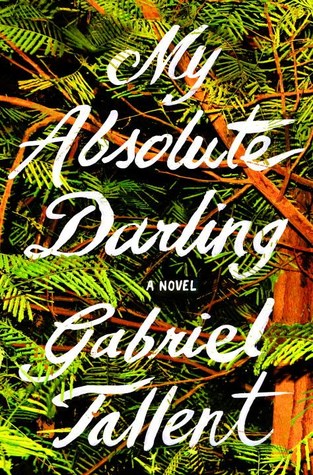
My Absolute Darling

Hardcover432 pages
Expected publication: August 29th 2017 by Riverhead Books 

Keeping with the debut theme and also with a very strong sense of place, but decidedly NOT fantasy in any way is My Absolute Darling. In fact, I was given this book as the answer to this questions I asked PRH rep Robert, Whats the darkest book you are going to have at ALA?” He brought the question to the entire team.

So t everyone at PRH I say, “Touché. Job well done.” Let me start with a warning here-- this book is DARK, like seriously, realistically dark. But, it is also beautiful.

Here is the quick set up, Turtle is 14 and lives with her survivalist father in Northern CA. Her mother is dead. Her father, may love her, but he is brutal. I cannot stress this enough. There is physical and emotional abuse here. Turtle spends much of her time roaming the miles of unspoiled wilderness of the woods, creeks, and islands near her home. She knows no other way of life. She lives under the rules and oppressive world views of her father. Her only interactions with people are in school, and well, you know how middle school can be, so that’s not the best either.

But, when Turtle befriends Jacob, a high school boy who lives a fairly normal life, she begins to see that she has a choice to live differently. Thus begins Turtle’s journey. Using the survival skills her father has been teaching her for her entire life, Turtle goes on a journey to save herself. It is gripping, dangerous, and harrowing. The story is suspenseful as we are intimately engaged in Turtle’s struggle. But she is 14, so all her choices are not the ones we would make.

This book is as close as you are going to get to a horror novel without ANY supernatural interference [like a super intense horror novel],  but what sets it apart from other brutal stories of terrible childhoods is the beauty of the writing. The passages describing the natural world are worth the price of admission. And, Turtle is an inspiration.

I will admit right now, this book is not for everyone. There are many trigger warning here, and Tallent pulls no punches. He does not use metaphors when it comes to the brutality and terror of Turtle’s life. However, if you are a reader that can move past that, I promise you that at its core, this is a beautiful and inspirational story that will stay with you for years to come.

Readalikes would include A Land More Kind Than Home by Wiley Cash and The Bluest Eye by Toni Morrison. If you don’t mind a little bit of speculative, I also think The Road by Cormac McCarthy or Never Let Me Go by Kazou Ishiguro would workAll have a disturbing tone, a character centered storyline and lyrical language.

Three Words That Describe This Book: Coming of Age, Strong Sense of Place, Heartbreakingly Beautiful


The Last Ballad: A Novel

384 pages
Expected publication: October 3rd 2017 by William Morrow
Speaking of Wiley Cash, his third book is coming out in October and it is a departure from the southern Gothic influenced psychological suspense he has written before it. Now, I know Cash is a no brainer add for public libraries at this point, but I wanted to include it today because while it is excellent you are going to need to let patrons know how it is different from his other novels.

In fact, I was considering not Raving it today because he is so popular and you don’t need me to tell you to buy it, but here is what pushed me over the edge....Wiley Cash left me a voice mail. He saw on Goodreads that I had already read The Last Ballad and given it 5 stars. He followed the links to my blog [I’m a Goodreads author], saw that I was a librarian, found my cell number [it’s listed here so libraries can contact me to hire me], and called me.

Yes that’s right, Wiley Cash was stalking me. But to be fair, he both admitted to it and apologized for it in the first seconds of the almost 2 minute voicemail he left me. Well, of course I called him back. He wanted me to know that he wrote most of this book in a library because he and his wife had moved in with her parents while they were looking for a new house. He couldn’t write there and went to the library. He is also very worried about this novel because it is so different and he really hopes people like it.

Well, after chatting for a few minutes I told him that he just won himself a spot on my limited list because he was so sweet. I also told him librarians will love his story! And, the few I have told already do.

But back to the book- The Last Ballad. This is seemingly the story, set in 1929, of one poor, uneducated, 28 year old woman- Ella May Wiggins- who works the night shift at American Mill No. 2 in North Carolina. We know from the very early pages that Ella May is not going to live for much longer because Ella May is a real person. She joined the organizer trying to unite the poor white workers; in fact, Ella May was not only fighting those in power to try to unionize the white factory workers, she was also involved in trying to make the poor white workers accept the poor black workers into the unions too.  

Despite the fact that we know she will die before the book is done, and make no mistake that darkness and sadness penetrates the book, as I read, I couldn’t stop turning the pages and hoping that somehow she would make it through. That the poverty and oppression would end-- I know it does not, it still has not, but I still hoped as I read. Such is the brilliance of Cash’s writing.

So the publisher suggests Ron Rash’ Serena, Denis Lehane’s The Given Day, and films like Norma Rae and Silkwood as read/watch alike. I agree but I would also like to add the Pulitzer Prize winning, linked story collection, Olive Kitteridge by Elizabeth Strout to the list. The Last Ballad is told in a  similar fashion to Olive Kitteridge, with Ella May only having the POV for a few of the chapters. In most of the  chapters the story is told from those who have come into contact with Ella May. Some only for a moment, but that encounter effects them greatly. This stylistic storytelling choice is what elevates this novel from a good story about an ordinary woman who made her mark on history [a popular subgenre today] to an excellent book about the fight for equality and dignity for all.

I would also suggest this to people who have enjoyed recent books like, Hillbilly Elegy or White Trash. Here we have historical fiction, well researched but fiction, on the same topic. Speaking of, Cash also told me that the finished copy of the book will include an appendix essay about the real Ella May.


This book may be set in 1929 but it shows us the roots of our current social turmoil and upheaval. It illustrates issues and concerns of right now, from racism to workers rights to police brutality to the 1% vs the 99%- all by telling the story of one forgotten woman’s life through her eyes yes, but also those around her, in one compelling, emotional, and fascinating book.


Three Words That Describe This Book: Multiple POVs, Historical but Timely, Character Centered

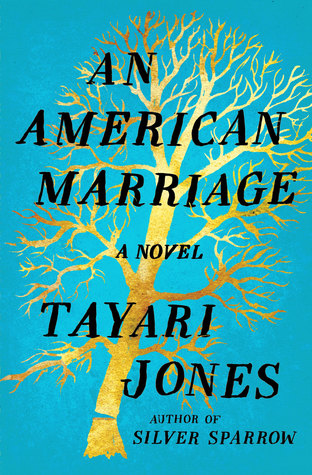
An American Marriage

Hardcover320 pages
Expected publication: February 6th 2018 by Algonquin Books
Jones’ last novel, Silver Sparrow is one of my all time favorites. I still regularly hand sell it to readers, and it came out 6 years ago! When I saw she finally was going to have a new book, I knew I needed to get my hands on it as early as possible. 

Like Silver Sparrow, An American Marriage is set in Atlanta and like Silver Sparrow it has a provocative setup-- Celestial and Roy are a couple in love and on the rise, but soon after they are married, Roy is convicted and sent to prison for a crime Celestial knows he didn’t commit-- for 12 years. How does your life and love continue from there.

Celestial turns to Andre, Roy’s best friend for help. After 5 years, Roy’s conviction is overturned and poof...he is free and ready to join his old life. But can he? Is that life still there? 

But seriously, what would you do if this happened to you? That question alone and how these characters deal with it would make this a good book. But what makes it great are the characters and the fact that Jones allows them each a chance to tell the story. She writes eloquently but through the characters. We watch their lives unfold with a truth and complication that feels real and without the melodrama that would creep in if Jodi Picoult or Nicholas Sparks told this story. And by the way, that is not a judgmental statement. Melodrama is a style of storytelling that has its place for the right reader, but this is not the kind of book that is, even though if you just knew the story line it may sound that way.

This book reminded me more of The Mothers by Britt Bennett. Both are character- centered novels that deal with serious issues in an honest way [The Mothers takes on abortion] set in African American communities. But as I said above about The City of Brass, you do the biggest disservice to your patrons if you only suggest “black books” as readalikes because this a book about characters, issues and relationships, period.


To that end I would also highly suggest Tell the Wolves I’m Home by Carol Rifka or The Round House by Louise Erdrich- neither of which is a “black book.”


Three Words That Describe This Book: Multiple POVs, Character Centered, Honest

Paperbacks from Hell: A History of Horror Fiction from the '70s and '80s
Paperback256 pages
Expected publication: September 19th 2017 by Quirk Books

Paperbacks From Hell: A History of Horror Fiction From The 70s and 80s is exactly what the title says it is, but it is also so much more. 

Like Hendrix’s fiction, this nonfiction book has the snarky humor, but you can also not deny his true, undead love for these books.

Broken up into categories based on subgenre [similar to ones I use in my book], Hendrix looks at the best paperback books and authors from this era in chapters on, for example vampires, demonic possession, and deadly animals. Yes he provides the crazy covers but he also gives biographies of authors from the still well known to the barely known ever. There are discussions of the books, their appeal and summaries. There is a huge index. It is exhaustive. But it is so fun to read.

Anyone who has ever read a horror paperback will find something here to enjoy. Like Hendrix, who openly shares his younger self’s obsession with these books, books he only first opened because of their covers, many of us have read a book or two [or in my case a hundred] found within these pages and we loved it! The affection Hendrix has for the topic-- the “trashy” books that turned him into a critically acclaimed novelist-- bleeds through [pun intended]. In fact, after you read this book, you too will accept that these books are no less worthy because they blatantly intended to scare readers- or at least that’s what Hendrix [and I] hopes.

This book pairs nicely with Stephen King’s 1980s nonfiction masterpiece advocating for the importance and the universal appeal of horror- Danse Macabre, a book all of your libraries own. Of course any of the hundreds of books mentioned within the pages of Paperbacks from Hell could be sought out by your patrons.

Three Words That Describe This Book: Fun, Books About Books, Eye-Opening

Three Titles I Teased About Upcoming Raves:

In the Fall, I will have full reviews of these three books in Booklist. I didn’t want to waste my limited Rave time talking about them, since you can read my “Raves” in the magazine soon, but just a quick heads up about why you need to pre-order these titles ASAP.

Creatures of Will and Temper by Molly Tanzer [November 2017]. John Joseph Adams Books from HMH. From the imprint’s landing page:
Led by John Joseph Adams, the acclaimed short fiction editor and series editor of The Best American Science Fiction and Fantasy, John Joseph Adams Books is dedicated to publishing best-selling and award-winning science fiction and fantasy from a diverse range of voices, both new and established—fiction that is literary and accessible, sometimes experimental, and always full of a sense of wonder.
In this one fencing, demons, and upper crust Victorian society collide. I am very excited to dive into this one after the conference. Horror authors in particular have been buzzing about it already.

Strange Weather by Joe Hill is coming out in October. It is a collection of 4 novellas. So already we have two reasons to love this book-- Joe Hill and novellas.  As I mentioned back in April, novellas are hot right now, and Joe Hill well, he is great. Just preorder it. My full review will be in the August 1st issue of Booklist which is the Science Fiction, Fantasy, Horror Spotlight issues.

Speaking of that issue, I will also have a review of The New Annotated Frankenstein and an interview with the editor, Leslie Klinger. You may think this book is the least “sexy” of the ones I mentioned today, but you are wrong. I will let you read the review and interview to see why, but for now, you need to know that this is a book to order because 2018 marks the 200th Anniversary of this novel, written by a teenage girl, which birthed both the horror and science fiction genres. For more information, visit Arizona State University’s Frankenstein Bicentennial Project.

One Title That is Already Out and I Have Already Raved:

In The Valley of the Sun by Andy Davidson is a book that I loved. You can read my full review but here are my-- Three Words That Describe This Book: lyrical, haunting, atmospheric.

I wanted to Rave this book even though it came out in early June because it is THAT good, but its is from from a smaller press so I want to make sure I give it all the attention it deserves. The rules to mention something in this presentation were that the book much be on the exhibit floor. So.....I talked to Skyhorse and they have not only put the book out on the floor, but they also made 25 hardcover copies available to folks who came to this program. I handed out tickets, and the first 25 who turned them in at booth 3131 got a copy...for FREE!

Buy this book. It is amazing. You will thank me later.

And now, time for a breath. [Exhales]

Of course I did not say all of this in my ten minutes during the program. This post has a lot more detail. Also you can go to Booklist Reader for a list of all of the titles.


Finally, I “Raved 15 more titles that were at the conference in this post on Friday. So in total that’s 24 titles coming soon that I think are worth your time.

I will be back tomorrow with more ALA Annual wrap up posts including wrap ups by others.

Wednesday, May 28, 2014

What I’m Reading: This Dark Road to Mercy

Way back in February, I read This Dark Road To Mercy by Wiley Cash.  Let me begin by saying I was one of the many LOVERS of Cash’s debut novel, A Land More Kind Than Home.  And, while I did not love TDRTM as much, I still found it to be very good.  [It is hard when ALMKTH was pretty close to perfect. ] I am also struck by how much of what I found appealing about ALMKTH is the same here in TDRTM just to a slightly lesser degree.  If you are new to Wiley Cash, click here for my ALMKTH review.

Here’s the set up for TDRTM. We are in North Carolina.  It’s 1995.  Our narrators are a Easter, a young girl who along with her sister, Ruby, lives in foster care after the death of their mother, Brad Weller, their social worker, and Robert Pruitt, an ex-con with a grudge against Easter’s Dad.

The narration goes back in forth between the three as we follow the story of Wade, Easter’s dead beat, former minor league baseball star Dad, as he tries to get his girls back.  Wade convinces the girls to escape into the night with him.  They go since there only other option is to move to Alaska to live with the grandparents they have never met. Brady and Pruitt are both looking for Wade but each man has different intentions on what they want to do with him once they find him.

Like ALMKTH there is violence and tension here, enough to make more delicate readers uncomfortable.  Let me say, Wade is just a loser, but Pruitt is a bad, bad man, and since he takes his turns telling the story, it can get intense.

Easter was okay to me.  She grew on me, but I never loved her, but I really liked Brady.  And Pruitt was a great villain. The characters drive the action, but overall, I did not inhabit them as I did in ALMKTH. I think if Easter was a bit stronger, I would have LOVED this book.  I am hearing that from other readers too.  Once they get past Easter’s opening chapters and keep going, they really get into the book.

Again the landscape plays a part in the story.  For example, the first time Easter and Ruby see the ocean after years of living so close but never getting there was heartbreakingly beautiful.

This is modern Southern Gothic, psychological suspense that is compellingly paced, but not brisk.  As the pacing begins to drag with one narrator, we switch voices and it starts building again.  Although like other psychological suspense stories, the tension builds and the pacing increases as we race toward the finish. And I loved the climax here.

The most strikingly genius thing about this novel is how Cash uses the 1995 home run record race between Mark McGuire and Sammy Sosa to play with the tone of the novel.  Let me explain.  Like all of us were during the summer of 1995, the characters in the novel are wrapped up in the race for the HR record.  People are giddy over it.  Everyone, everywhere is following it.  The novel’s climax even happens at a Cubs-Cardinals game.  Back in 1995, we were all excited by this.  It made you smile to hear about who hit how many home runs no matter how bad a day you had. Everyone was talking about Sosa and McGuire and their home runs.  It was the lead story on the news every night, all over America.

But that was 1995.  Cash published this book in 2014.  The reader in 2014 can remember back to that innocent age and now knows it was all a sham and a fraud!  The double entendre of feelings-- remembering our pure joy and having the frustration and sadness that it was all because of steroids that it was possible-- adds a unique unsettling quality to the entire book.  It is subtle and brilliant.

Overall, TDRTM is just a little more straight forward than ALMKTH.  The atmosphere is there, but it is not an overriding appeal. The characters are good, but not great. The story is interesting and compelling, but will not haunt you.  However, I am giving it out to readers constantly and they seem to be enjoying it, again, one they get past Easter’s opening and move into Brady.  If they can make it to Pruitt’s first chapters, they are usually hooked.

I myself liked it and would be willing to read Cash’s next book.

Three Words That Describe This Book: psychological suspense, southern gothic, multiple narrators

Readalikes:  Click here for my first round of Cash readalikes, including John Hart who would be your best bet match especially for this novel.  Click here to my review of The Last Child, which is a good suggestion here too.

Specifically with TDRTM, if you want more books about the foster care system, another good option is The Language of Flowers by Vanessa Diffenbaugh. The link is to my report from when our book group read that novel.

Also, many people will enjoy this book for the large baseball frame.  This happens to be a personal favorite frame of mine and I have blogged about it many times.  Click here to pull up tons of baseball suggestions. I would also specifically suggest The Art of Fielding by Chad Harbach as a readalike for more reasons than just the baseball frame.

For a more traditional psychological suspense involving sisters try Ruth Rendell’s The Water’s Lovely.

Finally, on NoveList I found a perfect "title to title" suggestion, Southern Cross the Dog by Bill Cheng. Here is an excerpt from the reason why: "These richly atmospheric Southern Gothic novels are simultaneously brutal, lyrical, and moving, filled with memorable characters and desperate adventures. Couldnt have said it better myself.

Friday, September 26, 2014

BPL Book Discussion: A Land More Kind Than Home

Way back on 9/15, our group met to discuss A Land More Kind Than Home by Wiley Cash.

I read, loved, and wrote about this novel back in 2012, so you can click through for a preview.

But to keep this post standard with the other book discussion reports, here is the publisher's summary:
For a curious boy like Jess Hall, growing up in Marshall means trouble when you get caught spying on grown-ups.  
Adventurous and precocious, Jess is protective of his older brother, Christopher, a mute whom everyone calls Stump. Though their mother has warned them not to snoop, Stump can't help sneaking a look at something he's not supposed to—an act that will have repercussions. It's a wrenching event that thrusts Jess into an adulthood for which he's not prepared. He now knows that a new understanding can bring not only danger and evil—but also the possibility of freedom and deliverance.  
Told by resonant and evocative characters, A Land More Kind Than Home is a haunting tale of courage in the face of cruelty and the power of love to overcome the darkness that lives in us all.
Since I'm already late here, let's get right into the discussion:
  • You know how it all begins…we had liked 10, disliked 0, so-so 1
  • Comments for the so-so person:
    • I didn’t like the essence of the story. I was waiting for justice to be served, but that was not the point. I had to get over that.
  • The liked that people couldn’t stop with the comments, which was great for me because these initial comments helped me to guide the rest of the discussion. Here are some of those first thoughts:
    • The first page got me and I couldn’t stop reading.
    • That pastor was evil personified; it was great!
    • I loved the 3 points of view to tell the story.
    • I loved the writing and language specifically
    • I loved the characters
    • Stump and Jess’ relationship was so real.
  • Question— Why did the author choose to tell the story with 3 points of view and why those 3 povs?
    • We needed Jess.  This is a very adult story; the adults drive the action; the history between Clem and Jimmy is complicated; the true story here goes back a long time; a kid pov is needed.  Like us, Jess is looking in on the story with a pov that is innocent and naive.  We need Jess to be us, the reader.
    • We needed Clem because he is “The Law” and Addie is the common sense and historical perspective.  She is also the only one who is not intimately involved in the deaths here.
    • I usually hate when the pov switches a lot, but Cash made it clear.  He marks when a new speaker takes over and gives them a few chapters so we get in their groove.
    • I saw it like a triangle with Jess as the point at the top. He is the most precarious.  Clem and Addie’s points make the base. [ed note: nicely done]
    • I also saw the 3 narrators as representing the 3 different generations present in the story: Addie is the long view, Clem is 25 years in town, and Jess is 9.
  • Question— Although we were happy with who got to tell this novel, whose point of view did you not get, but desperately wanted?
    • Julie! What motivated her? Someone else yelled, “Explain yourself mom!”  Many people expressed that although their first instinct is to want Julie to have a chance to tell us why she made the choices she did, the story is better because we don’t know.
    • Jimmy. He seems like a better man than the abusive, drunk father he was to Ben. We only heard from Clem about how Jimmy was in the past, but never saw it. It would have been nice to hear from him about his transformation; or did he not have a transformation.
    • When we were petering out I mentioned to the group that I was surprised that no one said they wanted to hear from Pastor Chambliss.  Someone put it nicely by saying that he was another example of how charlatans can pull people in, but I did not want to know more about him than that.  Ick.
  • Question: Why did Cash choose to tell this story in such an out of order fashion with 3 narrators?
    • I love that the way he tells the story underlies the fact that no one can ever understand the “true story” of anything.
    • No one person can tell a complicated story
    • Interestingly, the action in this story’s present only takes place over the space of a week, but the novel and the way it is told brings us back decades and let’s us get to the root of the problems fueling the action.
    • I usually hate back and forth stories, yet here I didn’t notice, or I noticed but didn’t mind.  It was all so fluid and necessary for the way he wrote the novel.
    • It is obvious he comes from a family of storytellers (said by someone who had the paperback with an interview with Cash). His easy way with crafting a story comes through here.
  • Question: The title comes from an epigraph at the start of the novel. So let’s talk title and epigraph.
    • I got chills when I went back and re-read the epigraph after finishing the novel.  Many times the epigraphs never make sense to me, either before or after I read the book.  Not this one. It was perfect.
    • The epigram is about a person not wanting to come back home. Coming home is fraught with problems for all of the characters here.
    • The title- A Land More Kind Than Home— the place they are, Marshall, NC is not a kind place. It is, and seems to always have been, a tough place. They will go somewhere better when they die. Talk of heaven being better comes up a few times.
    • On a literal level, their lives were hard.  Addie’s personal biography broke our hearts. The environment is hard too.
    • There were many descriptions of the land and the topography that together paint a picture of a rough place to live.
    • The title spoke to me of hope. Even though life is tough, if you believe there is hope. If you have faith, there is hope.
    • Even the ending is like this.  It is a tough ending, people die, but their is a sense of hope that the remaining characters will move forward.  Even the church is going back to being a positive place, no longer a secretive church.
  • Question: What is Jess had told the truth about it being him— not Stump— who they heard speak at the church meeting earlier? What if he shared the information about his mother and the pastor too?
    • We cannot underestimate the lure of Chambliss. It was not the entire town who he held under his spell, and behind the newspaper covered windows of the church, but there were many who needed to fill an emptiness inside of them.
    • Telling the truth would not have changed Julie. She was too far under the spell.
    • Besides, who would he tell? He had no one who would have listened to him.
  • We talked about the ending at length and although I am trying hard not to give too many spoilers, there were some excellent points brought up by the group, points that are worth sharing.
    • We talked about specific lines and situations throughout the novel that foreshadowed the final showdown between Chambliss, Julie, Ben and Clem.
    • When Clem stopped “knowing Ben” that’s when everything changed. When he turned the gun on Jess, all bets were off.
    • So much foreshadowing, like Clem talking about the previous Sheriff retiring after 25 years and Clem being at year 25 himself.
    • The foreshadowing built to the climactic scene well when you analyze it— it was all building for decades, but as I was reading it, the ending felt rushed.
    • I agree, but then I thought about how it was 20 years of issues that came to a head quickly, so really not as fast as you think at first.  I liked that Cash allowed me to see the slow build over the years without sacrificing the story. It still moved quickly even though it was complicated.
  • Question: Why did Addie Shelter Julie?
    • That wasn’t a good choice.  Julie was the bad one here.
    • Clem pointed out that he knew what it was like to watch a mother grieve, but Addie did not.  
    • I think it was important that Addie was not a mother herself. A mother might not have been as understanding to Julie, who allowed Chambliss to kill her child.
  • Question: How does A Land More Kind Than Home compare to a Shakespearean tragedy?
    • This book had a story and ending much like Romeo and Juliet, although instead of 2 families star crossed lovers, they each lost a son.
    • What I love about this novel is that we think Stump’s death is the tragedy but it is not. It is only the incident that brings 20 years of issues to a head.
    • The entire novel had a biblical feel. All of it was a cautionary tale.
    • It also ends with healing and salvation— of the people, of their church. They literally let the light in.
  • Question: How will Jess and Jimmy get on after the novel ends?
    • Addie seems to think that they will be fine.
      • But, someone said, she also watched someone die at the hands of Chambliss and said nothing for 20 years, so does Cash want us to think they will really be fine? Hmm. That is an interesting question.
    • Most of us thought Jimmy changed, but we were not sure.
    • One of the themes of the book is redemption, so...
    • I think it will be a hard road for Jimmy and Jess, but with the help of the community, Addie and Clem, they will thrive.
    • I don’t know. I am worried that Jess will always resent Clem. Also, is Cash saying Jess will repeat the sins of his father and grandfather.
  • Final words or phrases to describe this book?
    • revenge
    • faith
    • hope
    • betrayal
    • good vs evil
    • light vs dark
    • forgiveness
    • understanding
    • healing
    • charlatan/charisma
    • blind faith
    • poignant
    • beautifully written
    • atmospheric
    • lyrical
    • multiple point of views
    • nonlinear story telling
Readalikes:  First, here are excerpts from my original suggestions from 2012:
Wiley Cash's novel is everything people always claim  John Hart is.  Hart doesn't do it for me as you can see here, but many people do enjoy Hart's North Carolina set suspense novels, so I think he is a good suggestions option for some readers. 
But the author Cash most reminds me of is the great Joyce Carol Oates.  Of course, Cash has 1 novel and Oates is one of our greatest living American writers, but I see a lot of Oates in Cash.  A good similar read here would be The Falls. 
The Cove by Ron Rash which also came out this spring, is a suspense story which hinges on its North Carolina setting and is probably as close to perfect a match as you could get here.  At the same May 29, 2012 Book Lover's Club, Marilyn had this to say about The Cove:
"I was immediately caught by the cover - a stream with wooded hills on both sides and the back of a woman with long hair wading in the water.  There is a brief introduction by the author which says that during WWI Germans in America were taken to internment camps. It is set in the backwoods of North Carolina.  It starts in the 1930s with a man who is doing a land survey.  He is from out of town and not feeling very welcome.  He finds an abandoned well and pulls out a skull.  Flash back to 1918 where a young sister and brother are trying to run their farm after their parents die.  The sister helps a man who has been stung by wasps and she finds a note in his pocket that says I am a mute and trying to get to New York and that is all I will say…" 
Cold Mountain by Charles Frazier shares the southern setting, lyrical language, and vivid characterizations with A Land More Kind Than Home. They also share a shifting point of view and a storyline in which characters must come terms with the difficulty of their life situation. 

A suggestion that is a little more off the beaten path would be Alden Bell's The Reapers Are the Angels. Like Cash's novel, Bell's is also a psychological suspense story merged with a Southern Gothic feel, only in Bell's novel, the characters inhabit a world where they has been a zombie apocalypse.  Take out the zombies though, and they are remarkably similar stories.
 

And for a cross format watch alike, the entire time I was reading A Land More Kind Than Home, it kept reminding me of the HBO series Carnivale from the early 2000s.  Both have weird preachers and an atmospheric, odd, bleak, yet beautiful story driven by psychological suspense, setting, and characters.  Go seek out the DVDs for the series if you liked this novel. 
Other suggestions from this discussion and second reading:
  • Someone in the group mention that the novel was Faulkner-esque.  This is a very good comparison.
  • Someone else mention it reminded her of To Kill A Mockingbird by Harper Lee. In this case it was the child narration about a crime, a small town, and the issues than run deeper than the specific crime at hand that seemed similar to her.
  • Shakespearean tragedy was discussed above and specifically Romeo and Juliet with the 2 families and their dead children.
  • I love that the ladies are getting so good at these RA suggestions.  Another person mentioned that this book reminded her of her favorite author, who also happens to set his novels in North Carolina, Pat Conroy and specifically Beach Music.  Also a great suggestion.
  • Finally, NoveList had this outside of the box suggestion-- Shine Shine Shine by Lydia Netzer, "In this novel, we meet Sunny (congenitally bald), her mother (terminally ill), her husband Maxon (a socially inept genius engineer), and their son (diagnosed with autism). The story moves back and forth between Sunny and Maxon’s childhood in rural western Pennsylvania and their present in an affluent suburb of eastern Virginia. Like Cash’s novel, Shine Shine Shine shows us the costs of forcing people to fit into conventional notions of normality."

Tuesday, April 19, 2016

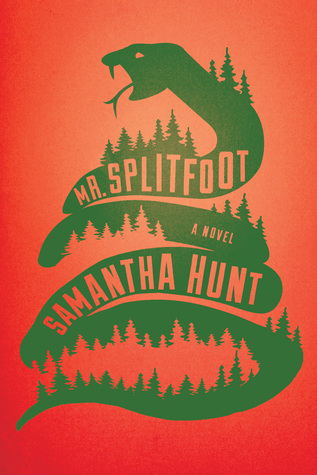
What I’m Reading: Mr Splitfoot

Becky’s Soundbite Review of Mr Splitfoot by Samantha Hunt:
Creepy and compelling, this contemporary Gothic has much to offer a wide range of readers. Ruth and Nat are orphans living in a severely religious and corrupt group home who begin conducting seances to contact the dead or missing parents of their fellow orphans. Many years later, Cora, Ruth’s single and pregnant adult niece awakens to find her Aunt Ruth, who she has not seen in many years, has returned, mute, to lead Cora on a journey across northern NY State on foot.  Where are they headed? Where has Ruth been all these years? The skillfully told dual narratives, move back and forth between the two time frames, compelling readers to join Ruth and Cora, following both the women and the clues from the past into the present.  Plot twists, lyrical language, and a heartbreakingly beautiful ending make this a satisfying read.
Further Appeal Notes: For such a lyrical novel, with sentences that beg to be re-read, and for one with such a focus on the characters-- particularly Ruth and Cora-- this is a surprisingly compelling novel. It could have been much more methodically paced since much of the action in Cora’s storyline involves her and Ruth simply walking, with only Cora talking because in the present storyline, Ruth cannot or will not talk. [Don’t worry, this “or” question is resolved.] But it is not slow at all. Much of this is a result of the well constructed dual storylines. Each separate storyline is intriguing, but it is the frequent switching back and forth that drives the action and keeps readers turning the pages. Readers are compelled forward to find out what in the past is driving the storyline in the present. And rest assured, there is no confusion here because the Ruth of the past and Cora in the present are such unique and strong narrators that you clearly know which storyline and time frame you are in at all times.

This is also a story about a journey, about the limited choices poor kids have, especially poor women. It is a novel about the place, far upstate NY, too.  There is a reverence for the natural beauty of the place, but it is balanced with a sadness about what it is like to live there too.

I cannot stress enough how beautifully this novel ends. It may not be a typical or standard example of a closed ending, but it is resolved beautifully and movingly. Readers who enjoyed the journey will be satisfied.

This is a surprising book in that it is not your typical story in any way; however, I do think it would appeal to a wide range of readers nonetheless. As I mention below, it reminded me greatly of Karen Russell and Wiley Cash, two authors who I would also describe this exact way.

Three Words That Describe This Book: atmospheric, parallel narratives, lyrical

Readalikes: The publisher says Mr Splitfoot is for fans of Aimee Bender and Kelly Link.  I agree with that, but I felt more of a connection to Karen Russell and in particular, Swamplandia! Both are atmospheric and follow young women on the outskirts of “normal society” who are on a journey. They are also equally as lyrical with a strong sense of place [just different places]. They are also offbeat with a slightly mystical or magical element.

Also, I don’t like the idea that a female author can only trigger female author read likes because the first author I thought of when reading Mr Splitfoot was Wiley Cash. Here is a sample of what I said in my review of his debut novel A Land More Kind Than Home:
This is a beautifully wrought story that at every turn gives you more than you expected.  The "plot" involves the killing of a mute child at a prayer "healing" by the creepy preacher mentioned above.  But we know from the first pages that the child will die.  Thus, this novel is not about the murder.  It is about rural communities and the intimate links between the people who live there.  And it is about the setting.  In the end this is a story where a drama unfolds, a conflict which has it roots back a generation from the current murder, and once we reach the last page, everything has changed and yet, at the same time, we are back to the way it always was.
Much of the commentary here about the appeal of this story also holds true for Hunt’s novel.

Finally, try Delicious Foods by James Hannaham. How the stories are told with a manipulated time frame, the overall ominous tone, and the theme of lives lived on the edges of “normal" society, are all shared here.

Please click on the links for both the authors and the specific titles in this readalike section to find many more readalike options.