RA FOR ALL...THE ROAD SHOW!

I can come to your library, book club meeting, or conference to talk about how to help your readers find their next good read. Click here for more information including RA for All's EDI Statement and info about WHY I LOVE HORROR.
Showing posts sorted by relevance for query baseball. Sort by date Show all posts

Friday, October 15, 2010

Baseball Reads

It is that time of year again. The championship series for baseball begin tonight.

Living in Chicagoland for the past 13 years I have noticed that people here are very good at ignoring baseball's existence once the playoffs roll around (except for 2005 when the White Sox won the World Series; that year, baseball was all people would talk about). All the sports talk these days is about Da Bears, the Blackhawks and the Bulls. Although I like these teams, I am a Jersey girl who loves her Yankees, and just I love this time of year.

Despite lower television ratings, baseball is still "America's Pastime," and as a result, there is a great literary tradition of baseball fiction.  Personally, I am a big fan of any fiction featuring baseball, so I thought I would share some of my favorites with you.

Take the books I am suggesting, add a few of your own ideas, and set up a small baseball themed display at your library to coincide with the World Series. It will catch the attention of even the most casual babseball fan. The idea is to play off (pun intended) what is going on in the world when you are displaying books. Your patrons like that what they have been hearing about in the media, or what has been on their mind, is reflected in the books you are highlighting. It shows them we care.

So here are some of my personal favorites in baseball fiction. This is by no means a comprehensive list. And, I cannot even begin to scratch the surface for nonfiction, but at least when it comes to assembling nonfiction for a display, you can gather them all by call number quite easily. Please post a comment to add your own baseball fiction suggestions too.
  • I love W.P. Kinsella. Many of you may know his book Shoeless Joe from which the film Field of Dreams was adapted.  But my personal favorite is The Iowa Baseball Confederacy in which the Cubs play a game against a team of amateurs, a game which may have never ended.
  • Another classic is The Universal Baseball Association, Inc., J. Henry Waugh, Prop. by Robert Coover.  This cult favorite is a must read for both baseball fans and anyone who plays fantasy sports (I am both).  Here Henry creates an elaborate single-player, 8 team baseball league, using dice to control the players and teams.  As he gets more involved with his "game," Henry loses touch with his real life. It is a haunting and comic story.
  • Steven King loves baseball too. The good news for non-horror readers is that King's baseball books are not in that genre.  Try this year's novella, Blockade Billy or the wonderfully haunting Girl Who Loved Tom Gordon, which is one of my go-to titles for someone who wants a "good read" but cannot bear to be more specific.
  • If you have never read The Natural by Bernard Malamud (and no, watching the movie does not count), now is the perfect time of year to check it out. It is the story of a past his prime baseball player, who, when he finally gets his chance on a big stage, shines! Malamud is a wonderful storyteller. If you have only read The Natural, try something else by him.
  • In Summerland, Michael Chabon has created a young adult, fantasy for baseball fans of all ages. Set on a Washingotn State island, a new resident who is a ball bad player, gets recruited to play  baseball, in games that they need to win in order to save the world.
  • Pete Hamill often includes babseball in his historical novles about immigrants in New York. It makes perfect sense since baseball, and Americaare so intrinsically linked in our national consciousness.  Snow in August has the most blatant baseball storyline, as it is set against the summer that Jackie Robinson came to the Brooklyn Dodgers, and tells the story of how a young Irish boy and a Rabbi bond over the game.
  • The Housekeeper and the Professor by Yoko Ogawa is a book I have talked about on this blog before. The story is about a man whose memory only lasts 80 minutes, but one thing he can remember is baseball statistics. This novel is set in Japan and has a moving and memorable scene where the main characters all go to a baseball game for the first time. Even readers like me who have been to dozens of professional baseball games will be moved by this scene. It will bring back memories of your first time too.
  • Many years ago I had fun reading, Castro's Curveball by Tim Wendel.  This is not a great work of literature, but it is a fun story for baseball fans. Castro's Curveball imagines what Fidel Castro's baseball career could have been like through the eyes of an old American who played with him.
  • Philip Roth's The Great American Novel, is not one of his best known works, but it is a satirical novel which takes a very un-nostalgic look at baseball.
  • Underworld by Don DeLillo is one of my all-time favorite books and the entire thing hinges on on baseball. As the novel opens it is October 3, 1951 and at the Polo Grounds, Bobby Thomson hits “the shot heard round the world,” while half way around the world, the Soviets test their first atomic bomb.  The story then jumps to 1992 in the American desert where Nick Shay, a waste analyst who now owns that famous baseball, reunites with a former lover, Kara Sax.  DeLillo uses the two stories that of the fate of the ball, told from beginning to end, and that of Shay and Sax, told from the end to the beginning, interweaving real historical characters, to create a web of interconnected experiences that recounts the shared experience of all Americans in Cold War America.
  • Play For A Kingdom by Thomas Dyja brings together two of my favorite fictional frames, baseball and the Civil War. Here Union and Confederate soldiers meet before a huge battle to play baseball.

Wednesday, June 29, 2011

BPL Book Discussion: Wait Till Next Year

WAIT TILL NEXT YEAR: A MEMOIRWell, due to part one of the installation of our new chiller at the BPL, book club met a week late.  This month we all read historian and numerous award-winning author Doris Kearns Goodwin's light memoir of her childhood growing up in the NY suburbs during the 1950s, Wait Till Next Year.

After appearing as one of the stars of Ken Burns' Baseball documentary talking about her childhood as a Brooklyn Dodger fan (yeah!) and her adulthood as a Red Sox fan (boo!) people were asking her for more.  She was very engaging on the small screen and I have to say her memoir is equally as engaging.

Before we get to the discussion I have a few comments to frame it all for you because the make up of the group did drive this discussion more than others we have had in the last 10.5 years.  This was one of those discussions where I didn't go to one of my prepared questions until we were almost an hour in.  Also, I should note that my ladies are all Goodwin's age, or at the most 10 years older, so they understood the world she was describing because they had lived it, just in Chicago (mostly) rather than NY.

I fell like as the only younger member of the group, I should let you know how I felt so that you don't think that you need to have lived during this era to enjoy this memoir.  I really enjoyed the book.  However, I love baseball and baseball history.  I still prefer to listen to ball games on the radio or go to a game than watch them on TV.  Also, I grew up in the NY area and am a huge Yankees fan.  My Dad grew up in Queens during this era too.  His Dad was a huge Dodger fan (my Dad has the 1955 Championship poster in his home still) and he was a huge Yankees fan in the late 60s. (He was under 10 when the Dodgers moved to LA).  So I was predisposed to liking this memoir based on setting and main subject.

So in terms of appeal, I think you need to have a love for baseball as our National Pastime, a connection to or interest in the 1950s, or a love of memoirs in order to enjoy this book.
  • We began with the liked, disliked, so-so question and all but 2 were an enthusiastic LIKEs!  The two who voted so-so enjoyed her writing and the time period nostalgia, but one has no interest in sports or rooting for teams and the other grew up in Minnesota at that time where they did not have a baseball team so she couldn't get into the rivalry between the Dodgers, Giants, and Yankees. 
  • The 10 who liked it had many reasons.  First they all agreed it was super easy to just imagine the rivalry between the Cubs and Sox of the same era.  In fact, many of them just changed the teams and players names in their heads.  They all talked fondly of scoring games, listening on the radio, going to the ball park, rooting for their team, following every game, and arguing with friends and neighbors who rooted for the other team.  
  • We also talked about the time period.  The participants spent most of the discussion reminiscing with Goodwin.  I brought up the fact that the best memoirs make you recall your own memories, which led one lady to bring out her own list of her memories which this book made her think about.  her list started a longer discussion about all of the great memories this book brought up.  I will not list them all here, but let me say that talk of the era and of life at that time, took up most of our discussion.  It was a fun and dynamic discussion.  It flowed on its own with one participant bringing up a memory and relating it to the book and then another and another.  I had to really do a lot of moderating on Monday, making sure everyone got to have their say.  It was great!
  • One participant felt the book was too light and positive.  She wanted more depth and nuance, knowing what a great and well respected historian Goodwin is.  Another participant who has read and enjoyed Goodwin's heavier books, presented a counterpoint here.  She felt the entire tone of the book was one of nostalgia and adding more negativity, no matter how appropriate, would have spoiled the cohesive tone of the book.
  • We did bring up the few troublesome issues from her childhood:
    • Sick Mother: One participant grew up at the same time with a sick mother.  She said this is how it was.  People did not talk about it or dwell on it, but neighbors just picked up the slack with the kids.  I mentioned how I wanted more depth here, but this participant said as a child, there would not have been more depth for Goodwin.  Yes, looking back she could analyze it, but the memoir is written so that Goodwin is describing how she felt as she experienced her childhood.  This participant felt Goodwin accurately portrayed how it was as it was happening.
    • Polio: Again, I thought Goodwin was sort of flippant about how serious the threat was.  As a mother, those discussions of polio attacking children in a seemingly random pattern with no one knowing how or why it was transmitted was terrifying.  But again, the ladies told me as a kid, you did feel like Goodwin.  You were bummed at not being able to go to the pool or being forced inside on a nice day.  For the parents it was a nightmare, but for the kids, it was a nuisance.  She captured it as they had felt it.
    • The McCarthy Hearings: Probably the most troubling thing Goodwin brings up is living through the McCarthy hearings.  She describes the games her friends all played recreating the hearings that their mothers watched on TV all day, every day for months. They had their own hearings which ended up heated and nasty, much like the ones on TV.  While none of the ladies said they played games like this, they did talk about how scary the hearings were, and how they were all people were talking about at the time.
  • We talked about how much easier it was to have ball players as heroes in the 1950s. First of all, Jackie Robinson was Goodwin's favorite player. A better role model would be hard to find.  We talked about how the people weren't better then, but that the media ignored the bad and focused on the good.  Today, the media looks hard for dirt on any famous person.  We thought that it was still okay for kids to look up to sports figures, but that as parents, we needed to help guide their choices in who they look up to.
  • Goodwin talks about her dual devotions to the Dodgers and the church.  Many of the participants had similar experiences. People talked about meeting kids with different religions, nuns who love baseball, saying lots and lots of prayers before bed, and many of the other things she brings up.
  • We also talked about how unique the 50s were in America.  Things got a bit better every year for all of their families, even those who grew up poorer.  This led to a discussion about the sustainability of that life style and how today's young people may be the first Americans to not do better than their parents in almost a century.
  • There a strong father-daughter relationship theme to this book.  Goodwin and her Dad were very close due to her mother's illness and their shared love of baseball.  This topic, although not discussed specifically, came up frequently and is a huge overriding arc in the memoir.
  • I ended as I always try to with  having people throw out words or phrases to describe the book:
    • memories
    • homespun
    • light
    • baseball
    • relaxing
    • nostalgia
    • comfortable
    • childhood
Readalikes:  There are many directions to take a reader who enjoyed this book.  Next month we are reading another memoir which is a great compliment to Wait Till Next Year, Bill Bryson's memoir of growing up in Iowa during the 1950s, The Life and Times of the Thunderbolt Kid.

For those who want a full account of the history of the era, I would suggest the wonderful The Fifties by the late historian David Halberstram.

Many might want to read more about the Brooklyn Dodgers and Jackie Robinson.  For those readers I would suggest the following books: Jackie Robinson by Arnold Rampersad, Branch Rickey by Jimmy Breslin, and Forever Blue by Michael D'Antonio. Also, don't forget the aforementioned Baseball by Ken Burns and the companion book.

For those who want more memoirs about fathers and daughters, try Swing Low by Miriam Toews.

For novels, I happen to love novels which feature baseball.  Here are some of my suggestions which capture the tone and feel of Goodwin's memoir:
  • Snow in August by Pete Hamil (NY, baseball, religion)
  • The Housekeeper and the Professor by Yoko Ogawa (previous book discussion book, Japan but baseball and scoring it are key, nostalgic and positive tone)
  • Shoeless Joe by W.P. Kinsella (the book on which Field of Dreams was based)
  • Underworld by Don DeLillo (a bit more literary, but begins with "The Shot Heard Round the World" in the Dodgers-Giants game, also this novel tells the history of the second half of the 20th century and readers who also like Goodwin's award winning history titles will really enjoy Underworld)
  • For more, I have this post on Baseball Reads.

Tuesday, March 21, 2017

Advice on Dealing With Difficult Patrons-- The Hyper-Specific Reader

I get a lot of questions about serving specific difficult patrons and while I share my advice with the person asking, the advice often does not make it into the blog. It should. It could help more of you. So I am going to fix that now.

Today will be the first of an as needed series where I offer Advice on Dealing with Difficult Patrons. I will tag all of these posts "serving difficult patrons" so that they can all be indexed together.

If you have a specific difficult patron you would like my FREE advice on how to deal with, contact me with the details. The only rule I have is that I must be able to share the generalities of the question and my advice with the rest of the RA world.

Our first difficult patron is the Hyper-Specific Reader. You know the type. They only want to read a very specific book that may or may not exist. Here are a few I have had in the past:

  • Only books that are “about baseball.” He would read fiction, nonfiction, kids, teen, adult, but it had to be “about baseball. It couldn’t just have baseball in it.
  • Only books set during the time of the Tudors
  • Only books with dragons
  • My books cannot have the word cancer in them. Not just books with a cancer storyline. The word can’t be in there. 
  • Only books from the mystery section....with the mystery sticker. Nothing from our regular fiction section which included many books that could be classified as mystery. And, don’t get me started about the fact that authors like Harlan Coben who started as mystery writers and moved into suspense, but in order to keep his books together we kept them all in the mystery section. She’d read his suspense titles but not other similar authors because they were not in the mystery section.
That is just a small sample from my 15 years at the RA Service desk. But last month when I travelled to South Carolina, this question came up again. The very general hyper-specific patron in question here would only read “antebellum stories set in the south that did NOT focus on slave life.” She was not against stories with slaves in them, she just didn’t want that point of view only.

We talked about titles that stretched her specifics and together the room came up with a few more suggestions. But that is not the point. The point is that eventually, if she stays this rigid, not only will we run out of books that exist within those parameters, but also, the staff will come to resent helping her. Both are equally as bad.

When dealing this hyper specific reader I suggested that together, they make a list of the books that she feels perfectly fit her specific tastes. Then she should also make a list of other books she has enjoyed that do not fit this mold [she had read a few outside her narrow box]. Then I suggested that they go on NoveList together and note the appeal factors that are similar across all of the books. Using the database they could let the computer identify some possible titles.

I really want to stress using a resource with this patron-- together at the desk. She was fairly stubborn and didn’t want the library workers “forcing” her to try something she wouldn’t like-- even though she was asking for their help [people, what are you going to do?]. By allowing the database to identify the titles, the pressure could be off the staff. The choices seem less personal based and more official. We can say, “this is a resource identified suggestion based on your previously enjoyed titles."

The key is to get at least 2 titles outside the hyper specific zone to use as a bridge. The staff in this situation had at least 4 or 5 that they knew of off the top of their heads. You need something to move you a bit out of the corner the patron has boxed herself into before you start.

You can do a version of this to fit the person. So with my baseball guy, we found out that one of the reasons he demanded baseball was that he was reading on his overnight security guard shift and he knew that baseball would keep his interest enough to keep him awake. So instead of struggling for more baseball books, we made a larger list of his interests and found him titles that included those [using NoveList and Goodreads]. As we went on helping him, we were able to find authors who he had enjoyed who also write in a series. Once he found a series he liked, he read them all. That kept his interest which kept him awake and happy.

The point is, we dug deeper together. Often the thing making the patrons so hyper specific and demanding has more to do with their insistence on that type of book. All you have to do is find them 1 book outside their comfort zone that they enjoyed and then they will try another, and another, and then even another. Soon they are miles away from that narrow boxed in corner.

I was just pointing this out to one of my former patrons who I still meet with weekly to help her choose her books. She used to only read James Patterson and Mary Higgins Clark. All other books she read grudgingly while she waited. Now she has found so many more authors across many genres that she is considering taking her name off the automatic holds list for Patterson. We both had a laugh about how a few years ago that would have been a “scandalous” thing to say for her.

One last thing though. It doesn’t always work. Sometimes, you cannot get the person to budge even a centimeter. There is a point where it is okay, with your supervisor's approval, to nicely tell the person that you can no longer help them.  I don't think we talk about this enough. If you have done all you can to match this reader with books and they are unwilling to try your suggestions, you are within your rights to simply allow them to browse alone.

For the record, I have done this with a handful of patrons over the years.

Make it clear that you cannot suggest books that haven’t been written, but that there are thousands of options at your fingertips now, books that she should give a chance. Books that you think she will like despite the fact that they are not exactly what she thinks she needs.

If she is still unwilling to read what you have to offer, then I have shown these people how to use NoveList [if you have it] to help themselves.  Again, you need to okay this with your supervisor.

We love to help readers find the perfect read, but we also cannot create books out of thin air. Don’t let unreasonable expectations make you resent your commitment to public service.

So try my advice on how to convince these hyper-specific readers to try something outside of their strict confines, but if you can’t get them to bite, move on to help the next person.

Tuesday, March 31, 2020

RA for All Flashback: The Hyper-Specific Reader

I have been receiving some questions from library workers who are noticing different behavior from their patrons right now, and one of the questions that keeps popping up is how do we help the extremely specific requests we seem to all be getting in higher numbers, with our limited collection access.

I think one of the reasons we are seeing an uptick in the hyper-specific request is because in this time of uncertainty, a book rec is something people can have more control over. Even my family members are getting way more specific than normal. There are other reasons too, and the whys don't really matter, but dealing with the hyper-specific reader is not always about giving them the exact book they are asking for. Often it is more about listening to them and working together to find a suggestion.

I had remembered answering a question similar to the ones I have been receiving from all of you, so I dug through the archives and found this post from 2017. I have also reposted it in its entirety below.

I also have a few more posts tagged "serving difficult patrons" that you could access.

Finally, if you have an immediate RA Service related question, use the search box for the blog [top left corner]. There are over 3,000 posts here on the blog. I might have already answered your question. I never mind if you contact me, but I have been receiving more inquiries than normal, so I might not be able to get back to you fast enough.

TUESDAY, MARCH 21, 2017

Advice on Dealing With Difficult Patrons-- The Hyper-Specific Reader

I get a lot of questions about serving specific difficult patrons and while I share my advice with the person asking, the advice often does not make it into the blog. It should. It could help more of you. So I am going to fix that now.

Today will be the first of an as needed series where I offer Advice on Dealing with Difficult Patrons. I will tag all of these posts "serving difficult patrons" so that they can all be indexed together.

If you have a specific difficult patron you would like my FREE advice on how to deal with, contact me with the details. The only rule I have is that I must be able to share the generalities of the question and my advice with the rest of the RA world.

Our first difficult patron is the Hyper-Specific Reader. You know the type. They only want to read a very specific book that may or may not exist. Here are a few I have had in the past:

  • Only books that are “about baseball.” He would read fiction, nonfiction, kids, teen, adult, but it had to be “about baseball. It couldn’t just have baseball in it.
  • Only books set during the time of the Tudors
  • Only books with dragons
  • My books cannot have the word cancer in them. Not just books with a cancer storyline. The word can’t be in there. 
  • Only books from the mystery section....with the mystery sticker. Nothing from our regular fiction section which included many books that could be classified as mystery. And, don’t get me started about the fact that authors like Harlan Coben who started as mystery writers and moved into suspense, but in order to keep his books together we kept them all in the mystery section. She’d read his suspense titles but not other similar authors because they were not in the mystery section.
That is just a small sample from my 15 years at the RA Service desk. But last month when I travelled to South Carolina, this question came up again. The very general hyper-specific patron in question here would only read “antebellum stories set in the south that did NOT focus on slave life.” She was not against stories with slaves in them, she just didn’t want that point of view only.

We talked about titles that stretched her specifics and together the room came up with a few more suggestions. But that is not the point. The point is that eventually, if she stays this rigid, not only will we run out of books that exist within those parameters, but also, the staff will come to resent helping her. Both are equally as bad.

When dealing this hyper specific reader I suggested that together, they make a list of the books that she feels perfectly fit her specific tastes. Then she should also make a list of other books she has enjoyed that do not fit this mold [she had read a few outside her narrow box]. Then I suggested that they go on NoveList together and note the appeal factors that are similar across all of the books. Using the database they could let the computer identify some possible titles.

I really want to stress using a resource with this patron-- together at the desk. She was fairly stubborn and didn’t want the library workers “forcing” her to try something she wouldn’t like-- even though she was asking for their help [people, what are you going to do?]. By allowing the database to identify the titles, the pressure could be off the staff. The choices seem less personal based and more official. We can say, “this is a resource identified suggestion based on your previously enjoyed titles."

The key is to get at least 2 titles outside the hyper specific zone to use as a bridge. The staff in this situation had at least 4 or 5 that they knew of off the top of their heads. You need something to move you a bit out of the corner the patron has boxed herself into before you start.

You can do a version of this to fit the person. So with my baseball guy, we found out that one of the reasons he demanded baseball was that he was reading on his overnight security guard shift and he knew that baseball would keep his interest enough to keep him awake. So instead of struggling for more baseball books, we made a larger list of his interests and found him titles that included those [using NoveList and Goodreads]. As we went on helping him, we were able to find authors who he had enjoyed who also write in a series. Once he found a series he liked, he read them all. That kept his interest which kept him awake and happy.

The point is, we dug deeper together. Often the thing making the patrons so hyper specific and demanding has more to do with their insistence on that type of book. All you have to do is find them 1 book outside their comfort zone that they enjoyed and then they will try another, and another, and then even another. Soon they are miles away from that narrow boxed in corner.

I was just pointing this out to one of my former patrons who I still meet with weekly to help her choose her books. She used to only read James Patterson and Mary Higgins Clark. All other books she read grudgingly while she waited. Now she has found so many more authors across many genres that she is considering taking her name off the automatic holds list for Patterson. We both had a laugh about how a few years ago that would have been a “scandalous” thing to say for her.

One last thing though. It doesn’t always work. Sometimes, you cannot get the person to budge even a centimeter. There is a point where it is okay, with your supervisor's approval, to nicely tell the person that you can no longer help them.  I don't think we talk about this enough. If you have done all you can to match this reader with books and they are unwilling to try your suggestions, you are within your rights to simply allow them to browse alone.

For the record, I have done this with a handful of patrons over the years.

Make it clear that you cannot suggest books that haven’t been written, but that there are thousands of options at your fingertips now, books that she should give a chance. Books that you think she will like despite the fact that they are not exactly what she thinks she needs.

If she is still unwilling to read what you have to offer, then I have shown these people how to use NoveList [if you have it] to help themselves.  Again, you need to okay this with your supervisor.

We love to help readers find the perfect read, but we also cannot create books out of thin air. Don’t let unreasonable expectations make you resent your commitment to public service.

So try my advice on how to convince these hyper-specific readers to try something outside of their strict confines, but if you can’t get them to bite, move on to help the next person.

Wednesday, May 28, 2014

What I’m Reading: This Dark Road to Mercy

Way back in February, I read This Dark Road To Mercy by Wiley Cash.  Let me begin by saying I was one of the many LOVERS of Cash’s debut novel, A Land More Kind Than Home.  And, while I did not love TDRTM as much, I still found it to be very good.  [It is hard when ALMKTH was pretty close to perfect. ] I am also struck by how much of what I found appealing about ALMKTH is the same here in TDRTM just to a slightly lesser degree.  If you are new to Wiley Cash, click here for my ALMKTH review.

Here’s the set up for TDRTM. We are in North Carolina.  It’s 1995.  Our narrators are a Easter, a young girl who along with her sister, Ruby, lives in foster care after the death of their mother, Brad Weller, their social worker, and Robert Pruitt, an ex-con with a grudge against Easter’s Dad.

The narration goes back in forth between the three as we follow the story of Wade, Easter’s dead beat, former minor league baseball star Dad, as he tries to get his girls back.  Wade convinces the girls to escape into the night with him.  They go since there only other option is to move to Alaska to live with the grandparents they have never met. Brady and Pruitt are both looking for Wade but each man has different intentions on what they want to do with him once they find him.

Like ALMKTH there is violence and tension here, enough to make more delicate readers uncomfortable.  Let me say, Wade is just a loser, but Pruitt is a bad, bad man, and since he takes his turns telling the story, it can get intense.

Easter was okay to me.  She grew on me, but I never loved her, but I really liked Brady.  And Pruitt was a great villain. The characters drive the action, but overall, I did not inhabit them as I did in ALMKTH. I think if Easter was a bit stronger, I would have LOVED this book.  I am hearing that from other readers too.  Once they get past Easter’s opening chapters and keep going, they really get into the book.

Again the landscape plays a part in the story.  For example, the first time Easter and Ruby see the ocean after years of living so close but never getting there was heartbreakingly beautiful.

This is modern Southern Gothic, psychological suspense that is compellingly paced, but not brisk.  As the pacing begins to drag with one narrator, we switch voices and it starts building again.  Although like other psychological suspense stories, the tension builds and the pacing increases as we race toward the finish. And I loved the climax here.

The most strikingly genius thing about this novel is how Cash uses the 1995 home run record race between Mark McGuire and Sammy Sosa to play with the tone of the novel.  Let me explain.  Like all of us were during the summer of 1995, the characters in the novel are wrapped up in the race for the HR record.  People are giddy over it.  Everyone, everywhere is following it.  The novel’s climax even happens at a Cubs-Cardinals game.  Back in 1995, we were all excited by this.  It made you smile to hear about who hit how many home runs no matter how bad a day you had. Everyone was talking about Sosa and McGuire and their home runs.  It was the lead story on the news every night, all over America.

But that was 1995.  Cash published this book in 2014.  The reader in 2014 can remember back to that innocent age and now knows it was all a sham and a fraud!  The double entendre of feelings-- remembering our pure joy and having the frustration and sadness that it was all because of steroids that it was possible-- adds a unique unsettling quality to the entire book.  It is subtle and brilliant.

Overall, TDRTM is just a little more straight forward than ALMKTH.  The atmosphere is there, but it is not an overriding appeal. The characters are good, but not great. The story is interesting and compelling, but will not haunt you.  However, I am giving it out to readers constantly and they seem to be enjoying it, again, one they get past Easter’s opening and move into Brady.  If they can make it to Pruitt’s first chapters, they are usually hooked.

I myself liked it and would be willing to read Cash’s next book.

Three Words That Describe This Book: psychological suspense, southern gothic, multiple narrators

Readalikes:  Click here for my first round of Cash readalikes, including John Hart who would be your best bet match especially for this novel.  Click here to my review of The Last Child, which is a good suggestion here too.

Specifically with TDRTM, if you want more books about the foster care system, another good option is The Language of Flowers by Vanessa Diffenbaugh. The link is to my report from when our book group read that novel.

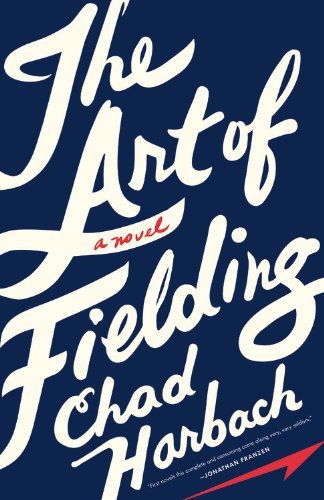
Also, many people will enjoy this book for the large baseball frame.  This happens to be a personal favorite frame of mine and I have blogged about it many times.  Click here to pull up tons of baseball suggestions. I would also specifically suggest The Art of Fielding by Chad Harbach as a readalike for more reasons than just the baseball frame.

For a more traditional psychological suspense involving sisters try Ruth Rendell’s The Water’s Lovely.

Finally, on NoveList I found a perfect "title to title" suggestion, Southern Cross the Dog by Bill Cheng. Here is an excerpt from the reason why: "These richly atmospheric Southern Gothic novels are simultaneously brutal, lyrical, and moving, filled with memorable characters and desperate adventures. Couldnt have said it better myself.

Friday, February 17, 2012

What I'm Reading: The Art of Fielding

Well, while I am making good progress on my New Year's resolution to read 2 new romance authors this year, I am quite far behind on my resolution to keep up on my reviews.  Of the 6 books I have finished reading in 2012 (with 2 more that I have to finish in the next week for work), I have only written 2 reviews so far.  So I am 4 (about to be 6) behind already!!

I will only be getting further behind, so today I am going to buck up and get going.  Also, I have a bunch of boring paperwork to complete today, so writing a review will be a nice procrastination option.

As I mentioned at the end of this post, I saved the consensus best book of 2011 to read to start 2012.  I really did enjoy The Art of Fielding by Chad Harbach, but I feel like it is cheating for me to read and review.  Why?  It had so many elements that I like if only one of them appears in a book, but this one literally had everything but a circus (one of my other favorite frames; click here to see more on that) and if it had been set in NJ instead of WI, I might have exploded with happiness.

Seriously, here is a cross-referenced list of the things I love to see in any book which are all in play in The Art of Fielding:
  • Baseball
  • Liberal Arts College Setting
  • Moby Dick references
  • Ralph Waldo Emerson references (this one is even key to the final dramatic moments)
  • My actual alma matter shows up and is made fun of, but in a fair way.  It made me laugh.
  • Book within a book frame. (The Art of Fielding is a book that the characters in the book refer to often.)
The Art of Fielding also features some of my favorite story telling techniques:
  • Told as a "slice of life"-- The novel is one year in the life of 5 characters. You learn a bit about their life before this pivotal year and nothing about what happens after, but you are wrapped up in every detail of the year in which the book takes place.
  • Told from multiple charcaters points of view.  The story bounces back and forth between 5 protagonists.
  • Interesting but extremely flawed characters.  Each of the 5 protagonists is a good person deep down, but they all have a serious flaw that propels the story along.  In the end they mostly redeem themselves and come to terms with their flaws, but as a reader you are not sure that these flaws are completely overcome.
So all of this being said, I am a bit freaked out by Harbach.  Does he know me? Are we similar people? I don't know the answers here, but I am not going to complain.  That being said, I will again say I might not be the best person to take advice from on this book.  I was predisposed to love it.


Now more general appeal comments.  This is subtle storytelling.  You are meant to dive in and experience this novel.  You live with the characters, get wrapped up in their problems, and come to feel like they are your friends.  They all hit some pretty low points during the course of the book, but manage to pull themselves out (for the most part).

As a result of these low points, there are some darker moments in this novel.  There is one particualrly darkly humorous scene towards the end, but overall, the novel was realistic, thought provoking, bittersweet, and hopeful.

This is not the best book I ever read, but it was extremely well executed (it is hard to believe this is a first novel) and compelling. I was happy to spend a few days immersed in the world of Westish College.  I was sad to finish the book because I so enjoyed my time reading it, but I felt like the ending while open, was satisfying.  All things do not turn out well, nor do all turn out badly.  I will definitely read Harbach's next book.

Notice I  haven't said much about the plot here.  This is on purpose.  The plot itself is not the issue.  How the story is told will determine whether you like it or not.  Plus, this book has been reviewed to death in the last few months, so if you just want a basic plot, go here.

Three Words That Describe This Book: slice of life, multiple points of view, character driven

Readalikes:  The first book I thought of was another one of 2011's best, Swamplandia! because it shares all three of the story telling techniques I mentioned above. Click here for my full review of Swamplandia!.

Many reviewers have called The Art of Fielding Franzen-lite.  I agree completely.  In Harbach's novel the characters are more likable, less annoying, and the story more nuanced. Click here for my review of Freedom by Franzen for more.

The backlist title I most thought of while reading The Art of Fielding was Richard Russo's Straight Man.  The protagonist here is the Chairperson of the English Department at a liberal arts college.  He reminded me so much of the Westish College President who is one of the 5 narrators of The Art of Fielding.  Another good campus life/politics novel is Moo by Jane Smiley.  I have read both the Russo and Smiley, but years before I started this blog. Both are worth a trip to your local library to check out.  Interestingly, both authors are masters at writing quintessentially "American" novels that are critically acclaimed yet accessible. I think Harbach can be placed in their cannon for now.  I hope he stays there and becomes as reliable as these 2 have been over their long careers.

Underworld by Don DeLillo is another suggestion.  It too uses baseball as a frame without being a "baseball novel."  There is a fluctuating point of view in Underworld, but the story is much broader in scope.  In Underwold, the story is that of the last 50 years of the 20th century, while in The Art of Fielding, we are following one academic year.

Monsters of Templeton by Laura Groff could be another suggestion.  From my original review:
Willie Upton returns to her home town of Templeton to recover from a disastrous relationship with her graduate professor. Willie, is a direct descendant (on both sides!?!) of the town's founder. Here Templeton is a stand-in for Cooperstown, NY complete with a James Fenimore Cooper stand-in and a "baseball history museum." But Templeton has something the real Cooperstown does not, a sea-monster, long a part of town folklore, rising to the surface of the lake, dead, in the opening pages of the novel. What follows is a complex novel in which Willie searches through the town's historical documents for the identity of her father. Goff has the dead speak, giving them entire chapters of monologue, and she incorporates some of Cooper's more famous characters into the story.
I think if you are okay with the speculative elements here, the tone, characterizations, and style are very similar.

I mentioned Moby Dick above.  If you feel you did not get the Moby Dick references, a quick look at Nathaniel Phlibrick's compelling and fun Why Read Moby Dick? will clear it all up for you.

Monday, June 25, 2012

Monday Discussion: Sporty Reads

With the Euro Cup moving to the semi-finals, baseball creeping up to its midpoint, and the Olympic Trials, Tour de France. and Wimbledon all beginning this week, I have sporting events on the brain.

I do love the Olympics though.  Every time they come around, winter or summer, our whole family gathers around the TV to watch even the most obscure events.  (Team Handball is one of my husband's favorites).

Anyway, to get ready I thought we could spend today's Monday Discussion talking about our favorite "sports books."  I put the term in quotes because I want you to define what fits.  It can have sports as the main plot, or a sport can simply play a memorable role.  You choose.

Here is a list of some of the books I have reviewed (and enjoyed) which featured sports:

Another one of my all time favorites, which I have read many times, is The Iowa Baseball Confederacy by W.P. Kinsella.

Here are a few other sports related posts I have done on RA for All in the past:
All of these posts include more sports related reading options.  I am sure we will be seeing a lot more lists from other resources once the Olympics get going.

Now it is your turn.  For today's Monday Discussion, let me know your favorite "Sporty Reads."

Click here for past Monday Discussion.

Monday, November 18, 2013

Casey Award for Best Baseball Book of the Year

I had to post this more as a reference for myself because I had no idea this award existed.

The 2013 finalists for the Best Baseball Book of the Year were just announced.  Click here for the list.

I am posting this mostly to help me to help an extremely particular patron who will only read "baseball" books.  Now I have not only this resource to identify winners of this award, but also, the longer nominee lists from this year and year's past. Now I have a whole new collection of possible reading suggestions for him.

[Click here to read my more in depth post from 2011 about how to use award lists as an RA tool.]

But, I am also posting it because if I have a patron [and staff] who will benefit from this list, someone else out there must have a use for it too.

I hope it helps you to help a reader find their next good read.

Friday, February 3, 2012

Football Reads

You all have no choice but to indulge me today since I am a bit preoccupied.  You see, I am a NY Giants fan and the past few weeks have been a whirlwind of emotions.

Knowing it would be tough to concentrate on much else, I have rearranged my work schedule so that I am off work from now until Monday morning.

I have to say, living in Chicago, it is fun to be the only Giants fan that my friends know.  (Although I have made a few calls back to NJ this week.)  Everyone is so excited for me.  I appreciate the support.  But right now, I need to distract myself to get through the next couple of days.  I have a feeling I will have the cleanest house on the block come kick-off time Sunday night.

Today I have a few football related reads to help you to enjoy the big game.  Now, I know that the list of football reads is nowhere near as long as that for baseball books.  In fact, although I enjoy football slightly more than baseball, overall, I much prefer baseball framed fiction and nonfiction.  That is not to say that there aren't great football books though.

I should begin with my fantasy football team, which is named, The Paper Lions after the book by the same name by the late, great George Plimpton.  From the Amazon review:
Through the course of a long and distinguished career in letters, George Plimpton has crafted an art form from participatory journalism, and Paper Lion is his big touchdown. In the mid-'60s, Plimpton joined the Detroit Lions at their preseason camp as a 36-year-old rookie quarterback wannabe, and stuck with the club through an intra-squad game before the paying public a month later. What resulted is one of the funniest and most insightful books ever written on the game; 30 years later it remains a major model of what was then blossoming into New Journalism. Plimpton's breezy style wonderfully captures the pressures and tensions rookies confront in trying to make it, the hijinks that pervade the atmosphere when 60 high-strung guys are forced to live together in close quarters, and the host of rites and rituals with which football loves to coat itself. Of course, Plimpton didn't make it as a football hero; he barely accounts himself with dignity on the field, which is just as well. You don't have to be a lion when you've got a typewriter that can roar.
This really is a classic piece of sports writing, period.  If it is just great sportswriting you are looking for, I would also suggest The Best American Sport Writing of the Century edited by another late, great, David Halberstam.

In the spirit of Plimpton, journalist Stefan Fatsis tried out to be a kicker for the Denver Broncos a handful of years ago.  The resulting book, A Few Seconds of Panic was quite enjoyable.  Click here and scroll down to read my review from August, 2008.

A few other football themed reads I would recommend are:

I'll be back on Monday, win lose or draw. Go Big Blue!

Friday, September 5, 2014

Are You Ready For Some Football?

People who know me, know that I love football season.  I play fantasy football, am in 4 different pools, am a die-hard NY Giants fan, and because I love football, but live in Chicago, I am a Bears Season Ticket Owner.

I know I am not alone. The NFL is by far the most watched sports league in America.  It is also the biggest money maker, and it generates a lot of gambling revenue.

So, make sure you have some football themed displays ready to go this weekend.

I will admit, it is a bit harder to find great literary options for football books than let’s say, baseball books.  In fact, I happen to prefer books about baseball to books about football [which is weird since I like football more,  but hey, it’s what I like].

That being said, why not take a different angle on the whole football display thing.  Here are a ideas:

Enjoy the start of the NFL season. And remember, whether or not you like football, your patrons are watching it, so remember their interests when making displays.

Monday, March 14, 2016

What I’m Reading: Children of the Dark

Today I have an exciting review to share with you.  This is a book every public library needs to buy. I am not kidding here. If you have readers who enjoy classic Stephen King-- which is ALL of you-- buy this book. Here is the draft of my star review which appears in the 3/15/16 issue of Booklist

Children of the Dark.
Janz, Jonathan (author).
Mar. 2016. 398p. Sinister Grin, paperback, $16  (9781944044145)
REVIEW. First published March 15, 2016 (Booklist).
In the first lines of this chilling novel Will lets us know that he has a terrifying story to tell, “The week I saw seventeen people die didn’t begin with blood, monsters, or a sadistic serial killer. It all began with a baseball game.” And so, we readers wait, the tension builds relentlessly throughout the book, and all of those terrible things do eventually come to pass in perfect horror fashion. But first we are settled into Will’s life in small town Indiana. A local baseball star, he is also poor, with a drug addicted, single mom, and a six year old sister whom he adores. Soon this unlikely hero will lead the entire community into a battle for their lives. The strong narrative voice, a recently awoken ancient evil, and a terrifying serial killer with surprisingly strong ties to Will combine forces to deliver a story with an old school horror feel that is in no way derivative. Heart-pounding action, well developed characters (both good and evil), and just the right amount of gore drive this fast paced story to its unsettling conclusion. This is the perfect book for those who love classic Stephen King. Think Stand by Me meets Something Wicked This Way Comes with a generous helping of the pulp sensibility of Brian Keene and you have Janz, a horror storyteller on the rise.
I read a lot of horror books, and when it comes to newer voices, I always go in with a skeptical eye, meaning I was predisposed to not being impressed here. That fact makes how much I was blown away by this novel even more impressive. Janz has been receiving praise in the horror community for about a year, but now is the time for the wider world to start reading him.

Three Words That Describe This Book: strong narrative voice, well developed characters, awesome tension

Readalikes: As I said above, classic Stephen King and the Bradbury coming of age, small midwest town, horror classic Something Wicked This Way Comes are great options. But there is a bit of the more modern pulp mastery of a writer like Brian Keene here too.

Other books Children of the Dark reminded me of (with links to reviews) are:
All three of these critically acclaimed horror novels have strong a narrative voice, a coming of age theme, and wonder characterization, just like Janz’s novel.

This book comes out tomorrow. GO ORDER IT NOW.

Monday, June 9, 2014

Monday Discussion: What Three Books?

Today’s Monday Discussion is based on an old question that has circulated around books people on the Internet many times before today.  The question is, “What 3 books define you?”

Why am I finally posing the question today?  Well, I have wanted to tackle this question here on the Monday Discussion for a while now, but I also knew that would mean I would have to accept the challenge for myself.  Every time I tried to think about picking 3 books for myself, my head would start hurting.  How could I do it? Only three books!?! I could never whittle it down.

And then, late last week, I had an epiphany.  Well, epiphany is a strong word.  It was more of a moment when I eyes told my brain, “Hey you, brain, stop over thinking this and look at the 3 books you have permanently stacked separately from all your other books, placed in a prominent location in your living room, with your picture of yourself receiving your library degree placed on top of them.”

Yeah, for someone who is supped to be smart, I can be an idiot some times.  All this hand wringing and I had already implicitly made the choice years ago. And, once I had placed the books there 10 years ago, I have never changed which three books they were.  So over the last few days, I turned my attention away from which books I would choose to why I had chosen those three.

It turns out, my reasons are tied to both what is contained within the pages of the books themselves AND to when I read them.

Book 1: Master and Margarita by Mikhail Bulgakov. Why? Although I was an American Studies major in college, I some how unofficially minored in Russian studies too.  One of my favorite classes was on the literature of the Soviet era, but instead of the approved Soviet books, we read the novels and stories that were the true great 20th Century Russian literature, but were officially banned by the government and now allowed to be published in a post-Soviet world.  Of all of these works, Bulgakov’s Master and Margarita was the best (IMO).  It is the 1 novel that defines all that I loved about my college and the classes I took while there.  It was my most memorable class, and since it was a small discussion class all about literature, looking back, the class and that novel in particular,  can probably be pointed to as the first tangible sign of my eventual career as a RA librarian. And, the novel itself showed me how much I love that type of book [see Book 2 description or any of these posts for more on that], setting the stage for my adult personal reading preferences. Here is the link to the other times I have mentioned my love for this novel on this blog.

Book 2: The Giant’s House by Elizabeth McCracken. Why? This one is easy, it a perfect Becky book-- odd, interesting, character driven, macabre, and all of it told in a quirky, slightly askew way.  AND the main character is a librarian.  Nuff said. I also clearly remember seeing McCracken speak at PrinterRow Lit Fest back in the summer of 1996, reading an excerpt from this novel, after she was named one the the best Young American Novelists in Granta 54.  I was captivated by her (even more than Sherman Alexie who was also there and great), but my then boyfriend [now husband] and I were also beginning the final plans for the rest of our life together that summer.  By the next summer, we would be engaged and I would officially move to Chicago.

Book 3: Underworld by Don DeLillo. Why? Well, I have gone on record on this blog many times saying this is one of my all-time favorite books. As I have written here
It is October 3, 1951 and at the Polo Grounds, Bobby Thomson hits “the shot heard round the world,” while half way around the world, the Soviets test their first atomic bomb.  The story then jumps to 1992 in the American desert where Nick Shay, a waste analyst who now owns that famous baseball, reunites with a former lover, Kara Sax.  DeLillo uses the two stories that of the fate of the ball, told from beginning to end and that of Shay and Sax, told from the end to the beginning, interweaving real historical characters, to create a web of interconnected experiences that recounts the shared experience of all Americans in Cold War America.
I love this novel because it has a baseball frame, because of the interesting double story lines told in two different directions (one in a linear time line and one in a backward time line), and finally, because of what these stylistic choices reveal about the history of 20th Century America [again, remember I was an Am Studs major].  But back to when I read it.  I lugged this 800+ paged hardcover on the EL every day during a hot summer when I was a newly engage, recent college graduate, and had my first real Library job (as an ILL runner for a law firm library). I felt like such a grown-up, reading the hot critically acclaimed novel of the moment in my high-rise office’s lunch room as I looked out over Lake Michigan.  I also went to the Chicago Public Library to see DeLillo read from the novel  that summer AND I waited in line to have my copy signed!

So there are my 3 books.  Do I think these 3 books define the whole complexity of me? No, not even close.  But do I think they open a window onto who I am at this point in my life? Yes.

So for today’s Monday Discussion, join me and take the 3 book challenge.  Pick three books that get to the heart of who you are now or who you were at another point in your life or maybe even who you want to become.  If you feel like it is too hard, try looking for clues around you like I did. What books do you already keep close? Don’t be overwhelmed by the question, as I thought I was.  It is much easier than you think. As a book lover, somewhere inside of you, you already know the answer. Today, let it out.

For past Monday Discussions, click here.

Sunday, March 1, 2009

What I'm Reading: February 2009

Even though it was a short month, I still have five books I want to share.

Olive Kitteridge by Elizabeth Strout made it onto many best lists for 2008. After hearing Melissa Bank talk about how much she loved it on NPR, I put my name on the reserves list at BPL. Although I figured I would like this novel-in-stories after reading many reviews, it was Banks' personal reflection on her experience reading Strout's book that really drew me to it.

Olive Kitteridge is the story of the eponymous woman. She is a retired middle school teacher in a small town in coastal Maine. Olive has a husband and one distant son, she is crotchety and probably suffers from untreated depression. Sounds like fun, huh? It is though because what makes this story so engrossing, goes way beyond who Olive is. Strout's choice to reveal Olive through connected stories, all told from different points of view (including Olive's) gives the reader a unique experience. We learn about Olive, her family, and her town. We get intimate portraits of many of the inhabitants of Crosby, Maine. And although Olive is an abrasive woman, at the conclusion of the 13th story, the reader sees her finally moving toward an understanding of herself and what her behavior means to those around her.

Readers who enjoyed the "novel-in-stories" frame of Olive Kitteridge may also enjoy Joann Kobin's Woman Made of Sand which details the life of a husband and wife and their children through interconnected stories or Melissa Bank's own novel made of up interrelated stories showing one woman's path to independence, The Girl's Guide to Hunting and Fishing.

There are some readers who may enjoy the message of Olive Kitteridge but are turned off by the "novel-in-stories" format. For those readers, I would suggest The Corrections by Jonathan Franzen which recounts, in much more detail than Strout's work, a dysfunctional family struggling to have one last Christmas together.

Finally, some readers may want more information on stroke victims and/or depression after reading this novel, so I would suggest these two basic primers available easily in my library system: 100 Questions and Answers About Stroke by Kinan K. Hreib and The Mindful Way Through Depression: Freeing Yourself From Chronic Unhappiness by Mark Williams.

This month I also picked up the graphic novel, Castle Waiting by Linda Medley. This volume is a collection of comics which begins with a retelling of Sleeping Beauty and evolves into a modern fable about an abandoned castle and its eccentric inhabitants. Many reviews say that this work is a "feminist fairy tale." I don't know if I agree, but it does use the fairy tale format to tell the story of strong, independent women who do not need to be saved, instead saving themselves with the help of wonderful friends. I was completely engrossed by this graphic novel and could not put it down for the few hours it took me to read it.

I do have to warn readers though that although the ending resolves the major plot points, overall, the end has an very open feel. I still had many questions about the characters and situations that were evolving throughout the book. Some readers may be turned off by this. But on the plus side, this graphic novel is completely acceptable for adults and young adults.

Jane Yolen wrote a wonderful introduction in my edition of Castle Waiting, and I would highly suggest any of her novels to readers who enjoyed this graphic novel. Try Yolen's own unique retelling of Sleeping Beauty as a holocaust survivor's tale in Briar Rose. I also thought of Robin McKinley's numerous retold fairy tale novels as I was reading Medley's book. Try Rose Daughter, McKinley's retelling of Beauty and the Beast. I also really like Just Ella, an after-the-happily-ever-after retelling of Cinderella by Margaret Peterson Haddix. Finally, don't forget about The Princess Bride either the movie or the novel by William Goldman.

In terms of other graphic novels which I would suggest to readers of Castle Waiting there is the popular Bone series by Jeff Smith beginning with Out From Boneville or Fables: 1001 Nights of Snowfall by Bill Willingham which according to NoveList, "(P)resents the back stories of storybook and nursery rhyme characters who live side-by-side with humans."

In keeping with the speculative fiction theme, I also read the highly acclaimed and award winning horror novel, Sharp Teeth by Toby Barlow. And, like Olive Kitteridge, Sharp Teeth has an interesting style; it is a novel-in-verse. Barlow's novel is an inventive mix of horror, traditional noir, and epic poetry, all rolled into one entertaining, but bloody novel. Make no mistake, this is first and foremost a werewolf story, so there is plenty of sex and gore, but it is still fine for Young Adults as none of it is too graphic. In fact, Sharp Teeth won a 2008 Alex Award for best adult fiction to suggest for teens.


The story goes that in the seedy underbelly of LA there are three competing packs of werewolves fighting for supremacy and seeking revenge for past injustices. Connecting the packs and their separate, yet converging story lines, is Detective Peabody, who is investigating some suspicious murders which are somehow connected to dogs. The free verse is unsettling at first, but ultimately it enhances the chaos of the plot. As someone who reads and writes about a lot of horror, I appreciated this novel's originality.

There are many werewolf stories, but two that are the most like Sharp Teeth in having a darker, less romantic tone, are Ravenous by Ray Garton, which also takes place in California and puts a modern spin on the legend of the werewolf or Fool Moon by Jim Butcher which takes place in Chicago and has both werewolves and investigative elements. Also, those who enjoy this type of "neo-horror" which spins a new urban riff on the old horror legends, you cannot miss Christopher Moore. Try You Suck, which is a modern vampire tale.

Sharp Teeth is as much about forlorn and seedy L.A. is as it is about werewolves; so I would also suggest the Harry Bosch mystery novels of Michael Connelly (The first is The Black Echo). Connelly's LA is a forlorn city where people go in search of their dreams, only to have them violently squashed.

For those who like their supernatural beings a little more docile, I also listened to Laura Goff's Gothic novel The Monsters of Templeton. Willie Upton returns to her home town of Templeton to recover from a disastrous relationship with her graduate professor. Willie, is a direct descendant (on both sides!?!) of the town's founder. Here Templeton is a stand-in for Cooperstown, NY complete with a James Fenimore Cooper stand-in and a "baseball history museum." But Templeton has something the real Cooperstown does not, a sea-monster, long a part of town folklore, rising to the surface of the lake, dead, in the opening pages of the novel. What follows is a complex novel in which Willie searches through the town's historical documents for the identity of her father. Goff has the dead speak, giving them entire chapters of monologue, and she incorporates some of Cooper's more famous characters into the story.


The Monsters of Templeton is a modern take on an old fashioned Gothic novel. There are ghosts, monsters, and dark family secrets, but this is not a horror novel, as the publisher has tried to market it. This is literary fiction with speculative elements. The "monsters" are there to enhance the story, they are never threatening.

Readers of this novel may want to read some of Cooper's novels and/or histories of the Baseball Hall of Fame. But in terms of readalikes matched by the overall appeal of The Monsters of Templeton, I would suggest 3 novels: The Thirteenth Tale by Diane Setterfield which is a Gothic novel that also recounts a twisted family history (click here to see my take on this novel); Special Topics in Calamity Physics by Marisha Pessl in which a Yale Freshman (with a narrative voice eerily similar to Willie's) recounts her life history as if it were a class in Western Literature including her interesting family history and the death of a high school teacher (again, click here to see my take); and The Stolen Child by Keith Donohue which is a magical tale of a 7 year-old who is kidnapped by a pack hobgoblins to be replaced by one of them. It is the story of the two boys' experiences and their concurrent struggle to find where they came from.

Finally, I also listened to Jonathan Tropper's How to Talk to a Widower this month. This is the story of 29 year-old Doug, whose life has stood still in the two years since his wife died in a plane crash. The novel concerns how Doug finally begins to rejoin the world as a fully functioning human being, but it is not easy. This book is humorous and serious. Doug must deal with the anger and disappointment of his dead wife's teenager son, his sister's marriage to a guy she met at his wife's funeral, his stroke victim dad, and wacky twin sister. He has to accept a future in which his happiness could someday become a direct result of his wife's death.

Tropper's novel is most similar to anything by Jennifer Weiner, especially Certain Girls (which I read in April 2008). Weiner deals with many of the same issues using a combination of humor and seriousness. Even though Tropper's tone and storyline is reminiscent of Weiner's, many male readers may be turned off by her novel's pastel colored covers. For these readers I would suggest Tony Parson's trilogy of novels beginning with Man and Boy. Here after the protagonist has a one-night stand, his wife leaves him and their four-year-old son for a new job in Japan. Like Doug, the protagonist here is alternately wry and sad, as he moves forward with his life.

Finally, for those that were interested in a novel that looks at the grieving process of a young widow with humor and seriousness there is Lolly Winston's Good Grief, as well as this extensive list of nonfiction for those left widowed at a young age.