RA FOR ALL...THE ROAD SHOW!

I can come to your library, book club meeting, or conference to talk about how to help your readers find their next good read. Click here for more information including RA for All's EDI Statement and info about WHY I LOVE HORROR.
Showing posts sorted by relevance for query a land more kind than home. Sort by date Show all posts

Friday, September 14, 2012

What I'm Reading: A Land More Kind Than Home

Yesterday, I reminded you about the Browser's Corner, and working on my review for this book is why it was in the front of my brain.  Let me explain. At our May 29th meeting of the Book Lover's Club Alena said this about A Land More Kind Than Home by Wiley Cash:
"This is a debut novel by a southern writer.  This book got a rare five stars from me.  It is about a creepy preacher man in the North Carolina mountains who handles snakes.  Of course he is crooked but no one can prove it.  You have these ugly horrible people and this gorgeous writing.  The action is in 48 hours.  It is not pleasant; there is no hero, there is killing, death and destruction.  But the whole thing ends the way it should end.  Cash is a writer to watch.  I love Southern fiction and religious extremism as a background to novels.  A down and dirty book that has writing that elevates it."
When the Book Lover's Club meets on the last Tuesday of odd numbered months, I take notes on what the participants have to say about the book they have come to share.  We then post the notes on the Browser's Corner, here.  These notes serve as an annotated reading list of patron picks for both the members of the group to go back and look at, and for any one to peruse.  The Book Lover's Club notes on their own are a fabulous RA tool, and they are just one section of The Browser's Corner.

Needless to say, after that description by Alena, I put the book on hold for myself the next day, got it within a week, and finished it right away.  I have to agree with everything she said.

This is a beautifully wrought story that at every turn gives you more than you expected.  The "plot" involves the killing of a mute child at a prayer "healing" by the creepy preacher mentioned above.  But we know from the first pages that the child will die.  Thus, this novel is not about the murder.  It is about rural communities and the intimate links between the people who live there.  And it is about the setting.  In the end this is a story where a drama unfolds, a conflict which has it roots back a generation from the current murder, and once we reach the last page, everything has changed and yet, at the same time, we are back to the way it always was.

That is the general review.  Here are some specific things I want to point out about the appeal of this novel.  I would classify this book as psychological suspense meets Souther Gothic.

First let's look at its psychological suspense aspects. Terrible stuff happens, and we see it unfold from the point of view of the murdered boy's younger brother, the female town elder/midwife [she is the moral center of this community], and its current Sheriff.  The story is bleak and atmospheric. The tension is thick, and I was on the edge of my chair turning the pages with trepidation both wanting, and not wanting, to know what would happen next. It is intricately plotted, with layers overlapping and time frames shifting, but the style adds to the uneasy atmosphere and provides key details to the story.  But again, it is not straight suspense or mystery because the investigation is not part of the story.  The reader knows what happened and why; the murderer is never in question.  The questions come from how people will react.

Second, and probably even more key to whether or not someone will like this novel is its deep roots into the Southern Gothic tradition.  This is a lyrically written novel in which the setting [North Carolina hill country] is a character.  Cash describes the tough landscape and its weathered people, but with an obvious affection.  His love for the place is evident despite the bleakness of the story.

Another key thing in A Land More Kind Than Home is the characterization.  The setting and characters go hand in hand.  Without careful construction of fleshed out characters whose motivations, history, and present situations we truly understand, Cash's carefully constructed novel falls flat.

A Land More Kind Than Home is a novel you experience.  While there is not fast-paced action, the novel's contradiction of the beautiful language with the horrible actions compelled me to stay in my seat and keep reading the pages.  While technically I would classify the novel as leisurely paced, I was so enchanted by the world Cash created that I read it in 2 sittings.

I can't wait to read Cash's second novel.

Three Words That Describe This Book: lyrical, mutliple points of view, atmospheric

Readalike:  Wiley Cash's novel is everything people always claim  John Hart is.  Hart doesn't do it for me as you can see here, but many people do enjoy Hart's North Carolina set suspense novels, so I think he is a good suggestions option for some readers.

But the author Cash most reminds me of is the great Joyce Carol Oates.  Of course, Cash has 1 novel and Oates is one of our greatest living American writers, but I see a lot of Oates in Cash.  A good similar read here would be The Falls.

The Cove by Ron Rash which also came out this spring, is a suspense story which hinges on its North Carolina setting and is probably as close to perfect a match as you could get here.  At the same May 29, 2012 Book Lover's Club, Marilyn had this to say about The Cove:
"I was immediately caught by the cover - a stream with wooded hills on both sides and the back of a woman with long hair wading in the water.  There is a brief introduction by the author which says that during WWI Germans in America were taken to internment camps. It is set in the backwoods of North Carolina.  It starts in the 1930s with a man who is doing a land survey.  He is from out of town and not feeling very welcome.  He finds an abandoned well and pulls out a skull.  Flash back to 1918 where a young sister and brother are trying to run their farm after their parents die.  The sister helps a man who has been stung by wasps and she finds a note in his pocket that says I am a mute and trying to get to New York and that is all I will say…"
Cold Mountain by Charles Frazier shares the southern setting, lyrical language, and vivid characterizations with A Land More Kind Than Home. They also share a shifting point of view and a storyline in which characters must come terms with the difficulty of their life situation.

A suggestion that is a little more off the beaten path would be Alden Bell's The Reapers Are the Angels. Like Cash's novel, Bell's is also a psychological suspense story merged with a Southern Gothic feel, only in Bell's novel, the characters inhabit a world where they has been a zombie apocalypse.  Take out the zombies though, and they are remarkably similar stories.

And for a cross format watch alike, the entire time I was reading A Land More Kind Than Home, it kept reminding me of the HBO series Carnivale from the early 2000s.  Both have weird preachers and an atmospheric, odd, bleak, yet beautiful story driven by psychological suspense, setting, and characters.  Go seek out the DVDs for the series if you liked this novel.

Friday, September 26, 2014

BPL Book Discussion: A Land More Kind Than Home

Way back on 9/15, our group met to discuss A Land More Kind Than Home by Wiley Cash.

I read, loved, and wrote about this novel back in 2012, so you can click through for a preview.

But to keep this post standard with the other book discussion reports, here is the publisher's summary:
For a curious boy like Jess Hall, growing up in Marshall means trouble when you get caught spying on grown-ups.  
Adventurous and precocious, Jess is protective of his older brother, Christopher, a mute whom everyone calls Stump. Though their mother has warned them not to snoop, Stump can't help sneaking a look at something he's not supposed to—an act that will have repercussions. It's a wrenching event that thrusts Jess into an adulthood for which he's not prepared. He now knows that a new understanding can bring not only danger and evil—but also the possibility of freedom and deliverance.  
Told by resonant and evocative characters, A Land More Kind Than Home is a haunting tale of courage in the face of cruelty and the power of love to overcome the darkness that lives in us all.
Since I'm already late here, let's get right into the discussion:
  • You know how it all begins…we had liked 10, disliked 0, so-so 1
  • Comments for the so-so person:
    • I didn’t like the essence of the story. I was waiting for justice to be served, but that was not the point. I had to get over that.
  • The liked that people couldn’t stop with the comments, which was great for me because these initial comments helped me to guide the rest of the discussion. Here are some of those first thoughts:
    • The first page got me and I couldn’t stop reading.
    • That pastor was evil personified; it was great!
    • I loved the 3 points of view to tell the story.
    • I loved the writing and language specifically
    • I loved the characters
    • Stump and Jess’ relationship was so real.
  • Question— Why did the author choose to tell the story with 3 points of view and why those 3 povs?
    • We needed Jess.  This is a very adult story; the adults drive the action; the history between Clem and Jimmy is complicated; the true story here goes back a long time; a kid pov is needed.  Like us, Jess is looking in on the story with a pov that is innocent and naive.  We need Jess to be us, the reader.
    • We needed Clem because he is “The Law” and Addie is the common sense and historical perspective.  She is also the only one who is not intimately involved in the deaths here.
    • I usually hate when the pov switches a lot, but Cash made it clear.  He marks when a new speaker takes over and gives them a few chapters so we get in their groove.
    • I saw it like a triangle with Jess as the point at the top. He is the most precarious.  Clem and Addie’s points make the base. [ed note: nicely done]
    • I also saw the 3 narrators as representing the 3 different generations present in the story: Addie is the long view, Clem is 25 years in town, and Jess is 9.
  • Question— Although we were happy with who got to tell this novel, whose point of view did you not get, but desperately wanted?
    • Julie! What motivated her? Someone else yelled, “Explain yourself mom!”  Many people expressed that although their first instinct is to want Julie to have a chance to tell us why she made the choices she did, the story is better because we don’t know.
    • Jimmy. He seems like a better man than the abusive, drunk father he was to Ben. We only heard from Clem about how Jimmy was in the past, but never saw it. It would have been nice to hear from him about his transformation; or did he not have a transformation.
    • When we were petering out I mentioned to the group that I was surprised that no one said they wanted to hear from Pastor Chambliss.  Someone put it nicely by saying that he was another example of how charlatans can pull people in, but I did not want to know more about him than that.  Ick.
  • Question: Why did Cash choose to tell this story in such an out of order fashion with 3 narrators?
    • I love that the way he tells the story underlies the fact that no one can ever understand the “true story” of anything.
    • No one person can tell a complicated story
    • Interestingly, the action in this story’s present only takes place over the space of a week, but the novel and the way it is told brings us back decades and let’s us get to the root of the problems fueling the action.
    • I usually hate back and forth stories, yet here I didn’t notice, or I noticed but didn’t mind.  It was all so fluid and necessary for the way he wrote the novel.
    • It is obvious he comes from a family of storytellers (said by someone who had the paperback with an interview with Cash). His easy way with crafting a story comes through here.
  • Question: The title comes from an epigraph at the start of the novel. So let’s talk title and epigraph.
    • I got chills when I went back and re-read the epigraph after finishing the novel.  Many times the epigraphs never make sense to me, either before or after I read the book.  Not this one. It was perfect.
    • The epigram is about a person not wanting to come back home. Coming home is fraught with problems for all of the characters here.
    • The title- A Land More Kind Than Home— the place they are, Marshall, NC is not a kind place. It is, and seems to always have been, a tough place. They will go somewhere better when they die. Talk of heaven being better comes up a few times.
    • On a literal level, their lives were hard.  Addie’s personal biography broke our hearts. The environment is hard too.
    • There were many descriptions of the land and the topography that together paint a picture of a rough place to live.
    • The title spoke to me of hope. Even though life is tough, if you believe there is hope. If you have faith, there is hope.
    • Even the ending is like this.  It is a tough ending, people die, but their is a sense of hope that the remaining characters will move forward.  Even the church is going back to being a positive place, no longer a secretive church.
  • Question: What is Jess had told the truth about it being him— not Stump— who they heard speak at the church meeting earlier? What if he shared the information about his mother and the pastor too?
    • We cannot underestimate the lure of Chambliss. It was not the entire town who he held under his spell, and behind the newspaper covered windows of the church, but there were many who needed to fill an emptiness inside of them.
    • Telling the truth would not have changed Julie. She was too far under the spell.
    • Besides, who would he tell? He had no one who would have listened to him.
  • We talked about the ending at length and although I am trying hard not to give too many spoilers, there were some excellent points brought up by the group, points that are worth sharing.
    • We talked about specific lines and situations throughout the novel that foreshadowed the final showdown between Chambliss, Julie, Ben and Clem.
    • When Clem stopped “knowing Ben” that’s when everything changed. When he turned the gun on Jess, all bets were off.
    • So much foreshadowing, like Clem talking about the previous Sheriff retiring after 25 years and Clem being at year 25 himself.
    • The foreshadowing built to the climactic scene well when you analyze it— it was all building for decades, but as I was reading it, the ending felt rushed.
    • I agree, but then I thought about how it was 20 years of issues that came to a head quickly, so really not as fast as you think at first.  I liked that Cash allowed me to see the slow build over the years without sacrificing the story. It still moved quickly even though it was complicated.
  • Question: Why did Addie Shelter Julie?
    • That wasn’t a good choice.  Julie was the bad one here.
    • Clem pointed out that he knew what it was like to watch a mother grieve, but Addie did not.  
    • I think it was important that Addie was not a mother herself. A mother might not have been as understanding to Julie, who allowed Chambliss to kill her child.
  • Question: How does A Land More Kind Than Home compare to a Shakespearean tragedy?
    • This book had a story and ending much like Romeo and Juliet, although instead of 2 families star crossed lovers, they each lost a son.
    • What I love about this novel is that we think Stump’s death is the tragedy but it is not. It is only the incident that brings 20 years of issues to a head.
    • The entire novel had a biblical feel. All of it was a cautionary tale.
    • It also ends with healing and salvation— of the people, of their church. They literally let the light in.
  • Question: How will Jess and Jimmy get on after the novel ends?
    • Addie seems to think that they will be fine.
      • But, someone said, she also watched someone die at the hands of Chambliss and said nothing for 20 years, so does Cash want us to think they will really be fine? Hmm. That is an interesting question.
    • Most of us thought Jimmy changed, but we were not sure.
    • One of the themes of the book is redemption, so...
    • I think it will be a hard road for Jimmy and Jess, but with the help of the community, Addie and Clem, they will thrive.
    • I don’t know. I am worried that Jess will always resent Clem. Also, is Cash saying Jess will repeat the sins of his father and grandfather.
  • Final words or phrases to describe this book?
    • revenge
    • faith
    • hope
    • betrayal
    • good vs evil
    • light vs dark
    • forgiveness
    • understanding
    • healing
    • charlatan/charisma
    • blind faith
    • poignant
    • beautifully written
    • atmospheric
    • lyrical
    • multiple point of views
    • nonlinear story telling
Readalikes:  First, here are excerpts from my original suggestions from 2012:
Wiley Cash's novel is everything people always claim  John Hart is.  Hart doesn't do it for me as you can see here, but many people do enjoy Hart's North Carolina set suspense novels, so I think he is a good suggestions option for some readers. 
But the author Cash most reminds me of is the great Joyce Carol Oates.  Of course, Cash has 1 novel and Oates is one of our greatest living American writers, but I see a lot of Oates in Cash.  A good similar read here would be The Falls. 
The Cove by Ron Rash which also came out this spring, is a suspense story which hinges on its North Carolina setting and is probably as close to perfect a match as you could get here.  At the same May 29, 2012 Book Lover's Club, Marilyn had this to say about The Cove:
"I was immediately caught by the cover - a stream with wooded hills on both sides and the back of a woman with long hair wading in the water.  There is a brief introduction by the author which says that during WWI Germans in America were taken to internment camps. It is set in the backwoods of North Carolina.  It starts in the 1930s with a man who is doing a land survey.  He is from out of town and not feeling very welcome.  He finds an abandoned well and pulls out a skull.  Flash back to 1918 where a young sister and brother are trying to run their farm after their parents die.  The sister helps a man who has been stung by wasps and she finds a note in his pocket that says I am a mute and trying to get to New York and that is all I will say…" 
Cold Mountain by Charles Frazier shares the southern setting, lyrical language, and vivid characterizations with A Land More Kind Than Home. They also share a shifting point of view and a storyline in which characters must come terms with the difficulty of their life situation. 

A suggestion that is a little more off the beaten path would be Alden Bell's The Reapers Are the Angels. Like Cash's novel, Bell's is also a psychological suspense story merged with a Southern Gothic feel, only in Bell's novel, the characters inhabit a world where they has been a zombie apocalypse.  Take out the zombies though, and they are remarkably similar stories.
 

And for a cross format watch alike, the entire time I was reading A Land More Kind Than Home, it kept reminding me of the HBO series Carnivale from the early 2000s.  Both have weird preachers and an atmospheric, odd, bleak, yet beautiful story driven by psychological suspense, setting, and characters.  Go seek out the DVDs for the series if you liked this novel. 
Other suggestions from this discussion and second reading:
  • Someone in the group mention that the novel was Faulkner-esque.  This is a very good comparison.
  • Someone else mention it reminded her of To Kill A Mockingbird by Harper Lee. In this case it was the child narration about a crime, a small town, and the issues than run deeper than the specific crime at hand that seemed similar to her.
  • Shakespearean tragedy was discussed above and specifically Romeo and Juliet with the 2 families and their dead children.
  • I love that the ladies are getting so good at these RA suggestions.  Another person mentioned that this book reminded her of her favorite author, who also happens to set his novels in North Carolina, Pat Conroy and specifically Beach Music.  Also a great suggestion.
  • Finally, NoveList had this outside of the box suggestion-- Shine Shine Shine by Lydia Netzer, "In this novel, we meet Sunny (congenitally bald), her mother (terminally ill), her husband Maxon (a socially inept genius engineer), and their son (diagnosed with autism). The story moves back and forth between Sunny and Maxon’s childhood in rural western Pennsylvania and their present in an affluent suburb of eastern Virginia. Like Cash’s novel, Shine Shine Shine shows us the costs of forcing people to fit into conventional notions of normality."

Tuesday, April 19, 2016

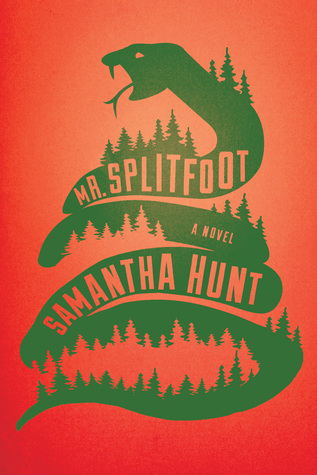
What I’m Reading: Mr Splitfoot

Becky’s Soundbite Review of Mr Splitfoot by Samantha Hunt:
Creepy and compelling, this contemporary Gothic has much to offer a wide range of readers. Ruth and Nat are orphans living in a severely religious and corrupt group home who begin conducting seances to contact the dead or missing parents of their fellow orphans. Many years later, Cora, Ruth’s single and pregnant adult niece awakens to find her Aunt Ruth, who she has not seen in many years, has returned, mute, to lead Cora on a journey across northern NY State on foot.  Where are they headed? Where has Ruth been all these years? The skillfully told dual narratives, move back and forth between the two time frames, compelling readers to join Ruth and Cora, following both the women and the clues from the past into the present.  Plot twists, lyrical language, and a heartbreakingly beautiful ending make this a satisfying read.
Further Appeal Notes: For such a lyrical novel, with sentences that beg to be re-read, and for one with such a focus on the characters-- particularly Ruth and Cora-- this is a surprisingly compelling novel. It could have been much more methodically paced since much of the action in Cora’s storyline involves her and Ruth simply walking, with only Cora talking because in the present storyline, Ruth cannot or will not talk. [Don’t worry, this “or” question is resolved.] But it is not slow at all. Much of this is a result of the well constructed dual storylines. Each separate storyline is intriguing, but it is the frequent switching back and forth that drives the action and keeps readers turning the pages. Readers are compelled forward to find out what in the past is driving the storyline in the present. And rest assured, there is no confusion here because the Ruth of the past and Cora in the present are such unique and strong narrators that you clearly know which storyline and time frame you are in at all times.

This is also a story about a journey, about the limited choices poor kids have, especially poor women. It is a novel about the place, far upstate NY, too.  There is a reverence for the natural beauty of the place, but it is balanced with a sadness about what it is like to live there too.

I cannot stress enough how beautifully this novel ends. It may not be a typical or standard example of a closed ending, but it is resolved beautifully and movingly. Readers who enjoyed the journey will be satisfied.

This is a surprising book in that it is not your typical story in any way; however, I do think it would appeal to a wide range of readers nonetheless. As I mention below, it reminded me greatly of Karen Russell and Wiley Cash, two authors who I would also describe this exact way.

Three Words That Describe This Book: atmospheric, parallel narratives, lyrical

Readalikes: The publisher says Mr Splitfoot is for fans of Aimee Bender and Kelly Link.  I agree with that, but I felt more of a connection to Karen Russell and in particular, Swamplandia! Both are atmospheric and follow young women on the outskirts of “normal society” who are on a journey. They are also equally as lyrical with a strong sense of place [just different places]. They are also offbeat with a slightly mystical or magical element.

Also, I don’t like the idea that a female author can only trigger female author read likes because the first author I thought of when reading Mr Splitfoot was Wiley Cash. Here is a sample of what I said in my review of his debut novel A Land More Kind Than Home:
This is a beautifully wrought story that at every turn gives you more than you expected.  The "plot" involves the killing of a mute child at a prayer "healing" by the creepy preacher mentioned above.  But we know from the first pages that the child will die.  Thus, this novel is not about the murder.  It is about rural communities and the intimate links between the people who live there.  And it is about the setting.  In the end this is a story where a drama unfolds, a conflict which has it roots back a generation from the current murder, and once we reach the last page, everything has changed and yet, at the same time, we are back to the way it always was.
Much of the commentary here about the appeal of this story also holds true for Hunt’s novel.

Finally, try Delicious Foods by James Hannaham. How the stories are told with a manipulated time frame, the overall ominous tone, and the theme of lives lived on the edges of “normal" society, are all shared here.

Please click on the links for both the authors and the specific titles in this readalike section to find many more readalike options.

Wednesday, May 28, 2014

What I’m Reading: This Dark Road to Mercy

Way back in February, I read This Dark Road To Mercy by Wiley Cash.  Let me begin by saying I was one of the many LOVERS of Cash’s debut novel, A Land More Kind Than Home.  And, while I did not love TDRTM as much, I still found it to be very good.  [It is hard when ALMKTH was pretty close to perfect. ] I am also struck by how much of what I found appealing about ALMKTH is the same here in TDRTM just to a slightly lesser degree.  If you are new to Wiley Cash, click here for my ALMKTH review.

Here’s the set up for TDRTM. We are in North Carolina.  It’s 1995.  Our narrators are a Easter, a young girl who along with her sister, Ruby, lives in foster care after the death of their mother, Brad Weller, their social worker, and Robert Pruitt, an ex-con with a grudge against Easter’s Dad.

The narration goes back in forth between the three as we follow the story of Wade, Easter’s dead beat, former minor league baseball star Dad, as he tries to get his girls back.  Wade convinces the girls to escape into the night with him.  They go since there only other option is to move to Alaska to live with the grandparents they have never met. Brady and Pruitt are both looking for Wade but each man has different intentions on what they want to do with him once they find him.

Like ALMKTH there is violence and tension here, enough to make more delicate readers uncomfortable.  Let me say, Wade is just a loser, but Pruitt is a bad, bad man, and since he takes his turns telling the story, it can get intense.

Easter was okay to me.  She grew on me, but I never loved her, but I really liked Brady.  And Pruitt was a great villain. The characters drive the action, but overall, I did not inhabit them as I did in ALMKTH. I think if Easter was a bit stronger, I would have LOVED this book.  I am hearing that from other readers too.  Once they get past Easter’s opening chapters and keep going, they really get into the book.

Again the landscape plays a part in the story.  For example, the first time Easter and Ruby see the ocean after years of living so close but never getting there was heartbreakingly beautiful.

This is modern Southern Gothic, psychological suspense that is compellingly paced, but not brisk.  As the pacing begins to drag with one narrator, we switch voices and it starts building again.  Although like other psychological suspense stories, the tension builds and the pacing increases as we race toward the finish. And I loved the climax here.

The most strikingly genius thing about this novel is how Cash uses the 1995 home run record race between Mark McGuire and Sammy Sosa to play with the tone of the novel.  Let me explain.  Like all of us were during the summer of 1995, the characters in the novel are wrapped up in the race for the HR record.  People are giddy over it.  Everyone, everywhere is following it.  The novel’s climax even happens at a Cubs-Cardinals game.  Back in 1995, we were all excited by this.  It made you smile to hear about who hit how many home runs no matter how bad a day you had. Everyone was talking about Sosa and McGuire and their home runs.  It was the lead story on the news every night, all over America.

But that was 1995.  Cash published this book in 2014.  The reader in 2014 can remember back to that innocent age and now knows it was all a sham and a fraud!  The double entendre of feelings-- remembering our pure joy and having the frustration and sadness that it was all because of steroids that it was possible-- adds a unique unsettling quality to the entire book.  It is subtle and brilliant.

Overall, TDRTM is just a little more straight forward than ALMKTH.  The atmosphere is there, but it is not an overriding appeal. The characters are good, but not great. The story is interesting and compelling, but will not haunt you.  However, I am giving it out to readers constantly and they seem to be enjoying it, again, one they get past Easter’s opening and move into Brady.  If they can make it to Pruitt’s first chapters, they are usually hooked.

I myself liked it and would be willing to read Cash’s next book.

Three Words That Describe This Book: psychological suspense, southern gothic, multiple narrators

Readalikes:  Click here for my first round of Cash readalikes, including John Hart who would be your best bet match especially for this novel.  Click here to my review of The Last Child, which is a good suggestion here too.

Specifically with TDRTM, if you want more books about the foster care system, another good option is The Language of Flowers by Vanessa Diffenbaugh. The link is to my report from when our book group read that novel.

Also, many people will enjoy this book for the large baseball frame.  This happens to be a personal favorite frame of mine and I have blogged about it many times.  Click here to pull up tons of baseball suggestions. I would also specifically suggest The Art of Fielding by Chad Harbach as a readalike for more reasons than just the baseball frame.

For a more traditional psychological suspense involving sisters try Ruth Rendell’s The Water’s Lovely.

Finally, on NoveList I found a perfect "title to title" suggestion, Southern Cross the Dog by Bill Cheng. Here is an excerpt from the reason why: "These richly atmospheric Southern Gothic novels are simultaneously brutal, lyrical, and moving, filled with memorable characters and desperate adventures. Couldnt have said it better myself.

Wednesday, September 30, 2020

What I'm Reading: 31 Days of Horror Eve Edition

Today is the last  day of September which means starting tomorrow over on the horror blog, 31 Days of Horror begins. I have quite a bit of exciting content planned throughout the month of October but to get you ready, here are 3 horror reviews that are appearing in the October 1, 2020 issue of Booklist to get you ready. 

First up a star for a library favorite series. And let me tell you, I do not often give a star for a third book in a series, but this one deserves it.


Red Hands

by Christopher Golden

Ben Walker Series

STAR REVIEW 

A car crashes into a small town parade, a sick man emerges, killing everyone he touches, instantly. As Maeve Sinclair rushes the man, he passes the deadly touch on to her, the magnitude of which she only learns by accidentally killing her mother and brother before escaping into the mountains. With this intense opening, imbued with a sense of dread that relentlessly ratchets upward throughout, Ben Walker, weird science expert/ US Government commando, is called back from the involuntary retirement he earned in The Pandora Room to tasked with neutralizing the situation by both capturing Maeve, alive, with warring operatives on his heels. While this is clearly a pivot in the series as Walker is on American soil, working with a different team, and instead of battling a recently unearthed ancient contagion, he is fighting one the government resurrected on purpose, the way the story unfolds is reminiscent of previous outings. The neck whipping action and shifting point of view allows the reader to easily gain a wide angle perspective on the complicated, terrifying situation, invoking maximum terror on every page. Golden also leaves room for his diverse cast of characters to develop and inhabit the story fully, adding in an uncomfortable realization that this fictional story is not too far from reality. For fans of horror-thriller series like those by Jonathan Maberry and Mira Grant.

Further Appeal: This is a pivot for the series, but a pivot that makes it better. Ararat and Pandora Room were both excellent but the format-- Walker goes overseas to stop an ancient evil from being literally dug  up, before it is unleashed upon the world-- would have gotten old a third  time around. This time, the ancient evil has been in US hands and is mistakenly unleashed. This shift added energy and immediacy to an already terrifying, fast paced story. It kept  it fresh and surprising.

Walker’s evolution as a character and a man, commando, father, and human, has also been a side plot of the series. He is a complicated man with a good heart who doesn't always make the right personal choices. He continues to grow and be developed in interesting ways by Golden. This is very important in any series. If the protagonist gets stagnant, the series can die. Not here.

This is why I gave this book a star ultimately-- it invokes maximum terror on every page. Golden wrings it out of his prose but it also seems effortless. That effortless ability was amazing to watch unfold on the page. And the diverse cast of characters is standard for this series but Golden goes a step further and fleshes out all of the characters without sacrificing plot. For example, the baby sister and older scientist could have both been sidekicks or after thoughts, but they are so important to the plot and the emotion of the story. Golden gives their development the attention they deserve.


Three Words That Describe This Book: fast paced, terrifyingly realistic, intriguing frame

Readalikes: I mentioned 2 of the best horror-thriller series writers above, but tile in particular is a great choice for people who enjoyed The Loop by Jeremy Robert Johnson and Survivor Song by Paul Tremblay, click on titles to see my reviews of those titles with even more readalike options.

Halloween Season: Stories

By Lucy Snyder

Oct. 2020. 166p. Raw Dog Screaming, $14.95  (9781947879218)
First published September 1, 2020 (Booklist).
 

Snyder, a master at crafting visceral and unsettling stories that deeply probe Lovecraftian horror and dark fantasy, is back with a Halloween themed collection of 13 stories and two poems, perfectly packaged for library patrons.The volume opens with the visceral poem “Beggar’s Night,” which instantly creates an immersive sense of dread, setting the precise unnerving tone for what is to follow- character driven tales, intense emotions, with the threat of violence lurking behind every corner. Three stories in particular illustrate the range of stories and feelings readers can expect to experience. “Cosmic Cola,” a Lovecraftian homage; a cinematic tale of an annual corporate Halloween Eve party that is not as festive for the guests as it is for the hosts. “The Porcupine Boy,” the story of a young man running a medical advocate company, manages to walk the line between horrifying and oddly sweet without missing a beat. “In the Family” is an intense monologue that sucks the reader in, builds sympathy, and then yanks it away with one evil twist, a twist for which there is no escape. With a stunning cover sure to lure in readers during the haunting season, Snyder’s collection is the perfect compliment for fans of the book and now HBO series, Lovecraft Country by Matt Ruff, as well as a solid suggestion for readers of her cosmic horror peers such as John Langan and Caitlin Kiernan.

Further Appeal: I think I captured the range of what to expect, but I also want to say that the range of gore, terror, and violence is also all over the map here- from subtle to escalating to intense to in your face.

I also wanted to share my note I took when reading the story Cosmic Cola: "This is awesome, cosmic horror goodness!" I want a sequel to this one.

This is a must purchase collection that can be read all year long, but should definitely be popular every October. And the cover is perfect for displays. It is by Lynne Hansen who I invited to participate the horror blog-a-thon.

Three Words That Describe This Book: immersive, Lovecraftian, uncomfortable 

Readalikes: I have three above, but really any critically acclaimed, horror story collection by a single author are a good choice here. I do think Karen Russell and Lauren Beukes have excellent horror adjacent collections that will also work.

And last  but definitely not least...


The Children of Red Peak 
by Craig DiLouie
Nov. 2020. 400p. Redhook, paper, $16.99  (9780316428132); e-book, $9.99 (9780316428118)First published October 1, 2020 (Booklist).


Bram Stoker Award nominated DiLouie [Suffer the Children] returns with a heart wrenching, thought provoking and terrifying tale about the meaning of life. In 2005, members of a religious cult committed suicide on top of Red Peak. Five children were the only survivors. But when the authorities rescued them, there were no bodies to be found...anywhere! Now as the 15th anniversary of this mysterious event approaches, one survivor commits suicide, forcing the others, and their unhealed, psychological wounds, back together. Told from the alternating perspectives of 3 survivors, both in the present and with flashbacks to their days living in “The Family” as children, a stylistic choice that provides the necessary background details, even illustrating the same events from different perspectives, all without sacrificing a compelling and steadily increasing pace that builds relentlessly until each is forced to confront their trauma in a climax that is both beautiful and terrifying. Utilizing true crime tropes and introducing historical, supernatural intrigue surrounding the mountain itself, DiLouie creates more than a typical “cult” thriller. This is an emotionally devastating, yet ultimately hopeful horror story about trauma, the healing power of love, family, and friendship, and the unexplainable forces, with unknownable motives, that surround us all. A great choice for fans of The Only Good Indians by Jones, Disappearance at Devil’s Rock by Tremblay or The Hunger by Katsu.


YA Statement: Teens will be fascinated by the story of a religious cult through the eyes of it’s tween and teen members. The overall themes of friendship, family, and overcoming adversity will also resonate with them.

Further Appeal: I feel like the marketing materials are not fair to this book, it is so much more complex and satisfying than a story of cult consequences. It is a book that is about faith more than anything else. And the ending was beautiful and terrifying, at the same time. Also about the ending, it is an open ending in the best kind of way. Open because the 4 survivors each make a different choice for different reasons, and each are correct for them, while not telling us if the supernatural force is good or evil. Furthermore, I don't think it matters, the book is still horror even if the force on the mountain is good.


I loved the way the story is structured, with the different povs and how they overlapped both in the present and the past. The growth of the characters is enhanced because we see them through their own eyes and the eyes of the others, both now and in the past. But also, the way DiLouie clusters chapters together with the same pov for a few chapters, then just when you are fully sucked in there is a cliff hanger for that character, but the thread is picked up with another pov. It keeps you reading, it adds detail, and keeps it all interesting because the characters are all so different. And then it all compresses as we race to the top of the mountain and the story’s conclusion.


Finally, the introduction of the cursed history of the place helped to enhance the dread and terror. I mean, we know that everyone but these survivors died, so the tone is clearly full of dread, but somehow, this "it happened multiple times before and since" true crime added element was a good addition.


Three Words That Describe This Book: Beautiful, Terrifying, Religious Cults

.

Readalikes: I listed only horror readalikes but this book has wide cross over appeal. For example, A Land More Kind Than Home by Wiley Cash or Joyce Carol Oates as well as true crime about cults.

Monday, December 2, 2019

What I'm Reading: The Boatman's Daughter

Today I have my latest Booklist review and it is so good that I am calling it now-- this title will be among the best books of 2020 next year. Think I'm overreacting? Well, when this author's first book came out, I knew absolutely nothing about the author or the book and it blew me away immediately. That title went on to be one of the most critically acclaimed horror debuts of the year and led to the author signing a 2 book, major publisher deal. [Links below] So, lesson here: listen to Becky. and read the review below, which as always is my longer, draft review with added information to help you help patrons. You don't want to get behind the curve so early in the year.

The Boatman’s Daughter.


Davidson, Andy (author).

Feb. 2020. 416p. Farrar/MCD, paper, $16 (9780374538552)
First published December 1, 2019 (Booklist).
Davidson [In the Valley of the Sun] presents another hauntingly lyrical story that is dripping with atmosphere, in which the complicated characters and foreboding setting take the lead, draw readers in and envelope them in this brutal yet beautiful tale. Told through an omniscient lens, readers are introduced to a broken town, deep in the bayous and along the river banks of Southwestern Arkansas. Miranda ferries contraband for a corrupt sheriff and a ne'er-do-well preacher, trying her best to make a living among the dense forests, winding rivers, and run down buildings. A stormy, tragic evening, 11 years prior, set Miranda's life on this path, and she cannot break free for many reasons, some apparent, some hidden by or from her, and even a few that are tied down by a dark magic. The novel, centered around Miranda's final three runs, uses these criminal endeavors to tell the story of the interconnected characters and a place across generations, revealing the sins, secrets and magic, recounting brutal violence and desperation but also love and forgiveness. It is a story of monsters, both human and supernatural, where no one is innocent and yet, the lines between good and evil are still clearly drawn. Told with a restraint in the narration, a storytelling style where no detail is unnecessary, a slow burn that explodes at the novel’s mid-point, making room for the plot and the pacing to breathe and unravel toward the novel’s satisfying conclusion, this is a confidently told narrative that fully embraces its roots in the horror genre while also claiming a rightful place alongside Southern Gothic classics of the 21st Century such as Sing, Unburied, Sing by Ward, Winter’s Bone by Woodrell, and A Land More Kind Than Home by Cash.  

Further Appeal:  This is Davidson's second novel and I am telling you, I LOVED his debut, but this one is better. It is a crime novel with a fairy tale, timeless feel [although it appears to be 1979-80 where the "present" action takes place, if you follow the scant clues and do the math]. And there are  non-negotiable supernatural elements. This is not a Tremblay book where it could be real or it could be supernatural and you get to decide...Nope. There are monsters here. Actual monsters.

I would like to address the timeless, fairy tale tone. I tried to portray that feel in the review but I don't get many words and I wanted to make sure to be explicit here. It is Southern Gothic meets Fairytale.

The book builds world details and characters relentlessly for the first half of the book. The storytelling moves it along, but it is at a steady, not brisk pace. And the thing is, the details will all matter....every...single...one. There is a literally breaking point in the middle of the book [almost exactly] where the story explodes and races to its conclusion.

The Boatman's Daughter is an immersive reading experience that will envelop readers in every facet, with its setting, characters, storyline, tone, message, all of it. And it will leave you thinking about many real world issues in its wake.

Three Words That Describe This Book: lyrical, haunting, complex characters

Readalikes: I give you three above. I also have more in the In the Valley of the Sun review. Check all of those out. But the three in the review, taken together represent this title very well. Also, those 3 readalikes are all titles that have done very well with a public library audience; therefore, I would argue, so will this one.

I also think that fans of Lauren Groff's The Monsters of Templeton or anything by Karen Russell will enjoy this title too. In fact, I also love Russell and that link goes to any time I have mentioned her as a readalike or reviewed her books, leading you to many more options.

I would also like to mention how happy I have been with the books under the MCDxFSG imprint. I would highly suggest anything that comes from them. I recently reviewed Tinfoil Butterfly by Moulton and I am a huge fan of The Grip of It by Jemc. But all of the titles. They are all different in plot, but very similar in feel. They are all atmospheric, lyrical, character centered, and very unsettling. I don't usually make an overarching "imprint" readalike but MCD as an imprint is a great resource for more readalikes, at least right now.

Tuesday, July 14, 2015

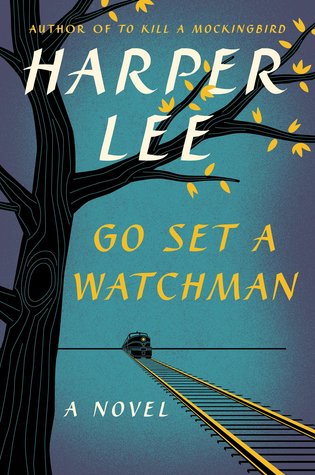
While You Wait for Go Set a Watchman: How to Turn an Event Book Into Opportunity

I know you know that Go Set a Watchman came out today.  I also know most of you had already prepared “While you wait” lists of alternatives for the influx of patrons who will be coming in to request it-- many them coming to the library for the first time in years.

But I also know that when this HUGE single book events happen, you can never have enough readalike options.

You also want to make sure you have options for every kind of reader.  Remember, a book like this brings people out of the woodwork.  People who haven’t been to the library in a long time. They do not realize there will be a wait list.

We need to use event book opportunities like this one to show off our awesome services.

Harper Lee brought em in the building, now it is our job to show off our skills and promote those books which are on the shelf right now.

With bestsellers, you cannot only have exact readalikes [if there is such a thing] ready.  Your instinct will be to have other southern set titles with Civil Rights themes ready to hand out automatically each time someone asks to be placed on the waiting list.  And while, for example, The Help is a great readalike suggestion, there are many readers who only want Go Set a Watchman for this type of read, when actually they generally prefer a completely different type of book normally.

This is where you can shine and turn these newbie library users into lifelong believers. You can make them see the light and turn into library evangelists, spreading the word of your amazing skills all over town.

[I used bold, but I am not exaggerating. This has worked for me. I have made this happen multiple times.]

First, make sure the patron in front of you asking to be put on hold for the Lee book wants to read something just like it while they wait. Instead of offering a readalike immediately, try saying something like, “We have lots of great reads on the shelf right now. What kind of book do you want to read while you wait? I am sure we can find you something that will make the time pass quickly.”

This is how we at the library turn a publishing event into a chance for us to market ourselves and our book expertise. We hand them a much better option for them, tailored to their specific preferences, and they LOVE it. They think we worked magic when all we did was have the RA conversation with them. Success!

So by all means, have the very specifically matched readalike suggestions lists for Go Set a Watchman out for people.  But the patrons that stop and ask for help...to those patrons, please engaging them in a conversation about what they like to read (in general) and use all that you have learned by reading this blog and attending my trainings over the years to find these patrons the perfect read for them- whether or not it shares anything in common with the book they came in to reserve.

To help you start thinking outside the box, I will give you a few Southern Gothic options with a coming of age theme. BY the way, these would be great for the people who you haven’t seen since Gone Girl came out. Click on the titles for a full review of each.

Now go out there are show off your mad RA skills! I know you can do it.

Wednesday, July 25, 2018

Wiley Cash Starts a Book Club That Asks Us All To Rethink "The Canon"

Author Wiley Cash, who I am a personal fan of and if you click here you can see every thing I have written about him and his books, is staring a national book club that asks us all to rethink the cannon.

From an article via Garden and Gun Magazine:
As a best-selling author, North Carolina’s Wiley Cash (This Dark Road to MercyA Land More Kind Than HomeThe Last Ballad) knows the power of getting his novels in the hands of literature-loving book clubs. But for his newest project, the Open Canon Book Club, Cash wants to highlight the work of other authors in an effort to broaden people’s worldview through literature. “I feel like we’re in a time when we need to hear underrepresented voices, people who don’t look like us or talk like us,” Cash says. “What I’m really interested in is getting books in front of book clubs they might not otherwise have.” 
Membership is free and open to all. You’ll get discussion questions for each month’s book, a list of related titles, and dates for live online conversations hosted by Cash and the guest authors. Local independent bookstores across the country will also give discounts for the selected book. 
First up in September: Crystal Wilkinson’s The Birds of Opulence, the story of several generations of African-American women in a Kentucky township. Although Cash had never met Wilkinson, he had long admired her work and thought it was just the kind of book he would want to share with readers. “I want to open up a literary experience for people to say, ‘This is something I’ve never encountered before,’” Cash says. 
Cash had his own kind of literary “aha” moment as a sophomore creative writing major at the University of North Carolina-Asheville. He read the story collection Bloodline by the writer Ernest J. Gaines, and though the two authors came from very different backgrounds (Cash grew up in an old mill town in North Carolina; Gaines on a plantation in Louisiana, where his ancestors had been slaves), Cash recognized elements of his own family in the characters Gaines drew out. The book changed his life. Cash went on to study with Gaines at the University of Louisiana–Lafayette, and the two formed a lasting bond. 
Cash has mapped out selections for the Open Canon Book Club for the next year or so. In addition to showcasing talented, diverse voices, he wanted to choose authors who would enjoy engaging with club members. “At the very least,” he says, “this is going to be a way to steer people to good books—and that’s what we want.”
You can follow the links in that article, or click here to go directly to Cash’s Open Cannon website where there is already a long list of book stores all over the country who are participating.

Here is how libraries can get involved:

  • If you local book store is listed, give them a call and talk about partnering up
  • If your local book store is not listed, call them and talk to them about joining up.
  • Use the link to join to get the newsletter, selection announcements, and discussion info in your email box and run it through your library yourself.
  • At the very least-- make sure you have the titles Cash is discussing in your collections because you might not. And, he is providing you some talking points to handsell each title.
Thanks to Cash, who has done much in his career to use his privilege to promote underrepresented authors and titles.

I know just about every library in America has his award winning and critically acclaimed novels, so adding those books he thinks are worth your time is an easy sell to your collection development people and patrons.