RA FOR ALL...THE ROAD SHOW!

I can come to your library, book club meeting, or conference to talk about how to help your readers find their next good read. Click here for more information including RA for All's EDI Statement and info about WHY I LOVE HORROR.

Wednesday, December 30, 2009

Black Quill Award Nominees


It is almost time for one of my favorite awards of the year...the 3rd Annual Black Quill Awards given by the registered readers and editors of Dark Scribe Magazine for the best in horror, suspense, and thriller books.  As they say at Dark Scribe, it is the best of the books that keep you up at night.

I love these awards because they hit at the appeal of the books; they are not just singled out by their genre. These awards reward writers who invoke fear in their readers, however they do it.  Not all of these books are "horror," in the traditional sense, but they all create a chilling atmosphere and set a dark mood. They are all most compelling for the atmosphere their authors create.


There are eight categories of nominees here.  They are open for voting in December and January with the winners announced on January 31st.

Books that I wrote about on this blog that are nominated in the "Dark Genre Novel of the Year" category are Castaways, The Unseen, and Drood. Use the links to read my opinion on these books.

Also, Robert Dunbar, a great writer and acquaintance of mine, is nominated in the"Best Dark Genre Fiction Collection" category (hint, hint).

Anyone who is a registered reader can vote. I will be. It is free to register, and as a bonus, the online magazine is a pretty good read too.  So click on over and register today.

Tuesday, December 29, 2009

What I'm Reading: Her Fearful Symmetry


Recently I devoured Audrey Niffenegger's new novel, Her Fearful Symmetry. I was nervous before I began because I really enjoyed The Time Traveler's Wife and the new book was getting mixed reviews. Well, I am happy to report that I actually enjoyed Her Fearful Symmetry (herein, HFS) even more than The Time Traveler’s Wife (herein, TTW).

The reason I enjoyed the newer novel more and others disagree has to do with the difference in the appeal of each novel. The overall tones of these novels are on opposite ends of the spectrum. TTW is a love story with a science fiction element and a heart-warming ending. (click here to read my full report on TTW).

On the other hand, HFS is a dark ghost story about deep family secrets with seriously twisted characters and an unsettling ending.  I loved it! But this huge shift in tone, mood, and storyline focus can easily explain why fans of the more heartwarming TTW were disappointed.  Whereas Claire and Henry in TTW are good, well meaning, loving people, the main characters in HFS are manipulative, selfish, and mean.

Without giving anything away, here is the basic plot. Edie and Elspeth were identical twins growing up in London, Edie married and moved to the Chicago Suburbs and had twins of her own, Julia and Valentina.  When Elspeth dies in London, she leaves her flat, overlooking Highgate Cemetery to the twins with the condition that their parents don't come over the ocean with the girls.  However, Elspeth finds herself a ghost, stuck in the flat and eventually figures out how to communicate with the girls. Elspeth's lover, Robert, and the upstairs neighbor, Martin (who has a serious case of OCD), are also key to the story.

But there are many twists and turns through this story and at the end, there is one HUGE plot twist that makes the book even darker and more sinister.  Again, I liked that, but it is not for everyone.

Appeal: This is a complex, character-centered, gothic tale told in a modern setting. With its focus on death, family betrayal, mental illness, and cemeteries, the novel is shrouded in a darkness of tone and mood that rarely lifts. But HFS is also filed with lyrical language, beautiful scenes, and amazing passages that beg to be read a second, or a third time. TTW, the sequel, this is not.

3 Word That Describe This Book: dark, twins, character-centered

Readalikes: HFS is very similar to a few other books I have read and loved.  The Graveyard Book by Neil Gaiman, The Thirteenth Tale by Diane Setterfeld, The Good Thief  by Hanah Tinti and A Brief History of the Dead by Kevin Brockmeier.

Also, use this link for my report on my book discussion on The Stolen Child for a longer list of books that are similar to HFS.

Books about Highgate Cemetery, London travel guide (the twins use them when they first move to London), books about twins (especially those trying to have separate lives), and books about ghosts could all be of interest to readers after finishing HFS.

Sunday, December 27, 2009

What I'm Reading: Asterios Polyp

I was able to get my hands one of the year's best reviewed books, Asterios Polyp by David Mazzucchelli.  If you want a grown-up fiction graphic novel, this one is for you.  One of the problems with the current offerings in "grown-up" graphic novels is that many of the nongenre options are all nonfiction.  Those of us who enjoy literary fiction graphic novels have fewer choices.  Thankfully, Asterios Polyp  is a good option.

The plot is pretty simple, Asterios Polyp is 50 years old when his New York City apartment is destroyed in a fire.  He then takes off on a bus as far as his money can take him to start over in a generic Midwest town.

Asterios' life story is told in flaskbacks as narrated by his twin, who died in utero.  He is a famous "paper architect," meaning he is well renowned for his drawings but none were never built. He was a self righteous, blowhard professor in Ithaca, married to a caring, sensitive sculptor named Hana.  But as we see, he ruined his own life by basically being a jerk.

Asterios' time in the Midwest working as a car mechanic is the first time he truly comes to know himself, and as the book ends, he is trying to make amends for his past mistakes. It is when his life completely falls apart, that he sets off to finally build one. The irony is, he has never built anything before.  I liked that tie in; he is famous for never building anything, but at some point he finally has to step up and do it.

In terms of the drawing style I liked that Mazzucchelli used a free style, utilizing the entire page to tell the story, but still made it easy to follow. How? He changed the font size and style for each character.  Each character talks in dialogue bubbles, and has their own unique font which also gives you clues into their personality.  The narrator uses much larger font, outside of any dialogue bubbles.

The drawing style is fairly traditional; nothing crazy.  I liked how when Asterios is being pompous, Mazzucchelli breaks down Asterios figure into more basic shapes. Mazzucchelli uses tricks like this to enhance the story throughout the graphic novel.

In terms of the colors, it is  mostly Grey,White and Primary colors (blue, red yellow), with each section using one color pallet. As the chapters shift, so does the dominant color. That was also effective in separating out the different sections of this fairly complex story.

3 Words hat Describe This Book: character-driven, modern, redemptive

General Comments: I am not sure how I feel about the entire dead twin narration mostly because I don't think it pans out. I get how once Asterios finds himself again that the twin disappears, but I felt like he should show up at the end since he was there at the beginning; you know, for closure.  There is a one-page epilogue but it is from the perspective of the family in the Midwest who Asterios stayed with.

I did love the complex characters and their interactions. I also liked the "arts" setting. However, I am not sure how I feel about the ending. It feels like a cop-out for such a complex story.  I don't want to give it away since it kind of comes out of nowhere. Read it for yourself and let me know what you think.

Readalikes: David Mazzucchelli has contributed to many graphic novels in the past, so here is a link to his other work.  Specifically, I would suggest starting with City of Glass, the graphic novel version of Paul Auster's wonderful novel.

This graphic novel is also similar to a book of modern art, both because of Hana's sculptures and the overall look of the book itself.  Here are a few examples.

David Mazzucchelli's drawings (and the content to a lesser extent) reminded me of the work of Daniel Clowes.  Both men use a similar style and write interesting, complex, character-driven, fictional stories.

Fans of Chris Ware will also like Asterios Polyp.

Also, a few other graphic novels have received high accolades this year, and they may be of interest to you.  If so, check out Stitches: a Memoir by David Small, AD: New Orleans After the Deluge by Josh Neufeld,  and The Book of Genesis by R. Crumb.

Wednesday, December 23, 2009

Last Minute Shopping Ideas

So its 59 minutes until Christmas Eve and some of you out there may still need a gift or two.  Books are always a good idea. As I have said many times on this blog, there is a book for everyone.

Book stores are open tomorrow, so you still have time and besides the wonderful resources available here on RA for All, here are a few holiday gift guides to help you out:

January Magazines's Holiday Gift Guide

The New York Times Books Section Holiday Gift Guide 
Amazon's Gift Guide 
NPR Gift Books

Merry Christmas.

Monday, December 21, 2009

More Bests Lists: Again With Genre Fiction Options

RA Online posts their best historical fiction for 2009 and their best biographies and memoirs.

The Rap Sheet has links here to the best crime novels of 2009.

Financial Times' best books of 2009.

The finalists and winners of The Audies for best audiobooks of 2009 are also posted. There are lists for just about every genre here; use the links in the right gutter of the page.  Even if you don't listen to audio books, this a great list of some of the best books, period, in each genre.  With so few genre fiction best lists, the Audie genre lists are a great option for all readers.

More Interviews with RA Librarians

About 10 days ago I posted this link to RAO's interview with Readers' Advisor Jane Jorgenson.  It proved so popular, Sarah Statz Cords posted another interview, this time with Jody Wurl, the Teen and Web Services Librarian at the Hennepin (MN) County Library System.  Part One is here. Part Two, here.

 Both of these interviews are great resources for anyone working in RA or those just interested in what we do to help you find your next good read.

Saturday, December 19, 2009

More Best Lists-- Featuring the Best of the Best

The Book Beast has compiled a list of all of the magazine and newspaper best books of the year lists and has created this aggreagted list of the best of the best.  Page two has the honorable mention list.

Thanks to the folks at Graphic Novel Reporter I have GN best lists to share here and  here.

NPR posted this list of the best book club books of 2009.  Their large collection of "best" books is getting huge! Pick and category, any category and click on over to find a book.

And my favorite list of the year, every year, Stephen King's favorite books he read in 2009 from his column in Entertainment Weekly.

Friday, December 18, 2009

What I'm Reading: Firmin

After hearing from multiple sources about Firmin: Adventures of a Metropolitan Lowlife by Sam Savage, I added it to my "to-read list;" however, I was not impressed, and I though I would be.  Look at this review from Booklist:
In Savage's darkly comic debut, the titular metropolitan lowlife is a rat, albeit one with lofty literary ambitions. The runt of 13 siblings spawned in the basement of a shambolic Boston bookshop, Firmin survives his lean first weeks by munching on the edges of books. He quickly develops a predilection for actually reading them, too. Soon he's perusing everything from Joyce to compendiums of dirty jokes and even developing a secret fondness for the bookshop's owner, Norman. Tutored by a sign-language book, Firmin tries to communicate with Norman and his human brethren with predictably disastrous results until an obscure science fiction author, who writes about rats and lives above the bookshop, takes him in as a pet. There Firmin enjoys a brief respite of security, writing odes in his head and dreaming of glory, until the wrecking ball threatens the decaying neighborhood. Blending philosophy and abundant literary references with originality, Savage crafts a small comic gem about the costs and rewards of literary illusions.
So, I should have loved this book.  It is darkly comic, it has the speculative element of an anthropomorphic animal, and it is all about books and reading; all things I love.  So if the appeals all fit my tastes why didn't this book work for me?

This is a good opportunity to talk about using only appeal to match a book with a reader.  Even though I preach about the superiority of matching the right book to the right reader when you focus on appeal, there are no guarantees.  This is why I always tell patrons that while I think the book I am giving them is a good suggestion for them based on their likes, they still may not enjoy it.  What I say excatly is, "If you find you aren't enjoying the book, close it up and bring it back. We can find you something else; just look at all the books we have waiting for you." I also remind them that we don't ever check to see if they have finished a book, so feel free to not finish it.

So why didn't I like this book.  Well, although it had the good appeal matches for me that I mentioned above, I was turned off by all of the digressions the narrator makes.  Firmin, the rat is narrating the book, but he is too scattered for me.  It took more than half of the book for him to find focus.  Also, the book was too snarky; it was as if the author was trying to hard to be dark and unfocused so as to be cool.  It felt forced to me.

Also, I did not care about Firmin or the humans be befriended. Without caring about them or their plight, I could not get into the book.  This is a character driven book, but I did not enjoy the charcaters.  I usually don't need to sympathize with the main character in order to like a book.  That was not the problem.  I just did not care to be bothered.  The characters did not grad my attention and demand to be followed through the story.

I think I can put Firmin in the same category as Captain Freedom, which I also did not enjoy (click here and scroll down to see what I had to say).  Both have too many references and are too obviously ironic for me. However, since ever reader reads a different version of the same book, I know there are many other readers for whom this book struck the perfect chord,  Click here and here to see what some of these Firmin-lovers have to say.

Readalikes:  On the other hand, there are books similar to Firmin which I did enjoy. If you want to read a book about people/animal interactions, from the animal's perspective, in an urban environment, with a darkly comic tone, I think The Roaches Have No King by Daniel Evan Weiss is an oldie but goody.  I loved this book.  It is very similar to Firmin in theory, but in practice, I enjoyed it much more. I still give this "dustie" out to readers.

Christopher Moore is a great example of an author who successfully crafts darkly comic, urban stories with speculative elements.  Try A Dirty Job.

And don't forget the king of all anthropomorphic novels, Watership Down.  If you have never read it, put down Firmin and pick it up instead.  Contrary to popular belief, Watership Down is not a kid's book; it is a very adult cautionary tale.

Wednesday, December 16, 2009

Student Reading Maps

Tonight marked the end of another semester of GSLIS 763 at Dominican University.  Four students did a reading map for their finals.  Use the links below to access each map, but remember they are all archived on the class blog right here.

Monday, December 14, 2009

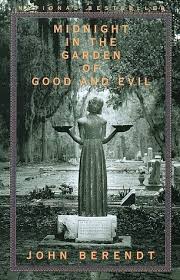
BPL Book Discussion: Midnight in the Garden of Good and Evil


Today our book group gathered for our annual holiday party. We met from 12-4 and had a potluck lunch.  The library provided the sandwiches and everyone else brought a side or dessert. We always pick a book for which there is a movie.

As you can probably tell, the discussion takes second fiddle to the party, but that is the point. We are all so busy this time of year, but we still want to get together. By picking a book with a movie, there is no pressure to read the book. In fact, I tell them as much the month before. No one should feel burdened reading the December book.  We are meeting to celebrate and have fun.

So we read and watched Midnight in the Garden of Good and Evil (herein MitGoGaE) by John Berendt. First the book.  MitGoGaE is hard to describe.  It is considered a modern true crime classic. It has won awards as gay literature, it has been cited as the beginning of the current narrative nonfiction craze, and it has been credited as reviving the tourist industry in Savannah, GA.

John Berendt, a writer for New York Magazine, goes to Savannah, GA to write about the town and stumbles into a friendship with a con-man/jazz club owner, a drag queen, and a gay antiques dealer, Jim Williams, who, while Berendt is living in town, kills a volatile young man, Danny Hansford, who was his employee and sometimes lover.

Through four trials, over 8 years, Berendt follows Williams' story, but also introduces the reader to the colorful characters of 1980s Savannah.  We read about the squares, the beautiful mansions, the social strata, and the town politics; we see the town's underbelly, go into its cemetaries at midnight, and come to love, trust, and then lose trust in, many of its residents.  Savannah and its citizens are as important to the book as the trials.

The movie came out in 1997.  It was directed by Clint Eastwood and stars John Cusak and Kevin Spacey. It also features a very young Jude Law in the Danny Hansford part. Click here for some trivia about the movie too.

In terms of our discussion, it was brief, which again is the point at these less formal December meetings.  We began by talking about how Berendt chose to write MitGoGaE.  He made himself a character and rearranged the timeline in the name of narrative. We all agreed that the world Berendt is recreating for us was crazy. Many mentioned how if this was a fiction book, they would think it was too unbelievable.  This kept us turning the pages to see what would happen next, though.

We also talked at length about individual characters, the race issues, and the "good ole boy" American South. As Chicagoans, those of us who had not travelled extensively in the South were shocked by some of the revelations about the segregation and prejudices that were still in control of 1980s Savannah.


The discussion was short, but the movie was great, the patry a sucess, and another scessful year of book discussions at the BPL was completed.

Readalikes: As I mentioned above, MitGoGaE is considered a true crime modern classic.  It is most similar to In Cold Blood by Truman Capote.  Both are narrative nonfiction, true crime masterpieces; however, the criminals in Capote's book are less sympathetic.

Writers like Erik Larson, John Krakauer, and Mike Dash owe quite a bit to Berendt.  All three's best selling style can be traced back to MitGoGaE's success back in the early 1990s.

Also, don't forget books about Savannah, Georgia.

In terms of fiction, one participant mentioned John Grisham as a great readalike. She cited his use of the south and its traditions, racial issues, and colorful characters, as well as a focus on trials; I would agree. She thought that Grisham's newest, Ford County works especially well as a readalike.  With its connected stories, all taking place in one county, it reminded her of MitGoGaE.

Also, I would suggest any mystery with eccentric characters for fans of MitGoGaE.  I would even argue that it need not be in the south, although that wouldn't hurt.  You can use the wonderful resource, Stop You're Killing Me and their genre index for humorous mysteries or their location index for southern mysteries to find readlaikes that would fit your tastes.

Specifically, here I would suggest Cathy Pickens' Southern Fried Mysteries or The Case of the Missing Servant by Tarquin Hall, which I read here.