RA FOR ALL...THE ROAD SHOW!

I can come to your library, book club meeting, or conference to talk about how to help your readers find their next good read. Click here for more information including RA for All's EDI Statement and info about WHY I LOVE HORROR.
Showing posts sorted by relevance for query swamplandia!. Sort by date Show all posts

Friday, April 17, 2020

Flashback Friday Reads: Swamplandia!

My daughter and I were discussing a Tiger King read alike list she found. She pointed out Swamplandia! by Karen Russell on the list as looking pretty good.

Anyone who has read this blog for any amount of time know how much I love Karen Russell. [Click here for all the love; warning, it's a lot love.]

I book talked Swamplandia! to her and did a super fast Libby check and saw it was ready for immediate download as an ebook or an audio book at my library. She's busy with school reading now, but put it on her list for the future.

But, she also gave me the idea to re-post my original review of the novel today. I have also recommended or mentioned the work of Russell dozens of times here on the blog. So while below and here you can find my review of Swamplandia! from 2011, I want to also remind you that this link will bring you to my other reviews of Russell's story collections and the other times I have suggested her as a readalike for other books

Every one of her books I have read have subsequently ended up in that year's "Best Books I Read This Year" list too.

Finally, click here to run a Google search for Tiger King Readalikes

______________________________________

CLick here for original post

WEDNESDAY, MAY 25, 2011


What I'm Reading: Swamplandia!

I recently finished the heralded Swamplandia! by Karen Russell.  This is one that I felt lived up to the hype.  But a disclaimer here, Swamplandia! is exactly the type of book I adore:  dark, odd, completely character driven (almost without a plot really), quirky, and just plain fascinating.

This book is more of a character sketch of a family in transition, during said transition, than it is a typical story.  The plot follows the Bigtree family, owners of a shabby alligator wrestling tourist attraction called Swamplandia!, deep in the Ten Thousands Islands of the Florida Everglades.  When we meet the Bigtree's things have taken a grave turn for the worse.  The mother, the star of the show, has recently died of cancer and their grandpa has just been put into a nursing home.  Left is the father, Chief, and three siblings: oldest brother Kiwi, middle sister Osceola, and our main narrator, 13 year old Ava.  We also do get some alternating view points from Kiwi when he goes off to take a job at an amusement park on the mainland.

The story stretches over a few months period as the family completely falls apart.  Chief goes to the mainland in an effort to raise funds to save Swanplandia, Kiwi leaves, Osceola tires to elope with a ghost, and Ava goes on an adventure to try to save her sister, getting more than she bargained for along the way.  Each must come to terms with their grief and face reality; some just take longer than others.  As the novel ends, they have been reunited and there is a plan to finally move forward again as a family, albeit probably without Swamplandia!.

This "slice-of-life" quality of the story is one of the reasons someone would either love or hate this novel.  All we see is this transitional period.  As readers we do not see the glory days of the past or know what will become of the Bigtrees once they are reunited.  We are just along for the ride during the most trying period of their lives.  I enjoy this type of book.  It is more like a big character sketch; however, many readers will be frustrated by the lack of a clear plot.

This novel's sense of place is the next big appeal.  Russell nails the descriptions here.  I could feel, see, smell and hear the Everglades.  She meticulously describes the islands, the waterways, the vegetation, the animals, the humidity....everything.  I felt like I was there.  It is beautiful and secluded, but also sinister and creepy.  She relayed that dichotomy perfectly.  It almost made me want to visit.

The time period here is unclear too.  It seems like it is set in the recent past, but that feeling could be from their isolated home too.  No matter when it is supposed to be set, the story has a timeless feel which I enjoyed.

Other key appeals are the methodical pace, the magical feeling of the story without any actual supernatural elements, the two adolescent narrators, and the open ending.  This is a character centered story about loss, mourning, and independence.  It is ultimately about growing up and being forced to face the real world.

Before I finish, I should also say that there is one fairly disturbing scene involving Ava in the last third of the book.  It is not graphic, but it is upsetting.  It may taint the book for some readers.  I thought it made sense and pushed the novel from the magical realism realm firmly back into the cold hard truth.  I thought it made sense as a symbol of Ava's maturation from dreamy to serious.  Although I wish she could have been spared the hurt, I think the story needed it as a plot development for the reader to believe that she too was ready to move on.  Everyone else in the family had their reality check moments, hers was just the most disturbing.


Three Words That Describe This Book:  slice-of-life, sense of place, quirky

Readalikes:  I have been suggesting Swamplandia! to my readers who enjoyed The Monsters of Templeton by Lauren Groff.  Click here (and scroll down) to see my report on when I read this novel.  Also from that report, I would also suggest these readalikes for Swamplandia!:
But in terms of readalikes matched by the overall appeal of The Monsters of Templeton, I would suggest 3 novels: The Thirteenth Tale by Diane Setterfield which is a Gothic novel that also recounts a twisted family history (click here to see my take on this novel); Special Topics in Calamity Physics by Marisha Pessl in which a Yale Freshman (with a narrative voice eerily similar to Willie's) recounts her life history as if it were a class in Western Literature including her interesting family history and the death of a high school teacher (again, click here to see my take); andThe Stolen Child by Keith Donohue which is a magical tale of a 7 year-old who is kidnapped by a pack hobgoblins to be replaced by one of them. It is the story of the two boys' experiences and their concurrent struggle to find where they came from.
Two other novels that come to mind are Extremely Loud and Incredibly Close by Jonathan Safran Foer and Edwin Mullhouse: The Life and Death of an American Writer 1943-1954 by Jeffrey Cartwright by Steven Millhauser.  Both are quirky, slice-of-life novels about times of transition involving young people.  These two novels also happen to be 2 of my favorites of all time.  I don't think Swamplandia! is in that tier for me, but it was very good.

If you loved the setting and want to read more books set in Florida, no one describes the place better than Carl Hiaasen.

For nonfiction, try Washington Post writer Michael Grunwald's The Swamp: The Everglades, Florida, and the Politics of Paradise.  It is the perfect book for people who want to learn more about the region depicted here.  It received starred reviews when it came out in 2007 and Grunwald is an award-winning journalist.  We even own it at the BPL.

I was also reminded of Susan Orlean's The Orchid Thief: A True Story of Beauty and Obsession which also takes place in the Everglades and has a similar magical, timeless feel to it.

Look for more reviews of What I'm Reading the rest of this week leading into the holiday weekend.

Wednesday, May 25, 2011

What I'm Reading: Swamplandia!

I recently finished the heralded Swamplandia! by Karen Russell.  This is one that I felt lived up to the hype.  But a disclaimer here, Swamplandia! is exactly the type of book I adore:  dark, odd, completely character driven (almost without a plot really), quirky, and just plain fascinating.

This book is more of a character sketch of a family in transition, during said transition, than it is a typical story.  The plot follows the Bigtree family, owners of a shabby alligator wrestling tourist attraction called Swamplandia!, deep in the Ten Thousands Islands of the Florida Everglades.  When we meet the Bigtree's things have taken a grave turn for the worse.  The mother, the star of the show, has recently died of cancer and their grandpa has just been put into a nursing home.  Left is the father, Chief, and three siblings: oldest brother Kiwi, middle sister Osceola, and our main narrator, 13 year old Ava.  We also do get some alternating view points from Kiwi when he goes off to take a job at an amusement park on the mainland.

The story stretches over a few months period as the family completely falls apart.  Chief goes to the mainland in an effort to raise funds to save Swanplandia, Kiwi leaves, Osceola tires to elope with a ghost, and Ava goes on an adventure to try to save her sister, getting more than she bargained for along the way.  Each must come to terms with their grief and face reality; some just take longer than others.  As the novel ends, they have been reunited and there is a plan to finally move forward again as a family, albeit probably without Swamplandia!.

This "slice-of-life" quality of the story is one of the reasons someone would either love or hate this novel.  All we see is this transitional period.  As readers we do not see the glory days of the past or know what will become of the Bigtrees once they are reunited.  We are just along for the ride during the most trying period of their lives.  I enjoy this type of book.  It is more like a big character sketch; however, many readers will be frustrated by the lack of a clear plot.

This novel's sense of place is the next big appeal.  Russell nails the descriptions here.  I could feel, see, smell and hear the Everglades.  She meticulously describes the islands, the waterways, the vegetation, the animals, the humidity....everything.  I felt like I was there.  It is beautiful and secluded, but also sinister and creepy.  She relayed that dichotomy perfectly.  It almost made me want to visit.

The time period here is unclear too.  It seems like it is set in the recent past, but that feeling could be from their isolated home too.  No matter when it is supposed to be set, the story has a timeless feel which I enjoyed.

Other key appeals are the methodical pace, the magical feeling of the story without any actual supernatural elements, the two adolescent narrators, and the open ending.  This is a character centered story about loss, mourning, and independence.  It is ultimately about growing up and being forced to face the real world.

Before I finish, I should also say that there is one fairly disturbing scene involving Ava in the last third of the book.  It is not graphic, but it is upsetting.  It may taint the book for some readers.  I thought it made sense and pushed the novel from the magical realism realm firmly back into the cold hard truth.  I thought it made sense as a symbol of Ava's maturation from dreamy to serious.  Although I wish she could have been spared the hurt, I think the story needed it as a plot development for the reader to believe that she too was ready to move on.  Everyone else in the family had their reality check moments, hers was just the most disturbing.


Three Words That Describe This Book:  slice-of-life, sense of place, quirky

Readalikes:  I have been suggesting Swamplandia! to my readers who enjoyed The Monsters of Templeton by Lauren Groff.  Click here (and scroll down) to see my report on when I read this novel.  Also from that report, I would also suggest these readalikes for Swamplandia!:
But in terms of readalikes matched by the overall appeal of The Monsters of Templeton, I would suggest 3 novels: The Thirteenth Tale by Diane Setterfield which is a Gothic novel that also recounts a twisted family history (click here to see my take on this novel); Special Topics in Calamity Physics by Marisha Pessl in which a Yale Freshman (with a narrative voice eerily similar to Willie's) recounts her life history as if it were a class in Western Literature including her interesting family history and the death of a high school teacher (again, click here to see my take); andThe Stolen Child by Keith Donohue which is a magical tale of a 7 year-old who is kidnapped by a pack hobgoblins to be replaced by one of them. It is the story of the two boys' experiences and their concurrent struggle to find where they came from.
Two other novels that come to mind are Extremely Loud and Incredibly Close by Jonathan Safran Foer and Edwin Mullhouse: The Life and Death of an American Writer 1943-1954 by Jeffrey Cartwright by Steven Millhauser.  Both are quirky, slice-of-life novels about times of transition involving young people.  These two novels also happen to be 2 of my favorites of all time.  I don't think Swamplandia! is in that tier for me, but it was very good.

If you loved the setting and want to read more books set in Florida, no one describes the place better than Carl Hiaasen.

For nonfiction, try Washington Post writer Michael Grunwald's The Swamp: The Everglades, Florida, and the Politics of Paradise.  It is the perfect book for people who want to learn more about the region depicted here.  It received starred reviews when it came out in 2007 and Grunwald is an award-winning journalist.  We even own it at the BPL.

I was also reminded of Susan Orlean's The Orchid Thief: A True Story of Beauty and Obsession which also takes place in the Everglades and has a similar magical, timeless feel to it.

Look for more reviews of What I'm Reading the rest of this week leading into the holiday weekend.

Tuesday, September 22, 2015

How I Remember So Many Books

People are always asking me how I remember so much about so many books.  The secret is not a steel trap memory or even hours locked in a room, alone, reading.  In fact, it isn't even a secret at all; the answer is clearly stated in my VERY public 10 Rules of Basic RA Service in rules 4, 5 and 6:
4.   Write down adjectives about what you read; plot you can find. 
5.   Read widely (at least speed read widely).
6.   Read about books. 
One of the reasons people find my trainings so useful is that I actually practice what I preach.  Over the years, my "10 Basic Rules" have changed because I use them every day myself and when they are not longer accurate or useful, I go back and revise.

But steps 4 thru 6...those could quite possibly be the key to my overall success. They lay the foundation that makes it possible for me to do what I do. So let me help spell it out for you and make them yours too.

First things first, with Rule 4, ADJECTIVES, that is the key.  If you notice in my reviews I always list the top 3 key words or phrases that described the book. These words are NEVER the genre of the book either. The genre is always in the post’s tag. The genre and the plot are easy to find on Goodreads, Amazon, or even in the OPAC, but the feel of the book is not as easy to find in another resource.

By forcing myself to think about the essence of the story, the main reasons why someone would love or hate it, I am also forcing myself to think about the book I just read in relation to its very best reader. The person for whom this book would be their next great read. This alone, puts me in a better state of mind to suggest the book to readers than if I am simply rehashing what happened. Putting the reader first is always going to lead to success and focusing on the adjectives that best describe the book are the best way to put that reader first each and every time.

By getting at those adjectives, I am already thinking about how I will book talk the book. I am coming up with my flashy hook to grab a potential reader's attention.  Compare this plot heavy opening of Swamplandia! from NoveList's description:

"The Bigtree children struggle to protect their Florida Everglades alligator-wrestling theme park from a sophisticated competitor after losing their parents."
to my adjective focused opening:

Swamplandia! is exactly the type of book I adore:  dark, odd, completely character driven (almost without a plot really), quirky, and just plain fascinating.
Which one better tells you, the potential reader of this award-winning novel, if this book is right for you or not?

Those adjectives are why the readers in front of you will love or hate the book. It’s not the plot. I should note that I did pick Swamplandia! as my example on purpose because it does show that sometimes a simple plot statement, like the first example above, is enough to tell a reader that they are not interested. Everglades and alligator-wrestling will turn some readers off from the start.  But even a quirky plot like this one does not provide enough of the WHY.

Thinking about the book I just read from this adjective perspective also opens me up to thinking about possible readalike suggestions from a wider angle. I am matching similar books based on the essence of the novel at hand, not on its plot. Why? Because I am not wasting my time thinking about the plot, so it does not cloud my judgement or limit my readalike suggestions.

As you can see, I spend a lot of my time thinking about the books I have read from the perspective of the adjectives that best describe their appeal. The second part of Rule 4 is to write them down. Why? See the above few paragraphs. You put in all that work, you want to remember it, right?

Seriously though, get them down somewhere, preferably in the cloud where you can retrieve them anywhere at anytime.  I have a blog, but you can easily do this on Goodreads.

EVERY SINGLE TIME YOU FINISH A BOOK YOU NEED TO WRITE SOMETHING DOWN ABOUT IT SOMEWHERE THAT YOU CAN RETRIEVE THIS INFO,

As I have said [quieter] above, that something should be at least 3 adjectives that best describe the book. Once you have spent the time thinking about it and then write it down, you have already given yourself a better chance at remembering it.

The retrievable part is the final point here on Rule 4.  I have a better time remembering 3 adjectives about a book than the characters' names or the setting, but I definitely cannot remember every adjective for every book I have ever read.  But, I can pull up this blog, search for the book, quickly glance at the bolded section "Three Words That Describe This Book" [you thought the bolding was for your benefit...ha, nope..it's for me] and my memory is jogged in an instant. Those words trigger a meaningful opening for me to talk about the book. I can scan my review for more, but honestly, those words open up my memory.

But the secret to my super success and why people are constantly impressed with my "book knowledge" is that I use all of what I have said here about Rule 4, for the books I read cover to cover, and apply it to rules 5 and 6 also.

What I mean here is that I have practiced honing in on the essence of the appeal of the books I read so much that I can now do it for books I have not read.  I make sure I am at least skimming books from every genre all the time [see my famous genre-a-day post for more on that] and I am constantly reading about books-- backlist books, new books, hot books....everything that is written about books and authors. I analyze what I am speed reading and what I am reading about for the appeal. I filter out plot and look for the essence of why someone would enjoy the book at hand.

I know this may sound hard right now, me having sprung this on you.  But, I can tell you from experience, both from my own experience and from the experience of those I have trained, it is merely a matter of practice-- years and years of practice-- but it works. And when you combine your work on the books you encounter with your colleagues--oh my goodness that is some serious compound interest of knowledge [but that is another talk].

So there is my not so secret, secret on how I remember so many books. Contact me if you want to know how I can work with you and your staff to start showing off your own book expertise to your patrons.

Wednesday, May 16, 2012

Karen Russell Wins the Young Lions Award

As I read here as well as other places:
The New York Public Library revealed that Karen Russell is the winner of the 2012 Young Lions Fiction Award for her debut novel,Swamplandia! The award includes a $10,000.
This award recognizes an American writer 35-years-old or younger for publishing a novel or a short story collection. Russell... has published a novel and a short story collection (St. Lucy’s Home for Girls Raised by Wolves).
Readers of this blog know how much I loved Swamplandia!  If you can't recall, here is a link to all the love.

Thursday, March 17, 2011

Orange Prize Long List and a Comment on Female Writers

The Orange Prize is a British Prize given to the best fiction written by a woman (they do not have to be British though).  They just announced their long list, and in my opinion, it is the best in years.

The Guardian took the list and turned it into a slide show with the book covers and a bit about each book and its author.  Click here to view.  I like the British cover of Swamplandia! better than ours.

In past years, there have been complaints that there was not enough great literary fiction by women to fill the list. There was criticism that the bottom of the list was very weak, and that books landed on the list purely because they were okay and had a female author.  Not so this year.  This is a VERY strong list of some of the best books from the last 12 months, period:  The Tiger's Wife, A Visit From the Goon Squad, Room, and Swamplandia! to name a few.


Here is an essay discussing how much better the list is this year.  It even talks a little about why and discusses the importance of the list.  I am not a feminist, more post-feminist.  I personally believe that the world is co-ed, so women have to battle in there with men if they really want to prove themselves.  But I will concede that when it comes to literary fiction, sometimes women are forgotten in the mix.

The solution: women should write better books; books so good that the world cannot deny them even when judged against men.

Case in point, in the last 12 months, A Visit From the Goon Squad by Jennifer Egan won the National Book Critics Circle Award, Lord of Misrule by Jaimy Gordon won the National Book Award,  and Deborah Eisenberg won the PEN/Faulkner award a few days ago.  They beat men.  Very prominent men (Egan beat out Franzen, for example).

So thank you women for writing books that have been judged on an equal playing field with men and have come out ahead.  This makes the Orange Prize Long List a true list of some of the best new books out there right now, regardless of the gender of their authors.

So if your patrons want excellent literary fiction by a woman or just a list of some of the best literary fiction out there, period, pass on the Orange Prize Long List to your patrons.

Friday, February 17, 2012

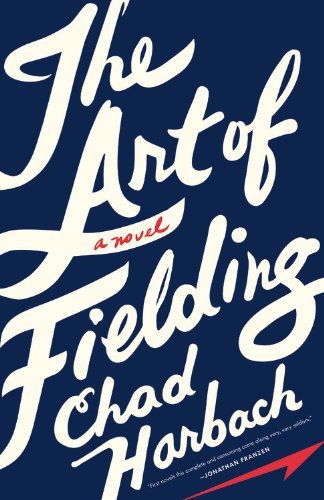
What I'm Reading: The Art of Fielding

Well, while I am making good progress on my New Year's resolution to read 2 new romance authors this year, I am quite far behind on my resolution to keep up on my reviews.  Of the 6 books I have finished reading in 2012 (with 2 more that I have to finish in the next week for work), I have only written 2 reviews so far.  So I am 4 (about to be 6) behind already!!

I will only be getting further behind, so today I am going to buck up and get going.  Also, I have a bunch of boring paperwork to complete today, so writing a review will be a nice procrastination option.

As I mentioned at the end of this post, I saved the consensus best book of 2011 to read to start 2012.  I really did enjoy The Art of Fielding by Chad Harbach, but I feel like it is cheating for me to read and review.  Why?  It had so many elements that I like if only one of them appears in a book, but this one literally had everything but a circus (one of my other favorite frames; click here to see more on that) and if it had been set in NJ instead of WI, I might have exploded with happiness.

Seriously, here is a cross-referenced list of the things I love to see in any book which are all in play in The Art of Fielding:
  • Baseball
  • Liberal Arts College Setting
  • Moby Dick references
  • Ralph Waldo Emerson references (this one is even key to the final dramatic moments)
  • My actual alma matter shows up and is made fun of, but in a fair way.  It made me laugh.
  • Book within a book frame. (The Art of Fielding is a book that the characters in the book refer to often.)
The Art of Fielding also features some of my favorite story telling techniques:
  • Told as a "slice of life"-- The novel is one year in the life of 5 characters. You learn a bit about their life before this pivotal year and nothing about what happens after, but you are wrapped up in every detail of the year in which the book takes place.
  • Told from multiple charcaters points of view.  The story bounces back and forth between 5 protagonists.
  • Interesting but extremely flawed characters.  Each of the 5 protagonists is a good person deep down, but they all have a serious flaw that propels the story along.  In the end they mostly redeem themselves and come to terms with their flaws, but as a reader you are not sure that these flaws are completely overcome.
So all of this being said, I am a bit freaked out by Harbach.  Does he know me? Are we similar people? I don't know the answers here, but I am not going to complain.  That being said, I will again say I might not be the best person to take advice from on this book.  I was predisposed to love it.


Now more general appeal comments.  This is subtle storytelling.  You are meant to dive in and experience this novel.  You live with the characters, get wrapped up in their problems, and come to feel like they are your friends.  They all hit some pretty low points during the course of the book, but manage to pull themselves out (for the most part).

As a result of these low points, there are some darker moments in this novel.  There is one particualrly darkly humorous scene towards the end, but overall, the novel was realistic, thought provoking, bittersweet, and hopeful.

This is not the best book I ever read, but it was extremely well executed (it is hard to believe this is a first novel) and compelling. I was happy to spend a few days immersed in the world of Westish College.  I was sad to finish the book because I so enjoyed my time reading it, but I felt like the ending while open, was satisfying.  All things do not turn out well, nor do all turn out badly.  I will definitely read Harbach's next book.

Notice I  haven't said much about the plot here.  This is on purpose.  The plot itself is not the issue.  How the story is told will determine whether you like it or not.  Plus, this book has been reviewed to death in the last few months, so if you just want a basic plot, go here.

Three Words That Describe This Book: slice of life, multiple points of view, character driven

Readalikes:  The first book I thought of was another one of 2011's best, Swamplandia! because it shares all three of the story telling techniques I mentioned above. Click here for my full review of Swamplandia!.

Many reviewers have called The Art of Fielding Franzen-lite.  I agree completely.  In Harbach's novel the characters are more likable, less annoying, and the story more nuanced. Click here for my review of Freedom by Franzen for more.

The backlist title I most thought of while reading The Art of Fielding was Richard Russo's Straight Man.  The protagonist here is the Chairperson of the English Department at a liberal arts college.  He reminded me so much of the Westish College President who is one of the 5 narrators of The Art of Fielding.  Another good campus life/politics novel is Moo by Jane Smiley.  I have read both the Russo and Smiley, but years before I started this blog. Both are worth a trip to your local library to check out.  Interestingly, both authors are masters at writing quintessentially "American" novels that are critically acclaimed yet accessible. I think Harbach can be placed in their cannon for now.  I hope he stays there and becomes as reliable as these 2 have been over their long careers.

Underworld by Don DeLillo is another suggestion.  It too uses baseball as a frame without being a "baseball novel."  There is a fluctuating point of view in Underworld, but the story is much broader in scope.  In Underwold, the story is that of the last 50 years of the 20th century, while in The Art of Fielding, we are following one academic year.

Monsters of Templeton by Laura Groff could be another suggestion.  From my original review:
Willie Upton returns to her home town of Templeton to recover from a disastrous relationship with her graduate professor. Willie, is a direct descendant (on both sides!?!) of the town's founder. Here Templeton is a stand-in for Cooperstown, NY complete with a James Fenimore Cooper stand-in and a "baseball history museum." But Templeton has something the real Cooperstown does not, a sea-monster, long a part of town folklore, rising to the surface of the lake, dead, in the opening pages of the novel. What follows is a complex novel in which Willie searches through the town's historical documents for the identity of her father. Goff has the dead speak, giving them entire chapters of monologue, and she incorporates some of Cooper's more famous characters into the story.
I think if you are okay with the speculative elements here, the tone, characterizations, and style are very similar.

I mentioned Moby Dick above.  If you feel you did not get the Moby Dick references, a quick look at Nathaniel Phlibrick's compelling and fun Why Read Moby Dick? will clear it all up for you.

Monday, March 12, 2012

Monday Discussion: What Do You Do When You Are Not Enjoying a Book?


Part 1:
Today's Monday Discussion is a bit different.  I would like to combine it with my What I'm Reading post on The Flame Alphabet by Ben Marcus.  Back here I posted about how excited I was to read The Flame Alphabet.  Well, I read it (sort of; see Part 2) and I am sorry to report, I did not like it.

The plot has to do with a alternative reality where the speech of children is slowly killing adults. Marcus uses this plot to contemplate the larger philosophical concepts of language and expression.  The narrator is a father.  He and his wife have a teenaged daughter.  He is trying to figure out why he and his wife are so sick.  There is also this under current of a story about a very weird form of Judaism.  (Frankly, I found it a bit anti-semitic; and I know Marcus is Jewish, but so am I and I didn't like it.)

Even after reading my own description of the book, it sounds like I should love it, but here's the main problem though, this book has no character development.  There is no one here I cared about, nor did Marcus try to get me to care.  Also, the plot doesn't move.  I only got 150 pages into the book (more on that in Part 2 of the post) and nothing happened.  I am fine for a book that doesn't really go anywhere, but only if there is character development.  (See my review of Swamplandia! to see what I mean.)

But, as I have said before, these reviews are not about me and if I liked the book, they are about who I could suggest the book to.  Therein lies another problem.  I can not think of someone to give this book to.  Jose in Circ is trying it, and will let me know.  A woman in Kathy's book club who likes more dense books couldn't finish it though.

So, I am stuck here too.  Which leads us to Part 2 of this post in a moment.

Three Words That Describe This Book: experimental, philosophical, relaxed pace

Readalikes: Marcus has been compared to other authors who are also more experiemental like George SaundersNathan Englander, and David Foster Wallace.  Someone else said he was similar to Jonathan Lethem.  Maybe, but I really like Lethem.  Click here to see more about him.

Part 2:
That's my report on reading the book, but let's move on to the Monday Discussion part of this post.  As I mentioned above, I was very torn about giving up on The Flame Alphabet.  I really thought I should like it.  Many of my favorite authors (Lethem, Safran Foer, and Chabon) all had wonderful things to say about it.  The entire plot intrigied me.  It is an experimental book about language and expression which is normally perfect for me.

Now, normally if I am not enjoying a book, I skim through the middle and read the end to get a sense of how it turns out. As I tell my patrons all of the time, if you are not enjoying a book, there are many, many more; simply close it, bring it back, and we will give you something else.  I almost always take my own advice.  As a rule, I have no problem giving up on a book.

But with this novel, I felt like I should keep plodding away on it.  I even took a 2 week break and went back to it.  But in the end, I couldn't do it.  I returned it half done and did not skip to the end to see how it turned out just in case I give it another try on audio. We will see.

What about you.  For today's Monday Discussion, share what has happened when you tried to read a book you thought you would love, only to find yourself very disappointed.  What did you do?  How did you react?  Or, just share if you are one of those people who can return a book unread, or do you finish everything, like it or not.

For past Monday Discussions, click here.

Thursday, May 17, 2012

Carnegie Medal for Excellence in Fiction and Nonfiction Finalists

Back in March I posted this big news:
...RUSA and Booklist announced that they will be using the RUSA Reading List winners for adult genre fiction and the Booklist 50 Editor's Choice titles as finalist lists for a brand new award for Adult Fiction.  Nancy Pearl has agreed to be the Chairperson of the inaugural award committee. The ALA and the Carniegie Corporation are sponsoring this award.
Well, today those finalists have been announced, and Karen Russell is on a tear this week. She should play the lottery.  Here is the official announcement:

Andrew Carnegie Medal for Excellence in Fiction 2012 Finalists:


Russell Banks. Lost Memory of Skin,
published by Ecco, an imprint of HarperCollins Publishers
An intelligent and fearlessly sympathetic portrait of a group of society’s outsiders—sex offenders—that illuminates the moral complexities at the heart of our justice system.

Anne Enright. The Forgotten Waltz,
published by W. W. Norton & Company
The vicissitudes of extramarital love and the obstructions to its smooth flow—including spouses, children, and the necessary secrecy surrounding an affair—are charted in sharp yet supple prose.

Karen Russell. Swamplandia!,
published by Alfred A. Knopf, a division of Random House, Inc.
This dazzlingly inventive first novel introduces 12-year-old gator-wrestling Ava Bigtree and her eccentric family, whose lives (and the Florida theme park they run) straddle the boundaries between the real and the surreal.

Andrew Carnegie Medal for Excellence in Nonfiction 2012 Finalists:


James Gleick. The Information: A History, A Theory, A Flood,
published by Pantheon Books, a division of Random House, Inc.
A comprehensive study describing the melodious interplay between science and literature documents the transmission of human knowledge from talking drums to the Internet.

Manning Marable. Malcolm X: A Life of Reinvention,
published by Viking Penguin, a member of Penguin Group (USA)
This definitive work on the life of the Malcolm X corrects previous misconceptions and offers new information about the charismatic leader’s life and death during the turbulent years of the civil rights era.

Robert Massie. Catherine the Great: Portrait of a Woman,
published by Random House, an imprint of the Random House Publishing Group
A compulsively readable biography of the fascinating woman who, through a combination of luck, personality, and a fine mind, rose from her birth as a minor German princess to become the Empress of all the Russias.

The winners will be announced at the ALA Annual Conference.

Tuesday, April 19, 2016

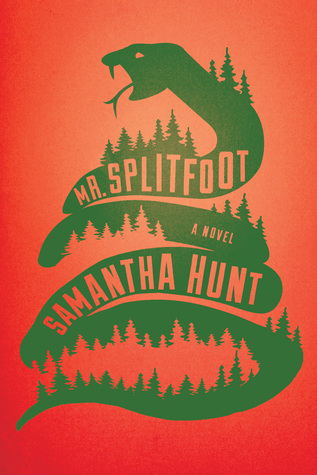
What I’m Reading: Mr Splitfoot

Becky’s Soundbite Review of Mr Splitfoot by Samantha Hunt:
Creepy and compelling, this contemporary Gothic has much to offer a wide range of readers. Ruth and Nat are orphans living in a severely religious and corrupt group home who begin conducting seances to contact the dead or missing parents of their fellow orphans. Many years later, Cora, Ruth’s single and pregnant adult niece awakens to find her Aunt Ruth, who she has not seen in many years, has returned, mute, to lead Cora on a journey across northern NY State on foot.  Where are they headed? Where has Ruth been all these years? The skillfully told dual narratives, move back and forth between the two time frames, compelling readers to join Ruth and Cora, following both the women and the clues from the past into the present.  Plot twists, lyrical language, and a heartbreakingly beautiful ending make this a satisfying read.
Further Appeal Notes: For such a lyrical novel, with sentences that beg to be re-read, and for one with such a focus on the characters-- particularly Ruth and Cora-- this is a surprisingly compelling novel. It could have been much more methodically paced since much of the action in Cora’s storyline involves her and Ruth simply walking, with only Cora talking because in the present storyline, Ruth cannot or will not talk. [Don’t worry, this “or” question is resolved.] But it is not slow at all. Much of this is a result of the well constructed dual storylines. Each separate storyline is intriguing, but it is the frequent switching back and forth that drives the action and keeps readers turning the pages. Readers are compelled forward to find out what in the past is driving the storyline in the present. And rest assured, there is no confusion here because the Ruth of the past and Cora in the present are such unique and strong narrators that you clearly know which storyline and time frame you are in at all times.

This is also a story about a journey, about the limited choices poor kids have, especially poor women. It is a novel about the place, far upstate NY, too.  There is a reverence for the natural beauty of the place, but it is balanced with a sadness about what it is like to live there too.

I cannot stress enough how beautifully this novel ends. It may not be a typical or standard example of a closed ending, but it is resolved beautifully and movingly. Readers who enjoyed the journey will be satisfied.

This is a surprising book in that it is not your typical story in any way; however, I do think it would appeal to a wide range of readers nonetheless. As I mention below, it reminded me greatly of Karen Russell and Wiley Cash, two authors who I would also describe this exact way.

Three Words That Describe This Book: atmospheric, parallel narratives, lyrical

Readalikes: The publisher says Mr Splitfoot is for fans of Aimee Bender and Kelly Link.  I agree with that, but I felt more of a connection to Karen Russell and in particular, Swamplandia! Both are atmospheric and follow young women on the outskirts of “normal society” who are on a journey. They are also equally as lyrical with a strong sense of place [just different places]. They are also offbeat with a slightly mystical or magical element.

Also, I don’t like the idea that a female author can only trigger female author read likes because the first author I thought of when reading Mr Splitfoot was Wiley Cash. Here is a sample of what I said in my review of his debut novel A Land More Kind Than Home:
This is a beautifully wrought story that at every turn gives you more than you expected.  The "plot" involves the killing of a mute child at a prayer "healing" by the creepy preacher mentioned above.  But we know from the first pages that the child will die.  Thus, this novel is not about the murder.  It is about rural communities and the intimate links between the people who live there.  And it is about the setting.  In the end this is a story where a drama unfolds, a conflict which has it roots back a generation from the current murder, and once we reach the last page, everything has changed and yet, at the same time, we are back to the way it always was.
Much of the commentary here about the appeal of this story also holds true for Hunt’s novel.

Finally, try Delicious Foods by James Hannaham. How the stories are told with a manipulated time frame, the overall ominous tone, and the theme of lives lived on the edges of “normal" society, are all shared here.

Please click on the links for both the authors and the specific titles in this readalike section to find many more readalike options.

Thursday, January 19, 2012

Battle of 2011's Best and Best to Come in 2012

I was going through my RSS feeds yesterday and found two things that on their own are interesting, but paired together are fun.

First, one of my favorite events of the  year has begun, the annual battle of the books over on The Morning News.  Basically they run a bracket system like the NCAA basketball tourney where the previous year's best books battle it out for supremacy.  They use guest editors to stage the battles and make the decision.  It is a wonderufl way to wrap up the dueling "best of the year" lists.  Click here for all of the info.

So I will let the good people at The Morning News close out 2011 in the world of books (although my votes are for Swamplandia or the Sister's Brothers).

So now let's move to 2012.  I love this calendar from the people at Book Page.  It breaks down the most anticiapted book of 2012 by month.  I will use this calendar all year.  I can use it to plan for collection development purposes, and for my own sake.  I may have to start a countdown to the publication of The Twelve I am so excited for it (scroll to August).

There you have it.  Out with the old and in with the new!

Saturday, December 31, 2011

What I'm Reading: Becky's Favorite Books I Read This Year

Here are my Top 10 Favorite Books I Read in 2011, in no particular order. Please use the links provided for my full reviews.


  • Swamplandia! by Karen Russell: the descriptions of the Everglades alone makes it hands down my favorite book this year
  • The Leftovers by Tom Perrotta: a favorite author who keeps surprising me by getting better with each book
  • The Known World by Edward P. Jones: again, I am sorry it took me so long to read this masterpiece.
  • Before I Go To Sleep by S. J. Watson: a better suspense story I did not read this year.


  • The Caretaker of Lorne Field by Dave Zeltserman: I read some great horror this year (click here to see more) but nothing stayed with me more than this one.
  • Centuries of June by Keith Donohue: for its ability to be original AND entertaining
  • Full Dark No Stars by Stephen King: not horror, but these four psychological suspense novellas were riveting and frightening, especially in the excellent audio version I listened to.
I have a few overall comments and observations to make about my reading also:
  • There was no nonfiction on my final top 10. I tried to go back and find something I enjoyed enough to bump one of these novels off, but I could not. I really liked both In the Garden of Beasts by Erik Larson and At Home by Bill Bryson, but I enjoy both authors and expected to enjoy these books.  As a result, my enjoyment did not surprise me as much as it did with the 10 books in the list above.
  • For similar reasoning 2 other novels just missed the cut, Faithful Place by Tana French and Started Early, Took My Dog by Kate Atkinson.
Finally, I always save at least one title from one of the year's best lists to start the next year off with. Example from year's past in this tradition  Await Your Reply (on most of 2009's Best Lists, made mine in 2010), Olive Kitteridge (on most of 2008's Best Lists, made mine in 2009), The Brief Wondrous Life of Oscar Wao (on most of 2007's Best Lists, made mine in 2008).  That is a good track record for this year's selection, The Art of Fielding,  to have to live up to.  I will have a report on it sometime in January, but it will be an entire year before I will know how it pans out in comparison to everything else I read in 2012.
Thank for following me on yet another year of reading.