In today's LitHub newsletter, they have are featuring this essay:
Monday, November 3, 2025
In Praise of Librarians in Dangerous Times vis LitHub
Monday, September 22, 2025
Essay by a Librarian About Having a Controversial Job and My Thoughts About the Responsibilities of Being a Librarian in the Public Eye
My book comes out tomorrow and as I get ready to let the world know why some of the genre's most popular authors love Horror, I am also cognizant of the fact that the release of this book is my chance to communicate to a larger audience what we do at our public libraries.
My essay to begin the book is all about what a Readers' Advisor is and how important the work we all do is. And, as expected, one of the questions I received at my first in person event for the book required me to talk about the definition of horror and how to find the right horror book for each reader.
I have been a Public Librarian since the summer of 2000, so a full 25 years, and this will come as no surprise to any of you, while the job has never been easy (or as easy as the general public seemed to think it was), the last 5 years have been beyond hard. We have become the public enemy to many.
There are many library workers fighting the good fight, losing their jobs, getting doxxed, etc... I am not alone in speaking out publicly for public libraries and librarianship. But there are not enough of us speaking out into the general media and communications landscape. We need to all start addressing how messed up it is that being a librarian is one of the US's most controversial jobs.
My contribution to this conversation is both my book and my willingness to start calling out supposed supporters about how little they have actual done to help us in every space I can. Click here for more by me on this topic.
Last week, librarian Katie Walsh, took their own very public stand with this essay in Slate-- "I’m a Librarian, Therapist, Personal Assistant, and First Responder. Moments Like This Make It All Worth It. It’s one of the most controversial jobs in the country, but I’m so glad it’s mine."
Please click through and read this essay. Not only is an excellent example of library workers advocating for themselves and helping to counter the negative images that some are trying to spread about us, but also, it all begins with a great RA conversation, one similar to ones you have had many times.
Friday, April 4, 2025
COVER REVEAL: Why I Love Horror Edited by Me with an Excerpt from Grady Hendrix
![]() |
| Pre-Order now |
Today CrimeReads has the cover reveal of my upcoming book. Out 9/23/25.
Click below to read the excerpt. I picked Hendrix's essay for the excerpt because it is right in the middle of the book and it is one of the best in the book. It leaves you on a cliff hanger and let me tell you, the rest of the essay is totally worth it. Early readers agree. I have received MANY comments as they finish this essay.
You can pre-order WHY I LOVE HORROR anywhere books are sold. Here is the Bookshop.org link. Digital ARCs will be available at Library Journal's Day of Dialog on 4/17 where Alma Katsu and I will be there to discuss her essay and her upcoming book FIEND and soon on NetGalley and Edelweiss. Paper ARCs will be at StokerCon and ALA Annual.
Thank you to CrimeReads for hosting the cover reveal.
Monday, August 12, 2024
What I'm Reading: Booklist's Spotlight on SF/F/H Online Only Reviews
(I still have a third online only review but it is not up yet, but it is Ellen Datlow's upcoming anthology. I will post it when I can but you know you are buying it, especially because it contains a long out of print SGJ story. But I digress.)
Below I have my draft reviews of 2 books with bonus appeal info and my three words, but please note, these reviews are longer than their print cohorts. Online allows for up to 300 words which means I can add more information to the official review. And in this case, since both are collections, it allowed me to go into detail about some of the essays and poems inside of the books.
Please check out all of the wonderful Science Fiction, Fantasy & Horror content available for you all month over on Booklist Online. And click here to see more from me on how to use it to help readers.
The Horror Aesthetic: Essays from the Dark Corners of the Genre
By L. Marie Wood
Oct. 2024. 232p. Mocha Memoirs, $25 (9781962353151); paper, $17.99 (9781962353144); e-book (9781962353168). First published August 9, 2024 (Booklist Online).
Horror author and scholar Wood has collected dozens of her essays and lectures from the last decade into one volume centered around her thoughts on the genre from her perspective as an African American woman and professor. With essays on topics as broad as the genre as a whole to specifics about tropes, the use of African Folklore in Horror, the history of Horror and its popularity across time, Horror film, and more, Wood’s essay collection stands out as more than a book, rather it could be seen as a course on Horror, its readers and society as a whole. Of particular note to library workers and their readers is the excellent section outlining the various types of antagonists (e.g. mummies, vampires, werewolves, killers or the undead in general, even bugs) in Horror fiction with a detailed breakdown of their history throughout literature, film, and human storytelling, discussion as to how writers employ them and why readers enjoy them. Whether readers turn to this book for a specific essay or to read it in its entirety or something in between, this is a stellar entry point into the genre, told with a compelling mix of the authoritative voice of a well known teacher and the grace of a critically acclaimed fiction author, and suitable to die hard Horror fans and newcomers alike. As Horror is seeing a surge in interest from a more mainstream audience, this volume serves as a great companion to help libraries provide context to their Horror fiction collections both to assist library workers as they help readers and for curious readers themselves.
Three Words That Describe This Book: essays about Horror, authoritative, fascinating
Further Appeal: This book sells itself. I was able to capture the reason someone would read it-- either cover to cover- or consult it for a specific need or interest. What I like about this collection the most, is that while Wood is an expert, she is also a college professor. That comes through in the essays included here. She is sharing her knowledge but in a way that even someone new to these topics can understand. Anyone, from those just curious about Horror to hardcore fans, will enjoy this book.
Readalikes: I could not list in in the review itself but my book is a great readalike here. It is listed in the side bar of the online review. Also this collection of essays is the perfect companion to Horror Noire: Blacks in American Horror Film from 1890s to Present by Robin R. Means Coleman and the film made about it, Horror Noire: A History of Black Horror.
Tiny Oblivions and Mutual Self Destructions
Poems by Maxwell I. Gold
Aug. 2024. 96p. Raw Dog Screaming, paper, $13.95 (9781947879775). First published August 9, 2024 (Booklist Online).
Cosmic horror is having a moment as it separates itself from its virulently racist and hateful founder, H. P. Lovecraft. Authors—many from groups Lovecraft openly despised—are harnessing the subgenre’s powerful message of nihilism, of looking at forces whose power is so vast that human suffering is of no concern, and then using the terror of being forced to live in their marginalized identities as the root of their own horrific tales. Gold, fresh off a Bram Stoker nomination for his last horror poetry collection, Bleeding Rainbows and Other Broken Spectrums, boldly inserts himself into this conversation, staking his claim as the voice of cosmic horror poetry and centering his own experience as a gay Jewish man. Many of the works in this collection of free-verse poems could chillingly stand on their own, as illustrated in “The Mirrored Ones,” featuring a protagonist who is trapped and repeatedly tapping, in a futile attempt at release. However, they are stronger together, united by an unnamed narrator, presenting a story of intense existential dread where the repetition of the small things, like needles and mirrors, are continuously juxtaposed with gaping mouths and unending voids. Take for example, the placement of the poem “2055,” which offers a clear picture of an Earth in extreme eco-distress, followed immediately by “I Was Nothing But A Dead Star in His Pocket,” which casts the narrator as a rat trapped by a cosmic being for millennia. Recurring places, situations, and events all build to a crescendo as they shift and change, carving out a space where the reader must grapple with immersive and visceral feelings underscored by the terrifying threat that all could “succumb to the pressure.” Like the works of Stephanie M. Wytovich and Christina Sng, Gold's collection is a great option to showcase how poetry is an excellent format to elicit the tantalizing and unsettling feelings that are at the heart of horror’s popularity, or as an introduction to cosmic horror as it stands today.
Three Words That Describe This Book: cosmic horror, thought provoking, immersive
This collection of poems is important for that first point because Gold is the leading writer of Cosmic Horror poetry right now. But also, Horror poetry in general is very popular. As poetry gains in popularity, Horror poetry in particular is rising to the top because of how accessible it is to a general audience. Horror is about how it makes you feel, and so is poetry. Using words and imagery to make the reader feel emotions is the bread and butter of poets already. Combine that skill with the emotion that is Horror and you can see why Horror poetry is having a mainstream moment.
Tuesday, November 28, 2023
A Deep Dive Into Romance via Public Books
I am working on a few bigger projects today, however, I did not forget about the blog. I have an essay I have been saving that looks at why Romance is thriving with data to back it up.
We need to stay on top of the biggest trends all of the time, yes. But it also helps to give these trends context. The increased interest in Romance readership, especially titles not from the white, hetero, cis POV is undeniable. So take a few moments to look at Public Books' report, "Genre Juggernaut: Measuring "Romance"
This essay will help you understand where the current interest is coming from and how it has been sustained, as well as give you a sense of where it might be headed.
The data here is fascinating and presented both in text and with visuals. It is also helpful to understand the emergence of Romantasy (Romance Fantasy) as its own category, and a term we see patrons using when they come in to ask for books.
Give the article a look and maybe use some of the things you learn to engage your Romance readers in conversation about what they are reading, what trends they are seeing, and why they want more of. Even if you are not a Romance reader yourself, this essay will get you up to speed immediately on where the genre is at this moment.
Tuesday, November 29, 2022
How Fiction Helps Us Cope With the Real World via Self
When I teach Readers' Advisory in general and genres that appeal directly to the emotions, specifically [Horror, Romance, Gentle Reads, and Relationship Fiction], I spend a great deal of time talking about how important reading fiction is to us as humans.
Reading stories of fictional worlds, allows us a safe way to escape our day to day existence while also exploring new places, people, and situations. And because of the public libraries and the work we do to help match readers with the right book for them at that moment in their lives, it is an affordable way to escape.
Matching books with readers based on the feel of the book, not the plot, is at its essence what RA is. It is different from "bibliotherapy" however. We, as public library workers, are not trained to provide actual psychological help to our readers, many of who we barely know. But, we can help them find the right book, author, or even genre, to explore as a way to help themselves in the way they need at that moment.
We do this by being the middle person, a match maker, there to open up the universe of options for them. To navigate the mass of titles and help them narrow down a choice, so they can find what they re looking for-- be it something for just a fun, quick, escape, something deeper, or anything in between.
Today, I want to share an essay by Jennifer Chen, from Self earlier this month entitled, "I Highly Recommend Romance Novels If You're Really Going Through It Right Now," where Chen talked personally about how Romance novels "...saved me when self-help couldn't."
This is a great resource for you, not only to look at the broader RA issues I am talking about, but also to see how a specific genre can provide a much needed real world connection.
If you are anyone who has ever helped any reader-- which should be all of you or why do you read this blog-- this reader reaction to finding the right books for them is a wonderful resource to ward understanding WHY we do this work and WHAT "success" looks like from a reader perspective.
Thursday, November 4, 2021
Why Don't Books Have a Credits Page? via Book Riot
I was going to have a different post today, but my colleague and Summer Scares committee member, Kelly Jensen had a fascinating essay on Book Riot today entitled "Why Don't Books Have a Credits Page?"
Like me, Jensen has done Readers' Advisory and Collection Development as a librarian and she has written a few books. She has a 360 degree view on the book world, which I always appreciate in her writing and as I work with her on Summer Scares.
"Before falling into the world of books, first as a librarian, then as a writer and editor, I didn’t think too much about the pieces of a book or how it came together. I mostly perused acknowledgments to see if there were any familiar names or, when I began to understand what it was I loved in a book, to discover if books I really enjoyed were edited or agented by the same people. There’s a lot of reader service in finding common themes an editor likes in their books, for example, or seeing the types of books an agent represents.
But then, I published a book and I realized the true value in all of these elements of a book, both as a writer and as a reader."
Click here to read more.
Jensen brings up a variety of ways a credits page would help you as you help readers. One of her points deals with something I have written about too-- using the same editor as a readalike.
But she has so much more to say about why books should have a "Credits" page [like a movie] and how it is helpful to readers and library workers.
I am a huge proponent of thinking outside the box as we help readers. Not only does it help us to identify new resources as we employ a slightly different perspective to our day-to-day work, but it is also extremely energizing. And don't we all need that these days.
I mean, I got so excited I cancelled the pre-scheduled post for today. That is saying a lot coming from me.
Wednesday, June 29, 2016
Essay on How We Consume Media
By this point most library workers see things the same way I do. When we talk about “Readers’ Advisory,” we are talking about library workers matching the patron in from of them with the right leisure read, watch, listen, etc... for them at that moment.
However, we are ahead of the curve. The rest of the world still seems to have this PRINT vs DIGITAL mentality. That is all they want to talk about-- patrons, mainstream media, publisher studies. What is being lost in this simplification are the WHYs and HOWs people consume media today.
As library workers, we need to be aware of trends in media consumption. For example, think about how hard it would be to do your job if you were not aware of the binge watching phenomenon. This is a huge shift in how many of our patrons use our materials and online streaming services from just a couple of years ago. When I help people who want a new show or series to read, I need to make sure to ask how long a series they are looking for and if they want one that is already done so they can experience it in its entirety. This is something most people didn’t care about before, but now, more have strong feelings about this than do not.
That question in general was not one I thought to ask back in 2000 when I was a baby librarian, but with changing methods in delivery and consumption, it was one I had to ask all of the time by 2015.
The point I am trying to make today is as part of our jobs as Readers’ Advisors we need to stay aware of how and why the public consumes their media not just what they are reading [be that a specific title or a format].
To get you thinking about this important service issue a little more seriously, I suggest you read this excellent and well researched essay from The Millions-- Beyond Digital vs. Print: On How We Consume Media. There is much there that you can use to better serve a patron right now.
Tuesday, June 16, 2015
Future of the Book
I was so focused on the future that I lost track of the present...today’s post. Thankfully though, all this future thinking reminded me of one of my favorite resources.
The Millions, hands down my favorite online literary site, is filled with interesting, outside the box writing about books and culture. One example is the occasional feature, The Future of the Book. In this feature, authors and contributors take the title of said feature and craft an essay on that topic.
The results not only produce a nice range of essays on an interesting topic, but just looking through the archive of all of the essays in one place makes you realize what an open topic “The Future of the Book” is. Just seeing the vastly different places each author takes this topic makes you think about what books mean to people-- right now. Because whenever we talk about “The Future,” we are actually analyzing the present [the definition of what SF does].
As a RA librarian, I think it is important to step back from time to time to look at books and reading from an “outside the library” perspective. This is a great example.
Click on over to the feature and see what you can learn about yourself, your patrons, and where reading and books are right now to get a sense of where you think it all going.
Friday, September 28, 2012
Why Adults Read So Much YA Lit
One of their arguments is that the "remedial" nature of YA Lit for adults is a nice change of pace. The argument is much more complex than this sound bite version I am writing here, so click through to read this well thought out and argued article.
While their points are well taken, I think Culture Ramp and others who have engaged in this debate are missing one key factor. There is currently a trend away from the sympathetic narrator in adult fiction, especially in literary fiction, but even in genre fiction. One thing you can count on in YA Lit is that the reader is meant to sympathize with and root for the protagonist. The protagonists in teen novels are supposed to be reflective of the teens who are reading them, and are meant to provide an example of the best course of action to take in a difficult situation. These novels and their protagonists in particular, serve as role models for teens. The protagonists go through a worse version of what the teen readers are going through and come out okay on the other end. The readers are supposed to identify with the characters' plight and learn from the fictional teens' mistakes.
In my work with adult readers, I find that many of them are growing weary with protagonists they cannot trust or do not like. For these readers, knowing that a YA novel will give them a sympathetic narrator is just what they are looking for.
Anyway, that is my 2 cents on the subject, Feel free to leave your in the comments.
On a side note, this reasoning is also why I am generally disappointed with YA novels. I like ambiguity in my protagonists; I crave the unreliable narrator. The clear cut nature of who is good and who is bad is why I often stay away from YA lit in my own personal reading. On the other hand, this is why I like the YA novels of John Green because I feel like he does not pander to teens. His protagonists are nuanced and complex in more of an adult literary fiction style.
Tuesday, September 11, 2012
Literary Guide to the NFL Season
So you get the point. I love the NFL. But, there I days when I feel like my love of football clashes with my obsession with literature and reading. But the people over at the Page Turners blog (NY Daily News) have helped me to reconcile my two seemingly diametrically opposed loves, with a great essay analyzing the literature that best defines each team. Use the linked title below to see the original post with pictures, or just read the text copy below.
But first a 2 bits on analysis here:
- Their overall point is one I love: there will only be one team with a happy ending, but after the season, each team will have a good story to tell.
- What a great way to branch out the concept of readalikes too. Here are readalikes for you favorite sports team. Brilliant. And I thought I was inventive for offering book readalikes for TV shows.
Nerds and Neanderthals: A literary guide to the 2012 NFL season
Buffalo Bills: Tired of wallowing in mediocrity, the Bills have decided to throw caution to the wind. They’ve opened up their wallets and are looking to a large man (DE Mario Williams) to show them the way to a happier life.
Literary Equivalent: "Zorba the Greek" (Nikos Kazantzakis)
Miami Dolphins: The Dolphins are the stars of the NFL reality show, "Hard Knocks." Will they be able to ignore the intense scrutiny of the camera and focus on their craft? Or will these highly-trained professionals succumb to the drama and allow their art to be compromised?
Literary Equivalent: "Frankenstein" (Mary Shelley)
New York Jets: In the absence of true leadership, a culture arises that values bravado over all other virtues. This volatile mix of personalities must resist a descent into anarchy and choose between two imperfect leaders (Mark Sanchez and Tim Tebow) before they tear themselves apart.
Literary Equivalent: "Lord of the Flies" (William Golding)
AFC North
Baltimore Ravens: After years of striking fear in the hearts of men, is this the season that the great Baltimorean (Ray Lewis) finally meets his end?
Literary Equivalent: "The Poe Shadow" (Matthew Pearl)
Cincinnati Bengals: Pinning their hopes to an unproven but charismatic redhead (Andy Dalton), this swarthy crew hopes he has what it takes to lead them to glory.
Literary Equivalent: "The Long Ships" (Frans Bengtsson)
Cleveland Browns: As a Cleveland fan, you had better learn to love the pain.
Literary Equivalent: "Fifty Shades of Grey" (E.L. James)
Pittsburgh Steelers: Led by a man with a reputation as a headhunter (James Harrison), the Steelers play with the ruthless aggression of a bygone era. But has the world moved on and made their violent style obsolete?
Literary Equivalent: "Blood Meridian" (Cormac McCarthy)
AFC South
Houston Texans: Despite making their first ever playoff appearance, the Texans lost several key contributors on both offense and defense and begin the season with nothing but questions.
Literary Equivalent: "The Interrogative Mood" (Padgett Powell)
Jacksonville Jaguars: Compact but powerful, Maurice Jones-Drew packs a concise punch while toiling in relative obscurity.
Literary Equivalent: "The Collected Stories of Lydia Davis" (Lydia Davis)
Indianapolis Colts: Against a backdrop dripping with nostalgia, the team must learn to move on from their rich past. With a lot of (Andrew) luck, they just might be able to carve out their own place in the world.
Literary Equivalent: "The Joy Luck Club" (Amy Tan)
Tennessee Titans: In the world of fantasy (football), Chris Johnson had no equal… until reality came crashing down on him last season. Can he regain his footing in the fantasy realm and scramble his way back into our good graces?
Literary Equivalent: "The Talented Mr. Ripley" (Patricia Highsmith)
AFC West
Denver Broncos: Searching for a more beautiful brand of football, John Elway becomes infatuated with the talented Peyton Manning. In a vain attempt to hold on the glories of his youth, Manning strikes a deal with Elway in an attempt to retain his youth and delay the inevitable march of time.
Literary Equivalent: "The Picture of Dorian Gray" (Oscar Wilde)
Kansas City Chiefs: Last year everything seemed to go wrong for Kansas City (particularly losing young stars Jamaal Charles and Eric Berry for the season), and yet they managed to come out on the other side, if not better, then tougher. Now the team must regroup and find the strength to keep pushing despite past heartbreak.
Oakland Raiders: This season will be played in the shadow of departed owner Al Davis, a hard-living Californian who notoriously bypassed prudence in favor of speed (Exhibit A: Darius Heyward-Bey). As the team races on, will Davis’s legacy be one of triumphant ecstasy or wasted potential?
Literary Equivalent: "Less Than Zero" (Brett Easton Ellis)
San Diego Chargers: The team said goodbye to two legends during the off-season (Junior Seau and LaDainian Tomlinson). Will they be able to cope and do they have the key to unlocking playoff success and leaving their painful past behind?
Literary Equivalent: "Extremely Loud and Incredibly Close" (Jonathan Safran Foer)
NFC East
Dallas Cowboys: Are they an offensive juggernaut on the cusp of breaking through? An overrated glamour team with no guts? A mediocre team elevated by the grace of being in a high profile market? This team looks different from every perspective, and you're never quite sure which account is accurate.
Literary Equivalent: "Rashomon and Other Stories" (Ryunosuke Akutagawa)
New York Giants: Once again, the G-men are Masters of the Universe — but can they maintain their perch at the top?
Literary Equivalent: "Bonfire of the Vanities" (Tom Wolfe)
Philadelphia Eagles: Everything seemed to be going their way, but the Eagles found themselves in a rut for most of last season. Will breaking up with Asante Samuel and starting a promising new relationship with DeMeco Ryans be enough for the team to recapture its mojo?
Literary Equivalent: "How Stella Got Her Groove Back" (Terry McMillan)
Washington Redskins: With this team there always seems to be magic in the air--at least during the summertime. Will the arrival of the enchanting Robert Griffin III be enough to finally turn their off season dreams into reality or will Washington fans eventually awake, disillusioned and unsatisfied?
Literary Equivalent: "A Midsummer Night’s Dream" (William Shakespeare)
NFC North
Chicago Bears: Under former offensive coordinator Mike Martz, the Bears strayed from its lunch pail roots and experimented with a more aesthetically pleasing brand of offensive football — with mixed results. Now the team looks to get back to the basics, going for substance over style with the realization that when it comes to football, beauty really is in the eye of the beholder.
Literary Equivalent: "On Beauty" (Zadie Smith)
Detroit Lions: The sharp rise from league embarrassment to “it” team has left team this struggling with a major identity crisis. Are they loveable upstarts or menacing bullies? Following an off-season featuring multiple arrests, this team has a lot of soul searching ahead of them if they have any hope of establishing an identity for themselves.
Literary Equivalent: "The Namesake" (Jhumpa Lahiri)
Green Bay Packers: Motivated by his humble beginnings (an embarrassing drop in the 2005 NFL Draft), Aaron Rodgers has climbed to such great heights that anything short of a Super Bowl is considered as a disappointment.
Literary Equivalent: "Great Expectations" (Charles Dickens)
Literary Equivalent: "Slow Man" (J.M. Coetzee)
NFC South
Atlanta Falcons: Last year, GM Thomas Dmitroff gave up a king’s ransom for the right to draft wide receiver Julio Jones, hoping that his rare combination of speed and power would put the Falcons over the top. After a promising but inconsistent rookie season, Jones is out to realize his potential and prove that he is the right fit for this team.
Literary Equivalent: "The Missing Piece" (Shel Silverstein)
Carolina Panthers: In his record-breaking rookie reason, quarterback Cam Newton displayed superhuman abilities, not only with his rocket arm, but with his uncanny ability to escape tricky situations. With his tenacious sidekick (Steve Smith) by his side, the unlikely duo is determined to take the team to new heights and change NFL landscape.
Literary Equivalent: "The Amazing Adventures of Kavalier & Clay" (Michael Chabon)
New Orleans Saints: After a tumultuous off season heavy with suspensions and fines (including a year-long ban for head coach Sean Payton), New Orleans fans will spend most of their season resentful and sending angry missives to NFL Commissioner Roger Goodell and other authority figures; letters that will probably never even be read.
Literary Equivalent: "Herzog" (Saul Bellow)
Tampa Bay Buccaneers: The Bucs have put together an intriguing cast of characters, but the question remains: Do they have the skill to successfully weave the different parts together into a cohesive whole?
Literary Equivalent: "A Visit from the Goon Squad" (Jennifer Egan)
NFC West
Arizona Cardinals: Since entering the league, Larry Fitzgerald has been one of the league’s greatest wide receivers and one of its consummate professionals. But since QB Kurt Warner’s retirement, his world has become a truly desolate place. With such scant signs of life around him, Fitzgerald can’t help but feel desperately alone on the football field.
Literary Equivalent: "Zone One" (Colson Whitehead)
St. Louis Rams: Despite a successful track record, head coach Jeff Fischer was unceremoniously dismissed from his position with Tennessee. Known for his disarming nature and straight- forward approach, Fischer will bring a new sincerity to a program that is in desperate need of a fresh perspective.
Literary Equivalent: "No One Belongs Here More Than You" (Miranda July)
San Francisco 49ers: Always the controversial figure, the enigmatic Randy Moss has been largely villainized in the court of public opinion. This is his last chance to prove that the stories aren’t true, that he has been misunderstood this whole time. It also wouldn’t hurt his cause if he could prove that he can still fly down the field.
Literary Equivalent: "Wicked" (Gregory Maguire)
Seattle Seahawks: Unable to find his perfect man, the likeable but unlucky Pete Carroll decided to take a chance on Russell Wilson — despite his obvious shortcomings. Will Wilson turn out to be the Mr. Right with whom Carroll can spend the rest of his life season?
Wednesday, August 29, 2012
The Future of American Fiction series on Flavorpill
If you haven’t noticed, we spend a lot of time thinking about literature here in the Flavorpill offices, digging through its past, weighing its current state, and imagining its future. Take a look at our bookshelves and you’ll find us reading everything from Nobel Prize winners to age-old classics to paperbacks printed at the bookstore down the street. Call it Chick-Lit, Hysterical Realism, Ethnic-Lit, or Translit — if it’s good fiction, we’ll be talking about it. So this summer, we launched The Future of American Fiction: a weekly interview series expanding on that endless conversation about books we love, and yes, the direction of American fiction, from the people who’d know. Each Tuesday we’ve brought you a short interview with one of the writers we think is instrumental in defining that direction.I have been following the series all summer, but I waited until it finished to pass it on. I have to say though, I can tell they need more librarians on their blog. There was no tag for the entire series. I had to run a search that only pulled up these articles, and then provide you with the link to the search. So my link is the best way to access each entry.
Despite the organizational issues, the content is great. The most recent entry is an interview with Emma Straub, whose new book, Laura Lamont's Life in Pictures, has been getting buzz for months.
The editors went out of their way, as the stated above, to ask a wide range of authors about their opinion on where American Fiction is headed. What I love here is that these authors are mostly at "midlist" level right now, but they are helping to move fiction into a new direction.
This is a series worth a look for readers and librarians. Pass this one on to your interested patrons.
Wednesday, August 1, 2012
Marketing Horror All the Year Through
As part of Monster Librarian's Monster Movie Month, I wrote a guest post for them about how to use the popularity of horror movies and TV shows to market your horror book collection to a wider range of readers.
Here is the link to my guest post. It also includes a link to their review of my book. For you lazy people, the full text is also copied below.
One of the biggest questions I get from my fellow librarians is how they can best market their horror offerings throughout the year. Of course it is easy to get patrons to notice horror in October. Every other marketer in the world is priming the public for all things scary, so when people walk in the library, they are horror hungry zombies, looking for their next meal. We have to do little more than place the horror books within their line of sight, and patrons snatch up the books by the handful.
Ah, but the rest of the year we do not have the entirety of mass media working for us; we have to try just a little bit harder. But as daunting a task as it may seem, marketing horror to your patrons during the other 11 months of the year, is not as difficult as you might think. I have 2 easy ways you can seamlessly incorporate horror into your general work marketing books at your library.
First, let’s talk about traditional library displays. Most of you out there probably put up a big horror display in October. But why aren’t you doing it other times of the year? The most common answer is that you think your patrons aren’t thinking about horror outside of October. But in the last few years this is not necessarily true.
Let’s take the first 6 months of 2012 as an example. In April, we saw the release of The Cabin in the Woods, a terrific and popular haunted house movie. In May, there was the Johnny Depp vampire soap opera Dark Shadows and in June, the king of mash-ups, Seth Grahame-Smith helped to bring his bloody, smart, and amusing novel, Abraham Lincoln Vampire Hunter to the screen. Each of those movie releases had their own marketing campaigns that resulted in buzz about them among the general public. For each, a small display could have easily been created.
You begin by putting up a graphic of the movie poster on regular 8 ½ by 11 paper (just do a Google image search for the movie) next to a handful of books. Then you grab some books that are connected with the movie. So for Cabin in the Woods, you could pull out some haunted house books, vampire books for Dark Shadows, and some comic horror novels for Abraham Lincoln Vampire Hunter. Displays do not need special shelving. Just put books out anyplace where you have space. For example, at the Berwyn Public Library, we put these small, current event displays up on our desk, on a top shelf that we keep clear to rotate with impromptu displays, and even on small side tables in our seating areas.
These current event displays not only show your patrons that you understand their interests, but they also make a trip to the library easier for them. Patrons are daunted by the large number of books on our shelves, so anything we can do to pull out good books for them, makes them less intimidated and more willing to browse. And, displays linked to current media darlings are a sure fire crowd pleaser.
But how do you choose the books? Here is where I can help. In my new book and on its companion website, I have a lot of lists that would help you to identify titles that you could highlight. I am even fine with you using my annotations, as long as you cite where they are from. In the book I have entire chapters on haunted houses, vampires, and comic horror that include long annotated lists of popular titles available at most public libraries. On the website, RA for All: Horror, I use tags on each post. You just need to choose a tag, like vampires, and all of the relevant posts come up. There are literally hundreds of options at your fingertips.
Another way you can work horror into your displays throughout the year is to simply include a few horror titles in the mix in your larger, more planned displays. For example, we have done displays featuring coming-of-age stories at our library. Since this is such a popular theme in novels, on the display we included books from every genre. There was literary fiction, science fiction, fantasy, suspense, and horror, just to name a few. As I argue in my new book, a coming-of-age theme is huge in all horror. In most horror novels, the protagonist has to overcome his own shortcomings, face his inner demons, and grow up before he can defeat the physical monster in front of him. So what horror books can be included on a “Coming-of-Age” display? Any you want.
What about a display on gardening? I have lots of “plants of terror” titles to suggest to you in my book or on the blog, but here are two of my favorites– The Ruins by Scott Smith and The Caretaker of Lorne Field by Dave Zeltersman.
This plan works with just about any theme. If you just make an effort to incorporate horror into all of your displays, I am sure you will find a tale of terror to fit most displays. The moral here is to consciously mix all genres into your displays. You will have more fun, and you will make a wider range of patrons happier.
My second tip for marketing horror all year also plays off of the media. I mentioned a marketing strategy for one-time movie releases, but what about the excitement we are seeing for popular horror television series throughout the year? Again, let’s stick with just the first 6 months of 2012 and talk about two of the most popular series on television, period– AMC’s The Walking Dead and HBO’s True Blood (okay, technically True Blood is paranormal, not pure horror, but trust me, I will address that in a moment).
The Walking Dead ran on TV in the winter and spring, while True Blood is currently running this summer. For each series I took a different marketing approach at the library. For The Walking Dead, I focused on a web campaign of all things zombie. On my blog, I ran many Walking Dead inspired posts and worked hard to incorporate book suggestions in these posts. I did this throughout the run of the show, culminating with a display of zombie books in the library during the week leading up to the finale.
True Blood was a little more difficult, since its fans are mostly those who like paranormal stories. In paranormal, the main thrust of the story is NOT to invoke fear, as it is in horror. The scares come, but they are not the overall point of the work. As a result, some horror fans do not like paranormal and vice versa. But, that doesn’t mean NO horror fans like True Blood. To address the wide range of appeal in the TV series and the book series, a few years ago, I created this list of Sookie Stackhouse read alikes broken up by appeal. I considered all of the reasons you may like the series and included plenty of horror options on the list. This list is available online and in the library and is one of most popular lists.
I hope I have inspired you to consider marketing horror throughout the year. The popularity of horror TV series and movies today proves horror’s staying power. And if huge production companies think it is okay to push horror during the other 11 months of the year, why shouldn’t you? We have way less to lose than they do.
And don’t be scared of helping your horror patrons. They are not monsters, they just like to read about them.
Tuesday, July 10, 2012
The Great New Jersey Novel
In the past, I have had posts like this one, where I have listed my favorite NJ novels. I vaguely wrapped this self serving post in a discussion of considering people's personal peculiarities when finding books for them to legitimize my indulgence.
But today, when I went into my Google Reader, I was happy to see I am not the only one talking about great New Jersey novels. The Millions, an extremely reputable online literary magazine, had this essay talking about the best NJ novels ever!
On a different note, tomorrow is Gillian Flynn, so expect all Flynn, all the time. The event is "sold out" but we will be video taping it. It will be posted, probably on the BPL website, sometime next week. Of course, I will let you know.
And after the Flynn event, I will have more big news about another best selling author who I have been booked to interview this coming Fall.
Thursday, May 10, 2012
Writers Ponder America and Its Role in Global Political Culture
From April 30 to May 6, 100 writers from 25 countries will be in New York for a festival sponsored by the PEN American Center.
As part of the festival, A. O. Scott, a critic for The New York Times, will talk with the writers Martin Amis, Margaret Atwood and E. L. Doctorow at a Times Talk event on May 2, co-sponsored by the Consulate General of Canada in New York.
I admire these three authors for their fiction, but I wasn't so sure about what they would have to say about this issue. I think their thoughts are worth passing on. I did not notice these essays linked anywhere else, so I am passing them on:We asked those three writers — Ms. Atwood from Canada, Mr. Amis from Britain and Mr. Doctorow from the United States — to consider the question of America and its role in global political culture. Here are their answers.
Personally, I am partial to Ms. Atwood's essay mostly because she said in order to understand America you need to read Hawthorne and Melville (my top 2 favorite authors ever!)
Wednesday, April 18, 2012
Escaping Into a Good Book
Earlier this week, The Wall Street Journal's Cynthia Crossen, otherwise known as, Booklover, wrote this wonderful essay on the importance of "escapist fiction."
I love how she argues that any book can be an escape, even something that most people would deem "serious literature." It simply matters if you are using it as an escape.
She also argues that reading for escape is important for everyone. Read what you want for whatever reason you want.
In my work providing RA service to patrons and training librarians to better their RA service, I am constantly arguing that reading, anything, for any reason, has intrinsic value. We cannot judge anyone's tastes as higher or better than another person's. It simply does not matter.
I just want you to read a book you will enjoy. That is the mission behind my entire professional career.
Everyone should feel free to read whatever book they want from genre fiction to 1,000 page histories without having to explain why they are reading it. No one but you should care why you are reading the book you are reading.
If you come to me, or any well trained RA librarian, you should expect to get help matching your reading tastes with the huge mass of books currently sitting on the shelves at your local public library. I will not tell you what you should read because I honestly believe what you should read is based on what you are currently in the mood for. It is that simple. Really.
So thanks Booklover. Thanks for making my case in the mainstream press. Thanks for all of your wonderful columns (click here to access). And thanks to my husband for passing the article on.
Thursday, February 9, 2012
Romantic Suspense
Another area of romance with which I am more familiar is Romantic Suspense. Technically, Romantic Suspense has much more in common with traditional Suspense, Thrillers, and Adventure stories. Here it is all about the action, pacing, and heroes saving the day.
In Romantic Suspense, the protagonist is always a strong female who is fighting a villain, finding love, getting in peril, extricating herself, and then reuniting with her love interest.
This is the basic plot of most Romantic Suspense novels; however as a recent essay I read in my favorite crime fiction resource, Criminal Element, notes in "You Can't Do That Here: Awkward Moments in Romantic Suspense:"
Ever notice how you can be reading a really good romantic suspense and then something just plain screwy happens?
Like…say, there’s one of those life or death moments. I’m not talking after the life or death moment has passed and the adrenaline rush is still going and people just have to have the glorious life reaffirming moment… (you know where I’m going with this, right?)
But right in the middle. Guns blazing, or people chasing them, or the bad guy is so very, very close…
And what do the hero and the heroine do?
Nookie.This is just the beginning of the essay, click here for the full text. Also, scroll down to read the interesting discussion that has continued in the comments.
On a final note, I would be remiss if I did not mention that despite the random sex, Romantic Suspense also happens to have much more violence than regular suspense. It is a great option for your readers who like harder edged suspense and some lovin'; which is quite a high number of people by the way (at least that is what 11 years behind the RA desk has shown me).
Tuesday, January 24, 2012
Hot Author of the Moment: Ben Marcus
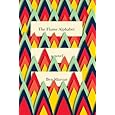
This seemed right up my alley, and Marcus' interview reminded me of one of my 2011 favorites, The Leftovers by Tom Perrotta. So of course I placed a hold immediately. I got Berwyn's copy today. I have to say, as cool as the book sounds, it really has a pretty awful cover. Seriously, how does this lame and bright cover help sell this quirky and dark book.
But that is an aside. You can read my post on the importance of covers in helping readers here.
So, I was already enamored with Marcus when this essay he wrote for The Wall Street Journal caught my eye. Entitled "Strong Emotions, Delivered by Stealth," the writing professor side of Marcus explains how the best authors are able to get us to care so much about a fictional character that we are moved to actual emotions. This is an essay about how to write fiction but it is not written for authors, it is written for us readers.
It made me recall specific books or scenes that have really moved me. For example, I will never forget how the end of Cold Mountain did more than just bring a tear to my eye, it literally had me sobbing, and I am not the sobbing at a book type, more just the teary eyed type. I also recall leading a book discussion of Atonement during which a participant was so physically angry at the main character, Briony Tallis, that she stood up and started pointing and yelling at another group member who was defending the fictional character.
Actually, come to think of it, this behavior was not that unique. I have led many a book discussion like this in which I have had to verbally remind the group to stop getting so worked up about the behavior of a specific character in a novel. Yes, I have had to remind people many times that "these are not real people." But I also then direct the group to the point that the author must be doing a great job if we feel this strongly about a fake person.
So anyone who has ever cried at the end of a book or wanted to sucker punch a character, read Marcus' essay. I'll come back to Marcus the novelist in a few weeks with a review of The Flame Alphabet.
Friday, January 13, 2012
For Love of Acknowledgements
I thought most people did not have an opinion about acknowledgements either way. This week I learned I was wrong. The Millions posted an essay entitled, "The Story Behind the Story" by Henriette Lazaridis Power in which she professes her love of acknowledgements, and talks about how best selling author Ann Patchett does not believe in them. It is an interesting issue to contemplate. I greatly enjoyed her take on it.
What about you? How do you feel about acknowledgements?
Tuesday, August 23, 2011
Are Books Dead?
The good news here is that the major media outlet in question is The Guardian which has the best book coverage on the web. This essay by Ewan Morrison is part of the conversation from this past weekend's Edinburgh International Book Festival.
Now those of is who have been in libraries for awhile now have heard it all before. I remember back in 1998 in my fist library school class reading an article about how libraries will no longer exist in ten years. And here we are 13 years later standing tall and seeing record high circulation numbers.
However much I have dismissed other death of books essays in the past, Morrison's essays makes some great points.
First, we have a generation coming up right now who use very little paper. Not just to read on. The more you think about it you see how right he is. They don't jot notes on paper, the don't collect or save paper. They are the first paperless generation, and they certainly do not read on paper.
Second, he talks about the death of the advance. Kathy and I were discussing this a bit in the RA office today. At first, you think, no big deal, but what it means is that the midlist authors get left behind because they can no longer make a career of writing. Without the chance to be professional writers, they cannot hone their craft, get better, and become the prize winners of tomorrow. He convincingly uses Don DeLillo
Third, there is the current generation's expectation of free original content on the web (not that I am helping matters here by writing a blog with original content and not making a cent for doing it). This is a huge issue. People expect everything to be available for free online. This may be the biggest obstacle to the life of the printed book.
There is much more to see in Morrison's argument. I would highly suggest you take a look for yourself.
Ironically, I am off this morning to take the kiddos to the first day of 1st and 4th grades where they will use books and computers in almost equal amounts of time in the classroom. I am already noticing how much more they read printed books than their peers though.