RA FOR ALL...THE ROAD SHOW!

I can come to your library, book club meeting, or conference to talk about how to help your readers find their next good read. Click here for more information including RA for All's EDI Statement and info about WHY I LOVE HORROR.
Showing posts with label relationship fiction. Show all posts

Tuesday, April 7, 2026

Booklist April 2026 Issue Has a Spotlight on Relationship Fiction and the Annual (Excellent and Genre Defying) "To Beach Their Own"

On the Cover From Mothers and Other Strangers, by Corey Ann Haydu, a Top 10 Relationship Fiction title. Painting by Sebastian Blanck; cover design by Keith Hayes. Used with permission from Little, Brown and Company, a division of Hachette Book Group.
Relationship Fiction is one of our most popular genres at the public library and the recourses for it are sparse. But each year Booklist comes through with a special spotlight on it for us. And that time is now!

Before we get there, I want to talk about the evolution of this genre for a moment. When I started in libraries this genre was referred to as "Women's Fiction." It was basically considered to be books for women, about their lives, starting after the "happily ever after."

But even back when Joyce Saricks and I were teaching the RA class at the graduate school, we told our students that we didn't love the name as there wasn't a men's fiction and saying everything else was men's fiction was not helpful either. It did a disservice to these books, kept them marginalized, and did not leave room for the full breadth of stories that could be told.

And yet, reference books were written on Women's Fiction and the genre persisted. 

As the years went on, however, it changed, for the better. The genre morphed into what I describe it as today in my training programs. This is the text from Slide 17 of my Demystifying Genre presentation:

  • Intimate look into lives people outside of romance.

  • Sympathetic link with reader

  • All relationships considered but women tend to be at forefront

  • NF: Memoirs are about relationships

  • Celebrity book group choices

  • Kelly Jensen’s essay compilations

  • Trends: marginalized voices, navigating different cultures, friendship or family relationships, cross-over with gentle reads, older adults as real people

These are stories about people, intimate stories that are meant to elicit an emotional response from the reader and they are not only about love and they are not only focused on women. Friendships, entire families, people from different cultures and LGBTQ characters are also considered. And many books have a mixture of relationships and identities.

Relationship fiction includes some of our most popular titles. Take just the first four I have on Slide 17 as an example:

  • Tomorrow, and Tomorrow, and Tomorrow by Gabrielle Zevin
  • The Vanishing Half by Brit Bennett
  • Intermezzo by Sally Rooney
  • Heart the Lover by Lily King

But despite the popularity of Relationship Fiction, there are very few resources to help us help readers. A lot of that goes back to its roots as being dismissed as "Women's Fiction." The genre has evlolved but the attitudes about it have not.

Which brings me back to the annual Booklist Spotlight on Relationship Fiction because it is our best resource to help these readers.

First, make sure you have all of the titles on their current list (below). Get them ordered if you don't. Second, use the link I added to pull up the backlist of recent Top 10 Relationship Fiction titles in print and audio. Third, get up a display, make lists, promote these crowd pleasing titles for all readers. 

Here is the content from the issue

Spotlight on Relationship Fiction

And then click on this link for one-click access to the backlist of these lists for print and audio going back to 2023.

But wait, there is more. There is also the annual feature: To Beach Their Own!

That above link is the 2026 list but Booklist has been rethinking the "Beach Read" and providing a great list of option going back to 2020. Click on this link to pull them all up. These lists defy genre contractions and offer books I use for sure bet options when I am stuck for an outside the box recommendation for even the most difficult patrons. These titles, if you pull them all, make for a great display of "beach reads" or "under the radar gems."

Tuesday, April 25, 2023

Booklist Relationship Fiction Spotlight w/ a Bonus Booklist Reader Print Access Reminder

The latest issue of Booklist, in which I have 2 reviews, but today, I would like to highlight their Spotlight on Relationship Fiction.

What is Relationship Fiction? Well, I like to define it as all of emotionally driven relationships between people that are NOT Romance. For a more official definition, you can turn to my publisher and the series I write for here:

Relationship Fiction focuses on emotional stories filled with characters seeking to find balance, accept loss, or start anew. Story lines recount moments of inner conflict and domestic discord played out on a small, intimate scale. The problems in these books are rarely too big to overcome and even in the edgier titles there can be a somewhat comforting ethos. Readers enjoy that these stories are meaningful and reveal the core of a situation, character, or issue  and impart lessons learned.

Now on to Booklist's April 15, 2023 issue and their Relationship Fiction resources. 

My editor, Susan Maguire, has this list of the Top 10 Relationship Fiction: 2023. From that page:

The top 10 relationship fiction titles reviewed in Booklist from April 15, 2022 through April 1, 2023, plumb depths of feeling while exploring the power of human connection through intergenerational conflict, biological and found family, and, sometimes, humor.

To go with that list of print, Heather Booth also has a Top 10 Relationship Fiction on Audio: 2023. From that page:

The emotions at play in the relationship fiction titles listed below come through vibrantly thanks to narrations that are keenly attuned to their characters’ experiences and the interactions among family members, friends, and lovers. All titles were reviewed in Booklist from May 1, 2022, to April 15, 2023. 

And to round out the spotlight, Susan wrote this article with a list about Intergenerational Relationship Fiction. You will need to get your log in to read that last one, or check it out in the print edition. Again, if your library gets Booklist (which most do), you have free online access. Click here to set that up.

Relationship fiction is very popular and these resources showcase why. Use all to suggest titles, start a display, and/or share the lists with your patrons. And because this coverage focuses on titles from the last year, chances are many are on the shelf right now.

Relationship Fiction is also a category in the RUSA CODES Reading List Awards. This means you have access to many more backlist best titles with one click here. Now you have no  excuse to build those displays today.

Finally, this is a reminder that every issue of Booklist is a spotlight issue and will have best lists on a format, genre, or interest area that will include a top 10 list of the best titles from the past year. And most importantly, that spotlight content is also now available in the Booklist Readera magazine that features diverse readers' advisory recommendations for readers and listeners of all ages. It is filled with high-interest, themed lists that showcase books you can read and check out now. And you can click here to find out how to order print copies to give away to your patrons at the library.

Click here to learn more


Thursday, September 24, 2020

NoveList/LibraryReads Crash Course Updates: Literary Fiction Recording and Relationship Fiction Coming Soon

The NoveList and LibraryReads Crash Courses are the easiest way you can stay up to date on popular adult reading choices. They are also FREE. You do not need a subscription to NoveList in order to take advantage of everything these programs have to offer.

Click here to get to the archive of all of the Crash Courses.

This week, they had the latest one-- Literary Fiction. You can access the information about the program, the handouts, panelists info, and of course, the recording all here.

And right after the recording of Literary Fiction went live, the next course on relationship fiction was announced. Those details and how to sign up are here and below.

I suggest signing up so you get notified when the recording is available. I am rarely able to make these live but I always watch the recording. And if I always watch and learn something, you have no excuse. 

Webinar: Crash Course in Relationship Fiction

Do you have a go-to strategy for helping readers with relationship fiction? Whether your readers are fans of upbeat stories of bouncing back or sardonic looks at family dysfunction — let NoveList and LibraryReads break down the best relationship fiction has to offer your readers — from unlikely friendships to witty comedies of manners.

Join as they cover:

  • Why readers choose relationship fiction 
  • History of relationship fiction 
  • Classics, new titles/authors to watch, and awards to know  
  • Subgenres and crossovers
  • NoveList insider information on genre headings, themes, appeal terms, and more

We welcome anyone interested to stay for an additional 15-minute training to share search strategy tips and learn where to access genre-related information in NoveList.

Tuesday, October 27, 2020
2-3 pm Eastern
Optional NoveList training from 3-3:15pm Eastern


By submitting your personal information, you acknowledge that EBSCO Information Services will collect and process your information in accordance with its Privacy Policy, including the categories and purposes of use for such information as described here


Rebecca Vnuk is the Executive Director of LibraryReads. She has an MLIS from Dominican University and worked as a public librarian for a decade before becoming the editor for Collection Management and Library Outreach at Booklist magazine. Rebecca is the author of three reference books on the topic of Women’s Fiction, as well as a best-selling book on weeding library collections. She was named a Library Journal Mover and Shaker in 2010 and was the 2010 PLA Allie Beth Martin Award Winner for distinguished Readers Advisory Service. She lives in the Chicago suburbs with her husband and two tween sons (both of whom still love to read, whew!).

Halle Eisenman leads the Editorial Content Team which oversees the creation of the lists, articles, book discussion guides, and all the other amazing and informative content you can find in NoveList. Prior to working at NoveList, she spent a dozen years working for a public library system in a variety of roles, but no matter what her job title, her favorite part of any day was suggesting books to patrons. When not at work, Halle can often be found walking her dogs (they get lots of exercise when she’s listening to a particularly riveting audiobook), binge-watching TV shows aimed at teenagers, baking, or sitting on her back porch with a book. She is currently serving on the RUSA CODES Reading List Council. 

Kathy Stewart, Moderator: If you’ve heard about NoveList, you might have talked with Kathy. She loves sharing the good stuff about NoveList products with all interested, drawing upon her public librarian experience to help others match readers with books. Kathy’s background as a children’s librarian still informs her reading, from picture books that are read-aloud fodder to character-driven, ‘quiet’ books for older kids and teens.


Thursday, July 25, 2019

What I'm Reading: Goodreads Updates [second 2019 installment]

Today I have another installment of my catch up reviews; 9 to be exact. This post should serves as a reminder that I do periodic updates of all of the books I read for "fun" on Goodreads and then compile them here so that the titles are searchable on the blog too. See below for the authors and titles as well as my three words. Use the links [click on titles] to read the full review on Goodreads.

This should also tide you all over while I am on vacation beginning tomorrow 7/26 and not returning to until 8/5.

And beware, when I get back the August issue of Booklist will have just gone live, and it is the best issue of the year-- the spotlight on Science Fiction, Fantasy and Horror. Not only do I have 3 reviews in that issue, but I have also helped with some of the supplemental coverage. So I will be in full on Speculative Fiction mode upon my return.

Stay out of trouble, read my reviews, use the blog backlist as a resource, and keep helping those patrons. I'll be back before you know it.

Audio
Print

Tuesday, May 7, 2019

What I'm Reading: The Seven of Eight Deaths or Stella Fortuna [A Release Day Review]

Today I have a rare release day review. I saved this review for today because not only is this book an amazing read, but it is the PERFECT Mother's Day gift for all of the women in your life, no matter their relationship to you. However, while women will be drawn to this book. I think men would like it too.

The Seven or Eight Deaths of Stella Fortuna is the debut novel by Juliet Grames. First a word about Grames who I have met a few times because she works for Soho Press. Back in 2017, she was a part of the RUSA panel at ALA Annual entitled, "Growing Readership Through Diversity." You can click here to read a recap of that program and even listen to it.

Grames lays into the entire publishing industry in this talk while still admitting her status a white woman. But Grames also backs up her beliefs with actions and was part of the team that launched diverse bestsellers like Love Hate & Other Filters and The Widows of Malabar Hill into the world, titles that have gone on to sell many copies and win numerous awards and citations.

So when Grames emailed me a few months ago and asked if I would read her debut novel, I didn't hesitate. She is a person I like personally and admire professionally. Also, as a member of a large Italian family myself [one side Philly Italian, the other side New York Jews-- our huge family gatherings are loud and boisterous, but also full of love], I was excited to read this one.

Before I get too far ahead of myself here is the book description from Goodreads which also contains a lot of good appeal:
In this stunning debut novel, a young woman tells the story behind two elderly sisters’ estrangement, unraveling family secrets stretching back a century and across the Atlantic to early 20th century Italy 
For Stella Fortuna, death has always been a part of life. Stella’s childhood is full of strange, life-threatening incidents—moments where ordinary situations like cooking eggplant or feeding the pigs inexplicably take lethal turns. Even Stella’s own mother is convinced that her daughter is cursed or haunted. 
In her rugged Italian village, Stella is considered an oddity—beautiful and smart, insolent and cold. Stella uses her peculiar toughness to protect her slower, plainer baby sister Tina from life’s harshest realities. But she also provokes the ire of her father Antonio: a man who demands subservience from women and whose greatest gift to his family is his absence. 
When the Fortunas emigrate to America on the cusp of World War II, Stella and Tina must come of age side-by-side in a hostile new world with strict expectations for each of them. Soon Stella learns that her survival is worthless without the one thing her family will deny her at any cost: her independence. 
In present-day Connecticut, one family member tells this heartrending story, determined to understand the persisting rift between the now-elderly Stella and Tina. A richly told debut, The Seven or Eight Deaths of Stella Fortuna is a tale of family transgressions as ancient and twisted as the olive branch that could heal them. 
I am happy to report that this book delivered in every way promised above. It is a perfectly rendered, multigenerational, immigrant, historical saga mostly set in the 20th Century. But it is also a story about a woman who refuses to conform, even when it appears to outsiders that she has. It is a relaistically complicated story of a large family and specifically the lives of the women. It is what appears to be a traditional family saga story, and yet there is much more hidden in there.

That extra nuance is what I want to focus on next. It is Grames desires to understand the complicated relationship between the female members of her own family that drove her to write this story. And, although it is fiction [she includes a note about that in the back of the book], because her inspirations were real people, she really dives into these women, their life choices, and how it all affects their relationships to each other and their families. But also the preifereal women. We see a variety of life choices, some chosen and some forced.

The entire book is framed by a character, much like Grames herself, the granddaughter of Stella, who is doing the family research to find out what is truth and fiction, to try to pry the details from the historical record to fill in the missing pieces, the parts the women in the family won't share. While this character only breaks into talking directly to the reader directly a few times, those times are important. One of my favorites is when this narrator honestly breaks down her feelings about the life Stella had to endure, wishing she didn't have to live it, wishing she could have kept her vow to never have children, and yet, all the while acknowledging that without Stella giving in to society and its pressures on women of the time, she, the narrator, would have never been born. This is a great example at the nuance here, of what makes this an excellent example of a historical family saga.

Also the frame of the deaths-- all 7 or 8 of them-- is wonderful. It adds a layer of magic to the story, a magic that may or may not be a ghost, a magic that by the end may have been revealed to be something quite the opposite of magic, something much more base and earthly. And yet, it is all up to you, the reader to decide what you want to believe [which I loved].

The reader is looking for each new death and the narrator knows this. She dangles them in front of us from the title and in the opening pages. She keeps dangling them as sections of the book have pages announcing it is time for another almost death. She winks and nods and prods us through the book. But all the while making us love Stella, despite her faults. Making us care about the family-- warts and all, good seeds and bad ones. Making us invested in their lives, their travels and travails, and their journeys as if they were those of our own loved ones.

We feel Stella's pain. We get attached to many of the characters. We root for her to be able to break free of the bonds that society placed on women of her age. And we end knowing that while some things have gotten better for women, somethings haven't changed.

We see Stella's life from birth, to 95 years old. Ironically, the book ends before her death, although we know it will come soon; this I also loved. It would have been trite to end with her death. We see and hear about other deaths and funerals, but not Stella's or Tina's. And if we did, I would not have enjoyed this book as much.

How do you fell when you finish this book? It's weird. I loved the book. I loved reading it. I loved spending time with the characters. But at the end, you just are. You aren't happy or sad. You just feel like you understand "Family" a little better. You will look at the elders in your family a little differently. You will want to ask them to share life stories. And you will hug your loved ones a little tighter.

This is a page-tuner kind of saga, that has a great frame and very well developed characters. It will memorize you and make you appreciate all of the women who came before you. There is a strong woman at the center of it all-- strong physically and mentally. There is the complicated relationship between sisters at the core. There is high drama and an increasing pace. Anyone who likes historical stories of families-- especially immigrant to first generation ones-- will love this book. Others who like to read about women who refused to be pigeon-holed will also want to read this.

This is a book for readers who are part of a family, no matter their racial or ethnic background. So therefore, it is a book for everybody.

Three Words That Describe This Book: family saga, compelling, strong female

Readalikes: Any book which takes a look at strong women who want to forge their own paths is a great option here. Examples: Fates and Furies by Groff, Here Comes the Sun by Nicole Dennis-Benn, The Red Tent by Anita Diamant. I could keep going. There are a lot of books like this. You get the point. This one will be popular and for a wide audience.

This book also reminded me a lot of Pachinko by Min Jin Lee, which is a family saga set in Japan during the 20th century and follows the family of a young South Korean immigrant woman through her life. These two books make a good pair. Click here for my longer review of Pachinko and for more readalikes.

Also, books about immigrant women across generations by authors like Amy Tan, Isabel Allende, and Lisa See

Friday, August 17, 2018

What I’m Reading: Mr & Mrs American Pie

Today I have a review of a book that I am so excited about. I read it months ago and it just came out-- Mr & Mrs American Pie by Juliet McDaniel. 

Below, I have my official review, but before that I should also mention that this book has a blurb from me on the back, and not one of my Booklist reviews (someone else reviewed this for Booklist and gave it a star), but a blurb attributed to me.  I took a picture, see:


I really liked this book, and I am not the only one. Besides the starred Booklist review, Laura Dern is developing this debut novel for television. Here is the Variety article with all of the details. 

Also, if you live in Chicago, Ms. McDaniel will be reading/signing books at Book Cellar in Chicago this Saturday. Click here for info

But first, you need to know more about this title. Mr & Mrs American Pie by Juliet McDaniel. Here is the summary from Goodreads:


The year is 1969. Dick Nixon was just sworn in as the thirty-seventh President of the United States. Neil Armstrong just took one small step for man and one giant leap for mankind. And notable Palm Springs socialite Maxine Simmons just found out that her husband is leaving her for his twenty-two-year-old secretary. 
After a public meltdown at Thanksgiving, Maxine finds herself not only divorced, but exiled to Scottsdale, Arizona. However, these desert boondocks will not be her end―only her Elba. The former beauty queen sets her eyes on a new crown: that of the Mrs. American Pie pageant, awarded to the nation’s best wife and mother. 
Maxine only has one problem: to win the crown she’ll need to find―or build―a family of her own.
Appeal: Lets start with some of what I said above A hilarious and thought-provoking satire with as much heart as bite.” 

This is technically what was called “women’s fiction,” but what I am now calling domestic fiction. But this is one of most interesting, unique, and inclusive domestic fiction tales I have ever read. And what stuck me most was how the novel is set in the 1970s but it teaches us all so much about our world today. This is why it rises above other similar novels.

Here are just some of the issues that come up in the book:

  • commentary on the role of women in society and their limited choices for “success”
  • Vietnam War
  • being a gay man
  • desegregation and racism
  • child neglect
  • definition of “family,” specifically how we can make our own happy family, one that can be stronger than the traditional, socially normal, ties of conventional marriage and parenthood.
This are series issues, right? Yes they are, but guess what, the book is not a Jodi Picoult emotion-fest. These issues are all dealt with respectfully and honestly but this book is hilarious, heart-wariming and ultimately upbeat. It will make you think about serious issues; it’s bordering on irreverent and moves at a compulsively readable pace. Serious scenes are followed by hilarious caper-espque action sequences.

But none of this would work if McDaniel didn’t have superior character development. Our three main narrators-- Maxine, her friend Robert, and a boy Chuck-- take turns telling the story. They are 3 dimensional. We root for them equally but they are not perfect, not even close, but they all mean well. Each has personal issues that they need to deal with but they all want to do the right thing. Together they find happiness in their cobbled together family, surprising many people, but most importantly themselves. They are an inspiring bunch who make you cringe, laugh and cheer.

I started this book because the publisher asked me to take a look at it. I meant to only skim it to give him basic feedback; however, once I started it, I was glued to my couch for the rest of the day, ignoring all else to finish it. I was surprised how much I loved it. 


McDaniel reveals the truth behind the curtain of the "perfect family" in 1970 America, makes you think about how far we have and havent come since then, and lets you have a good laugh at all of our own expenses.

Three Words That Describe This Book: satire, thought provoking, heart-warming

Readalikes:  This is a book you can hand out to men, women, fans of literary fiction, domestic fiction, and crime caper. It is also a great option for book clubs and has teen appeal too.

As I said above, this is a great title for a satirical look at family and women’s lives like those by Maria Semple and Helen Ellis with all of Carl Hiaasens crime, caper humor and pacing. 

A nonfiction option that also matches this novel very well is I’m Judging You: The Do-Better Manual by Luvvie Ajayi which, like Ms McDaniel’s book is irreverent and thought provoking but still very upbeat. 

Friday, July 28, 2017

RA for All Vacation Edition: Day 7- Backlist Gems from the Archives

Today I've got a women's lives-novel in verse- for adults- by a YA author. Got that? Good. Here it is. 

WEDNESDAY, JUNE 15, 2011

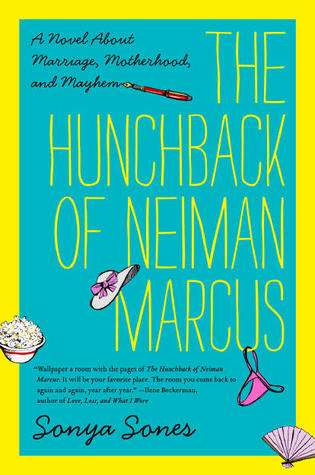
What I'm Reading: The Hunchback of Neiman Marcus

When we have our ARRT Steering Committee meetings, the members are encouraged to share an interesting book with the group.  This is a great way for us Readers' Advisors to share titles that we think would be good suggestions for our patrons.  It also opens us up to new titles.  Since no one can possible read everything, it is a wonderful way to learn about more books.  In fact, I quite frequently will use the suggestion straight from a fellow ARRT member and pass it on to a patron the very next day.

At the March meeting, Karen suggested we all try The Hunchback of  Neiman Marcus: A Novel About Marriage, Motherhood, and Mayhem by Sonya Sones.  She had just turned in this review to Library Journalon the book:
Sones, Sonya. The Hunchback of Neiman Marcus: A Novel About Marriage, Motherhood and Mayhem. Harper: HarperCollins.Apr. 2011. c.416p. ISBN 9780062024671. pap. $13.99. In her first adult novel, an ode to the sandwich generation, Sones employs the same light, free-verse style that has made her young adult titles (Stop Pretending: What Happened When My Big Sister Went Crazy; One of Those Hideous Books Where the Mother Dies) so popular. Dodging her book editor’s calls, newly menopausal Holly finds no pleasant distraction in focusing on her family—a hospitalized mother suffering from ’roid rage and dementia, an only daughter going away to college, and a husband idling at his own midlife crossroads. Readers will smile when they see the “but” coming in a poem that begins, “My husband has many fine qualities” and sigh when Holly describes the ache she feels watching a young neighbor playing with her toddler. Somewhere between Nora Ephron and Jennifer Weiner, Sones recounts the little ouches of aging with a perfect blend of wit and tenderness.VERDICT This is what chick lit should want to be when it grows up—wise, funny, and blunt.—Karen Kleckner, Deerfield P.L., IL
This book is exactly as advertised.  Holly tells us her story, both her present situation with a daughter about to go off to college, a husband who is keeping a secret, and a sick mother thousands of miles away, and her thoughts about how she got to this point.  Her nostalgic looks back at her daughter's childhood were especially moving for me personally.

Holly's voice alternates between humorous, touching, annoyed, angry, frustrated, joyous, and thankful.  She is the reason to read this book.  Her emotions feel real, her reactions true, and her insight down-to-earth

The verse is not as obtrusive as one would think.  We open with Holly's 50th birthday around the corner and the realization that menopause has come.  The short poems capture her feelings perfectly.  Sones uses some poems to move Holly's story forward and others look at the issues of the sandwich generation in greater detail.  So while one poem may be about how much she will miss her daughter, the next may be about her sagging breasts.  There will be one about her work followed immediately by one about her mother.  The switching back and forth is not distracting, rather, it gives Holly depth.  I could feel her inner struggle and the different things vying for her attention.  I did not need pages of character development to understand Holly.  Her poems, and the order in which Sones placed them, did the heavy lifting of the character development here.

Due to the verse style, this is also a quick read.  I raced through the book telling myself I would just read one more poem, but then 45-60 seconds later I thought, just one more, and again...you get the point.  This would be a great summer read for any mom, whether they are living Holly's life right now, or will be someday.

Three Words That Describe This Book: novel-in-verse, humorous, touching

Where This Book Took Me (summer reading feature):  to a peek into what my life may be like in 12-14 years.

Readalikes:  I like Karen's description that this book fits in somewhere between Jennifer Weiner and Nora Ephron.  The Hunchback of Neiman Marcus is a Women's Lives book in the truest sense.  It explores the choices and situations which women in America face today as they move from their child bearing and rearing years into their middle age.

Other women's lives books about mature women which are both humorous and touching are The Three Weissmanns of Westport by Cathleen Schine (more literary), Julie and Romeo by Jeanne Ray (more chick lit feel but with an older protagonist), and the Miss Julia series by Ann B. Ross (a cozier story).

Adriana Trigiani is also a great writer of stories of women from all ages and walks of life.  Her focus is on families, friends, and their interaction with a great balance between humor and touching scenes.  She is just an all out excellent story-teller who will appeal to those who like Sones' work here.

Sones also reminds me of Elizabeth Berg, but with a tad bit more in your face humor (Berg's can be subtle).

If you just liked the whole novel in verse thing, I ran a search in NoveList by clicking on the genre heading in this novel's record called "novels in verse," limited it to "Adult" and "Fiction" and got 31 solid results which included books by the poet and novelist Ana Castillo, who is a great choice for these readers.  Try Watercolor Women / Opaque Men: A Novel in Verse or the novel Peel My Love Like an Onion.

Tuesday, March 1, 2016

Collection Development Tricks for Women's Fiction

March is Women's History month which means it is a good time assess your collection in Women's Fiction-- both what you own and what is on the horizon.

But first, before I give you tips on collection development, let's back up here a second. The genre tag of "women's fiction" is always troubling. What is it? What makes it different than romance or literary fiction?

Thankfully, I have answers...well not me per se...someone better.  Rebecca Vnuk is the library world's women's fiction expert and here is her essay from 2013 where she defines and explains this genre and its unique appeal.

So go read her essay and then come back.

Now we can start talking about women's fiction collection assessment.  The best place to start is with the most recent year.  Rebecca compiled this list of the top 2015 titles in the genre for Booklist's Spotlight on Women's Fiction issue. You can also use your library's digital subscription to Booklist Online to search previous year's lists too. In general a quick perusal of the Spotlight on Women's Fiction issues of Booklist from March of the the last few years, is a great collection assessment tool. You know your library has them saved in the periodical stacks. Go pull them and spend a few hours reading and checking your library's holdings.

A couple other assessment tools:

  • NoveList uses the genre tag "Women's Lives and Relationships" and you can pull up the "Getting Up to Speed in Women's Fiction" article which was updated in June of 2015.
  • Look up your most popular Women's Fiction authors on Fantastic Fiction and then see what the authors have blurbed. Do you own these books? Should you?  Here is Jodi Picoult's entry to get you started.

After you have looked at what you have in women's fiction and figured out what to keep, what to add, and what you just plain missed and need to add immediately, it is time to move on to what is coming down the pike.

Last week, Rebecca Vnuk hosted the webinar-- What's New in Women's Fiction.  This webinar featured many great titles, but what I loved most about watching the webinar was that you get a better sense of the other genres that cross over into women's fiction.

You will appreciate how broad the appeal of "Women's Fiction" really is as you listen to the publishers talk about their upcoming titles.


Click here to access the webinar

Wednesday, November 18, 2015

What I’m Reading: The Gilded Age in Fiction-- Same Frame, Two Different Reading Experiences

This Fall I read two new books with the exact same setting-- The Gilded Age in New York City [1870-1900]. However, beyond the shared frame, these books have very little else in common in terms of traditional appeal factors.

I am grouping them together here because for some people, frame is very important. They will read anything with a specific frame.  So as not to repeat myself, I have a much longer piece on that issue here. For those people, I am making sure to put the frame in my "three words" for both books.

Now for others, frame is the not an important issue.  Instead pacing or storyline or character etc... is what makes a great read for them.  However, we may be tempted to match books when their frame is as similar as these two’s happen to be. You see “Gilded Age” listed for both and you might be tempted to think the books are readalikes for one and other, yet that may not be the case at all.

In fact, if you search either of these books on NoveList, the other appears in the readalike bar on the right.  Interestingly, they are computer, not people, created matches based on the shared genre, time period, and place. I do not disagree with this, as I said above, these three frames may be all someone needs to enjoy both books, but this reinforces what I am trying to do here-- suss out the nuances that matter. Because while I liked both, I clearly enjoyed one more than the other AND I have not suggested both to the same reader yet.

To that end these reviews are meant to illustrate the give and take inherent in this issue.  Both are very well executed novels that will appeal to a wide range of readers, but at their core’s these novels have a very different feel.

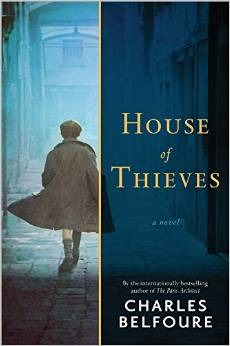
First up, the historical thriller, House of Thieves by Charles Belfoure.

At it’s essence this is the story of how a good, solid man turns to a life of crime, while still staying likable and good in our eyes.

Here is a tiny bit of set up.  It’s 1886 and the rich are VERY rich and the poor, very poor. NYC is run by respected crime bosses. They are criminals yes, but they also among the city's largest arts and political donors. They truly run the city. Our villain is Kent, a crime boss and his crew. Our “hero,” John Cross, is an architect for the very rich. But his son has a gambling problem. To resolve the large debt, Kent wants Cross to use his connections and knowledge to help him rob the homes of NYC’s richest residents.

But why you will like this book is how Belfoure writes it. What is so great here is how he managed to write a novel convincingly and accurately set in its historical time, while telling the story in a way today’s audiences like. He nailed both the historical and the thriller aspects.

For historical fiction fans, the novel has all the details of the time and place. It has a lot of information about being an architect to the rich at this time. And it has amazing descriptions of some spectacular homes. The streets, people, and places come alive.

And while I love historical details, sometimes, historical thrillers move to slow for me. I don’t know why I don’t mind it with regular historicals and do with thrillers, but I do and from our discussions in the crime fiction genre study and from my work with readers, I know I am not alone there [*cough cough* The Alienist]. But Belfoure has managed to use modern techniques like short chapters, fluid point of view shifts, and powerful action scenes to ratchet up the suspense and pacing.

Here are two examples that occur in the first 30 pages to illustrate what I am talking about.

First, the novel opens with an awesome bank robbery and explosion scene that then moves to the perspective of the crime bosses who are watching the scene unfold. The details set the historic tone, but the scene served the same purpose that today’s prologues in suspense novels do. We were thrown right into the middle of the story and are excited to keep reading to see what is going on and how our story will fit into this world.

And second [one of my favorite moments in the beginning of a book in a long time], at around page 30, we see the beginning of the day in a rich home. One of the things the wealthy of this time had were ice boxes. They were built into the side of the house with a door that opened to the outside so literal huge blocks of ice could be delivered to keep things in the ice box cold.  Well, what if you opened your ice box to find...A FROZEN SEVERED HEAD! That was pretty great.  Let’s you know this is not your typical historical thriller.

This novel is under 400 pages and has a moderate cast of characters who all get frequent turns to narrate with fluid and fast paced shifts in the point of view [the entire Cross clan, even the little 10 year old brother has a chance to narrate-- and that was good], yet it is moments like the two above throughout the story that keep the pacing high.

There is also social commentary and flashy fun here [a climax is at the top of the under construction Statue of Liberty!]. But what I loved the most was the ending. The decision Cross and his wife make about how they will live the rest of their lives after the ordeal under Kent’s thumb is over is what takes this book from good to awesome.

Three Words That Describe This Book: flashy fun, suspenseful, Gilded Age

Readalikes: I thought about Pete Hamil and his novel North River while reading this.  You can go to my review of North River, which also has readalikes [fiction and nonfiction]. The time period is different though (1934).

I also think the historical thrillers of Matthew Pearl are a good option here.  Both authors write compelling, historical thrillers with a solid amount of detail.  With Pearl the professional setting is usually book based. I have read a few of them.

But the nuanced characters and their surprising decisions reminded me more of the suspense novels of today.  Belfoure has much in common [protagonist wise] with Gillian Flynn or Tana French. I think House of Thieves is a great option for fans of those popular, literary, psychological suspense writer who want a bit more action and don’t mind the historical setting.

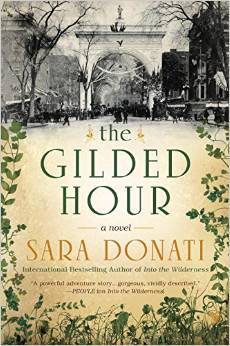
Next up is the medical framed, women’s lives, historical by Sara Donati, The Gilded Hour.

Here the date is 1883 and again we are in NYC. The story is about the forgotten people of this time.  It is about racial injustice, the suppression of women, medical advancements, and fertility issues.

Our main characters are two women, cousins, one who is half black, who are trying to provide birth control to women and how they were prosecuted by a real life Postal Inspector (who had a ton of political and legal power) and his crusade to suppress vice [The Comstock Act].

Okay first big difference here, the pacing. This is a 700 page, traditional historical. It moves at a much more methodical pace but one that is appropriate to the type of book; it is a pace that fans of a thick historical will expect and enjoy.

You know it will be a complex, historical because the families and major characters are listed in the front two pages and those who are real are noted. The novel also incorporates newspaper articles, telegraphs, and letters as a narrative device to keep up an authentic tone, as opposed to House of Thieves above, where things get a bit outrageous [but super fun] at times.  Again, same setting but two different readers.

This is a great read for people interested in the history of medicine, women's history [especially women in medicine], women's lives, and/or a history of women's health issues. There is a strong romance element here too.

There is suspense with the postal inspector trying to catch our heroes. There are many people [of all sexes and races] who help them along the way.  Things get tense and threatening but the overall story is not about the crime angle, it is more the issues I listed in the previous paragraph.


Three Words That Describe This Books: history of medicine, character centered, Gilded Age

Readalikes: The most obvious readalike is a TV series-- The Knick-- which I have written about at length with readalikes here.

Donati also mentioned the wonderful Destiny of the Republic by Candice Millard which I read here, for people who want more history of medicine detail from this era. I agree.

Another author who is similar to Donati is Jennifer Donnelly. Both write historicals featuring women and their lives with strong romance elemnts.  Interestingly, Donnelly has a very similar historical novel about social conscious female doctors, The Winter Rose.

Finally, a book I read which had a very similar feel, although is set in Brooklyn in 1700s and follows a woman who runs a gin still is Brookland by Emily Barton.  I highly suggest this for fans of a book like The Gilded Hour. You can click on the title for my full review.

Wednesday, May 20, 2015

BPL Book Club: Saving CeeCee Honeycut

On Monday, we met to discuss Saving CeeCee Honeycutt by Beth Hoffman.  Here is the publisher's description via LitLovers:
Steel Magnolias meets The Help in this Southern debut novel sparkling with humor, heart, and feminine wisdom.
Twelve-year-old CeeCee Honeycutt is in trouble. For years, she has been the caretaker of her psychotic mother, Camille-the tiara-toting, lipstick-smeared laughingstock of an entire town-a woman trapped in her long-ago moment of glory as the 1951 Vidalia Onion Queen. 
But when Camille is hit by a truck and killed, CeeCee is left to fend for herself. To the rescue comes her previously unknown great-aunt, Tootie Caldwell. In her vintage Packard convertible, Tootie whisks CeeCee away to Savannah's perfumed world of prosperity and Southern eccentricity, a world that seems to be run entirely by women. 
From the exotic Miz Thelma Rae Goodpepper, who bathes in her backyard bathtub and uses garden slugs as her secret weapons, to Tootie's all-knowing housekeeper, Oletta Jones, to Violene Hobbs, who entertains a local police officer in her canary-yellow peignoir, the women of Gaston Street keep CeeCee entertained and enthralled for an entire summer.
Laugh-out-loud funny and deeply touching, Beth Hoffman's sparkling debut is, as Kristin Hannah says, "packed full of Southern charm, strong women, wacky humor, and good old-fashioned heart." It is a novel that explores the indomitable strengths of female friendship and gives us the story of a young girl who loses one mother and finds many others.
Here's our discussion notes:

  • 7 people liked this book, 5 were so-so and no one disliked it
  • The liked voters jumped right into the discussion and wanted to share not why they liked it but why they LOVED it.
    • It was funny heartwarming, sad (appropriately); just a good read all around
    • It is easy to read without being fluff.
    • The characters were delightful. It was more about the characters than anything else.
    • Yes, and they weren't just stereotypes. They were believable people.
    • I loved how the author contrasted life up north with CeeCee taking care of her mother with the full life down south.
    • I liked how psychologically realistic the novel was.  She did not get magically better by moving into a big house in GA. She stillhad to work through some serious issues.
  • The so-so people:
    • I was waiting for the other shoe to drop the entire time. It never did. Everything worked itself out perfectly.
    • Aunt Tootie was a bit unbelievably good.
    • It was a nice little story, but it was too predictable.  I always knew what was coming next.
    • I liked the writing, especially the descriptions of nature, but overall it was too much of a Pollyanna story.
    • One participant said she was so-so because she herself lost her mother at 13 and she did not "fall into a bed of roses" like CeeCee.  For her, this book brought back too many bad memories.
    • It was a little too pink and sweet.
    • This was the summer of 1967 in the south yet there is very little about Civil Rights. That bothered me. Why set it in such a pivotal summer then.  Make it a few years earlier and the glaring omission of the huge events happening that same summer would not be an issue to me.
  • Question: How did the author's choice of having CeeCee narrate the story as a 12 yr old in the present tense effect how the novel unfolded?
    • I liked how it was through her eyes as all of this was happening to her. If she were looking back on this life changing summer (like when we read The Round House), it would be a different book.
    • It was a unique point of view.
    • She was very smart for her age, but since she had been caring for her mother and raising herself since she was very young, this was not very surprising.
    • This narrative choice allows us the watch CeeCee change and grieve in real time.
    • I think the narration-- from the eyes of a 12 year old-- is responsible for some of the "fluffiness" of the story. Her life was all about survival before moving the GA. Once there, she can let go of all of her worries. She has never had to only enjoy herself.
    • I liked that we see her inner feelings. We can understand why she is reacting oddly to seemingly normal things.
  • Question: Did you like the ending?  (People started talking about the ending just before this, so I went with the flow and let them run with it.)
    • I loved the ending because it was a beginning.  The first day of the rest of her real life.
    • I wouldn't want to see her in school. We saw her through the hard transition. She will be fine.
    • The book was really set during the summer. The story felt like stringed together vignettes, but summer is like a vignette. The vignettes are ending and life is beginning now. We step away.
    • The book is about her moving forward. As she walks to school, she is leaving us behind.
    • I asked if they would want to catch up with CeeCee's story later in her life? One said no. But a few said yes, after she has grown up a bit more.
  • Question: How did this novel deal with mental illness in the 1960s?
    • The way CeeCee's mom's illness and how it was dealt with was historically accurate. Pills were prescribed, but no one forced her to take them. The Dad got mad that she wouldn't and there was no counseling for the family.
    • They were shunned and made fun of because of the mental illness. No one stepped in to help.
    • Even Aunt Tootie feels badly about not helping earlier, but no one discussed mental illness openly then.
    • Some of us tried to give the Dad a break. He tried the best he could , but that was because of the narrative choice the author made.  CeeCee cannot understand what her Dad is going through. She doesn't know or understand what he is felling and what he did to help.
    • Poor CeeCee only learns about mental illness from the dictionary. Then she worries most of the novel that she will inherit it.
    • The not knowing if her mom killed herself or died by accident is also a tough.
    • The scene at the peach farm, when all of CeeCee's emotions about her mother come to a head was very memorable and believable.
  • Question: What were some of your other favorite characters or scenes that you want to share?
    • Oletta! She was nice, a listener, had great words of wisdom. She and CeeCee helped each other heal-- they were the mother and daughter each had loved and lost.
    • The lunch in the parking space outside the jewelry store was the best.
    • I loved Oletta's friends
    • The nursing home scene!
    • Neighbors- Goodpepper and Hobbs. Just everything about them separate and together.  Hobbs was a woman you loved to hate, but Goodpepper was not all perfect.
    • Overall, I just loved how the southern hospitality was well depicted.
    • As I read this book, I chuckled and laughed despite some of the serious issues here. This is why I liked it so much.
  • Question: What did you think of CeeCee's camera as a literary device?
    • I loved that she is drawn to taking photos.  They are stills in time of her new life. So much has changed for her and she is still processing it all. The photos slow it all down a bit.
    • The bra pictures were great! It shows she isn't perfect. It illustrates some of the anger she had inside her. She took it out on Ms. Hobbs, but she is a villain here anyway. It gave CeeCee some depth and showed some spunk.
    • It was not nice of her but it sure was funny. Very clever.
  • Question: What did you think of the garden party scene?
    • I loved the fight. There were all these women who feel so strongly about everything, it was bound to happen.
    • I like how this beautiful party ended with a brawl and everyone moved on. It was a nice metaphor for where CeeCee came from and where she was now going. Life would not be perfect ever, but even the little battles will be easy to handle now that she is in a safe place.
    • Also, I felt like Ms. Goodpepper and Ms. Hobbs needed this blow up. Their conflict was festering. Now they can move on and have a better relationship.
  • Question: Let's talk title-- Saving CeeCee Honeycutt
    • Saving her for now.
    • Saving her for her future
    • Teaching her to save herself
    • "Saving" is the present participle-- it notes that the saving itself is ongoing and is always happening and will continue to happen. It does not end when the book ends.
    • If it was called "How CeeCee Was Saved" that would be a different book.
    • She is also saving memories for herself at the end of the book, literally in pictures and figuratively in her "life book."
    • I like how who is "saving" her is not identified.  They all are, We all are.
  • Words or phrases to describe this book:
    • "peach of a novel" (from back of paperback)
    • endearing
    • warm and fuzzy
    • rose colored glasses
    • hopeful
    • comfortable
    • great characters
    • southern hospitality
    • memorable scenes
    • vignettes
    • female centered
    • lovely descriptions and metaphors
    • cinematic
    • fresh writing, original phrasing

Readalikes: This novel is the Secret Life of Bees meets Midnight in the Garden of Good and Evil with a heaping tablespoon of Fannie Flagg.

I also agreed with what it said up top in the publisher's description-- the movie Steel Magnolias and the novel, The Help would also be good choices.

This novel also reminded me of Rush Home Road by Lori Lansens (one of my under the radar book club favs) and the Divine Secrets of the Ya-Ya Sisterhood by Rebecca Wells.