RA FOR ALL...THE ROAD SHOW!

I can come to your library, book club meeting, or conference to talk about how to help your readers find their next good read. Click here for more information including RA for All's EDI Statement and info about WHY I LOVE HORROR.
Showing posts with label Berwyn Public Library. Show all posts

Wednesday, February 26, 2014

In Memoriam: Gail Lofgren

Today we found out that the former library director of the Berwyn Public Library died at home.  That she died was not a shock.  Although she was not very old, I knew she was quite ill and would not be pulling through. But her death did make me think back to the mark she made on Berwyn, a mark that trickled out to the rest of the library world.

Let me explain.  Most of you have not heard of Gail. She was a powerhouse in Berwyn, running the library and serving on many community boards. But in terms of her reach into the larger library community, at first glance her reach seems very local.

However, Gail was always an independent thinker. Back in 2000, she knew the adults of Berwyn were not being served well when it came to their leisure reading needs.  She shook up the library, a library where most of the employees lived in the community, or if they lived outside the borders of Berwyn, they had roots and ties to Berwyn for decades.  She reached out and searched for people to run a new department that would only provide adult leisure reading help.  And she took a chance staring this new Readers Advisory Department hiring 2 librarians who hadn’t even finished their degrees yet, 2 librarians with roots far from Berwyn (NJ and NM), 2 librarians who had no track record, 2 librarians who shared her passion for service.

Those 2 librarians were me and Tammy.  Tammy is now our the BPL’s Director, and I am here.  I wasn’t even sure if RA was all I wanted to do when I went to Berwyn, but it was too good of an opportunity to turn down.  Gail gave us the room to make the RA Department what we wanted it to be.  She gave me a place to grow and learn to the point at which now I am writing the textbooks, leading the RA seminars, and writing an RA blog that is listed in textbooks. I went from not being sure, to an expert.

So, no Gail might not be mentioned as a force in the library community.  But she was.  She gave me a chance, my first chance.  She believed in me.  She believed in RA when very few libraries had a staff devoted solely to it.

I think of the hundreds of librarians I have trained to provide quality RA service.  I think of the thousands of patrons who have been better served because of the training I gave those people.  And I am proud to be one of the many people who loudly trumpets the RA horn throughout the library world.  

But where would RA be today without Gail starting this train in motion?  Even scarier, where would I be?  I am glad those are questions I don’t have to answer.  Thank you Gail.  Rest in peace.

Friday, January 28, 2011

eBoook News

The big news throughout the book world late yesterday revolved around this announcement by Amazon that in the 4th Quarter of 2010, eBooks outsold paperbacks.

I have talked about eBooks here in the past.  I have mixed feelings about how and if I would use eBooks personally, but in terms of library usage, we are moving forward full steam at the BPL to integrate eBooks and eReaders.

In the next few months, we will have one of each of the major eReaders available for patrons to use in the library.  We will have them near the RA desk for patrons to touch, play with, and to use to help patrons trouble shoot problems with their personal readers.  We are going to train the staff to use all of them and to help patrons.

The next step will be that we have an undetermined number of Sony eReaders for patrons to check out.  We are unsure whether they will be preloaded with books also, but for sure, patrons will be able to use their library card to download an eBook from OverDrive.  We will even do it for you at the library so that before you leave, your books are loaded and you are shown how to read them.  This will begin in late fall or early summer.

A word about the Kindle though.  We know that the Kindle is the most popular eBook reader, but unfortunately it is also only works with Amazon.  It is incompatible with every other system.  The Sony eReader is the most library friendly device and will work with OverDrive.  As I mentioned above though, we will have a Kindle to help patrons who own them.  We will have it loaded with free eBooks so that patrons can see how it works, but we do not have plans to have any available for check out right now.

So, don't worry, as eBooks are gaining steam, the BPL is ready to help you navigate the growing world of digital books.  And, they will coexist happily right next to the paper ones.

Let me know what your library is doing to prepare for the eReader boon.  If you are a reader, how are you using your eReader.  Is it compatible with your library's eBooks?

Wednesday, January 26, 2011

BPL Displays: January 2011

I must admit, I forgot to cross-post our displays this month.

On the small display we are featuring "The Best of 2011" and on the tall display we have "Inspirational Fiction."

Click here for the annotated lists which sample the display offerings.

Click here to access the archive of past displays.

Wednesday, July 21, 2010

Browser's Corner Update

Our fearless RA leader at BPL, Kathy, has been busy adding annotations and lists to The Browser's Corner. A whole new batch is there if you want to take a look. Click here for the blog and here for the suggested reading lists including my Sookie Stackhouse Readalikes which I posted about here.

The physicial shelf that houses the books has been a big success. I love how well the combination of an online and in-library presecence is working out. We have some patrons who only consider what is on the shelf at the moment, but we also have those who have learned to use the blog as a resource of recommended reads.

No matter where you live, check out our staff suggestions anywhere, anytime. Now I am off to finish up a fresh batch of suggestions for Kathy to use to keep the Browser's Corner going strong.

Sunday, November 29, 2009

Best Graphic Novels of the Decade and General GN Library Collection Comments

Here is another one of Paste's lists of the "Best of the Decade." This time it's the best graphic novels.

We have worked hard at Berwyn to have a graphic novel section for readers aged 16 and up. Click here to read some of my posts about our work. This does not mean our "adult" graphic novel section is in any way "R" rated, it just contains books with stories and art that is sophisticated enough to interest an older audience.

I knew our work is getting noticed when about a year ago (after, at that point 8 years of building the collection), an over 50 year-old woman asked me for help in picking out graphic novels for herself. Thus, the first of my "graphic novels for grownups" lists was born. (There have been updates, but I will save that for another post.)

Don't forget to click here and see the graphic novels my students have read over the last few semesters too. Some are from the decade's best list above.

Looking at these three lists and reading the annotations, it should become clear that graphic novels are not just comic books, and they aren't just for kids.

Tuesday, October 20, 2009

BPL Displays: Horror 2009

And so it begins, the home stretch to Halloween. I will be doing a series of posts on the year in Horror over the next 10 days, but to begin, here is the list I made for Berwyn, complete with readalikes both old and new.

Look for at least 2 more posts highlighting horror in the coming days.

Wednesday, September 9, 2009

The Annotated Bibliography Gets a New Look

Annotated bibliographies are a RAs bread and butter. I make many lists of books on a certain topic or with a shared theme, giving each book a pity 2-4 sentence description. Click here to see examples of our annotated lists at the BPL or click here to see things I have tagged annotated lists for examples.

As useful as these lists are to patrons, they are not very sexy. Well, I think, that may be about to change. A few days ago I saw this feature in The Daily Beast in which Nicholas Kristof writes about his favorite books.

I love this presentation for an annotated bibliography. You click on the cover and enter a gallery in which with each click of a cover, another cover is revealed, all with Kristof's comments on the right. In reality it is a simple annotated list of books, but in practice it is so much more engaging to the reader.

Obviously this presentation only works on the web; it does not translate on paper. Needless to say, I am intrigued by this new presentation of an old standby. You still need to have solid and well written annotations, but the gallery begs the reader to stand-up and pay attention to your list.

Monday, August 24, 2009

Discussion Questions for Assassination Vacation

Here at the Berwyn Library, we compile book discussion kits (click here to see a list). One of our titles available for checkout is Assassination Vacation by Sarah Vowell. However, this title does not have prepared discussion questions available.

Recently, we received an email request for questions for this title, and I figured if one person wants them, there are probably others out there interested in them too.

So here is the sheet of questions I prepared for discussing Assassination Vacation. Feel free to use and share. The information begins with this summary from the publisher:

Sarah Vowell exposes the glorious conundrums of American history and culture with wit, probity, and an irreverent sense of humor. With Assassination Vacation, she takes us on a road trip like no other -- a journey to the pit stops of American political murder and through the myriad ways they have been used for fun and profit, for political and cultural advantage.

From Buffalo to Alaska, Washington to the Dry Tortugas, Vowell visits locations immortalized and influenced by the spilling of politically important blood, reporting as she goes with her trademark blend of wisecracking humor, remarkable honesty, and thought-provoking criticism. We learn about the jinx that was Robert Todd Lincoln (present at the assassinations of Presidents Lincoln, Garfield, and McKinley) and witness the politicking that went into the making of the Lincoln Memorial. The resulting narrative is much more than an entertaining and informative travelogue -- it is the disturbing and fascinating story of how American death has been manipulated by popular culture, including literature, architecture, sculpture, and -- the author's favorite -- historical tourism. Though the themes of loss and violence are explored and we make detours to see how the Republican Party became the Republican Party, there are all kinds of lighter diversions along the way into the lives of the three presidents and their assassins, including mummies, show tunes, mean-spirited totem poles, and a nineteenth-century biblical sex cult.

Discussion Questions for Sarah Vowell’s Assassination Vacation prepared by Becky for the Berwyn Public Library

  1. Vowell has a unique voice. In Assassination Vacation she recounts the history behind three US Presidents’ assassinations as she experiences them through touring places that featured significant in their lives and deaths. However, this is not a straight, chronological history.? Did you like the author’s writing style and organization? Why or Why not?
  2. Assassination Vacation is only a partial history of the events surrounding the deaths of Presidents Lincoln, McKinley, and Garfield. In fact, it is part history and part travelogue into the industry created by their deaths. In this book, what do you think Vowell is trying to say about American popular culture both in the past and the present? What does she think about our obsession with both the victims and the murderers?
  3. What were you favorite places Vowell visited in her travels? Who were your favorite people she met along the way?
  4. We are taught quite a bit about Lincoln and his death in school, but McKinley and Garfield are rarely mentioned. What new things did you learn about Presidents McKinley and Garfield? Has your opinion of them changed?
  5. This is a book about very public deaths, although Vowell goes to great lengths to add humor to the book. Did you find the book humorous? Did you find it ultimately uplifting or depressing?
  6. Did you think Assassination Vacation had enough details? What more would you like to find out about the “characters” and places in this book? Are you interested in personally visiting any of the places Vowell described?
  7. What are the strengths of this book? Where are its weaknesses? Would you suggest this book to a friend or another book group? Do you think this book would be a good addition to the reading list of a high school American History class? Why or why not?
  8. In what ways do you think this book might be controversial? Did anything about Vowell’s travelogue bother you?
  9. Vowell was inspired to go on her “assassination vacation,” after seeing the musical, “The Assassins.” Is there a uniquely themed vacation or tour which would interest you?

Thursday, July 23, 2009

BPL Book Discussion: The Year of Magical Thinking

This week, my group met to discuss Joan Didion's 2005 National Book Award Winner for Nonfiction, The Year of Magical Thinking. The plot as described by the folks over at Reading Group Guides is:
...a stunning book of electric honesty and passion. Joan Didion explores an intensely personal yet universal experience: a portrait of a marriage --- and a life, in good times and bad --- that will speak to anyone who has ever loved a husband or wife or child.

Several days before Christmas 2003, John Gregory Dunne and Joan Didion saw their only daughter, Quintana, fall ill with what seemed at first flu, then pneumonia, then complete septic shock. She was put into an induced coma and placed on life support. Days later --- the night before New Year's Eve --- the Dunnes were just sitting down to dinner after visiting the hospital when John Gregory Dunne suffered a massive and fatal coronary. In a second, this close, symbiotic partnership of forty years was over. Four weeks later, their daughter pulled through. Two months after that, arriving at LAX, she collapsed and underwent six hours of brain surgery at UCLA Medical Center to relieve a massive hematoma.

This powerful book is Didion's attempt to make sense of the "weeks and then months that cut loose any fixed idea I ever had about death, about illness . . . about marriage and children and memory . . . about the shallowness of sanity, about life itself.
My group is made up of women from their late 50s into their 80s. Many of them have lost a spouse, 2 most notably during the years in which they have been part of the discussion group. Both felt that The Year of Magical Thinking was the best book about the grieving process they had read. The entire discussion was like a giant therapy session; in a good way.

Some general comments we had about the book.
  • She hits grief right on
  • You can tell she writes for a living, the words were beautiful
  • It is a compelling read even though it is a serious subject
  • The use of humor was very "healing."
  • She effectively used the passive voice; it worked because you are not in charge with illness and death.
  • With a death or illness of a loved one, it doesn't matter if you are rich or poor
  • When a couple is as close as John and Joan were, it is hard to go on; this book gave her a reason to go on.
  • Didion puts death on center stage in this book. You cannot hide from it.
  • She wasn't writing about John, she was writing about herself.
  • This was not a tract about the mourning process, it was personal, full of honesty and isolation.
We talked about Didion's use of repetition throughout the book. We all thought it was realistic. While you are grieving you do repeat things. It is comforting. The repetition leads her to healing.

One of our members works in the funeral industry, singing and playing for funerals. However, she pointed out that this book was odd to her. All of her work on funerals is within the context of faith and this book was not about faith at all. Didion refers to religion but she does not confront her husband's death in any religious context.

We also discussed where the turning point in Didion's grief was. When does she stop thinking that her husband will come back and accept he is gone for good? We decided that when she went back to work, covering the Republican primary, in her own city, where her memories of Dunne were the strongest, that she was going to be fine. She re-entered her own world. And by the end she has come to terms with the fact that she is a widow.

Readalikes: People may want to read Didion and Dunne's works after reading The Year of Magical Thinking. Others may want similar memoirs by writers about their marriages and the death's of their spouses. Two very good ones are About Alice by Calvin Trillin and An Elegy for Iris by John Bayley.

Joan Didion has also adapted The Year of Magical Thinking into a play. It will be staged here in Chicago in January and February of 2010 at the Court Theater.

Some bittersweet fiction about long relationships such as The Last Time They Met by Anita Shreve, The Time Traveler's Wife by Audrey Niffenegger, and The Story of a Marriage by Andrew Sean Greer would be good suggestions.

Note for next month, we will be meeting in the 4th week of August instead of the third to discuss Maisie Dobbs by Jacqueline Winspear.

Monday, July 13, 2009

ALA Report Post Coming Soon. In the Meantime...

I have not been posting because I have been spending my days at the wonderful American Library Association Conference. I will be writing up 2 posts about programs I went to that pertain to RA issues specifically, and at least a third about random things that are worth sharing.

In the meantime, I wanted to remind everyone that our brand new Saturday Book Discussion Group at the Berwyn Public Library, "revisiting greatest hits from discussions past," begins this Saturday with My Sister's Keeper by Jodi Picoult. Click on the link to get details. If you've read the book and are in the area, stop by.

Friday, June 26, 2009

Book Discussion Survey Results

In this post I urged you to take the Reading Group Guides Survey for book club participants. They just posted the results here.

7,700 people took the survey. One of the findings that most interested me was the fact that over 70% of people get their discussion book suggestions from friends. This is a void into which your public library can step.

Whether or not you library hosts a book discussion group, the staff should be able to help you find appropriate titles for your group.

Here at BPL we have noted this finding, and we are going to try to market our services better to the groups that meet outside of the library. People don't know what we can do for them unless we tell them.

Wednesday, June 17, 2009

BPL Book Discussion: North River

This week at BPL we discussed Pete Hamill's North River. I also wrote about reading this novel in June of 2008 here.

Pete Hamill is an accomplished, if not quite bestselling author, who tends to write literary fiction that captures the people and character of New York City.

North River follows Dr. Delaney, the local doctor in Greenwich Village during the Depression. He is an injured WWII vet, serving the poor and dealing with the disappearance of his wife. Delaney has been limping through life, not fully living, until his only child, Grace, abandons her almost 3 year old son Carlito on his doorstep. Delaney also saves the life of his WWII buddy, turned Italian mobster friend and gets himself mixed up in a mob war. Into this chaos enters Rose, an illegal, Sicilian immigrant, who is hired to care for Carlito and keep house. Her solidity and love of life, help to change the Delaney home forever.

This is a slice of life story about the growth of Delaney. As a Jersey girl myself, I loved the 1930s, NYC setting, and found the happy (but let me say, very open) ending refreshing in a work of literary fiction. Don't get me wrong, there are some dark issues like mafia, suicide, prostitution, poverty, and domestic abuse, which are all explored in this novel. However, overall, Delaney's story is life affirming.

And it is with this point that our discussion began. The entire group loved how this book felt "old fashioned," not just because it was about a simpler time, but also because it was a novel with substance that was "easy to read," "fluid," and "straightforward." (The quoted terms were all used by the participants to describe this novel.)
We also talked a great deal about Hamill's use of words. People read out passages with descriptions they enjoyed. We talked about how well Hamill captured Carlito's 3 year-old voice. He is young and did not know English. Delaney's observations of how he learns to build sentences (noting his first uses of adjectives and verbs) as well as Hamill's dialog for the boy, were striking to us. Hamill is known for his ability to capture people and describe places evoking all five of the readers senses, and our group noticed this right away.

Despite the fact that this novel was written by a man, the participants were quite impressed with how Hamill described Rose. One participant thought he did such a great job describing the food and cooking smells that she had to double check the author's name to make sure it wasn't a female writer. This led another group member to comment on Delaney's dreams. She also felt that including dreams was a bit more feminine. We were in agreement that this novel would be a great choice for groups that tend to only read women writers but want to try a male author.

North River also centers around the grandfather/grandson relationship which my group enjoyed, although here they thought Hamill's maleness shone through. As mothers and grandmothers, the participants felt that Carlito adjusted a little too fast for their taste. Others were appalled that Delaney agrees to give custody of Carilto back to his daughter, the mother who abandoned him, so easily. And a few others though Delaney himself made the transistion from being "numb" to having a full household a bit too smoothly. However, these were all minor complaints. No one thought that any of this took away from the novel as a whole.

There is some moral ambiguity in this novel too. Delaney tends to injured people in the neighborhood who are victims of domestic abuse and severely injured Chinese prostitutes, but never reports any crimes to the police. The largest issue, however, is Delaney's involvement in a mob war. First he saves his war buddy, who is one of the local mob bosses, after a botched assassination attempt. For his work, Delaney accepts $5,000 in cash from the mobster. He then is targeted by the rival mob boss, Frankie Botts. After caring for Frankie's sick mother, Delaney is no longer in mortal danger. Yet, when his war buddy returns and makes it clear that Frankie will be dead shortly, Delaney does not alert the police or Botts. He questions himself when a mob war breaks out all over the city. He could have stopped it, but chose not to.

We discussed these moral ambiguities. However, we agreed that Hamill built up Delaney as the caregiver to the community; the only doctor they had. He needed to take care of these forgotten people, and since no one could really pay him, taking the $5,000 from a mobster was a no-brainer. He had a kid to take care of now. And, for the same reasons he could not get involved in their mob issues.

The only other mild criticism our group had was that the ending was a bit too neat. Things seemed to wrap-up perfectly. Although, again, the characters and setting we so richly described that we all were okay with the happy, if still slightly open, ending.

One last amusing anecdote from our group. I used these Reading Group Guides discussion questions to lead the group. Question 12 states:

One presence in this novel has in fact vanished: the big city political machine. Such machines were often corrupt but did play important roles in urban life --- for example, in handling the arrival of immigrants in large numbers. Are there any lessons here for today’s world?
Okay, note to the writers of these questions....we live in Chicagoland and the big political machine is still HUGE here. Those people need to see Mayor Daley in action some time. I mean the guy wanted to close an airport, and when no one would let him, he brought in some bulldozers in the middle of the night to dig up the runway. And he will get us the Olympics, I am sure of it. Without his political machine, we would have no chance.


Readalikes:
During the discussion, participants mentioned that this book reminded them of A Tree Grows in Brooklyn by Betty Smith and The Godfather by Mario Puzo.
Those who liked North River for its historical description of local politics may also want to try William Kennedy's novels of Albany politics. Ironweed is the best of the lot and takes place in a similar time frame.

Richard Russo also writes about the evolution of mature men very well. Try Straight Man which follows a middle aged college professor who is humorously stumbling through absurd situations. Although it has more blatant humor than North River, at its heart, Straight Man is about its main character's growth.

The "Five Points" history of NYC plays a big role in creating the mood and setting for this novel. Those who want to know more about the history of that era should either check out the book The Gangs of New York : an Informal History of the Underworld by Herbert Ashbury or view the Martin Scorsese film The Gangs of New York (2002).

For those who liked the New York City setting I would suggest the novel, Empire Rising by Thomas Kelly or these books about the history of NYC.

The next meeting of our group is on Monday, July 20th at 2pm when we will be discussing Joan Didion's memoir, The Year of Magical Thinking.

Tuesday, June 9, 2009

BPL Displays: Summer Reading 2009

As I mentioned here, the theme of our summer reading program at the Berwyn Public Library is "Master the Art of Reading."

In the awesome display pictured here (created by a team of Berwyn staff members as conceived by Kathy) we are currently highlighting books that feature art and/or artists. By artists, we mean anyone in the arts, including but not limited to painters, writers, dancers, actors, etc... Click here for 2 annotated lists of suggestions, one for general fiction and one for mysteries.

In July this display will change, stay tuned for details.

Our other display will be up all summer and features books that are classics or are "destined to be classics. Use the embedded link to see our annotated lists of suggested titles.

Monday, June 8, 2009

Master the Art of Reading: Summer Reading 2009

Like me, I bet you feel like you are seeing summer reading lists every where you go these days. Below, I have compiled lists from some major publications, but first I would like to remind everyone that your local public library has been running a summer reading program for years. We are the originators of the summer reading phenomenon.

Here at the Berwyn Public Library you can see we are calling our summer reading program: Master the Art of Reading. Along with winning prizes simply for reading, we are also offering a creative journal writing class. You do not have to be a Berwyn resident to join our reading program, so stop on by. Click here for details.

Tomorrow, I will be posting our display lists to give you some summer reading suggestions, but here are some of my favorite lists I found other places...
One of my favorite things about these lists is that, taken together, they mix new and old titles. Don't let the media make you think that you can only read the new "hot" books this summer. There are many great titles from the backlist, books you always meant to get to, but never did, and they are all available through your local public library.

Tuesday, June 2, 2009

If You Like Marjane Satrapi Try...


I just turned in the first draft of my readalike article on graphic novelist Marjane Satrapi for the NoveList database. You should look for it to be up in the next 2 weeks or so. Until then, look at this list of readalike authors for Satrapi which I compiled for the BPL website.

As well as my readalike article talking about the appeal of Marjane Satrapi with a list of 5 authors who are similar and why, NoveList also has a book discussion guide on Satrapi's Persepolis ready to go up any day. It is the database's first book discussion guide for a graphic novel!

I have been trying to get my group to read Persepolis for years, maybe now they will be more willing. In the meantime, these 2 new additions to the wonderful offerings already available on NoveList (accessible from most public library websites or in person) should help a lot of readers.

Friday, May 29, 2009

New Book Discussion Group Beginning at BPL!

Our book discussion groups at BPL are getting so popular that beginning in July we will be adding a Saturday group led by Briana. She has decided to go with a "greatest hits of Berwyn's book discussion" theme. After polling Kathy and me she has come up with the following 6 month schedule (links are to my blog posts about past discussions):

July - My Sister's Keeper
August - Thirteenth Tale
September - River of Doubt
October - Behind the Scenes at the Museum
November - Suite Francaise
December - Loving Frank

Briana's group also highlights the fact that Briana, Kathy, and I take our old book discussion books and create kits that patrons can check out. Each kit contains at least 9 paperback copies of the book, discussion questions and read alike suggestions. Click here to see our full list of available titles.

Kathy and I have also announced our July-December schedule. Click here to see it. We accept anyone who can make it in person to the meetings, whether you live in Berwyn or not.

While I am talking about book discussions I should also mention our list of book discussion resources, available here. Personally, my absolute favorite free resource is Reading Group Guides. I use this to get ideas for titles to discuss, read author interviews, acquire discussion questions, and just to read their great blog.

A new resource I just found is Readers Place. I like this one because it is from the UK and offers a different perspective.

That should keep your book clubs busy for the next few months.

If you have had a great discussion and want to share with the rest of us, let me know.

Sunday, May 24, 2009

Romance for All

I have talked about Romance getting a bad rap many times on this blog. One of my favorite resources to combat this unfair treatment of romance novels and their readers is the web site Smart Bitches, Trashy Books.

This no-nonsense web guide to romance has now morphed into a book, Beyond Heaving Bosoms: The Smart Bitches' Guide to Romance Novels, which I also purchased for the Berwyn Public Library's collection.

These ladies are pretty amazing. They are tireless in their goal of legitimizing the genre and its readers. For example, a few months ago they went on NPR to try to get the anchor to read a romance. Click here to read all about it.

Kudos to these ladies. Come check out the book at BPL (ignore the non-circ call number; we'll let you check it out if you want to) or go to their website to find the perfect Romance for you.

Thursday, May 21, 2009

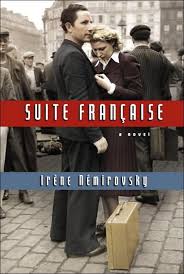
BPL Book Discussion: Suite Francaise

This past Monday the group got together for a great discussion of Irene Nemirovsky's Suite Francaise. First some background on the book. One reason Suite Francaise makes such a great book discussion book is that it has the powerful double pronged attack....the book itself (really 2 novellas) is a well crafted and entertaining work of literature, while the back story, Nemirovsky's life (and death) story add another dimension to the work. The two are so intertwined, it is impossible to separate her from her novellas.

Suite Francaise is the title Nemirovsky gave for her planned collection of 5 novels about France during WWII. Nemirovsky wrote the first 2 books and outlined the third while she and her family were trying to allude the Germans, who had occupied Paris and its suburbs. As stateless Jews (of Russian descent) Nemirovsky and her husband were subject to deportation. Ultimately, Nemirovsky and her husband were sent to concentration camps (separately) where they died. Their children were hidden and managed to save the manuscripts and notes, which published with her translated notes and correspondences with her husband and publisher once Nemirovsky was arrested by the Germans, make up the book Suite Francaise.

For more on Nemirovsky's story you can go here.

What is so intriguing about this work is that it is almost definitely the earliest work of fiction about WWII. Writing in 1942 about the 1940 fall of Paris and the German occupation of France, Nemirovsky was not even sure where the last 2 unwritten sections of her work would go. The war would have needed to progress further and her life would have needed to be extended for her to figure out where the book would go.

This led our group to discuss how different Suite Francaise was from the myriad of WWII books and novels we have read. This work is not a readalike for The Diary of Anne Frank or Night; these books would be readalikes for her biography, rather, this work is about the day to day aspects of living in a country controlled by the enemy. We marvelled in her descriptions of how the villagers coped with housing the German officers in their homes, while their own young, male family members were either fighting the Germans, prisoners of war, or already dead. One participant likened their arrangements and general friendliness to one and other as remarkably similar to the relationships between plantation owners and house slaves in the American South.

We spent most of our time talking about the second novella,"Dolce," which is set entirely in one village, as mentioned above, and goes into remarkable detail about the occupation and how the villagers lived. While the relationships between the Germans and French was important here, there was also quite a bit about the strict class distinctions among the French villagers. The situation was described multiple times as the "eye of he storm." It was a soft, sweet time as the novella's title suggests, but it was all the more powerful after reading her notes, knowing Nemirovsky planned to follow "Dolce," with a novel entitled "Captivity."

The characters in "Dolce" were sympathetic and fully realized. Many participants remarked on the detail in character descriptions and the lyrical language (how she could describe the weather so beautifully, for example). Even without the fact that she wrote this novella while literally on the run, we were amazed by the work's technical virtuosity.

We did talk about the first novella, "Storm in June," we just spent less time on it. A lot of this has to do with the style of the section. "Storm in June" follows a few characters who are frantically fleeing Paris as the Germans take over the city. We talked about how the style of this first section accurately reflects the plot. The narration jumps around to different people's points of view. It is scattered and incomplete; filled with violent and mean spirited acts. In short, is is as uncomfortable and unsettling to read as the evacuation itself.

We hit a few other topics such as the French resistance and where Nemirovsky might have gone with her book if she had lived.

I would highly suggest this title to groups who are looking for a different view on a popular topic, who are willing to mix fiction and nonfiction, and/or groups who do not mind an unfinished work.

In terms of readalikes, click here for a list of books on occupied France.

Fiction readers who enjoyed this book should also try Sebastian Faulks, most notably Charlotte Gray and Birdsong. I would also suggest Geraldine Brooks' most recent title People of the Book which I also wrote about here. This novel hits at the issues within Nemirovsky's novellas, living with the enemy and surviving through war, as well as addressing the author's life story, keeping a book safe despite terrible odds.

Monday, May 11, 2009

Read Alikes on NoveList and BPL Website

NoveList has posted my Read Alike article on Jonathan Lethem. I don't know about other states, but in Illinois, the state library makes NoveList Plus available to all public libraries for a very nominal fee.

The NoveList Read Alike articles are detailed and extensive, including an essay by leading readers' advisors as to exactly why readers enjoy the specific author and others they may enjoy and why. These articles are among the most popular features on NoveList. Berwyn cardholders can access NoveList at any time by clicking here.

On the Berwyn Library website, we have also begun to offer a simplified version of read alikes to our patrons who need just a quick list of authors. Click here to see our growing list of authors. RA staff members take our most popular authors and create lists of other authors who share similar appeal factors. Here is the direct link to my list of read alike authors for the genre bending Jonathan Lethem.

The entire staff has been working hard to create the lists, all as part of our larger effort to anticipate our patrons' needs on the web. However, beyond helping our patrons, Briana and I have been working on having Google pick-up our lists when readers, anywhere, search for their own read alikes.

I am happy to report that after a few months, we have been successful. Now if you search "If you like Jonathan Lethem try" or "Lee Child read alikes" in Google, the BPL read alike offering appear on the first page of results. You can try it for any of our authors.

Please feel free to use our lists to help your patrons. But remember, for more detailed information, turn to NoveList.