RA FOR ALL...THE ROAD SHOW!

I can come to your library, book club meeting, or conference to talk about how to help your readers find their next good read. Click here for more information including RA for All's EDI Statement and info about WHY I LOVE HORROR.
Showing posts with label african american. Show all posts

Wednesday, May 28, 2025

A New Best Seller List Featuring Black Writers and The Black Book Accelerator

Logo for the African American Literature Book Club featuring this words with their logo on the right- which is a brown circle denoting a head peeking out from on top of an orange open book that the head is reading.


Last week, I was alerted to a brand new bestseller list from a long time trusted resource-- African American Literature Book Club. AALBC has been one of go-to resources to find great books by Black authors since I became a librarian; they have been around longer than that! And have always done great work.

The resource is BLK Bestsellers List: America's Bestseller Books Written by Black Writers from January 2024 to the present, sortable by month

They use the following data and methodology for this list as clearly stated on the bottom of the page:

Sales Data Source: Circana BookScan, January 2023 – May 2025, U.S. print sales, from thousands of retailers including national and regional bookstore chains; independent bookstores; mass merchandisers (e.g., Walmart, Target); Online retailers (e.g., Amazon); and supermarkets and specialty retailers.

Methodology: Books are categorized and filtered for Black Authors by the African American Literature Book Club. This bestsellers list is a sneak peek into a much larger effort led by the Black Book Accelerator (Learn More).

Here is why I love this bestseller list as a tool for us to do our work suggesting books to readers AND as a way to be actively anti-racist. This is not a list of the best selling books by Black writers. Rather it is a list of books by Black writers which were bestsellers. 

In other words, this is not a list others can try to disparage or even ignore because it is WOKE. This is a list of straight up bestsellers that were bestsellers on the white dominated lists in the last 18 months which happen to be written by Black people.

So when people tell me and Robin in our Actively Anti-Racist Service to Readers training programs (click here to sign up up for the next live offering) that people in our town don't read "those books," or, well we only have money for the bestsellers and it is not our fault that those titles are overwhelming white, or....insert lame and useless excuse here-- well here is proof that every single one of those excuses holds no weight.

Public libraries always buy the bestsellers. It is the first thing we do. As someone who did collection development for a community of 60,000 people, I understood that my job was to maintain a circulating collection of popular fiction. That meant having every book on the bestsellers list. It also meant exposing my readers to books that they would not find without my help, but which I knew they would like, be that up and coming writers, mildest stalwarts, small press stars, or books just like the white bestsellers but written by marginalized voices.

This new list, showcases that Black books are for everyone (which, has always been true). However, it also showcases the years of work done by AALBC to promote Black authors, in particular the Black Book Accelerator. From their homepage:


Mission
The mission of the Black Book Accelerator is to strengthen the Black book ecosystem and measurably increase overall stakeholder revenue. 

The Black Book Bestseller list not only celebrates cultural representation but also influences market trends, empowers readers to support Black literature, and inspires emerging Black writers by showcasing successes that might not have otherwise received recognition.

Methodology

Our data is based on monthly print unit sales provided by Circana BookScan. You may read more about Circana.
Since the book publishing industry lacks a definitive source of data on how authors identify themselves, we determine books by Black authors using a combination of BISAC codes and manual research.
We are actively collaborating with organizations in the book publishing industry to improve how authors can share information about their personal identities.

Blackness


The primary requirement for inclusion on the bestseller list is that the author self-identifies as Black or African American. We respect and uphold individuals' self-proclaimed racial and ethnic identities.

For our definition of “Black or African American,” we refer to the U.S. Census Bureau’s classification. This includes individuals with ancestral roots in any of the Black groups of Africa. It encompasses those who identify as “African American” as well as those who associate with more specific African ethnic groups, such as Nigerian, Afro-Cuban, Ethiopian, or Somali.

While we have established these criteria to highlight and promote authors of Black and/or African American descent, we recognize the vast diversity within this community. We are committed to ensuring that our selections reflect a broad spectrum of experiences, backgrounds, and perspectives. We also acknowledge that definitions and categorizations evolve over time.

But the best part of the Black Book Accelerator project is how honest they are with themselves. From the FAQ:


Q: Couldn’t this information be used for bad purposes?

A: Yes, but we think the good outweighs the bad, and to do nothing is to reinforce the status quo, which is unacceptable.

Q: Don’t you think continuing to focus on race is a problem? Suppose someone published a list of the bestselling white writers; wouldn’t that be racist?

A: The purpose of this list is to address historical and systemic disparities by celebrating the most commercially successful books written by Black writers — whose work deserves more attention.

Q: What about authors who identify as Latino, Asian, LGBTQ+, etc.?

A: We hope our work can serve as a model for similar efforts within other communities. We welcome collaboration and are happy to share our insights with those seeking to elevate underrepresented voices.

They are doing the work AND having the hard conversations about said work. When Robin and I talk about being intention with your anti-racist service to readers-- this is what we mean. We are also constantly called out for being racist in favor of marginalized voices. But here's the thing, if you want to intentionally work against systemic racism, you have to tilt the scales to get there-- INTENTIONALLY. As they say above-- the status quo is unacceptable.

These "questions" listed above are the same things Robin always says are framed as "good faith": questions when really they are just trying to get you to stop doing the work. They are really there as "gottchas," from the asker. We see it all the time. I love that AALBC are very clear, open, and honest, that those questions are not worth exploring further for very good reasons. Full Stop.

This has been a long post, but everything here is important and connected. In order to summarize, here are the 4 points I hope you take away from this post.
  1. AALBC is an amazing and longstanding resource 
  2. Black bestsellers are everyone bestseller
  3. Being intentionally diverse is not racist
  4. If you are intentionally diverse over time, the brick wall that is systemic racism can be broken down, one brick at a time. 
Want more help? You can sign-up for the August edition of Actively Anti-Racist Readers' Advisory Service with Robin and I right now.

Monday, December 21, 2015

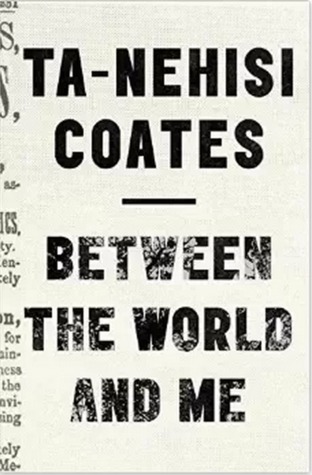
What I’m Reading: Delicious Foods and Between the World and Me

Today I have two reviews. Both are books that have been on many year end best lists. Both are two of my favorite reads of the year.  But why am I reviewing them together? Because each book resonated more with me because I read the other in conjunction with it.  So this will not be a traditional “What I’m Reading” post in that I will not separate my discussions of these two titles; however, this will be an extremely useful post for you to use as you help readers.

In fact, I would argue that this will be a MORE helpful review because I am pairing these books.  So much has already been said about  Between the World and Me that I almost didn’t write a review of it. I didn’t feel like I could add anything useful to the conversation. But in organizing the review in the fashion, I truly feel like I am helping you to help a reader.

For the record, that is always my goal with the reviews here on the blog. I try to give you something you cannot get from other review resources.  I think this is important to spell out since I have a lot of new readers. These posts are meant to be used to help a reader who either enjoyed the title I am reviewing to find more titles he or she would enjoy OR to help you to match this book with its best reader. I am not writing them to hear myself pontificate. Once these reviews stop being useful, I will stop writing them.

Enough preamble. Let’s get on with the information...

I want to start with Delicious Foods by James Hannaham, which is the book that most surprised me this year.  This was a novel that was clearly on my radar; I had heard it was good before it even came out. I ordered it for my library, and almost checked it out for myself a couple of times. But then, the combination of a review and a personal recommendation put this book on the top of my to-read list-- and they came from the same person.

My very good friend, Magan told me about how much she loved the audio of this novel. She loved it so much that not only did she give the audio a star in her Booklist review, but also she stood her ground and defended her choice to her editor, Joyce Saricks.  Well, it did get a star in the September 1st issue of Booklist, and then this novel went on to be on many year end best lists, many of which singled out the audio for its excellence.

Since it was Magan’s review that led me to listen to this novel, I am going to let her explain it to you more:
Hannaham’s stunning second novel (after God Says No, 2009) opens with 17-year-old Eddie’s desperate escape from Louisiana, driving a (stolen) car for the first time in his life, minutes after having both of his hands cleaved at the wrists under mysterious circumstances, in search of his aunt in Saint Cloud, Minnesota. It’s a hell of a tale: Eddie’s father was murdered when he was 6, and his mother, Darlene, completely shattered by her grief and guilt, spiraled downward into crack addiction, effectively abandoning Eddie long before she hopped into a minibus to work at Delicious Foods. She’s turned into a modern-day indentured servant in the hellish place, where Eddie eventually joins her. Author Hannaham narrates his harrowing novel and moves between unbelievable scenes of human suffering and dark, sly humor in so skillful a manner that belief is easily suspended while “Scotty,” Darlene’s name for crack, narrates events from his perspective. His voice characterizations bring to vivid life each of the sad collection of broken people at Delicious Foods, ratcheting up the horror without speeding through the plot, concluding with a realistic portrait of the aftereffects of suffering and perseverance on a family. Not to be missed.   — Magan Szwarek
 Before I add more of my own thoughts here, I want to say that this experience of being compelled to finally read this book because of the work of a librarian, AND having it turn out to be one of my favorites of the year reaffirmed for me why I work so hard to help all of you be better Reader’s  Advisors. This book was such a great read that I will always remember it, and I read it because of a librarian suggesting it to me. I am not lying when I tell you in trainings how powerful sharing a reading suggestion with a patron can be. People, you can be this person for someone out there!

I will suggest this novel for years to come to readers much like I do with The Miracle Life of Edgar Mint, The Good Thief, City of Thieves, Brief History of the Dead, and The Snow Child. No none of these are readalikes for each other, but they are all quirky, well constructed, thought-provoking, and emotionally moving stories that do not loose anything over time. While they are not sure bets for every reader who walks through the doors of the public library, they are great under the radar picks for a wide range of readers.

On the other hand, Between the World and Me by Ta-Nehisi Coates IS a sure bet.  I read a lot of books, and I see my fair share of hype about many books that are very good, but not as great as people want you to believe.  Between the World and Me is not that. It is one of the best books I have ever read. It will and should be read by every American at some point in their lives. It will become a classic that is read in schools.

Why? Because Coates takes his personal journey as a black man in America, and lays out the brutal truth, without judging or casting blame-- that is my favorite part about it, the nonjudgmental tone. This is a personal, emotional, and lyrical letter to his son about the truth of race in America, yet Coates takes what is a complex problem, and amazingly puts it into a deceptively short book without sacrificing anything.

Everyone should read this book, but in particular, all white America needs to read this, especially people who think that race is no longer an issue. For example, how many white people think about one of the facts Coates lays out early in the book-- that as a country, we have still had slavery longer than we have not!  Of course this is true, but it still shocked me to see it on the page. How can this fact not be at the front of my brain more often. Why have I never had this thought? Of course, someone like Coates lives this fact every day of his life.  As a Jewish person, I understand a very small sliver of what Coates is saying, but I can blend in my highly Catholic area. People don’t look at me and know immediately that I am not on team Jesus. Most of them just assume everyone is. When they find out I am not, I am a quaint example of “the other.”

Being black in America is hard enough, but being America’s "foremost public intellectual,” while being black could be soul crushingly impossible. The fact that Coates handles it so well and produced such an amazing book is awe inspiring.

Back to the first book...Delicious Foods is written by someone who didn’t need to read Coates’ book because it is obvious from the novel that he, James Hannaham, has lived in Coates’ shoes. Delicious Foods is proof of Coates’ brilliance, his truths, and the surprisingly succinct way he delivers such a complex message.

Because I read these two powerful and honest books back-to-back, I took more from each-- more knowledge, more enjoyment, more feeling. And yes, I meant to use the word “enjoyment." Despite how heart-wrenching and emotionally raw both books are, I enjoyed the experience of reading them.  Both were lyrical, beautiful and compelling. And while both were emotionally difficult to read, neither is “sad.” Both end with hope for a future that is better than today. If others read these books, maybe that better future will happen.

Three Words That Describe Delicious Foods: original, heart-wrenching, haunting

Three Words That Describe Between the World and Me: honest, lyrical, classic

Readalikes [for both]: Since I am reviewing fiction and nonfiction titles together here I have 3 of each to offer up as readalikes.

Fiction-- The 1980s slavery depicted in Delicious Foods reminded me so much of the masterful The Known World by Edward P. Jones which is a historical fiction novel based on the fact that there were black slave owners.  Both novels are inventive and original with a fluid use of time-line. But this is also a readalike for Between the World and Me. Both books are beautifully written while also taking a hard and honest look at America’s troubled history with race.

I am suggesting The Round House by Louise Erdrich because like both books here it looks at a tenuous and fraught history between Americans and those of a persecuted race, but with Erdrich it’s Native Americans.  But also, all three books have a coming of age theme. In all three the narrator is able to look back on his life to a critical moment (or moments), assess the racial injustice, and still move on without resorting to simple blame. All three works are also haunting and heartbreakingly beautiful.

My final fiction suggestion may sound a bit odd, but I think it works-- Station Eleven by Emily St. John Mandel. All three works are haunting, lyrical, and moving, with complex characters, that explore hard truths about humanity. In my review of Station Eleven I chose the word “disquieting” as one of my “three words.” This struck a chord with me when I was thinking about the two books being reviewed here. That word can apply to all three.

Nonfiction-- The Fire Next Time by James Baldwin. Actually, anything by James Baldwin. Coates openly admits to using Baldwin as an inspiration [not that he could hide it], but I also see much of Baldwin and his anger at injustice in Hannaham’s narrative voice too.

The Other Wes Moore by Wes Moore and/or Nickel and Dimed: On Not Getting By in America by Barbara Ehrenreich are both books I have read with my book club that elicited the following response-- “Every high school kid in America needs to read this book.” While Between the World and Me is much richer than these two offerings [they are a both much more of a simplistic look at similar, entrenched, American, societal problems],  but the themes are similar.  Also as readalikes to Delicious Foods, both of these suggestions take much of the class and race conflict from the novel and ground it in fact in a way that makes the novel even more realistic.

Wednesday, April 20, 2011

Student Annotations: Special Reading Interests

You read what I had to say about special reading interest areas, now it's time to hear from the GSLIS 763 students.

Click on over to the class blog to see what they had to say about their reading for this week.

Special Reading Interests Discussion

Tonight in GSLIS 763 we are tackling the last grouping of books.  It is hard to believe that there are only 2 weeks left in the Spring 2011 semester.

At the end we focus on what we have reluctantly agreed to call "Special Reading Interests."  Exactly which books fit this designation will vary depending on where you live.  Here in the Chicago area the most popular of these are Inspirational, African American, Latino/s, and GLBTQ.  Specifically at the BPL these are highly popular areas of reading interest for our patrons.

After talking in general about how to work with patrons who are seeking books by genre and special reading interest, we focus on these 4 areas, their resources, the most popular authors, and the genre trends.

Working with any special reading interest collection is always tricky.  If you pull these books out, you risk being accused of ghettoizing them; deeming them as not worthy enough to be the the general fiction.  However, when you do not pull out these books, readers complain that you aren't paying attention to their reading needs.  In other words, you cannot win.

How do you tackle this double-edged sword?  I have found success by making sure your staff is educated about reading options for your largest special reading interest groups.  Also, listen to your patrons.  What do they want?  How are they accessing the books?  We use this 2 pronged attack as we help readers at the BPL.   Let me give you concrete examples:

For Inspirational that is religious we use a sticker; however, for more general inspirational that is not religious (like Mitch Album) we do not.  Our readers who use the stickers to find reading suggestions are looking for Christian fiction.  However, we are aware of books which have an inspirational message and pull them out for displays and annotated lists throughout the year.

For African American, we do not use stickers; however, we do have a high urban fiction readership. To help both our readers and the staff, our fearless leader, Kathy, works to keep an urban fiction list both in print and on the Browsers Corner blog.  We also frequently pull out urban fiction for small mini-displays. 

For GLBTQ, we are blessed to have an active GLBTQ group in Berwyn, BUNGALO, who are also huge library supporters.  They have their monthly meetings at the library, give us a monetary donation every year, and are active volunteers in the Friends of the Library.  As a result, we have a great GLBTQ collection, but we do not pull it out.  In fact, I highly argue against anyone pulling out their GLBTQ books.  Why?  Some GLBTQ readers could be struggling with their feelings about their sexuality and would not want to have to go to a designated area where they would stand out.  Rather, I argue for actively stickering your GLBTQ titles so that readers who are still uncomfortable asking for help can find the books on their own.  This needs to be done with your fiction and nonfiction titles, by the way.

For Latino/a, we do nothing.  I am not sure why.  I think because there is confusion as to whether or not South American authors should be grouped here too.  We do have a large popular fiction collection in Spanish and have a high bilingual patron base.  But like African American, the Latino/a authors are mixed in throughout our collection and at least once a year we highlight the titles with a large display and an updated annotated list of titles of interest.  Interestingly, some of the younger Latino/a writers are moving more toward Urban Lit too.

So where should you go for resources to help your patrons with these special reading interests.  I will give you one web based suggestion for each to get you started.

Inspirational:  I like Best Inspiration because it encompasses the full range of what people find inspirational.  They have also captured the biggest trend in the area--bucket lists.

African-American: For the mainstream, I like The African American Literature Book Club.  For your Urban Lit readers try Street Fiction, a site run by a librarian to promote and educate about the genre.  He has reviews, lists, and interviews.

GLBTQ:  The gold-standard resource for GLBTQ reading interests is The LAMBDA Literary Foundation.  No more commentary needed.  This site is full of information that represents the full breadth of the reading interest and has information for authors and readers.

Latino/a:  I like Latino Stories, a resource created by a teacher, Jose B. Gonzales.  He has links to other websites, resources, awards, and best lists.

Now, I want to know what other special reading interests are popular at your library.  How do you help these readers?

Monday, December 6, 2010

New Paranormal and Urban Lit Resources

Paranormal Fiction and Urban Lit are among the most popular genres at libraries all over the country.  Thankfully, I have 2 new book resources and 2 web resources to pass on to you as you assist your patrons.

Fang-tastic FictionFang-tastic Fiction by Patricia O' Brien Mathews is part of the same series as my book. Here is the product description:
What's good besides Twilight? Answer burning questions such as this with the help of Mathews engaging tour through today's spooky lit. Readers will be able to search "read-alike" lists for series featuring their favorite "creatures" with up-to-date, chronological lists of series titles and summaries. Librarians will be able to suggest a multitude of adventures starring angst-ridden heartthrobs, superheroes, and champions. Focused exclusively on the best of the best, this lively readers advisory
  • Rates each series on a scale of 1 - 5 for levels of violence, sensuality, and humor
  • Contains more than 200 annotated entries
  • Enables book selection by type, character, series, and author
  • Lists all the volumes in a favorite series together and offers numerous read-alikes
Designed to keep librarians and readers up-to-date with the hottest contemporary supernatural beings in adult literature, Fang-tastic Fiction is both fun to read and easy to use.
On the web, thanks to Shelfrenewal I also found Wicked Little Pixie.  This website reviews paranormal romance and urban fantasy.  There are reviews and a great list of series in alpha order by author.  I am going to be using the link, printing series off, and handing them to happy patrons from now on.

Urban Grit: A Guide to Street Lit (Genreflecting Advisory Series)On the Street Lit front, Libraries Unlimited is releasing Urban Grit: A Guide to Street Lit as part of their Genreflecting Advisory Series at the end of this month.  Here's the product info on this yet to be released title:
Street lit is also known to its enthusiastic readers as "urban fiction," "ghetto lit," "hip-hop lit," and "gangsta lit." No matter what it's called, it remains one of the most significant and increasingly popular forms of modern literature.
This text provides a much-needed resource guide to this vibrant genre. In this title, more than 400 entries appear in eleven chapters, each focusing on a different subgenre of street lit. The author has organized titles by popular subgenres and themes, such as prison life and urban erotica, to help librarians more easily identify read-alikes. Urban Grit: A Guide to Street Lit also contains practical tips on integrating these books into an existing collection or library program and meeting challenges that may arise in the process.

The author, Megan Honig also has a fabulous blog which you can access here.  This month in anticipation of the release of the book, she is running a series called 30 Days of Street Lit.  You can use this link to follow her postings.

We have ordered both books for out RA Reference shelf here at the BPL.  I am excited to have some new resources to help the many readers who ask about these two emerging genres each and every day.

Wednesday, April 21, 2010

Student Annotations: Last of the Semester

Tonight's class is entitled, "Special Reading Interests." In this class we talk about areas of fiction where your community might have an interest. Since we have only 3 hours and we are training the librarians of Northern IL, we focus on the following four categories: Inspirational, African American (including Urban Lit), Latino/a, and GLBTQ (Gay, Lesbian, Bisexual, Transgendered and Questioning).

For these interest areas, we discuss fiction and nonfiction.  We also require the students to each try a book in one of these areas during the course of the semester.

I realize this is only a small sampling of the special reading interests out there, but for a vast majority of the librarians we are training, these will be the most common. The idea is for them to read a book and think about its appeal for more than just what genre it is. Many times, just being a book by a, for example, African American author, is an appeal factor in and of itself. This class and the required reading forces the students to think about this. So, even if you want to argue about the areas we have chosen, the exercise is useful as training for dealing with any patron's special reading interest.


Click on over to the Class Blog to see what they read this week.

Also to see what has been read in these areas in the past click on the interest area to see all posts: Inspirational, African American, Latino/a, and GLBTQ. These links are helpful if you have a patron (or yourself) who wants to read one of these books.

That's it for annotations this semester. Joyce will teach the class this summer, so I will post their work.  The students still have finals, so, at the least, I will have a few more reading maps to add to the class archive in a few weeks.

Saturday, February 27, 2010

Black History Month For All

I know black history month ends tomorrow, but for those of you who meant to read a book by an African American author, here is a site that you can use all year long. Called, White Readers Meet Black Authors, this blog is:
"Your official invitation into the African American section of the bookstore! A sometimes serious, sometimes light-hearted plea for EVERYBODY to give a black writer a try"
This site is chocked full of useful information. But more importantly, I love the tone of the blog. Many white readers are hesitant to ask for help finding African American authors, but here is a resource asking you to ask. I love it!  My only quibble is that she should add "library" after bookstore.

Don't forget the BPL's annotated lists for Black History Month which I posted about here.


Thanks to Rebecca over at Shelfrenewal for pointing out this site.

And finally, a special note to my students...use this site if you are still trying to find a multicultural title for class.

Wednesday, November 18, 2009

Student Annotations: Special Reading Interests

Tonight we talked about the fact that in every community there are special interests you need to be aware of. The four most popular special reading interests in the Chicagoland area are Inspirational Literature (both religious and non-religious), African American Literature, Latino/a Literature, and Gay, Lesbian, Bisexual, and Transgendered Literature.

These are not genres, but rather specific interest areas which include books in all genres. It is also important to note that you do not have to "be" in one of these groups to read books in these special reading interest areas.

My students read some books in these 4 categories and posted about them on the Word Press blog.

Since people are less familiar with these areas I thoughts I'd also share just one web resource from each area.

Inspirational: Beliefnet
African American: African American Literature Book Club
Latino/a: The Boston Public Library's Latino Life Bookmarks
GLBTQ: I'm Here, I'm Queer. What the Hell Do I Read?

Use the resources or the student blog to find something new to read.

Wednesday, June 24, 2009

Student Annotations: Special Reading Interests

Today's class is a catch all that we call Special Reading Interests. These are books that fall into any genre but fit the following reading interests: African-American, Latino/a, Gay, Lesbian, Bisexual, Transgendered, or Inspirational.

These are the four most common special interest in the area around Dominican University, as a result, these are the ones we focus on. If you were near a reservation, I could see why you might focus on Native American Literature, or if you were in CA, you might need to add Asian-American Literature to the list.

The key to this day is to show the students that you sometimes need to think about issues beyond just genre when giving reading suggestions. And, a great way to do this is by picking the most popular reading interests in your area.

Also, we use this class to stress how important it is to not think of, for example, "African-American" books as a genre. This is a big mistake. Within each of these special reading interests, there is a book in every genre, with appeal factors specific to that genre. For example, just because a reader likes "gay authors" does not mean they will like the literary fiction of David Leavitt the same as the mysteries of Mark Zubro. You need to further understand within the confines of "gay authors" what type of book that reader wants.

Enough explaining, here is the link to Joyce's students' annotations for today.

Thursday, April 16, 2009

Student Annotations: Special Reading Interests

Last night our class discussed the most popular special reading interests in the Chicagoland area. So head over to our class Word Press blog for annotations on Inspirational, African American, Latino/a and GLBTQ.