RA FOR ALL...THE ROAD SHOW!

I can come to your library, book club meeting, or conference to talk about how to help your readers find their next good read. Click here for more information including RA for All's EDI Statement and info about WHY I LOVE HORROR.
Showing posts sorted by relevance for query edgar mint. Sort by date Show all posts

Monday, May 3, 2010

Big Month of Books: May 2010

As I was catching up on my reading about books today at work, I realized there are a lot of big name books coming out this month-- many of which I have something to say about (surprise).

InnocentFirst of all, tomorrow Scott Turow's new novel, Innocent, a sequel to the still popular Presumed Innocent, is out. The book is getting good reviews but what I want to tell all of you is what a truly nice guys he is. Back in my pre-public library days I was a reference librarian at the big Chicago law firm where Turrow is a partner and he was nothing but nice and respectful to the library staff and to me personally. It is nice to see one of the good guys getting the attention he deserves

And its is not just me who likes Turow; his fellow authors just voted him the new President of the Author's Guild.

The Lonely Polygamist: A NovelAnother new title this month that I am eagerly awaiting is The Lonely Polygamist by Brady Udall. Back in 2000 when I first started working RA I could not put Udall's first novel (The Miracle Life Of Edgar Mint) into enough people's hands. In fact, that novel is still one of my favorite go-to back list, hidden gem suggestions. I have given it out so much that I wouldn't be surprsied if the Berwyn Library has the highest circ stats on Edgar Mint in the country. Back to The Lonely Polygamist.  Udall's new book is also garnering great reviews. I am on hold for it. Are you?

The Girl Who Kicked the Hornet's Nest
You are living under a rock if you do not know about the last of the late Stieg Larsson's books due to come out this month. The Girl with the Dragon Tattoo and The Girl Who Played with Fire were 2 of my favorite books I read in 2009. Like just about everyone else on the planet, I am both hotly anticipating The Girl Who Kicked the Hornet's Nest's release and sadden by the fact that once I finish it, there will be no more. I am glad to see reviewers are saying that the trilogy is appropriately and satisfyingly concluded in this novel. However, it is sad to think that Larsson never got to live to see his great success and critical acclaim.

The Ark: A Novel The Indie Next List for May also pointed me to The Ark by Boyd Morrison:
Can the ancient world still impact the modern? In a resounding 'Yes,' Boyd Morrison relates a story involving Noah's Ark and a modern bioweapon. This fast-paced suspense sweeps two engineers and an archaeologist into the grip of modern day fanaticism. The Ark will take you on a roller coaster ride of plot twists and turns. Highly recommended! —Fran Wilson, Colorado State University Bookstore, Fort Collins, CO
Sounds like a sure winner to me.

Click here and here to see other lists of the best of May 2010. What are you waiting to read?

Friday, September 7, 2012

What I'm Reading: The Snow Child

Many moons ago I read the debut novel by Alaskan author Eowyn Ivey, The Snow Child.  The novel is based on a traditional Russian folk tale in which a childless couple make a snow child and it comes to life, but eventually it melts when the warm weather comes.  Click here for a recent picture book adaptation of the tale.

In Ivey's version, the couple, Jack and Mabel, are homesteaders in 1920s Alaska, not a very forgiving landscape.  They are barley making it.  She is lonely and he is physically unable to keep up with the intense labor of the farming.  During the season's first snowfall in the nadir of their time in Alaska, the couple has a fun moment building a snow child.  The next morning, the snow child is gone but they glimpse a blonde, wild girl running into the woods.  So begins their relationship with this mysterious child, Faina.

Now Jack and Mabel are well educated and understand that what they are seeing could only come out out of a fairy tale, but over time, Farina becomes a part of their life, and their family.  While Mabel accepts Faina without question, Jack sets out to prove where she really came from.  She gives them purpose, but in a story based on a fairy tale, the ending can only be bittersweet at best.

This is a novel for people who like retold fairy tales. Even though we know how the story will eventually end up, there are still surprises, enchanting moments, wonderful characters, and a just a feeling for being utterly transfixed by the story.  You get lost in this book, and don't want to leave the characters.

The setting here is so vivid it becomes a character.  It is stark and unforgiving.  It is cold and wet.  We can feel the wind as Ivey describes it.  But it is also beautiful and mysterious.  When spring comes we breathe a sigh of relief with the homesteaders.  I was transfixed by the descriptions.  I also enjoyed the historical aspects too.  There is much detail here about how one would actually have to live on a homestead in 1920s Alaska, how you would (or wouldn't) be able to communicate with your family back East, and why one would make the choice to live literally in the middle of nowhere.

The characters are also an important part of whether or not you will like this story.  Because the plot is not action oriented-- the seasons come and go with regularity and life does not vary much-- it is the characters you must read for.  Mabel and Jack are well fleshed out, as we get alternating chapters from their different point s of view.  Their only friends and neighbors are great secondary characters and add a bit of humor to the story.  And their youngest son becomes a pivotal character in the tale.

Since the story takes place over a 2 decade period, we see the characters grow and change.  We see how the harsh landscape grows on them.  And we come to love them all like family.

The language is lyrical and slightly old fashioned but it works for the setting and frame of the retold fairy tale. This is a great book to curl up with and read in one of 2 sittings.  The ending is resolved but a bit open.  Overall this is a dreamlike read with a bittersweet ending.

Three Words That Describe This Book: retold fairy tales, strong sense of place, dreamlike

Readalikes: The first book I thought of when reading The Snow Child was Keith Donohue's The Stolen Child.  Click here for my review of that novel.

Really anything by Donohue, Kevin Brockmeier, or Steven Millhauser would work here.  In fact, take a look at this post where I summarize the appeal of all three of these authors.  But for those of you who don't want to open a new window, I would say these men share with Ivey a style in which they tell a story and you, the reader, sit back and experience it.  Their work is  lyrical, dreamlike, and character driven with details frames anchoring it all.

The Night Circus by Erin Morgenstern also has a similar fairy tale quality, where the setting and characters reign supreme.  Again, it is a book that will transfix you.  Click here to read my detailed review.  (You can also see me interview live next month for free by clicking here).

Other books I read that would work as readalikes (use links for details):
One of my favorite backlist titles is The Miracle Life of Edgar Mint by Brady Udall.  Here is what I have to say about it on the Browsers Corner:
Edgar is a half-apache, half white child whose life the reader enters when his head is crushed under the wheel of the mailman’s truck.  After a miracle recovery, Edgar is abandoned by his family and begins a remarkable journey. This is an uplifting and inspiring story of a truly unique and lovable protagonist. Fans of John Irving will love this novel
Finally, here is the link to the GoodReads page on Fairy Tales that includes links and lists for traditional fairy tales and retellings.

Thursday, October 30, 2008

What I'm Reading: October 2008

This month I read two completely different historical fiction titles and a popular nonfiction one.

I first encountered The Good Thief by Hannah Tinti when reading reviews and, as I often do when a review strikes me, put the title on hold. Many times I end up returning the book before reading it, but this title seemed too good to pass up, and thankfully I was correct. The Good Thief has been described as being reminiscent of Dickens, and I think that is very much true. The time period, class issues, and the plucky orphan main character all lead one to that comparison.

Here are the details. The Good Thief is Tinti's first novel. We begin the story in 19th Century, New England, in a Catholic orphanage. 12-year-old Ren has lived here for as long as he can remember. He also has no recollection of how he came to lose his hand either. Ren is worried about his future because he is nearing the age when, if not adopted, he will be sold into the army and never know what it is like to have a home and a family. One day, Benjamin arrives,claiming to be Ren's brother, and adopts Ren. As you can imagine, Benjamin is not who he claims to be and the two begin an exciting adventure together.

The Good Thief is, refreshingly, a traditional adventure story (with a historical background) in a literary landscape where adventure is being consumed by thrillers and terrorism plot lines. It is fast paced, the hero is resourceful and lucky (maybe unbelievable so, but that goes with the genre), and it has a resolved, happy ending. Tinti uses many of Dicken's own tricks and themes to propel her story along., including a wonderful cast of eccentric secondary characters such as a dwarf who lives on the roof, a murdering giant, and a hard of hearing landlady. The novel is appropriately funny, heart-warming, melodramatic, and bittersweet, with each occurring in the right places.

I would suggest this novel to anyone looking for a fast paced, old fashioned story. Although it is not a gentle read (there are murders and the exhumation of bodies), it is good for a wide range of readers. I would especially suggest this in audio form to a family with middle school and older children to listen to on a driving vacation.

Specific readalike titles would of course include anything by Dickens. But for more modern authors and titles, those interested could try the hugely popular The Story of Edgar Sawtelle by David Wroblewski which also has a disabled but plucky, young male protagonist (here he is mute), and a coming-of-age theme; it also loosely follows the plot of Hamlet. A less mainstream suggestion would be another well received first novel, When the Finch Rises by Jack Riggs. Here the reader follows two young boys in the 1960s South, their tough lives, their coming-of-age, and the strength of their friendship that pulls them through. It is important to note that this novel does have touches of magical realism. Finally one of my back list favorites that I would be a perfect match for readers who liked Ren is The Miracle Life of Edgar Mint by Brady Udall.

For those who really enjoyed the 19th century, New England setting, you could always try works by or about Louisa May Alcott, Henry David Thoreau or Ralph Waldo Emerson. All three writers captured this time, as it happened, and are still read today.

I also read another historical fiction with some adventure elements and a similar title, but with a completely different setting and tone. City of Thieves by David Benioff is a WWII drama. St. Petersberg (or Pitter as its residents refer to it) is under siege by the Nazis and Lev, the son of a poet (and victim of Stalin) is literally starving while protecting his beloved Pitter. One evening he is caught out after curfew, thrown in jail, and awaiting his punishment...death. In his cell, Lev meets an army deserter and university student named Kolya. The two are offered a reprieve by the Colonel if they can locate a dozen eggs for his daughter's wedding cake in less than a week's time. The boys set out into the wild streets of Pitter, and eventually slip behind German lines. Along the way, as Lev narrates, the two form a true friendship, meet many interesting people, and come to understand the beauty and horrors of war.

City of Thieves has both a war and coming-of-age theme, much like How I Live Now by Meg Rosoff. Also, the popular and well reviewed thriller, Child 44 by Tom Rob Smtih, has a similar setting, but a faster pace and a bit less historical detail. Both would make good readalikes, but possibly not for the same reader.

For nonfiction suggestions, there are literally millions of books on WWII, but this link will lead you to a list of books about the Russian Front, giving any interested readers more information about the setting of Benioff's novel.

Finally, this month I also listened to Simon Winchester reading his latest books, The Man Who Loved China. First comment, Winchester is a wonderful writer, but probably not the most exciting reader. That being said, if you are interested in the West's first true and fair encounter with China and the creation of what is still considered to be the best reference guide of the history of china, read this book. Joseph Needham, the man referred to in the book's title, was not only brilliant, but also interestingly eccentric. In true Winchester style, Needham and his work are raised in importance and links are drawn between Needham and larger world issues, such as the Unibomber.

As I have written on NoveList Plus in my readalike for Winchester, similar authors would include Mark Kurlansky, Jared Diamond, John McPhee, Dava Sobel and Susan Orlean. I would highly suggest checking out these authors if you like Winchester's work.

But specifically, as I read this book, a few novels about Cambridge and China that I had read recently kept popping into my head. I really don't have a subjective reason why, but Ghostwalk by Rebecca Stout and the novels of Lisa See came into my mind often as I read The Man Who Loved China. For what it's worth, I have linked to blog entries where I discussed these novels.

Thursday, April 29, 2010

BPL Book Discussion: The Good Thief

Last week, my group met to discuss Hannah Tinti's The Good Thief, and to prepare for our upcoming appearance in The Chicago Tribune.


First, to the important stuff. As I mentioned here, we were accepted to be featured as one of the Printers Row Chicagoland Bookclubs. To that end, I was asked to have the group answer some specific questions and take their picture. So thanks to Briana, here we are (minus 2 regulars).

Look for an announcement on this blog in the coming months to see when our feature is run, and, more importantly, to see what we have to say about how awesome the Berwyn Library's Monday Book Club is.

Now on to the discussion, which was a great one incidentally.  I first read The Good Thief  by Hannah Tinti back in October of 2008 and it was my favorite book I read that year also. Here is what I said about it back then:
"The Good Thief is, refreshingly, a traditional adventure story (with a historical background) in a literary landscape where adventure is being consumed by thrillers and terrorism plot lines. It is fast paced, the hero is resourceful and lucky (maybe unbelievable so, but that goes with the genre), and it has a resolved, happy ending. Tinti uses many of Dickens' own tricks and themes to propel her story along., including a wonderful cast of eccentric secondary characters such as a dwarf who lives on the roof, a murdering giant, and a hard of hearing landlady. The novel is appropriately funny, heart-warming, melodramatic, and bittersweet, with each occurring in the right place."
The novel is set in 19th Century, upper New England and follows the story of  an enchanting 12-year-old boy named Ren. Ren was left, missing his left hand, as an infant in an orphanage, he is finally adopted by a man claiming to be his brother, but who is quickly revealed as a con man. This historical adventure leads Ren on a Gothic inspired adventure in which his parentage is finally revealed and his future is secured.

I was concerned about doing one of my favorite books with the book club, but it worked out great.  I began, as usual, by going around the room and asking who liked, disliked, or felt so-so about the book. We had no "dislikes", many "loves," and only a few "so-so's." I have mention using this discussion starting trick before and highly recommend it to all book discussion leaders.  First, you get a sense of what you are up against. I always try to provide a balance of opinions in the discussion because when everyone agrees, the discussion is boring.  In this case, I knew I would need to be more critical of the novel, providing some counterpoints for their "Good Thief Love."

Second, this technique allows the discussion to begin naturally. After people pick a side, I call on someone from the majority opinion (in  this case, loved it) and ask why they felt this way. This gets the discussion going right away. You do have to make sure you get the other people (in this case, the so-so's) into the discussion too. In many cases, the reason one person loved the book is why another did not.

So, what did we discuss. The biggest thing I want to share about our discussion is how excited everyone was that we read a fun, fast-paced story. One participant said reading this novel reminded her of reading as a child: a book you couldn't put down, with characters you loved, great details of time and place, and a fun, adventurous story with a happy ending. This is important for long standing book clubs. We can get bogged down in serious books, so it is nice to have a chance to read a fun book with enough issues to discuss

Here is a list of some of the issues we discussed:
  • Ren was a wonderful protagonist. We loved his perspective, imagination, and his good heart
  • Tinti's beautiful language, engrossing descriptions, and eccentric characters were commented upon
  • One participant had us look at the intro pages for each of the novel's 3 parts.  Part One has a picture of a hand (in this part Ren is used for his lack of hand). Part Two has a picture of a skull (here Ren meets the Doctor and learns about anatomy). Part Three has a picture of a heart (here Ren finds a family)
  • We spent a lot of time talking about how similar to a Dickens novel this truly was. This otherness of time and place with a nod to great works of the past, allowed Tinti the leeway to create a story in which anything could (and does) happen.
  • The theme of redemption is big in this novel.
  • We spent time talking about all of the secondary characters. We evaluated their actions and motives. Although they are all different, all of the characters in the book are outcasts and most evolve, grow and change. This is a bunch of extreme characters too. They keep you on your toes.
  • My favorite question of the day, "Can you be a good thief?" This was a fun side discussion
  • The book was dark, but Ren was light.
  • Nature vs. Nurture
  • Ren and his religious upbringing.
  • In a book with a bunch of positive female characters, not one is a wife or mother. Hmmmmm.
Readalikes: Specific readalike titles would of course include anything by Dickens. But for more modern authors and titles, those interested could try The Story of Edgar Sawtelle by David Wroblewski which also has a disabled but plucky, young male protagonist (here he is mute), and a coming-of-age theme; it also loosely follows the plot of Hamlet. A less mainstream suggestion would be another well received first novel, When the Finch Rises by Jack Riggs. Here the reader follows two young boys in the 1960s South, their tough lives, their coming-of-age, and the strength of their friendship that pulls them through. It is important to note that this novel does have touches of magical realism. Finally one of my back list favorites that I would be a perfect match for readers who liked Ren is The Miracle Life of Edgar Mint by Brady Udall. I would also suggest The Graveyard Book by Neil Gaiman, and City of Thieves by David Bennioff.

Monday, March 28, 2011

Monday Discussion: Backlist Gems

The backlist.  It is what makes the library stand apart from bookstores.  We have all the currently hot books, but we also have stacks filled with older titles you may have missed.

Even though I actively advocate for the backlist here on this blog, even I sometimes forget all the stacks have to offer to us.  Back on St. Patrick's day, we had a RA staff meeting and our fearless leader, Kathy, asked us to come prepared to book talk a potential book discussion book.  All were good, but Betty's choice was perfect.  She mentioned A Canticle for Leibowitz by Walter Miller which was originally published in 1959.  Here is the Amazon review:
Walter M. Miller's acclaimed SF classic A Canticle for Leibowitz opens with the accidental excavation of a holy artifact: a creased, brittle memo scrawled by the hand of the blessed Saint Leibowitz, that reads: "Pound pastrami, can kraut, six bagels--bring home for Emma." To the Brothers of Saint Leibowitz, this sacred shopping list penned by an obscure, 20th-century engineer is a symbol of hope from the distant past, from before the Simplification, the fiery atomic holocaust that plunged the earth into darkness and ignorance. As 1984 cautioned against Stalinism, so 1959's A Canticle for Leibowitz warns of the threat and implications of nuclear annihilation. Following a cloister of monks in their Utah abbey over some six or seven hundred years, the funny but bleak Canticle tackles the sociological and religious implications of the cyclical rise and fall of civilization, questioning whether humanity can hope for more than repeating its own history.
I listened to Betty describe the book to us and was shocked that although the title was familiar to me, I had no idea what this book was about.  It sounds like a book I would love.  It sounds like a book at least a dozen patrons of mine would love.  And it has been sitting on our shelf, waiting for me to suggest it to someone.  It makes you think of the hundreds of other great reads that are going unread on our shelves.

My favorite backlist titles to hand out to patrons are The Miracle Life of Edgar Mint by Brady Udall,  the Jeeves novels by P. G. Wodehouse, and The Brief History of the Dead by Kevin Brockmeier.

The blog Shelfrenewal centers around the idea of dusting off backlist gems and inspiring librarians to start suggesting them to readers again.

What about you?  What backlist titles are on your radar right now?  And by backlist, I am talking about anything older than 5 years which is readily available in the average public library's open stacks.

You can access the Monday Discussion Archive here.

Thursday, May 30, 2013

While You Wait-- And The Mountains Echoed

The two big books of the month are now out and both have long holds queues.  Dan Brown's Inferno is a bit easier to find readalikes for as his brand of intellectual, historical, adventure thriller has been often duplicated.  Also, at the BPL we already have this list of Dan Brown readalikes posted online and available in print at the library.

Khaled Hosseini is a bit harder to match with suggestions while people wait for And The Mountains Echoed.  Hosseini crafts moving, character centered tales, with a strong emotional pull and a setting or frame in Afghanistan.  Some people read his books because of their Afghanistan frame, but many who were first drawn to him because of that current events frame have learned to love his storytelling style.

I have read both of Hosseini's previous titles, but only A Thousand Splendid Suns was read since the blog began.  Here is what I had to say about that title in March of 2008:
I also listened to the popular A Thousand Splendid Suns by Khaled Hosseini. Hosseini's follow-up to The Kite Runner tells to stories of two women, Miriam and Laila, as they live through three decades of war in Afghanistan. With his second novel, Hosseini has shown that he is an excellent storyteller who is here to stay. I especially enjoyed the detailed history lesson which this book provided. Mostly, I was riveted by the two women, their voices, and their stories. 
Those who like Hosseini's setting of Afghanistan should also try the current nonfiction best seller Three Cups of Tea: One Man's Mission to Promote Peace...One School at a Time by Greg Mortenson or the fiction title The Swallows of Kabul by Yasmina Khadra. Those who enjoyed learning about the history of Afghanistan may also want to delve into the Iranian Revolution (a neighbor of Afghanistan). Here I suggest The Complete Persepolis by Marjane Satrapi. In this accessible graphic novel, Satrapi tells her personal story of living through war and Islamic revolution in Iran. Much of her story resonates with that of Miriam and Laila's. Finally, those readers who found the women's friendship against all odds very appealing, I suggest Snow Flower and the Secret Fan by Lisa See. Although this novel takes place in China, the laotongrelationship between the two main characters has many similarities with Hosseini's novel.
Since Hosseini does not write quickly, people are literally clamoring for And the Mountains Echoed.  The reviews are also fabulous, pushing demand even higher. People want this book right now, and you are the one that has to tell them that they are not going to get it.

But look on the bright side.  Times like this are when you have a chance to shine.  Yes you will have to take the patron's hold for And the Mountains Echoed, but look at all of the other books that are sitting on your shelves just waiting to be read by someone at this very moment. You have the perfect opportunity to show these patrons another great title they can read while they wait. Do not let this captive audience leave without even offering to give them a title to read now.

That's where I come in.  Besides the titles I mentioned above and other books with a Afghanistan frame, here are some titles that are also intricately plotted stories, told with lyrical language, characters you care about, and a reflective tone.  Again, these are NOT your typical Middle East set suggestions.  Most importantly, these books will be on the shelf.  Links are to my reviews where possible:

There is no reason for your patrons to leave unsatisfied when they come in hoping to get a copy of And the Mountains Echoed because there is always another book they will like somewhere else in the stacks.

Feel free to add your own readalike suggestions in the comments.

Monday, July 7, 2014

50 Books for 50 States: A List, a Staff Training Exercise, A Patron Tool, and Some Fun All Rolled Into One Post

I know just yesterday I said that I would not have a Monday Discussion today.  And I still will not, but I can’t help myself from posting this list, "Celebrating Read, White and Blue: 50 Favorite Books for 50 States” from the Barnes and Noble blog originally posted on the 4th, a list which is sure to cause discussion.

The list has the blogger’s choice of a book for each state.  What I love about the list is that it combines classics, old and new.  The books listed for my two favorite states NJ and IL perfectly illustrate that.  IL Has Native Son listed, while NJ has The Brief Wondrous Life of Oscar Wao.  An old established classic juxtaposed with a modern one. Nicely done.

Of course, I quibble with a few of the choices.  For example, while When the Emperor Was Divine by Julie Otsuka was a fantastic book [I read it before the blog began], I don’t really associate it with Utah.  Yes it is technically set there, but it is much more about the no man’s land that is the Japanese internment camp.  For me, the first book that comes to mind if someone says Utah is The Miracle Life of Edgar Mint by Brady Udall; one of my all time favorites.

See I am starting a discussion on Monday even after I said I wouldn’t.  I just can’t help myself.

So check out the list for yourself.  Then just for fun, change it up.  Make your list of 50 books for 50 states.  Maybe some would stay the same, but I know for at least a few everyone will have something different.  Circulate it among your staff.  Ask them to fill in their favorites where they differ. It will be a great training exercise.  Don’t use reference tools though.  Simply ask people to contribute to the list with books that they think of immediately when the state is mentioned.  Mix it up with fiction and nonfiction if you want. Together you can create a huge library-wide list of multiple options for each state.

Then make it all available to patrons, in print or online.  Why?  Well, first it makes a great book related conversation starter, both between you and a patron to break the ice, but also, for a patron to take home and use at a summer bbq with friends and family.

Second, this mega-list is a great RA tool to use for a patron looking for an interesting summer reading project or for suggesting a book to go with their vacation destination. For example, The Dog Stars by Peter Heller, as suggested in the original list, would be an amazing read for anyone going to Colorado this summer, but so would Plainsong by Kent Huruf or The Shining by Stephen King (depending on the reader). If you created the mega-list I suggest above, you end up with 3 awesome choices for a patron looking for a CO set book.

And third, this is all a fun exercise to shake you out of the summer blahs.  I don’t know about your library, but we are VERY busy in the summer.  Many patrons are trying to squeeze a year of reading into the summer. Our door counts are up.  The Summer Reading Program is entering its busiest time. And, staff are out on staggered vacations so we are all doing our jobs plus the work of someone who is enjoying a well earned vacation. Busy is an understatement.

When you are feeling too busy, it is often easy to lose sight of how great we have it-- working in a library, helping people find their next great read, and making people happy. A quick, easy exercise like this can reinvigorate you, remind you why you do it all in the first place, and sharpen your skills. What a treat!

Following my suggestions in this post, will make for a fun (yet still skill building) diversion. And after a nice relaxing long weekend followed by what will probably be a super crazy Monday (which is why I wrote this post on Sunday and set it to post automatically on Monday), we are all going to need a break.

Tuesday, May 22, 2012

Spotlight on Westerns

If you work in a library today you know this much is true about Westerns--you can count on your fingers the number of Western questions you get in a year, yet somehow when you check the circ stats, you find that the books are still getting checked out.

When I first started at the Berwyn Library almost 12 years ago (Yikes!), Westerns had their own section, but they were on a different floor from the rest of the adult fiction.  When we moved them back down stairs soon after creating the RA department and interfiled them with the rest of fiction (keeping their identifying "western" sticker though), there were grumbles, but the complaints didn't hurt the circ stats on the titles.  We found that Westerns were being checked out more after giving up their private real estate.

While the circ stats on Westerns are nowhere near those for Mysteries or even Urban Fiction (for which we have way fewer titles), the collection still stands its ground.  We continue to add new Westerns to our collection.

Right now, we have our annual Western display up .  Each year we puill out the Westerns and let them relive their time in their own section.  For a month they get to shine on their own display.  John has created a very catchy and fun sign on the display and included an annotated list of titles you might want to try.

Looking at the display while working the last few days, I was inspired to share some of my favorite modern western titles and authors with you.  The point I am trying to make is that anyone can read Westerns. So here are a few of my favorite Westerns and their cousins, otherwise known as Novels of the West.

  • Hondo by Louis L'Amour is an amazing novel.  If you are looking for the definition of a great read, look no further.  Do not be turned off by a hokey cover (if yours has one).  Read this book.  Each semester I manage to convince one student to do so and every single one has loved it.
  • In the same vein, don't forget about Larry McMurtry.  His Westerns appeal to a wide audience.  
  • I read Peace Like A River by Leif Enger years ago, but it has stayed with me.  I still hand it out to people.  This is a quirky story of a family in trouble in the upper plains, but in contemporary times.
  • Ivan Doig is another author I want to highlight.  As I wrote for the NoveList author descirption for Doig: "Ivan Doig has turned his personal experiences into award-winning literary novels and personal histories of the West. These are not your grandfather's Westerns however, as gun-play and cattle-herding take a back seat to people and places. Doig writes both fiction and nonfiction which recounts the history of Western Montana. A typical Doig Western follows a family as they attempt to settle, live, and prosper in an unforgiving environment. Readers enjoy his lyrical prose, deliberate pacing, and vivid scenery. Doig's books are ultimately hopeful, paying homage to his forebearers. Start with: The Whistling Season"
  • But probably my favorite writer of Novels of the West today is Brady Udall.  Click here for my review of The Lonely Polygamist (which has some amazing descriptions of the landscape of the West.  Also, click here to see my Browsers Corner post on The Miracle Life of Edgar Mint.
If you want to see the latest news in the world of Westerns, go to the recently revised homepage of the Western Writers of America.

Thursday, June 5, 2014

What I’m Reading: The Swan Gandola

Back in March I had the pleasure of spending time with Timothy Schaffert’s The Swan Gondola.  Notice I said “spending time” not reading.  I did read this book, but as you will see in a few moments, this is not a novel you simply read. If that is the type of book you are looking for, stop reading this review. Rather The Swan Gondola is all about the atmosphere you are placed into while turning the pages.

But first, a tiny bit of plot, not because something will be given away if I give a lot of plot, rather I am simply giving a tiny bit because this is the type of book where nothing happens, yet everything happens. The plot is very inconsequential to whether or not you would enjoy the book.

The story begins and ends with Ferret, a ventriloquist/con man. The entire story is framed around Ferret’s escape from the 1898 Omaha World’s Fair in a hot air balloon, and while we keep returning to that “present” from which Ferret is recounting his story, the bulk of the tale is Ferret’s story of falling in love with Cecily, a performer at the Fair.

We spend Ferret’s days with him as he works the fair with his dummy, follows Cecily, watches her perform, meets new people, and has adventures.

The publisher’s sound bite is:
"A lush and thrilling romantic fable about two lovers set against the scandalous burlesques, midnight séances, and aerial ballets of the 1898 Omaha World’s Fair. “

I think this makes the book sound more action packed than it truly is.  This is a fable, told in the form of an homage to The Wizard of Oz. The bulk of the action is taking place at the Fair, but there isn’t much action.  This is a leisurely paced, historical set piece.  It is all about the setting and the tone. You inhabit the place with Ferret, our narrator.  You meet his friends and associates.  These are people who live on the fringes, and we are meant to follow along.

Ferret and Cecily’s story has a macabre tone, in fact it is more like a ghost story than a romance, but an old-fashioned ghost story in the Gothic tradition.  Atmosphere rules here. The entire story is set slightly askew.  Their love story is odd, the people they know and meet are all over the top, but interesting.  Theirs is a doomed love, but we know this from the start as Ferret is recovering from his balloon crash and slowly unveils the entire novel to the elderly sisters who are caring for him.

While reading The Swan Gondola, I began to realize that it would become a book best characterized as “perfect for Becky.”  This is my kind of book all around-- odd, interesting, character driven, macabre, with historical details [involving a fair or carnival (bonus Becky love)], a frame that pays homage to another work of literature, and all of it told in a quirky, slightly askew way.

Now this being said, a perfect book for Becky does not mean I am out at the desk thrusting this book into every patron’s hand.  No, I am actually much more discerning about who I hand sell this book too because I realize how quirky it is.  I have only given it to one person so far, carefully chosen, and she liked it.  It is a book I will keep in my perverbial back pocket for years to come, puling it out at the right moment, for just the right patron.

But for now, I was happy to inhabit the world of The Swan Gondola for a few enjoyable days.  I may even go back out for another ride some day.

Three Words That Describe This Book: Atmospheric, historical, macabre

Readalikes: Because The Swan Gondola is so much the classic Becky book,  I have a ton of books which I have loved that share this same feel. I will list them with links to my reviews in no particular order:


For a more traditional readalike suggestion, if you have a patron who loved all the parts in The Devil in the White City by Erik Larson about the fair, but could have done without the murder investigation, than this is a great choice for him or her.

And of course, people who love the original L. Frank Baum Wizard of Oz tales will gobble up this book.  I would think twice about giving it to patrons who only love the movie version though.

Monday, December 21, 2015

What I’m Reading: Delicious Foods and Between the World and Me

Today I have two reviews. Both are books that have been on many year end best lists. Both are two of my favorite reads of the year.  But why am I reviewing them together? Because each book resonated more with me because I read the other in conjunction with it.  So this will not be a traditional “What I’m Reading” post in that I will not separate my discussions of these two titles; however, this will be an extremely useful post for you to use as you help readers.

In fact, I would argue that this will be a MORE helpful review because I am pairing these books.  So much has already been said about  Between the World and Me that I almost didn’t write a review of it. I didn’t feel like I could add anything useful to the conversation. But in organizing the review in the fashion, I truly feel like I am helping you to help a reader.

For the record, that is always my goal with the reviews here on the blog. I try to give you something you cannot get from other review resources.  I think this is important to spell out since I have a lot of new readers. These posts are meant to be used to help a reader who either enjoyed the title I am reviewing to find more titles he or she would enjoy OR to help you to match this book with its best reader. I am not writing them to hear myself pontificate. Once these reviews stop being useful, I will stop writing them.

Enough preamble. Let’s get on with the information...

I want to start with Delicious Foods by James Hannaham, which is the book that most surprised me this year.  This was a novel that was clearly on my radar; I had heard it was good before it even came out. I ordered it for my library, and almost checked it out for myself a couple of times. But then, the combination of a review and a personal recommendation put this book on the top of my to-read list-- and they came from the same person.

My very good friend, Magan told me about how much she loved the audio of this novel. She loved it so much that not only did she give the audio a star in her Booklist review, but also she stood her ground and defended her choice to her editor, Joyce Saricks.  Well, it did get a star in the September 1st issue of Booklist, and then this novel went on to be on many year end best lists, many of which singled out the audio for its excellence.

Since it was Magan’s review that led me to listen to this novel, I am going to let her explain it to you more:
Hannaham’s stunning second novel (after God Says No, 2009) opens with 17-year-old Eddie’s desperate escape from Louisiana, driving a (stolen) car for the first time in his life, minutes after having both of his hands cleaved at the wrists under mysterious circumstances, in search of his aunt in Saint Cloud, Minnesota. It’s a hell of a tale: Eddie’s father was murdered when he was 6, and his mother, Darlene, completely shattered by her grief and guilt, spiraled downward into crack addiction, effectively abandoning Eddie long before she hopped into a minibus to work at Delicious Foods. She’s turned into a modern-day indentured servant in the hellish place, where Eddie eventually joins her. Author Hannaham narrates his harrowing novel and moves between unbelievable scenes of human suffering and dark, sly humor in so skillful a manner that belief is easily suspended while “Scotty,” Darlene’s name for crack, narrates events from his perspective. His voice characterizations bring to vivid life each of the sad collection of broken people at Delicious Foods, ratcheting up the horror without speeding through the plot, concluding with a realistic portrait of the aftereffects of suffering and perseverance on a family. Not to be missed.   — Magan Szwarek
 Before I add more of my own thoughts here, I want to say that this experience of being compelled to finally read this book because of the work of a librarian, AND having it turn out to be one of my favorites of the year reaffirmed for me why I work so hard to help all of you be better Reader’s  Advisors. This book was such a great read that I will always remember it, and I read it because of a librarian suggesting it to me. I am not lying when I tell you in trainings how powerful sharing a reading suggestion with a patron can be. People, you can be this person for someone out there!

I will suggest this novel for years to come to readers much like I do with The Miracle Life of Edgar Mint, The Good Thief, City of Thieves, Brief History of the Dead, and The Snow Child. No none of these are readalikes for each other, but they are all quirky, well constructed, thought-provoking, and emotionally moving stories that do not loose anything over time. While they are not sure bets for every reader who walks through the doors of the public library, they are great under the radar picks for a wide range of readers.
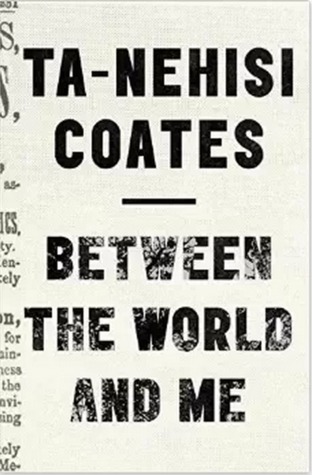
On the other hand, Between the World and Me by Ta-Nehisi Coates IS a sure bet.  I read a lot of books, and I see my fair share of hype about many books that are very good, but not as great as people want you to believe.  Between the World and Me is not that. It is one of the best books I have ever read. It will and should be read by every American at some point in their lives. It will become a classic that is read in schools.

Why? Because Coates takes his personal journey as a black man in America, and lays out the brutal truth, without judging or casting blame-- that is my favorite part about it, the nonjudgmental tone. This is a personal, emotional, and lyrical letter to his son about the truth of race in America, yet Coates takes what is a complex problem, and amazingly puts it into a deceptively short book without sacrificing anything.

Everyone should read this book, but in particular, all white America needs to read this, especially people who think that race is no longer an issue. For example, how many white people think about one of the facts Coates lays out early in the book-- that as a country, we have still had slavery longer than we have not!  Of course this is true, but it still shocked me to see it on the page. How can this fact not be at the front of my brain more often. Why have I never had this thought? Of course, someone like Coates lives this fact every day of his life.  As a Jewish person, I understand a very small sliver of what Coates is saying, but I can blend in my highly Catholic area. People don’t look at me and know immediately that I am not on team Jesus. Most of them just assume everyone is. When they find out I am not, I am a quaint example of “the other.”

Being black in America is hard enough, but being America’s "foremost public intellectual,” while being black could be soul crushingly impossible. The fact that Coates handles it so well and produced such an amazing book is awe inspiring.

Back to the first book...Delicious Foods is written by someone who didn’t need to read Coates’ book because it is obvious from the novel that he, James Hannaham, has lived in Coates’ shoes. Delicious Foods is proof of Coates’ brilliance, his truths, and the surprisingly succinct way he delivers such a complex message.

Because I read these two powerful and honest books back-to-back, I took more from each-- more knowledge, more enjoyment, more feeling. And yes, I meant to use the word “enjoyment." Despite how heart-wrenching and emotionally raw both books are, I enjoyed the experience of reading them.  Both were lyrical, beautiful and compelling. And while both were emotionally difficult to read, neither is “sad.” Both end with hope for a future that is better than today. If others read these books, maybe that better future will happen.

Three Words That Describe Delicious Foods: original, heart-wrenching, haunting

Three Words That Describe Between the World and Me: honest, lyrical, classic

Readalikes [for both]: Since I am reviewing fiction and nonfiction titles together here I have 3 of each to offer up as readalikes.

Fiction-- The 1980s slavery depicted in Delicious Foods reminded me so much of the masterful The Known World by Edward P. Jones which is a historical fiction novel based on the fact that there were black slave owners.  Both novels are inventive and original with a fluid use of time-line. But this is also a readalike for Between the World and Me. Both books are beautifully written while also taking a hard and honest look at America’s troubled history with race.

I am suggesting The Round House by Louise Erdrich because like both books here it looks at a tenuous and fraught history between Americans and those of a persecuted race, but with Erdrich it’s Native Americans.  But also, all three books have a coming of age theme. In all three the narrator is able to look back on his life to a critical moment (or moments), assess the racial injustice, and still move on without resorting to simple blame. All three works are also haunting and heartbreakingly beautiful.

My final fiction suggestion may sound a bit odd, but I think it works-- Station Eleven by Emily St. John Mandel. All three works are haunting, lyrical, and moving, with complex characters, that explore hard truths about humanity. In my review of Station Eleven I chose the word “disquieting” as one of my “three words.” This struck a chord with me when I was thinking about the two books being reviewed here. That word can apply to all three.

Nonfiction-- The Fire Next Time by James Baldwin. Actually, anything by James Baldwin. Coates openly admits to using Baldwin as an inspiration [not that he could hide it], but I also see much of Baldwin and his anger at injustice in Hannaham’s narrative voice too.

The Other Wes Moore by Wes Moore and/or Nickel and Dimed: On Not Getting By in America by Barbara Ehrenreich are both books I have read with my book club that elicited the following response-- “Every high school kid in America needs to read this book.” While Between the World and Me is much richer than these two offerings [they are a both much more of a simplistic look at similar, entrenched, American, societal problems],  but the themes are similar.  Also as readalikes to Delicious Foods, both of these suggestions take much of the class and race conflict from the novel and ground it in fact in a way that makes the novel even more realistic.

Tuesday, June 29, 2010

What I'm Reading: The Lonely Polygamist

Okay, here is my first review of one of the 2010 summer reading darlings. In the interest of full disclosure, I have a lot of love for Brady Udall (click here for proof), but even I was a bit worried before I opened his new 600+ page book about a Polygamist and his family.

I am happy to report, that despite the fact that the plot had me worried, Udall is such a great writer that it didn't matter. I was hooked, and I have to say, this was quite a page-turner...for literary fiction at least.

The plot of The Lonely Polygamist  is fairly simple. Golden Richards is the head of a large family; 28 kids and 4 wives. He is going through a midlife crisis to match the size of his family. Business has kept him out of town for nights on end and the family is falling apart. Also, the death of one of his children is still haunting him.

The story opens with a great extended scene of life in the Richards' home. It goes back to look at how Golden got to where he is today. Then Udall begins to introduce the two other points of view which will tell the story of the downfall and the eventual steps to rebuild the Richards family.

This is where the book moves from good to great. Golden's 4th wife, Trish and his most emotionally troubled 11-yr old son, Rusty, take turns, with Golden, telling their stories. Pieced together, this is a tragic story; we are watching a slow-motion train wreck here, but it is with genuine characters. It is the inner struggle of these richly drawn characters that drives the story. The more we learn about them, the more steam the story picks up, and the action follows.

I haven't even mentioned any of the particulars of said action, but trust me, you don't want me to ruin it. This is a book that begs to be experienced, not just read.

Warning, things do not turn out well for all 33 members of the Richards family, but as a unit, the family has healed and found peace by the novel's conclusion, and, after 600+ pages of living with them, you the reader are also satisfied. It is an open but resolved ending.

As of right now, The Lonely Polygamist is running even with Await Your Reply as the best book I have read so far this year. Why? This is a believable story of life on the fringes with flawed but intriguing characters.While the huge cast could have been distracting, by focusing on 3 points of view, the story has both focus and variety. When one story line is starting to wane, another one picks up. I haven't even mention the great writing, the amazingly described desert landscapes, and the great characters.

Three Words to Describe This Book:  character-centered, family dysfunction, complex
[Notice I didn't include polygamy here. It really is not at the center of why someone would or would not like this book.]

Readalikes: In an enthusiastic review of Udall's novel in Library Journal these readalike suggestions were offered, "Think of the zany theatrics of Carl Hiaasen paired with the family drama of Elizabeth Berg." I don't disagree with the thought that is your could smush Hiaasen and Berg together you would get a book very similar to The Lonely Polygamist; however, this cannot actually be done, and an individual book by either author may or many not reliably appeal to a Udall fan. I am a great example of this theory, as I love Udall, always, mostly like Hiaasen, and only sometimes like Berg.

Other reviewers have said that Udall's complex family story is reminiscent of Tolstoy, while others have mentioned John Irving. These readalike suggestions I feel are going to be more reliable.

The books and authors that came to my mind as possible readalike suggestions upon completion of this novel were (with reasons in parentheses):
Readers may also want to read nonfiction about uranium mining, the Manhattan Project, the Mormon Church, and polygamy (this link includes memoirs).

And of course there are the comparisons to the TV show Big Love, but really, The Lonely Polygamist is much, much better, and much more complex. While Big Love is about the life of a polygamist, The Lonely Polygamist is about a life, actually it is more specifically about 3 lives within one large family.

Oh, and if you are one of the only people left in the world who I haven't told this to, go out and read Udall's The Miracle Life of Edgar Mint. It really is one of the best books I have ever read.

Thursday, February 22, 2018

What I’m Reading: Flashback/Omaha Edition

Today is a travel day. I am headed to Omaha for a regional library training all day tomorrow, but as soon as I land today I will be headed to Lincoln to tape a segment for Nebraska Public Radio’s All About Books program. [When the recording goes live on the radio I will let you all know.].

I thought I would leave you with the best novel I have ever read set in Omaha. It made my 2014 personal best list too-- The Swan Gondola by Timothy Scaffert.

This is a genre blended, backlist option that would work for a wide range of readers.

I pasted the original review post below and you can also access it with this link. I hope my trip to Omaha will now help you to find a backlist gem to suggest to a reader today, tomorrow, or sometime soon. Or maybe, it will simply serve as a reminder of the joys and pleasures readers can find in the treasure trove that is the backlist and spur you to look to an older suggestion as you help your readers. Remember, a book doesn’t have to be new to be a good read.

Back tomorrow with the info about tomorrow’s training session.
______________________________________________

Back in March I had the pleasure of spending time with Timothy Schaffert’s The Swan Gondola.  Notice I said “spending time” not reading.  I did read this book, but as you will see in a few moments, this is not a novel you simply read. If that is the type of book you are looking for, stop reading this review. Rather The Swan Gondola is all about the atmosphere you are placed into while turning the pages.

But first, a tiny bit of plot, not because something will be given away if I give a lot of plot, rather I am simply giving a tiny bit because this is the type of book where nothing happens, yet everything happens. The plot is very inconsequential to whether or not you would enjoy the book.

The story begins and ends with Ferret, a ventriloquist/con man. The entire story is framed around Ferret’s escape from the 1898 Omaha World’s Fair in a hot air balloon, and while we keep returning to that “present” from which Ferret is recounting his story, the bulk of the tale is Ferret’s story of falling in love with Cecily, a performer at the Fair.

We spend Ferret’s days with him as he works the fair with his dummy, follows Cecily, watches her perform, meets new people, and has adventures.

The publisher’s sound bite is:
"A lush and thrilling romantic fable about two lovers set against the scandalous burlesques, midnight séances, and aerial ballets of the 1898 Omaha World’s Fair. “

I think this makes the book sound more action packed than it truly is.  This is a fable, told in the form of an homage to The Wizard of Oz. The bulk of the action is taking place at the Fair, but there isn’t much action.  This is a leisurely paced, historical set piece.  It is all about the setting and the tone. You inhabit the place with Ferret, our narrator.  You meet his friends and associates.  These are people who live on the fringes, and we are meant to follow along.

Ferret and Cecily’s story has a macabre tone, in fact it is more like a ghost story than a romance, but an old-fashioned ghost story in the Gothic tradition.  Atmosphere rules here. The entire story is set slightly askew.  Their love story is odd, the people they know and meet are all over the top, but interesting.  Theirs is a doomed love, but we know this from the start as Ferret is recovering from his balloon crash and slowly unveils the entire novel to the elderly sisters who are caring for him.

While reading The Swan Gondola, I began to realize that it would become a book best characterized as “perfect for Becky.”  This is my kind of book all around-- odd, interesting, character driven, macabre, with historical details [involving a fair or carnival (bonus Becky love)], a frame that pays homage to another work of literature, and all of it told in a quirky, slightly askew way.

Now this being said, a perfect book for Becky does not mean I am out at the desk thrusting this book into every patron’s hand.  No, I am actually much more discerning about who I hand sell this book too because I realize how quirky it is.  I have only given it to one person so far, carefully chosen, and she liked it.  It is a book I will keep in my perverbial back pocket for years to come, puling it out at the right moment, for just the right patron.

But for now, I was happy to inhabit the world of The Swan Gondola for a few enjoyable days.  I may even go back out for another ride some day.

Three Words That Describe This Book: Atmospheric, historical, macabre

Readalikes: Because The Swan Gondola is so much the classic Becky book,  I have a ton of books which I have loved that share this same feel. I will list them with links to my reviews in no particular order:


For a more traditional readalike suggestion, if you have a patron who loved all the parts in The Devil in the White City by Erik Larson about the fair, but could have done without the murder investigation, than this is a great choice for him or her.

And of course, people who love the original L. Frank Baum Wizard of Oz tales will gobble up this book.  I would think twice about giving it to patrons who only love the movie version though.