RA FOR ALL...THE ROAD SHOW!

I can come to your library, book club meeting, or conference to talk about how to help your readers find their next good read. Click here for more information including RA for All's EDI Statement and info about WHY I LOVE HORROR.
Showing posts sorted by date for query lee and low. Sort by relevance Show all posts

Monday, March 2, 2026

American Booksellers Association's Winter Institute Recaps via PW and Self Awareness

I am back after a long weekend to watch my second kid's Junior recital at college with the whole family in attendance. I will be catching up on emails and such today but first, for all of you, I have something for you to catch up on as well.

Last week the American Bookseller Association had their Winter Institute 2026 (WI2026) in Pittsburgh. This event is comparable to their ALA Annual. Bookseller and authors converge from all over the country. There are panels, an exhibit hall, and tons of ARCs. 

I have said this before, but I know many of you still don't take it as seriously as I do, but understanding what independent booksellers are focusing on, how they are promoting books, and how they are attracting readers-- all of it-- is comparable to what we are doing. We need to be not only paying attention to them, but also, working with them more.

I am doing the working with them more part right now and there will be more on that soon. (Do stay tuned for more on this, I am working on a larger initiative and some smaller collaborations.  

In the meantime, you need to do your part and follow the news from last week's WI2026. I have made it easy for you. 

Click here to pull up all of PW's coverage.

Click here to pull up all of Shelf Awareness' coverage.

There is a lot of information here that you can use. This is the first major gathering of booksellers and authors for 2026. See what they are talking about, what authors were there, what the panels were about, what people said. It is all there. 

I did here from my colleague Lauren, one of the owners of the Twisted Spine, a horror only bookstore in Brooklyn, that there was a general consensus at WI2026 that horror author events are among the most popular at bookstore and this is true all year long. 

Finally, one of the reports that comes out during the Winter Institute is the Lee and Low Baseline Diversity Survey for Publishing. However, this year, Jason Low had to suspend the survey because of the state of book bans. And this suspension is indefinite. He instead released a call to action for everyone to work harder to fight books bans, especially those of children's books. Click here to read his call to action as published in PW.

And follow Kelly Jensen's censorship coverage on Book Riot for the most up to date information and even more action steps. 

Friday, May 3, 2024

Actively Anti-Racist Service to Leisure Readers: How to Properly Apologize for Causing Harm

As a reminder, Robin and I offer a class entitled Actively Anti-Racist Service to Leisure Readers which you can learn more about here.

The main way we offer this class is through Learn with NoveList, but in the last 6 months we have also given versions of this talk in person, together, 2x. We always meet often (virtually) to discuss ways to enhance our training based on the questions/comments we receive and consider current events/issues.

Next week marks 3 years since we gave our first official version of this training-- for Eugene, OR, and both of us have reflected on how different the training is now precisely because we make sure to make it responsive to the questions we receive and other things happening in the larger world.

[Note: we did the very first presentation on this topic together for LibraryReads in Fall 2020]

This constant evolution is also why we have turned down multiple offers to turn this work into a book.

One of the things we added a year ago is a reminder that when you are the person doing the anti-racist work and you misstep, people will come for you. It is easier for people to criticize those doing the work for being imperfect than it is to do the hard work for themselves. Robin and I both share examples of times we have misstepped and how we handled it. I also give examples on how to publicly and in writing include acknowledgment of harm in the work you do at the library and how you can show your commitment to doing better-- both to hold yourself accountable and to set the example for others-- hopefully inspiring change in those around you.

We explain clearly how to properly apologize by acknowledging harm and taking responsibility to do better going forward. I always add this important comment-- when you apologize there is no, "But, I didn't mean it." NO BUTS. It doesn't matter if you didn't mean it and it was an honest mistake. What matters is that you caused harm and/or did not live up to the standards you set for yourself. Then make it clear that you plan to do better going forward. Hold yourself to the standards you want to live up to. No one is perfect. We all misstep. You need to keep moving forward.

And, you actually show that you didn't mean it more by apologizing properly. "Buts" are less authentic because they are about making yourself look or feel better, not about doing the hard, uncomfortable work.

Robin shared a great example of this from another entity that works very hard to be anti-racist-- Lee & Low. You might recognize the publisher's name for their work on "Diversity in Publishing." Click here for my Feb 2024 post to learn more.

Lee & Low, work tirelessly to uplift marginalized voices, very publicly, and loudly. Recently they misstepped and did not live up to their own standards, but it is their apology, acknowledgment, and pledge to do better that I want to highlight because it showed they truly care about the work. This is how you do it. 

For those who have access to X you can click here to read it. But I have also posted screen shots at the bottom of this post. And I will be adding this as an example to my slides as well so that Robin and I can continue to have examples of others who are living up to their ideals despite being imperfect because we all are imperfect,

If you want to have the most up to date information and conversations with Robin and I on the topic of Actively Anti-Racist Service to Readers, there are still 2 live session as part of our 2024 cohort of learns on Learn with Novelist. Click through for details. We will be talking about this in July for sure. 

Thursday, February 29, 2024

Lee & Low's Quadrennial Update to Their Diversity in Publishing Report

Lee & Low have release their third Diversity in Publishing Baseline Report. Below I have reposted the introduction, but you should click here to read the entire thing. 

From the Diversity Baseline Survey landing page (different than the page with the current report):

Lee & Low Books released the first Diversity Baseline Survey (DBS 1.0) in 2015. Before the DBS, people suspected publishing had a diversity problem, but without hard numbers, the extent of that problem was anyone’s guess. Our goal was to survey publishing houses and review journals regarding the racial, gender, sexual orientation, and ability makeup of their employees; establish concrete statistics about the diversity of the publishing workforce; and then build on this information by reissuing the survey every four years. Through these long-term efforts, we would be able to track what progress our industry shows over time in improving representation and inclusion.

The fact that this is the 3rd iteration has made the results and reporting even more useful and significant. 

And full disclosure: As a reviewer for a major journal, I was one of the people surveyed for this report.

Click here or see below to get started reading the results. 

WHERE IS THE DIVERSITY IN PUBLISHING? THE 2023 DIVERSITY BASELINE SURVEY RESULTS

INTRODUCTION
We decide what stories get published, which creators get the extra sales or marketing push, and which books get reviewed.

The Diversity Baseline Survey was created to answer a question: Does the book industry have a diversity problem? A benchmark to measure the demographics of the publishing workforce was missing from the larger conversation about representation in books. First executed in 2015 and then in 2019, the Diversity Baseline Survey has become an industry standard, providing a way to track whether publishing’s inclusive hiring practices are working. See data from the previous studies—2019 and 2015—for comparison.

Employers are routinely vociferous about their commitment to Diversity, Equity, Inclusion (DEI) initiatives without implementing the transparent means to monitor results. We know institutional change takes time to bear fruit, which is why revisiting the survey every few years is so vital.

WHY DOES DIVERSITY IN PUBLISHING MATTER?

People from all backgrounds are demanding to see themselves in media. Thanks to the Cooperative Children’s Book Center at the University of Wisconsin-Madison, we know there are more diverse children’s and young adult books being published today. We also know the book industry’s power as a form of cultural expression and as a tastemaker. Television, film, and theater are influenced by publishing trends and successes. It has been heartening to see diverse casting reflected in the many book-to-screen adaptations—irrevocably altering who is seen and heard.

It’s imperative the publishing workforce continues to reflect the many lived experiences in North America. As gatekeepers, we decide what stories get published, which creators get the extra sales or marketing push, and which books get reviewed. Our industry greatly benefits from a diverse workforce to shape the voices and characters that will appeal to a wide audience.

While the 2023 Diversity Baseline Survey results still indicate a majority workforce of straight, nondisabled, White women, there are noticeable percentage changes across various categories. For example, when the DBS was first administered in 2015, 79% of the respondents identified as White. In 2023, 72.5% identified as White. This marked improvement shows that the publishing industry is becoming more inclusive, albeit incrementally so.

THE LAST FOUR YEARS

To say a lot has happened since 2019, when the last DBS results were released, is an understatement. In the US, the political climate feels increasingly polarized as we fight to preserve our democracy. As global citizens, we also bear witness to geopolitical instability and violence from all corners of the planet. These events, among many others, have shaped our worldview:

  • The COVID-19 pandemic killed over 7 million people and temporarily shut down the world.
  • People worldwide rose up to protest state-sanctioned violence and racial injustice in the wake of George Floyd’s murder by police.
  • The US Supreme Court issued judgments ending affirmative action and the federal right to abortion.

Within our industry, important conversations are changing the landscape:

Click here to continue reading the full report

Monday, August 21, 2023

Reminder: Labeling Books as "Diverse" Reinforces White Supremacy via Alex Brown and Lee and Low

I am working on some updates to my portion of the Anti-Racist program Robin and I offer in order to make sure we are addressing our most common questions. One of the questions we get over and over [and over] again from well-meaning, mostly white library workers is, "Why can't we label the books with the author's identity to make it easier for people to find them?" We have many different ways we answer this question, but we also have colleagues we trust who we like to point you to for help. 

One of my favorite resources is this speech by Stephen Graham Jones entitled, "Being Indian is Not a Superpower." It's in my slides, but I haven't posed it in a while here on the blog. But since I was also using today to re-up another older post I often link to, I thought revisiting it here today was a good reminder.

However, the main reason for today's post is because this question, "Why can't we label the books with the author's identity to make it easier for people to find them? " was circulating yet again. Thankfully, someone reposted something I often refer to as well, a guest post by my colleague Alex Brown via Lee and Low entitled,  "Labeling Books as "Diverse" Reinforces White Supremacy."

First some background. Publisher Lee and Low has been on the forefront of confronting White Supremacy in publishing. Click here to see more posts by me about their work. And also click here for their blog. As a reviewer, I participate in their industry diversity survey every year as well. Both publications I work for [Booklist and Library Journal] are willing participants and require we reply. 

Back to this particular post. Alex is a person I turn to for answers to some of the most difficult questions in  my work centering anti-racism in RA Service. They are not only smart, thoughtful, and a good writer, but they also serve teens through a school library, so their perspective allows me to cast a wider net on service experiences from my mostly Adult Public Library lens. 

Below is the link and intro to that post, with a final comment from me after the excerpt. This is one you need to bookmark as an evergreen reminder.

Click here to read the full essay


DIVERSITY, RACE, AND REPRESENTATION, GUEST BLOGGER POST
HOW LABELING BOOKS AS “DIVERSE” REINFORCES WHITE SUPREMACY

In this guest post, librarian Alexandria Brown discusses the issues with labeling books as “diverse” and other ways we can build and promote a more equitable library collection. 

Every so often, the question of whether or not to add a spine label designating “diverse” books makes the rounds. Many condemn the practice, but lots of library staff persist in labeling. Like most diversity, equity, and inclusion (DEI) issues in librarianship, many of my colleagues are still operating within a white (and cisgender and heterosexual) supremacist framework. It is an understandable predicament to be in – after all, many library degree programs are not as strong as they could be in advocating for DEI and decolonization. So let’s examine the question of diversity labeling and see if we can’t get to a better understanding of why it’s problematic.

Click here to read the entire guest post. 

Before I leave you today, please note, both resources I am using here are by people from marginalized perspectives. Robin and I also try to center our marginalization [black, her, Jewish, me] in our responses to any of these questions as well  because it is important to listen to the people who live these experiences. This might sound like common sense, but the number of people who argue with us and Alex, telling us why we are wrong, well they are too many to count. If your instinct is to argue with any of us about how to best center anti-racism in your work with leisure readers, please take a step back and consider, are you allowing systemic oppression and how our world centers whiteness to cloud your response?

By the way, you can identify with a marginalized perspective and still be a victim to this. I often share my experience in English classes and having to go home and learn more about Jesus in order to understand the conversation. It took until college when I enrolled in a Jewish American Literature class when I realized how marginalized I was. And also, it allowed me to argue back in normal English classes to add my non Christian perspective to our discussions with confidence. This was a transformative experience in my journey to understand how harmful it is that our society centers a white, straight, Christian experiences as a default. 

But that level of detail is starting to move into the training Robin and I offer. Which reminds me, for those who are still reading this post, here is a teaser-- Robin and I will have some news soon about how you can join us on a year long conversation about these issue throughout 2024. 

Monday, February 6, 2023

State of Diversity in Publishing and Robin's and My Anti-Racist Training Program

As Robin and I offer our Actively Anti-Racist Service to Leisure Readers workshops and training programs, we work very hard to explain that finding great readers by marginalize voices is not that hard if you prioritize searching them out.

This is not a lie, but it is also true that it is ALWAYS easier to find a book by a straight, cis, white person for any topic or appeal factor. Robin and I discuss at length the issue of systemic oppression that lies at the foundation of our world, a fact that once acknowledged makes it easier to do the work we work to train you to do. 

Once of those pillars, supporting a world where whiteness is the default is the publishing industry. It is mostly white and even with concerted efforts to uplift and publish marginalized voices, the work can only go so far with a mostly white work force. This is not to say they are not trying, but the work  take time.

Last week, Book Riot had this essay with the history of the intentional efforts by the publishing industry to  to diversify itself. The essay includes is a good history of this effort, with links, which began with a Lee & Low survey in 2019. This essay brings us all up to the present and includes multiple reports so that you can have a full picture of the issue.

Information like this is key to our work in libraries, both as we try to provide actively anti-racist service to our readers AND as we are simultaneously struggling with how to diversify our ranks as well.

I  also want remind you that Robin and I are very engaged in this work from every angle, and our Learn With NoveList Active Anti-Racist Service to Readers class is the perfect way to help  be part of the solution. We just had our first of 4 live Q&A's with  the first cohort of learners and it went very well. There is plenty of time to get in and finishing the asynchronous learning before we come back in April for another live session. And once you complete the, you can participate in all three remaining sessions if you want. All for one price.

Click here to see a preview of the class and learn more.

I cannot stress enough how happy Robin and I are with this course. And to be very honest with all of you, it is better and cheaper than if we come to your library. Seriously. 100% better and cheaper.

And to sweetened the deal, use the code "Becky" and receive $40 off for 1 person, or email learnwithnovelist@ebsco.com and ask about discounts for multiple people from your organization to learn together. It is the best way to take our class both in terms of the learning itself and the pricing. 

Whether or not you take the course, please go here and read "The State of Diversity in Publishing" via Book Riot. 

And if you have further questions you can always contact me.

Wednesday, March 11, 2020

The Ripped Bodice's 4th Annual Report: The State of Racial Diversity in Romance

The Ripped Bodice, the only exclusive Romance book store in the United States released their 4th annual "Diversity in Publishing Report."

Click here to see the report. That link leads to the page where you can access the older reports too.

Also, click here for some analysis of the report in comparison to years' past via Book Riot.

There is not much more to say except "Thank You" to the Ripped Bodice for doing the work. Now in year 4 we can see data that is helpful. That's the thing with data collection, we need to start collecting it, but then wait to draw conclusions.

Not only do we now have enough to start seeing incremental change, but also, we are seeing enough slow change to stand up and demand more wholesale change. The ball has reached the top of the hill and it needs to get that final push so it can rush down to catch up the years of neglect, racism, and inequality.

The time is ripe to go at this issue hard, from every angle. The Ripped Bodice and Lee and Low are giving us the data to start. Let's get more people involved. More loud people.

Take a few moments out of your day to take a look at the report. And, then take a few more moments to think about your own collections, suggestions, readalikes, etc..... Are you making sure EDI concerns are part of everything you do. You can be a voice for change. Every single one of you.

Click here to see my most recent presentation on the topic of how we incorporate EDI values in our RA Service. I have updated it since the date on the title slide. The slides contain links to more information on how YOU, every single one of you, can help improve the situation.

Stop waiting for someone else to make the changes you can start making at your library and with your patrons today.

Wednesday, January 29, 2020

The Diversity in Publishing Report 2.0 via Lee and Low


Click here for the full
Lee and Low report

Lee and Low recently updated their 2015 study on the problem and why diversity in publishing matters. Click here to read the full report. It is NOT good news. There has really not been much movement.
We need to keep pushing. I have also reposted the introduction to the report below. This is a must read no matter your job title. You work in a library, you need to know. But also, you need to act. Use my tags on diversity, equity and inclusion to read about ways you can act.
Here is the report:

Lee & Low Books released the first Diversity Baseline Survey (DBS 1.0) in 2015. Before the DBS, people suspected publishing had a diversity problem, but without hard numbers, the extent of that problem was anyone’s guess. Our goal was to survey publishing houses and review journals regarding the racial, gender, sexual orientation, and ability makeup of their employees; establish concrete statistics about the diversity of the publishing workforce; and then build on this information by reissuing the survey every four years. Through these long-term efforts, we would be able to track what progress our industry shows over time in improving representation and inclusion.
Why does diversity in publishing matter? The book industry has the power to shape culture in big and small ways. The people behind the books serve as gatekeepers, who can make a huge difference in determining which stories are amplified and which are shut out. If the people who work in publishing are not a diverse group, how can diverse voices truly be represented in its books?
The results of DBS 1.0 were stark. 79 percent of respondents identified as White. 78 percent were women. 88 percent were straight. 92 percent were non-disabled. At a time when readers of all backgrounds were demanding to see themselves in books, the publishing industry came nowhere near to reflecting the rich diversity of the United States.

Friday, January 24, 2020

American Dirt Controversy and EDI [Updated 1/29/20]

I wanted to use this space today to provide links to the discussion around the newest Oprah pick, American Dirt by Jeanie Cummins.

I am going to provide a few links for people to get up to speed on the issues, including links to photos and then I will make some comments on the controversy, what to do, what we can learn from it, and what it illustrates.
The question I want to address immediately, and the one that many library workers have asked me about, "Am I not allowed to like the book now?"

I am addressing this first because while some people out there have asked the question in a racist manner [some even unapologetically], there are a good number of white, library workers who feel bad that they enjoyed the book, felt like it helped them to understand a serious issue a bit better, but now have some uncomfortable and guilty feelings about having enjoyed it.

I think this question and the answers it leads to are a perfect example of why the lack of diversity in publishing is the biggest problem here, not the author or the book.

Look, you can enjoy American Dirt as a read, you can "learn" something from it, but when you finish you must step back and acknowledge that it is cultural appropriation at best, and trauma porn about a victimized people by others at worst. And you need to learn from it. Think about why you liked it and acknowledge that it stems from a white privilege that you can work to fix by asking  questions, listening to others, and being willing to admit mistakes as we grow.

But the bigger problem here, the white privilege in the publishing world, especially at the big 5. No one thought to allow members of the Latinx writing community to comment earlier in the process, and I am not talking about the "Well Latinx authors read it after it was done and blurbed it" excuse. I am talking about before they offered her piles of money for the manuscript. Because once they gave her a huge advance, no one was backing down. Many jobs would be lost over that.

Publishing decisions makers are almost solely white. [See the brand new Lee and Low Report on Diversity in Publishing.] Many of them are well meaning, but with their white privilege [which all white people have, even myself, even when we try not to], they could not identify the problems that many Latinx people in the publishing world spotted immediately. And some were egregious [see the links to the pictures I included above].

When I give my EDI lectures I talk about how important it is for all white people to always listen first and act later. I bounce my ideas about my EDI training, the advice I give, etc... off of members of marginalized communities, always. I never assume I have all the solutions. I only assume that with my status as a white lady in a profession made up of 88% white ladies that I have a face that people listen to, and so, I make sure what I say is as accurate and helpful as possible.

Publishing does NOT have these people. They need them. If they had Latinx people in house to read the Cummins manuscript, I don't think it would have become the "IT" book of the season in pre-pub publicity. I am not sure she would have even gotten a book deal.

Not only have multiple Latinx writers pointed out the problems with the book, from grossly incorrect use of Spanish to the overall unsettling nature of reading this appropriated story of trauma, but also many have said that they have proposed similar books, books set in Mexico, and have been told straight up by publishers that, "No one wants to read that." But a white author suggests it and publishers listen, get excited, and throw money at it.

Here is but one example, author Gabino Iglesias [whose book Coyote Songs is better than American Dirt in every way, IMO] wrote about how deep the problem is on multiple fronts here on LitReator. Remember this is a man who is an author, a critic for major media outlets, a teacher of current MFA students [and kids], and has a PhD in journalism. He understands what he is talking about in this essay from every front. Please read this essay.

This alone has been extremely upsetting to the Latinx community. And I don't think they are overreacting, especially when some of the defense of Cummins has been, "Well there were no Mexican authors who wanted to write this story." I feel for the Latinx author community who have expressed great hurt over statements like that, and the whole situation in general.

Despite the problems, concerns, and issues, sales are not being effected, stores still have up their giant marketing displays with tons of copies of the title [I just saw one at my local store this morning], and Oprah is not backing down from picking it as her next book club choice.

It feels like a more things change, the more they stay the same, moment. But I am hoping it is not. I hope we look back and see this as the beginning of a larger commitment to making sure there are more people of color in the publishing industry. I am hoping there is a huge call to hire POC editors. I am hoping publishers will not tell #ownvoices authors that "no one" wants to read about their experience because that is simply not true anymore.

So many white readers are talking about how much American Dirt opened their eyes. What if a less problematic book did that? People are hungry for these stories.

We are getting closer. We are still very far. But maybe, just maybe, American Dirt will be the catalyst that forces the publishing industry to finally act.

Let's see.

Additional Info [added 1/29]: There is another issue that is surfacing. Some library workers have indicated that the book was marketed to them as an "Own Voices" title. They are sharing publishing copy that they received that was vague and misleading. I can share my own personal story that this book was aggressively promoted at ALA Annual in DC in June of 2019. I was given 2 copies of an ARC at two separate events. I was told it was going to be the "MUST READ" title of 2020 about the border crisis. Now, I looked into the book a bit more after it was handed it to me, and had concerns about the author being "Own Voices." I put the book aside because of those concerns and decided to focus on other titles I was excited about.

Yes, there is deceptive marketing to take advantage of those of us who want to shine a light on more diverse and inclusive titles, but also, we, the library workers, need to not blindly trust the publishers. Come on, we are known for doing research. Please do your research on upcoming books. I love our library marketing reps. One of them is a actual friend and neighbor. But I never blindly trust any of them. I take their recommendations and make my own decisions. [End addition]

Now on to the service to patrons issue. Some library workers have asked me if they should display the book and/or tell people about the controversy.  This answer is easy. People will be coming in for the book because of the controversy. The holds list will be very long. You will be adding more copies [which again, some people are uncomfortable with because then they are helping the publisher make more money]. However, you have to add more copies because we always work to meet demand. Not ordering more is a form of censorship.

BUT, we can educate. We can provide point - counterpoint bookmarks with links to put in every copy as they go out. We can host programs about Latinx publishing and the refuge crisis. Use this as a chance to have a community conversation, educate people, and give them even more information. If people say this book has helped to "open their eyes," think about how much wider they will open if we supplement the book with even more information.

Take the controversy and turn it into a chance to educate your community. That shouldn't be hard because this is what we do. It is intimately tied up with our overall mission.

I wish this didn't happen, but if we learn and grow from it, as a society, and if publishing makes real change, then it will all be worth it.

Tuesday, February 26, 2019

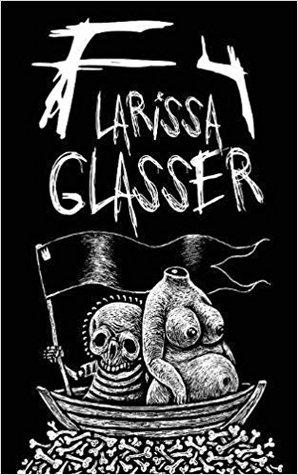
Trending: Bizarro Fiction With a Bonus Review of F4

Today I have a lot to say both about the Bizarro genre, trans fiction, and I even have a review. This post will touch on a lot of issues that libraries need to be aware of. I have saved it for Women in Horror Month on the horror blog to highlight the inclusion of trans women in our celebration AND  am cross posting on the general blog because there are also issues of collection development, EDI [equity, inclusion, and diversity], and providing access to popular but non mainstream genres.

I know that is a lot, but it is important and I want you all to pay attention because this post contains information for every library worker, from every size library, anywhere across the country, to use to help patrons.

First, I want to begin with an introduction to the increasingly popular speculative fiction subgenre of Bizarro. Excerpted from the Wikipedia page on the genre:
Bizarro Fiction is a contemporary literary genre which often uses elements of absurdism, satire, and the grotesque, along with pop-surrealism and genre fiction staples, in order to create subversive, weird and entertaining world., The terms was adopted in 2005 but the independent publishing companies Eraserhead Press, Raw Dog Screaming Press and Afterbirth Books. Much of its community revolves around Eraserhead Press, which is based in Portland, OR and has hosted the BizarroCon yearly since 2008.... Bizarro [is] "literature's equivalent to the cult section at the video store," and a genre that "strives not only to be strange but fascinating, thought-provoking, and above all, fun to read."
...In general Bizarro has more in common with speculative fiction genres (such as science-fiction, fantasy, and horror)....
Please click here to read more about Bizarro and follow the many citations and links for more info, including the lists of Wonderland Book Award winners [Bizarro's well respected award- you can see every final ballot here] and notable titles.

But even just this brief introduction should illustrate that there is a wide audience for these types of books. They are weird yes, but also fun. This is a place for the "weirdos" to have thought provoking conversations through art, find a community to which they can belong, and have a safe space to express themselves. But what I love about Bizarro, and what you will see in my review below, is that the focus on is on fun! These are books people will enjoy reading, if only they could have access to them.

The Bizarro author most likely to be included in library collections is Jeremy Robert Johnson. I also featured Johnson and one of his more recent works on the horror blog here. I would suggest his work as an introduction to the genre, but here's the thing, once people read and like him, where do they go next? We need to offer more. But how?

Look I realize not every library has space, money, and even a collection development policy that would allow for these weird and often raunchy titles. I know some of you can't even buy Erotica. But here is the thing, Bizarro, like Erotica before it, is gaining in popularity among mainstream audiences. We need to find a way to provide access. I have an easy solution though. For any emerging genre, especially those with sex and/or violence, get a Kindle for the genre. So in this case let's say and Erotica one and a Bizarro one. You load them with ebooks of the most popular titles and authors and you catalog them as "Bizarro Kindle." You can change out titles as often as you want. You can get hundreds of titles for a very low price, and still be able to offer emerging genres to your patrons without sacrificing shelf space.

But back to the main point here. This definition of Bizarro and its appeal focuses on the fun, which it is. But it is important to also note that this is a place where people who might not fit into mainstream society can also express themselves, hence my focus on a trans framed title by Larissa Glasser today-- F4.

I am going to explain why I loved this title and think all library workers need to be aware of it below, but I also want to make a stand here and proclaim that I include trans women in celebrations of women in [fill in the blank]. I know there are some in the Women in Horror month world who take issue with including trans women, but I am not one of those. And in fact, I specifically chose Glasser to highlight this month to make my position clear.

But the real reason I am highlighting Glasser today is because she is a great writer. I was first introduced to Glasser when she was on a panel at StokerCon last year. She was sitting next to Victor LaValle. I don't remember the exact question, or her answer, but I remember sitting there watching and listening to Larissa answer a difficult question. I was also watching Victor watching her, nodding along. When Larissa finished, it was Victor's turn. He said something to the effect of--She answered it perfectly. I have nothing to add. He was right and I knew that I needed to meet this smart, fascinating woman and read her book.

And so I did, and the book, it was awesome [more below]. We connected and I also found out that Glasser is one of us, a Librarian too.

I asked Glasser to introduce herself to all of you. Here is what she wrote:
Larissa Glasser is a Librarian-Archivist from New England. She writes dark fiction centered on the lives of trans women, library science, and heavy metal. Her work is available in Transcendent 3: The Year's Best Transgender Speculative Fiction [Lethe Press], Tragedy Queens: Stories Inspired by Lana Del Rey & Sylvia Plath [Clash Books]. Her debut novel F4 is available from Eraserhead Press. Larissa is a Member at Large of Broad Universe [a not for profit that supports women writers and editors in the speculative genres]. She is on Twitter @larissaeglasser and on Amazon: https://www.amazon.com/Larissa-Glasser/e/B077VRYC8L/

Now to my review of F4 which I highly suggest you use to start your own e-Bizarro collection:

First let's begin with the publisher's summary:
A cruise ship on the back of a sleeping kaiju. A transgender bartender trying to come terms with who she is. A rift in dimensions known as The Sway. A cruel captain. A storm of turmoil, insanity and magic is coming together and taking the ship deep into the unknown. What will Carol the bartender learn in this maddening non-place that changes bodies and minds alike into bizarre terrors? What is the sleeping monster who holds up the ship trying to tell her? What do Carol’s fractured sense of self and a community of internet trolls have to do with the sudden pull of The Sway?

Further Appeal: I know I have said it already but I cannot stress how fun this book is. There is adventure, a steam punk frame, science fiction, great character development, and a compelling plot filled with action, emotion, and interest. Carol is a hero to root for- a trans woman hero to root for. And that is key. This book is both a great genre romp that also features a trans main character. This is key.

Carol is a complete person. Bring trans is part of who she is and while this book talks a bit about her
"hatching," it is more about her and this fun, slightly raunchy, strange adventure. This is so important. We need to read and know about books like this so we can learn about the trans experience. This book taught me so much while I had fun reading it. It opened a window to the trans woman experience, feelings, and even terminology [I had urban dictionary open while reading this book and learned so much]. I am someone who tries to be inclusive and accept people for who they are but until you have a chance to understand them from their experience how can you?

As library workers who want to help people find titles both that reflect their experiences and open them to the experiences of others-- what we call "own voices"-- we need titles like this one; a book that is a great read, has a trans woman hero, and is not solely about coming out.

This book manages to weave an overall theme about how humans transform things to fit their needs in a way the encompasses the entire story not just the transgender portions. It was enlightening and thought provoking. Really. Amidst all the weird, crazy, and sexual action, there was so much to ponder here. Thought provoking issues for all humans to consider. It was eye opening for more than just the "trans education" I received. This was a nice surprise.

Okay but back to the fun again for a second. The set up-- the kaiju ship [it reminded me of Leviathan for grownups] in particular was cool. I liked the world Glasser created here as a speculative fiction fan.

And finally, there is the plain fact that Glasser herself is a writer to watch. I think I made that clear above, but seriously, she has the writing chops. Her stories are being accepted in anthologies from trans themed to general speculative fiction. She is garnering critical acclaim everywhere she goes, and as I mentioned above, Victor LaValle knows how smart and talented she is, and he knows what he is talking about. You don't need to just trust me.

Please do yourself a favor and read this book. It will both open your eyes to trans framed stories AND Bizarro.

Three Words To Describe This Book: Fun, Speculative, Compelling

Readalikes: The great thing about Bizarro is that there are so many places the genre can take you. Please refer to the author list here and especially those who have won the Wonderland Book Award, but here are a few I can suggest from personal experience:

  • Jeremey Robert Johnson [mentioned and linked above]
  • Brian Everson
  • Carlton Mellick III
  • Laura Lee Bahr
  • John Edward Lawson
  • C V Hunt
There are many more to see at this link, but those are a few of the current authors who you should check out.

Also, just look at the Eraserhead Press lineup of authors. I know Rose O'Keefe, the publisher personally, and I know her love for the genre. If she publishes it, the quality is good.

Tuesday, November 28, 2017

LibraryCon Live! Coming to a Computer Near Your on Dec. 6th!

Click here to Register for FREE!!!!
I realized that I signed up for Library Journal’s virtual Con and never passed it on here on the blog.

Thankfully there is still time for you to sign up here. Below I am posting the information from that sign up page, but a few comments first.

One of the moderators is my friend and co-StokerCon 2018 Librarians’ Day Coordinator, Kristi Chadwick. She has told me about some of the things that are planned and I can’t wait.

Second, everyone will want to tune in for the panel on how to plan a Con at your library. This is a huge growth area for libraries. My local library does an Anime-fest which is run like a Con. It grows every year and soon we might outgrow our space.  Trust me, on the outside you wouldn’t think my town would be a hot bed on Anime activity, but it is. You all need to hear from these libraries who have planned and run successful Cons.

Third, the opening and closing speakers are both excellent.

And fourth, whether you are a fan of SF, FSY, and Graphic Novels yourself or not, I promise you, your patrons ARE. Genre geekdom no longer hides in the shadows, and they want the library to serve them. So if you are not a fan yourself, you need this Con to help you get up to speed.

I realize very few, if any, of us can sit and watch the entire thing all day, but it is free to sign up. You can pop in and out, and you will get access to the recordings after. This is going to be a fun and useful event. And, you don’t have to travel or pay a dime. Go....get signed up now.

Still not convinced by no travel and no money? Here are the full details from the sign up page:
Join Library Journal and School Library Journal for our inaugural LibraryCon Live! We’re excited to offer a day-long celebration of fandom-beloved stories and characters, from pulse-pounding sci-fi horror to innovative reboots of classic series to mind-bending speculative fiction across formats. You’ll also learn from librarians and industry insiders on how to plan and host your own Comic Con-style event.
Plus, network online with other fans and explore our virtual exhibit hall where you’ll hear directly from publishers about their newest books and engage in live chats with featured authors. Whether you’re a public or school librarian, an educator of teens and young adults, or a superfan of graphic novels and sci-fi/fantasy, don’t miss this chance to meet and interact with some of your favorite stars across these genres.
Speakers include:
Opening Keynote:  John Jennings, (Lee & Low Books)
Superheroes, Super Powers, and the Supernatural
  • Joshua Dysart, (Penny Farthing)
  • Sina Grace, (Marvel)
  • Dr. Sheena C. Howard, (Lion Forge)
  • Jill Thompson, (Penguin Random House/DC Comics)
  • Peter Tomasi, (Penguin Random House/DC Comics)
  • Keezy Young, (Lion Forge)
  • Jason Puckett, (Georgia State University)
How to Plan and Host Your Own Library Con
  • Helen Crosson and Liz Hughes, (Half Hollow Hills Library, NY)
  • Marissa Lieberman, (East Orange Public Library, NJ)
  • Maggie Novario, (Fort Vancouver Regional Library District, WA)
  • Christina “Steenz” Stewart, (Lion Forge)
  • Ivy Weir, (Quirk Books)
Escape and Enchant: The Mind-Bending World of Speculative Fiction
  • Katherine Arden, (Penguin Random House/Del Rey)
  • Pierce Brown, (Penguin Random House)
  • Edgar Cantero, (Penguin Random House/Doubleday)
  • Fonda Lee, (Orbit)
  • Axie Oh, (Lee & Low)
  • Scott Westerfeld, (Macmillan)
  • Kristi Chadwick, (Massachusetts Library System)
Exploring the “Invisible Art” of Comics
  • Grace Ellis, (Image Comics)
  • Tony Medina, (Lee & Low)
  • Cyril Pedrosa, (Europe Comics)
  • Alex Segura, (Penguin Random House/Archie Comics)
  • Brenna Thummler, (Andrews McMeel)
Closing Keynote: Gene Luen Yang, (Penguin Random House/DC Comics)
LibraryCon Live! is a free, completely virtual conference—no traveling and no cost!
Register now! We look forward to ‘seeing’ you on December 6th.
Thank you to our sponsors:
Penguin Random House Library Marketing
Diamond Book Distributors
Andrews McMeel Universal
Archie Comics
Baker & Taylor
DC Entertainment
Del Rey Books
Europe Comics
Image Comics
Junior Library Guild
Lee & Low Books 
Lion Forge
Orbit
Penguin Young Readers Group
Penny-Farthing Productions
Quirk Books

Wednesday, March 8, 2017

Tales of the 5th/6th Grade Book Club: As Brave As You-- Week 6

[Please note, there was no post for Week 5, Chapter 12-14 because I was traveling and someone else led the discussion.]

Yesterday the group met to discuss Chapters 15-17 of As Brave As You.

Below I will recount what we discussed and how the meeting went without identifying any of the children, but please note that this is merely 1 of multiple meetings over which we will discuss the entire book. To access the full series of posts, use the 5th/6th gr book club tag.

Now on to the discussion:

  • I started with my best Thomas Jefferson impression and asked the kids, “What’d I Miss?” I was out last week and the other two leaders had to miss this week, so it was up to the kids to fill me in. Interestingly, they mentioned guilt.
    • We talked a lot about guilt
    • We talked about the characters who all fell guilt.
    • And even more interestingly, I noted, guilt was huge in this section too. And this is not the first week we talked about guilt.
    • Maybe, I asked them, we should think about guilt as a big theme in this book? But what should we think about guilt? Well, that we will need to finish the book to find out.
  • The big event in this penultimate section of the book was Ernie’s birthday and his attempt at shooting a gun. Spoiler, it goes badly, but not in the way you might think. No one is shot. The gun’s kick back knocks out his front teeth. So we switch from guilt to blame. The kids started talking about who to blame. We started listing who blames themselves:
    • Grandpa- he obviously blames himself the most.
    • Ernie blames himself for not admitting that he was too scared to try shooting the gun.
    • Crab has a lot of blame here.
    • Even grandma and Tess blame themselves
    • Someone mentioned that the parents will also blame themselves for leaving kids. And for sure Ernie Sr will blame grandpa.
    • I asked them, you are forgetting one big person who thinks he is to blame-- Genie someone said. Yes. He thinks it is his fault for being too eager for Ernie to shoot even though he knew Ernie didn’t want to. Remember he had been thinking of himself as bad luck for a while.
  • This long list of blame, I asked them, the fact that we made this long list so easily, what does that say about blame.?Is blaming worth it? They were silent. I said, I don’t think this is something you can answer today. I think it is a big, life question.
  • One girl said, it also shows that blame for accidents is very complicated. It’s not just the last person’s fault before something bad happens. This situation shows that the story leading up to the accident goes back a long way.
  • Before we moved on to a new topic someone said-- it must be really bad to be Grandpop. He caused Wood’s death, his living son is still mad at him, he hurt his oldest grandkid, grandma is mad at him. That’s a lot to carry.
    • He is taking this latest accident very hard.
    • Again with the guilt. He has too much.
    • He took the gun apart and left it apart. He didn’t want to put it back together for the first time ever. That’s a really big deal.
    • He is in pieces like the gun.
    • He stays in the inside out room all the time. He won’t talk to anyone.
  • Someone raised a hand and said-- How are we going to solve all of this big problems in the little bit of time we have left for the story?
    • We are starting to understand how Ernie Sr’s anger kept growing all these years too. It all keeps building.
  • Now on to Dr. Binks the man who sells good luck at the flea market in the form of teeth! It is not just a coincidence that the guy who sells the teeth is also an orthodontist-- and Ernie needs one.
    • As I reminded the kids, it is a fiction book so the author can make these coincidences happen.
    • Grandma is a retired nurse too. That came in handy.
  • Can Dr. Binks fix Ernie?
    • Genie got a Brice Lee tooth from Dr. Binks because Ernie loves Lee. Maybe it will bring Ernie luck.
    • But Ernie thinks the teeth are gross. Will he even like the tooth when Genie gives it to him?
    • He is too angry to appreciate the teeth or Dr. Binks.
    • We decided that Ernie and Dr. Binks are going to need to have a heart to heart talk like often happens in these kids’ books.
  • Tess’s mom left her house to take Tess to the flea market. Wow!
    • Tess had her look up “hypocondriac” and now she has an actual disease. That makes her feel better. At least enough to go outside.
  • Then we all realized, that was the first person Genie helped. He kept thinking he was bad luck and then after the gun incident low point, things are starting to improve. 
    • He got Ernie the tooth. Maybe that will help Ernie.
    • Prediction: Genie will start to be the one to make things better.
  • The section we read ended with the kids talking about making another trip to the yellow house. The kids all had something to say about this:
    • Something big and important is going to happen there.
    • Whatever happens will make them tell Grandpop the truth about MJ.
    • I think he already knows the bird is dead.
    • We have learned that Crab also goes to the house and that he shoots birds in there. Will the kids cross paths with him? He doesn’t know they go there.
    • What if he accidentally shoots at the kids when he goes to shoot birds?
  • I stopped the kids because this was a good prediction with textual evidence. Back when Ernie was first holding the gun, he swung around and pointed it at Crab and Grandpop by mistake. Could that have been foreshadowing? Maybe.
  • We also talked about the house in the past. All the bird cages were to hold hurt birds while they healed.
    • Maybe their trip to the house will be for healing?
We will find out everything next week when we complete the book and have our final discussion. We are all very excited.

Thursday, October 13, 2016

Library Reads: November 2016

[Editors Note: Today it’s the November Library Reads. I’ll post about Bob Dylan and the Nobel Prize tomorrow.]

Library Reads day means 3 things here on RA for All.
  1. I post the list and tag it “Library Reads” so that you can easily pull up every single list with one click.
  2. I can remind you that even though the newest list is always fun to see, it is the older lists where you can find AWESOME, sure bet suggestions for patrons that will be on your shelf to actually hand to them right now. The best thing about Library Reads is the compound interest it is earning. We now have hundreds and hundreds of titles worth suggesting right at our fingertips.
  3. You have no excuse not to hand sell any Library Reads titles because there is a book talk right there in the list in the form of the annotation one of your colleagues wrote for you. All you have to say to your patron is, “such and such library worker in blank state thought this was a great read,” and then you read what he or she said.
So get out there and suggest a good read to someone today. 


November 2016 LibraryReads List

faithful-blog

Faithful:
A Novel

by Alice Hoffman

Published:11/1/2016 by Simon & Schuster
ISBN: 9781476799209
“With only a touch of her usual magical realism, Hoffman crafts a tale that still manages to enchant. In Faithful, a young girl who survives a car accident that almost kills her best friend spends the next decade doing penance to try and alleviate her guilt. Despite her best efforts to avoid it, love, hope, and forgiveness patiently shadow her as she slowly heals. Shelby is a complex character and through her internal growth Hoffman reveals that she is a person worthy of love, a bit of sorcery that readers will hold dear. Simply irresistible.”
Sharon Layburn, South Huntington Public Library, Huntington Station, NY
fate-of-the-tearling-blog

The Fate of the Tearling: A Novel

by Erika Johansen

Published: 11/29/2016 by Harper
ISBN: 9780062290427
“It’s been fascinating to watch the Tearling saga evolve into a riveting blend of fantasy and dystopian fiction with characters developing in unexpected but satisfying ways into people I really care about. With the introduction of new characters in the town, a third timeline is woven into the story, leading to a plot twist that I did not see coming at all. This book has given me lots to think about–community, leadership, the use and abuse of power–and makes me want to reread all three books.”
Beth Mills, New Rochelle Public Library, New Rochelle, NY

nightschool-blog

Night School: A Jack Reacher Novel

by Lee Child

Published: 11/7/2016 by Delacorte Press
ISBN: 9780804178808
“Child goes back to the well and gives readers another glimpse into Jack Reacher’s past as a military cop — and what a worthwhile trip it is. It’s 1996 — after Reacher receives a Legion of Merit medal, he’s sent to “Night School” with two other men, one from the FBI and another from the CIA.  Soon the trio learns that they’ve been selected for a covert mission. Child layers his page-turning story with careful and sometimes dryly humorous details.This suspense series keeps getting better — it’s a joy to read.”
Elizabeth Eastin, Rogers Memorial Library, Southampton, NY
final_JAK.indd

When All The Girls Have Gone

by Jayne Ann Krentz

Published: 11/29/2016 by Berkley
ISBN: 9780399174490
“Charlotte crosses paths with Max, a former criminal profiler turned private investigator, at the condo of the recently deceased friend of her step sister Jocelyn. Max and Charlotte begin investigating and find themselves in the killer’s sights as they follow a twisted path into the past. Krentz is an expert at seamlessly blending suspense with romance. Her strong characters and their evolving relationship, plus a complex, twisted plot, all combine to make romantic suspense at its best.”
Karen Emery, Johnson County Public Library, Franklin, IN

ill-take-you-there-blog

I’ll Take You There: A Novel

by Wally Lamb

Published: 11/22/2016 by Harper
ISBN: 9780062656285
“I’ll Take You There is delightfully entertaining, funny and a bit mystical with wonderful connections to old movies and movie stars.  Felix Funicello runs a Monday night film club which meets in an old theater. One evening, he is visited by the ghost of a female director from the silent film era.  She takes him on a journey to his past where Felix sees scenes on the screen which help him gain an understanding of women who have been important to him throughout his life. This novel is insightful and inspirational in connecting scenes from the past with our present day society.” 
Marilyn Sieb, L.D. Fargo Library, Lake Mills, WI 
swingtime-blog

Swing Time

by Zadie Smith

Published: 11/15/2016 by Penguin Press
ISBN: 9781594203985
“Spanning over twenty years and two continents, Smith’s new novel is a charming account of one woman’s coming-of-age. Smith’s unnamed narrator, a mixed-race child lives in one of London’s many low-end housing units.  She meets Tracey and the two are bonded over the shared experience of being poor and “brown” in a class that is predominantly white. As the two stumble towards womanhood, the differences become more stark and divisive, and their friendship is fractured by Tracey’s final, unforgivable act. This book will appeal to lovers of character-driven fiction.”
Jennifer Wilson, Delphi Public Library, Delphi, IN 

victoria-blog

Victoria: The Queen: An Intimate Biography of the Woman Who Ruled an Empire 

by Julia Baird

Published: 11/22/2016 by Random House
ISBN: 9781400069880
“When Victoria inherited the throne at the age of eighteen, she was still sleeping in the same bedroom as her mother. Her first act as queen was to move her bed into a different room. This headstrong deed foreshadowed the determination with which she ruled an empire. Her fierce devotion to her country and family shines in the pages of Baird’s compulsively readable biography. She becomes a warm and relatable figure through Baird’s research. Her reign saw unimaginable changes in society, science, and technology, but through it all, Victoria remained.”
Ann Cox, Beaufort County Library, Hilton Head, SC 

moonglow-blog

Moonglow: A Novel

by Michael Chabon
Published: 11/22/2016 by Harper
ISBN: 9780062225559

“A grandson sits by his dying grandfather’s bedside as his grandfather slowly reveals the light and shadows of a marriage and of a family that kept secrets as a way of life. He learns of his grandmother’s life growing up during World War II; her coming to America and living with a man who kept to himself, even lying to her about his short time in prison. Chabon’s signature style includes carefully observed characters that are both new and familiar and shimmering prose that reflects and refracts light much as moonlight does.”
Jennifer Winberry, Hunterdon County Library, Flemington, NJ

normal-blog

Normal: A Novel

by Warren Ellis

Published: 11/29/2016 by FSG Originals
ISBN: 9780374534974
“Adam Dearden has been ferried to Normal Head, an asylum dedicated to treating only futurists.  Shortly after Adam arrives at Normal, a patient disappears from his locked room, leaving only a huge pile of insects behind. Adam unearths a conspiracy that will have readers flipping pages quickly, reminding us that ‘we are now in a place where we will never again have a private conversation.’ Witty and insightful, Ellis’s writing has much to say about technology and gives readers much to think about in this brief novel. Highly recommended.”
Mary Vernau, Tyler Public Library, Tyler, TX

orphansofthecarnival-blog

Orphans of the Carnival: A Novel

by Carol Birch

Published: 11/8/2016 by Doubleday
ISBN: 9780385541527
“Julia is an accomplished young woman who can sing, dance, ride horseback and speak three languages. Unfortunately for her, most people can’t get past what they see because Julia’s face is covered with thick hair, giving her an apelike appearance. Orphaned as a small child but raised in a wealthy household, Julia decides to travel the world as a carnival performer. This beautifully written work of historical fiction allows readers to consider what it means to be “other,” to always be on the outside looking in.”
Vicki Nesting, St. Charles Parish Library, Destrehan, LA