RA FOR ALL...THE ROAD SHOW!

I can come to your library, book club meeting, or conference to talk about how to help your readers find their next good read. Click here for more information including RA for All's EDI Statement and info about WHY I LOVE HORROR.

Friday, December 5, 2014

Annual "A Year in Reading" Series by The Millions


Sick of best lists yet?  I enjoy them as a tool to help readers and assess trends, but don't get too wrapped up in the hoopla for my own reading.

However, one of my favorite annual end of the year bookish wrap-ups in The Millions' "A Year in Reading" essay series in which they ask writers to talk about what they read over the last year and how it effected them as readers and writers.

Click here to access the entire archive which includes what has been posted so far this year and goes backward chronologically to 2003.

As a lover of books, I enjoy reading these essays every year.  Often, the editors ask the current year's most critically acclaimed authors to participate which makes the series a very interesting companion piece to the onslaught of best lists.

While it is not shocking that librarians like this series, don't forget that it is also perfect for our hard core patrons. You know the ones who are in multiple times a week; the ones who have read so many of the books that we suggest that we have nothing left up our sleeve; the ones who are always wanting more.

Now I personally love these patrons because they challenge me to be better and constantly up my game, but they can be exhausting.

Passing on an archive of essays about great reads written by authors they know [and possibly already love] will keep these patrons happy and busy.

Thursday, December 4, 2014

ARRT Crime Fiction Genre Study Day

Today we are meeting at Glenview Public Library to discuss espionage and forensic thrillers.  You can use the link to see the assignment.

I am finishing my prep for our 2pm meeting right now, and have been having way too much fun getting lost in the exotic and dangerous world of spies and delving into the gore and science of forensic anthropology.  I normally do not read these titles on my own, but I have to say, they have been among my favorite of the subgenres in the genre study so far.

One of the things we discuss in the meetings [which are open only to members of ARRT as are the detailed notes of the discussion] is the appeal of these subgenres.  What type of reader will most enjoy these books.  We have 25-30 people in attendance at each meeting, so we have many real life examples to share with each other.  I love this part of the discussion because most of us are experienced readers’ advisory librarians; we know of these authors.  But, we don’t often get a chance to share patron interaction stories, successes and failures in particular.  I learn so much by hearing from my colleagues on working with these authors and genres with readers.

In preparing to share my own experiences with espionage and forensic thrillers, one of the things I noticed with my patrons is that there is a pretty even split between women and men with these subgenres.  That was definitely not the case when we discussed cozy mysteries. But with espionage and forensic, I find that no matter the sex of the author, these books appeal to both men and women fairly equally.  That is rare in my experience.

Also both subgenres are extremely influenced by their popularity in visual mediums. Thrillers in general are very cinematic and often used for film and TV, but the current popularity of these two specific subgenres is particularly tied to their popularity on the screen.

So that’s a tease of what we will talk about later today.  I also give an overview of the subgenres and information about the specific authors that were assigned to start off the more specific discussion. But as I said, you must be a member to attend or receive the password to the notes.

That being said, I encourage anyone out there to use our assignments to create their own genre study, but please just credit ARRT.  Although I am the official leader of the 2 year genre study, it is a group effort with a team of 4 of us organizing and administering the meetings.  Plus we have the support and assistance from the entire Steering Committee.

I also just posted the next assignment for February 2015 at the Berwyn Public Library. It is the first meeting of year 2! We will be finishing up thrillers with a discussion of the subgenres of adventure, crime/caper, and supernatural.

If you are interested in having me come talk to your group about how to organize and run a genre study of your own, drop me a line, leave a comment, or tweet at me [@RAforAll].

Wednesday, December 3, 2014

The NPR Book Concierge is Back

Now if you want to ditch the best list idea completely and just look for critically acclaimed books released in 2013 and search through them by genre as well as appeal factors like "rather short" or "the dark side," then the brand new NPR Book Concierge is for you. 
Click here for NPR's explanation of why they ditched the traditional best list this year. [Hint one of the reasons is that they published 20 different ones last year, and really when you have 20 best lists, are your really making useful best designation?] 
I think this Book Concierge works well because it mimics a true reader. Yes, you might say Mystery is your favorite genre, but you may also want a funny mystery or a sexy one.  How do you find a more specific "best" option? Well, with Book Concierge, you can trust the critics to have narrowed the whole pie down to about 200 titles worth your time and then you, the reader, use their tags to find a very specific option for yourself. 
Color me impressed.
And it's back this year for 2014.  It's bigger and better too, with more filter choices and more books.

Click here to access the NPR Book Concierge.

It truly is the most responsive and fun best list of the year.

Plus, they perfectly remind you to check out last year's list for more choices-- one of my biggest tips when using best lists to help people!

Love it!

Stop reading this blog and go play on the Book Concierge.  RIGHT NOW!

Tuesday, December 2, 2014

Goodreads Best Books Winners As A Fantastic RA Tool

I know most of you have already seen the announcement that the Goodreads Choice Awards were announced today, but just in case you missed it here is the link.

Announcing the list is not why I am writing this post though.  As the title says, I want to remind you as to WHY you should care about and use this list to help actual leisure readers as they come to you seeking suggestions.

There are two things that make the annual Goodreads Choice Awards “fantastic.”

First, actual readers vote for their favorites:  I love using Goodreads comments in general as I help readers because I look at those comments and reviews as an actual patron telling me what they think about the book in question.  If there is a book I am unfamiliar with, especially in a genre that I am not a fan of, I rely on the Goodreads reviewers to provide me with the information about why someone loved or hated a book, which I can then share with the patron in front of me. I use these comments as a stand-in for a patron [which they are to some library, just not mine].

With their Choice Awards, Goodreads takes this extremely useful service and super sizes it.  With the awards, we have the best books according to users of the site all grouped together, and then we get to see the vote tally.  We see the winners and the runners up.  We see how many votes they got.  We have a fantastic list of a range of reading choices that hundreds, or even thousands of readers thought were good enough to vote for as “best” of the year.  There is a even a good chance that some of these best book runners up are on your shelves RIGHT NOW.

You can use the reader comments to help you to book talk these options to patrons and actually put a book in their hand today, a book that many people felt compelled to call the best of this year.  Your patrons will love you and you will be so happy that you could help them.

Second, and even more importantly for those of us who work with public library patrons, these awards are broken down by genre.  With the Goodreads Choice Awards, you have 20 categories, across all ages of readers, and in multiple fiction and nonfiction genres/categories.  Nowhere else can you find such valuable whole collection information about the best of the year options with so little effort.  

I can help someone who enjoys a wide range of options like literary fiction, horror, and history [like me] quite easily and with one resource. Success! And it is all because Goodreads is leveraging the enthusiasm of readers.  Hey that’s what we do as RA librarians too, but we do it locally.  They are helping us to peek at the larger picture. This helps us all to help our patrons better.

Combine the real world data from my first reason with the reality of the breadth of the information in this second reason, and you can see why I find the Goodreads Choice Awards to be a fantastic RA tool.

Public librarians who are working with leisure readers...I dare you to find a more useful end of the year best list than this one.

Monday, December 1, 2014

Monday Discussion: Which Fictional Family Would You Love To Spend The Holidays With?

RA for All is back from a week off for Thanksgiving.  I hope everyone had a nice time with friends and family. I hope you all had some good food and some rest.

But Thanksgiving is just the warm up to the holiday season when we all gather with family multiple times over the coming weeks.

It is with this in mind I thought I'd have a little fun with the idea of family here on the Monday Discussion.

So, here is your chance. Pick any fictional family who you would love to spend the holidays with-- movies, TV, books-- you choose where they come from, but they have to be fictional.  [It is a bit mean spirited to pick a real family, and I am trying to keep this amusing.]

I'll go first.

I spent my Thanksgiving Week in Disney World and on my way out of the park on Saturday we stopped to look at the Christmas windows in the store by the exit.  They were depicting scenes from Mickey's Christmas Carol, the one with Scrooge McDuck [still a classic.] It reminded me that Old Fezziwig and his wife threw some great parties back in Scrooge's young adult days.  So, my first choice is the Fezziwig's from Dickens' A Christmas Carol.

We also visited Harry Potter World at Universal and, as a family with a redheaded child, we were stopped by many characters in Diagon Alley asking if she was a Weasley. [ A few decided she was a cousin.] This made me think about all of the wonderful family celebrations the Weasley's had in the novels, and how they took Harry in and made him part of the family, even before he officially joined the family through marriage. So, that is my second choice-- The Weasley's in there home, in the wizarding world. With that choice I get to be with a wonderful family and experience magic-- double bonus.

How about you?

Share away...

For past Monday Discussions, click here.

Monday, November 24, 2014

What I'm Reading: The Book of Life

RA for All is on vacation this week as I spend time with the kids during their school break.  Please enjoy a preloaded review...

************************************
Recently, I listened to the final entry in Deborah Harkness’ bestselling All Soul’s Trilogy, The Book of Life.

First, you need to read my review of A Discovery of Witches (book 1) and Shadow of Night (book 2).  Those reviews have a ton of appeal info and readalikes.

Now, book 3.  I have been struggling with what to say about this book because I did not like it.  Now, I should back up and say I didn’t love the first book either, but that is because paranormal romance is not my thing, but I thought it was well executed and clearly saw a huge market for it [details here]. And then, book two, I really enjoyed because it was completely set in the 1590s. I loved it as a historical adventure.

So, I was cautiously optimistic about book 3, but I have to say, after finishing it, I was not impressed.

While I was looking over other reader comments to prepare what I was going to say, I happened to find one review on Goodreads which hit at all of the issues I have with the book.  She even, like me, was surprised by how much she enjoyed the first book.  So here I will repost Heather K’s review from Goodreads and then come back with my final comments and readalikes:
What a huge let down this book was. I'm talking EPIC proportion let down. 
First of all, I am shocked at all the positive reviews I'm seeing. I feel like we didn't read the same book.  
A Discovery of Witches was one of my favorite reads of 2011. I wasn't as much into reading then, and I stumbled across this one while randomly perusing my library for books. I fell in love with the story, the characters, and the magic of it all. I felt like the story was building up for something important, something powerful. 
The second book was also pretty successful for me. It was lovely in the way that I find historical fiction is pleasurable. I also have a deep love of time-travel books, so I was practically guaranteed to fall head over heels.  
A lot of time has passed since the second, and my expectations were sky high for the third. Unfortunately, the careful world-building fell to crap in the final installment. I'll try to break down my main issues with the story without giving away any spoilers. 
1) The POV switches: I have very specific opinions about lots of POVs in the a story: Namely, I hate them. This book had at least 5 different points of view, which irritated me to no end. Why not just two? Those extra points of view just seemed lazy to me, just a way for the author to do some "telling" and less "showing" about the characters. To make matters worse, the author switched from 1st to 3rd person throughout the book! Talk about a headache. It was a terrible choice, in my opinion. 
2) The number of characters: This book was like a who's who from the previous two books. I swear, no one was left out. There were so many people re-introduced that I had a hard time keeping track of everyone. The story felt so... cluttered. All of these extra people and their minor storylines weighed the plot down so much. It became sort of jumbled and confusing. I'm not sure why the author didn't just keep her focus on the main characters.
3) The lack of secrecy: I'm so confused! In the previous books, Diana and Matthew guarded the secret of their relationship, the quest for the book, and the secrets of Matthew's family fiercely. In this book? They let it alllll hang out. They tell everyone EVERYTHING! Everyone seems to know what they are searching for, that Diana is pregnant, simply everything! I have no idea why this had them throwing caution to the wind. They freaking told an entire class of students what they were researching. It was madness. Then they are looking for the person "leaking their secrets"... it could be the pizza boy for all they know! It was truly bizarre.
4) Diana's familiar: I won't say too much about this topic so I don't give away any spoilers, but I was utterly confused about the change in the firedrake's personality throughout the story, especially towards the end. 
5) The haphazard plot: It honestly felt like the author didn't think this trilogy through very well. It was like the author had a brilliant idea for the first book and then had no idea how to carry it through. The third book had to reveal some mind blowing things to fit with all the buildup, but instead it was a collection of jumbled tangents. The main characters jumped from location to location, doing a series of things that didn't really make sense. They seemed like chickens with their heads cut off. The book didn't seemed planned. It was almost as though the author was making it up on the fly.
6) The blood rage thing: I hated this plot point. Blood rage was supposed to be this crazy thing, but some deep breathing and zen meditation seemed to snap all the characters out of it?? I was so confused as to why it was this big issue to begin with if it was that easy to control. I would have preferred it be a mindless, insane thing instead of the nuisance it was made out to be. It was a poorly fleshed out concept that could have been more powerful.
7) The Book: Okay, what is the deal with that book? We never truly get answers. I still am left wondering who created it and why. If you are reading this book thinking that something wondrous will be revealed, don't hold your breath.
8) Plot inconsistencies: There are so many plot elements that make no sense or are left dangling. I don't want to go into them all because I want this review to be spoiler free, but there were many instances where the book contradicts itself. 
All in all, this book was a huge bummer. I give it 2 stars, mainly for nostalgia because I was happy to visit with these characters again. 
Back to Becky

A Note on the Audio: I listened to all 3 books. In fact, I stuck with listening after having such a great experience with Jennifer Ikeda as the narrator in the first book. She was Diana to me. I powered through and finished the trilogy because of Ikeda.

Three Words I Would Use To Describe This Book: trilogy finale, paranormal romance, intricately plotted

Readalikes:  In my review of the first book, I have a range of readalike options which capture the wide appeal of this series.

However, since I am not impressed with how it all ends, I am going to focus my new readalike suggestions on others who are better at providing solid and satisfying paranormal romance.

Kelley Armstrong who writes excellent paranormal stories featuring strong women many of which contain romance, and as a bonus Jennifer Ikeda even narrates some of the audios.  Dime Store Magic is a classic Armstrong tale that deal with witches.

Kim Harrison and Ilona Andrews are 2 other excellent authors of paranormal romance who have proven themselves over time [although Andrews is actually 2 people].

Friday, November 21, 2014

BPL Book Discussion Report: Brain on Fire

On Monday, our group met to discuss the memoir Brain on Fire by Susannah Cahalan.

From the publisher
One day in 2009, twenty-four-year-old Susannah Cahalan woke up alone in a strange hospital room, strapped to her bed, under guard, and unable to move or speak. A wristband marked her as a “flight risk,” and her medical records—chronicling a month-long hospital stay of which she had no memory at all—showed hallucinations, violence, and dangerous instability. 
Only weeks earlier, Susannah had been on the threshold of a new, adult life: a healthy, ambitious college grad a few months into her first serious relationship and a promising career as a cub reporter at a major New York newspaper. Who was the stranger who had taken over her body? What was happening to her mind? 
In this swift and breathtaking narrative, Susannah tells the astonishing true story of her inexplicable descent into madness and the brilliant, lifesaving diagnosis that nearly didn’t happen. A team of doctors would spend a month—and more than a million dollars—trying desperately to pin down a medical explanation for what had gone wrong. 
Meanwhile, as the days passed and her family, boyfriend, and friends helplessly stood watch by her bed, she began to move inexorably through psychosis into catatonia and, ultimately, toward death. Yet even as this period nearly tore her family apart, it offered an extraordinary testament to their faith in Susannah and their refusal to let her go.
Then, at the last minute, celebrated neurologist Souhel Najjar joined her team and, with the help of a lucky, ingenious test, saved her life. He recognized the symptoms of a newly discovered autoimmune disorder in which the body attacks the brain, a disease now thought to be tied to both schizophrenia and autism, and perhaps the root of “demonic possessions” throughout history. 
Far more than simply a riveting read and a crackling medical mystery, Brain on Fire is the powerful account of one woman’s struggle to recapture her identity and to rediscover herself among the fragments left behind. Using all her considerable journalistic skills, and building from hospital records and surveillance video, interviews with family and friends, and excerpts from the deeply moving journal her father kept during her illness, Susannah pieces together the story of her “lost month” to write an unforgettable memoir about memory and identity, faith and love. It is an important, profoundly compelling tale of survival and perseverance that is destined to become a classic.
Let’s move right on to the discussion:

  • We had 9 liked, 0 disliked, and 3 so-sos.
  • Opening comments had some nice back and forth:
    • So factual. Not enough mix with creative. I guess I just didn’t like the writing style
    • But, she is a journalist and she wrote this like a journalist. Facts come first in that kind of writing.
    • I am in the health care field, so many of the ah-ha moments I was aware of.  Not the diagnosis, but the fact of how the system works.
  • Since most of the opening comments were about writing style, I steered us a little more formally in that direction by saying, “It is written in a very distinctive style. "
    • The frequent switches between casual to technical bothered me.
    • I loved the way she did that because that’s how her life was during this time.
    • It was so compelling, but I have to say, knowing she ended up okay and wrote this book helped me to get through.  If someone else had written the book, I might not have been able to continue. If had I gotten to the end and she died, I would have been devastated.
    • Yes, the story has a happy ending, but it is hard and scary to read.
    • The writing style made me feel like I was falling apart as she was falling apart.
    • Becky, who grew up reading the New York Post told the group that the entire book is sort of written like a Post article-- sensational, quick bursts, easy flowing language, not flowery or beautiful language.
    • She attacked the story of her disease and recovery like a newspaper story.
    • Interesting that both her parents kept journals.
  • Question: Personality...what makes it? Is it static?
    • I hate to say this, but as she feel apart mentally, I liked her less and less. If she had a physical disease like cancer, I would never have felt this way about her. But because the disease completely changed her personality, she became someone I did not like. [I thanked this participant for being so candid and honest.]
    • She definitely needed a support system of people who knew who she was BEFORE. They had to fight to get that person back when she was at her worst because the doctors and nurses only saw the crazy person. No one treating her knew who she really was.
    • Personality is never set.  Our experiences shape it.
    • Trauma can change you forever.  She will never be the same carefree person she was before.
    • She has PTSD, as do her parents and Stephen, probably
  • Question: Identity...what makes it?
    • Identity is more significant and deeper.
    • One person shared something she read by Elie Wiesel about Alzheimers as she was caring for her mother when she was dying from the disease. He described Alzheimers as a book where everything is gone but the cover. That cover is there; it is the identity, but the true person, their personality, is gone.  This is what Cahalan is like.
    • But her identity is forever altered by the fact that she had this disease, went crazy, and almost died.  It has become part of who she is.
  • Question: How did this book change the way you think about memory?
    • I can’t get over how she remembers clearly that her step father called her a “slut” in the car on the way to the hospital, but it never happened.
    • The idea that our brains can clearly remember things that never happened is scary.
    • It is like when you have a realistic dream and you could swear it was all real and actually happened.
    • Yes, in fact, things that didn’t happen become more real to her than things that did.  Her recreation of that fact and how it feels made for a compelling and interesting read.
    • Drugs and her illness also effected her memory.
    • There were huge things that happened to her, that she was a participant in, that she has absolutely no memory of.
    • She had to reconstruct her life and rebuild her memory, but as a journalist, not as the person who it happened to.  Weird. The only perspectives she had were from others and the videos of herself.
    • How much of our own memory is from the perspective of others? Probably quite a lot.
  • Question: Why did she write this book?
    • I cannot imagine trying to explain an incident in my life that I had no memory of.
    • She needed to write the book to heal as a person and to have the confidence to go back to work as a journalist.
    • It started as a vehicle to get back to work.
    • As she began to help and touch others, she felt inspired to keep going.
  • Question: The term mental illness?
    • I don’t think I could ever use the term “mental illness” again. I think I would call everything just illness.
    • Yes, we don’t call a heart attack, cardiac illness. Do we call arthritis ambulatory illness? No.
    • This book showed me that mental illness can have a physical basis.
    • We don’t know enough to know if something is “mental” illness or “physical" illness, so why use the word mental at all.
  • Question: The title...Brain on Fire.?
    • I did not like it because she had an inflammation.  That can go back down with little damage. Fire damage can not be so easily fixed.
    • But an inflammation is hot like fire.
    • Also, fire can cause quick and sudden change.
    • I saw it like an electric fire in her brain.
    • Fire is an emergency always.  The brain is the center of us. Fire and Brain together is a bad thing. Very illustrative.
    • Again Becky shared her NY Post experience. The title of the book was just like a NY Post headline; they are famous for them.
  • Question: The use of faith in the memoir?:
    • Faith in its purest sense is used powerfully in this book.
    • The family has faith that if they keep searching for the truth, they will get her back.  They know they might never find it, but they have faith.
    • They had faith that something was more wrong with her than a psychotic break.
    • Most importantly they had faith that she would heal.
    • I saw this book as an extreme example of real love and true faith. Her parents didn’t love each other, but they truly loved her.  Stephen had true and deep love for her too.
    • Their love gave her faith to heal and live.
  • Some final comments:
    • Stephen loved her and stayed with her even when the real her was not there anymore.
    • The two family weddings she goes to during her recovery were very illustrative of how she was doing.
    • I liked how she described feeling herself coming back as she was typing.
    • I was so scared for her when she couldn’t read or write.  She is journalist and an avid reader. As a reader it terrified me.
    • She was so lucky.  Luck saved her as much as medicine, and she knows that.
  • We always end with words or phrases to sum up the book and close the discussion:
    • compassionate
    • difficult
    • heartbreaking
    • scary
    • search for truth
    • fascinating
    • compelling
    • meaning of illness
    • resiliency
    • mistakes in medicine
    • accurate diagnosis
    • lack of control
    • edgy
    • memory
    • enduring love

Readalikes: Before I get to similar reads, I want to direct people to Cahalan’s website which has a lot of information and suggested reading lists.

There are a couple of directions you can go here.  First, this is a true story of a difficult time.  It is hard to read, but has a happy ending.  This reminded me of The Glass Castle by Jeannette Walls, about which I clearly said as I was reading it, “their life is horrible, but I am really enjoying this book.” I felt weird saying it then, but it was true then as it is now with Brain on Fire.

During the discussion, someone mentioned this memoir reminded her of Everybody’s Got Something by Robin Roberts. "That was a book about hope too,” she shared.

If you have access to NoveList, there is a great “Recommended Reads” list that contain Brain on Fire. [You can find a link to it in the Brain on Fire entry.] There are many books there which look at the way we learn about and battle diseases, such as The Emperor of All Maladies by Siddhartha Mukherjee.

A few others health and memory related nonfiction titles that may appeal to those who enjoyed Brain on Fire are:

Thursday, November 20, 2014

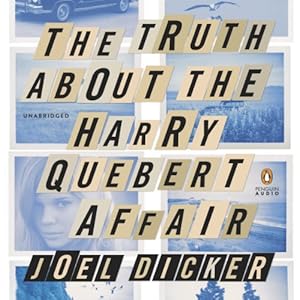
What I’m Reading: The Truth About The Harry Quebert Affair

Earlier this summer I listened to the audio of one of Europe’s recent bestsellers, The Truth About the Harry Quebert Affair [herein HQA] by Joel Dicker. I have waited to write this review because I was very torn on who to suggest this book to.  Recently someone came in asking about it after a friend recommended it, so I had to wrap myself around who this book is best suited for whether I was ready to or not.

Part of my hesitation comes form the marketing campaign for this book.  It was pegged as a "literary thriller."  While this is technically true, it is also extremely misleading.  Unlike The Goldfinch or Night Film, which are literary fiction titles that have a large thriller storyline, HQA is a thriller with a publishing world frame, as the story is about authors, mysterious masterpiece novels, and the unsolved murder of a young girl.

Which brings me to the complicated plot first.  This is a book within a book, within a book, within another book, and, quite possibly, within a book 2 more times [if you really want to be specific and annoying]. I could go into a long explanation of the plot here, but if you want that click here. Rather I am going to give you a bare bones sketch.

In 1975 a young girl named Nola Kellergan disappears.  But our story open 33 years later as a writer, Marcus Kellergan, who is struggling to come up with what to write as the follow up to his smash debut novel, is called by his old mentor and writing teacher, Harry Quebert.  Nola's body has been found on Harry's property and he has been arrested for her murder.

What follows is a story told in parallel narratives, one taking place in 1975 and one in the present, as Marcus unravels the truth behind Nola's death.  In the process of the cold case being investigated, Marcus also writes 2 bestselling books about his investigation, the second of which is the book we the readers are reading right now.  He also uncovers way more than just who killed Nola. [Cue sound effects.... da, da, DAAAAA!]

After reading the novel I will say that while it has a HUGE literary frame it is NOT literary.  It is a fun, compelling, intricately plotted, very dramatic thriller.  That thriller part is the key.  HQA has all of the hallmarks of a solid thriller, but that also means it has some of the draw backs.  Depending on whether or not thrillers are your thing this will be awesome or a problem. You can decide for yourself into which camp you fall with the quick list I made below.

Thriller aspects HQA nails:

  • intricate plot twists which keep coming and coming and coming.
  • plot over character development-- characters aren't bad, but many are drawn with broad strokes and rely on familiar stereotypes and tropes, as is common in many thrillers.
  • a compelling, page turning pace despite a long page count.
  • shocking conclusions that go beyond the simple "who dunnit."
  • a great frame-- thrillers stand out from suspense from their reliance on frame, often from a particular profession.  Here the publishing industry is splayed wide open. [For more from me on what makes something a thriller, you can see this older post, but if you are part of the ARRT genre study, we have detailed notes from our long conversation on the issue just last month.]

One word of caution: This is also a novel about the American literary landscape, set in New England, written by someone who lives in Europe.  There were definitely moments when I felt like Dicker relied on stereotypes and used very broad strokes to create his frame.  Now, as someone who lived in New England while getting a BA in American Studies with a focus on literature, I realized before starting this novel that I could be so familiar with the landscape and frame that I would not be satisfied by anyone's portrayal of it, but I have asked a few people who are not as well versed as myself and they too agreed that it was a bit obvious that Dicker is not American.

But judged on its own merits, and not on the mis-marketing by the publisher, HQA is a solid entry into the thriller category.  It makes for a great vacation read.  Despite the plot twists and intricate overlapping of elements and timelines, it is not hard to follow, it moves steadily despite its 650+ page count, and once I let myself go and settled in to listen to the story unveil itself, I had fun. There is a lot of positive to be said for that.

A note on the audio: I could take it or leave it on Pierce Cravens' narration.  His voice was mildly annoying, but then, so too was Marcus, our narrator.  Since I think Dicker wrote Marcus to be slightly annoying, maybe this was on purpose.  For me, this was the type of book I love listening to. I often get upset at the lack of character development and the use of stereotypes as a crutch in many thrillers [but those are some of the reasons their fans love these books, I know], so listening to thrillers allows me to let go a bit more and just let the story wash over me.  I never would have stuck with HQA in print because of my personal genre preferences, but overall, I am glad I listened to it as I now know exactly who to suggest it to. Plus, as I said above, it was a fun read.

Three Words That Describe This Book: parallel storylines, dramatic, intricately plotted

Readalikes: Based on everything I said above, I realized immediately that HQA reminds me a lot of The Book of Fate by Brad Meltzer.  Both are thrillers with a new adult coming into his adult career, handling a cold case, with an intricate plot.

In my opinion, today's best writer of dramatic and compelling suspense and/or thrillers that feature ordinary people put into extraordinary circumstances who are forced to use the skills they have in their chosen profession to work their way out of the problem is Harlan Coben. So if you have fans of Coben's who are looking for more, try suggesting HQA.

If you really still want a dramatic story with a focus on a mystery surrounding the life of an author, your two best options are Atonement by Ian McEwan (very literary) or The Thirteenth Tale by Diane Setterfield. [FYI, these are 2 of my all time favs.]

Wednesday, November 19, 2014

Reader's Guide to Tonight's National Book Awards

I am working on catching up on a ton of reviews, so today, please enjoy this great piece from the LA Times  in anticipation of tonight's announcement of the National Book Award winners.

I am excited. This is one of my favorite awards.  Not only do they give out fiction, nonfiction, and poetry, but they also name a young people's literature award.  They are also never afraid to make a bold move, like when they gave Stephen King the Medal for Distinguished Contribution to American Letters. Many people were upset, but not me.  He clearly deserved it.  [Click through for reporting from 2003 on that divisive award.]

This reminds me that you can all watch the National Book Awards on the live stream here.

Also, in general, the NBA website is a fantastic resource for information about American writers.  They have information on every book that makes the finalists lists and they have interesting interviews with authors who have won this citation.

Click here for an example using two time finalist Gene Luen Yang.

In fact, back in 2011 I had this post on using awards lists as an RA tool. Don't forget about all awards lists.

So enjoy the award announcement tonight, but don't forget to use the awards lists and websites as a resource all year long.

Tuesday, November 18, 2014

New Issue of The Corner Shelf is Available

The newest issue of Booklist’s The Corner Shelf is available with this link.  As usual, it is a treasure trove of information for that space where the work we do with leisure readers and the effort we put into developing our collections meet.

Here is the intro editor Rebecca Vnuk has for the newsletter.
What do drag queens and banned books have in common? More than you might think. Misha Stone and Jared Mills report on "Banned! Books in Drag at SPL," a look at a successful outreach event that found librarians rubbing elbows with drag queens at a Seattle nightclub, all in the name of good reads. Our "Notes from the Field" interview this month features Rita Meade, aka Screwy Decimal. You may know her from her blog of the same name, her Twitter feed (@ScrewyDecimal), or her fabulous children's programming at Brooklyn (NY) Public Library. While you're waiting for the comeback tour of Lost in the Stacks, the library rock band she sings with, take a read and see what else she's been up to (hint: it's a lot!).
This issue also features our biannual "Professional Reading Roundup" to help you stay up-to-speed on the latest Booklist Online exclusive reviews of professional reading titles; and a look at how Baker & Taylor can help you with your A/V collection. ("At the Corner of Baker & Taylor”).
As always, I want to know what you'd like to read about in Corner Shelf. Feel free to contact me at rvnuk@ala.org.
Rebecca Vnuk, Editor, Reference and Collection Management, Booklist
Use this link to get the details.