RA FOR ALL...THE ROAD SHOW!

I can come to your library, book club meeting, or conference to talk about how to help your readers find their next good read. Click here for more information including RA for All's EDI Statement and info about WHY I LOVE HORROR.

Wednesday, October 8, 2014

The Illinois Library Association Conference is Coming Next Week....

...and while I know many of my readers will not be there, as part of the official Conference Program Planning Committee, I am very preoccupied with the conference, the programs, and the planning [hence the appropriate title of the committee].

I will not only be part of the team overseeing things, but I will also be presenting and reporting from the conference, so next week, look for lots of conference related links and info. So may this serve as your warning that the blogging may be a bit irregular.

But, I will be actively Tweeting from the conference [@raforall] using the #ILAkick. So, by just visiting the blog, you can follow what is happening at the conference through my eyes, in real time. Just keep your eyes on the Twitter feed box, always available in the right gutter of the blog, under the cover of my book.

[The horror blog, however, will solider on as if ILA is not happening though, so don't worry about that. 31 Days of Horror rests for no mortal.]

But back to the Conference itself.  Here is the link to the official program for everyone to peruse.

If there is a specific program you want to know more about, you can click here to access handouts, but give people some time to post them. In  some cases they will not be uploaded until after the presentation happens. Even mine aren't up yet.

Below I have pulled out a few programs to highlight-- all for selfish reasons. [Hey, it's my blog, so I get to call the shots.]

You can also go here if the full program is too overwhelming.  That link will let you sort everything nicely.

++++++++++++++++++++++++++++++++++++++++++++++

Monday 10/13

8:00 – 10:00 P.M.
Welcome Reception and Battledecks Competition
All conference attendees are invited to attend this event,
hosted by the Public Library Forum. The event will feature
Battledecks – a competition where speakers present a deck
of 10 slides in 4 minutes. The catch? They’ve never seen the
slides before!

Location: Presidential Ballroom, Abraham Lincoln Springfi eld
DoubleTree Hotel

The Welcome Reception is made possible by the generous
support of Sikich.

The Battledecks competition is made possible by the generous
support of Booklist.

Tuesday 10/14

10:45-11:45 AM
Leveraging Your Librarian Influence 
Through The Power of Reviews
Building off of the success of librarian-driven 
programs such as Library Reads and the Soon 
to Be Famous Illinois Author Project, library 
workers are beginning to fl ex their muscle, 
showing publishers just how much influence we 
truly have over which author or book becomes 
the next big thing. But reviews don’t have 
to only appear in a professional resource to 
matter. As the book experts in your community, 
you can promote books through local reviews, 
shelf talkers, and staff picks in the library and 
online, reaching readers near and far. Booklist 
editor Rebecca Vnuk, and public librarians 
Becky Spratford and Kara Kohn will discuss 
their experience writing professional reviews 
for Booklist, NoveList, and Library Journal while 
sharing tips on how you can become involved 
and harness the power of reviews.

Speakers: Rebecca Vnuk, Booklist, Editor, 
Reference and Collection Management; Becky 
Spratford, Berwyn Public Library; and Kara 
Kohn, Plainfield Public Library District

Track: Reference and Readers Advisory

Location: Room B-2, Prairie Capital Convention 
Center

This program is made possible by the generous 
support of Overdrive.


8:00-9:30 PM
Lincoln’s Ghost Walk: Legends & Lore
This ten-block, ninety-minute walking tour uses 
the Lincoln sites as the backdrop for the bizarre 
and strange stories surrounding Lincoln’s life 
and death. Lincoln had prophetic visions and 
dreams; Mary had seances in the White House; 
and no other Presidential family endured so 
much so that this nation might survive. This 
tour is loaded with factual history and the 
ghostly lore of Lincoln and is suitable for all 
ages; bizarre history, not scary. Library horror 
expert, Becky Spratford, will be there to answer 
questions and give you reading suggestions just 
in time for Halloween.

Pre-registration is required for this event. 
The tour will begin at the 
Old State Capitol.

Wednesday 10/15

10:15-11:15 AM
Start Up: Using Kickstarter to Grow 
a Community
The Circulating Ideas 
podcast publicizes the 
creative, innovative work 
that librarians are doing 
to bring libraries into the 
21st century. In 2013, the 
podcast ran a successful 
Kickstarter campaign to fund 
improvements, including adding 
mobile capabilities. In this presentation, you 
will learn about creating online professional 
communities through new media, how 
Kickstarter campaigns can help grow that 
community, and what types of projects may be 
right for your organization to utilize Kickstarter.

Speaker: Steve Thomas, Circulating Ideas

Track: Outreach and Community Building

Location: Room B-4, Prairie Capital Convention 
Center

2:00-3:00 PM
Listen and Learn: Podcasting 
for Librarians
Podcasting is growing 
quickly as a new 
medium for professional 
development and 
expression. In this session, 
you will learn the benefi ts 
of the podcasting medium 
and participate in a hands-on 
demonstration of a podcast’s
 production, from planning to distribution.

Speaker: Steve Thomas, Circulating Ideas

Tracks: Innovation

Location: Room B-4, Prairie Capital Convention 
Center

6:00 – 10:00 P.M.
Fourth Annual ILA Pub Stroll
Don’t miss ILA’s most popular networking 
event. Each stop on the Pub Stroll serves food 
and will offer drink specials. Plan to have dinner 
and drinks with old friends or new colleagues. 
No registration is required. Attendees set their 
own schedule and are responsible for their own 
food and beverage purchases. See page 14 for details.

Thursday 10/16

11:15 AM -12:15 PM
Take Your Friends Group From Drab 
to Fab
Friends groups can be a great asset to any library, 
but just like any group of volunteers, no matter 
how well meaning, they can often be hard to 
motivate. As seasoned Friends of the Library 
Liaisons, Becky Spratford, Nikki Zimmermann 
and Carmen Higgins understand the joys and 
frustrations all too well, and they will share their 
tales of how they re-energized their Friends 
honestly, relating both their successes and their 
failures. Learn how to get more money out of 
your book sales, grow your membership, increase 
meaningful member involvement, and create 
excitement around Friends sponsored events. The 
program will also include time for the audience to 
ask questions and share their ideas. This is your 
chance to both learn from and network with other 
Friends Liaisons. Together we can strengthen 
all of our libraries by kickstarting our biggest 
supporters.

Speaker: Carmen Higgins, Westmont Public 
Library; Becky Spratford, Berwyn Public Library; 
and Nicole Zimmermann, La Grange Public 
Library

Track: Trustees, Friends, and Foundations

Location: Room B-4, Prairie Capital Convention 
Center

12:15- 1:45 PM
Beyond eReaders: Circulating WiFi 
Hot Spots from the Public Library
An examination of the Forest Park Public 
Library's decision to circulate WiFi Hot 
Spots to patrons: why we decided to try it, who 
we partnered with, how we do it, and what the 
experience has been like since the go live date. 
Visitors will learn about the procedures involved 
with circulating hardware, the challenges 
regarding service area coverage, a cost benefi t 
analysis, as well as feedback from patrons that 
have used the program.

Presenters: Magan Szwarek and Maureen Sill, 
Forest Park Public Library

Location: Poster Session-- Exhibit Hall

For the full Conference Program, click here.

Tuesday, October 7, 2014

Training With Maine Today

This morning, I will be running another training for the Maine Regional Library System.

This month it is a fully updated and revamped version of my popular Bridging the Physical Virtual Divide program:

Promoting books in the virtual world is a tricky proposition. On the one hand, you want to exploit tools like blogs, wikis, and the ever expanding collection of social media options to reach more readers, but on the other hand, you do not want to forget about your core brick and mortar customers. Readers' Advisory expert, Becky Spratford is here to help. Using examples from her library and others, Becky will share her tricks and tips for navigating this key service issue without sacrificing your core services. Although she will not recommend or evaluate specific social media platforms, Becky will leave you with an overall philosophy and key strategies that can be easily implemented at your library across a variety of digital platforms.

Click here for the slides.

This program has A TON of links to other libraries.  While you don't get the full effect without me presenting the details, this presentation is extremely useful on its own. I encourage you to take a look.

Also, don't forget that I can train your staff or large groups of librarians virtually as I am doing with Maine. I currently have openings in January, March and May of 2015.  February and April are already closed [and May is filling up quickly]. Feel free to contact me for details and pricing.

Next month, I will be unveiling a brand new program for Maine, Taking It To the Streets: Successful Adult Programming Outside of the Library. 

Monday, October 6, 2014

Monday Discussion: What Are Your Favorite Horror Titles to Share With Patrons [Featuring a Pic of Our Awesome Halloween Display]

In case you didn't know, Over on RA for All: Horror, I am running my 31 Days of Horror blog-a-thon.  In honor of the first Monday of the month, the Monday Discussion is running both places.

Today I want to hear from you about your favorite horror titles to hand-sell to patrons this season. Notice I did not ask you to share your favorite horror book.  That is a different question, which I have asked before.

Rather, what I want to know is which scary books are you most likely to suggest to a patron this season, especially a patron who walks in the door and just wants a seasonal read. What are you giving those occasional horror readers?

Do you have a go-to list of sure bet horror? Or even sure bet "not-quite horror."

I'll go first.

My favorite titles to suggest during this season change each year.  You can check here or here for some ideas from year's past, but this year, I am giving the fans of more traditional pulp horror James Herbert (see this post for why), Richard Layman, or Brian Keene.  The first two are classic horror authors who are no longer alive, the and third is the reigning king of pulp. These are for readers who want that super scary, horror movie type read.

For fans of a lighter touch who just want to experience a tiny bit of terror, I like to give out is The Unseen by Alexandra Sokoloff or The Caretaker of Lorne Field by Dave Zeltersman (both meancing but not bloody) and David Wong's funny, but a bit gross, yet thought provoking John  Dies at the End.

Now it's your turn. Which scary books are you sharing with patrons this haunting season?

Here is a picture of the BPL's horror display, arranged by John, to get you in the mood. Yes, the skeleton is flying over patrons as they walk by.

For past Monday Discussions, click here.

Friday, October 3, 2014

Tomorrow is 24 Hour Comic Book Day!

What is 24-Hour Comic Book Day and why should you care? Great question.  I'm glad I asked it.

Seriously though, 24-Hour Comic Book Day is an event in which artists are challenged to create a 24 page comic in 24-Hours.  Click here for more details. The idea behind this event began in 1990 when Scott McCloud challenged a friend to do just this.  And now, it happens every year on the first Saturday in October.  McCloud has a great history of it all on his site, here.

Although most events are located at comic book stores, there are a few libraries who are hosting these events.  It makes sense, especially in areas without a comic book store, for libraries to be a place for artists to gather and create.  I would compare it to the libraries who participate in NaNoWriMo.

Now, logistically I get it that most libraries could not stay open for 24 hours straight to be a venue for this event, but that doesn't mean you can't support it.

Promote it at your library. Make displays. Or just use it as an excuse to promote your graphic novel collections.

In that vein I have two resources worth your click RIGHT NOW in order to better educate yourself on comics and why they appeal to readers.

First, there is a BRAND NEW resource from the Book Riot family called Panels.  From their "Welcome "statement:
We wanted to drum up a community of seasoned comic book readers as well as novices to the form. That’s who we hope to speak to and also who we are. We looked for a wide array of voices. We found ourselves a chorus, and will continue to grow. Every day we get to play show-and-tell with our favorite new finds. We’re excited about that. 
Panels is a celebration of comics, the people who make them, and the people who love them. We take comics personally, because that’s the way they’re made. Personally. By people with things to say.
Click through to access the full site and see for yourself.

So, Panels is there trying to help the newbie as well as the comic book geek. This is great. But one of the hardest things for librarians who do not enjoy comics to overcome when helping fans find more to read is the fact that they do not understand the appeal themselves.

This is true for many genres. It is harder to help patrons with genres they love when we don't enjoy them ourselves, but with straight text formats, there seem to be more resources that help you to overcome this barrier.

One of my sure-fire tactics on this issue is to try to find someone who loves something and use their enthusiasm to sell the genre to another fan. Find someone who can articulate WHY they love, in this case, comics and you will better understand why others do too.

Luckily, I have a librarian created resource to help us here.  Ohio public librarian, Jack Phoenix has a blog called My Comic Memories in which he shares both RA and personal info about each of his comics. He begins with a comment on the comic itself and then moves on to why it is meaningful to him.  It is a memoir of his life through his comic book collection.  I absolutely love what he does here and highly encourage you to click through.  You can learn a lot about the appeal of comics from Jack.

For my previous list of preferred graphic novel resources for librarians, click here.

Finally, I want to end with a shout-out to my local comic book store-- Chimera Comics.  They are hosting artists for the 24 hours and running a silent auction.  I am very spoiled to have a comic book shop within walking distance from my home.  My son [a huge Marvel fan] and I will be making a stop tomorrow to be a part of the celebration.

Good luck to anyone out there taking the 24-Hour Comic Book Day challenge.

Thursday, October 2, 2014

Form Based RA From a Non-Library Based Perspective-- What We Can Learn

A few days ago I received a forwarded email from my husband with this quiz that promised to answer the question, “What Book Should You Read Next?"

He included the following comment with the message: “Isn’t this what you do for a living?!?”

My first instinct was to be mad and scream at my phone, “What do these random people know about the art of matching readers with books?” [For the record, I was at work, sorting through book donations and did not actually scream out loud, but inside I yellin'.]

But after a few deep breaths, I found a computer so I could properly assess this non-library generated threat to my profession, and a miffed, feeling superior Becky clicked through to the quiz. And do you know what happened...? I learned so much!

Yup that’s right.  I am saying right here that the silly algorithm based quiz that was probably paid for by the publishers to promote their titles taught me something.  And it taught me enough that I felt like it was worth sharing with everyone else.

Here’s what I want to share. First, click through and look at the questions. The quiz provides a very basic version of the RA interview but uses language questions that were not only intuitive but also based in current popular culture.

Compare the quiz to some of the very best libraries who use form based RA online interview questions: Williamsburg Regional Library, Seattle Public Library, Skokie Public Library. I love these services, share them with libraries to encourage them to adopt similar ones, and am actively working toward instituting a service based on these at my library.

But stop the presses! Where is the fun in filling out these forms? Where is the natural conversational tone that we certainly have when working with people at the service desk.  I mean, I totally ask about television shows and movies when working with a reader in front of me, but I don’t see that showing up in form based RA at libraries with any regularity.  Similarly, I often ask where my patrons will be doing their reading, as the quiz does, but not in form based.

Here’s the heart of the issue: we often get so caught up in our library world and theory that we forget we are helping people who live outside the library world and firmly in the real world.  We ask questions about appeal and genre and pacing.  We try to do it in a conversation manner, and we do, but it is still from a more esoteric starting point-- especially when we make the transition from in-person RA to form based.

And every more freakily, I filled out the quiz and it told me I should read The Diner, a book on my to-read list! Here’s what it said for why the algorithm picked it for me:
Hey there, Queen of Darkness. You're clearly looking for a creepy thriller that will keep you up past your bedtime. Try Herman Koch's The Dinner. This Dutch best seller is about two couples who meet at a restaurant in the wake of their sons' terrible crime. As the story progresses, you won't know who or what to trust... aside from your own sense that something is very, very wrong.
Wow. It really got me with those lay-person, real world, and very whole collection questions.

Now, that is not to say that this quiz does not have its limitations. It has many. My husband tried it and was intrigued but not as happy.  I also tried to answer the questions as a few of my long time patrons and got mixed results.  Much of this has to do with the fact that there is a limited number of preloaded books that could be the answer while in the public library we have hundreds of thousands of possible choices.  But, still it’s all worth taking a little more seriously than my initial reaction called for.

All of us who work with leisure readers need to learn from this quiz and ones like it.  I think I am going to make it a part of the RA training I do now.  I have already started to incorporate resources and ideas from outside of the library world as a regular part of my training programs, so this is on that natural progression.

If nothing else, let a few patrons take the quiz and see what they think-- about the questions and the answers.

Wednesday, October 1, 2014

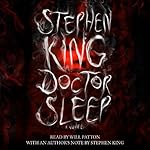
What I’m Reading: Doctor Sleep

Back in April I finished listening to Doctor Sleep by Stephen King but I saved this review for the start of my 31 Days of Horror marathon (which began today here) for a few reasons.

1.  It's Stephen King. How better to get you psyched for the Halloween season than with the man who invented the modern horror genre. King symbolizes everything that we experience in the library during this month-- people come to the library wanting a seasonal read, and sometimes, his is the only horror name they know. This is where the average patron begins his or her horror interaction with us, so why not start the month with King?
2. As you will see below, this novel makes for an excellent horror introduction.  It is a well written novel with wide appeal but may not represent the current state of today’s horror.
3. I wanted to get you psyched for helping readers looking for scary reads whether or not you read my horror blog. I had my first official seasonal request for an adult horror story at the desk on Monday. If you haven’t already been approached, you will be soon.
4. I was already so far behind in this review, that I figured it would be better received and used by you to help patrons closer to Halloween anyway.

So here’s the very quick set up on the plot.  Doctor Sleep is the long awaited sequel to The Shining, which I have gone on record many times as saying is the best Stephen King book to start reading King with. Doctor Sleep begins with the main character of The Shining [who was a child in that novel], Danny, as a not so well adjusted adult. He is still actively and self destrctively running from the horrors that his psychic powers force him to see. As you can imagine then, Doctor Sleep is the story of Danny’s very late coming of age.  The story is about how he is forced to address his powers, help a young girl who is even more powerful than himself, and return back to where his personal horrors all began to vanquish an evil that has been living amongst all of us for hundreds of years and is out for blood.

Yes, I am being very vague on the plot because I don’t want to giveaway too much from either novel.  But this brings up an important point.  You do NOT need to read these books as a series or even in order in order to enjoy either or both.  I enjoyed how Doctor Sleep added depth to The Shining but gives enough background detail into how Danny got to the point he is at, so that you don’t have to have read it.

In terms of appeal, you want to read this book to see a master at work. As I said in my book about King [paraphrased]:
"A typical King story line features fast paced action and conversational language with misfit heroes tackling an evil that has been unleashed upon a normal world. King loves isolated settings, and he does not shy away from including sex and violence in his books." 
And Doctor Sleep features all the best King has to offer.  Specifically this novel has a well developed reluctant, extremely flawed, but sympathetic protagonist, Danny; in fact, it helps that many of us remember him as a kid in The Shining. But it is not just Danny, the other major characters here are well drawn, multi-dimensional and interesting, particularly the young girl Danny must team up with in order to save humanity.

But it is the villains that are fantastic here.  It is a group, and they are an evil lurking just beneath the surface of our real world. Only Danny and others with “the shining” can see them for what they really are.  The mythology King has created around the group, their seat of power, how they stay alive....just everything about them is menacing, chilling, and terrifying. I dare you to ever talk to someone in an RV again after reading this book. You are a braver soul than I if you can do it.

But this also leads to the biggest problem I see with Doctor Sleep as a 21st Century horror novel. It is too thriller like in its storytelling.  It has a very clear dichotomy between the good guys and the bad guys. But most importantly, the situation King sets up is for a final epic showdown should result in terrible losses for our heroes, but it does not.  In fact, the ending was super happy and perfect; it got a little cheesy as we find out the true relationships between some of our heroes.  It was just way too happy for horror.  It had the Hollywood ending feel of a thriller, not the emotionally wrenching ending of a more traditional horror novel like NOS4A2.

Also, on a personal dislike note, there is a huge Alcoholics Anonymous angle to this story [which I get because of King’s personal experience], but for me, it was too preachy. However, this is also a reason some people will love the book.

So, as a novel, it is top notch-- great story, fantastic action, terrifying evil, wonderful characters, and it adds to the universe that the classic The Shining started.  This is a great read for King fans and supernatural thriller fans.  However, for horror fans, those who really appreciate the nuances that the genre has developed over time, it is a disappointment. For me, I liked it but think NOS4A2 is better.

So know what your reader is looking for.  And this time of year that distinction matters.  There are plenty of patrons who want to dabble in horror during the Halloween season, and for them, Doctor Sleep is an EXCELLENT suggestion. However, for people who want to experience the genre at it’s current best should try Joe Hill, Jonathan Maberry, or a few of the other authors I talk about on the horror blog. [Also, there is more in the “Readalike” section below.]

Note on the audio:  Stephen King is such a fantastic story teller that more often than not I find listening to his books even better than reading them. I better appreciate his pacing and story construction in this format. The reader here, Will Patton has read King before. He was not as good as Craig Wasson’s reading of 11/22/63, [that may be unfair because 11/22/63 is one of the best books I ever listened to and much of that has to do with the quality of the book, and nothing to do with the reader], but Patton did keep me involved in the rising tension and caring about the characters even when I was feeling bogged down in the AA stuff.  He grabbed my attention, inhabited Danny [who is a very complex character], and easily kept me fully engaged for 18.5 hours.

Three Words That Describe This Book: compelling, great characters, unrelenting menace

Readalikes:  As I mentioned above, the other mainstream, epic horror novel of 2013 was NOS4A2 by King’s son Joe Hill.

Another classic, if slightly less well known horror novel that like Doctor Sleep that was a long awaited follow-up to a classic, yet still completely readable on its own, is A Winter Haunting by Dan Simmons [the sequel to Summer of Night]. Again, from my book:

“Forty-one years after I died, my friend Dale returned to the farm where I was murdered,” begins Simmons terrifying look into ghosts and madness.  Although with Winter Haunting, Simmons returns to the characters of 1991’s Summer of Night, this novel stands on its own as an engrossing fright-fest with nods to the classics in the haunted house subgenre.

For more stories of people with psychic abilities try the backlist option A Stir of Echos by Richard Matthesson or the new trilogy by Jeff VanderMeer which begins with Annihilation.  These are also compelling horror stories with a menacing atmosphere lots of suspense and characters with psychic abilities.

Finally, if you have access to NoveList, I updated the readalike article on King last year.  There are many more options there.

Monday, September 29, 2014

Monday Discussion: Mystery vs Thriller Suspense

The Monday Discussion is late today because I have been preparing for this week's big ARRT Crime Fiction Genre study meeting during which we will take the HUGE leap from Mystery to the other crime genres.

As you can see from the assignment, we are beginning with a few different Thriller subgenres.  But during the beginning of the meeting, I am charged with the task of making this group of seasoned librarians care about the small [but as I will argue key] differences in how mystery and thriller/suspense appeal to readers.

Now being a part of what promises to be a lively discussion is a membership benefit of joining ARRT, but I would like to include as many opinions as possible in our conversation.

So for today's Monday Discussion, I want to ask all of you, what do you see as the key appeal differences when it comes to readers between books we call "mystery" and those that we call "thriller" or "suspense?"

I usually go first on these discussions, but I have said much on this topic over the years on this blog; in fact, here is one short post on that topic from 2 years ago.  But I already know what I think.  As the facilitator of this discussion, I want to know what others think-- even if your answer is you don't think the distinction is worth making.

I want to make sure our discussion on Thursday includes as wide a range of thoughts and opinions as possible. The more points of view the better; especially if they are diametrically opposed points of view.

Now, to be fair, I will add one new thing before I open the floor.  Last week, on Fiction-L [the RA listerv] there was this post by Stacy Alesi on the 16 differences between mystery and thrillers/suspense. I don't think I agree with every single point she makes, but the essence of what she is getting at is good.  And, it is a great way for me to solicit feedback from all of you.

So, for today's Monday Discussion, tell me what you see as the differences between mystery and thrillers/suspense.

For past Monday Discussions, click here

Friday, September 26, 2014

BPL Book Discussion: A Land More Kind Than Home

Way back on 9/15, our group met to discuss A Land More Kind Than Home by Wiley Cash.

I read, loved, and wrote about this novel back in 2012, so you can click through for a preview.

But to keep this post standard with the other book discussion reports, here is the publisher's summary:
For a curious boy like Jess Hall, growing up in Marshall means trouble when you get caught spying on grown-ups.  
Adventurous and precocious, Jess is protective of his older brother, Christopher, a mute whom everyone calls Stump. Though their mother has warned them not to snoop, Stump can't help sneaking a look at something he's not supposed to—an act that will have repercussions. It's a wrenching event that thrusts Jess into an adulthood for which he's not prepared. He now knows that a new understanding can bring not only danger and evil—but also the possibility of freedom and deliverance.  
Told by resonant and evocative characters, A Land More Kind Than Home is a haunting tale of courage in the face of cruelty and the power of love to overcome the darkness that lives in us all.
Since I'm already late here, let's get right into the discussion:
  • You know how it all begins…we had liked 10, disliked 0, so-so 1
  • Comments for the so-so person:
    • I didn’t like the essence of the story. I was waiting for justice to be served, but that was not the point. I had to get over that.
  • The liked that people couldn’t stop with the comments, which was great for me because these initial comments helped me to guide the rest of the discussion. Here are some of those first thoughts:
    • The first page got me and I couldn’t stop reading.
    • That pastor was evil personified; it was great!
    • I loved the 3 points of view to tell the story.
    • I loved the writing and language specifically
    • I loved the characters
    • Stump and Jess’ relationship was so real.
  • Question— Why did the author choose to tell the story with 3 points of view and why those 3 povs?
    • We needed Jess.  This is a very adult story; the adults drive the action; the history between Clem and Jimmy is complicated; the true story here goes back a long time; a kid pov is needed.  Like us, Jess is looking in on the story with a pov that is innocent and naive.  We need Jess to be us, the reader.
    • We needed Clem because he is “The Law” and Addie is the common sense and historical perspective.  She is also the only one who is not intimately involved in the deaths here.
    • I usually hate when the pov switches a lot, but Cash made it clear.  He marks when a new speaker takes over and gives them a few chapters so we get in their groove.
    • I saw it like a triangle with Jess as the point at the top. He is the most precarious.  Clem and Addie’s points make the base. [ed note: nicely done]
    • I also saw the 3 narrators as representing the 3 different generations present in the story: Addie is the long view, Clem is 25 years in town, and Jess is 9.
  • Question— Although we were happy with who got to tell this novel, whose point of view did you not get, but desperately wanted?
    • Julie! What motivated her? Someone else yelled, “Explain yourself mom!”  Many people expressed that although their first instinct is to want Julie to have a chance to tell us why she made the choices she did, the story is better because we don’t know.
    • Jimmy. He seems like a better man than the abusive, drunk father he was to Ben. We only heard from Clem about how Jimmy was in the past, but never saw it. It would have been nice to hear from him about his transformation; or did he not have a transformation.
    • When we were petering out I mentioned to the group that I was surprised that no one said they wanted to hear from Pastor Chambliss.  Someone put it nicely by saying that he was another example of how charlatans can pull people in, but I did not want to know more about him than that.  Ick.
  • Question: Why did Cash choose to tell this story in such an out of order fashion with 3 narrators?
    • I love that the way he tells the story underlies the fact that no one can ever understand the “true story” of anything.
    • No one person can tell a complicated story
    • Interestingly, the action in this story’s present only takes place over the space of a week, but the novel and the way it is told brings us back decades and let’s us get to the root of the problems fueling the action.
    • I usually hate back and forth stories, yet here I didn’t notice, or I noticed but didn’t mind.  It was all so fluid and necessary for the way he wrote the novel.
    • It is obvious he comes from a family of storytellers (said by someone who had the paperback with an interview with Cash). His easy way with crafting a story comes through here.
  • Question: The title comes from an epigraph at the start of the novel. So let’s talk title and epigraph.
    • I got chills when I went back and re-read the epigraph after finishing the novel.  Many times the epigraphs never make sense to me, either before or after I read the book.  Not this one. It was perfect.
    • The epigram is about a person not wanting to come back home. Coming home is fraught with problems for all of the characters here.
    • The title- A Land More Kind Than Home— the place they are, Marshall, NC is not a kind place. It is, and seems to always have been, a tough place. They will go somewhere better when they die. Talk of heaven being better comes up a few times.
    • On a literal level, their lives were hard.  Addie’s personal biography broke our hearts. The environment is hard too.
    • There were many descriptions of the land and the topography that together paint a picture of a rough place to live.
    • The title spoke to me of hope. Even though life is tough, if you believe there is hope. If you have faith, there is hope.
    • Even the ending is like this.  It is a tough ending, people die, but their is a sense of hope that the remaining characters will move forward.  Even the church is going back to being a positive place, no longer a secretive church.
  • Question: What is Jess had told the truth about it being him— not Stump— who they heard speak at the church meeting earlier? What if he shared the information about his mother and the pastor too?
    • We cannot underestimate the lure of Chambliss. It was not the entire town who he held under his spell, and behind the newspaper covered windows of the church, but there were many who needed to fill an emptiness inside of them.
    • Telling the truth would not have changed Julie. She was too far under the spell.
    • Besides, who would he tell? He had no one who would have listened to him.
  • We talked about the ending at length and although I am trying hard not to give too many spoilers, there were some excellent points brought up by the group, points that are worth sharing.
    • We talked about specific lines and situations throughout the novel that foreshadowed the final showdown between Chambliss, Julie, Ben and Clem.
    • When Clem stopped “knowing Ben” that’s when everything changed. When he turned the gun on Jess, all bets were off.
    • So much foreshadowing, like Clem talking about the previous Sheriff retiring after 25 years and Clem being at year 25 himself.
    • The foreshadowing built to the climactic scene well when you analyze it— it was all building for decades, but as I was reading it, the ending felt rushed.
    • I agree, but then I thought about how it was 20 years of issues that came to a head quickly, so really not as fast as you think at first.  I liked that Cash allowed me to see the slow build over the years without sacrificing the story. It still moved quickly even though it was complicated.
  • Question: Why did Addie Shelter Julie?
    • That wasn’t a good choice.  Julie was the bad one here.
    • Clem pointed out that he knew what it was like to watch a mother grieve, but Addie did not.  
    • I think it was important that Addie was not a mother herself. A mother might not have been as understanding to Julie, who allowed Chambliss to kill her child.
  • Question: How does A Land More Kind Than Home compare to a Shakespearean tragedy?
    • This book had a story and ending much like Romeo and Juliet, although instead of 2 families star crossed lovers, they each lost a son.
    • What I love about this novel is that we think Stump’s death is the tragedy but it is not. It is only the incident that brings 20 years of issues to a head.
    • The entire novel had a biblical feel. All of it was a cautionary tale.
    • It also ends with healing and salvation— of the people, of their church. They literally let the light in.
  • Question: How will Jess and Jimmy get on after the novel ends?
    • Addie seems to think that they will be fine.
      • But, someone said, she also watched someone die at the hands of Chambliss and said nothing for 20 years, so does Cash want us to think they will really be fine? Hmm. That is an interesting question.
    • Most of us thought Jimmy changed, but we were not sure.
    • One of the themes of the book is redemption, so...
    • I think it will be a hard road for Jimmy and Jess, but with the help of the community, Addie and Clem, they will thrive.
    • I don’t know. I am worried that Jess will always resent Clem. Also, is Cash saying Jess will repeat the sins of his father and grandfather.
  • Final words or phrases to describe this book?
    • revenge
    • faith
    • hope
    • betrayal
    • good vs evil
    • light vs dark
    • forgiveness
    • understanding
    • healing
    • charlatan/charisma
    • blind faith
    • poignant
    • beautifully written
    • atmospheric
    • lyrical
    • multiple point of views
    • nonlinear story telling
Readalikes:  First, here are excerpts from my original suggestions from 2012:
Wiley Cash's novel is everything people always claim  John Hart is.  Hart doesn't do it for me as you can see here, but many people do enjoy Hart's North Carolina set suspense novels, so I think he is a good suggestions option for some readers. 
But the author Cash most reminds me of is the great Joyce Carol Oates.  Of course, Cash has 1 novel and Oates is one of our greatest living American writers, but I see a lot of Oates in Cash.  A good similar read here would be The Falls. 
The Cove by Ron Rash which also came out this spring, is a suspense story which hinges on its North Carolina setting and is probably as close to perfect a match as you could get here.  At the same May 29, 2012 Book Lover's Club, Marilyn had this to say about The Cove:
"I was immediately caught by the cover - a stream with wooded hills on both sides and the back of a woman with long hair wading in the water.  There is a brief introduction by the author which says that during WWI Germans in America were taken to internment camps. It is set in the backwoods of North Carolina.  It starts in the 1930s with a man who is doing a land survey.  He is from out of town and not feeling very welcome.  He finds an abandoned well and pulls out a skull.  Flash back to 1918 where a young sister and brother are trying to run their farm after their parents die.  The sister helps a man who has been stung by wasps and she finds a note in his pocket that says I am a mute and trying to get to New York and that is all I will say…" 
Cold Mountain by Charles Frazier shares the southern setting, lyrical language, and vivid characterizations with A Land More Kind Than Home. They also share a shifting point of view and a storyline in which characters must come terms with the difficulty of their life situation. 

A suggestion that is a little more off the beaten path would be Alden Bell's The Reapers Are the Angels. Like Cash's novel, Bell's is also a psychological suspense story merged with a Southern Gothic feel, only in Bell's novel, the characters inhabit a world where they has been a zombie apocalypse.  Take out the zombies though, and they are remarkably similar stories.
 

And for a cross format watch alike, the entire time I was reading A Land More Kind Than Home, it kept reminding me of the HBO series Carnivale from the early 2000s.  Both have weird preachers and an atmospheric, odd, bleak, yet beautiful story driven by psychological suspense, setting, and characters.  Go seek out the DVDs for the series if you liked this novel. 
Other suggestions from this discussion and second reading:
  • Someone in the group mention that the novel was Faulkner-esque.  This is a very good comparison.
  • Someone else mention it reminded her of To Kill A Mockingbird by Harper Lee. In this case it was the child narration about a crime, a small town, and the issues than run deeper than the specific crime at hand that seemed similar to her.
  • Shakespearean tragedy was discussed above and specifically Romeo and Juliet with the 2 families and their dead children.
  • I love that the ladies are getting so good at these RA suggestions.  Another person mentioned that this book reminded her of her favorite author, who also happens to set his novels in North Carolina, Pat Conroy and specifically Beach Music.  Also a great suggestion.
  • Finally, NoveList had this outside of the box suggestion-- Shine Shine Shine by Lydia Netzer, "In this novel, we meet Sunny (congenitally bald), her mother (terminally ill), her husband Maxon (a socially inept genius engineer), and their son (diagnosed with autism). The story moves back and forth between Sunny and Maxon’s childhood in rural western Pennsylvania and their present in an affluent suburb of eastern Virginia. Like Cash’s novel, Shine Shine Shine shows us the costs of forcing people to fit into conventional notions of normality."

Thursday, September 25, 2014

Getting Ready For 31 Days of Horror: Nonfiction for Horror Readers

I have been spending the entire day prepping the horror blog for the 31 Days of Horror onslaught that will begin on October 1. 

And then, into my email box came a very timely surprise-- the October issue of NoveList's RA News with this article by Audrey Barbakoff entitled "Nonfiction for Horror Readers." And, she quotes me, so I think it is worth your time.

Click through or see below for a teaser.

And make sure to check out RA for All: Horror daily starting 10/1. [And yes that means I have to run 2 blogs a day. Sorry in advance if I get crabby on this blog around October 15]

++++++++++++++++++++++++++++++++++++++++++++++++

Nonfiction for Horror Readers
by Audrey Barbakoff
*This article originally appeared in the October 2014 issue of RA News.*
The room is dark. Something creaks behind you. Was it just the house settling, or were those footsteps? And what just moved in the corner of your eye?

Readers who delight in a racing heart and a chill up their spine do not have to be limited to haunting the horror section. Give them a Halloween treat by bringing them to the nonfiction shelves, where truth can be more frightening than fiction.

Terrifying true tales have much to offer the fear aficionado. First and foremost, horror readers are seeking an emotional experience. "The central appeal of horror is the feeling it generates," writes Becky Siegel Spratford in The Readers' Advisory Guide to Horror, Second Edition. "There is no question that the tone and mood of a horror book are the most important appeal factors for horror readers." Real-world stories set against a similarly dark and sinister atmosphere have the power to engage these readers as strongly as fiction.

Horror is also unique from other highly atmospheric fiction in the way it goes about generating that emotion. Readers' Advisory expert Joyce Saricks agrees that horror "demand[s] an emotional reaction from readers: true fear," but then specifies that such fear must be "generated by the unknown." In horror novels, evil is terrifying because it is fundamentally irrational. It cannot be explained away, and it just might be sneaking up behind you as you so innocently turn the page.

Many works of nonfiction also confront the terrifying unknown. Some books delve into the ultimately unfathomable minds of killers, sociopaths, and criminals. (Many books of this type are also true crime. For an introduction to that topic, read Lock Your Doors, Don't Talk to Strangers, and Other True Crime Advice by Mike Nilsson.) Others put their readers face-to-face with an amoral universe which inflicts disaster on the innocent. Often they tackle historical events both eerie and unexplained.

These darkly atmospheric true-life tales of the unknown will keep a horror reader company upon a midnight dreary. 
++++++++++++++++++++++++++++++++++++++

You will have to click here for the full suggested list.  If you dare....

Wednesday, September 24, 2014

New RUSA CODES RA Conversation

From my email box to your computer screen....
A new CODES Conversation begins October 14th  and will run through the 15th. If you wish to take part in the discussion you do not need to take any further action as you are already subscribed. 

RA as a Technical Service
RA does not just happen in the stacks and at the public service desk. It happens in the catalog, in collection development, and in materials processing. Join a community of over 500 librarians interested in all things RA as we discuss how to make sure that the RA service that happens behind the scenes of public service gets the attention and focus necessary to make all of RA as robust and useful as possible.
Some of the topics we will address include:

How best to calculate, and what factors to consider in setting, holds ratios?

Genre Headings: How (if at all) do catalogers/patrons/advisors agree to what constitutes a genre? How many headings do we want/need in an age of genre blends?

What features of the catalog support and enrich RA?

How can the collection development staff help the public services staff keep up with new titles and genres?

What use are stickers on books? How do they work with genre blends?

Should we interfile or have divided collections?

How do we ensure the best access to paperbacks? And speaking of paperbacks has the format flipped to some degree to ebooks?

CODES Conversations are focused electronic conversations on current issues facing collection development and readers’ advisory librarians—or anyone interested in those areas. The free, moderated discussions are open to all – just subscribe to the discussion at http://lists.ala.org/sympa/subscribe/codes-convos, then follow and contribute (or lurk!) as you wish.