RA FOR ALL...THE ROAD SHOW!

I can come to your library, book club meeting, or conference to talk about how to help your readers find their next good read. Click here for more information including RA for All's EDI Statement and info about WHY I LOVE HORROR.
Showing posts sorted by relevance for query clowes. Sort by date Show all posts

Wednesday, November 30, 2011

What I'm Reading Graphic Novel Edition: Mr. Wonderful and Chew

Tonight's class includes a discussion on Graphic Novels so I thought I would catch up on my reviews of the two graphic novels I finished recently: Mister Wonderful by Daniel Clowes and Chew: The Omnivore Edition by John Layman and Rob Guillory.

Daniel Clowes was the first alternative comic writer to really break out into the mainstream.  His characters are generally misanthropes and/or people on the edges of "normal."  However, his focus on the people on the periphery of polite society is a commentary how we are all outsiders in one way or another.

In order to underscore the universality of how we all feel like a weirdo at times, he uses exaggeration and the grotesque in his stories and art.  This makes for a slightly surreal quality to his stories, but they are firmly grounded in reality.

Clowes is most popular with 25-45 year olds who are regular graphic novel readers; however, with his growing popularity, numerous awards, and even an appearance alongside Alan Moore on the Simpsons, Clowes is being read more by the casual graphic novel reader too.

I personally love Clowes, but it is important to note that I fit into the above category of traditional Clowes fans.  To the right here you can see a page from Mr. Wonderful.

Mr. Wonderful takes only an hour or two to read and savor. For those who vaguely remember seeing it somewhere else before, it was originally serialized in The New York Times Magazine.

Mr Wonderful hits at all of the Clowes appeals I mentioned above, plus a few more I will mention now.

The pages are busy and require your attention, but they are not hard to follow.  He uses every inch of the page to tell you a story.

Clowes employs a clear style which he introduces from page one and sticks to throughout.  Once you get in the groove of his storytelling methodology, you are good to go.

The story itself is merely a slice of life peek into our eccentric main character, a divorced man looking for love.  He is set up on a blind date by friends and this graphic novel is the story of that date.  We get glances into both parties' backstories and specifically into the mind of Mr Wonderful himself.

This is a quirky, fun ride through a blind date from hell that might just lead to an ulikely relationship.

Three Words That Describe This Book: quirky, slice of life, outsiders

Readalikes:  Mr. Wonderful reminded me of HBO's Bored to Death.  Mr. Wonderful and his misadventure could easily be used as a plot line for the Jonathan Ames character on the show.  Interestingly, Ray, another character on the show, is a comics writer himself.  Click here to see artist Dean Haspiel's drawings used on the show.  It all overlaps perfectly.

Clowes' storytelling  has always reminded me of the novels of Jonathan Lethem.  As a readliake here I would specifically suggest Chronic City or You Don't Love Me Yet.

In graphic novels, I also find Chris Ware a good readalike option.  Both men write alternative comics with outsider main characters and a literary fiction-esque story line. You can't go wrong by giving Jimmy Corrgian: The Smartest Kid on Earth a try if you like Clowes.

The work of graphic novelist Adrian Tomine and David Mazzucchelli's Asterios Polyp (link to my review) are also good options.

Now on to the next review.  Here is how I learned about Chew: Jose at work read it and said to me, "You have to try this graphic novel. The main character is a guy who gets a psychic impression from every bite of food he eats." That was enough for me.  I put it on hold and am now totally addicted to this smart, scary, and thought provoking graphic novel series.  I am holding my breath for Volume 2 to be released on December 20th.

Here is the link to the official website for the series, which includes examples of the art.  In particular, I think the picture on the right really captures the series' tone and style.

From that same site, here is the creator's description of the series:
Tony Chu is a cop with a secret. A weird secret. Tony Chu is Cibopathic, which means he gets psychic impressions from whatever he eats. It also means he's a hell of a detective, as long as he doesn't mind nibbling on the corpse of a murder victim to figure out whodunit, and why. It`s a dirty job, and Tony has to eat terrible things in the name of justice. And if that wasn`t bad enough, the government has figured out Tony Chu`s secret. They have plans for him… whether he likes it or not.
The world in which Tony is a detective is also a near future dystopia where some type of horrible bird flu has killed millions of people, and now, chicken as a food source has been completely outlawed for our own safety.  Or, as we come to question, is that just what the government is telling us? Why? What is the big secret?

Tony's powers move him to the biggest, baddest government agency in this new world...the FDA!  His job is to stop illegal chicken consumption; however, his powers have created many enemies who are out to get him.  We meet Tony's celebrity chef brother, his partners, and an intriguing restaurant reviewer with powers of her own. There are many more interesting characters, but you will need to discover them on your own.

As this first compendium ends, Tony is just on the edge of discovering what is really going on in regards to the outlawing of chicken.  Many factions are closing in on him, from different sides, and I want to know what is going to happen! (see my above comment about holding my breath for Vol 2)

The drawings are dark, edgy, and colorful.  There are a lot of sharp jagged lines to keep you uneasy.  The page is used in many different ways to tell the story, from full page illustrations, to extreme close ups, traditional panels, and oversized ones.  Again, the presentation fluctuates to add that unease to the story which is truly gratifying.

I would best describe the series as gruesome and funny, in equal measure.  It has all the trappings of both a great dystopian novel, with the thought provoking story lines and chilling social warnings as well as the comforts of a solid detective story.

This is a dark (bordering on horror), character driven story with cliff hangers, shocking plot twists, and an extremely interesting frame.  But it really is also funny. Tony is a great protagonist.  If you like him, you will love the series.

Chew is not for the weak stomached, but it is also one of the most original stories I have read in a long time.

Three Words That Describe This Book:  original, dystopic, uneasy mood

Readalikes:  Chew is clearly heavily influenced by the drawing style, themes, and storytelling method of Robert Kirkman and his enormously successful Walking Dead series.  Both series use a similar drawing style, but more importantly, they use a near future, dystopian setting to provide social commentary on the world today.  Chew also uses the classic Kirkman storytelling techniques of a large cast of characters, many subplots, and shocking, cliff hanger endings.  Without Kirkman, there would be no Chew, but that is a good thing.  It is nice to see someone begin influenced by Kirkman while still telling a engaging and original story.

Joe Hill's Locke and Key series is also a great readalike.  I have read and reviewed all 4 compendiums here, here, here, and here.

The novel The Particular Sadness of Lemon Cake by Aimee Bender also features a protagonist who can taste the emotions of the person who made her food, but I would only suggest this novel to Chew fans if the cibopath part of the story is their favorite part. The tone and mood of the two stories are very different.  In Bender's book, no one is eating murder victims.

Chew is much more in line with near future dystopian stories, especially those which are character driven such as Never Let Me Go by Kazou Ishiguro, Oryx and Crake by Margaret Atwood, Shades of Grey by Jasper Fforde, and of course, Fahrenheit 451 by Ray Bradbury.

Don't forget to check out what my students also read for class tonight.

Thursday, February 8, 2024

Using Awards Lists As a RA Tool: PEN/Faulkner Foundation Award for Fiction Longlist

This is part of my ongoing series on using Awards Lists as a RA tool. Click here for all posts in the series in reverse chronological order. Click here for the first post which outlines the details how to use awards lists as a RA tool.  

This week, the PEN/Faulkner Foundation announced the longlist for their prestigious fiction award. From the about page for the award:

The PEN/Faulkner Award for Fiction honors the best published works of fiction by American permanent residents in a calendar year. Three writers are chosen annually by the Board of Directors of the PEN/Faulkner Foundation to serve as judges, ensuring that our awards selection process is free of commercial influence. These judges select an initial longlist of ten books, followed by five finalists, and finally one winner as the “first among equals.” The author of the winning book receives a $15,000 prize. The authors of each of the other finalists receive $5,000. The Award is presented at an annual celebration of the year’s distinguished books and authors. This exquisite literary evening features introductions by the PEN/Faulkner Award judges, original presentations by the year’s PEN/Faulkner Award winner and four finalists, and a star-studded list of notable guests, including our PEN/Faulkner Literary Champion.

This year's longlist includes the following titles:


  • Witness by Jamel Brinkley (Farrar, Straus and Giroux)
  • The Guest by Emma Cline (Random House)
  • Monica by Daniel Clowes (Fantagraphics)
  • Open Throat by Henry Hoke (MCD)
  • The Best Possible Experience by Nishanth Injam (Pantheon)
  • What Happened to Ruthy Ramirez by Claire Jimenez (Grand Central)
  • Biography of X by Catherine Lacey (Farrar, Straus and Giroux)
  • The Heaven & Earth Grocery Store by James McBride (Riverhead)
  • Absolution by Alice McDermott (Farrar, Straus and Giroux)
  • Users by Colin Winnette (Soft Skull)
To see the full announcement including information on this year's judges, click here

The breadth of titles being considered is among the best in literary fiction on this list is refreshing. There are some of the books we have seen on many best lists as well as some library mainstay authors, but the inclusion of a few books I have not even heard of and the Clowes graphic novel is awesome. 

This inclusion of lesser known authors is important because this is not an award that exists in an isolated ivory tower. Go to the landing page for the awards and scroll below the information about the current 2024  award and take a look at the books and authors that have been long listed and honored in the past. Almost all are books and authors you know about.

At the very least, take make sure these titles are in your collections. And find ways to get them into the hands of readers, especially the lesser known titles, and especially give them to your literary fiction fans. All of these titles on the current list or past lists are also excellent book discussion choices.

Finally, you can click here to learn more about the PEN/Faulkner Foundation's education programs. They will work with you to bring authors to your school or library. Yet another reason to know about this resource.

Thursday, June 6, 2013

ARRT Graphic Novel Genre Study


Today is the third meeting of the ARRT Genre Study on Graphic Novels.  Last month we tackled superheroes which is an area of weakness for me personally.  However, later today we are moving into my comfort zone, Alternative and Literary graphic novels.


Our benchmark is Daniel Clowes' Ghost World. I read this gn before the blog existed, but here is a link to the times I have read Clowes since.

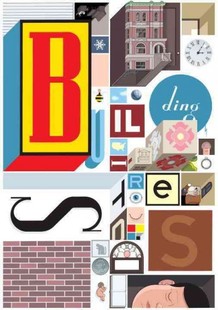
Of course another benchmark author in this area is Chris Ware and you can see my extensive posts on his 2012 masterpiece, Building Stories, including this post here where I show how we cataloged the 14 piece story.  I am bringing my personal copy to the meeting for the group to see also.

Many of the titles we will be discussing today also appeared on my Graphic Novels for Grownups list which is available in print or online from the BPL.  This is a popular list here at our library and a popular category of graphic novels in our adult collection.

However, after being a part of the genre study this year, I am starting to wonder if the alternative/literary genres of gns are popular here at the BPL because they are the ones Kathy and I read the most often, and therefore buy the most often, and furthermore suggest the most often. I am sure there is a link there.  We are less into superheroes, and as a result, we have fewer copies of these graphic novels and a lower interest.

But that's why I am in the genre study.  To look seriously at the entirety of graphic novels, assess my strengths and weaknesses, learn more by talking to other librarians, and look critically at my work with graphic novel readers and my collection.

Monday, December 10, 2012

What I'm Reading: Building Stories

Believe the hype.  Building Stories by Chris Ware is on just about every best list for 2012.  Here is what I turned into Kathy to be included in my post for the Browsers' Corner Best of 2012 (coming later this month):
In an age where eBooks seem to be taking over, Chris Ware has created a story that can only be experienced in print form. Building Stories is one single story told in graphic novel form in 14 distinct parts. Each part is different; for example, some are hardbound books, others are small comic strips, a few are pamphlets, and still more are large broadsheets. At the story’s center is an apartment building in Chicago in 2000. The building has 3 floors, with one apartment on each floor. While some pieces follow all of the residents, the main focus of the story is on the life of the young, amputee who lives in the 3rd floor walk-up. The majority of Building Stories follows her both while she lived there and in decade before and after. We grow attached to her as we see her search for acceptance, love, and fulfillment. As a reader, you make your way through the story as you see fit. Ware does not impose an order on the 14 pieces to his tale. This creates a unique storytelling experience as every reader encounters the story in a different order. Readers familiar with Ware’s drawing style will also notice his trademark large headed characters, a bright color palate, and his use of the entire page to tell the story.
That is pretty much the entire book in one paragraph. I do want to flesh out a few of the appeal factors here though.

This is a book for people who are worried that eBooks will take over the world of publishing.  Because this graphic novel is actually a box filled with 14 pieces of a single story, it can only be read and experienced in print.  In today's digitally, app fueled world, there is something comforting about sitting down with the box, choosing one of the 14 parts, and sitting down to experience it.

That is how you read any Ware book by the way, they are always an experience first, and a story second.  You experience the genius in his art work and in the way he structures a story.  Time flows freely here, like in all of his books, but the themes at the heart of his tale do not get lost in the tide of his style.

Here is an example of what I mean when I say that time flows freely.  This graphic novel is written in a circle, with no beginning or end, but it is still a complete story.  We see the characters at various points in their life, but we never see a beginning or end to their lives.  We are there for a time, visiting them, being a part of their lives, and then leaving when we read whatever the last piece we, the readers, choose to end the story with.  It's the classic "slice of life" story taken to a satisfying extreme.

Since Ware imposes no order on how the book is read, each reading produces a slightly different version of the same story.  This makes it a great option for re-reading.  In fact, I am normally not a re-reader and I am excited to read this again in a few months to get a new experience from the graphic novel.

Speaking of the story, in Building Stories the theme is also like his other works (most notably the brilliant Jimmy Corrigan: The Smartest Kid on Earth)-- how we all long for fulfillment, love and acceptance, and while we think we find it at times, in the long run, it slips through our fingers and we keep the search going.

That is not to say the tone of the story here is dark and depressing.  It is melancholy overall, but there are moments of elation, joy, and contentment sprinkled throughout.  As a result, you do not feel overwhelmed by disappointment and sadness.  Also, Ware tells the story from a place of observation.  We come to care for the characters, but we do not necessarily sympathize with them.  I know that sounds confusing, but it describes Ware's narrative voice perfectly.  We see them, watch them, even root for them at times, but we also know that they will not make the right choices in the end.  But somehow, it is all wonderful and beautiful to observe.

The story here is realistic.  With its free narrative structure, extremely well rounded and fleshed out characters for whom you know their deepest darkest secrets, and lack of a starting and ending point, Building Stories resembles the actual human experience more than any novel I have ever read.  It is remarkable in this sense.

The Oak Park and Chicago setting will also appeal to many readers in this area. Real places are drawn and/or referred to, like The Book Table, the BPL's favorite book store.

Finally, for libraries, there are many cataloging issues with Building Stories.  Click here for my post (with pictures) on how we handled it at the BPL.

Three Words That Describe This Book: episodic, layered, stylistically interesting

Readalikes:  I have a couple directions you could go with suggestions here.  First, the episodic nature of the 14 pieces, made Building Stories feel like a book of short stories.  With its connected characters, melancholic tone, and realistic portrayal of the people in the story, it reminded me of Olive Kitteridge by Elizabeth Stout. Also, the old lady in Building Stories really reminded me of Olive herself.  Click here for a book discussion report on this book.

Another similar title is The Elegance of the Hedgehog by Muriel Barbery which also revolves around the tenants of a single building and is reflective, melancholic, and character-centered.

In terms of graphic novels that are similar.  I think the tone of Adrain Tomine and Daniel Clowes are  similar to Ware.  Click here for more from me on Clowes.

Three years ago I read the graphic novel Asterios Polyp by David Mazzucchelli.  Click here to see the similarities.

Wednesday, October 20, 2010

Graphic Novel Reading List for College Students

Author Alexander Chee taught a very popular seminar on the graphic novel at my alma mater, Amherst College.  Since the moment he stopped teaching the class, he has been asked to share his thoughts on this seminar by so many friends and colleagues that he recently composed this post on his blog entitled, "On Teaching the Graphic Novel."

At the bottom of my post here, I will be re-posting his reading list; however, I highly suggest reading his thoughtful essay on his methods, theories, arguments, and experiences in teaching this class.

I was happy to see I have read most of the titles. Also many of them also appear on my very popular "Graphic Novels for Grown-Ups" list.

I think if you are an adult who is interested in the graphic novel as literature or if you are new to the format and want a list of the very best the format has to offer, read this essay.

If you are a librarian who does not have a handle on your graphic novel collection for adult readers, stop reading my post and click to Chee's right now.

If you are a library who wants to highlight the very best of graphic novels, use Chee's (or my) list to create a display. Each time we chose to highlight graphic novels at the BPL, we gain more adult readers. And once they start reading graphic novels, they become part of that readers regular rotation of books.

No matter your situation, if you are someone who wants to read the best books out there today, you are missing some great literature if you don't read graphic novels.

My only complaint here is that this class wasn't taught when I was a student.

Here's the list:
The ENGL 74 Amherst College Memorial Reading List:
American Born Chinese, Gene Yang
Shortcomings, Adrian Tomine
Mother Come Home, Paul Hornschmeier
Jimmy Corrigan, Chris Ware
Pyongyang, Guy Delisle
Exit Wounds, Rutu Modan
Aya, Margaret Abouet
Blankets, Craig Thompson
In the Shadow of No Towers, Art Spiegelman
Maus, Art Spiegelman
Lucky, Gabrielle Bell
Jar of Fools, Jason Lutes
Curses, Kevin Huizenga
Life Sucks, Jessica Abel
La Perdida, Jessica Abel
Drawing Words and Writing Pictures, Jessica Abel & Matt Madden
Ghost World, Daniel Clowes
Batman: The Dark Knight Returns, Frank Miller
Ronin, by Frank Miller
Night Fisher, R. Kikuo Johnson
Watchmen, Alan Moore
Top Ten: The 49′ers, Alan Moore
Black Hole, Charles Burns
McSweeney’s 13, edited by Chris Ware
Scott Pilgrim 1, Brian Lee O’Malley
Battle Angel Alita 1, Yukito Kishiro
Banana Fish vol. 6, Akimi Yoshida (Volumes 1-19 exist)
Lone Wolf and Cub Vol. 1, Kazuo Koike
Astonishing X-Men, Vol. 1, Joss Whedon
The Tale of One Bad Rat, Bryan Talbot
Blue Pills, Frederik Peeters
Ordinary Victories, Manu Larcenet
Prosopopus, Nicolas de Crécy
Dogs and Water, Anders Nilsen
Monologues for Gauging the Density of Black Holes, Anders Nilsen
Poor Sailor, Sammy Harkham
Persepolis, Marjan Satrapi
Fun Home, Alison Bechdel
Epileptic, David B.
Powr Mstrs Vol. 1
What It Is, Lynda Barry
The City, Franz Masereel
Incognegro, Mat Johnson
7 Miles A Second, by David Wojnarowicz
MOME, various issues (a quarterly journal of comics)

Sunday, January 24, 2010

Big List of Graphic Novels Due In 2010

I am doing a lot of planning for the coming year's book purchases at the BPL and I came across this great list of hotly anticipated Graphic Novels coming out in 2010.

I am excited for the new Daniel Clowes and Charles Burn.  I am also interested in seeing the graphic novel version of Pride and Prejudice and Zombies.

There is a lot here to be excited about if you are a graphic novel fan.

Monday, August 13, 2012

Monday Discussion: Death Bracket Preparation--Graphic Novels

We are getting close to the end of preparations for the Death Brackets.  Click here for the full details.  Also an update, we will probably be splitting off Mystery from the rest of Crime since our collection is split that way too.

This week, I am considering adding Graphic Novels into the mix, so I figured I would gather some names of your favorites just in case. Oh, and I don't care if they write fiction or nonfiction Graphic Novels.  We mis them together here.  Our Graphic Novel collections are only separated by age range with the fiction collections (Childrens, Teen, and Adult) with comic strip compilations filed in the 741.5s).

Here are my favorites:
  • Alison Bechdel
  • Daniel Clowes
  • Chris Ware
  • Alan Moore's non-Marvel GNs
What about you?  Let me know.  I can't guarantee I will include Graphic Novels until after we crunch the summer reading data and I look at circulation statistics.  But I do know that Graphic Novels for adults are more popular here at the BPL than they are at the average library in our system.

Next week is the final week of preparations when I will be asking you about YA authors that are great for Adult readers.

You can follow past Monday Discussions here.

Tuesday, May 27, 2008

Student Annotations: Graphic Novels

It's a two-fer on annotations at RA For All today. Here are two graphic novel offerings to go with the gentle read I already posted. I do have to admit, these are two of my personal favorites also.

David Boring by Daniel Clowes
Persepolis by Marjane Satrapi

Enjoy.

Monday, March 3, 2008

What I'm Reading: February 2008

Another month has ended and I have three more books and some suggested readalikes to share with you.

Early in February I finally got to Away by Amy Bloom. One of last year's better reviewed novels, this title was suggested to me by many friends and colleagues. Away tells the story of Lillian and her struggles as a Jewish immigrant from Russia. Lillian left home after her parents, husband, and possibly young daughter were killed in a massacre of Jews back in her hometown. Once in New York, Lillian manages to get a good job as a seamstress for a Jewish theater and becomes the owner's and his son's mistress. Her life is going well until a relative comes to America and tells her that her young daughter is still alive and living with another family. Lillian leaves everything in New York behind and goes off on a cross country journey to Alaska in an attempt to cross to Siberia and find her daughter.

Along the way, Lillian meets many people who help her. This is the most intriguing aspect of Bloom's novel. She makes an interesting storytelling choice here. As Lillian meets and then leaves people, the reader is told of that left behind character's future. We know what happens to the secondary characters whom we have grown attached to.
I also enjoyed how Bloom chose to end the novel with aspects of wish fulfillment, while still keeping a realistic ending.

Although I enjoyed this novel as a reader, I loved it as a Readers' Advisor. This will be an easy book to suggest to a wide variety of readers. Many of my readers will love both the story and being able to know what happened to everyone, even Lillian's daughter.

Readers who are currently enjoying Geraldine Brooks' newest best seller, People of the Book, with its Jewish history undertones and the journey aspect (of a book, if not a person) should try Away. Also readers of Ann Patchett would enjoy this novel.

Good-bye Chunky Rice was the first graphic novel by Craig Thompson, the critically acclaimed author of Blankets. I enjoy going back to look at currently popular author's earlier works and while some times the trip down memory lane is not worth it (think early Sue Grafton), this was not one of those cases. Good-bye Chunky Rice tells the story of a turtle with an urge to move on and the lovesick mouse he leaves behind. When Chunky Rice boards a rickety boat, we are introduced to other lonely and struggling characters. The pictures are in black and white panels, but the message of the price of "finding yourself" is in full color. Readers who like graphic novelists Chris Ware, Daniel Clowes, and David B. will also enjoy Thompson's work.

I am also thankful (for many reasons) that I chose to listen to Stephen Colbert's I am America (And So Can You). I don't know how much more I can add to the discussion of this enormous best-seller, but I will say that I loved how Colbert changed the text for the listener. He reminds us that we are listening to, not reading, his book on many occasions. My personal favorite moment in the book is early on when he relates that the book will not be available in libraries because there are "no free rides." Although I enjoy Colbert's humor, I am glad I listened to an abridged version because the book loses its freshness overtime and becomes repetitive. Fans of Colbert's TV show and this book should also seek out Our Dumb Century: The Onion Presents 100 Years of Headlines From America's Finest News Source.

Sunday, December 27, 2009

What I'm Reading: Asterios Polyp

I was able to get my hands one of the year's best reviewed books, Asterios Polyp by David Mazzucchelli.  If you want a grown-up fiction graphic novel, this one is for you.  One of the problems with the current offerings in "grown-up" graphic novels is that many of the nongenre options are all nonfiction.  Those of us who enjoy literary fiction graphic novels have fewer choices.  Thankfully, Asterios Polyp  is a good option.

The plot is pretty simple, Asterios Polyp is 50 years old when his New York City apartment is destroyed in a fire.  He then takes off on a bus as far as his money can take him to start over in a generic Midwest town.

Asterios' life story is told in flaskbacks as narrated by his twin, who died in utero.  He is a famous "paper architect," meaning he is well renowned for his drawings but none were never built. He was a self righteous, blowhard professor in Ithaca, married to a caring, sensitive sculptor named Hana.  But as we see, he ruined his own life by basically being a jerk.

Asterios' time in the Midwest working as a car mechanic is the first time he truly comes to know himself, and as the book ends, he is trying to make amends for his past mistakes. It is when his life completely falls apart, that he sets off to finally build one. The irony is, he has never built anything before.  I liked that tie in; he is famous for never building anything, but at some point he finally has to step up and do it.

In terms of the drawing style I liked that Mazzucchelli used a free style, utilizing the entire page to tell the story, but still made it easy to follow. How? He changed the font size and style for each character.  Each character talks in dialogue bubbles, and has their own unique font which also gives you clues into their personality.  The narrator uses much larger font, outside of any dialogue bubbles.

The drawing style is fairly traditional; nothing crazy.  I liked how when Asterios is being pompous, Mazzucchelli breaks down Asterios figure into more basic shapes. Mazzucchelli uses tricks like this to enhance the story throughout the graphic novel.

In terms of the colors, it is  mostly Grey,White and Primary colors (blue, red yellow), with each section using one color pallet. As the chapters shift, so does the dominant color. That was also effective in separating out the different sections of this fairly complex story.

3 Words hat Describe This Book: character-driven, modern, redemptive

General Comments: I am not sure how I feel about the entire dead twin narration mostly because I don't think it pans out. I get how once Asterios finds himself again that the twin disappears, but I felt like he should show up at the end since he was there at the beginning; you know, for closure.  There is a one-page epilogue but it is from the perspective of the family in the Midwest who Asterios stayed with.

I did love the complex characters and their interactions. I also liked the "arts" setting. However, I am not sure how I feel about the ending. It feels like a cop-out for such a complex story.  I don't want to give it away since it kind of comes out of nowhere. Read it for yourself and let me know what you think.

Readalikes: David Mazzucchelli has contributed to many graphic novels in the past, so here is a link to his other work.  Specifically, I would suggest starting with City of Glass, the graphic novel version of Paul Auster's wonderful novel.

This graphic novel is also similar to a book of modern art, both because of Hana's sculptures and the overall look of the book itself.  Here are a few examples.

David Mazzucchelli's drawings (and the content to a lesser extent) reminded me of the work of Daniel Clowes.  Both men use a similar style and write interesting, complex, character-driven, fictional stories.

Fans of Chris Ware will also like Asterios Polyp.

Also, a few other graphic novels have received high accolades this year, and they may be of interest to you.  If so, check out Stitches: a Memoir by David Small, AD: New Orleans After the Deluge by Josh Neufeld,  and The Book of Genesis by R. Crumb.

Friday, June 23, 2017

Book Buzz Chicago Summary and Recap

Yesterday, I spent the afternoon at Chicago Public Library Harold Washington Center for the Association of American Publishers Pre-ALA Annual Book Buzz.

I was only there for the Adult portion of the buzzing. I tweeted almost every book, although I will admit that by the end I got tired. If you click here you can pull up the #bookbuzzcpl hashtag (whether you are a Twitter user or not) and see every book and something about each. It will be in reverse chronological order and will have me and others who Tweeted.

When CPL librarian, and my friend, Stephen Sposato welcomed us to the Buzz he asked us each to find at least one book from today’s presentation to Buzz about- to our colleagues, to Library Reads, to our patrons.

So Stephen, challenge accepted. I will Buzz about 1 book from each presenter here below. Please note, I will NOT be promoting any of the big author's titles because you don’t need me to do that for you. You know about those books; they are on automatic order. My job is to help you learn about the books you might miss. I know you aren’t a moron. The publishers, however, some of them think we are. *sigh*

I will also include links to the Library Marketing Team’s page. Titles link to Goodreads. But again, go to the hashtag and the links to the  publishers’ pages for all of the books. I am doing only 1 per publisher.

Here they are in the order in which the publishers appeared.

WW Norton & Co

  • Cuz: The Life and Times of Michael A. by Danielle Allen [NF]: This book looks amazing. It starts as a personal memoir about Ms. Allen helping a young cousin get back on his feet after spending 11 years in jail. Things are going well, but three years later he is murdered. The book then also becomes a work about reforming the system we use to deal with juveniles who commit crimes. I think it would be a great readalike for The Other Wes Moore.
  • See What I Have Done by Sarah Schmidt [Fic]: Written by an Australian librarian who was doing research on another topic but facts about Lizzie Borden kept coming up. Lizzie was haunting her in nightmares, so she had to write a novel about her life. This is a story about the entire family told from Lizzie’s point of view.
  • The Green Hand and Other Stories by Nicole Claveloux [GN]: French comics master’s stories gathered in English for the first time! Originally published in 1970s, this book is a great introduction to a neglected artist. Daniel Clowes loves her. Give this to his fans.
  • The End of the World Running Club by Adrian J. Walker [Fic]: Robert McCammon blurbed it, so that should be enough, but here are some details. Edgar is not a good Dad, but he is separated from his family when an asteroid hits the Earth, he races back across the wasteland to reunite with his family. For fans of Station Eleven and The Martian. Was a bestseller in Europe.
  • Endurance: A Year in Space, A Lifetime of Discovery by Scott Kelly [NF]: The unflinching and honest memoir by Kelly about his record breaking stays in space, but also his life growing up and how he came to be an astronaut. This will be a great read for anyone. We need more real life science heroes in our lives. I think my whole family will enjoy this one.
  • Best Day Ever by Kaira Rouda [Fic]: Okay, this one sounds creeptastic. Paul is a perfect husband and father. He whisks his wife away for a couples weekend at their lake house, promising it will be the “best day ever,” except....things are not as perfect as they appear. A page-turner, that spirals out of control quickly. For fans of Big Little Lies. Should be a huge library hit.
  • A Moonless, Starless Sky: Ordinary Women and Men Fighting Extremism in Africa [NF] by Alexis Okeowo: A New Yorker writer and one of the best young journalists out there today looks at the regular people, mostly women, fighting to stop fundamentalism from taking over the continent. This books looks amazing but I wish she gave it moe time. Michael Connelly and James Patterson [!] did not need to be buzzed.
Quirk Books
  • Cinemaps: An Atlas of 25 Great Movies by Andrew DeGraff [NF]: Detailed, handprinted maps from classic films like The Shining, The Princess Bride, The Breakfast Club and Jaws!!!! [I am doing a different Quirk Books title from the presentation for my Read N Rave panel.] 
  • The Dirty Book Club by Lisi Harrison [Fic]: Yup, its what it sounds like. It’s the 1960s and a group of women read dirty books for their book club. The story is about how the club changes their lives. Harrison is a YA author. This is her first adult title. This seems like a great pick for book clubs.
  • The Widows of Malabar Hill by Sujata Massey [Fic]: This is the first in a brand new mystery series set in Bombay in 1921 and featuring a female, lawyer sleuth who fights to protect women’s rights. 
  • The Twelve-Mile Straight by Eleanor Henderson [Fic]: 1930s, Georgia. In a white sharecropping family, the daughter gives birth to twins: 1 white, 1 black. A black farm hand is accused of rape and lynched. That is where the story begins. So many issues to consider here. Compelling read too.
  • The Floating World by C. Morgan Babst [Fic]: A Katrina set debut novel by a NO native. Deals with the aftermath, both overall and personally for one specific family. Dazzling, piercing, unforgettable.
  • Emma in the Night by Wendy Walker [Fic]: 2 sisters disappear. Three years later one comes back. It’s a twisted, family, psychological suspense, but what got me was when Anne said that this book “sets a new standard for the unreliable narrator.”
Now it’s you turn. If you attend any book buzz programs either this weekend or in the future, take a moment to promote at least one title out in the world.

Monday, July 3, 2017

A Writer's View of ALA Annual: A Guest Post by Author and Conference Presenter Brian Pinkerton

Prior to ALA Annual, I was put in contact with horror, thriller, and mystery writer Brian Pinkerton through our joint affiliations with the Horror Writers Association. Here's more about Brian and a link to all of his books:
Brian Pinkerton is a USA Today Bestselling Author of fiction in the suspense, thriller, mystery and horror genres. His novels include Abducted, Vengeance, Killer's Diary, Bender, Rough Cut, Anatomy of Evil and How I Started the Apocalypse. Select titles have also been released as audio books and in foreign languages.
Brian's short stories have appeared in anthologies including Chicago Blues, PULP!, The Horror Zine and Zombie Zoology. His screenplays have finished in the top 100 of Project Greenlight and top two percent of the Nicholl Fellowship of the Academy of Motion Picture Arts and Sciences. Brian received his B.A. from the University of Iowa and Master's Degree from Northwestern University.
Although Brian and I had the bad luck to be speaking at the conference on the SAME DAY at the SAME TIME [seriously, what are the odds?], we met up during the conference to chat.

Brian was blown away by the exhibit hall and I asked him to share his experiences with the conference as a visitor from the world of the writer. Below he shares his day on the exhibit floor and some comments about the panel he was a part of.

You will be hearing more from Brian on the horror blog this Fall but for now, here is his guest post with a writer's view of ALA Annual. I have to say, I learned quite a bit about how to use what I saw in the exhibit hall from his different perspective. I hope you enjoy it too. 

Take it away Brian.

*******************************************
I really didn’t know what to expect at my first ALA Conference but I knew I’d be surrounded by people with a mutual affection for books. That was a welcoming feeling even before I arrived at the McCormick Place convention center. 
I was invited to speak on an author panel by United for Libraries, a division of ALA that brings together networks of library supporters. My introduction to the organization came through their partnership with the Horror Writers Association. 

My dusty, preconceived notions for a library conference drew up images of of towering bookshelves and stoic librarians shushing each other on the way to seminars about the Dewey Decimal system. Instead, I discovered a broad and boisterous group celebrating all forms of the community sharing of information and storytelling, embracing the latest technology and distribution channels while remaining faithful to the power of the printed word. The range of topics and activity was enormous. The program book alone was 300 pages. 

Each day at the conference was filled with presentations, panels, readings, signings and awards. Big name guest speakers included Hillary Clinton, Sarah Jessica Parker and Ron Chernow. 
My panel was scheduled for June 26, but I decided to check out the conference one day early since I lived a short drive away in the Chicago suburbs. I spent a couple of hours on a Sunday afternoon exploring the exhibit hall. 

As expected, the aisles were packed with publishers showcasing their latest books. But there were also booths dedicated to cataloguing software, online lending, literacy programs, professional development, gaming, scanning equipment, audiobooks, illustrators, censorship, inclusive diversity, research tools, library furniture, archiving, academic libraries, information technology degrees and…well, I could go on and on. 

The wildest gizmo in the exhibit hall was a humongous vending machine for libraries to enable 24/7 book lending. It’s like Redbox for books. Just insert your library card and select a title. I had to take a photo of that. 

Like most everybody else, I was drawn to the generous spread of free books. When someone commented on my remarkably light tote bag, I didn’t have the courage to admit I had just returned from unloading a full bag of books into the trunk of my car. I felt somewhat guilty taking free books – they were meant to engage librarians, not writers. But the temptation was too great. 

picked up novels with compelling back cover copy. Many were prepublication editions for reviewers and proofing. I found books for my wife, kids, brother and dad. I grabbed an enormous, 1,000-page ACT prep book for my son. A representative for the publisher expressed relief that she wouldn’t have to lug that one back home. Several savvy publishers scanned the QR code on my nametag to retrieve my email address for their mailing lists in exchange for free books. A fair trade. 

In addition to books, I filled up on slick publisher catalogues listing new releases. For a writer, they served a dual purpose – sources for future reading material and potential publishers to pitch one day. 

Aside from books, the most popular freebies were posters and tote bags. In fact, I saw one person who filled a tote bag with tote bags. There was also food. If someone became hungry, they just needed to wander over to one of cooking demonstrations by popular cookbook authors. 

One of the most uplifting discoveries for me was the huge selection and popularity of books for younger readers. Who says kids don’t read anymore? Aisle after aisle displayed the latest wave of releases: children’s stories with gorgeous artwork, young adult novels exploring serious and lighthearted themes, and graphic novels telling autobiographical tales of everyday heroes (not just superheroes). 

One of my favorite stops was Drawn & Quarterly, a long-time Canadian publisher of alternative comics and graphic novels featuring unique writer-artists like Seth, Chester Brown, Peter Bagge and Lynda Barry. I stood in line for an autographed book by the French cartoonist Guy DeLisle. 

I also enjoyed visiting boutique publishers specializing in niche reference books sold primarily to libraries and not found in bookstores. From Rowman & Littlefield, I picked up a detailed tome devoted to one of Stephen Spielberg’s earliest films – a TV movie named Duel. My interest in the book wasn’t Spielberg, it was my favorite writer, Richard Matheson, who wrote Duel’s screenplay based on his own short story. The book included drafts of Matheson’s original script and insights into his writing process. 

One of the coolest areas was a display of zines – DIY mini-publications with seemingly random, spontaneous drawings and musings. These handmade editions – individually copied, folded and stapled – brought back memories of my own zine days with my childhood friend Kevin, working on Fantazine. One of the contributors to Fantazine was future Oscar nominee Dan ClowesFantazine also published my first short story, a crude effort that will never be anthologized. 

I stopped by the Science Fiction and Fantasy Writers of America (SFWA) booth and talked to author Barbara Barnett about genre crossing. Like me, she’s a member of multiple writing organizations. My own collection of acronyms includes MWA, HWA and ITW. 

also met up with Becky Spratford, the super-energetic Readers Advisory specialist who consults with librariesShe is a good friend of the horror community and author of The Readers' Advisory Guide to Horror. She’s also the person who finally convinced me to go on Twitter 

Becky took me over to meet the team at Sisters in Crimea mystery genre organization founded by Sara Paretsky. I met SIC President Diane Vallere, who was scheduled to join me on Monday’s author panel. My final activity of the day was locating where I would be speaking the following morning. I didn’t want to risk getting lost at the last minute. 

Fortunately, I arrived Monday on time and at the right room. Our panel was titled “It’s a Mystery to Me: Crime Fighting Authors.” I was honored to be included with a stellar cast: Scott Turow (bestselling author of legal thrillers), Susanna Calkins (award-winning local mystery writer)Diane from SIC, and Kate White (former editor-in-chief of Cosmopolitan magazine who now writes mysteries). 

The room was packed. People were standing in the back. The panel moderator was Barbara Hoffert from Library Journal, and she neatly set up each writer with a compelling summary of their latest book. I appreciated that because I struggle at summarizing my own books. 

For the panel, each writer was given 10 minutes to introduce themselves. I’m a writer, so the night before I wrote out what I planned to say. Then I boiled it down to a few key words on scrap paper to trigger the narrative flow. Ultimately I didn’t have to glance down at the trigger words when I spoke, but it was good to have a security blanket. 

told the audience how libraries were responsible for me being a writer. My mother was a high school English teacher who took me on regular outings to our local library in Northbrook, Illinois when I was very youngdiscussed my development as a writer and talked about my preference for crafting stories that place ordinary people in extraordinary situations – whether it be mystery, thriller or horror. 

I’m a writer because I’m an introvert and I don’t like public speaking, but it seemed to go okay. Later, when Scott Turow spoke, he twice referred back to something I said, and it reassured me I was at least partly coherent. 

After the five of us spokethere was a Q&A with the audience, followed by a book signing. Everyone in line wore a dangling nametag, which made it easier to accurately inscribe each book. Overall, I signed 70 paperback editions of Bender and sent them out into the wild. For no particular reason, doodled cartoons alongside my signature – smiley man, perky dog or, in rare occasions, Kurt the WormOne of the people in line was Clara, the fiancee of Mark Sieber from Virginia. Mark is the curator of the popular Horror Drive-In forum and all-around good guy.  I inscribed a Happy Birthday greeting for him. 

After the panel and signing, I was tired and ready to go home. But couldn’t resist the urge to return to the exhibit hall. 

There is always time for one more book.