RA FOR ALL...THE ROAD SHOW!

I can come to your library, book club meeting, or conference to talk about how to help your readers find their next good read. Click here for more information including RA for All's EDI Statement and info about WHY I LOVE HORROR.
Showing posts sorted by relevance for query the other wes moore. Sort by date Show all posts

Thursday, March 24, 2011

BPL Book Discussion: The Other Wes Moore

The Other Wes Moore: One Name, Two Fates
On Monday despite many people being on vacation, we still had 12 people at the BPL to discuss The Other Wes Moore: One Name, Two Fates by Wes Moore.

Wes Moore has turned this book into a movement.  Before reading this book, I would suggest going to his website.  In fact, here is the official summary from that site:

Two kids with the same name, liv­ing in the same city. One grew up to be a Rhodes Scholar, dec­o­rated com­bat vet­eran, White House Fel­low, and busi­ness leader. The other is serv­ing a life sen­tence in prison for felony mur­der. Here is the story of two boys and the jour­ney of a generation. 
In Decem­ber 2000, the Bal­ti­more Sun ran a small piece about Wes Moore, a local stu­dent who had just received a Rhodes Schol­ar­ship. The same paper also ran a series of arti­cles about four young men who had allegedly killed a police offi­cer in a spec­tac­u­larly botched armed rob­bery. The police were still hunt­ing for two of the sus­pects who had gone on the lam, a pair of broth­ers. One was named Wes Moore. 
Wes just couldn’t shake off the unset­tling coin­ci­dence, or the inkling that the two shared much more than space in the same news­pa­per. After fol­low­ing the story of the rob­bery, the man­hunt, and the trial to its con­clu­sion, he wrote a let­ter to the other Wes, now a con­victed mur­derer serv­ing a life sen­tence with­out the pos­si­bil­ity of parole. His let­ter ten­ta­tively asked the ques­tions that had been haunt­ing him: Who are you? How did this happen? 
That let­ter led to a cor­re­spon­dence and rela­tion­ship that has lasted for sev­eral years. Over dozens of let­ters and prison vis­its, Wes dis­cov­ered that the other Wes had a life not unlike his own: Both had grown up in sim­i­lar neigh­bor­hoods and had dif­fi­cult child­hoods, both were father­less; they’d hung out on sim­i­lar cor­ners with sim­i­lar crews, and both had run into trou­ble with the police. At each stage of their young lives they had come across sim­i­lar moments of deci­sion, yet their choices and the peo­ple in their lives would lead them to aston­ish­ingly dif­fer­ent destinies. 
Told in alter­nat­ing dra­matic nar­ra­tives that take read­ers from heart-wrenching losses to moments of sur­pris­ing redemp­tion,The Other Wes Moore tells the story of a gen­er­a­tion of boys try­ing to find their way in a chal­leng­ing and at times, hos­tile world.
Our discussion was long and animated.  Every single person had something to say about this alternatively inspiring and heart-breaking story.  I want to start with where we ended to set the tone for the discussion notes to follow.  After our 90 minute discussion, I asked the group to give me a word or phrase which they would use to describe this book.  Here is what I got:
  • Nature vs Nurture
  • Hope
  • Don't give up on people
  • Inspirational
Also, before the discussion began, I set some ground rules to help the discussion of a book about 2 people with the same name go more smoothly.  We referred to the author Wes Moore as Wes 1 and the incarcerated Wes Moore as Wes 2.  I will use this designation in the notes that follow.

Now on to the discussion itself.
  • I began asking who liked, didn't like and was so-so on the book.  For the first time in awhile, we had 0 dislikes!  8 liked the book, and 4 were so-so.  The so-so votes were mostly because although they were engaged by the story, the writing was plain.  This is true.  Wes 1 is a bright, well educated young man, but he has no training as a writer or even a journalist.  This is a solidly written book, but compared to our last discussion title, Rush Home Road, which was simply put, beautifully written, with lyrical and magical language, The Other Wes Moore was comprised of powerful, but declarative sentences.  Once we agreed that it was the content, not the language used that we would discuss, everyone dove right in.
  • Many participants mentioned how they always enjoy books about social history, but it was the personal nature of this story that really drew the participants in.  One participant said she was so engrossed in the story that when Wes 2 turned his back on the job training and went back to selling drugs, she had to set the book aside.  She was just so sad for him.  Another participant talked about how we always hear how much tougher it is for young, black men, but this really made her understand WHY.  Another shared how this opened her eyes to specific situations with real live people.  Finally on this topic, someone shared how the personal story and the social dynamics that led each Wes to a different fate were interesting.
  • People appreciated the details Wes included about the prison waiting room, the corners where drugs were sold, the living conditions, and the Bronx during the 1980s.  Everyone agreed these places came alive for us.  And that says a lot since we are a long way from 1980s inner city Baltimore or the Bronx.
  • We discussed at length how both Weses were very bright but Wes 2 fell through the cracks.  We talked about the failures of the education system for certain students.  Even Wes 1 almost fell through the cracks and he was at a private school and eventually military school.
  • This led to a discussion of bad teachers vs bad parents. The group shared personal experiences and opinions on this topic.  We came down agreeing that teachers cannot do everything, but that  parents also need to take more responsibility.  One participant said this book should be required 8th grade reading.  I added that Wes Moore agrees, and he travels all over the country talking to at risk young people and their parents and teachers.  Click here to see more on that topic.
  • I asked the group to consider why Wes 1 was so haunted by Wes 2, so haunted that years after the fact, Wes 1 tracked Wes 2 down and began the dialog that led to this book.  Someone offered that she felt Wes 1 genuinely wanted to figure out why it wasn't him.  It all goes back to the quote that defines this book: "The chilling truth is that his life could have been mine.  The tragedy is that my story could have been his."  We also felt that Wes wrote the book to help others.  That is evident when you get to the end and he has a "call to action" with long lists of groups and resources to try to stop young people from turning to a life of crime.
  • Then, a participant chimed in that she felt he wrote the book to explore the age old dilemma of nature versus nurture.  We discussed this at length, and decided that the book as a whole falls in the middle here, with a lean toward nurture.  Both boys had serious intervention.  For Wes it was his mom.  She stayed on him even when he was ditching school and failing.  She didn't take defeat and sent him to military school.  However, once there, Wes tried to run away 5 times.  It took him to decide that he was going to not try to run away a sixth time for him to succeed.  Wes 2 had one last chance when he entered Job Corps.  He got serious, government funded job training.  He was a star of the program.  He was a leader to others, but when he went back home and worked for awhile, he couldn't take the pressure of supporting his family and went back to the drug trade.  We felt Wes 2 needed a network after Job Corps to step in and support him when times got tough, but he still needed to decide for himself to stay on the right path.
  • These 2 moments described above were talked about at length.  To us, they represented the "life changing moments" for the 2 Weses.  Wes 1 decided to stay at military school and was very successful.  His life has only gone up from that one moment, the moment he stopped resisting.  For Wes 2, he had a series of ups and downs, but after he gave up on his Job Corps training, it was all downhill.  The group then shared life changing moments in their own lives, or the lives of their children.  We all appreciated everyone's honesty and willingness to share.  This is a great discussion point to get your group to look at the larger issues of the book.  It is easy to get caught up in the 2 Weses personal stories, but we should not lose sight of the universal message of this book.
  • The Weses talk about expectations, saying if your network of family and friends expects you to succeed you will and if they expect you to fail you will.  We talked about this.  Is it that simple?  We decided no.  This means that when you fail, you can blame others, but ultimately we agreed that in this book, and in life, when you fail as badly as Wes 2 has, you have no one to blame but yourself.  Even Wes 1, who had a supportive family had to make the decision for himself to stay in school.  However, if we are saying Wes 1 succeeded due to more nurturing, there is a problem with this argument.  How can I be the only one to blame for my failures if I get less nurturing? If I need intervention from good people to succeed and I don't get that intervention, when I fail is it my fault?  We decided this is a problem too big to discuss in book group, but maybe solving this huge dichotomy holds the key to solving the problems described in this book.
  • We ended by talking about what ideas the book gave us for ameliorating the conditions that led to the imprisonment of Wes 2.  The question, which I found here, asks, "What can be done to ensure a more productive life for the many young men who grow up on the streets."  We had some great ideas from the group:
    • Get this book in the hands of young people
    • Get involved by mentoring.  If you can turn around 1 kid that is more important than helping no one.
    • Teach parenting skills.  We could see how Wes 2 was completely unprepared to be a father, by no fault of his own.  Specifically, we thought more parents needed to be taught how to teach their kids right from worng.  The group felt that is a problem all over the country, rich and poor, urban, suburban, and rural.  Someone else suggested more birth control education in middle school would have also helped Wes 2.
    • Others mentioned having more inter-generational time for kids.  Not just having this contact with families though.  We talked about allowing youth to go to nursing homes and allowing seniors who are unrelated to the children, going into the schools to share their life experiences.
    • Make life on the street less appealing by giving these kids the chance to experience something else.  For example, go to the corner, throw the kids in a bus and take them to a museum.  They have no idea what else is out there.  Maybe if they had more experiences they would chose a different path.
    • Keep them busy.  More after school programs no matter who is running them.  This allows the kids to both stay busy and try new things.
Readalikes:  The best readalike for this book is David Simon's The Corner: A Year in the Life of an Inner-City Neighborhood for which a HBO mini series was made.  It also became the basis for the critically acclaimed HBO series, The Wire.  Each of these read and watch alikes are deeply rooted in serious journalism and follow the real people of Baltimore, from the dug dealers, to the kids working the corners and from  the mayor to the kids who make it out and go to college.  Everything Wes Moore relates from his and the incarcerated Moore's life is corroborated here.  Simon was a reporter for the Baltimore Sun for many years, while Wes Moore, although he did an admirable job, is not a professional writer.  So if you want more detail, on Baltimore, Simons is the author for you.

For those who want a deeper look into inner-city poverty during the era when the Moore boys grew up, the best book out there is still There Are No Children Here: The Story of Two Boys Growing Up in The Other America by Alex Kotlowitz.

For readers who were interested in the inspirational story of the writer Wes Moore, I would suggest the novels of Paulo Coelho, specifically The Alchemist.  Also, Best Inspiration is a great website of all things inspirational (not just religious).  On the main page, in the left gutter, they have a list of inspirational authors.  Try one.  Or read the book that inspired Wes to make changes in his life, My American Journey: An Autobiography by Colin Powell.

Monday, December 21, 2015

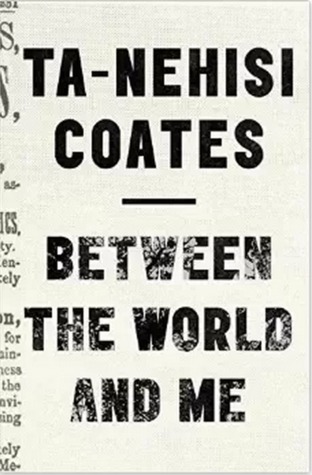
What I’m Reading: Delicious Foods and Between the World and Me

Today I have two reviews. Both are books that have been on many year end best lists. Both are two of my favorite reads of the year.  But why am I reviewing them together? Because each book resonated more with me because I read the other in conjunction with it.  So this will not be a traditional “What I’m Reading” post in that I will not separate my discussions of these two titles; however, this will be an extremely useful post for you to use as you help readers.

In fact, I would argue that this will be a MORE helpful review because I am pairing these books.  So much has already been said about  Between the World and Me that I almost didn’t write a review of it. I didn’t feel like I could add anything useful to the conversation. But in organizing the review in the fashion, I truly feel like I am helping you to help a reader.

For the record, that is always my goal with the reviews here on the blog. I try to give you something you cannot get from other review resources.  I think this is important to spell out since I have a lot of new readers. These posts are meant to be used to help a reader who either enjoyed the title I am reviewing to find more titles he or she would enjoy OR to help you to match this book with its best reader. I am not writing them to hear myself pontificate. Once these reviews stop being useful, I will stop writing them.

Enough preamble. Let’s get on with the information...

I want to start with Delicious Foods by James Hannaham, which is the book that most surprised me this year.  This was a novel that was clearly on my radar; I had heard it was good before it even came out. I ordered it for my library, and almost checked it out for myself a couple of times. But then, the combination of a review and a personal recommendation put this book on the top of my to-read list-- and they came from the same person.

My very good friend, Magan told me about how much she loved the audio of this novel. She loved it so much that not only did she give the audio a star in her Booklist review, but also she stood her ground and defended her choice to her editor, Joyce Saricks.  Well, it did get a star in the September 1st issue of Booklist, and then this novel went on to be on many year end best lists, many of which singled out the audio for its excellence.

Since it was Magan’s review that led me to listen to this novel, I am going to let her explain it to you more:
Hannaham’s stunning second novel (after God Says No, 2009) opens with 17-year-old Eddie’s desperate escape from Louisiana, driving a (stolen) car for the first time in his life, minutes after having both of his hands cleaved at the wrists under mysterious circumstances, in search of his aunt in Saint Cloud, Minnesota. It’s a hell of a tale: Eddie’s father was murdered when he was 6, and his mother, Darlene, completely shattered by her grief and guilt, spiraled downward into crack addiction, effectively abandoning Eddie long before she hopped into a minibus to work at Delicious Foods. She’s turned into a modern-day indentured servant in the hellish place, where Eddie eventually joins her. Author Hannaham narrates his harrowing novel and moves between unbelievable scenes of human suffering and dark, sly humor in so skillful a manner that belief is easily suspended while “Scotty,” Darlene’s name for crack, narrates events from his perspective. His voice characterizations bring to vivid life each of the sad collection of broken people at Delicious Foods, ratcheting up the horror without speeding through the plot, concluding with a realistic portrait of the aftereffects of suffering and perseverance on a family. Not to be missed.   — Magan Szwarek
 Before I add more of my own thoughts here, I want to say that this experience of being compelled to finally read this book because of the work of a librarian, AND having it turn out to be one of my favorites of the year reaffirmed for me why I work so hard to help all of you be better Reader’s  Advisors. This book was such a great read that I will always remember it, and I read it because of a librarian suggesting it to me. I am not lying when I tell you in trainings how powerful sharing a reading suggestion with a patron can be. People, you can be this person for someone out there!

I will suggest this novel for years to come to readers much like I do with The Miracle Life of Edgar Mint, The Good Thief, City of Thieves, Brief History of the Dead, and The Snow Child. No none of these are readalikes for each other, but they are all quirky, well constructed, thought-provoking, and emotionally moving stories that do not loose anything over time. While they are not sure bets for every reader who walks through the doors of the public library, they are great under the radar picks for a wide range of readers.

On the other hand, Between the World and Me by Ta-Nehisi Coates IS a sure bet.  I read a lot of books, and I see my fair share of hype about many books that are very good, but not as great as people want you to believe.  Between the World and Me is not that. It is one of the best books I have ever read. It will and should be read by every American at some point in their lives. It will become a classic that is read in schools.

Why? Because Coates takes his personal journey as a black man in America, and lays out the brutal truth, without judging or casting blame-- that is my favorite part about it, the nonjudgmental tone. This is a personal, emotional, and lyrical letter to his son about the truth of race in America, yet Coates takes what is a complex problem, and amazingly puts it into a deceptively short book without sacrificing anything.

Everyone should read this book, but in particular, all white America needs to read this, especially people who think that race is no longer an issue. For example, how many white people think about one of the facts Coates lays out early in the book-- that as a country, we have still had slavery longer than we have not!  Of course this is true, but it still shocked me to see it on the page. How can this fact not be at the front of my brain more often. Why have I never had this thought? Of course, someone like Coates lives this fact every day of his life.  As a Jewish person, I understand a very small sliver of what Coates is saying, but I can blend in my highly Catholic area. People don’t look at me and know immediately that I am not on team Jesus. Most of them just assume everyone is. When they find out I am not, I am a quaint example of “the other.”

Being black in America is hard enough, but being America’s "foremost public intellectual,” while being black could be soul crushingly impossible. The fact that Coates handles it so well and produced such an amazing book is awe inspiring.

Back to the first book...Delicious Foods is written by someone who didn’t need to read Coates’ book because it is obvious from the novel that he, James Hannaham, has lived in Coates’ shoes. Delicious Foods is proof of Coates’ brilliance, his truths, and the surprisingly succinct way he delivers such a complex message.

Because I read these two powerful and honest books back-to-back, I took more from each-- more knowledge, more enjoyment, more feeling. And yes, I meant to use the word “enjoyment." Despite how heart-wrenching and emotionally raw both books are, I enjoyed the experience of reading them.  Both were lyrical, beautiful and compelling. And while both were emotionally difficult to read, neither is “sad.” Both end with hope for a future that is better than today. If others read these books, maybe that better future will happen.

Three Words That Describe Delicious Foods: original, heart-wrenching, haunting

Three Words That Describe Between the World and Me: honest, lyrical, classic

Readalikes [for both]: Since I am reviewing fiction and nonfiction titles together here I have 3 of each to offer up as readalikes.

Fiction-- The 1980s slavery depicted in Delicious Foods reminded me so much of the masterful The Known World by Edward P. Jones which is a historical fiction novel based on the fact that there were black slave owners.  Both novels are inventive and original with a fluid use of time-line. But this is also a readalike for Between the World and Me. Both books are beautifully written while also taking a hard and honest look at America’s troubled history with race.

I am suggesting The Round House by Louise Erdrich because like both books here it looks at a tenuous and fraught history between Americans and those of a persecuted race, but with Erdrich it’s Native Americans.  But also, all three books have a coming of age theme. In all three the narrator is able to look back on his life to a critical moment (or moments), assess the racial injustice, and still move on without resorting to simple blame. All three works are also haunting and heartbreakingly beautiful.

My final fiction suggestion may sound a bit odd, but I think it works-- Station Eleven by Emily St. John Mandel. All three works are haunting, lyrical, and moving, with complex characters, that explore hard truths about humanity. In my review of Station Eleven I chose the word “disquieting” as one of my “three words.” This struck a chord with me when I was thinking about the two books being reviewed here. That word can apply to all three.

Nonfiction-- The Fire Next Time by James Baldwin. Actually, anything by James Baldwin. Coates openly admits to using Baldwin as an inspiration [not that he could hide it], but I also see much of Baldwin and his anger at injustice in Hannaham’s narrative voice too.

The Other Wes Moore by Wes Moore and/or Nickel and Dimed: On Not Getting By in America by Barbara Ehrenreich are both books I have read with my book club that elicited the following response-- “Every high school kid in America needs to read this book.” While Between the World and Me is much richer than these two offerings [they are a both much more of a simplistic look at similar, entrenched, American, societal problems],  but the themes are similar.  Also as readalikes to Delicious Foods, both of these suggestions take much of the class and race conflict from the novel and ground it in fact in a way that makes the novel even more realistic.

Tuesday, September 4, 2018

New Content by Me Available on NoveList Including Inclusive Lists of Book Discussion Titles

NoveList recently uploaded SIX new pieces by me that are book discussion group related. I wanted to alert all of my readers to them here on the blog whether you subscribe to NoveList or not for a couple of reasons:
  1. If you subscribe, I want you to know how to access the info I will be summarizing below.
  2. If you don’t subscribe, I want you to at least have access to the bare minimum of information that can help you and encourage you to contact me privately for more if you want it.
The first piece was my second in the Book Discussion First Aid series on NoveList. Here is the title  of the article and the intro:
Book Discussion First Aid: Try Something New 
Book discussion groups are a lot of fun… until they aren't. Anyone who has led a group for more than a few years knows exactly what I mean. After 18 years of facilitating book discussion groups and helping others to improve theirs, I have a few tips to share on how to re-energize your book club. 
I have broken up these "new" ideas into four general areas. Determine which gets the best response and keep the others in reserve because you don't want to try everything I mention here at once.  Shaking things up a little is good, an earthquake is bad.
If you want to access this article, use the “Especially For” tab at the top, then choose "Readers' Advisory.” If you scroll to the bottom you will see the section for "Book Clubs.” I have included a screen shot of that section and have added an arrow on where you should click, “Book Group Innovators.” Clicking on "Book Discussion First Aid" will only bring up my first piece [which is also good, but not new]. You can scroll through all of the excellent “Book Group Innovators” content but it loaded most recent first, meaning right now, my article is at the top.

If you are not a subscriber, and would like some more information on this article, contact me.

The next 5 pieces are lists of six books each. I proposed the idea of these lists to my editor, Krista. There weren’t really any “Grab and Go” list options for book club leaders. I offered to come up with 5 lists of 6 books to get things going. I came up with a theme for each list and then provided 6 inclusive titles with original annotations.

I demanded of myself that each list was inclusive both from a diversity standpoint, but also a genre and one too. I want these lists to help actual book groups have access to lists of possible titles that are not the ones everyone is doing or suggesting.

I hope to do 5 more lists this month and then we will see how it goes from there.

In terms of finding these lists on NoveList, if you are a subscriber, simply search any of the titles listed below and under the “Lists and Articles” tab in that title’s record you will have access to the full list containing this title. That access will include my annotation. So for example, when you search  The Wangs Vs The World, as seen in this screen shot, under “Readers’ Advisory” you will see the list title, “Happy Discussable Books for Adult Book Groups,” and it will pull up the entire list of 6 titles for you.


Here on the blog, below, I have provided the name of the list and my description of what I intended in making that list as well as the titles included. My annotations for each title on NoveList mention specific discussion points and/or reasons why I included the title, but at least those of you without a subscription can see the titles I included.

I am very proud of this new content and know it will help you help readers both those who are in a book group [yours or their own] and simply those who are looking for a good read. If you have an idea for a themed list you would like me to create, contact me and let me know. I will be doing as many of these as I have ideas for in the coming months.

Great Middle Grade Reads for Adult Book Groups
Many adult book discussion group give YA titles a try, but today’s middle grade level is also a great resource for a book club that wants to try something different. This list of six recent titles are award winning, compelling, thought provoking, and fun to read. They will lead toward dynamic and issue driven discussions that will inspire, surprise and delight even the most high-brow groups.
  • Gaiman, Neil. The Graveyard Book
  • Ryan, Pam Munoz. Echo
  • Reynolds, Jason. As Brave As You
  • Palacio, R.J. Wonder
  • Kelly, Erin Entrada.  Hello Universe
  • Applegate, Katherine.  Wishtree
Happy Discussable Books
You do not have to break down in a weeping pile of despair in order to have things to discuss in book club. While these books do not eschew serious issues, all end in a heartwarming fashion with the characters in a much better place than when the story began.
  • Simonson, Helen.  Major Pettigrew’s Last Stand
  • Stuart, Julia. The Tower, the Zoo and the Tortoise
  • Chang, Jade. The Wangs vs. the World
  • Hoang, Helen. Kiss Quotient
  • Jonasson, Jonas.  The 100-Year-Old Man Who Climbed Out the Window and Disappeared
  • Ajayi, Luvvie. I’m Judging You: The Do Better Manual
Short Discussable Titles
I am not sure when it was decided that a book needed to be able to fill in as a doorstop in order to be considered book club worthy. Here is a list of books, each made up of fewer than 250 pages, but all containing enough ideas  to fuel any length discussion from start to finish.
  • Jiles, Paulette. News of the World
  • Morrison, Toni The Bluest Eye
  • Mankell, Henning. Italian Shoes
  • Moore, Wes.  The Other Wes Moore: The Story of One Name and Two Fates
  • Clement, Jennifer. Prayers for the Stolen
  • Jackson, Shirley.  We Have Always Lived in the Castle
Nonfiction for Fiction Book Clubs
Many groups that focus on fiction want to give nonfiction a try but are wary that they will have to sacrifice a narrative in the process. The following six titles present true occurrences in a style that puts storytelling at the forefront while still dispensing truth.
  • Millard, Candice.  River of Doubt: Theodore Roosevelt's Darkest Journey
  • Moore, Kate.  The Radium Girls: The Dark Story of America’s Shining Women
  • Gordon-Reed, Annette.  Hemingses of Monticello: An American Family
  • Tolan, Sandy.  The Lemon Tree: An Arab, a Jew, and the Heart of the Middle East
  • Bechdel, Alison.  Fun Home: A Family Tragicomic
  • Obmascik, Mark. The Big Year: A Tale of Man, Nature, and A Fowl Obsession
Off the Radar Gems
Is your group done with reading all of the new, trendy book club group titles? There are plenty of discussable reads lurking just under the book club radar, that will surprise and inspire, not to mention provide plenty of fodder for the group discussion.
  • Lansens, Lori.  Rush Home Road
  • Jones, Edward P. The Known World
  • Dennis-Benn, Nicole.  Here Comes the Sun
  • Henirquez, Cristina.  The Book of Unknown Americans
  • Sa'dawi, Ahmad.  Frankenstein in Baghdad
  • Jones, Stephen Graham.  Mongrels

Friday, June 23, 2017

Book Buzz Chicago Summary and Recap

Yesterday, I spent the afternoon at Chicago Public Library Harold Washington Center for the Association of American Publishers Pre-ALA Annual Book Buzz.

I was only there for the Adult portion of the buzzing. I tweeted almost every book, although I will admit that by the end I got tired. If you click here you can pull up the #bookbuzzcpl hashtag (whether you are a Twitter user or not) and see every book and something about each. It will be in reverse chronological order and will have me and others who Tweeted.

When CPL librarian, and my friend, Stephen Sposato welcomed us to the Buzz he asked us each to find at least one book from today’s presentation to Buzz about- to our colleagues, to Library Reads, to our patrons.

So Stephen, challenge accepted. I will Buzz about 1 book from each presenter here below. Please note, I will NOT be promoting any of the big author's titles because you don’t need me to do that for you. You know about those books; they are on automatic order. My job is to help you learn about the books you might miss. I know you aren’t a moron. The publishers, however, some of them think we are. *sigh*

I will also include links to the Library Marketing Team’s page. Titles link to Goodreads. But again, go to the hashtag and the links to the  publishers’ pages for all of the books. I am doing only 1 per publisher.

Here they are in the order in which the publishers appeared.

WW Norton & Co

  • Cuz: The Life and Times of Michael A. by Danielle Allen [NF]: This book looks amazing. It starts as a personal memoir about Ms. Allen helping a young cousin get back on his feet after spending 11 years in jail. Things are going well, but three years later he is murdered. The book then also becomes a work about reforming the system we use to deal with juveniles who commit crimes. I think it would be a great readalike for The Other Wes Moore.
  • See What I Have Done by Sarah Schmidt [Fic]: Written by an Australian librarian who was doing research on another topic but facts about Lizzie Borden kept coming up. Lizzie was haunting her in nightmares, so she had to write a novel about her life. This is a story about the entire family told from Lizzie’s point of view.
  • The Green Hand and Other Stories by Nicole Claveloux [GN]: French comics master’s stories gathered in English for the first time! Originally published in 1970s, this book is a great introduction to a neglected artist. Daniel Clowes loves her. Give this to his fans.
  • The End of the World Running Club by Adrian J. Walker [Fic]: Robert McCammon blurbed it, so that should be enough, but here are some details. Edgar is not a good Dad, but he is separated from his family when an asteroid hits the Earth, he races back across the wasteland to reunite with his family. For fans of Station Eleven and The Martian. Was a bestseller in Europe.
  • Endurance: A Year in Space, A Lifetime of Discovery by Scott Kelly [NF]: The unflinching and honest memoir by Kelly about his record breaking stays in space, but also his life growing up and how he came to be an astronaut. This will be a great read for anyone. We need more real life science heroes in our lives. I think my whole family will enjoy this one.
  • Best Day Ever by Kaira Rouda [Fic]: Okay, this one sounds creeptastic. Paul is a perfect husband and father. He whisks his wife away for a couples weekend at their lake house, promising it will be the “best day ever,” except....things are not as perfect as they appear. A page-turner, that spirals out of control quickly. For fans of Big Little Lies. Should be a huge library hit.
  • A Moonless, Starless Sky: Ordinary Women and Men Fighting Extremism in Africa [NF] by Alexis Okeowo: A New Yorker writer and one of the best young journalists out there today looks at the regular people, mostly women, fighting to stop fundamentalism from taking over the continent. This books looks amazing but I wish she gave it moe time. Michael Connelly and James Patterson [!] did not need to be buzzed.
Quirk Books
  • Cinemaps: An Atlas of 25 Great Movies by Andrew DeGraff [NF]: Detailed, handprinted maps from classic films like The Shining, The Princess Bride, The Breakfast Club and Jaws!!!! [I am doing a different Quirk Books title from the presentation for my Read N Rave panel.] 
  • The Dirty Book Club by Lisi Harrison [Fic]: Yup, its what it sounds like. It’s the 1960s and a group of women read dirty books for their book club. The story is about how the club changes their lives. Harrison is a YA author. This is her first adult title. This seems like a great pick for book clubs.
  • The Widows of Malabar Hill by Sujata Massey [Fic]: This is the first in a brand new mystery series set in Bombay in 1921 and featuring a female, lawyer sleuth who fights to protect women’s rights. 
  • The Twelve-Mile Straight by Eleanor Henderson [Fic]: 1930s, Georgia. In a white sharecropping family, the daughter gives birth to twins: 1 white, 1 black. A black farm hand is accused of rape and lynched. That is where the story begins. So many issues to consider here. Compelling read too.
  • The Floating World by C. Morgan Babst [Fic]: A Katrina set debut novel by a NO native. Deals with the aftermath, both overall and personally for one specific family. Dazzling, piercing, unforgettable.
  • Emma in the Night by Wendy Walker [Fic]: 2 sisters disappear. Three years later one comes back. It’s a twisted, family, psychological suspense, but what got me was when Anne said that this book “sets a new standard for the unreliable narrator.”
Now it’s you turn. If you attend any book buzz programs either this weekend or in the future, take a moment to promote at least one title out in the world.

Thursday, May 8, 2014

ARRT Pinterest

Today is beautiful and I am off work, so I am going to plant my flowers.  Today’s post, therefore, will be quick but useful.  As promised yesterday, ARRT Pinterest guru, Emily (@LibCatEmeB) has crafted a wonderful Pinterest presence for ARRT.  You can find all of the boards here.

True to our mission of “Developing Readers Advisory skills and promoting reading for pleasure through public libraries in the Chicago metropolitan area, the boards are a mixture of training resources, book lists, and book news.

To help get people interested in our new Pinterest venture, we are collected your favorite, sure bet discussion books and have created a board with them all here.  But the great thing about social media is, the list is never done.  Please feel free to pin more titles, tweet your favs using the hashtag #arrtreads, or leave them on the ARRT Facebook page. You can even leave them in the comments on this blog and I will get them to Emily.

In fact, I will add 2 more right now [with links to my discussion notes]:

The Other Wes Moore by Wes Moore
Still Alice by Lisa Genova

But more generally, as we saw in yesterdays presentation, specific book discussion groups take on their own unique personality over time.  There is no one correct way to run the perfect book group.  Rather, a crowd-sourced collection of ideas, leadership styles, and tips creates a wonderful resource for book club leaders where they can access, and then try out, multiple techniques until they find the best combination for their group at that time. 

So add to the list of books that other leaders felt worked well for their book clubs.  Hey, maybe your group can test run these titles and see how they work.  It would be an easy way for you to narrow down a possible list of discussion books, since we are crowd-sourcing a sure bet list for you.  But that is what we do over at ARRT, try to help making working with leisure readers easier for you and a better experience for your patrons.

Finally, a note about Pinterest.  While I was at Skokie PL yesterday, I saw my former student Ally, who wrote this great post for me on how to get started on Pinterest.  Just in case you need a refresher.

Tuesday, November 30, 2010

BPL Book Discussion Schedule: Jan-June 2011

The votes have been tallied and the titles selected. Here is the official list of what my group will be discussing on the third Monday of each month at 2 pm from January to June 2011.  Anyone is welcome to join us.

January 17th
The Fortunate Pilgrim by Mario Puzo
February 28th
Rush Home Road by Lori Lansens
March 21st
The Other Wes Moore by Wes Moore
April 18th
The Samurai's Garden by Gail Tsukiyama
May 16th
Italian Shoes by Henning Mankell
June 20th
Wait Till Next Year by Doris Kearns Goodwin

To see what other groups the BPL has to offer, for all ages, click here.