RA FOR ALL...THE ROAD SHOW!

I can come to your library, book club meeting, or conference to talk about how to help your readers find their next good read. Click here for more information including RA for All's EDI Statement and info about WHY I LOVE HORROR.
Showing posts sorted by relevance for query moby dick. Sort by date Show all posts

Thursday, February 19, 2015

Backlist Not To Miss: Ahab’s Wife

I was at the movies Monday night and saw a preview for In the Heart of the Sea based on the book of the same name by Nathaniel Philbrick. The book [and movie] are based on the tragedy of the whaleship Essex, the true story that inspired Moby Dick.

As I have mentioned numerous times on the blog, Moby Dick is one of my all time favorite books.  I have not only read the book, by I enjoy reading books about this book too.

Back to the movie preview, watching it made me think of Moby Dick, which then made me think of other books I have read because of their Moby Dick frame. And the first one to leap to my mind was Ahab’s Wife by Sena Jeter Naslund which I read back in 2011.

I can pretty much guarantee that I am not the only person who will have Moby Dick on the mind as this Ron Howard film begins to be advertised more and more.

So to help fill that “while you wait” gap for people who want Philbrick’s book, here is my original review of Ahab’s Wife. It’s a backlist gem.

TUESDAY, NOVEMBER 1, 2011

What I'm Reading: Ahab's Wife

Ahab's Wife: Or, The Star-gazer: A Novel (P.S.)It is embarrassing how far behind I have gotten on my reviews.  So no excuses, just putting my nose to the grindstone and going back to tackle a book I read in early August,  Ahab's Wife or, the Star-Gazer by Sena Jeter Naslund. Ahab's Wife was a book I actually owned in paperback and kept meaning to read, I just never got around to it.  After attending one of our Book Lover's Club meetings and hearing someone talk about how much they loved this book, I moved it from the bottom of the to-read pile right to the top.

I have to say I was also influenced by that fact that the book dovetailed nicely with my planned vacation.  Remember back here when I read the Lonely Planet travel guide on my trip to Nova Scotia?  And, with the whaling, light house and sea faring details in Ahab's Wife (all which were a part of that vacation) and the novel's setting during the 1800s in New England (which is a favorite of mine) and my personal obsession with Moby Dick, really what was I waiting for.  I threw this 600+ paged paperback into my suitcase and started reading it as my plane made its way toward the Atlantic Ocean.

Here is the setup.  The book is narrated by Una and it is her life story.  We know from the start that Ahab was not her first husband nor her last.  So what we have is the fictional memoir of the wife of a famous fictional character.  This is a huge part of the appeal of this novel.  In fact, many readers (myself included) love this type of "classics revisited" story which gives a new perspective on a popular fictional character or story.  Think about the cottage industry of Jane Austen inspired fiction alone.

Although at least a surface understanding of the plot of Moby Dick is helpful here, this really is a great example of historical fiction about a woman's life.  Una moves in the educated circles of 19th Century New England. Talk of the transcendentalists (Like Ralph Waldo Emersonand Margaret Fuller), life on whaling ships, the abolitionist movement, and industrialization fill this novel.  For me, this happens to be my favorite time period to read about, so I loved it.  But any reader who likes an authentic historical setting and an interesting protagonist will enjoy this book.

Una's childhood living with her uncle, a lighthouse keeper, and his family, her adventures (dressed in drag) on a whaling ship, her romances, her friendships, and her intellectual pursuits, fill this novel.  It is written in first person, with Una talking to us, the readers.  These are her confessional memoirs.  Her life is not scandalous, but it is eventful and she crosses paths with many famous people, both real and fictional. Una is a full and vibrant narrator with a historically accurate personality. Each person she encounters, is well fleshed out also.  Naslund puts character first here.

Due to the level of detail, the high page count, and the fact that it is the complete story of most of Una's life, this is a leisurely paced book.  This is not a novel to race through.  You are experiencing Una's life as she chooses to unfold it for the reader.  The leisurely pace is also underscored by the language.  There are beautiful descriptions and passages here.  There are whole sections you will want to re-read for their sheer beauty.

Overall, the tone of this novel is nostalgic, bittersweet, slightly darker, but realistic.  I say slightly darker because while Una is mostly happy, there is quite a bit of sadness in her life.  While she feels a true love connection with Ahab, we all know before beginning of the book, that his obsession with the white whale will also be his mortal downfall.  That knowledge and sadness does color the entire book.

I am glad I waited until I had time to immerse myself in Una's world.  I was able to enjoy all this book had to offer while physically seeing whales from the deck of a ship and visiting light houses.  But even if you are sitting at home, landlocked in your comfy chair, Naslund's lyrical writing and compelling protagonist will take you on a memorable journey, as long as you are willing to sit back and let her take you on a ride at her own pace.

Three Words That Describe This Book:  classics revisited, historical woman's life, lyrical

Readalikes:  There are so many directions you could take readers after they finished this book.  First, obviously, many will be interested in the source material, Moby Dick.  But also, Nathaniel Philbrick has spent much of his popular, nonfiction writing career researching Moby Dick.  Readers might want to try In the Heart of the Sea: The Tragedy of the Whaleship Essex or the new title, Why Read Moby Dick?

Other "classics revisited" which would appeal to fans of Ahab's Wifeinclude Finn by Jon Clinch (my review is here) which looks at The Adventures of Huckleberry Finn from Huck's father's perspective,Geraldine Brooks' March which is a retelling of Little Women from the absent father's point of view, and The Wind Done Gone by Alice Randall which looks at Gone With the Wind from the slaves' perspective. All are set around a similar time period, bring up similar issues, and use a beloved piece of literature as their frame.

In a similar vein, I would also suggest the novel Sally Hemings by Barbara Chase-Riboud which is a fictionalized account of the slave who fathered many of Thomas Jefferson's children.  The nonfiction counterpoint here would be the award winning nonfiction title, The Hemingses of Monticello by Annette Gordon-Reed.

As I was reading Ahab's Wife I could not stop thinking about how similar it is to Isabel Allende's Ines of My Soul which is about one of the female founders of Chile in the 1500s.  We read it for book club here.  As a rule, both Naslund and Allende write lyrical, authentic stories of brave and bold women.

Although it takes place a century before the action in Ahab's WifeBrookland by Emily Barton, which I reviewed here, follows a young, strong woman's life and her place in history.  Interestingly, I also finally got to Brookland this year after a few years of it languishing on my "to-read" list.

Finally for another leisurely placed saga story, featuring strong characters, and a love story at its heart, try Cutting for Stone by Abraham Verghese.

Monday, September 24, 2012

Monday Discussion: Moby Dick Big Read

On Friday I posted a link to the Moby Dick Big Read that is going on right now.  The latest chapter as of the time of this post is Chapter 9.  I have only had time to listen to 1 chapter myself, but as I have mentioned many times on this blog before, I am a huge fan of Moby Dick.  I think I read it at the right time, with the right teacher.  As a result, this project really interests me.

The idea of the project is to present this great American novel in a more accessible way.  The 135 chapters are being read aloud by people from famous to unknown and each chapter is accompanied by art (more at this link).  By taking it a chapter at a time in an audio format, where the reader can sit back and let the words and language wash over them, the organizers hope to introduce more people to the beauty and brilliance of this work.

This made me think of myself and my own reading.  When I am confronted with a "big" book, Moby Dick sized, I often turn to listening to it.  In the last few weeks, I have done this with Haruki Murakami's 1Q84 and Stephen King's 11/22/63.  Both of which are long and complexly layered. I don't know if I would have gotten through them if I had to carry a heavy book around for 3 weeks each to read them, but I loved listening to each of these captivating stories while I walked, drove, did laundry, or washed dishes.  I think I enjoyed them even more because I listened to them. I did not feel the pressure of a huge number of pages still to go, rather, I returned to each with a desire to be lost in the story again.  Both were among the best books I read this year.

Back to the point for today's discussion though.  The combination of the Moby Dick Big Read and my two positive experiences listening to big books got me thinking about other large tomes that might work well in this chapter a day, read by different people format.

So for today's Monday Discussion, I want to hear from you about what you would want to hear this way.

I will start with my suggestion. I would love it is someone organized a big read for all of The Wizard of Oz stories. Like Moby Dick, these are tales people know the basic plots for but very few people have read them. And, I think it would work well with different readers.

What about you?  For today's Monday Discussion, let me know a book or series that you would like to give the Audio Big Read treatment.

For past Monday Discussions, click here.

Tuesday, November 1, 2011

What I'm Reading: Ahab's Wife

Ahab's Wife: Or, The Star-gazer: A Novel (P.S.)It is embarrassing how far behind I have gotten on my reviews.  So no excuses, just putting my nose to the grindstone and going back to tackle a book I read in early August,  Ahab's Wife or, the Star-Gazer by Sena Jeter Naslund. Ahab's Wife was a book I actually owned in paperback and kept meaning to read, I just never got around to it.  After attending one of our Book Lover's Club meetings and hearing someone talk about how much they loved this book, I moved it from the bottom of the to-read pile right to the top.

I have to say I was also influenced by that fact that the book dovetailed nicely with my planned vacation.  Remember back here when I read the Lonely Planet travel guide on my trip to Nova Scotia?  And, with the whaling, light house and sea faring details in Ahab's Wife (all which were a part of that vacation) and the novel's setting during the 1800s in New England (which is a favorite of mine) and my personal obsession with Moby Dick, really what was I waiting for.  I threw this 600+ paged paperback into my suitcase and started reading it as my plane made its way toward the Atlantic Ocean.

Here is the setup.  The book is narrated by Una and it is her life story.  We know from the start that Ahab was not her first husband nor her last.  So what we have is the fictional memoir of the wife of a famous fictional character.  This is a huge part of the appeal of this novel.  In fact, many readers (myself included) love this type of "classics revisited" story which gives a new perspective on a popular fictional character or story.  Think about the cottage industry of Jane Austen inspired fiction alone.

Although at least a surface understanding of the plot of Moby Dick is helpful here, this really is a great example of historical fiction about a woman's life.  Una moves in the educated circles of 19th Century New England. Talk of the transcendentalists (Like Ralph Waldo Emerson and Margaret Fuller), life on whaling ships, the abolitionist movement, and industrialization fill this novel.  For me, this happens to be my favorite time period to read about, so I loved it.  But any reader who likes an authentic historical setting and an interesting protagonist will enjoy this book.

Una's childhood living with her uncle, a lighthouse keeper, and his family, her adventures (dressed in drag) on a whaling ship, her romances, her friendships, and her intellectual pursuits, fill this novel.  It is written in first person, with Una talking to us, the readers.  These are her confessional memoirs.  Her life is not scandalous, but it is eventful and she crosses paths with many famous people, both real and fictional. Una is a full and vibrant narrator with a historically accurate personality. Each person she encounters, is well fleshed out also.  Naslund puts character first here.

Due to the level of detail, the high page count, and the fact that it is the complete story of most of Una's life, this is a leisurely paced book.  This is not a novel to race through.  You are experiencing Una's life as she chooses to unfold it for the reader.  The leisurely pace is also underscored by the language.  There are beautiful descriptions and passages here.  There are whole sections you will want to re-read for their sheer beauty.

Overall, the tone of this novel is nostalgic, bittersweet, slightly darker, but realistic.  I say slightly darker because while Una is mostly happy, there is quite a bit of sadness in her life.  While she feels a true love connection with Ahab, we all know before beginning of the book, that his obsession with the white whale will also be his mortal downfall.  That knowledge and sadness does color the entire book. 

I am glad I waited until I had time to immerse myself in Una's world.  I was able to enjoy all this book had to offer while physically seeing whales from the deck of a ship and visiting light houses.  But even if you are sitting at home, landlocked in your comfy chair, Naslund's lyrical writing and compelling protagonist will take you on a memorable journey, as long as you are willing to sit back and let her take you on a ride at her own pace.

Three Words That Describe This Book:  classics revisited, historical woman's life, lyrical

Readalikes:  There are so many directions you could take readers after they finished this book.  First, obviously, many will be interested in the source material, Moby Dick.  But also, Nathaniel Philbrick has spent much of his popular, nonfiction writing career researching Moby Dick.  Readers might want to try In the Heart of the Sea: The Tragedy of the Whaleship Essex or the new title, Why Read Moby Dick?

Other "classics revisited" which would appeal to fans of Ahab's Wife include Finn by Jon Clinch (my review is here) which looks at The Adventures of Huckleberry Finn from Huck's father's perspective, Geraldine Brooks' March which is a retelling of Little Women from the absent father's point of view, and The Wind Done Gone by Alice Randall which looks at Gone With the Wind from the slaves' perspective. All are set around a similar time period, bring up similar issues, and use a beloved piece of literature as their frame.

In a similar vein, I would also suggest the novel Sally Hemings by Barbara Chase-Riboud which is a fictionalized account of the slave who fathered many of Thomas Jefferson's children.  The nonfiction counterpoint here would be the award winning nonfiction title, The Hemingses of Monticello by Annette Gordon-Reed.

As I was reading Ahab's Wife I could not stop thinking about how similar it is to Isabel Allende's Ines of My Soul which is about one of the female founders of Chile in the 1500s.  We read it for book club here.  As a rule, both Naslund and Allende write lyrical, authentic stories of brave and bold women.

Although it takes place a century before the action in Ahab's Wife, Brookland by Emily Barton, which I reviewed here, follows a young, strong woman's life and her place in history.  Interestingly, I also finally got to Brookland this year after a few years of it languishing on my "to-read" list.

Finally for another leisurely placed saga story, featuring strong characters, and a love story at its heart, try Cutting for Stone by Abraham Verghese.

Now on to the rest of the long back log of books read and not yet reviewed...

Friday, February 17, 2012

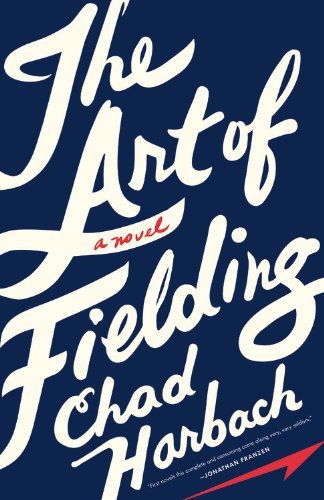
What I'm Reading: The Art of Fielding

Well, while I am making good progress on my New Year's resolution to read 2 new romance authors this year, I am quite far behind on my resolution to keep up on my reviews.  Of the 6 books I have finished reading in 2012 (with 2 more that I have to finish in the next week for work), I have only written 2 reviews so far.  So I am 4 (about to be 6) behind already!!

I will only be getting further behind, so today I am going to buck up and get going.  Also, I have a bunch of boring paperwork to complete today, so writing a review will be a nice procrastination option.

As I mentioned at the end of this post, I saved the consensus best book of 2011 to read to start 2012.  I really did enjoy The Art of Fielding by Chad Harbach, but I feel like it is cheating for me to read and review.  Why?  It had so many elements that I like if only one of them appears in a book, but this one literally had everything but a circus (one of my other favorite frames; click here to see more on that) and if it had been set in NJ instead of WI, I might have exploded with happiness.

Seriously, here is a cross-referenced list of the things I love to see in any book which are all in play in The Art of Fielding:
  • Baseball
  • Liberal Arts College Setting
  • Moby Dick references
  • Ralph Waldo Emerson references (this one is even key to the final dramatic moments)
  • My actual alma matter shows up and is made fun of, but in a fair way.  It made me laugh.
  • Book within a book frame. (The Art of Fielding is a book that the characters in the book refer to often.)
The Art of Fielding also features some of my favorite story telling techniques:
  • Told as a "slice of life"-- The novel is one year in the life of 5 characters. You learn a bit about their life before this pivotal year and nothing about what happens after, but you are wrapped up in every detail of the year in which the book takes place.
  • Told from multiple charcaters points of view.  The story bounces back and forth between 5 protagonists.
  • Interesting but extremely flawed characters.  Each of the 5 protagonists is a good person deep down, but they all have a serious flaw that propels the story along.  In the end they mostly redeem themselves and come to terms with their flaws, but as a reader you are not sure that these flaws are completely overcome.
So all of this being said, I am a bit freaked out by Harbach.  Does he know me? Are we similar people? I don't know the answers here, but I am not going to complain.  That being said, I will again say I might not be the best person to take advice from on this book.  I was predisposed to love it.


Now more general appeal comments.  This is subtle storytelling.  You are meant to dive in and experience this novel.  You live with the characters, get wrapped up in their problems, and come to feel like they are your friends.  They all hit some pretty low points during the course of the book, but manage to pull themselves out (for the most part).

As a result of these low points, there are some darker moments in this novel.  There is one particualrly darkly humorous scene towards the end, but overall, the novel was realistic, thought provoking, bittersweet, and hopeful.

This is not the best book I ever read, but it was extremely well executed (it is hard to believe this is a first novel) and compelling. I was happy to spend a few days immersed in the world of Westish College.  I was sad to finish the book because I so enjoyed my time reading it, but I felt like the ending while open, was satisfying.  All things do not turn out well, nor do all turn out badly.  I will definitely read Harbach's next book.

Notice I  haven't said much about the plot here.  This is on purpose.  The plot itself is not the issue.  How the story is told will determine whether you like it or not.  Plus, this book has been reviewed to death in the last few months, so if you just want a basic plot, go here.

Three Words That Describe This Book: slice of life, multiple points of view, character driven

Readalikes:  The first book I thought of was another one of 2011's best, Swamplandia! because it shares all three of the story telling techniques I mentioned above. Click here for my full review of Swamplandia!.

Many reviewers have called The Art of Fielding Franzen-lite.  I agree completely.  In Harbach's novel the characters are more likable, less annoying, and the story more nuanced. Click here for my review of Freedom by Franzen for more.

The backlist title I most thought of while reading The Art of Fielding was Richard Russo's Straight Man.  The protagonist here is the Chairperson of the English Department at a liberal arts college.  He reminded me so much of the Westish College President who is one of the 5 narrators of The Art of Fielding.  Another good campus life/politics novel is Moo by Jane Smiley.  I have read both the Russo and Smiley, but years before I started this blog. Both are worth a trip to your local library to check out.  Interestingly, both authors are masters at writing quintessentially "American" novels that are critically acclaimed yet accessible. I think Harbach can be placed in their cannon for now.  I hope he stays there and becomes as reliable as these 2 have been over their long careers.

Underworld by Don DeLillo is another suggestion.  It too uses baseball as a frame without being a "baseball novel."  There is a fluctuating point of view in Underworld, but the story is much broader in scope.  In Underwold, the story is that of the last 50 years of the 20th century, while in The Art of Fielding, we are following one academic year.

Monsters of Templeton by Laura Groff could be another suggestion.  From my original review:
Willie Upton returns to her home town of Templeton to recover from a disastrous relationship with her graduate professor. Willie, is a direct descendant (on both sides!?!) of the town's founder. Here Templeton is a stand-in for Cooperstown, NY complete with a James Fenimore Cooper stand-in and a "baseball history museum." But Templeton has something the real Cooperstown does not, a sea-monster, long a part of town folklore, rising to the surface of the lake, dead, in the opening pages of the novel. What follows is a complex novel in which Willie searches through the town's historical documents for the identity of her father. Goff has the dead speak, giving them entire chapters of monologue, and she incorporates some of Cooper's more famous characters into the story.
I think if you are okay with the speculative elements here, the tone, characterizations, and style are very similar.

I mentioned Moby Dick above.  If you feel you did not get the Moby Dick references, a quick look at Nathaniel Phlibrick's compelling and fun Why Read Moby Dick? will clear it all up for you.

Monday, June 13, 2011

Monday Discussion: Desert Island Book

To continue with the adult summer reading "Novel Destinations" theme, I want to talk about desert islands.

My almost 9 year old daughter asked me the other day what book I would bring if I were stuck on a deserted island in the middle of the ocean (her and her brother have been watching the first 3 Pirates of the Caribbean movies at home, so she has desert islands on the brain).

Before I could answer, she said, "I would bring the big Lord of the Rings Trilogy in one book because I haven't read them yet, and they are so long, when I finished, I could go back and start again since I would probably have forgotten a lot of it."

Good choice, I say, especially considering what a huge fantasy fan she is.  So I thought about the question, and I think I would pick Moby Dick.  I read this book back in college and loved it, but haven't read it since.  With it's ocean setting, detailed passages that are begging to be read more than  once, and its length, Moby Dick would keep me occupied for quite a while on a desert island.

So now it is your turn.  For today's Monday Discussion, let me know what 1 book you would take if you were stranded on a desert island.  Try to settle on just one.  It is harder than it seems.

Click here for the Monday Discussion Archive.

Monday, January 23, 2012

RUSA Outstanding Audiobook Narration Awards

Busy day for awards today.  Before the Monday Discussion, I wanted to also post the RUSA Listen List.  Again, I cannot stress enough how useful and helpful these RUSA lists are to librarians everywhere.  No where else will you find awards geared toward all of your adult leisure readers in one place.


In this case, the committee, including my co-teacher, Joyce Saricks who has literally written the book on audiobook RA and is the reason I now like audiobooks, has considered the entire sphere of leisure reading audiobooks regardless of genre.  This is their inaugural list, and I am so glad to have it.  Here is the link, but the press release is also attached below.

The Reference and User Services Association (RUSA) has announced its selection for the 2012 Listen List: Outstanding Audiobook Narration juried list.

The list was selected by The Listen List: Outstanding Audiobook Narration Council, whose members include Jodi L. Israel, library technology expert and veteran audiobook reviewer, Birmingham, AL; Bonnie Kunzel, youth services and adolescent literacy consultant, Germantown, Tenn.; Joyce Saricks, Dominican University, River Forest, Ill.; Kaite Stover, readers’ services manager, Kansas City (MO) Public Library; and Neal Wyatt, chair, Virginia Commonwealth University.

Established in 2010 by the Collection Development and Evaluation Section (CODES) of RUSA, the Council seeks to highlight extraordinary listening experiences that merit special attention by general adult listeners and the librarians who work with them. The Listen List recognizes and honors the narrators who create these experiences. Titles are selected because they are a pleasure to listen to and make one reluctant to stop listening; because the narration of the book creates a new experience, offering listeners something they could not create by their own visual reading; and because the narrator achieves an outstanding performance in terms of voice, accents, pitch, tone, inflection, rhythm and pace.

This inaugural juried list, designed for avid listeners and those new to the joys of being read a story, includes literary and genre fiction, memoir and history and features voices that enthrall, delight and inspire.

The 2012 winners are:

All Clear by Connie Willis. Narrated by Katherine Kellgren. Brilliance Audio. (ISBN 978-1-4418-7576-1).
This sequel to Blackout, a stellar science fiction adventure, follows the plight of a group of historians from 2060, trapped in WWII England during the Blitz. In a narrative tour de force, Kellgren brings to life a large cast of characters, including a pair of street-smart urchins who capture the hearts of characters and listeners alike.


Listen-Alikes:
Away by Amy Bloom. Narrated by Barbara Rosenblat. HighBridge.
Pirate King by Laurie R. King. Narrated by Jenny Sterlin. Recorded Books.
Year of Wonders by Geraldine Brooks. Narrated by Josephine Bailey. Books on Tape.


Bossypants by Tina Fey. Narrated by Tina Fey. Hachette Audio. (ISBN 978-1-60941-969-1). AudioGO. (ISBN 978-1-60941-719-2).
In a very funny memoir made decidedly funnier by its reader, Tina Fey relates sketches and memories of her time at SNL and Second City as well as the difficulties of balancing career and motherhood. In a voice dripping with wit, she acts out the book, adding extra-aural elements that print simply cannot convey.


Listen-Alikes:
Dress Your Family in Corduroy and Denim by David Sedaris. Narrated by David Sedaris. Hachette Audio.
I Was Told There’d Be Cake by Sloane Crosley. Narrated by Sloane Crosley. Penguin Audio.
The Partly Cloudy Patriot by Sarah Vowell. Narrated by Sarah Vowell. Simon & Schuster Audio.


The Last Days of Ptolemy Grey by Walter Mosley. Narrated by Dominic Hoffman. Penguin Audio. (ISBN 978-0-14-242856-6). Books on Tape. (ISBN 978-0-3078-7583-9).
Dominic Hoffman reads this elegiac novel of memory and redemption with fierce grace, inhabiting Mosley’s characters with voices perfectly crafted in pitch and rhythm. His rough, gravely narration manages the pace and mood of the book with astounding skill, brilliantly capturing the mental clarity and fog of 91-year-old Ptolemy Grey’s world.

Listen-Alikes:
Emily, Alone by Stewart O’Nan. Narrated by Andrea Gallo. Recorded Books.
Flowers for Algernon by Daniel Keyes. Narrated by Jeff Woodman. Recorded Books.
Noah’s Compass by Anne Tyler. Narrated by Arthur Morey. Random House Audio. Books on Tape.


Life Itself: A Memoir by Roger Ebert. Narrated by Edward Herrmann. Hachette Audio (ISBN 978-1-60941-035-3). AudioGO. (ISBN 978-1-61113-792-7).
Ebert’s clear-eyed account chronicles his life from his youth in Urbana, Illinois, to his fame as a world-renowned film critic in Chicago. Herrmann’s engaging, affable reading mirrors the author’s tone—honest, often humorous, sometimes bittersweet—as he unhurriedly ushers listeners through Ebert’s moving reflections on a life well-lived.


Listen-Alikes:
Born Standing Up: A Comic’s Life by Steve Martin. Narrated by Steve Martin. Simon & Schuster Audio. Recorded Books.
Chapters from My Autobiography by Mark Twain. Narrated by Bronson Pinchot. AudioGO.
Life by Keith Richards and James Fox. Narrated by Keith Richards, Johnny Depp, and Joe Hurley.  Hachette Audio.


Middlemarch by George Eliot. Narrated by Juliet Stevenson. NAXOS. (ISBN 978-184-379-439-4).
Juliet Stevenson brings crisp clarity, a witty sensibility, and a charming tonal quality to Eliot’s masterpiece of provincial life. Through her deft management of pacing and tone, she reveals character motivation and illuminates the many themes of the novel. But most of all she reclaims Eliot for listeners who thought they did not enjoy classics.


Listen-Alikes:
The Age of Innocence by Edith Wharton. Narrated by Lorna Raver. Blackstone Audio.
Jane Eyre by Charlotte Brontë. Narrated by Nadia May. Blackstone Audio.
Pride and Prejudice by Jane Austen. Narrated by Josephine Bailey. Tantor Media.


The Mischief of the Mistletoe by Lauren Willig. Narrated by Kate Reading. Penguin Audio. (ISBN 978-0-14-242830-6).
In this Regency Christmas caper, a pudding, a spy, a hilarious school theatrical, and a memorable country house party lead to laughter, love, and an offer of marriage. Reading’s lovely English accent and exuberance are a perfect fit for the wide range of characters, from young girls to male teachers to members of the aristocracy.


Listen-Alikes:
The Black Cobra Quartet series by Stephanie Laurens. Narrated by Simon Prebble. Harper Audio. Blackstone Audio.
The Scarlet Pimpernel by Baroness Emma Orczy. Narrated by Ralph Cosham. Blackstone Audio.
The Talisman Ring. Georgette Heyer. Narrated by Phyllida Nash. AudioGO.


One of Our Thursdays is Missing by Jasper Fforde. Narrated by Emily Gray. Recorded Books. (ISBN 978-1-4498-4675-6).
In this genre-bending romp, the “written” Thursday must rescue the “real” Thursday from a nefarious Bookworld plot. Emily Gray wears Thursday like a second skin, as she does the robots, dodos, and space aliens running around. The story is paced such that every nuance of pun and word play is captured and rendered aurally.


Listen-Alikes:
Blackout by Connie Willis. Narrated by Katherine Kellgren. Brilliance Audio.
The Peculiar Crimes Unit Mysteries series by Christopher Fowler. Narrated by Tim Goodman. Recorded Books/Clipper Audio.
Relative Danger by Charles Benoit. Narrated by Patrick Lawlor. Blackstone Audio.


A Red Herring Without Mustard by Alan Bradley. Narrated by Jayne Entwistle.  Random House Audio (ISBN 978-0-307-57643-9). Books On Tape. (ISBN 978-0-3077-0479-5).
Flavia de Luce, a terrifyingly proficient 11-year-old amateur chemist and sleuth, investigates the beating of a gypsy and the death of a villager in this third outing. Entwistle’s spot-on narration reveals the irrepressible, intrepid heroine’s prowess and captures a delicious range of secondary characters in these whimsical mysteries set in 1950s rural England.


Listen-Alikes:
To Kill a Mockingbird by Harper Lee. Narrated by Sissy Spacek. Harper Audio/Caedmon. Recorded Books.
Special Topics in Calamity Physics by Marisha Pessi. Narrated by Emily Janice Card. Penguin Audio. Books on Tape.
Tallgrass by Sandra Dallas. Narrated by Lorelei King. Macmillan Audio. BBC Audiobooks America.


The Snowman by Jo Nesbø. Narrated by Robin Sachs. Random House Audio. (ISBN 978-0-307-91750-8). Books On Tape. (ISBN 978-0-307-91752-2).
The icy chill of the Norwegian countryside and a series of cold-blooded murders dominate this Harry Hole crime novel. Sachs contrasts Hole’s world-weary professional attitude, his unquenchable thirst for justice, and his yearning for love and comfort, as he skillfully maintains a suspenseful pace and projects an overarching sense of doom.


Listen-Alikes:
The Girl with the Dragon Tattoo by Stieg Larsson. Narrated by Simon Vance. Books on Tape.
Hell is Empty by Craig Johnson. Narrated by George Guidall. Recorded Books.
Rain Gods by James Lee Burke. Narrated by Tom Stechschulte. Recorded Books.


A Tale of Two Cities by Charles Dickens. Narrated by Simon Prebble. Blackstone Audio. (ISBN 978-1-4551-0867-1).
The tragedy and heroism of the French Revolution come alive through Prebble’s distinctive and graceful narration. As the lives of Charles Darnay and Sydney Carton intersect, Prebble takes listeners deep into France and England, narrating terrifying descriptions and breathless acts of courage with a cadence that sweeps one away.


Listen-Alikes:
Les Misérables by Victor Hugo. Narrated by George Guidall. Recorded Books.
Sharpe’s Fury by Bernard Cornwell. Narrated by Steven Crossley. Recorded Books.
War and Peace by Leo Tolstoy. Narrated by Frederick Davidson. Blackstone Audio.


The Tiger’s Wife by Téa Obreht. Narrated by Susan Duerden and Robin Sachs. Random House Audio (978-0-307-87700-0). Books On Tape. (ISBN 978-0-307-87702-4).
In this imaginative novel, Balkan physician Natalia, on a mission of mercy, learns of her beloved grandfather’s death. Duerden’s mesmerizing voice leads listeners through the complexities of this rich novel with its intertwining stories, while Sachs memorably relates her grandfather’s haunting tales in a gentle and gruff voice.


Listen-Alikes:
Bel Canto by Ann Patchett. Narrated by Anna Fields. Harper Audio. Blackstone Audio.
Extremely Loud and Incredibly Close by Jonathan Safran Foer. Narrated by Jeff Woodman, Barbara Caruso, Richard Ferrone. Recorded Books.
Pretty Birds by Scott Simon. Narrated by Christina Moore. Recorded Books.


Why Read Moby-Dick? by Nathaniel Philbrick. Narrated by Nathaniel Philbrick. Penguin Audio. (ISBN 978-1-61176-024-8). Books on Tape. (ISBN 978-0-307-96967-5)
In what should be required reading before cracking the pages of Moby-Dick, Nathaniel Philbrick’s homage to this great American novel compels the listener to experience Melville with an almost incandescent joy. His voice resonates with palpable enthusiasm and calls to mind a New England professor giving a fascinating lecture.


Listen-Alikes:
Moby-Dick by Herman Melville. Narrated by Frank Muller. Recorded Books.
My Reading Life by Pat Conroy. Narrated by Pat Conroy. Random House Audio. Books on Tape.
The Swerve by Stephen Greenblatt. Narrated by Edoardo Ballerini. Recorded Books.

Monday, July 25, 2011

Monday Discussion: Seafaring Reading

My summer vacation will take me on a nautical journey to visit Maine and Nova Scotia, Canada.  It will be filled with lobster, scallops, the amazing tides of The Bay of Fundy, migrating whales, lighthouses, pirates (well, at least the places they used to frequent), Titanic burial grounds, and sea birds just to name a few of the nautically themed attractions.

To get in the spirit, I want to talk about nautical books for todays Monday Discussion.

I happen to be a sucker for Moby Dick.  Not only do I love the book, but books about that book intrigue me.  For example,  In the Heart of the Sea by Nathaniel Philbrick and Ahab's Wife by Sena Jeter Naslund.

The nautical adventures of Patrick O'Brian which began with Master and Commander have held up against the test of time and are a popular summer read for a wide range of patrons.

For fantasy fans, I highly suggest the Naomi Novik nautical novels which reimagine the Napoleonic Wars on the sea as fought by Admirals who can control dragons.  The captivating and popular Temeraire series begins with His Majesty's Dragons.

For the adventure reader, the benchmark nautical author is Clive Cussler.  If you have never read Raise the Titanic, I highly suggest giving it a try.  They used some of the techniques Cussler mentions in the book to actually raise the real Titanic.

And finally, for the horror fan, there is no better book of a sea voyage gone horribly wrong than Dan Simmons The Terror.

This is just a start.  Now it is your turn.  For today's Monday Discussion, share some nautical books that have captivated you.

Click here for the Monday Discussion Archive.

Monday, September 20, 2010

Monday Discussion: What's Your Favorite Feeling?

In past Monday Discussions I have asked about people's favorite frames in their reading. Today I have a similar question. What mood, tone, or feeling do you most look for in your leisure reading choices? In other words, how do you want the book you are reading to make you feel?

I realize this question has different answers based on what is going in your life at the moment. For example, I have a patron who normally loves literary fiction and mysteries, but now, she is going through a rough time as her husband was recently diagnosed with terminal cancer.  Both she and those of us at the RA desk who have been helping her to find her next good read for the last 10 years all need to switch gears. Now we are trying to find her "nice," "happy," "easy on the mind and spirit" reads. For the next year or so, this will be her main appeal determination.

But all things being equal, what is your "go to" feeling? Right now? In general? How has it changed over the years?

For me, this is easy. I most enjoy books that make me feel unsettled.When I look back at my favorite books, no matter the genre, when the overall mood and tone of the book is a bit off, I enjoy it more.  For example, three of my favorite classics are Moby Dick by Herman Melville, Twice-Told Tales by Nathaniel Hawthorne and Crime and Punishment by Dostoyevsky. The only feature these books share is the unsettling feeling they elicit from the reader.

This mood is not limited to a genre; however, the most common genres it appears in are literary fiction, psychological suspense, and literary fiction. So, it should come as no surprise that these are my favorite genres. I like this mood all of the time, but even more so when I am stressed because the dark and unsettling things in the book are way worse than what is going on in my life. It gives me perspective.

Suspense and mystery have a such a range of moods and tones that it is really imperative that I have a way to assess the book's mood before diving into it.  This is why I spend so much time training librarians and library students to be able to both determine and articulate a book's tone and mood to potential readers. After pacing, I think it is the biggest issue that readers do not articulate a preference for in the casual RA interaction. The librarian must come out and ask the patron what kind of mood they are looking for at that moment. Their answer makes a huge difference in terms of what I would suggest.

So again, I ask you, what is your go-to mood? Right now? In general? How has it changed over the years?

You can also follow past Monday Discussions here.

Monday, July 22, 2013

Monday Discussion: Best Book You Ever Read For School

My daughter has her first summer reading assignment ever.  She had to read a memoir and now has a series of essays and poems to write in relation to it.  Now, she loves to read (no shock there), but for the first time ever, she has been forced to finish a book she was not enjoying. [She has no trouble abandoning a book she is not into.] It is not that she hated the book, but it was not a book she would choose to read for fun. [I am purposeful leaving the title out since I do not want to prejudice others to this book, plus the title is not pertinent here.]

We had to have the talk about how soon she will have to read more for assignments and less for fun.  I am privately mourning this transition for her, but I too went through it and came out the other side still an avid reader. I figure being honest with her about the "have to" reads while still encouraging reading for fun as a recreational option will lessen the pain in the years to come.

While trying to put a good face on the entire situation, I shared with her tales the books I would have never read without having them assigned-- books I still count as among the favorites I have ever read.

After talking to her about those books I still remember fondly, I realized it would make a great Monday Discussion.  We did a version of this a few years ago, but I thought it would be worth revisiting it.  So here are the books I mentioned to her:

For the record, I have a much longer list of books I wish I had never even opened, but had to read for school. I'm looking at you Jude the Obscure. Yuck! Still to this day, the worst book I ever read. No contest.


Now it's your turn.  Tell me the books you hold dear in your heart, books you never would have read except for the fact that you were "forced to." And if you need to vent [as I obviously did], throw in a stinker or two.  But more loves than hates here; in the spirit of encouraging my daughter.

For past Monday Discussions click here.

Postscript: In case you were wondering,  she did finish the book in the week she scheduled herself to read it, and has answered the short response question already. School doesn't begin for 4 weeks from tomorrow, so thankfully she will still have time to read a few more books for pure pleasure before sixth grade begins.

Friday, September 21, 2012

RA Links Round Up

It's another fun filled edition of links I didn't have time to write entire posts about, but want to pass on.

Monday, June 21, 2010

Books to Spring into Adulthood

Earlier this month, the Chicago Tribune ran this interesting article entitled "Freshmen to Be: Time to Hit the Books."

For the article, William Hageman asked a range of people from Jerry Springer to a Nobel Prize winner what books they would suggest as summer reading to a student making the leap from grade school to Freshman year of high school. The range of books offered is wide- from Cabeza de Vaca  to The Power of Now with a few To Kill a Mockingbirds thrown in for good measure- but it is the explanations, the "whys" these well known people gave that is worth while here.

Since I normally don't post about books for readers under 16, you may be asking why I am directing you to read this article for yourself. The answer is simple. This is a good list of books that successful people found inspiring. It is a great list for readers of any age who are looking for an interesting thought-provoking book.

So check the list out for yourself and let me know what books you would suggest to this proposed person on the cusp of adulthood. Remember, the book has to be at the reading level of an average 14 year old, so please no Moby Dick or James Joyce here.

I will start the conversation with my own suggestion. I would suggest A Walk in the Woods by Bill Bryson. Written by Bryson after he returned back to American after many years abroad, the out of shape and out of sorts travel author, decided to reconnect with his home country by attempting to walk the entire Appalachian Trail. This is an inspiring story about our country's natural history, forgotten, out of the way places, and those who have and continue to work to conserve our natural resources. But this is also the story of an outsider, someone who feels he doesn't fit in, who is also not necessarily cut out for the task at hand (he is not in good enough shape for this endeavor, nor does he have any hiking OR camping experience), who nonetheless sets out on a new adventure to better himself.  All of this sets a great example for incoming Freshman, and one with themes and feelings they can relate to. And best of all, he does not actually succeed in his literal goal, yet he still accomplishes a great deal. (This theme of success found in failure is an important life lesson that is often lost in our public education system). This book is a mix of history and adventure, which, I would hope, upon reading would inspire these young adults to strive for a mix of education and adventure in their own lives.

So, what would you suggest and why? Just give me a sentence or two if you want.

Friday, July 15, 2011

Book Lovers Club

As I mentioned here, the BPL RA Department had its first ever Book Lovers Club on Tuesday night.  Kathy and I were pleasantly surprised at the turnout (30 people!).  We were overflowing.  But ever better than the turn out was how excited everyone was to come together to talk about books that they love.

For those who want to try a program like this at their own library I will explain how it went.  We were at a restaurant which had a back room set up for us.  Kathy set up the ground rules:
  • The library was buying appetizers and non-alcoholic beverages.  Participants were encouraged however to order their own drinks and food if they wanted right at the start to be brought throughout the discussion.
  • We asked everyone to introduce themselves and say why they came (ie why they love books).
  • We asked each person talk for no more than 2-3 minutes about their book or author and then a few questions could be asked by the group to each person.
  • We also told everyone that this was as much a chance to share our favorite books as it was a social club.  So after everyone had a chance (or 2) we were going to leave the second hour for less formal mingling.  And in fact, that was what happened.  At about 8:15 everyone got up and talked in small groups around the room and others moved into the bar.  Kathy, Jose (another BPL employee but there for the fun) and I were the last to leave at 10:30.
  • Finally, with such a big group, we split into 2 smaller groups with Kathy and I each leading a table.
So that's the set up.  Below I will provide a list of what books my table talked about, as well as a few of the participants' comments.  Everyone was super happy that Kathy and I were taking notes.  I think this was a key to the night's success.  As people came in they were anxious about getting all of the suggestions written down.  They came as much to share their favorite books as they did to get new reading suggestions.  Assuring them that we had it covered and that we would get everyone a list was a vital component to their enjoyment.

We did pass around an email and phone number sign-up sheet.  Kathy and I will type up the reading list which was created that night and post it on the Browsers Corner.  We will be creating a new page there in the coming weeks where we will continue to catalog the list of books spawned by this group over time.

Yes, over time.  It was such a hit, we are doing it again, for sure!  Kathy and I will meet in August to nail down the details, but it looks like The Book Lovers Club may be come an every other month social club event.

I for one am excited about the opportunity.  I feel this is a program not offered by any library I know of in the area.  Since it is not a book discussion group, but rather a social club for readers, I think we have a great opportunity to reach a whole new audience.  I will be writing an article for NoveList about this program in the Fall also, so that we can share our success with others.

Now on to my table's suggestions, with links to the record in our catalog.  Remember the full list will be available next week at the Browsers' Corner.  The comments are theirs (not mine unless noted).

Finally, please notice how when given only 2 minutes to share a book, people do NOT waste time on plot.  Every single participant spent their time on why they loved the book, and what it was about (the plot) does not figure into that very highly.
  • In the Woods by Tana French (suggested by me, comments from here): In the Woods can best be described as, police procedural meets psychological suspense.  This is a dark book, with an extremely flawed narrator.  Bad things are happening here and even when the crime is "solved," no one is satisfied; in fact, just about everyone involved with the case has been ruined as a result of the investigation.   And the kicker is, you know that it will not end well from the start, but you are so compelled by the complex plot, the interesting, 3-dimensional characters and their interactions that you cannot look away. 
  • Devil in the White City by Erik Larson: I heard it was interesting when it came out, but never got around to reading it.  When I read it I got a lot more than I expected.  The narrative style was compelling; it draws you in.  If you are a Chicagoan, you have to read this book!
  • The Master and Margarita by Mikhail Bulgakov: This is the best book I have ever read in my life! It has three plot lines that slowly come together.  It begins with the Devil coming to town with a talking cat.  I find it captivating and have read it 15 times.
  • God Knows by Joseph Heller: Most people know Catch-22.  This is the story of David, from the Bible, but with a modern twist.  It is humorous and gently blasphemous.
  • Agatha Christie and Janet Evanovich: This person suggested 2 authors.  Christie because she is not brutal with her mysteries, but they are always clever and convoluted.  She stays a step ahead of the reader.  Evanovich because they are fun, bright, and snappy.  Her novels are some of the only books where as I am reading to myself, I literally laugh out loud.
  • Lee Child: You  don't have to read the Jack Reacher series in order, which is nice.  Although they are modern suspense, they feel like an old time Western-- good guy rides into town and fixes everything before riding out again.
  • Tony Hillerman: He wrote great murder mysteries immersed in the Navajo Indian culture.
  • Ahab's Wife by Sena Jester Naslund: This book was a lucky accident.  A friend just handed me a book and said you'll love it.  I was a bit worried because it was thick and based on Moby Dick, which I hate!  But, I loved it.  It is one of my favorite books.  I loved how it wove in different pieces of history.
  • Marshall Field's: The Store That Helped Build Chicago by Gayle Soucek: This is a nonfiction book about the store and the man who started it.  If you are from Chicago you will like this.  I was surprised by how much I liked it.  I learned how Fields was the man who first brought women into shopping.
  • Caleb's Crossing by Geraldine Brooks: I love historical fiction in general and Brook specifically.  I cannot stop thinking about this book.  She constantly gives me the history and new information I crave, but I am also invested in her characters.  She always starts with one small fact in the fringes of history and then uses her imagination to fill it all in.
  • The Warmth of Other Suns: The Epic Story of America's Great Migration by Isabel Wilkerson: Although it was nonfiction it read like a novel to me.  Centered around 3 people; one who went to Chicago in the 1930s, one who went to NYC in the 40s and one who went to CA in the 50s.  I lived through much of this time, and even for me, it changes the way you think.  Today we tend to forget the struggle African Americans had so recently.  (Eds note: I promised the group I would share this link to the reading map my student Jeanne did on this book last semester).
  • You're Wearing That?: Understanding Mothers and Daughters in Conversation by Deborah Tannen: I love how she dissects how we communicate with each other.  This is something you don't consciously think about, and reading about it is fascinating.
  • Infinite Jest by David Foster Wallace: It is very long, but if you read it in pieces it is worth it.  It still stays with me.  It is about the mundanity of life, yet also how at the same time how wonderful and magical life is.  I compare it to the years of raising my small children.  There is a tension between how bored out of your head you can be while at the same time you know that it is glorious to watch your small children grow.
  • The Radleys by Matthew Haig (me): This is a family drama, about family tensions and secrets and how they can eat a family apart.  It just so happens that the secret these parents are keeping form their children is that they are all abstaining vampires.  It is similar to Tom Perrotta or Elizabeth Berg.  This is a great choice for people who think they would hate a "vampire" book.
  • Dracula in Love by Karen Essex:  The story of Dracula from Nina's perspective.  No fangs here; it is a historical story of Nina discovery who she really is.  There is also reincarnation.
  • Shirley Jackson: I like scary, creepy stories.  She is horrifying with no blood or guts. Particularly, the story "We Have Always Lived in a Castle," still gnaws at me. Why don't they ever leave the house? When the twist comes, it is bad.
  • Damon Runyon: I like him because he writes about lots of different subjects but for all he romanticizes them in a way that makes me love them too.
  • New Miss India by Bharati Mukherjee: New book about present day India.  A girl in a backwater town escapes an arranged marriage.  Great story.
  • Silver Sparrow by Tayari Jones: It has a great first line, " My father James Bigelow is a bigamist." It is the fascinating story of his two families, one which knows of the other family, the other which does not.  It is told from the alternating points of view of a daughter in each family.
  • The Book Thief by Markus Zusak: I have read so many books about Nazi Germany, yet this one was still fresh and original.  I liked how I had a view from a little town and saw the day to day life of ordinary German citizens.
  • A few books/authors mentioned in passing at the end: The Immortal Life of Henreitta Lacks by Rebecca Skloot, The White Tiger by Aravind Adiga and Jane Austen.

Thursday, April 25, 2024

Celebrate Halfway to Halloween With a New Why I Love Horror Essay and Giveaway.

On of my favorite display ideas is to spend the last week or so of April reminding people that it is also "Halfway to Halloween." In the third edition of my book, I go hard on encouraging all libraries to celebrate this "second Halloween" and one of my biggest arguments to do so is because the film industry has been doing this for the last 10 years. Think about it. How many Horror movies now come out in April? There are a lot out right now, and they are dominating the box office. 

People love Horror all year long, but even the casual fans start to crave more of it the further we get away from Halloween and the marketing machine that pushes it for 31 days. They often don't know where to look though. The "halfway" mark, is a great time to reuse your displays and content from the most previous October to promote it again. And calling it "Halfway to Halloween," is fun and attention grabbing.

Even some bookstores are celebrating this weekend. See, I have been talking about this since 2010 and others are finally catching on.

Today to highlight Halfway to Halloween I want to direct you to the work I do all year long to help you help your patrons find Horror over on RA for All: Horror. It is a one stop shop for all of your Horror for Libraries needs. But in particular there are 2 long running series that I am promoting today.

The first is my weekly giveaway of Horror titles, which today features 2 finished copied of Ink Vine by Elizabeth Broadbent. My goal with this series is series is three fold. First, I am giving away the physical ARCs of the books I have formally reviewed in Booklist or Library Journal. Often these are many of the "big name" authors. Once I have read them, I do not need them anymore. I am paying it forward and passing them on. Second, I offer smaller press titles and/or authors who cannot get me their books in time for a more traditional review the chance to get some space to promote their work for my library audience through a giveaway. I only include titles I believe are good for a general public library audience. They are not reviewed simply because I did not have the time (I cannot formally review every book) or more often because they could not get their book to me in time for our far in advance journal deadlines. 

When people enter the weekly giveaway, they stay entered until they win. There is no need to reenter. 

Third, the giveaways overtime then further as a resource to learn about new and upcoming titles that are worth your attention, even if you do not win. And, because they are all tagged "giveaway," you can pull up 4 years worth of titles in reverse chronological order. That tag alone serves as a repository of backlist titles you could be suggesting to your patrons-- with comments from me on who the best reader for each book is-- all from the last 4 years. 

If you are interested in being part of the weekly #HorrorForLibraries giveaway this week and going forward, visit the post with this week's giveaway to see how you can enter. 

The other series I am proud to offer on RA for All: Horror is my Why I Love Horror guest essays featuring authors answering that prompt, sharing why they are fans and practitioners of the genre. It offers authors a chance to speak directly to readers, sharing their adoration for the genre. This showcases a variety of reasons why someone would love horror themselves. As a resource it gives you a peek into the mind of an author whose books you should carry and offers you an example of a reader (that author) who likes Horror as well.

I have authors from household names to up and comers all indexed with the tag "Why I Love Horror" over on the Horror blog.

To celebrate Halfway to Halloween, I invited the author of today's giveaway book, Elizabeth Broadbent, to join the Why I love Horror family. Please see her essay below. But first, remember Horror is a great choice all year long, but especially now as we are Halfway to Halloween.

Why I Love Horror
by Elizabeth Broadbent

I was nine years old when I read Firestarter. I remember this for two reasons: It was my first Stephen King book, and I was only a few months older than Charlie. I can still picture the battered paperback, a movie tie-in and garage sale find. In the horror community, especially among older Millennials, you’ll often hear of kids reading brutally violent Stephen King, but nine is precocious even among that crowd. More focused on Charlie than Andy, I certainly skipped some of the more adult-leaning parts; despite that, I found the book more compelling than the standard Anne of Green Gables fare which passed as children’s lit in those days. Once we outgrew Beverly Cleary and tore through Judy Bloom, there was precious little left, especially for a kid who bought her books with quarters scrounged from the living room couch.

Years later, of course I’m appalled. Where were my parents? Who lets their nine-year-old read Stephen King? The answers to those questions explain why I found King so riveting in the first place. I was a lonely child, scapegoated by a narcissistic mother, alternately terrorized and ignored by an alcoholic father; my neurodivergence only exacerbated the abuse. Against that singular bleakness, Firestarter, Carrie, and even The Eyes of the Dragon felt more authentic than Pollyanna. Other books sugarcoated the world, but horror told the truth. I believed it as an all-too-young reader. Decades later, I believe it as a writer.

By mixing the speculative with the all-too-human monsters, horror shows us people at both their most depraved and most beautiful. I read The Prince of Tides when I was eleven—though it’s not generally considered such, I’d mark it a crucial entry point to the Southern Gothic genre. Tragic knight-in-shining armor Luke Wingo saves his brother, mother, and sister; the twin obsessions of Callanwolde for Lila and Lila for acceptance define the novel’s sickest villainy. There’s a full sweep of human experience there; I loved the book for that, but I also loved it for the prose. My house had no Shakespeare, no poetry. Until I found Conroy, I was unaware that people put words together that way. When I read him, I knew I wanted to do it myself.

I stayed in love with “acceptable” horror despite the academy’s insistence on devaluing it. I found horror that sang, from Jane Eyre to Moby-Dick, Flannery O’Connor to William Faulkner. In particular, the gothic caught me, that wicked mixture of creeping fear, constant threat, and intrusion of the past. Horror, but especially gothic horror, seemed to see the world in a way that felt authentic but safe, realistic but distant.

As I turned more and more to writing, I found my models there. Faulkner exhorts us to “tell about the South,” impossible without its tangle of racism and history, patriarchy and prejudice. Most great Southern literature is horror—how could it be anything but? An old South Carolina story alleges that when the Dalai Lama flew over the state, he was silent for a long time. “So much blood on the land,” he said finally. When we confront the truth, we Southern writers confront that blood, that systemic oppression, be it racial or sexual or classist, and often all three. My master’s thesis was Southern Gothic. We write what we know.

When I turned again to fiction after a career in journalism, horror snagged me once more. South Carolina lives and breathes high gothic drama; witness the Murdaugh clan, one of my final and favorite nonfiction subjects. Anyone shocked by their story never lived there; to understand the Murdaughs, you have to understand their eighty-five-year, unbroken legacy of racism, privilege, and oppression. In South Carolina, our past constantly intrudes upon the present.

That’s true for Southern literature, but it’s also the reality of adults who suffered through abusive childhoods. Like William Faulkner says, our pasts are never dead. They’re not even really past. Therapy can teach us to live with them, even help us heal, but the past never disappears, not entirely; it crowds into the present, insisting upon itself: You will never be enough. The world will hurt you. People will hurt you. I learned to see the world through horror. I see it that way still, both the best and worst of us.

The speculative element clears that lens rather than blurs it—when we keep horror at a safe distance, we can examine it more closely. That’s important for both Southerners and once-traumatized children; both groups grapple with pasts easier to see through a dark glass than a clear pane. In Ink Vine, making Emmy’s love interest otherworldly turns a microscope on the brutal spectrum of oppression, both classist and sexual. In Blood Cypress, coming in 2025 with Raw Dog Screaming Press, losing Beau Carson to a possibly supernatural force reveals both the Carson family’s dysfunction and Lila Carson’s love for her brother. When the truth is too terrible to examine, when people would refuse to engage with real-life horror, we can use the speculative to make them look long. It lets us tell the truth by telling it slant; long-hidden, trauma rises, and we can bear it.

Horror is real. It helps us answer the ultimate question—turning one last time to William Faulkner—both of the South and the hurt child. Why do they live at all? Despite our pasts, we limp on, enduring; confronting our pasts, we become whole. Horror offers truth in a world that would turn away. Couched in the gothic, we can wrestle our demons. And sometimes, if only for the moment, we can beat them.