One of the newer things (in the last year) we have added at the BPL RA desk is a more regular impromptu display. I know, this sounds like an oxymoron (regular, impromptu), but that is the best way to describe it.
What we did was put a small desk right next to the RA service desk. It is literally right next to one of the two computers we have for staff to work the desk. On it we put up about 10-12 books on a topic. Sometimes we have readalikes for a popular bestseller or for a current book based movie. During the winter Betty made lists of cold weather inspired books.
The point is, we gather a few books that are related, and at the very least put up a sign identifying why they have been put there. We do not plan these displays as we do we our two more formal displays (which are planned out months in advance with subjects and staff assignments). Anyone at the RA desk can change the display to whatever they want. We only ask that the displays stay up at least a week and that they are switched to something with a coherent idea linking the books. The key is that we put them next to our desk where patrons can see them on their way to the circulation desk, and so that these titles can spark a conversation between the staff and the patrons.
Let me explain using yesterday as an example. John worked on Sunday (a popular day when we change this impromptu display). John is also the staff member in charge of supervising all displays in the department. John gathered 12 fiction titles with an apocalyptic theme. He made a sign with a mushroom cloud that simply said "Ka-Boom!" That was it. An idea, 12 books to match it, and a simple, yet eye catching sign.
I worked Monday morning and the sign grabbed many people's attention. This is common when we change this small display, but as the day went on, less than 24 hours after John put it up, the display paid off in tangible RA terms.
I saw a 40-something patron looking at the display. He had his hand on a Scott Sigler book. Since he was right next to me and had stopped to pick up a book, I started to talk to him about Sigler. Turns out, he had read everything Sigler has written already, but was drawn to the display because it had other titles he enjoyed too. We started talking about apocalyptic fiction and I asked if he had read The Passage. He said no and asked if it was good. "It was only the best book I read last year, I told him."
I got him a Large Print copy because it was the only copy in, which it turns out he prefers so that he can read without his contacts in. (Another thing learned about this patron) We continued to talk about other authors and titles he might enjoy. He even suggested a book to me, River God by Wilbur Smith. I wrote it down to put on my Shelfari to-read list.
I had a 5 minute patron transaction. We talked about what he liked and disliked, we shared book suggestions, I learned about his format preferences, and I got to meet someone who uses our fiction collection regularly but has never stopped to talk to us, all because John changed the impromptu display. It is also important to note that I did not let him think I was the only one who could help him. I ended our conversation by reminding him to come back and tell whoever was at the desk how he liked The Passage. He left satisfied, with a few books to read, and with the feeling that the RA department of the BPL cared about him and his leisure reading.
So what began as a display put up by John, turned into me having an in depth conversation with a patron. That was just one of hundreds of examples of RA conversations that have begun as a result of this regular impromptu display.
It doesn't take much to spark a conversation between the RA staff and patrons. Try putting a few books on your desk, make a simple sign using Word, and see how many RA conversations you start in a day, in 2, in a week. Then put out a few more books under a different heading, and see what happens then. You will be surprised how many patrons will notice and use your impromptu display as a bridge to begin talking with you about their next good read.
Tuesday, March 8, 2011


Monday, March 7, 2011
Monday Discussion: Food Books
We recently bought a new dining room set and are celebrating with a big dinner party on Friday. Also, last week, everyone was talking about these food related new releases. So as a result, I have food books on the brain. I figured I would keep the idea going by asking about your favorite food related books.
When I thought about my own reading I was surprised. I enjoy both cooking and eating food and I love watching cooking and food related TV shows, but when I looked at what types of food related books I read, it was only nonfiction.
Here are some of my favorite writers who incorporate food and cooking into their work: Mark Kurlansky, Anthony Bourdain, and Ruth Reichl. With Kurlansky, if he writes about food, I will read it and probably love it. I like Bourdain's sense of humor, even if I do not always agree with his conclusions or life choices. Reichl gives a great female perspective. Click here to see when we read and discussed Tender at the Bone at the BPL.
This got me thinking about helping patrons who like me enjoy nonfiction books about food and cooking. So, can we automatically move these readers to fiction with a cooking or food focus. I am leaning toward a "no" on this question. For example, although I enjoy mysteries, even cozy ones, I am not a huge fan of culinary mysteries. However, when I think about it, the problem might be in the tone of these mysteries. They tend to be a bit on the sillier side. Also, the food and recipes are, for lack of a better term, more common. I appreciate more fancy and elaborate food and recipes. Finally, there is a big dessert focus in these books, and I am not a big baker; I am much more into meals.
The RA verdict here is that just the food connection alone will probably not work for readalikes. You must consider other issues like the tone of the work, for example.
I did try to think of other food related fiction I have read, and I could not. Maybe you can help me gather some ideas.
For today's Monday Discussion, talk about food related books you have enjoyed and/or about helping patrons who like food related books.
Click here to access the Monday Discussion archive.
Friday, March 4, 2011
More on the HarperCollins eBook Debate
If you care at all about the HarperCollins ebook limits at all you must watch the video I have embedded below. Librarians at the Pioneer Library System in Oklahoma took actual HarperCollins published physical books that they have on their shelves and examined their checkout records as opposed to their condition. They found books that are in perfect shape which are on their 65th checkout. That is 2 going on 3 purchases of the ebook version.
Watch the video and click here to read their open letter to HarperCollins. It is very enlightening and goes along with what I thought would be true.
Thanks to Galley Cat for passing on the video.
Watch the video and click here to read their open letter to HarperCollins. It is very enlightening and goes along with what I thought would be true.
Thanks to Galley Cat for passing on the video.
One Book One Chicago: Neverwhere

 I have no idea what happened, but finally, the One Book, One Chicago pick is cool. It only took 10 years. As announced here this week, Chicago will be reading Neverwhere
 by Neil Gaiman.
As I have mentioned here many times before, Neil Gaiman is one of my favorite authors. It is a great choice for the One Book, One Chicago program for many reasons. First, the book is urban. It is set in London and is all about the hidden world under the busy city streets. Chicagoans will be able to relate to the urban issues, but also, the idea of a complex system of underground tunnels, an understanding of which is key to the suspension of disbelief needed to enjoy this novel, is not foreign to us.
Second, Gaiman now lives in Wisconsin. He comes to Chicago frequently, he is very involved with the ALA and comics industry, and will probably be very willing to participate in the program. Author participation is key to the success of the program.
Third, this selection will draw younger readers into the program willingly. Yes, younger readers participated with To Kill A Mocking Bird
 , but that was more because they had to. Neverwhere, is appropriate for a teen audience, has a young protagonist, and is by an author deemed cool enough for young readers to pick up on their own. More importantly than attracting teens, Gaiman will attract 20-35 year olds, often the hardest demographic to get into the library (especially if they don't have children who they are bringing in regularly).
Fourth, Neverwhere is a challenging book. It has grit and realism mixed with fantasy. It asks tough questions about the choices we make with our lives. It is a story about a journey, about right vs wrong, and about finding yourself. Readers will have to take a hard look at their own lives and choices. I love it.
Fifth, Gaiman has an awesome website where he discusses his own work and larger issues in the world of reading and comics. I hope the program works with him to create web content. Gaiman has always been ahead of the curve in terms of a web presence. I hope the committee uses his expertise to enhance people's virtual experience with the program.
Finally, Neil Gaiman
 is a great author. He is one of the only writers out there today who has managed to write solid and entertaining stories for all ages, from picture books to adults. He has created one of the most imaginative and challenging graphic novel series ever with The Sandman. American Gods is one of the best "great American novels" I have ever read. He may be originally from England, but he has become one of our American treasures.
Click here for the One Book, One Chicago website.
Also, in a few months, look for Berwyn to announce our One Book, One City pick. I am already working on the publicity for it.
Thursday, March 3, 2011
Helping Literary Fiction Readers
While literary fiction is well represented in the major review sources, as a genre heading, it is very broad. There is such a range of topics, pacing, and style that it often hard to find similarities between your literary fiction patrons' favorite books. The new NoveList has added appeal searching which has helped us to find links between books easier, but I also want to share a few tricks I have learned over the years.
1. Awards and their short-lists are a great place to find suggestions for literary fiction fans. For example, I enjoy literary fiction, and after writing my reader profile as an example for my class a few years ago, I found that many of my favorite books had either won or been nominated for the Man Booker Prize. You would think I would have noticed this on my own, but no. I was shocked by how many of these books I had read and enjoyed without consciously trying to read from the prize list.
Ever since I discovered this about my own reading, I have made it a point to consider specific awards as a unique appeal factor for literary fiction fans. In fact, at the BPL, we offer our Holds Without Hassle patrons to identify favorite awards for an automatic hold, in addition to a specific author.
What is great about using lists of award winners and nominees is that there are many books to choose from. Here are some links to the prizes that I have found work as suggestion lists for patrons besides the Man Booker:
Again, please remember that it is not just the CURRENT list of nominees that you should consider. Use the archives on each of their web pages to access hundreds of worthy reading suggestions.
And now there is a new player in town. Beginning at this year's Book Expo America in May, there will be a new award, The Independent Booksellers Choice Awards. Click here to read the Book Group Buzz post where I originally learned about this award.
2. Don't forget short stories for literary fiction readers. They are among the patrons most interested in collections, especially those by up-and-coming authors. To get you started, click on over to this list of the "Top 20 Short Stories of 2010."
3. Whether or not a literary fiction reader is in a book club, lists of book discussion favorites is also a reliable place to find suggestions for these patrons. The best place to find lists of book club picks that goes back a few years is on ReadingGroupGuides.com. Use the "Find a Guide" tab to access their many lists.
4. Finally, and I have mentioned this before, don't forget about books, both fiction and nonfiction, about writers for literary fiction readers. Again, I was reminded of this due to the media blitz for The Paris Wife by Paula McLain, which is a novelization about the life of Hemingway's first wife, Hadley Richardson. Click here to read more about the book and its author. It appears The Paris Wife may become as popular as Nancy Horan's novel about Frank Lloyd Wright's mistress, Loving Frank, was a few years ago.
Let me know if you have any more strategies for helping literary fiction readers.
1. Awards and their short-lists are a great place to find suggestions for literary fiction fans. For example, I enjoy literary fiction, and after writing my reader profile as an example for my class a few years ago, I found that many of my favorite books had either won or been nominated for the Man Booker Prize. You would think I would have noticed this on my own, but no. I was shocked by how many of these books I had read and enjoyed without consciously trying to read from the prize list.
Ever since I discovered this about my own reading, I have made it a point to consider specific awards as a unique appeal factor for literary fiction fans. In fact, at the BPL, we offer our Holds Without Hassle patrons to identify favorite awards for an automatic hold, in addition to a specific author.
What is great about using lists of award winners and nominees is that there are many books to choose from. Here are some links to the prizes that I have found work as suggestion lists for patrons besides the Man Booker:
- Pulitzer Prize: includes fiction and nonfiction and I have found, they have the widest appeal; here is the direct link to all past winners
- PEN Faulkner: for American authors; current nominees just announced
- Indie Next List: although not an actual award, Indie Bound has a great track record of singling out books every month. You can access an archive that goes back to July of 2008 by clicking here and scrolling to the bottom.
- National Book Award
- National Book Critics Circle Award
Again, please remember that it is not just the CURRENT list of nominees that you should consider. Use the archives on each of their web pages to access hundreds of worthy reading suggestions.
And now there is a new player in town. Beginning at this year's Book Expo America in May, there will be a new award, The Independent Booksellers Choice Awards. Click here to read the Book Group Buzz post where I originally learned about this award.
2. Don't forget short stories for literary fiction readers. They are among the patrons most interested in collections, especially those by up-and-coming authors. To get you started, click on over to this list of the "Top 20 Short Stories of 2010."
3. Whether or not a literary fiction reader is in a book club, lists of book discussion favorites is also a reliable place to find suggestions for these patrons. The best place to find lists of book club picks that goes back a few years is on ReadingGroupGuides.com. Use the "Find a Guide" tab to access their many lists.
4. Finally, and I have mentioned this before, don't forget about books, both fiction and nonfiction, about writers for literary fiction readers. Again, I was reminded of this due to the media blitz for The Paris Wife
by Paula McLain, which is a novelization about the life of Hemingway's first wife, Hadley Richardson. Click here to read more about the book and its author. It appears The Paris Wife may become as popular as Nancy Horan's novel about Frank Lloyd Wright's mistress, Loving Frank, was a few years ago.Let me know if you have any more strategies for helping literary fiction readers.
Wednesday, March 2, 2011
BPL Book Discussion: Rush Home Road
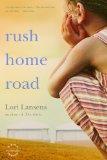
 After 10 years of leading a book discussion group for the BPL, I sometimes think nothing can surprise me anymore. I am happy to say, I was proven wrong this month, when we read Rush Home Road the first novel by acclaimed Canadian author Lori Lansens. In Rush Home Road, I found not only an original, compelling, and lyrical story, but also great fodder for a wonderful discussion. I was not expecting much for this month, but what I got was a treasure.

Although I had not read Lansens before, I was familiar with the critical acclaim for her 2007 novel, The Girls. Rush Home Road had actually gone out of print, but was brought back in 2008 due to the popularity of The Girls, and I for one am glad.
Rush Home Road's plot is simple to describe. We are in Canada, just outside of Windsor (so just across the water from America), in a trailer park, in the 1970s. A five-year old half white, half black girl--Sharla-- is abandoned by her mother and given to an elderly black woman--Addy. Although Addy is not well, she makes it her mission to "save" Sharla, love Sharla, and find her a family. The story is about their relationship to a point, but it is mostly about Addy.
The novel bounces back and forth between the 1970s present and Addy's past, beginning when she was raped by a neighbor and cast out of her community in the 1920s. This community was also interesting. Her hometown, Rusholme, was famous for being the terminus of the underground railroad. It was a town run by blacks; it was a world without segregation, and when Addy leaves Rusholme as a teenager, she sees racism for the first time in her life.
Now on to the discussion itself, which will reveal more plot points and plenty of the appeal of this novel:
- We started with the usual liked, didn't like, so-so vote. I had 11 liked, 1 so-so, and only 1 didn't like (and she didn't like it because there are realistic--not gratuitous-- but visceral descriptions throughout, of sex, births, deaths, etc... Take the opening line as an example,"It stinks of piss in the room.") Initial comments about why people liked it: It was so descriptive. I felt like I knew the people and places even though I hadn't been there. It painted such a good picture,
- We began talking about the overall tone of the book because, as one participant volunteered at the start: It was easy reading, but not an easy subject. I loved that statement, but asked others to elaborate. Someone else said that it was amazing that such a sad book could be so uplifting. Addy was raped, lost everyone she ever loved, and had a hard life, yet she survived, she kept on going, and remained a good person. Another participant enjoyed that Addy never moaned or said "poor me," she just went on.
- I was concerned about the style of the book. The novel is constantly shifting between past and present, without much to denote the shift. There is some confusion as you read, and as the novel goes on, the blending of the 2 stories (Addy's past and her present with Sharla) is less clear. But this worked well since as the story goes on, Addy is herself more confused. As Sharla notes, Addy is not sure where she is and who she is talking to. We feel Sharla's combined confusion and sympathy because of the style. Because just about everyone was enthralled by Addy, her story, and Lansens' writing, they feel into the rhythm of the two time periods easily. They just went with it and trusted Lansens to take them where they needed to go. I cannot stress enough what a testament to Lansens' writing this is. My group usually despises time shifts that are not broadcasted clearly.
- Great comment: "The two females here are a gift to each other." Sharla helps Addy to come to terms with her life and gives Addy a purpose again. Addy gives Sharla love, something she has never felt or experienced. Sharla also allows Addy to find love again, just when she thought she was all out of love. She gives Sharla a chance at a normal life, and she finds Sharla her real father and a family to be a part of.
- This point led us to the ending of the novel only 15 minutes into our discussion, but when you are leading a book group, you need to follow the flow of the conversation, not the structure of the book. Without giving too much away, the novel ends completely resolved. In fact, it is so resolved that it should have felt contrived, but we decided that Lansens did such a good job building up to this ending, that it just felt wonderful. Addy had a terrible life, but she ended it doing such good, she was happy, she got to finally go home, and she found Sharla a home. The final scene of Addy's childhood home with all those she had ever loved waiting to welcome her in, was simply beautiful.
- We talked about the bits of magical realism in the story, most notably the help Addy receives from her dead loved one. We talked about this literally as participants shared stories of talking with their dead parents and spouses. It seemed natural in the story as many of us admitted to looking to our deceased loved ones for guidance. I added a quote from Lansens to the discussion. She had said that the novel is about how "the past both haunts and inspires us." The entire book, the way it was laid out, the plot, and the reasons we all loved it were for exactly this reason. This overall theme is also why even those participants who hate magical realism, were fine with Addy receiving advise and encouragement from her dead brother.
- Race of course came up. We first talked about the fact that this novel is written mostly in the voice of an old, black woman, yet it was written by a young white one. Lansens' herself discussed this issue in an interview found in the back of the paperback edition. Her point is that all fiction requires that the author appropriate the voice of someone he or she is not. She dismissed any criticism about her choice of voice using this nonracial point. Our group is made up of older white women (and me). They did not mind that she took up Addy's voice. In our case, I thought they might be unhappy with her trying to capture an older woman. But they were fine with it. However, I do wonder if a group of elderly black women would feel the same way.
- We also talked about how Addy was introduced to segregation and racial issues, but due to her upbringing in Rusholme, she was less willing to just accept her place as inferior. This also allowed her to view the racial issues that came up from the most neutral position of any character. We also liked her husband Mose, the black man who could pass for white but identified as black. It made for some interesting moments in the story.
- We talked about the theme of family and home for a bit. This novel asks you to ponder what makes a family a family and what makes a home a home? These are huge universal questions at the heart of the book. These questions are also why the book is so ripe for discussion. We spent some time talking about being related vs being a family. People shared personal stories and we related them to the text.
- We talked about how the historical aspects of the novel added depth. The frame was interesting. We have not read much about Canada and we learned new information about the underground railroad. Everyone enjoyed this.
- Finally, we ended with a list of how Addy and Sharla are similar. I will list what we came up with in a second, but first, I want to point out that Lansens made these connections subtly. It is only in discussing the work that we realized how effortlessly she tied these two very different characters together. We appreciated this as readers, and were happy for the chance to reflect and discuss them. It enhanced our enjoyment of both the novel and the discussion. How Addy and Sharla are similar:
- Both have non-traditional birthday parties; in fact, both do not really celebrate their birthdays as a rule
- Both cast out by their parents, but both still hold on to hope for love
- Both suffer hunger, true hunger, not just skipping a meal
- Both rely on the kindness of strangers to survive
- Both have hand injuries, which while not debilitating, have come from important moments in their histories.
- Both show kindness to people who may not deserve it, but get kindness back
Readalikes: It is hard not to think of another popular and moving story of black women as told by a white woman, The Help when reading Rush Home Road.
A participant said the abandoned child bringing new life to an old person reminded her of when we read Blessings by Anna Quindlen, many, many years ago. Yet another participant said the feel of this novel and Addy's life story reminded her of On the Road with Charles Kuralt
 . Check out these backlist gems for yourself.
by Anna Quindlen, many, many years ago. Yet another participant said the feel of this novel and Addy's life story reminded her of On the Road with Charles Kuralt. Check out these backlist gems for yourself.
Lansens herself has said that Canadian author Margaret Laurence has been one of her biggest influences. Laurence is well regarded in Canada but not read as much here in America. More American readers should try Laurence.
has been one of her biggest influences. Laurence is well regarded in Canada but not read as much here in America. More American readers should try Laurence.
Other authors who are similar in tone, style, and topic to Lansens are John Irving, Alice Munro, and Jane Hamilton.
, Alice Munro, and Jane Hamilton.
Readers may also want to know more about the true story behind the fictional Rusholme; it is based on a real town. You can use this link to find more books about the Underground Railroad. Also, here is the official government site commemorating the underground railroad in Canada.
to find more books about the Underground Railroad. Also, here is the official government site commemorating the underground railroad in Canada.
Finally, our group also read Alias Grace by Margaret Atwood a few years ago. This story with its historical Canadian setting, strong female character, class (as opposed to race) issues, and beautiful writing, is also a good readalike option.
Tuesday, March 1, 2011
HarperCollins Responds
Click here to go over to Early Word where they have posted the publisher's official statement.
HarperCollins Ebook Policy
Many of you are probably following the OUTRAGEOUS news from HarperCollins that the ebooks they now make available for checkout on OverDrive will terminate after 26 checkouts.
To make the insanity of this decision clear, the books we buy from HarperCollins can sit on the shelf and be checked out with a library card over and over again. Just quickly scanning their top authors list, I see Diane Mott Davidson and Kim Harrison in the top 10. It would be safe to say that each of their books has circulated at BPL at least 50 times (and that would be a conservative estimate). The new Joyce Carol Oates will also be on the bestseller list soon.
But those same books, being checkout with the same library cards, just in ebook version, would disappear from our shelves after 26 checkouts. Are you kidding me. That makes no sense.
Libraries buy lots of books. We buy books that get good reviews, but may not sell well. For goodness sake, my book gets bought by most pubic libraries. Thanks to library purchases, I am still getting royalty checks on the first edition of my book, and it is 7 years old! These are not sales to scoff at.
So HarperCollins, we will now buy at least one print, the audio, and an ebook version of your books for our library patrons. But even though we are increasing the number of copies of your books we are buying, you want to be greedy and force us to buy more?
Are you forgetting that the library is a great advertisement for your authors and their books? Many patrons discover an author at the library and then go out an buy their own copies of the books. Did you think about that? Probably not. Now you may lose new readers because we will not have your books at all in ebook form. Good forward thinking HarperCollins.
Of course, I am not the only person upset about this. RA Online has this great post with a run down of the issue including many links with more details.
There is also this boycott website. It explains the full issue and has ways you can voice your displeasure. Please join the fight to shame HarperCollins into changing their policy.
To make the insanity of this decision clear, the books we buy from HarperCollins can sit on the shelf and be checked out with a library card over and over again. Just quickly scanning their top authors list, I see Diane Mott Davidson
and Kim Harrison in the top 10. It would be safe to say that each of their books has circulated at BPL at least 50 times (and that would be a conservative estimate). The new Joyce Carol Oates will also be on the bestseller list soon.But those same books, being checkout with the same library cards, just in ebook version, would disappear from our shelves after 26 checkouts. Are you kidding me. That makes no sense.
Libraries buy lots of books. We buy books that get good reviews, but may not sell well. For goodness sake, my book gets bought by most pubic libraries. Thanks to library purchases, I am still getting royalty checks on the first edition of my book, and it is 7 years old! These are not sales to scoff at.
So HarperCollins, we will now buy at least one print, the audio, and an ebook version of your books for our library patrons. But even though we are increasing the number of copies of your books we are buying, you want to be greedy and force us to buy more?
Are you forgetting that the library is a great advertisement for your authors and their books? Many patrons discover an author at the library and then go out an buy their own copies of the books. Did you think about that? Probably not. Now you may lose new readers because we will not have your books at all in ebook form. Good forward thinking HarperCollins.
Of course, I am not the only person upset about this. RA Online has this great post with a run down of the issue including many links with more details.
There is also this boycott website. It explains the full issue and has ways you can voice your displeasure. Please join the fight to shame HarperCollins into changing their policy.
Monday, February 28, 2011
Monday Discussion: Books into Movies
In honor of last night's Oscars I wanted to focus today's Monday Discussion on the best and worst of movies made from books.
Generally, I avoid movie versions of books I have loved. Specifically, I would not see the movie versions of The Road, The Lovely Bones, and The Time Traveler's Wife because I loved the books and did not want the movie to ruin it. In fact, for this reason I am considering avoiding the movie version of Water for Elephants and The Help, both due to theaters in 2011.
There have been surprises, like Cold Mountain, The Perfect Storm, and The Lord of the Rings Trilogy for which I loved the movie and the book.
And then there are books which I did not love, but I really enjoyed the movie versions of like No Country for Old Men.
But unfortunately, from time to time, I have seen a bad movie version of what was a good book. In my opinion recent examples of these include The Blindside (movie was sappy, book was very interesting and thought provoking and not just about Michael Oher) and The Ruins.
Specifically The Ruins movie version still makes me mad. For the record, The Ruins is my favorite horror book of all time. The movie not only changed the ending (which in this case changes the entire tone of the book), but they changed the order in which the monster killed off the characters. Also, in this novel, the characters are stranded on a hill top and being stalked by a plant-monster. The waiting is unbearable in the book. In the movie, there is no tension in the waiting. The characters are built up during these uneasy moments of doomed waiting in the book, waiting for help that they know will not and cannot come. In the movie, the characters did not have the chance to be developed because there was not emphasis on the tortured waiting.
I could go on for awhile about how much this movie ruined the book (pun intended).
To add to the discussion, The Chicago Tribune ran this article on Saturday suggesting books to compliment some of the Oscar nominees.
Now it's your turn. For today's Monday Discussion, share your opinions good or bad about books being turned into movies.
And remember, I now have the Monday Discussion Archive accessible here.
Friday, February 25, 2011
Readers' Advisory: How To Balance Your Library's Reading Budget
Joyce Saricks and Neal Wyatt (the editors of my book) finished up a the first of their online workshops on the topic in the title of this post yesterday.
Over on the ALA Editions Blog, they have posted the resources and some of the slides from their presentation here.
Head on over and see what Joyce and Neal had to say and add your questions to the comments field.
Good RA service need not break the bank. You can be creative in your purchases as well in how you market your collections in order to stretch your reading budget. It is imperative in this weakened economy that the library be a place for leisure readers. Patrons are on a tight budget and they are cutting their spending on books while increasing their use of the local library.
Of course, our budgets are tight at the library too. We need experts like Joyce and Neal to help remind us of all we can do with our limited funds.
Check it out for yourself.
Over at the BPL we are taking this advice to heart. We have increased our services to leisure readers both in the library and online in the last year without spending any extra money. In fact, we spent less on books but increased our circulation by concentrating on staff training, starting a permanent staff recommendation display and blog, The Browsers' Corner, and by focusing our time and energy on displays.
What are you doing in these lean budget times?
Subscribe to:
Posts (Atom)




