I will be speaking on the panel Trends in Genre Series. Here are the details.
Thursday, March 15, 2012 2:00 PM - 3:15 PM
Venue: Pennsylvania Convention Center
Room: 115-A-B
Join us for a lively discussion of trends in genre series with four top-notch stars in the field. Joyce Saricks will speak about “Gentle Reads.” John Charles will tackle Romance. Becky Spratford will talk about horror fiction and Kier Graff will finish up with mysteries. Moderated by Janet Husband.
My handouts and power point as well as Joyce and John's handouts are already posted here.
If you do make it to the program, stop and say hi. If you cannot make it either to my program or to PLA at all, please feel free to take a look at the handouts and contact me if you have any questions.
Also, take a look at the list Katie made over on Book Group Buzz, inlcuding panels she is on. I will be popping in to a few of her programs while I am in Philly.
Monday, March 12, 2012


Friday, March 9, 2012
RA Links Round Up
It's been a while since the last time I gathered up the links that have been gathering dust in my "drafts" folder. So here a round up of what has caught my eye in the last few weeks.
- The Chicago Tribune ran an article this week entitled, "Self-serve Libraries Hitting the Suburbs." It quoted Jeannie Dilger-Hill, the Director of my local library, and drew attention to some of the issues we have been discussing in our Board meetings for the last year or so.
- The people behind the wonderful family of websites under the BookReporter Banner have started another useful and niche filling site, 20 Something Reads with the tag line-- "A time to re-discover reading for pleasure--and FINALLY-- read what you want." I love the idea of capturing the generation who grew up addicted to Harry Potter and reminding them that now that they are adults, there are still some great reading options out there. I will be following them. I already am a loyal user and follower of GraphicNovelReporter and Reading Group Guides. The BookReporter Network's track record is impeccable.
- Speaking of Graphic Novels, I read this essay about creating sound effects in comic books. It is interesting, but wasn't worth a full post. I was pointed to the link by by feed to The Book Bench.
- Over on Shelf Renewal they have also reminded me of one of my favorite sources of YA information, with their Web Crush this week-- Librarian in the Middle. As they succintly put it, "this blog is a great way for RA generalists to keep a foot in the YA world."
- My friend and colleague, Joyce Saricks, has proudly proclaimed as one of her 2012 resolutions that she will finally read Ulysses by James Joyce. Good for her. I think I would rather take this route though.
- Speaking of Joyce, in her most recent column in Booklist, she writes about the importance of networking, and while we are networking, she reminds us to share the books we are reading with one and other. This is an important reminder, especially as many of us get ready to gather at the PLA Conference next week. She is asking all attendees to stop by the Booklist Booth (#431) and leave our busniess card with some of your favorite books on the back. And then for those not able to attend the conference, look to the Booklist Blog, Likely Stories for information on how you can add to the conversation.
- Also last night the National Book Critics Circle Awards were annouced here. And can you tell how not excited I am by this list since I put it last in the round up.
Thursday, March 8, 2012
March Madness Bookish Brackets
Remember back in the 20th Century when only NCAA basketball went all "Mad" in March?
Well, thankfully, now the book world has caught the March Madness bug too. There are three high profile bookish brackets circulating right now, using the popularity of the basketball tournament to get people excited about books. Today, I will highlight them and provide you the links you need to follow any or all.
The Daddy of all bookish brackets is The Morning News' Tournament of Books which begins today. Click here for the preview including rules, schedule, and judges. Click here for today's battle which includes the blow-by-blow reasoning from the guest judge and then a commentary from the editors. After 8 years, these guys really know what they are doing. My suggestions, check in daily all month long.
While the Tournament of Books is mostly a battle of literary fiction with a few critically acclaimed genre titles thrown in, the "gals" (their word) over at Dear Author and Smart Bitches are in their second year of running an all romance bracket. Their tourney is called DABWAHA. The site is here. It runs concurrent with March Madness. Click through for details, titles, voting, and commentary.
I have saved the most fun bracket for last. Over on Criminal Element, they are currently running one of their fabulous "Death Brackets." Last year, I was glued to my computer as I followed their bracket pitting the Toughest Dicks vs the Baddest Thriller Heroes. In fact, the best part of the bracket was how the writers told a story for each battle. Each of the battle posts was like a great crime fiction story in and of itself.
This time the battle is over Cliches in Crime Fiction. So you will see the following battles:
All of these brackets are making me think about trying to run a horror bracket next year over on RA for All: Horror. I think I will float the idea around to fellow horror bloggers. Maybe. We'll see.
For now, enjoy the Madness.
Well, thankfully, now the book world has caught the March Madness bug too. There are three high profile bookish brackets circulating right now, using the popularity of the basketball tournament to get people excited about books. Today, I will highlight them and provide you the links you need to follow any or all.
The Daddy of all bookish brackets is The Morning News' Tournament of Books which begins today. Click here for the preview including rules, schedule, and judges. Click here for today's battle which includes the blow-by-blow reasoning from the guest judge and then a commentary from the editors. After 8 years, these guys really know what they are doing. My suggestions, check in daily all month long.
While the Tournament of Books is mostly a battle of literary fiction with a few critically acclaimed genre titles thrown in, the "gals" (their word) over at Dear Author and Smart Bitches are in their second year of running an all romance bracket. Their tourney is called DABWAHA. The site is here. It runs concurrent with March Madness. Click through for details, titles, voting, and commentary.
I have saved the most fun bracket for last. Over on Criminal Element, they are currently running one of their fabulous "Death Brackets." Last year, I was glued to my computer as I followed their bracket pitting the Toughest Dicks vs the Baddest Thriller Heroes. In fact, the best part of the bracket was how the writers told a story for each battle. Each of the battle posts was like a great crime fiction story in and of itself.
This time the battle is over Cliches in Crime Fiction. So you will see the following battles:
1. Hit Men vs. Serial Killers
2. Riding the coattails of Sherlock Holmes vs. “One Last Job”
3. The alcoholic P.I. vs. Old school Italian Mafia4. Paranormal Crime Solvers vs. Culinary Sleuths (who share recipes)You can vote in the comments of this post. Check back to see which cliche wins.
All of these brackets are making me think about trying to run a horror bracket next year over on RA for All: Horror. I think I will float the idea around to fellow horror bloggers. Maybe. We'll see.
For now, enjoy the Madness.
Wednesday, March 7, 2012
Author Blurbs Revisited and RA Training Opportunities
Last year, I posted here about how to use the blurbs one author gives to another author as a tool to help readers. In fact, I use "blurbs" quite often at the desk when I am helping readers.
Again, read this post where I go into exact detail on how I use blurbs as an RA tool. I don't want to repeat myself.
I am not the only one out there contemplating the place of the author blurb in today's literary landscape. The New York Times is currently running a very interesting discussion entitled, "The Quandary of the Book Blurb." The series includes essays by bestselling author Stephen King, author and editor Sophfronia Scott, journalist and novelist Bill Morris, and literary agent Sharon Bowers. Together, the 4 essays cover every aspect of the blurb and how it can help or hinder authors and/or book sales. There is also a place for your comments as part of this discussion.
I feel that the author blurb is an important resource for helping readers, one which is often forgotten about. Reading these essays from the author, reviewer, and agent side of the issue will help you to understand how and if you can use these blurbs to help your readers find their next good read.
I am all about using "outside the box resources," a category into which I place author blurbs. As readers become more savvy about finding their own readalikes, especially with the popularity of sites like GoodReads (where readers are already having intelligent and useful conversations about their reading), librarians who help leisure readers need to make sure we are using the wealth of information and resources available to us as efficiently and effectively as we can. We need to make out training and expertise count.
We need to stand out as an invaluable resource to our patrons, not only because we have the books there for free checkout, but because our knowledge and assistance enhances their reading experience.
Which leads me to...well...me. I can come out to your library or conference to help you to close the training gap with your staff. I am currently booked through the summer but am beginning to schedule appearances starting in Fall 2012 (after August 21). Click here for more information.
I will also be appearing at the PLA conference next week (more details in the coming days). For a full list of all RA related programming at PLA, use the handy link from my friends at Reader's Advisor Online.
Again, read this post where I go into exact detail on how I use blurbs as an RA tool. I don't want to repeat myself.
I am not the only one out there contemplating the place of the author blurb in today's literary landscape. The New York Times is currently running a very interesting discussion entitled, "The Quandary of the Book Blurb." The series includes essays by bestselling author Stephen King, author and editor Sophfronia Scott, journalist and novelist Bill Morris, and literary agent Sharon Bowers. Together, the 4 essays cover every aspect of the blurb and how it can help or hinder authors and/or book sales. There is also a place for your comments as part of this discussion.
I feel that the author blurb is an important resource for helping readers, one which is often forgotten about. Reading these essays from the author, reviewer, and agent side of the issue will help you to understand how and if you can use these blurbs to help your readers find their next good read.
I am all about using "outside the box resources," a category into which I place author blurbs. As readers become more savvy about finding their own readalikes, especially with the popularity of sites like GoodReads (where readers are already having intelligent and useful conversations about their reading), librarians who help leisure readers need to make sure we are using the wealth of information and resources available to us as efficiently and effectively as we can. We need to make out training and expertise count.
We need to stand out as an invaluable resource to our patrons, not only because we have the books there for free checkout, but because our knowledge and assistance enhances their reading experience.
Which leads me to...well...me. I can come out to your library or conference to help you to close the training gap with your staff. I am currently booked through the summer but am beginning to schedule appearances starting in Fall 2012 (after August 21). Click here for more information.
I will also be appearing at the PLA conference next week (more details in the coming days). For a full list of all RA related programming at PLA, use the handy link from my friends at Reader's Advisor Online.
Tuesday, March 6, 2012
BPL Book Discussion: Unless

This month we read Unless by Carol Shields. This was the final novel by the Pulitzer Prize winning author before her death from breast cancer in 2003. Here is the summary from the publisher:
For all of her life, 44 year old Reta Winters has enjoyed the useful monotony of happiness: a loving family, good friends, growing success as a writer of light 'summertime' fiction. But this placid existence is cracked wide open when her beloved eldest daughter, Norah, drops out to sit on a gritty street corner, silent but for the sign around her neck that reads 'GOODNESS.' Reta's search for what drove her daughter to such a desperate statement turns into an unflinching and surprisingly funny meditation on where we find meaning and hope.
Warmth, passion and wisdom come together in Shields' remarkably supple prose. Unless, a harrowing but ultimately consoling story of one family's anguish and healing, proves her mastery of extraordinary fictions about ordinary life.Unless provided a unique opportunity for our group. As I always tell my students, sometimes you have a better discussion when people dislike a book than when people generally like it. As you will see below, overall, we disliked or were "so-so" on the book, but I am happy to say, we unanimously loved the discussion we had about the book. In fact, I would say that if you have an established group that can let their personal feelings for a book go and focus on what can be discussed about it, this book is a great choice. But if your group does not have trust in the leader to take them through a book they did not enjoy, it could be a disaster.
Here are the highlights of our comments and discussion:
- You know how we start by now. 3 people voted that they liked the book, 9 voted for disliked and 4 (including me) said so-so.
- I always try to ask the minority to go first, this ensures that they have a chance to have their say. One "liked" voter said she found it very thought provoking. She liked looking at what happens in a family when something goes wrong; how they solve their problems.
- Another person liked the novel because it was "a writer's book." There were entire sections that did nothing but contemplate the place of a writer.
- Some so-so people said that Reta annoyed them, but over time they appreciated that we were watching her unravel, that the book was all over the place because she was all over the place.
- The style of this book is highly unusual. She was having a small breakdown and the book reads like that. The plot is not really advanced for most of the book. The "story" here, following why Norah is now living on the street is hardly addressed. In fact, it is tip-toed around until the last 20 pages and then all wrapped up pretty quickly.
- This novel, while missing a traditional plot, it also not heavy on character development. We get a lot of Reta, but not much of anyone else. While Reta is self obsessed, we know her daughters, husband, and mother-in-law are all hurting, but Reta is too selfish to even ask them how they are feeling. This really bothered a lot of us. We were craving their point of view.
- To take it a step further, many of us in the group are mothers, and as mothers, we completely disagreed with Reta's handling of Norah's behavior. It was obvious that Norah was having some kind of mental breakdown of her own; she was hurting, yet no one asked her why. She needed help and intervention, but everyone seemed to want to give her space. Reta was too passive for us mothers.
- We all enjoyed Shield's use of letters that Reta writes to other authors she encounters while going through this difficulty time to advance the story. We learn that Reta does not mail them, but we see her struggling to come to terms with her daughter's choices, her own writing, and even her place in the world.
- Reta talks a lot about feminism in this novel. She works as the translator for a renowned French feminist. She spends hours with her group of female friend writers talking about inequality and trying not to let being a woman define who they are. But then she lets it define her and her daughter.
- Talking about the feminism Shields was trying to stir up in this novel led us to a long discussion of being raised as strong women no matter our age. Many of the older women (70+) talked about examples of feminists in their families going back to their mothers and grandmothers.
- Although we all thought the ending was a little rushed, we had a lot of say about it. I don't want to give much away, but the reason why Norah decided to beg on the street seemed to come out of nowhere. That combined with the visit by Reta's new editor and the opening up of the mother-in-law, led to much discussion.
- The mother-in-law, Lois. Her story taught us the importance of asking. It is not enough to only listen. Sometimes you need to ask. A question someone brought up that got us thinking, "If you don't ask do you really care?"
- We talked a bit about Reta's transition from translator for Danielle to novelist on her own over the course of the novel We discussed the difference in the two jobs and how the changed showed Reta's growth.
- This led to a longer discussion about the character of Danielle.
- Someone said how much they loved how this novel has sentences every now and then that you could pull out on their own and contemplate outside of the confines of the novel. A few of these were shared.
- We ended by quoting the portions of the novel where Shields has Reta talk about the word "Unless." All of the chapters are named after adverbs, but Reta has much to say about "unless" in particular. Although we enjoyed reading those lines, we were a bit upset that the title's meaning was so clearly laid out for us. We like to talk about the title and what it could mean. Here, there is not much more to say that Shields didn't write already.
Readalikes: There are a couple of titles I thought of when reading Unless that might be a good suggestion. First, I think Nick Hornby's How to Be Good is a better read for a reader who likes character and story but still wants to look at the idea of someone changing as their strive for "goodness." Also, if you are looking for a book about a woman writer going through a difficult time, I would also suggest The Hunchback of Neiman Marcus by the poet Sonya Sones, which I read here.
Those are my personal off the top of my head suggestions, but after doing a bit of research, I would suggest:
- Olive Kitteridge by Elizabeth Strout: read why here
- Good Harbor by Anita Diamant which deals with female friendships and familial turmoil.
- The Seven Sisters by fellow Canadian Margaret Drabble. Here a newly divorced woman is learning to be single. Like Unless it is thoughtful and contains a lot of looking back.
- Many people compare Unless to Mrs. Dalloway. I am going to trust them, but I like the Woolf book even less than the Shields.
Back to the regular schedule on the third Monday of the month in March when we meet to discuss The Particular Sadness of Lemon Cake by Aimee Bender.
Monday, March 5, 2012
Monday Discussion: Women's History Month Edition
So, it is the first Monday in March, which means it is time for Women's History Month.
I thought today we could talk about some of our favorite female authors. I decided to focus on current female authors who I really enjoy. I have linked to my reviews of their works for you to see why. These links are to any time I have mentioned them.
But, I have already written quite a bit about these women here on RA for All. Now it is your turn. What female writers now or in the past are among your favorites? Now is your chance to talk them up and get us to read them.
For past Monday Discussions, click here.
I thought today we could talk about some of our favorite female authors. I decided to focus on current female authors who I really enjoy. I have linked to my reviews of their works for you to see why. These links are to any time I have mentioned them.
But, I have already written quite a bit about these women here on RA for All. Now it is your turn. What female writers now or in the past are among your favorites? Now is your chance to talk them up and get us to read them.
For past Monday Discussions, click here.
Big News in Adult Fiction Awards
Today, RUSA and Booklist announced that they will be using the RUSA Reading List winners for adult genre fiction and the Booklist 50 Editor's Choice titles as finalist lists for a brand new award for Adult Fiction. Nancy Pearl has agreed to be the Chairperson of the inaugural award committee. The ALA and the Carniegie Corporation are sponsoring this award.
Click here or here for the details.
This is exciting news for authors and readers because when librarian's pick award winners, the public listens. The winner will be announced at the annual ALA Conference in June.
Click here or here for the details.
This is exciting news for authors and readers because when librarian's pick award winners, the public listens. The winner will be announced at the annual ALA Conference in June.
Maberry Delayed
I know I promised the Maberry interview yesterday, but it appears it has been delayed. I hope to have it for you sometime today. Details to follow after the Monday Discussion later today.
Friday, March 2, 2012
What I'm Reading: Dead of Night
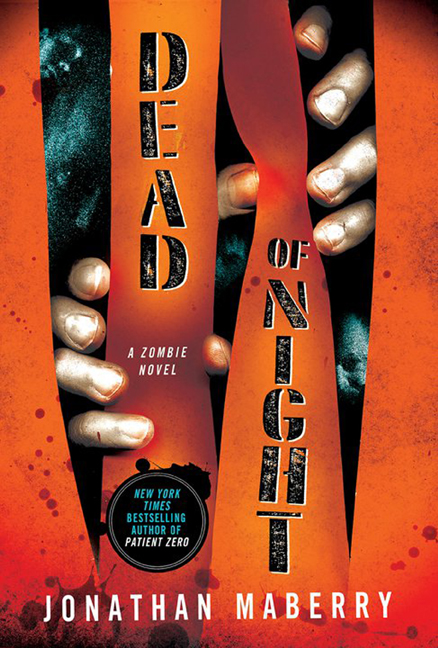
In preparation for the interview, which does include specific questions about Dead of Night, here is my review of the book.
Dead of Night is a zombie novel (as the subtitle tells us), but it is different than the bulk of today's zombie novels, even different than Maberry's critically acclaimed YA zombie series which begins with Rot and Ruin (link goes to my review of that novel). Why? This can be answered by Maberry himself in Chapter One which reads, in its entirety: "This is how the world ends."
That being said, I should say, this is a horror zombie novel, not a literary fiction one like Zone One, or a humorous one like Breathers, or even a political thriller one like Feed. Dead of Night is for horror fans who want to feel the dread and anxiety, who know bad things are going to happen and are turning the pages expecting them. Remember, as the first line tells us, "This is how the world ends." Do not pick up this book and expect a happy ending. Personally, I love that, but some readers may not.
But if you are looking for a serious horror treatment of the popular zombie craze that is well written and great fun to read. This is the book for you.
While most of today's zombie novels take a critical look at the world as it stands after the zombie apocalypse (click here for numerous reviews of some of the best of these books), Dead of Night is the detailed, action-packed story of how the apocalypse begins. Here we get a step-by-step account from all sides of how 1 infected person can mean the beginning of the end for human civilization. There is no "after" picture here. We get the details of the apocalypse as it begins from every angle, and we are left just as it is about to escalate.
As the novel opens we are in rural Western PA and a storm is quickly approaching (a double whammy of the popular isolated setting for horror). Local law enforcement are called to a possible break-in at the local funeral home. The body that was just delivered secretly (and unexpectedly) to that funeral home is of a notorious serial killer, Homer Gibbon. But before he was executed in prison, Gibbon was given an injection by Dr. Volker containing a formula designed to keep him conscious and awake while his body rots in the grave. Before he can be buried, Gibbon wakes up. He is conscious and fully aware, but is also very hungry...
The story is told in what has become Maberry's go-to winning style. He blends elements of traditional horror -- an unearthly monster, a troubled hero, an atmosphere of extreme unease, an isolated setting, and a relentless provocation of terror-- with the emerging genre of the supernatural thriller-- detailed investigative elements, a human villain out to kill, fast paced action, and shifting points of view from heroes to killer.
Like all Maberry novels there are many characters, some who only get a moment or two's turn at telling the story from their perspective. Some reader's may not like the jumping around, but anyone who has read one of Maberry's best selling Joe Ledger novels will be familiar with this story telling technique. Personally, I love it, especially when we get just a moment from the perspective of someone as they are being attacked. This technique adds to the unease of the story, and this anxious state of unease and terror is the main reason why someone reads and enjoys a horror novel in the first place. Maberry has a compelling dread filled story already, but the switching point of view across many characters ratchets it up to a whole new level.
That being said, there are a few main characters here. Our 2 heroes are Dez, a female, ex-vet, now cop who has had a troubled life and her ex-boyfriend "Trout," a journalist best known for his sensational pieces. Our villains are Dr Volker and serial killer Gibbon mentioned. There is one other pov that I found very moving and absolutely loved as it came out periodically throughout the novel, that of the funeral home director, Doc Hartnup. In fact, without giving anything away, Doc's pov was a fresh addition to the zombie novel tradition.
The shifting points of view, also speed up the pacing here. As a reader, you are seeing all sides to the issue. We know a zombie plague has begun to be spread even before the police on the ground do. We see the government preparing a response. We see Homer running around the county. We are afraid, but we keep turning the pages because we are rooting for Dez and Trout to figure it all out in time to save the day. You also keep reading because as a horror fan, you love this stuff.
I have to say I also enjoyed following the spreading infection in such a detailed fashion. The short chapters and shifting action mimicked the confusion and panic that was spreading with the plague.
One of my general complaints about novels today is that many of them have "third act issues." You are reading a great book and then the author runs out of steam, and it ends flatly. Geraldine Brooks Dead of Night which delivers right through the last page. The story line following Trout and Dez has its resolution, but we also have a great, twist at the end.
If you think traditional, strongly written horror is in decline, read this book. The only unpleasant side effect you may have is that it will make much of the other books you are reading look bad.
Three Words That Describe This Book: dread, compelling, multiple points of view
Readalikes: I have had much to say about zombie novels here. And, yes they are my favorite horror subgenre, so I am biased. I would suggest you read these posts to see my favorites, but I would like to highlight a few which I feel are fairly similar:
- The type of zombie here are reminiscent of those in Nate Kenyon's Sparrow Rock.
- The Rising by Brian Keene is the novel that is widely credited with beginning the 21st Century zombie craze.
- Joe McKinney's excellent zombie series which begins with Dead City is a great all around readalike option here. In McKinney's series we also follow a policeman as a zombie plague rising out of the destruction caused by a series of hurricanes slowly takes over an isolated town. Fans of Dead of Night who are craving more should check out McKinney right away.
Although The Ruins by Scott Smith does not contain a single zombie, these two books are very similar in tone, story telling technique, and in how they are ended. Readers of my blog know my love for The Ruins already though.
I also offered author readalikes to Maberry a few days ago here.
Come back on March 4th to see more about Dead of Night from Jonathan Maberry himself.
Thursday, March 1, 2012
Happy Pig Day!
Leave it to Quirk Books to celebrate with a list of the Greatest Oinkers in Literature. Totally worth a click
Subscribe to:
Posts (Atom)


