RA FOR ALL...THE ROAD SHOW!

I can come to your library, book club meeting, or conference to talk about how to help your readers find their next good read. Click here for more information including RA for All's EDI Statement and info about WHY I LOVE HORROR.
Showing posts sorted by relevance for query The Good Thief. Sort by date Show all posts

Thursday, April 29, 2010

BPL Book Discussion: The Good Thief

Last week, my group met to discuss Hannah Tinti's The Good Thief, and to prepare for our upcoming appearance in The Chicago Tribune.


First, to the important stuff. As I mentioned here, we were accepted to be featured as one of the Printers Row Chicagoland Bookclubs. To that end, I was asked to have the group answer some specific questions and take their picture. So thanks to Briana, here we are (minus 2 regulars).

Look for an announcement on this blog in the coming months to see when our feature is run, and, more importantly, to see what we have to say about how awesome the Berwyn Library's Monday Book Club is.

Now on to the discussion, which was a great one incidentally.  I first read The Good Thief  by Hannah Tinti back in October of 2008 and it was my favorite book I read that year also. Here is what I said about it back then:
"The Good Thief is, refreshingly, a traditional adventure story (with a historical background) in a literary landscape where adventure is being consumed by thrillers and terrorism plot lines. It is fast paced, the hero is resourceful and lucky (maybe unbelievable so, but that goes with the genre), and it has a resolved, happy ending. Tinti uses many of Dickens' own tricks and themes to propel her story along., including a wonderful cast of eccentric secondary characters such as a dwarf who lives on the roof, a murdering giant, and a hard of hearing landlady. The novel is appropriately funny, heart-warming, melodramatic, and bittersweet, with each occurring in the right place."
The novel is set in 19th Century, upper New England and follows the story of  an enchanting 12-year-old boy named Ren. Ren was left, missing his left hand, as an infant in an orphanage, he is finally adopted by a man claiming to be his brother, but who is quickly revealed as a con man. This historical adventure leads Ren on a Gothic inspired adventure in which his parentage is finally revealed and his future is secured.

I was concerned about doing one of my favorite books with the book club, but it worked out great.  I began, as usual, by going around the room and asking who liked, disliked, or felt so-so about the book. We had no "dislikes", many "loves," and only a few "so-so's." I have mention using this discussion starting trick before and highly recommend it to all book discussion leaders.  First, you get a sense of what you are up against. I always try to provide a balance of opinions in the discussion because when everyone agrees, the discussion is boring.  In this case, I knew I would need to be more critical of the novel, providing some counterpoints for their "Good Thief Love."

Second, this technique allows the discussion to begin naturally. After people pick a side, I call on someone from the majority opinion (in  this case, loved it) and ask why they felt this way. This gets the discussion going right away. You do have to make sure you get the other people (in this case, the so-so's) into the discussion too. In many cases, the reason one person loved the book is why another did not.

So, what did we discuss. The biggest thing I want to share about our discussion is how excited everyone was that we read a fun, fast-paced story. One participant said reading this novel reminded her of reading as a child: a book you couldn't put down, with characters you loved, great details of time and place, and a fun, adventurous story with a happy ending. This is important for long standing book clubs. We can get bogged down in serious books, so it is nice to have a chance to read a fun book with enough issues to discuss

Here is a list of some of the issues we discussed:
  • Ren was a wonderful protagonist. We loved his perspective, imagination, and his good heart
  • Tinti's beautiful language, engrossing descriptions, and eccentric characters were commented upon
  • One participant had us look at the intro pages for each of the novel's 3 parts.  Part One has a picture of a hand (in this part Ren is used for his lack of hand). Part Two has a picture of a skull (here Ren meets the Doctor and learns about anatomy). Part Three has a picture of a heart (here Ren finds a family)
  • We spent a lot of time talking about how similar to a Dickens novel this truly was. This otherness of time and place with a nod to great works of the past, allowed Tinti the leeway to create a story in which anything could (and does) happen.
  • The theme of redemption is big in this novel.
  • We spent time talking about all of the secondary characters. We evaluated their actions and motives. Although they are all different, all of the characters in the book are outcasts and most evolve, grow and change. This is a bunch of extreme characters too. They keep you on your toes.
  • My favorite question of the day, "Can you be a good thief?" This was a fun side discussion
  • The book was dark, but Ren was light.
  • Nature vs. Nurture
  • Ren and his religious upbringing.
  • In a book with a bunch of positive female characters, not one is a wife or mother. Hmmmmm.
Readalikes: Specific readalike titles would of course include anything by Dickens. But for more modern authors and titles, those interested could try The Story of Edgar Sawtelle by David Wroblewski which also has a disabled but plucky, young male protagonist (here he is mute), and a coming-of-age theme; it also loosely follows the plot of Hamlet. A less mainstream suggestion would be another well received first novel, When the Finch Rises by Jack Riggs. Here the reader follows two young boys in the 1960s South, their tough lives, their coming-of-age, and the strength of their friendship that pulls them through. It is important to note that this novel does have touches of magical realism. Finally one of my back list favorites that I would be a perfect match for readers who liked Ren is The Miracle Life of Edgar Mint by Brady Udall. I would also suggest The Graveyard Book by Neil Gaiman, and City of Thieves by David Bennioff.

Thursday, October 30, 2008

What I'm Reading: October 2008

This month I read two completely different historical fiction titles and a popular nonfiction one.

I first encountered The Good Thief by Hannah Tinti when reading reviews and, as I often do when a review strikes me, put the title on hold. Many times I end up returning the book before reading it, but this title seemed too good to pass up, and thankfully I was correct. The Good Thief has been described as being reminiscent of Dickens, and I think that is very much true. The time period, class issues, and the plucky orphan main character all lead one to that comparison.

Here are the details. The Good Thief is Tinti's first novel. We begin the story in 19th Century, New England, in a Catholic orphanage. 12-year-old Ren has lived here for as long as he can remember. He also has no recollection of how he came to lose his hand either. Ren is worried about his future because he is nearing the age when, if not adopted, he will be sold into the army and never know what it is like to have a home and a family. One day, Benjamin arrives,claiming to be Ren's brother, and adopts Ren. As you can imagine, Benjamin is not who he claims to be and the two begin an exciting adventure together.

The Good Thief is, refreshingly, a traditional adventure story (with a historical background) in a literary landscape where adventure is being consumed by thrillers and terrorism plot lines. It is fast paced, the hero is resourceful and lucky (maybe unbelievable so, but that goes with the genre), and it has a resolved, happy ending. Tinti uses many of Dicken's own tricks and themes to propel her story along., including a wonderful cast of eccentric secondary characters such as a dwarf who lives on the roof, a murdering giant, and a hard of hearing landlady. The novel is appropriately funny, heart-warming, melodramatic, and bittersweet, with each occurring in the right places.

I would suggest this novel to anyone looking for a fast paced, old fashioned story. Although it is not a gentle read (there are murders and the exhumation of bodies), it is good for a wide range of readers. I would especially suggest this in audio form to a family with middle school and older children to listen to on a driving vacation.

Specific readalike titles would of course include anything by Dickens. But for more modern authors and titles, those interested could try the hugely popular The Story of Edgar Sawtelle by David Wroblewski which also has a disabled but plucky, young male protagonist (here he is mute), and a coming-of-age theme; it also loosely follows the plot of Hamlet. A less mainstream suggestion would be another well received first novel, When the Finch Rises by Jack Riggs. Here the reader follows two young boys in the 1960s South, their tough lives, their coming-of-age, and the strength of their friendship that pulls them through. It is important to note that this novel does have touches of magical realism. Finally one of my back list favorites that I would be a perfect match for readers who liked Ren is The Miracle Life of Edgar Mint by Brady Udall.

For those who really enjoyed the 19th century, New England setting, you could always try works by or about Louisa May Alcott, Henry David Thoreau or Ralph Waldo Emerson. All three writers captured this time, as it happened, and are still read today.

I also read another historical fiction with some adventure elements and a similar title, but with a completely different setting and tone. City of Thieves by David Benioff is a WWII drama. St. Petersberg (or Pitter as its residents refer to it) is under siege by the Nazis and Lev, the son of a poet (and victim of Stalin) is literally starving while protecting his beloved Pitter. One evening he is caught out after curfew, thrown in jail, and awaiting his punishment...death. In his cell, Lev meets an army deserter and university student named Kolya. The two are offered a reprieve by the Colonel if they can locate a dozen eggs for his daughter's wedding cake in less than a week's time. The boys set out into the wild streets of Pitter, and eventually slip behind German lines. Along the way, as Lev narrates, the two form a true friendship, meet many interesting people, and come to understand the beauty and horrors of war.

City of Thieves has both a war and coming-of-age theme, much like How I Live Now by Meg Rosoff. Also, the popular and well reviewed thriller, Child 44 by Tom Rob Smtih, has a similar setting, but a faster pace and a bit less historical detail. Both would make good readalikes, but possibly not for the same reader.

For nonfiction suggestions, there are literally millions of books on WWII, but this link will lead you to a list of books about the Russian Front, giving any interested readers more information about the setting of Benioff's novel.

Finally, this month I also listened to Simon Winchester reading his latest books, The Man Who Loved China. First comment, Winchester is a wonderful writer, but probably not the most exciting reader. That being said, if you are interested in the West's first true and fair encounter with China and the creation of what is still considered to be the best reference guide of the history of china, read this book. Joseph Needham, the man referred to in the book's title, was not only brilliant, but also interestingly eccentric. In true Winchester style, Needham and his work are raised in importance and links are drawn between Needham and larger world issues, such as the Unibomber.

As I have written on NoveList Plus in my readalike for Winchester, similar authors would include Mark Kurlansky, Jared Diamond, John McPhee, Dava Sobel and Susan Orlean. I would highly suggest checking out these authors if you like Winchester's work.

But specifically, as I read this book, a few novels about Cambridge and China that I had read recently kept popping into my head. I really don't have a subjective reason why, but Ghostwalk by Rebecca Stout and the novels of Lisa See came into my mind often as I read The Man Who Loved China. For what it's worth, I have linked to blog entries where I discussed these novels.

Tuesday, March 17, 2009

The Good Thief Reading Map

I have talked about reading maps before here. They are all based on an article written by Neal Wyatt in Library Journal published in November, 2006.

In this article, Wyatt was expanding upon her previously published arguments about the evolution of RA service. From the mid-1980s to 2006, the primary tool of the Readers' Advisor was the read alike. I talk about read alikes almost daily on this blog and in my work, and they still are an excellent tool for finding new reading suggestions for yourself or your patrons. However, as Wyatt rightfully points out, "Read-alikes do not lend themselves well to experiencing the world of a book or exploring its references."

Her solution, reading maps:

"Reading maps are web-based visual journeys through books that chart the myriad associations and themes of a title via other books, pictures, music, links to web sites, and additional material. Reading maps open up the world of the book for the reader by diagramming the internal life of the book, allowing readers to inhabit the text and its outward connections, and enabling readers to follow threads of interest that stem from any particular part of the work."

Neal has traveled all over the country teaching librarians how to create reading maps. We have even had her come to our class to show our students how reading maps work.

Tomorrow night, I will be showing the class why and how reading maps work for RA service. Here is my first (still incomplete) attempt at a reading map for The Good Thief by Hannah Tinti.

There are 2 main keys to creating a reading map. First, chose the right book or subject. It needs to be something you can really get into since it is a fun, but time consuming, process to create a reading map. The subject also needs to lend itself to being explored in many directions. Second, you need to chose a platform to create your interactive reading map. I have used pbwiki. Whatever you chose, you need to embrace the Library 2.0 model of giving your patrons the ability to dictate their library experience by utilizing the technology of Web 2.0 design.

For example, a wiki, like I have set up, can not only be created to contain many links which can take the patron in many different directions, but also, it has features which would allow patrons to comment, modify, and even add to the reading map. Thus, it is never a static document, as the old fashioned pathfinder was. It is a continuously evolving tool to aid the library user in pursuing their next good read.

For more examples of reading maps, I have included this page in my reading map of The Good Thief which has links to some great examples from other libraries. Hopefully, after class tomorrow, some of my students will be inspired to create reading maps of their own for their final projects.

Tuesday, August 28, 2012

What I'm Reading: Unholy Night

I think this is oldest book in my "to-review" queue (finished it in May), so there is no better place to continue my quest to catch-up.

I am a big Seth Grahame-Smith fan. As I described him in NoveList, "Readers love that they can open a Grahame-Smith novel and revisit a beloved character in a new light. The stories may be outrageous, but the tongue-in-cheek humor and the obvious respect the author shows toward his source material makes for a hugely entertaining and compelling read."

Of course he came to national attention with the fun and entertaining Pride and Prejudice and Zombies, but in his newest novel, Unholy Night, Grahame-Smith takes the story of Jesus' birth and tells it through the eyes of Balthazar, a Middle Eastern, good hearted thief.

Yes, all the key info from the Bible is here, and as you read you enjoy getting to the parts you know, but that is just the frame.  What Grahame-Smith has done in Unholy Night is to write a historical novel about the violent and difficult times and political situation in the year that Christ was born.  Class issues, the Roman invasion, King Herod, and the difficulties of living in the desert are all addressed here.

This is also a character centered story, focusing on Balthazar, his motivations, his faults, and his ultimate redemption.  Most readers will enjoy this book for his story more than for the Jesus angle. You know what happens to Jesus.  We know Balthazar will keep Herod from killing the baby come what may.  There is no suspense in the traditional sense; although I should note, that Grahame-Smith did manage to make my heart race and anxiety level rise even though I knew the outcome.

The point of view switches occasionally to King Herod who could not be more villainous. He is evil, selfish, and hideously disfigured. As bad guys go, he is up there with some of my all-time favorites.  Readers who love a good villain, would like this book.

This novel is filled with blood, death, fighting, ambushes, defections, revenge, and redemption.  There are sword fights, camel chase scenes, and a brief appearance by zombies (a scene which I later learned does happen in the Bible; as a non-Christian, I had some catching up to do).

Everything you could ever want in a character-centered, historical adventure is here. There is also an overall "wink and nod" sense of humor at play throughout.  We are all in on the joke, but somehow, Grahame-Smith rises above and still manages to create an original and compelling tale from his own imagination.

I want to end with a comment about who may NOT like this book.  Very religious Christians may find this book too irreverent for their tastes.  Do not automatically give this to someone looking for Bible inspired stories based on subject matches.  You would need to discuss the appeal as outlined here in a bit more detail first.

Three Words That Describe This Book: known characters/new angle, adventure, humor

Readalikes: There are many novels which take a Biblical story and create a similar "behind the scenes" novel which shed more light on the life and times of the people in the religious text.  Like Unholy Night  these novels also have a slightly irreverent, but still respectful, of humor.  Some of the very best include:

But the book Unholy Night most reminded me of the historical adventure following 2 thieves by Michael Chabon, Gentlemen of the Road.  My review of that novel is here.

This novel is also reminiscent of another story of a kind hearted thief in a historical setting, The Good Thief by Hannah Tinti.  My review is here.

Finally, I would suggest George MacDonald Fraser's classic novels featuring the "incomparable and hilarious novels featuring the lovable rogue, soldier, cheat, and coward: Harry Paget Flashman."

Tuesday, December 29, 2015

What I’m Reading: Uprooted

Ahh, today is a review that is NOT months late because I just finished Uprooted by Naomi Novik last week.

I have read Novik in the past, but that was her Temeraire series.  Uprooted is a standalone, and one that was getting rave reviews from my fellow librarians and patrons. It was on many year end best lists. So I was determined to get through it before the end of the year.

Becky’s Soundbite Review:
“Based on a Polish folktale, but wholly its own magical story, Uprooted tells the story of Agnieszka, a poor rural girl who is chosen by The Dragon to be his student. What follows is an epic fantasy tale of good versus evil, with heroes and villains, kings and queens, good spirits and an evil Wood. This is also Agnieszka’s coming of age story. She must learn what it means to be a powerful witch, help her friends, save her community, and become an adult.  Be ready to be enveloped by Novik’s vivid world, make life-long friends with Agnieszka and her best friend Kasia, find romance, and go on an amazing adventure in this compelling and exciting tale." 
I did not give much of the set-up here that many reviews do because the set up was my least favorite part of this book. In fact, I had trouble getting into the book at the beginning with all The Dragon chooses a girl every 10 years stuff. Once Agnieszka was taken to his tower and she started showing a natural gift for magic, I was hooked.

The most important appeal factor in this novel is the world building. Wow is it great.  Every single place, from the villages, to the evil Wood, to the capitol city to just the tower where The Dragon lives were all amazing.  The descriptions were vivid and made each place come alive without slowing the pacing down at all.  If you like a detailed historical or fantasy setting, you will enjoy Uprooted

And yes I said historical or fantasy because most of the time to world of Uprooted felt historical. It could have been real except for the magic. It reminded me of Game of Thrones in that way, although I would not say they are readalikes in any other way.

Many reviews have said this book is a fairy tale retelling, or a fairy tale for adults. I disagree. It is much more an epic fantasy like a Tolkien. There is quite a lot for high fantasy fans here. The novel is filled with many story arcs where a smaller hurdle is cleared with high drama, before we move on to another conflict, each one building in intensity until we get to the final battle against the Wood and the safety of the entire world. A fairy tale tends to have one conflict leading to a single climax. The story map here had many ups and downs-- in a good way. Also, the villain here was way too complex for a fairy tale; it was much more of a concept than a single evil force.

Speaking of the Wood. What a great place/character. I don’t want to give much away but “the Wood” is the evil antagonist in this world. It is filled with evil that infects the people who live on it’s edges and those edges are constantly encroaching on the villages, swallowing many of them [and their inhabitants] up over the years.

The Wood is a nice bridge from the importance of place to the characters. Next to the world building, the characters are the next big selling point.  All of them are well drawn, complex and interesting-- good guys, bad guys, and in-between ones. But it is Agnieszka and the Dragon that rule the story.  Well, Agnieszka first. She is a strong, independent protagonist. She is young and naive at the outset, but she also knows herself and is true to what she believes. When she goes to live with the Dragon she has no idea the power she holds inside herself. Watching both of them discover it together is magical.

And plus, their romance is great and believable. There is one sex scene between them which is well done, but I have to say that the sensuous descriptions of their magic co-mingling and working a spell together were much hotter [on purpose I think].

I feel like this book is going to become a sure bet. It is good for men or women, teens to adults, people who love setting, plot, OR character. There is much to love in this standalone, epic fantasy.

Limiters:  There is one attempted rape scene, but Agnieszka battles him off and they confront each other later in the story. Amends are made.

Three Words That Describe This Book: strong world building, strong female protagonist, suspenseful

Readalikes: I couldn’t stop comparing Uprooted to The Night Circus by Erin Morgenstern while I was reading. Both are filled with magic, romance, secrets, a larger evil to battle, and have action and great secondary characters. They also both are fantasy novels but with such well defined settings that you would swear they are more historical fiction that just happen to feature magic. Both are modern, standalone fantasy classics.

I tend to enjoy novels that have a fairy tale feel without being strict retellings. You can click through to each review in the list below to see why else they are similar (beyond the fairytale-esque feel) and to find even more readalikes. Warning: these links may take you down a large rabbit hole from which you will emerge with a very long TBR list.
But Uprooted still has something many of these suggestions lack-- a lot of action. Those other book are mostly literary fiction with fantasy aspects. But Uprooted is first and foremost a fantasy book with literary and historical elements. There were times the story resembled classic high fantasy a la Lord of the Rings. Interestingly, I went back to my review of His Majesty’s Dragons and I also suggested Tolkien there too.

For people who want to read some of the other “best” fantasy of 2015, two titles that are also making many best lists and would appeal to those who enjoyed Uprooted are The Aeornauts Windlass by Jim Butcher or The Fifth Season by N.K. Jemisin; however these are both the first in a series, while Uprooted is a standalone title.

Wednesday, November 21, 2012

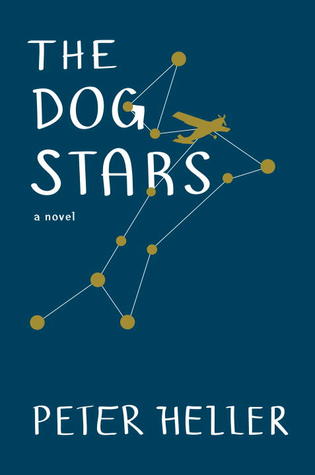
What I'm Reading: 2 Different Views of the Apocalypse: The Age of Miracles and The Dog Stars


Here is a "two-fer" of two of 2012's best reviewed debut novels; in fact, both were in Amazon's top 25 of 2012, and both have to do with an apocalyptic scenario.

I first heard about Karen Thompson Walker's debut novel, The Age of Miracles at the PLA Conference back in March of 2012.  What got my interest piqued was the set-up, so that's what I will start with here.

This novel is set in a near future in which the Earth's daily rotation begins to slow, gradually, so the days and nights each go on for longer and longer.  There is no end in sight here either.  The rotation slows a little more each day, so the end of the Earth is on the horizon, but just how long until the end, no one knows.

Our entry into this world is through the eyes of Julia, an CA resident, who is 11 years old when the slowing begins.  However, it is very important to note that the narration is all in the past tense.  Julia is telling us about the first year of the slowing from a vantage point of little over a decade later. This has 3 distinct effects on the narrative.

  1. We know that Julia and the Earth itself are going to make it through the initial days of the crisis.  So we are not just waiting for the world to end while we are reading. 
  2. Since this story is a recollection you lose the annoying too precocious for a kid problem of many books with a child's point of view.  In this case, Julia is an adult looking back on that pivotal year.  She can say things like, I didn't know it then but it was the last time I would ever eat grapes, with a sense of wistfulness and loss that she has gained with the passage of time.
  3. [And this is the most important distinction in terms of whether or not you will enjoy this book.] Julia's recollections of the slowing as an 11 year old are very personal and locally focused.  She comments on the different factions that emerge--those who want to keep clock time versus those who want to keep time with the cycles of day and night.  She notes when the wheat threshold was passed, meaning growing food naturally became impossible due to the large time periods of darkness.  But she does not spend a lot of time contemplating the socio-economic or political implications of these things.  She talks about them as they effect her.  Also, on top of the slowing, Julia is also concerned with her friendships, parents' crumbling relationship, and her first love.  11 is already "an age of miracles," and the slowing only puts a spotlight on this key year in a child's growth.
This narration is one of the key appeals of the book.  But why else would you read The Age of Miracles?

The descriptions of the slowing and all of its ramifications are fascinating and frightening.  Julia gives us an account of how long the stretches of all sun and all dark are.  She talks about how people try to cope, how basic life has to change, but how some things stay the same. Thompson did some research on what would happen if the Earth's rotation did begin to slow, but she admits in the notes that she took many liberties here.  However, it doesn't matter, the world she has created in this novel is compellingly real.  Because it is based in science and not the supernatural (like zombies), and because it was a gradual apocalypse, it all felt like it could happen.

Julia is the most well rounded character here, but there are solid secondary characters.  I do have to say her Mom and Dad seemed a bit stereotypical to me, but then again, we are seeing them through her 23 year old eyes, recalling her memories from when she was 11, so that could be how she saw them.  Thinking back now to my tween years, I really didn't think of my parents as people, so if I had to describe them, they would be a bit of a rough sketch too.

Please note, if you are looking for an explanation as to why the slowing started or how it will end, you will not get it here.  This novel has a completely open ending that draws no conclusion and provides no answers.  It is simply Julia's statement that she was there, lived through it, and is trying to keep living her life in a way that is useful and adds to society for as long as that will continue.  She will not and does not dwell on the catastrophe, she simply lives each day to its fullest.

Overall, I was captivated by the book, the setting, and Julia.  She had the fresh, innocent eyes to take this great change in and give it back to us, the readers, in a compelling and intriguing narrative.

Three Words That Describe This Book: ecological disaster, coming of age, captivating.

Readalikes:  The Age of Miracles reminded me of The Leftovers by Tom Perrotta.  Both look at a type of apocalyptic event that does not have an explanation and looks at how people deal on a micro-level. Click here for my full review of The Leftovers.

The Age of Miracles also reminded me of The Parable of the Sower series by Octavia Butler which takes place in a dystopian, near future CA, and follows a teenager.  

For non-science fiction, The Age of Miracles also reminded me of The Good Thief and anything by John Green.  Click here, here, and here to see why.

For a completely different view of a near future dystopia in both tone and writing style, there is The Dog Stars by long time outdoors, nonfiction writer, but first time novelist, Peter Heller.

While Julia gave us an 11 year old's, small range view into a catastrophe, in The Dog Stars, our protagonist Hig is a jaded adult, who can literally see the big picture of a world devastated by a flu pandemic from the window of his airplane.

Hig has lost everything-- his wife, his job, and it can be argued, his humanity-- in the pandemic. 99.7% of the population died.  It is 9 years later and life is bad.  People are desperate.  Hig and Bangley have made a good team though.  Set up at a small airstrip in Colorado, Hig, an amateur pilot, flies a 1956 Cessna around the perimeter, with his trusty copilot, his dog Jasper, making sure no one is coming to kill or raid them, while Bangley, who is good with guns and survival techniques mans the ground. They must kill some people, but Hig also helps a group of Amish who have "the blood disease," and brings back treats like salvaged cases of soda.

The entire book is from Hig's point of view.  It is written in stream of consciousness.  The sections are short and choppy.  The prose is spare but descriptive.  We follow the range of Hig's emotions.  He is still very distraught over the loss of his wife and the hopelessness of the world. The pacing is steady with bursts of action, but there are also stretches where nothing happens.

This is a methodical, contemplative book.  While Julia is captivating, Hig wears you down.  Once Jasper dies, Hig finally resolves to stop surviving and start living again.  As a reader, I was ready for this change and so very happy for Hig. He literally comes back to life.

I will not give away more plot details though.   I just want to let readers know that the methodical building of a tone of hopelessness and bleakness begins to lift when Hig decides to go past the safety perimeter.  Heller needed to establish this darkness though in order for Hig's transformation and what happens next to work.

This novel is much more character dependent than The Age of Miracles.  While Thompson's world building can carry large portions of the story, Heller's world has nothing but the characters, specifically Hig and, to a lesser extent, Bangley to keep it moving. The book is more of a character story than a story.

Again, the ending here is open, but with a little more certainty than in The Age of Miracles.  In The Dog Stars, it is hinted that survivors from the Middle East are coming, and Hig and his band of plucky survivors are moving toward living a life, not simply surviving.  Despite the bleakness at the novel's open, the darkness is beginning to slowly, one step at a time, recede.

This is a novel you need to finish, put aside, and think about for at least a few days before you can appreciate it fully.  That is a plus for me, but may not be one for you.

Three Words That Describe This Book: stream of consciousness, methodical, contemplative

This near future dystopia is for people who also enjoyed The Road by Cormac McCarthy which I still believe has a hopeful ending.

The Pesthouse by Jim Crace was suggested by NoveList, "Spare prose and unexpectedly moving romances characterize these post-apocalyptic novels, set in bleak futures in which humanity has been decimated by horrible diseases."

Two books I have read, loved, and think are good fits here are: The Reapers Are the Angels by Alden Bell and A Brief History of the Dead by Kevin Brockmeier. All three novels look at apocalyptic situations with compelling characters and spare language.  They are also contemplative with open endings.  Use the links for each title to read more specifics.

For an outside of the box recommendation, I would also suggest Mystic River by Dennis Lehane. While it is a realistic, crime drama, it is also compelling and spare with characters that must over come great despair.

Tuesday, March 7, 2017

Becky's WAY BACK MACHINE Suggestions

I am not a re-reader, but recently, I was looking for a quick, fun audio book and I decided to re-read Redshirts by John Scalzi; yes the Wil Wheaton one. I had meant to do that for a previous meeting of the genre study, but time was tight and I had read it before so I read something I never had before instead.

I was compelled to re-read it recently because two newer books-- Dark Matter and All Our Wrong Todays reminded me so much of Redshirts that I wanted to revisit it. I will write more about that re-read in my review for All Our Wrong Todays soon.

But what this re-read also made me realize is that I have a lot of these WAY BACK MACHINE suggestions that work really well right now, ones I am finding myself suggesting to people again after a many years drought.

Since these titles keep coming up in conversation with library workers and readers, I thought I would compile them here as WAY BACK MACHINE suggestions. It's a cute moniker [and can you tell, I like writing it in all CAPS?], but it is also another reminder of the treasure trove that is the backlist-- all of those titles, sitting on your shelves, not being read by anyone at the moment, yet would make for a great read for the right person, right now.

Here are some books from at least 5 years ago (or more) that I think work as great suggestions for today's reader. Where applicable, I have linked to my review:

The Brief History of the Dead by Kevin Brockmeier: I read this book pre-blog but it has never left me; I still think about it, all the time. It is beautiful and haunting. I have suggested it hundreds of times. over the years. It is not uplifting, yet it is elegiac. It takes the idea of the destruction of society to a whole new level, making you understand why people and their relationships to each other, no matter how tenuous, matter. I think this is a message all of us, on every side of every divide, can learn from these days. Here is an annotation for the novel that I wrote on the blog back in 2008:
A deadly virus is quickly killing off everyone on Earth, and Laura Byrd, a researcher in Antarctica is apparently the last person left alive. This apocalyptic story alternates between Laura’s struggle for survival and an alternate universe called “the city,” populated by the dead who still are remembered by those living on Earth. This compelling and original tale is chilling and thought provoking.
The Good Thief by Hannah Tinti: her new book is out this month, but while people wait, this is a great suggestion. It was also my favorite book I read in 2008. For today's reader, beyond the fact that her new book is out, this novel is a smart, fun, fast paced and historical escape. Click here to see the report from a 2010 book discussion I led on this novel. From my initial review:
We begin the story in 19th Century, New England, in a Catholic orphanage. 12-year-old Ren has lived here for as long as he can remember. He also has no recollection of how he came to lose his hand either. Ren is worried about his future because he is nearing the age when, if not adopted, he will be sold into the army and never know what it is like to have a home and a family. One day, Benjamin arrives,claiming to be Ren's brother, and adopts Ren. As you can imagine, Benjamin is not who he claims to be and the two begin an exciting adventure together.

The Good Thief is, refreshingly, a traditional adventure story (with a historical background) in a literary landscape where adventure is being consumed by thrillers and terrorism plot lines. It is fast paced, the hero is resourceful and lucky (maybe unbelievable so, but that goes with the genre), and it has a resolved, happy ending. Tinti uses many of Dicken's own tricks and themes to propel her story along., including a wonderful cast of eccentric secondary characters such as a dwarf who lives on the roof, a murdering giant, and a hard of hearing landlady. The novel is appropriately funny, heart-warming, melodramatic, and bittersweet, with each occurring in the right places.

Sharp Teeth by Toby Barlow: Novels in verse are coming back into popularity thanks to Kwame Alexander and Jacqueline Woodson. Their books for younger readers are not only priming kids and teens to read novels in verse, but these authors are drawing in adult readers too. Sharp Teeth is a great option for Adults and Teens as I explain in this excerpt from my review from 2009:
...it is a novel-in-verse. Barlow's novel is an inventive mix of horror, traditional noir, and epic poetry, all rolled into one entertaining, but bloody novel. Make no mistake, this is first and foremost a werewolf story, so there is plenty of sex and gore, but it is still fine for Young Adults as none of it is too graphic. In fact, Sharp Teeth won a 2008 Alex Award for best adult fiction to suggest for teens. 

The story goes that in the seedy underbelly of LA there are three competing packs of werewolves fighting for supremacy and seeking revenge for past injustices. Connecting the packs and their separate, yet converging story lines, is Detective Peabody, who is investigating some suspicious murders which are somehow connected to dogs. The free verse is unsettling at first, but ultimately it enhances the chaos of the plot. As someone who reads and writes about a lot of horror, I appreciated this novel's originality.
The Lemon Tree by Sandy Tolan: I led a book discussion on this title back in 2008 [click here to read out notes] and I have not stopped telling book groups to read this book since. Seriously, it is still in all of my book discussion training materials. Below I have attached some of the thoughts from the beginning of our discussion. Click through for more, but understand that all of the issues brought up in this book apply even more so to today, and are not limited to the specific Israel situation. These are discussions worth having everywhere about how all different groups of people relate to each other.
This Nonfiction title begins in 1967 as three young Arab men sneak back into Jewish Israel in order to see the homes they were forced to abandon in 1948. The men had no luck at the first two homes, but at Bashir's former home, the one with the lemon tree planted by his father, a young Israeli college student, Dalia, opens the door and lets the young men in. So begins a dialog between the two which continues despite bombings, exiles, and imprisonments. Tolan tells Dahlia and Bashir's stories, recounts their histories, and explains the minutia of the conflict from the 1930s to the present day.

The main theme of Tolan's book is an encouragement of mutual witness and empathy for the story of the "other." Our group was most impressed by this point. We were all awed by Tolan's ability to be fair and tell both sides of the conflict. Many people in the group expressed how difficult it was, until recently, to hear the Arab side of the story. This also led to an interesting discussion about how much easier it is for Americans of European descent (like our group participants) to identify with the Jewish perspective because of our shared cultural backgrounds. A book like this was appreciated for its ability to let the reader into the Palestinian history and perspective in a way that they had never experienced before.
And last, my favorite current WAY BACK MACHINE suggestion-- Shades of Grey by Jasper Fforde. From my original review:
...Fforde began a new series with Shades of Grey set in a dystopian, post apocalyptic world (after "the thing that happened") where people can only see a limited color range and the world is run by a series of odd rules set by a long dead leader. No one is allowed to think for themselves and what colors you can see (and how much) dictates your place in society, with the color-blind relegated to near slavery. Unlike his highly literary previous series, in the Shades of Grey world, librarians are left to roam bookless stacks. The horror!
That's the set up but what is important to tell readers is that they have to be okay with the fact that Fforde has yet to publish book two in this series. It's a dystopia that ends on a cliff hanger, but if that isn't a perfect metaphor for life in American right now, I am not sure what is. You need to let people know this before you give it to them, however. Let the readers decide if they can handle it. Seriously, I have friends and family who will not read this book precisely because they know there is no book two yet. But, I have suggested this book to a lot of people recently as the perfect dystopian novel for our dystopian times. The lack of any resolution or further explanation in subsequent books is eerily reminiscent of living life right now in 2017.

Now what about you? Why don't you take the time to make a list, or even better, a display, for your library of your WAY BACK MACHINE Suggestions. Steal the name from me, I don't care.

It was really fun and easy to travel back in time to my old reviews and find the best titles. But more importantly, it also shows how much you can help your patrons. These are titles that will go unread without you pointing patrons to them.

Flex your muscles and dig into the backlist. Way back. You may be surprised by how timely your finds are.

Thursday, June 18, 2015

BPL Book Discussion: Behind the Beautiful Forevers

This is not your normal installment of my BPL Book Discussion reports because Monday was no normal discussion day.  Monday marked the last time I led the BPL group after 14.5 years. I hope to occasionally return to be a participant in the group, but not for a bit. Also, I will be entering into a new book discussion venture that will be keeping me plenty busy [But that is for another time].

But back to my fabulous ladies [pictured left].  They really outdid themselves to say goodbye.  Not only did they come with snacks, balloons, cards and gifts of beautiful perennials for my garden, but they arranged one of the nicest tributes ever.

Regular readers of the book discussion reports know that I end every discussion with this: "Give me a single word of phrase to define the book." Obviously, the ladies are used to the question. Well, what they did was so perfect.  After our May meeting, one of the participants asked to take my picture.  Sneaky one she is because then she showed up at this discussion with the picture of me blown up in the center of the poster [pictured left].  She gave each participant a pice of paper and asked them to write down a word or phrase to describe me.  She then spent the discussion time writing the words around me in a circle on the poster.  You can see a closeup of what they create for me to the right.


As I had anticipated, it has been much harder to leave my book discussion ladies than the library itself. They are the reason I stayed as long as I did, so this should not have come as a surprise. In fact, they have only reinforced how much I love being a Reader's Advisor and ironically they have also made me realize that I have made the right choice by leaving the BPL to go out to help more libraries and more patrons.

I am so happy to have spent many years exploring hundreds of books with these amazing women.  And although the chapter in my life of leading discussions for them has come to an end, my participation in book clubs will continue. I will still be posting about book discussions here on the blog, including notes of specific discussions I will be leading.

Okay, now back to our regularly scheduled book discussion report.

This month we met to discuss the National Book Award winner, Behind the Beautiful Forevers: Life Death and Hope in a Mumbai Undercity by Katherine Boo.

Here is the publisher’s description:
In this brilliantly written, fast-paced book, based on three years of uncompromising reporting, a bewildering age of global change and inequality is made human.
Annawadi is a makeshift settlement in the shadow of luxury hotels near the Mumbai airport, and as India starts to prosper, Annawadians are electric with hope. Abdul, a reflective and enterprising Muslim teenager, sees “a fortune beyond counting” in the recyclable garbage that richer people throw away. Asha, a woman of formidable wit and deep scars from a childhood in rural poverty, has identified an alternate route to the middle class: political corruption. With a little luck, her sensitive, beautiful daughter—Annawadi’s “most-everything girl”—will soon become its first female college graduate. And even the poorest Annawadians, like Kalu, a fifteen-year-old scrap-metal thief, believe themselves inching closer to the good lives and good times they call “the full enjoy.”  
But then Abdul the garbage sorter is falsely accused in a shocking tragedy; terror and a global recession rock the city; and suppressed tensions over religion, caste, sex, power and economic envy turn brutal. As the tenderest individual hopes intersect with the greatest global truths, the true contours of a competitive age are revealed. And so, too, are the imaginations and courage of the people of Annawadi.  
With intelligence, humor, and deep insight into what connects human beings to one another in an era of tumultuous change, Behind the Beautiful Forevers carries the reader headlong into one of the twenty-first century’s hidden worlds, and into the lives of people impossible to forget. 
Annawadi is a makeshift settlement in the shadow of luxury hotels near the Mumbai airport, and as India starts to prosper, Annawadians are electric with hope. Abdul, a reflective and enterprising Muslim teenager, sees “a fortune beyond counting” in the recyclable garbage that richer people throw away. Asha, a woman of formidable wit and deep scars from a childhood in rural poverty, has identified an alternate route to the middle class: political corruption. With a little luck, her sensitive, beautiful daughter—Annawadi’s “most-everything girl”—will soon become its first female college graduate. And even the poorest Annawadians, like Kalu, a fifteen-year-old scrap-metal thief, believe themselves inching closer to the good lives and good times they call “the full enjoy.”  
But then Abdul the garbage sorter is falsely accused in a shocking tragedy; terror and a global recession rock the city; and suppressed tensions over religion, caste, sex, power and economic envy turn brutal. As the tenderest individual hopes intersect with the greatest global truths, the true contours of a competitive age are revealed. And so, too, are the imaginations and courage of the people of Annawadi. 
With intelligence, humor, and deep insight into what connects human beings to one another in an era of tumultuous change, Behind the Beautiful Forevers carries the reader headlong into one of the twenty-first century’s hidden worlds, and into the lives of people impossible to forget.
For purposes of this write up, the title of the book will be transcribed as BtBFs.

Here are the notes on our discussion:
  • We had exactly the split reaction I was expecting here-- 6 liked, 2 disliked, and 4 so-so.  
  • Liked comments:
    • I had a personal connection to this story because I was in India, in that slum, working with one of the characters, Sister Paulette, in 2008.  Boo’s work was entirely fair and honest from my personal experience.
    • Another participant shared that as a recent college graduate in 1968, she too took a trip to India.  She could clearly remember coming out of the airport down a dirt road filled with beggars. This book brought me right back.
    • I immediately saw everything in my life differently after reading this book. For example, getting water from a sink.  I also looked at the recycling scavengers in my own alley much differently.
    • I enjoyed the style of writing.  I felt like she really knew the people and could relate their story. It was so realistic, almost poetic.  
    • It was written like fiction with characters I could get to know. I enjoyed that.
  • Didn’t like:
    • It was “too much horrible.” And even worse, I can’t do anything about it.  I hate being helpless and not in control. I would rather not know.
    • I found the corruption overwhelming.
    • I couldn’t handle all the children suffering.
  • So-so: 
    • I can’t fault the author for choosing the topic, but there was no relief here. However, I appreciated the very many interesting insights and philosophical comments by the characters.  The people were compelling.
    • I kept waiting for some uplift.
    • That led to a discussion of the fact that it was a true account so she could not manufacture a happy, closed ending.
  • Question: The author claims there is hope in this book. Do you agree?
    • I think there is hope in that she wrote this book.  Doing her piece to help make people aware. That is a hopeful first step.
    • This book gives hope because some who read it will be able to do something and effect change because of it.
    • I am hopeful that education reform will come. The sham that is “education” in India is now exposed.
    • I saw hope in the children. They all played together and helped each other. They are the next generation. They can lead the change.
  • Questions: Are women more free in the slums than in rural India?
    • Asha and Manju have much better, more free lives living in the slum.
    • Although Asha plays the system very deliberately, I found I liked her resilience and resourcefulness.
    • Yes, her simple Indian truth that to pay people off in the beginning is always better than having to wait until you are out of options.
    • She built her own empire using the corrupt system in a smart way.  She was simply working within the rules of her society.
    • She was “street smart.”
    • She reminded me of my Chicago precinct captain. Not very different we all agreed.
  • Question: I stopped the talk of the women for a moment because people were dying to address the blurred sense of right and wrong in this world.
    • Asha is moral because she is doing what she needs to survive and take care of her family.
    • What is right and what is wrong when society is turned upside down? When the government and police are corrupt, what do you do?
    • I wished that Asha would be proud of Manju for wanting to be “better,” but instead Asha celebrated when her daughter started to follow in her own footsteps.
    • One participant shared a story when she made a “wrong” choice when faced with stupid government rules.  She was caring for her dying mother and needed a copy of her mother’s birth certificate.  She had power of attorney but her mother was mentally incapacitated.  The government would not issue the daughter her mother’s birth certificate.  Each time they asked this woman if she was the person in question, she told the truth and said no, I am her daughter. Her request was denied.  After weeks of making calls and playing by the rules, one day she answered YES when they asked if she was the person whose birth certificate was being requested.  She had it in days.  She totally understands how the people in this book make the choice to get results over being in the right and hers was such a small example.  Imagine the life and death situations in this book.
    • This story was a fantastic addition to our discussion and really helped those who were completely disgusted by the corruption and “amoral” behavior to see the story with more compassion.
  • Question: Why did Boo choose to frame her 4 years of research around an event in the middle-- Fatima’s burning.  Boo starts the book at this midpoint and then circles back? Let’s talk about why she made this storytelling choice.
    • The overall theme of the book is that they are surrounded by lies, corruption and poverty with no way out.  Fatima’s burning is a “flashy” way to put a major theme right at the start.
    • As a storytelling technic, she could have chosen any of the people because their lives are so intertwined and also so demonstrative of all of the problems, but Fatima’s burning is attention grabbing. A good center spoke from which the story can branch out.
  • Question: We had a general discussion of the inequality in all societies using this one in particular as a jumping off point.  Here are some of the most interesting comments:
    • The society is so corrupt that the people with the most power are the most corrupt. It keeps feeding itself.
    • One of my favorite insights was when Abdul overheard a police officer talking about not being able to afford the bare necessities for his family. Abdul was shocked.  This opened his eyes to the wider world.
    • Manju had 3 ways she could get out-- find an entrepreneurial niche like Abdul, go with politics and corruption like her mom, or get an education. She chose education, but had no model of someone it worked for.
    • How different is it really than in some of our poorest places in America. These are common issues al over the world; this book just shows an extreme.
    • It is a destitute slum next to a fancy airport. An airport with people from all over the world going in and out each day.  It was a brilliant narrative choice. It is too striking a contrast not to notice.
    • A lot of these issues are because of population.  Overall the world has too many people, but there are cities in India with populations larger than the entire country of Canada.  That is crazy.
    • Back to places where it is bad in America.  Someone shared the work she has done with some of the poorest reservations in South Dakota.  It is not much better there.  They too lack running water for example. Would millions of people read a book about the reservation? It is much harder to face the skeletons in your own closet. Maybe this book will allow others to look at the inequalities closer to home though-- like we are.
  • Question: Let’s talk title
    • The title is literally from the advertisements for tiles on the wall separating the airport from the slum which say “Behind the Beautiful Forever.” So since there are multiple ads in a row, you get the plural.  
    • I liked how the title connects with Fatima’s burning which is central to the story.  A remodel and going out to buy tiles figures prominently in that scene.
    • We also talked about how the title is not capitalized on the cover and what that could mean. One person said she thought it was because we are looking behind the wall at lesser people.  Not capitalizing reinforces that.
  • We had a general conversation on the ending. It was frustrating to many how open it was. We read the last paragraph out loud. We talked about how it closes up the stories of the people in the book and opens up the story as it will continue.
  • Someone else said she didn’t realize this was nonfiction until she got to the end and read the author’s note. “If I knew it was real, I would have read it differently.” She probably would have liked it more.
  • Question: Who had the best life in the book and why?
    • No one wanted to answer this question because all of their lives were so bad, but I made people offer things up.
    • Zehurisia- 2 votes
    • Manju- 2 votes
    • Abdul- 4 vote
    • Asha- 2 votes
    • Sunil- 1 vote
    • Meena- 1 vote, but she clarified because Meena does kill herself.  But this participant felt that she was inspirational in her ability to be philosophical in the face of her terrible life. She had the right idea but couldn’t survive with that idea in her world.
  • Words or phrases to describe this book:
    • ugly
    • makes you see/ opens your eyes
    • corruption
    • frustrating
    • poetic
    • memorable
    • new look at India
    • overwhelming
    • real people
Readalikes: During the discussion someone mentioned that this book is eye opening much like the 1962 publication of The Other America by Michael Harrington.

In that similar vein, the style of writing [compelling yet still journalistic] and the brutal honest truth about the way people on the margins live was reminiscent of Nickel and Dimed: On Not Getting By in America by Barbara Ehrenreich. We read that book in book club many moons ago.

Now these are both American parallels.  Many will want to read more about India. For them I have a plethora of fiction and nonfiction suggestions.

The novel The White Tiger by Aravind Adiga is a compelling story which gives a realistic peek into life as a poor Indian.  It also plays brilliantly with the idea of a twisted sense of morality when living in such a corrupt society, just like BtBFs. With this link you can also see a few more readalikes that I included in my review of The White Tiger, including The Death of Vishnu by Manil Suri.

For a little lighter, but still honest, look into modern India in novel form, I highly suggest the Vish Puri mysteries by Tarquin Hall

In terms of nonfiction about slums, NoveList suggests Favela by Janice Perlman about the Rio de Janeiro slums or Shadow Cities by Robert Neuwirth which includes India.

Finally, one person compared BtBFs to when we read Escape from Camp 14 because in both cases she learned something horrible that is going on in her world right now and she is completely powerless to help.  That was very frustrating to her, but she did make an interesting comparison in terms of appeal.  Yes, she did not like the book for that reason, but others may want to read more books that let them know about world problems that are not on their radar as of yet.  This is a great example of one of my favorite training tips-- you can learn just as much about who to suggest a book to from the people who hated it as you can from someone who loves it.

Saturday, November 7, 2009

What I'm Reading: The Man Who Loved Books Too Much


I recently picked up The Man Who Loved Books Too Much (herein TMWLBTM) by Allison Hoover Bartlett for 2 reasons, it was set in San Francisco (to which I was traveling), and I love books about books (shocking I know). TMWLBTM is marketed as being similar to The Orchid Thief; while I agree Bartlett was definitely influenced by Orlean's book , TMWLBTM does not live up to Orleans' outstanding book. That is not to say TMWLBTM is not good, it is good, but not great.

Here's the basics on plot. Bartlett has too main characters here, John Gilkey the book thief and Ken Sanders the rare book store owner who helped to catch him. Bartlett meets with both men, tells their stories, and tries to understand Gilkey's motivation. However, it is when Bartlett is giving the details of how the rare book industry works that the book is most compelling.

Sanders is a great hero. He worked very hard to convince American rare book sellers to create a database to share their info about stolen items. Gilkey, on the other hand, is not a strong villain. He is weak and wishy-washy. Although he has strong feelings about why he is entitled to steal the books, they do not make sense, to me. Bartlett struggles with this too. It is not her fault, but it does effect the ultimate power of her book.

Appeal: People who like books about books will enjoy this book. The details about the rare book industry give this an "insiders" feel that many will enjoy. The author writes in a very conversational tone; she is talking to the reader as if she is our friend, and she is both telling us a story and confiding her own secrets to us. This book is extremely open ended. Bartlett never figures out Gilkey's main motivation for compulsively stealing books, she never gets him to tell her where the biggest stash is hidden, and we still have many questions after turning over the last page. It is not Bartlett's fault that her protagonist/villain is not as interesting as we (and she) hope him to be, but readers can be left wanting more after finishing TMWLBTM. TMWLBTM is a quick read that will hold your interest while you are reading but may leave readers unsatisfied.

Readalikes: TMWLBTM is being compared to The Orchid Thief by Susan Orlean and rightfully so, but Orlean's book is the gold standard and TMWLBTM is paying homage. If you haven;t ever read The Orchid Thief, try it.

Confederates in the Attic by Tony Horwitz is another good suggestion. Here, Horwitz looks into the lives of people who are obsessed with the history of the Confederacy.

For those who liked the book aspects in TMWLBTM, try The Professor and the Madman about the making of the Oxford English Dictionary by Simon Winchester, which includes information about the OED's biggest contributor, an insane, incarcerated murderer. For these readers I would really suggest just about any book about books or book lovers here.

For fiction suggestions try, Arturo Perez-Reverte, and these mysteries about books.

Wednesday, October 23, 2013

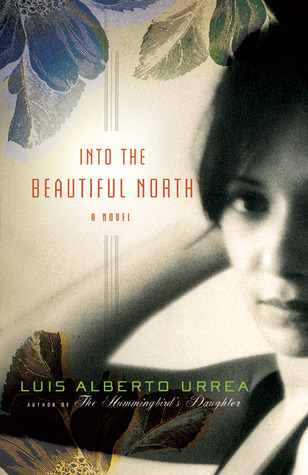
What I'm Reading: Into the Beautiful North

As I mentioned yesterday, tomorrow, I will be interviewing Luis Alberto Urrea for the Fox Valley Reads.  The book we all read is Into the Beautiful North.

I am going to break the mold on my review here in the interest of time.  First here is the publisher's statement on the book:
Nineteen-year-old Nayeli works at a taco shop in her Mexican village and dreams about her father, who journeyed to the US to find work. Recently, it has dawned on her that he isn't the only man who has left town. In fact, there are almost no men in the village--they've all gone north. While watching The Magnificent Seven, Nayeli decides to go north herself and recruit seven men--her own "Siete Magnificos"--to repopulate her hometown and protect it from the bandidos who plan on taking it over. Filled with unforgettable characters and prose as radiant as the Sinaloan sun, INTO THE BEAUTIFUL NORTH is the story of an irresistible young woman's quest to find herself on both sides of the fence.
And here is what Urrea has to say about it:
After the torture of writing The Devil’s Highway and the turmoil of completing The Hummingbird’s DaughterI needed a break.  I might have stopped writing at all except for haiku and road journals if I didn’t owe the good folks at Hachette another book… or ten.  So I set out to make myself happy.  I confess:  this book was utterly selfish.  But I also thought that if I made myself laugh out loud every day, perhaps you would laugh too.  And we all needed a laugh. 
Still, I had made a vow to God a long time ago that I would keep elements of witness and service in everything I write.  This being, for me, a spiritual journey rather than (sigh) a commercial one.  So I worked very consciously to embed elements of social commentary, subversion, surprise and humanity in every part of the book.  Some critics were harsh at first.  Yes, I knew it was “no Hummingbird’s Daughter.”  But I also thought it had some of the most humanitarian and provocative stuff in anything I’d ever written.  The initial chuckles may have disguised that.  
I was thrilled beyond belief that Latina magazine picked it as one of its best beach-reads.  Frankly, I was enjoying a bit of pop-writing.  I wanted a sunny book that went to the beach in a mesh bag and occasionally made the reader say, Hmmmm.It felt subversive to make undocumented people the heroes of an American book.  To make the three male heroes a gay man, a Mexican bowling alley janitor, and a scary cholo from the Tijuana municipal garbage dump.  It also felt subversive to make the action-hero a 19 year old young woman undertaking a heroine’s journey—Mad Max and Beowulf have nothing on Nayeli! 
Lately, people have been clamoring for sequels.  It’s funny—time changes all careers.  Now I’m not immediately known as “the author of Hummingbird,” but as the author of Beautiful North.  Here’s what readers and a couple of critics (hello, Alan Cheuse)  want to see:  1) the battle of Tres Camarones; 2) Tacho’s big gay wedding.  YES! 
I was pretty sure I had done something right when I was mocked for an hour by an atheist friend for putting so many ridiculous religious images in the book.  Then, when I got home, I had a letter from a nice Illinois church lady chiding me for the anti-Christian bias in the book.  For the record:  this time I have to side with the atheist.
So between these 2 statements you get a very good idea of what Into the Beautiful North is about.

So let me talk about some of the appeal. What is most striking about this book is the unique premise Urrea has concocted and the amazing characters.

Let's start with the premise.  As I noted here yesterday,
...the most striking thing about the story-- it’s set up.  I love that they are sneaking into the US to bring the undocumented workers back home.  It is a funny, touching, bittersweet, and quite honestly a subversive premise.  And it is so very original since most of the crossing the border literature and news today is so polarizing and political.  Instead you turn the entire issue on its side, forcing readers to rethink their own beliefs and opinions about illegal immigration.

This is an extremely thought provoking idea.  Characters along the way comment on how interesting Nayeli and her crew's task is, how noble, how counter intuitive.  This original set up makes for a story that is able to walk the tightrope between serious, heartfelt, and humorous without missing a step.

And then there are the characters.  Urrea alludes to how unorthodox his heroes are above.  You fall in love with this rag tag bunch as you read along and follow then on their quest.  If you are a reader who enjoys fully rounded, rich characters, this is a book you should not miss.  Each one is unique and what is unique about each character is helpful to the group on their road trip.

I could write a post each on various characters, that is how great they are.

It's funny, I know people who read for character and others who read for plot.  Into the Beautiful North is that rare book that could appeal to both.

Reading Into the Beautiful North was by far the best reading surprise I had this year, maybe in many years, especially considering I HAD to read it for work.  I didn't even need to like it to be able to interview him well.  I loved this book and will be telling many people about it.

Finally, I want to note there is an underlying spirituality to this, and all of Urrea's work.  There is no overt religion, just an overarching belief and faith driving the characters (some more than others). But as he said above, both religious people and anarchists have found reasons to dislike this book.

Three Words That Describe This Book: original, character centered, thought provoking quest

Readalikes:  First, visit the official Fox Valley Reads list of readalikes.  It is extensive and hits on the obvious read alike areas.

That list almost makes my job harder.  I have to think outside the box.  But hey, it is what I do.  So I am going with matching Into the Beautiful North with other original, thought provoking books, with quests of some type that still have a happy and bright tone.  It is not easy to find those, I know, but that is why I loved this book.  It gave me something unexpected that made me think AND smile.

Here are some books I have read that fit that mold. These titles share very little beyond what is in bold above, but that combo is so rare I think it is worth mentioning it.  You will not find these books showing up as readalikes in traditional sources. The titles link to my reviews with more detail and even more readalikes.

See some of you tomorrow night.