RA FOR ALL...THE ROAD SHOW!

I can come to your library, book club meeting, or conference to talk about how to help your readers find their next good read. Click here for more information including RA for All's EDI Statement and info about WHY I LOVE HORROR.
Showing posts sorted by relevance for query what i’m reading flavia. Sort by date Show all posts

Tuesday, May 11, 2010

What I'm Reading: The Weed That Strings The Hangman's Bag

The Weed That Strings the Hangman's Bag: A Flavia de Luce Mystery (Flavia De Luce Mysteries)Last year I couldn't stop raving about Alan Bradley's The Sweetness at the Bottom of the Pie which introduced the world to the fabulous Flavia de Luce, an 11-year-old, poisons loving sleuth in 1950s rural England.

I originally wrote about Flavia in this post, and over on the Browser's Corner I have written this shelf talker about the book:
 In this fresh and intelligent cozy, readers are swept back in time to rural England in 1950. Flavia de Luce, an 11 year-old aspiring chemist with an interest in poisons, finds a man lying in her garden, taking his last breaths. Readers will root for Flavia, who is just old enough to look out for herself but has not yet lost her adventurous spirit, as she investigates this mysterious death and ends up entangled in a decades old rare stamp smuggling ring.
[Oh, and as I promised to reveal in last week, The Sweetness at the Bottom of the Pie was the book I bought for the moms for Mother's Day this year.]

So it should come as no surprise that I was excited to read the next Flavia de Luce mystery which came out last month, The Weed That Strings the Hangman's Bag. And, I am happy to report that I enjoyed the second installment as much, if not more than the first.

It is only a few months later and Flavia still lives with her Dad and two sisters in a dilapidated manor house.  She meets a BBC puppeteer and his assistant who have broken down near the churchyard. Turns out the puppeteer has been here before, but when he is murdered, Flavia needs to reconstruct how and why someone would kill him, digging into the death of a young boy a few years before in the process. The two are tied together by weed and a hanging, but how? Read it for yourself to find out.

A patron and I were talking about the novel and we both agreed that although the appeal of discovering and slowly falling in love with Flavia could not be replicated in this second installment, we did appreciate that Bradley improved in his storytelling here. In the first book, Bradley seemed to have trouble resolving the mystery and had to put Flavia in mortal danger in order to wrap things up. Here Flavia is never in danger, yet she still solves the case. I think that is a sign of Bradley's maturity. The story was just as compelling without me having to worry about Flavia surviving.

It is also worth remembering that Bradley's series is a cozy. Why does this matter? Because a cozy is more about the characters and the frame (setting, time period, chemistry details, etc...) than the mystery. Cozies are appealing without the mystery; the mystery is simply a plot device to let the reader enter a world full of interesting characters and background details. The Weed That Strings the Hangman's Bag is a perfect example of this.

Three Words That Describe This Book: cozy mystery, original, captivating

Readalikes: Following I have re-posted the suggestions I first made for The Sweetness at the Bottom of the Pie, but first here are a few more new suggestions.

As I mentioned here, another new series with a great sleuth and an interesting frame follows Tarquin Hall's Indian PI Vish Puri.  Beginning with The Case of the Missing Servant, Puri, the owner of Delhi's Most Private Investigators Ltd., is a detective in the classic sense of Sherlock Holmes, but he uses very modern technology to solve this complicated case. I loved how the book was modern and old fashioned, all at the same time, much like the city of Delhi and the country of India itself is portrayed.  Click here for my full review of Hall's novel. The next installment of the Puri mysteries is due out in early June.

Besides the suggestions below, I would also suggest the Maisie Dobbs Mysteries by Jacqueline Winspear and the Spellman mysteries by Lisa Lutz (reviews here).

Suggestions from the first time I read a Flavia book (June 2009):
Other cozy mysteries with intriguing and original narrators that may appeal to readers of The Sweetness at the Bottom of the Pie are the mysteries of Bradley's fellow Canadian Louise Penny. Her Three Pines mystery series is set in a small Quebec village. The first is Still Life.
If you liked the original voice and unique setting in Bradley's novel as well as the eccentric characters, you should also try Alexander McCall Smith's No. 1 Ladies Detective Agency series. When I was reading Flavia's story I realized that I hadn't been so taken in by both a narrator and a setting since I had first read Precious Ramotswe's tale of solving problems in Botswana.
For more cozy reading suggestions, visit the Cozy Library.

A few reviews also mentioned how Flavia is reminiscent of Harriet the Spy.

Those who liked this book but want a little more sarcasm (this book has none), I would suggest Confessions of a Teen Sleuth by Chelsea Cain, which is the fictional biography of Nancy Drew.

In terms of nonfiction, readers may want to try these books about stamp collecting, poisons/chemistry, and rural England in the 1950s.

Friday, April 1, 2011

What I'm Reading: A Red Herring Without Mustard

A Red Herring Without Mustard: A Flavia de Luce Novel
I am a huge fan of the Flavia de Luce series by Alan Bradley, so it is no surprise that I read the third, and brand new installment, A Red Herring Without Mustard right after it came out.

Briefly here are some excerpts about Flavia and her family from the first time I read a Flavia book here:
If you are looking for a unique and original cozy mystery, I have a suggestion for you. It is 1950 in rural England and Flavia de Luce is an 11 year-old aspiring chemist with an interest in poisons. She lives in a crumbling, country mansion, with her father and two older sisters.
What is most endearing and entertaining about this novel is Flavia's voice. Bradley, was 11 himself in 1950 (so yes, he is a first time novelist in his 70s), and he understands the time period. For example, Flavia cannot just hop on the Internet to look things up; instead, she spends a lot of time in the musty stacks at her local public library. The book obviously won my heart right there.

Flavia is just old enough to look out for herself but her adventurous spirit has not yet been squashed by adulthood. She is still naive enough and her 1950s rural England world is still safe and small enough, that she takes the risks that keep the plot interesting. It would be hard to believe that an 11 year-old today could just slip away for the entire day, ride her bike all around the county, and have no one asking after her. But in the setting Bradley chose, it all seems fine.
This time, Flavia is the veteran of 2 murder mysteries and the police are less willing to indulge her. The story begins with someone who is out to kill a visiting gypsy and moves into an actual murder that is indirectly tied to the gypsy.  Flavia discovers the two victims, one still alive and one very dead.  As a result, the police have their eye on her and explicitly tell her father to keep her at home.  Flavia of course can sneak out no problem.  In fact, her various manners of sneaking out are a huge foreshadowing of things to come.

But the murder investigation is not the chief appeal here.  Like the other two novels in the series, the sense of place is huge. This is small town, rural England, where everyone knows everything about everyone else's business. Flavia is able to move in and out slightly unnoticed because of her age.  People are willing to open up to her, and her excellent hearing and chemical knowledge serve her well.

The characters are also the key to the appeal.  Meeting all of these quirky people and seeing how they are interconnected keeps you reading.  I especially like the family's cook and Dodger, the family's jack-of-all trades, who may be suffering from PTSD from the war, but is the wisest member of the household.

What I most enjoyed about this installment is that we are getting more details about the family's situation.  Flavia's mom died in an accident when Flavia was a baby and all of the family's money was hers.  Due to England's probate laws, since Harriet (the mom) died without a will, the family is now without funds, yet they still live in the large, literally falling apart manor home.  This book gives more details about Harriet and the family situation:  Dodger is packing the family silver to be sold at auction, Flavia's room leaks when it rains, there is an entire underground irrigation system that no one knows about.  You can feel this plot line building toward a more prominent role in future installments.  Much of that is because Flavia is growing up enough to care about what is going on outside her day-to-day existence.  This book introduces a Flavia who is leaving childhood and entering adolescence; a Flavia who wants to understand her family and their problems.

There are too many crazy and quirky characters to recount here.  Bishop's Lacey is one weird town.  But if you are okay with a convoluted mystery and love interesting characters, this is the book for you.  If you are a hard core mystery fan, I would try something more along the lines of P.D. James.

Three Words That Describe This Book:  captivating, quirky, original

Readalikes:  When I reviewed the first 2 books in this series here and here, I suggested the following books:

These series are set all over the map in terms of time and place, but they all share a few key elements with Bradley's series, they are fairly cozy, with serious undertones, they feature extremely quirky and interesting investigators, and they are all very original.

A few new suggestion that I want to offer which also fit this same mold are as follows:
In the past I have also suggested how Flavia is reminiscent of Harriet the Spy. And for those who liked this book but want a little more sarcasm (this book has none), I would suggest Confessions of a Teen Sleuth by Chelsea Cain, which is the fictional biography of Nancy Drew.


Another standalone title that would work for those who enjoyed the precocious narrator is The Selected Works of T. S. Spivet by Reif Larsen.

Thursday, June 11, 2009

What I'm Reading: Sweetness at the Bottom of the Pie

The Sweetness at the Bottom of the Pie: A Flavia de Luce Mystery If you are looking for a unique and original cozy mystery, I have a suggestion for you. It is 1950 in rural England and Flavia de Luce is an 11 year-old aspiring chemist with an interest in poisons. She lives in a country mansion, with her father and two older sisters. Early one morning, Flavia finds a man laying in their garden, taking his last breaths. The problem... late the evening before, Flavia had overheard her father arguing with this very same man. So begins an investigation into this strangers death; an investigation which involves rare stamps, a boys' school in the 1920s, and lots of intrigue and danger for young Flavia. But it is still a cozy, so not too much danger.

This is the set up for Sweetness at the Bottom of the Pie by Canadian author, Alan Bradley which won the 2007 Dagger Award for best first crime novel. What is most endearing and entertaining about this novel is Flavia's voice. Bradley, was 11 himself in 1950 (so yes, he is a first time novelist in his 70s), and he understands the time period. For example, Flavia cannot just hop on the Internet to look things up; instead, she spends a lot of time in the musty stacks at her local public library. The book obviously won my heart right there.

Flavia is just old enough to look out for herself but her adventurous spirit has not yet been squashed by adulthood. She is still naive enough and her 1950s rural England world is still safe and small enough, that she takes the risks that keep the plot interesting. It would be hard to believe that an 11 year-old today could just slip away for the entire day, ride her bike all around the county, and have no one asking after her. But in the setting Bradley chose, it all seems fine.

The mystery was fresh and the 1950s setting was well recreated. Like most cozy mysteries I was interested in the characters more than the mystery itself. This is important to point out about cozy mysteries. If you really want a well defined mystery with lots of twists, a cozy is not for you. But if you want eccentric characters, an interesting setting, and a mystery without any explicit violence (the death happen on-stage, but is completely, and confoundingly, bloodless), this is the book for you.

Sweetness at the Bottom of the Pie is the first in a projected trilogy. I would read the next one just to enter Flavia's world and narration again. Bradley made me care about Flavia, her family, and her friends enough that I would love to spend a few days with them again.

Other cozy mysteries with intriguing and original narrators that may appeal to readers of The Sweetness at the Bottom of the Pie are the mysteries of Bradley's fellow Canadian Louise Penny. Her Three Pines mystery series is set in a small Quebec village. The first is Still Life.

If you liked the original voice and unique setting in Bradley's novel as well as the eccentric characters, you should also try Alexander McCall Smith's No. 1 Ladies Detective Agency series. When I was reading Flavia's story I realized that I hadn't been so taken in by both a narrator and a setting since I had first read Precious Ramotswe's tale of solving problems in Botswana.

For more cozy reading suggestions, visit the Cozy Library.

A few reviews also mentioned how Flavia is reminiscent of Harriet the Spy.

Those who liked this book but want a little more sarcasm (this book has none), I would suggest Confessions of a Teen Sleuth by Chelsea Cain, which is the fictional biography of Nancy Drew.

In terms of nonfiction, readers may want to try these books about stamp collecting, poisons/chemistry, and rural England in the 1950s.

Tuesday, September 8, 2015

What I’m Reading: Books Set at Boarding School

Today I have 2 quick reviews of books by authors who I have read all or most of their books. While these are both very popular and safe to suggest to a wide range of library patrons (as I will discuss below), personally, I think I am done with both for awhile. Why? Well for me it is because I feel like I know what I will get with these authors and there are plenty of reading surprises out there for me.

I mention this up front for a couple of reasons-- both of which have RA implications.  First, I like to keep my reviews to being about the best reader for each book, and since these are solid authors who provide a great reading experience with each book, there are many readers who will love each new release. But, second, there are readers, like myself, who love a series or an author, but have also had enough.  For every reader who wants the safety of a known quantity book, there are readers who are looking for something new and need to move on.

With that general RA dichotomy out of the way, here are quick reviews of 2 books I read back in the early days of 2015. Both are Crime Fiction and both are set in boarding schools, although the share very little else in common.

As Chimney Sweepers Come to Dust is the 7th Flavia de Luce Mystery.  I have read all 7 and have very detailed reviews which you can access here.

I am not going to waste the time rehashing it all, but a key point that needs to be said upfront in that the series made a big shift with this 7th book.  It was not a surprise, as book 6 ended with a huge twist revealing....wait....SPOILER ALERT...skip until you see the next book cover if you don’t want to know....

Okay, as I was saying, book 6 ended with Flavia learning that she is actually part of a super secret spy ring (which her mother was also a part of) and that her whole family knew about it. This explains why they let her get involved with so many mysteries at least.  So as promised in book 6, book 7 is Flavia being shipped off to a special school for brilliant, girl, spies in Canada.

What follows is pretty much the same type of story/mystery that Flavia has been involved with in the past except without all of the characters we had grown to love back in England, which is good or bad depending on the reader.

The key to suggesting this series is to have people start at the beginning. If they love Flavia they will love the change of scenery. These books are too smart to be stuck in place forever.  But then again, many readers will not be happy, that the story they love has changed so much.  Just be forewarned. I have found it to be 60-40 in favor of the change. The 40% were mostly unhappy that the predictability of one of their favorite series was shook up.  I am wondering when book 8 comes out if they will settle back into the pro-Flavia camp-- once they are used to it.

Three Words That Describe This Series: quirky, intelligent, engaging

Series Readalikes: I have given many here. But here is one new one, The Mary Russell and Sherlock Holmes Mysteries beginning with The Beekeeper’s Apprentice by Laurie  R. King. Both feature young, precocious female detectives.

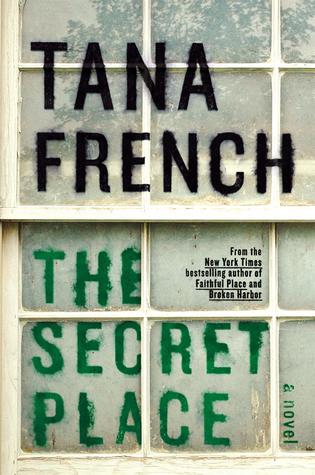
Now while Flavia is a bit on the cozy side, Tana French is not.  Her dark, psychological suspense novels featured troubled protagonists, troubled victims, and troubled suspects.  Everyone has secrets to hide, skeletons in their closets, and rarely does anyone make the “right” decision. Yes, even the “good” guys are not all good.

I have read most of her standalone (but loosely linked) Dublin Murder Squad novels. You can access the reviews here.  While they can all stand alone, French’s quality and style is demonstrated in all of her works.

In her newest novel, The Secret Place, French makes a wink and a nod back to her third novel, Faithful Place [details from me on that novel, here], although I should say from the start that having read Faithful Place is not necessary at all here, it only adds an extra layer of interest.

But something I said in my review of Faithful Place holds true also in The Secret Place:
That's the thing about French, it is how her books make you feel that is way more important than what happens.  Her books are well plotted police procedurals, but the mysteries are not always solved, and if they are, the bad guy does not always get brought to justice.  You are not quite sure what to expect.  With the number of suspense books I read, this is a huge compliment.  It is no wonder that her books end up on every award and best books list each time she writes a new one.
The specifics of the plot here involve a girl’s boarding school and their bulletin board where secrets can be posted. The year before, a young man at the neighboring boys' school turned up dead on the grounds of the girls’ school. But now, a year later, on the “the secret place” there is a picture of the dead boy and a note saying “I KNOW WHO KILLED HIM.” Who posted it? Who killed the boy? Was it one of the girls?

So the story unfolds intricately from this moment.  We have the investigation in the present, told from the perspectives of 8 girls (2 groups of 4 besties, and each group hates the other) and the detective, plus a plot thread that goes from the beginning of the end for the dead boy to his final evening.  That last plot thread is especially creepy because as those scenes begin, we, the readers, get a countdown to exactly how many days and even hours he has left to live. It gives you the willies each time [in a very cool way].

This is a complex and dark story, not for the feint of heart, but also very compelling.  I only had a mini quibble with a small, possibly supernatural subplot that is never fully developed nor did it seem wholly necessary when it was all said and done.

A Note on the Audio: I have actually only ever listened to French’s books and have always enjoyed the narration.  Since they are set in Ireland, I greatly enjoy the brogue of the narrators, something I cannot provide to the story when reading it in print. It adds to the atmosphere and since these are brooding, dark, atmospheric novels, the audio enhances that.  Specifically here the novel is narrated by a man for the present story line and a female for the past.  The woman’s voice in particular is breathy and creepy to go with her ominous storytelling charge.

Three Words That Describe This Book: unsettling, richly drawn character, intensely suspenseful

Readalikes: I have made many suggestions for readalikes in the past here, but here is one more new one-- S.J. [Sharon] Bolton’s Lacey Flint novels. As Shauna Griffin says in NoveList, "These psychologically intricate, suspenseful crime series offer intelligent, richly drawn characters whose investigations become intensely personal.” I have had great luck moving readers of one series to the other.

Wednesday, March 13, 2013

What I'm Reading: Series Roundup

[Ed note: I know I missed posting yesterday, but today you get 2 reviews, so we are even.]

It's time for another installment of Becky's series roundup.  I usually don't have enough to say for an entire post on the series titles I read, but I like to record anything unique about the specific book, and I always try to find new readalikes. Today I have two popular crime fiction titles that I have finished recently.

Speaking From Among the Bones is the next installment in the Flavia de Luce series. It is no secret that I just adore Flavia. You can click here for details on the other books in this series featuring the 11 year-old (living in 1951), British chemist with a speciality in poisons.

The story picks up a few months after the last book, I Am Half-Sick of Shadows, which was a Christmas story. It is now nearing Easter time and things are not improving for the de Luce's as their finances are in even worse shape.

The murder here involves the planned disinterment of the town's Saint (Tancred).  But when the tomb is opened, the missing town organist's dead body is found in the crypt.  Of course nosey Flavia is there, having ridden her trusty bike Gladys to the church yard, and she begins her own investigation.  Like the previous installments, her investigation leads Flavia to find clues others have missed, to learn more about her missing mother and family history, and to get herself in serious danger. In the end, she solves the case as usual too.

You read Flavia for  more than the mystery. Yes, the mysteries themselves are (in my opinion) better than the average cozy mystery, but it is Flavia you need to adore if you will enjoy this series.  Other appeal strengths here are the returning eccentric and interesting secondary characters.  It is also fast paced with a hopeful tone.  They are just fun to read.

The series has a conversational flow.  Flavia is telling us about solving the mystery, but she is also baring her soul to the reader. As a result, you always remember that she is 11; Flavia does not act older than her years.  This is a plus.  The reader is meant to be an adult looking back on what it was like to be 11.  We know more than her and Bradley underscores this in small ways, such as the fact that she does not understand love, marriage, or finances yet. She knows the family is in dire straights because her Father and older sisters tell her, but her day to day life is no different, so it does not bother her much. Until, that is, she thinks she might lose her beloved chemistry lab if the manor is sold.

As I suspected in the Christmas story (and wrote about here), not only is Flavia growing-up, but Bradley is advancing the main conflict in all of the books--what happened to Harriet (Flavia's Mom)?  This book ends with a shocking cliff hanger on that front, so if you are new to the series I would make sure to not start here.  In fact, this is a series I would suggest you begin at book one as this subplot has been consciously built over the course of the series, rather brilliantly, by Bradley (in my opinion).

In fact, this is why the Flavia series is so different from other cozy mystery series.  In many traditional cozies, you can pick up any of the books, in any order, and be fine.  Here, the storyline that is driving the entire series is the fate of Harriet.  It goes beyond each murder mystery, and to fully enjoy the series, you need to start at the beginning.

Three Words That Describe This Book: eccentric characters, conversational tone, fun

Readalikes: Please click here to see the many times I have listed readalikes for Flavia or mentioned Bradley's series as a readalike for other books.

But, I like to give at least one new readalike option each time I read a new series installment.  Today I want to offer the Charlaine Harris' Aurora Teagarden mysteries.  As NoveList says in the series readalike statement:
Although the Flavia De Luce Mysteries have some macabre humor not found in the Aurora Teagarden Mysteries, both feature strong female protagonists, complex family relationships, vividly atmospheric portraits of small-town communities, and wryly humorous depictions of colorful and eccentric characters.
This is also a good choice since Harris' Sookie Stackhouse series is coming to an end this year, now is a great time to remind people of another one of her series.

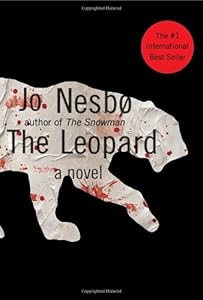
And now for something completely different, a violent, dark and twisted Nordic Noir-- the next book (for me) in the Harry Hole series, The Leopard.

Most Americans began following Hole's troubles with the 7th book in the series, The Snowman (click here for my review).  This was the first Hole book that was heavily marketed in America.  I had a lot to say about Hole in my review. Please click through if you are new to Nesbo's series as I do not want to repeat myself.

Like all Nordic titles, I listened to The Leopard mostly so I don't have to struggle with pronouncing the foreign words. I am happy to report the audio is excellent again.  The narrator is Hole to me, and I am not bothered by the fact that a Norwegian detective talks with a British accent.  Also, it is important to note the audio when you are reading a book in translation.  Hearing a book that is translated badly is very jarring.  That is not the case here.  The translation was smooth and effortless.  You would think the book first came out in English if it were not for the note at the end as to who translated it.

Back to The Leopard specifically.  Here are the only plot details you need to know.  The story begins with Harry living in Hong Kong trying to run away from his demons from The Snowman case.  He is failing miserably at this.  Kaja, a young, female crime squad detective convinces him to come back to Norway to help with a case, but the only reason he comes back is because his father is dying.

What follows is Harry being drawn into helping with a particularly brutal and vicious case involving the murders of people who are only connected by the fact that they spent one night in a wilderness cabin together as they were skiing the back country. But like previous Hole books, this is just the tip of a very twisted and evil iceberg.

The story is like The Snowman in tone.  It is dark, the bad guy is vicious and evil, there is corruption within the police, and even the good guys here all have a bad side to them.  There are also many twists; so many that they add to the suspense and the compelling pace.  You keep reading to watch it all unravel. There are descriptions of death and near deaths that are quite graphic and visceral.  Again, I did the audio which makes this even more noticeable, but I have a high tolerance for gore.  However, there was one scene where Harry has to injure himself pretty gruesomely in order to save his life.  Even I cringed a bit during that part.

Also, true to the series is the layering of multiple subplots that Nesbo handles flawlessly.  There are at least 4 major subplots going on under the layer of the murder instigation, and each eventually gets related back to the story as a whole.  In fact, often, one of the subplots contains a major clue to the murder investigation, but Nesbo is such a great storyteller that I often got wrapped up in the side stories for their own sake and forgot to pay attention to the clues hidden within them.

Another interesting style point with these books is that Nesbo gives you peeks into the bad guy's point of view off and on but you don't know who he is.  You also gets looks into the victim's perspective before they die as well as a few other main characters, but often, when it is not Hole, the reader is not sure exactly who is talking to us.  This also adds to the suspense and the compelling pacing.

If it is possible, Harry is even more broken in this installment than the one previous.  And even though he wins in the end, it is at a steep price.  The ending is still very dark even though Harry somehow manages to cheat death and save the lovely Kaja despite very unbelievable odds.  I did mention this "Hollywood Ending" problem with the first book, but obviously I did not mind it enough to not read the next book.  And, I was not surprised that such a dark book still had a happy-ish ending.

Like Bradley's series above, you read this series for Harry.  If you do not like Harry-- troubled, alcoholic, pining for his girlfriend, dad in a coma dying, Harry-- you will not like this series.  He is a completely different person from Flavia.  She is an optimist, Hole a pessimist.  But the appeal for readers is the same.  If you are okay with a troubled, conflicted, not all white knight protagonist, you will like Hole.  It can't be that crazy to connect these two widely different detectives (Harry and Flavia) because I enjoy them both, although for completely different reasons.

Three Words That Describe This Book: suspenseful, dark, lots of plot twists

Readalikes: Again, I have many varied readalike options with explanations here, but I want to add at least one new one.

John Burdett's Sonchai Jitpleecheep mysteries set in Bangkok and put out by the same publishers are also a good choice.  Both Jitpleecheep and Hole are troubled police officers who are involved in twisted, dark, and violent mysteries where the line between good and bad is very thinly drawn.  Also, both have a foreign setting (to American readers), a fact which is one appeal factor for me as a reader. 

On an interesting side note, I was compelled to return to the Harry Hole series to read The Leopard because I had noticed the newest book in the series, Phantom, on many of the year end best lists for 2012.  So I had Nesbo on my mind already, and then my son began reading Nesbo's humorous Doctor Proctor's Fart Powder children's series (which my son gives a hearty thumbs up to).  I couldn't resist the dichotomy of us reading the books side by side.

Wednesday, March 26, 2014

What I’m Reading: The Dead in Their Vaulted Arches

Today I have another review.  I am trying to look at this flurry of reviews as Spring Cleaning, rather than the first reviews of non-book discussion titles I have written all year.

This review will be quick as it is for the 6th installment of Alan Bradley's captivating Flavia de Luce Mysteries, The Dead in Their Vaulted Arches.

Interestingly, this is one of the few mystery series for which I have read and reviewed every book.  So I will not waste time here with back story.  For that, click here to bring up the previous five Flavia reviews.

This book takes place just a few weeks after Speaking From Among the Bones and is mostly concerned with the shocking information that was revealed at the end of that book-- the discovery of the body of Flavia's mom Harriet.

Dead in Their Vaulted Arches is much different book in tone, scope, and purpose than the five that came before.  The novel is mostly centered around what happened to Harriet and why it matters to all of England in general, and Flavia in particular.

The novel is more spy thriller than mystery.  This is a big shift in the direction of the series.  In fact, in my review of Speaking From Among the Bones I did note that I was sensing a change in the tone of the series, but it is more than that.

The way this novel ends, everything about the series, from the setting, to the focus (spying more than mystery) to the tone (much more serious) has changed.  I am excited about the change because it paves the way for our 11 year old, precious chemist to finally being to grow into a woman.  The shift and the explanation behind it also explains why Flavia was allowed to be so eccentric and independent, which will silence some critics who find her too precocious and without enough supervision in the past.

In short, Dead in Their Vaulted Arches marks the end of an era for Flavia the girl detective, but begins a brand new journey for her as a British Spy. The series and Flavia are coming of age together.  And, while things are getting more serious, I would still call this a moderately cozy series.

However, from a RA perspective, you need to be aware that your Flavia fans will either love and embrace this change, or it will put them off of Flavia forever.  This is the most important thing to be aware of when book talking this series to readers.

Three Words That Describe This Book: captivating, quirky, original

Readalikes: I have given many readalikes for this series over the past few years.  You can pull them all up with this link, but I also feel like a new book in the series means I should at least give you a couple of new readalikes too.  So here are 2 more series to check out if you like Flavia:

  • The Joanne Kilbourne mysteries by Gail Bowen are also cozy and quirky. Kilbourn is a university professor in Saskatchewan.
  • I have been reintroduced to Agatha Christie's Hercule Poirot mysteries because my daughter is reading them now. Like Flavia, Poirot is an outsider, intellectual.  The time frames are similar and both are cozy.  Interestingly, I made this RA connections when my daughter asked me for readalikes for the Poirot mysteries and I thought of giving her Sweetness at the Bottom of the Pie.

Wednesday, October 23, 2013

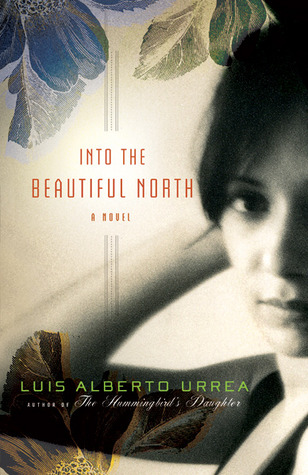
What I'm Reading: Into the Beautiful North

As I mentioned yesterday, tomorrow, I will be interviewing Luis Alberto Urrea for the Fox Valley Reads.  The book we all read is Into the Beautiful North.

I am going to break the mold on my review here in the interest of time.  First here is the publisher's statement on the book:
Nineteen-year-old Nayeli works at a taco shop in her Mexican village and dreams about her father, who journeyed to the US to find work. Recently, it has dawned on her that he isn't the only man who has left town. In fact, there are almost no men in the village--they've all gone north. While watching The Magnificent Seven, Nayeli decides to go north herself and recruit seven men--her own "Siete Magnificos"--to repopulate her hometown and protect it from the bandidos who plan on taking it over. Filled with unforgettable characters and prose as radiant as the Sinaloan sun, INTO THE BEAUTIFUL NORTH is the story of an irresistible young woman's quest to find herself on both sides of the fence.
And here is what Urrea has to say about it:
After the torture of writing The Devil’s Highway and the turmoil of completing The Hummingbird’s Daughter, I needed a break.  I might have stopped writing at all except for haiku and road journals if I didn’t owe the good folks at Hachette another book… or ten.  So I set out to make myself happy.  I confess:  this book was utterly selfish.  But I also thought that if I made myself laugh out loud every day, perhaps you would laugh too.  And we all needed a laugh. 
Still, I had made a vow to God a long time ago that I would keep elements of witness and service in everything I write.  This being, for me, a spiritual journey rather than (sigh) a commercial one.  So I worked very consciously to embed elements of social commentary, subversion, surprise and humanity in every part of the book.  Some critics were harsh at first.  Yes, I knew it was “no Hummingbird’s Daughter.”  But I also thought it had some of the most humanitarian and provocative stuff in anything I’d ever written.  The initial chuckles may have disguised that.  
I was thrilled beyond belief that Latina magazine picked it as one of its best beach-reads.  Frankly, I was enjoying a bit of pop-writing.  I wanted a sunny book that went to the beach in a mesh bag and occasionally made the reader say, Hmmmm.It felt subversive to make undocumented people the heroes of an American book.  To make the three male heroes a gay man, a Mexican bowling alley janitor, and a scary cholo from the Tijuana municipal garbage dump.  It also felt subversive to make the action-hero a 19 year old young woman undertaking a heroine’s journey—Mad Max and Beowulf have nothing on Nayeli! 
Lately, people have been clamoring for sequels.  It’s funny—time changes all careers.  Now I’m not immediately known as “the author of Hummingbird,” but as the author of Beautiful North.  Here’s what readers and a couple of critics (hello, Alan Cheuse)  want to see:  1) the battle of Tres Camarones; 2) Tacho’s big gay wedding.  YES! 
I was pretty sure I had done something right when I was mocked for an hour by an atheist friend for putting so many ridiculous religious images in the book.  Then, when I got home, I had a letter from a nice Illinois church lady chiding me for the anti-Christian bias in the book.  For the record:  this time I have to side with the atheist.
So between these 2 statements you get a very good idea of what Into the Beautiful North is about.

So let me talk about some of the appeal. What is most striking about this book is the unique premise Urrea has concocted and the amazing characters.

Let's start with the premise.  As I noted here yesterday,
...the most striking thing about the story-- it’s set up.  I love that they are sneaking into the US to bring the undocumented workers back home.  It is a funny, touching, bittersweet, and quite honestly a subversive premise.  And it is so very original since most of the crossing the border literature and news today is so polarizing and political.  Instead you turn the entire issue on its side, forcing readers to rethink their own beliefs and opinions about illegal immigration.

This is an extremely thought provoking idea.  Characters along the way comment on how interesting Nayeli and her crew's task is, how noble, how counter intuitive.  This original set up makes for a story that is able to walk the tightrope between serious, heartfelt, and humorous without missing a step.

And then there are the characters.  Urrea alludes to how unorthodox his heroes are above.  You fall in love with this rag tag bunch as you read along and follow then on their quest.  If you are a reader who enjoys fully rounded, rich characters, this is a book you should not miss.  Each one is unique and what is unique about each character is helpful to the group on their road trip.

I could write a post each on various characters, that is how great they are.

It's funny, I know people who read for character and others who read for plot.  Into the Beautiful North is that rare book that could appeal to both.

Reading Into the Beautiful North was by far the best reading surprise I had this year, maybe in many years, especially considering I HAD to read it for work.  I didn't even need to like it to be able to interview him well.  I loved this book and will be telling many people about it.

Finally, I want to note there is an underlying spirituality to this, and all of Urrea's work.  There is no overt religion, just an overarching belief and faith driving the characters (some more than others). But as he said above, both religious people and anarchists have found reasons to dislike this book.

Three Words That Describe This Book: original, character centered, thought provoking quest

Readalikes:  First, visit the official Fox Valley Reads list of readalikes.  It is extensive and hits on the obvious read alike areas.

That list almost makes my job harder.  I have to think outside the box.  But hey, it is what I do.  So I am going with matching Into the Beautiful North with other original, thought provoking books, with quests of some type that still have a happy and bright tone.  It is not easy to find those, I know, but that is why I loved this book.  It gave me something unexpected that made me think AND smile.

Here are some books I have read that fit that mold. These titles share very little beyond what is in bold above, but that combo is so rare I think it is worth mentioning it.  You will not find these books showing up as readalikes in traditional sources. The titles link to my reviews with more detail and even more readalikes.

See some of you tomorrow night.

Friday, May 30, 2014

What I’m Reading: The Outsmarting of Criminals

Reviews keep coming...

Earlier this month I read the first book in a new cozy series, The Outsmarting of Criminals: A Mystery featuring Miss Felicity Prim by Steven Rigolosi

I placed this book on hold immediately after reading this review in Library Journal:
/* Starred Review */ After being mugged in New York City, Miss Felicity Prim plans to embark on a new career: "criminaloutsmarting." She is going to do it the cozy way by moving to a small hamlet in Connecticut, where she'll buy a cottage with a garden. All this in Chapter 1! The staff of the doctor's office where she works is distraught when Felicity announces her resignation, especially the doctor, who wants to marry her. She'll have none of this until she tries her new venture, though. Investigating as a concept gets decidedly real when a corpse turns up in her basement (a secret basement, by the way). Det. Ezra Dawes and his team make a valiant effort to keep up with Felicity. Concurrently, Felicity and her sister learn they have a secret half-sister, and thus she has a second case to solve. Mercy! VERDICT This title had me at the cover—all done in Edward Gorey style. The tongue-in-cheek humor Rigolosi showed in his earlier work (Androgynous Murder House Party ) is key to this pitch-perfect mash-up of the greatest traditional/cozy mystery tropes. Similar in tone to Kerry Greenwood's Phryne Fisher series although with a contemporary setting; a pleasure from cover to cover. --Teresa L. Jacobsen (Reviewed March 1, 2014) (Library Journal, vol 139, issue 4, p74)
Between my love of books about books, the fact that I am leading the ARRT Crime Fiction Genre Study, AND that I had just led our 2 hour discussion on cozies a few weeks before, this book was exactly what I needed.

You get the plot and some of the appeal from the review, but let me talk a bit more about WHY someone would enjoy this book.  First, it is adorable.  If you like reading and are someone who gets caught up in books on a regular basis, I mean so caught up in the characters that you forget they ARE NOT REAL [you know you’ve done it]-- this is the book for you.  Felicity is that kind of reader of mystery novels, especially the classics.  But you don’t have to love mysteries to enjoy this series.  Rather, it is that “getting caught up” in a book aspect that is shared here.

This is a mystery about a reader and the books she loves first and foremost. But, it is also a "wink, wink" parody of mystery novels, their plots, and the eccentric characters who live on the small towns of cozy mysteries.  The official term for this type of book about books where the reader is in on the joke is technically called metafiction. In terms of appeal what that  term means is that you, the reader, should expect to have a fun romp in an endearing, engaging, and witty book about a love of books and reading.  The reader is in on all of the jokes, we crave the next plot twist ripped from the classic cannon of mystery fiction, and we can’t wait for what’s still to come.

Now many may find this piling on of all of the inside jokes a bit much.  Not me though.  Warn people that it is an exaggerated, adorable, send up and they can decide if they are interested for themselves. This is a book for which someone’s enjoyment will be highly dependent upon their expectations and mood as they read it.

But it is not all puns and inside jokes.  Rigolosi is a good writer. An example can be seen in his brilliant, “show don’t tell” portrayal of Felicity’s terrible driving. That bit of writing skill is worth reading the book.  It is a great running gag but done in an understated way that I really enjoyed.

The Outsmarting of Criminals is a fast paced, fun, page turner. It is a perfect summer read for all book lovers. And don’t blame me if after you finish the novel you too are thinking about leaving the rat race behind and becoming a cozy amateur detective yourself. Just make sure to buy a house that comes with its very own secret basement.

Three Words That Describe This Book: adorable, witty, eccentric characters 

Readalikes: This series takes everything I love about Bradley’s Flavia de Luce series and Hall’s Vish Puri series and smooshes [I know, not an actual word] them together.  Click here for more on Flavia and here for more on Puri including dozens more readalike options.

But really anything on the ARRT crime fiction genre study list from the April Meeting of Amateur, Cozy, and Humorous mysteries will work as a suggestion here.

This series also reminded me of a backlist, harder to find British mystery series that also is a parody of mystery novels by L.C. Tyler and beginning with The Herring Seller’s Apprentice.  Here is the link to my review of that book and here is the link to the Goodreads info on the whole series.

And finally, the best series for people who love books, reading, and metafiction is Jasper Fforde’s Thursday Next series. I think it should be required reading for book lovers.

More reviews coming over the weekend [especially since I took yesterday off from posting].

Thursday, February 7, 2013

What I'm Reading: The Poisoner's Handbook

I greatly enjoy reading history of science, so when my student Nicole presented her reading map on Deborah Blum's The Poisoner's Handbook: Murder and the Brink of Forensic Medicine in Jazz Age New York last semester, I was intrigued and put a hold on the CD.  I am glad I did.

The story Blum tells is anchored by the career's of Charles Norris, New York City's first officially trained medical examiner and Alexander Gettler, the city's first toxicologist.  To show their importance to their field's Blum breaks the book up into sections, each centered on a specific poison.  She then picks a case or two and throughout the section explains how the poison works, where it came from, and how these two visionaries were able to not only solve the cases, but completely change the way science was used to solve crimes. This structure results in a clever combination of history of science and true crime that in and of itself is enough reason to read the book.

Other appeals include the strong NYC, Jazz Age setting especially the details of the politics and the people (from the rich and famous to the regular ones).  Following the ups and downs of prohibition and its effect on the number of deaths in NYC was enlightening too.

Also, along the way we meet many interesting characters, some victims of poisoning and other the perpetrators, but each is written in a way that captured my interest. Blum was able to use her research to craft a cadre of eccentric, intriguing, and shocking secondary characters.

The pacing is compelling.  Since Blum breaks up the story into smaller sections she never has to let the scientific details bog down the narrative.  The episodic nature keeps it all rolling along. A poison is thoroughly investigated, and just as I began to get bored with a topic, the sections ends, a new one begins, and I was quickly learning about a new poison.  We keep reading because everything old is new again-- new poison, new chemistry to learn, new bad guys, but same old heroes Norris and Gettler.

My only complaint about this book is that Norris and Gettler are portrayed only in a positive light.  They seemed a little too good to be true.  Who knows, maybe they were, but I doubt it.

So if you are a fan of well researched and compelling history of science OR true crime, but especially if you like both, Blum's book is worth a read.

A note on the narration.  It was solid but unmemorable.  It kept me interested but I am not sure it is a book that is improved by listening to it.  However, it's episodic nature made the book a good choice for listening.  It was easy to fall into, listen while I did other things (worked out, folded laundry, drove), and then pick it back up again later. Since the main focus was on two men and only one poison at a time, it was easy to follow the narrative and the science.

Three Words That Describe This Book:  history of science, true crime, clever

Readalikes:  The first character I thought of when reading this book was my favorite budding chemist with an interest in poison's Flavia de Luce.  Then I thought of Sam Kean and Mary Roach.  But so did Nicole when she made her reading map.  In fact, Nicole has dozens of readalikes, so click on over to her reading map and check them out. She did a great job providing a wide range of reading suggestions.

Finally, I will add one readalike to the pot here.  A few years ago I read The Suspicions of Mr. Whicher: A Shocking Murder and the Undoing of a Great Victorian Detective by Kate Summerscale.  In that review I said: "What makes this true crime story different from many others is that the author takes an interesting angle." Although the angles are different, the same could be said for The Poisoner's Handbook. 

Tuesday, August 19, 2014

What I’m Reading: World of Trouble

There are very few times in life when you complete a series and it is just perfect.  As I mentioned in a previous Monday Discussion on this blog, this is how I felt about completing Ben H. Winters The Last Policeman Trilogy with the last installment, World of Trouble.

This review of World of Trouble as a novel will be short because to say too much would give away the joy of reading the series.

First, you need to see my reviews of The Last Policeman (book 1) and Countdown City (book 2) for more details.  Click through. I can wait.

Okay, you are back.  All I am going to say about World of Trouble as a book is that the story picks up where Hank left off, leaving his girlfriend at a safe house and headed back out into a world only weeks away from impact with the asteroid that will destroy most, if not all life on Earth.

Hank follows some leads to Ohio where most of the action in this book takes place.  I can tell you that before the asteroid hit the earth, Hank has put all the pieces into place from the last 2 books.  He knows what was going on with his sister, he solves a few other mysteries along the way, and still leaves time to end the novel in a beautiful, heart warming scene as the asteroid streaks across the sky.  It’s just perfect.

For Readers Advisory purposes what you really need to know is how to suggest this now completed trilogy to patrons. Here are a few tips and points on that front.

First, it stays completely true to the tone and focus of the first installment.  This means, Hank gets a bit more seasoned as he is investigating the mystery surrounding his sister, but he is still a bit naive and bubbling until the end.  He also remains endearingly good hearted and good natured despite the fact that the world may be ending any day. You can be sure Hank stays Hank no matter what.

Second, this series although set in a pre-apocalyptic time NEVER moves to post apocalypse.  Do not give this series to people who want to know what happens because of the asteroid!  This is a hard-boiled detective novel, albeit featuring an unexperienced detective, who refuses to accept defeat even as he faces down the end of the world.  He will fight to figure out what happened to his sister and why until the end. He will leave no stone unturned.  He will complete his mission before the deadline. Hank is nothing if not earnest, but Winters will not break our trust.  This is a pre-apocalyptic novel and it stays that way until the end.

But it is also a novel about what choices people make when they know the end of the world is coming.  There is no blue print for how you are supposed to act here.  We meet many, many people who all make different choices.  We see what happens to the country’s infrastructure, institutions, and community as the day of impact comes closer.  This is a lot to take in and makes the trilogy very thought provoking, but not as dark as you would imagine because of Hank’s positive personality.  Seeing these background details evolve over the course of the series is not only very interesting, but it is also a huge factor in why someone would read and enjoy these books. So my RA point here...take the term pre-apocalyptic literally.

Third, this is a great option for mystery fans with an off kilter sense of humor, who enjoy quirky characters, and a first person narration.

Fourth, if you commit to reading the entire trilogy, rest assured, it is extremely well paced.  You can read each book in a few sittings.  It would not be a huge investment in time.  They are also paperback originals, so I will be sending quite a few patrons with all three on vacation in the years to come.

Taking the entire series into consideration, I have been suggesting it to many more readers than before the publication of World of Trouble.  Until I finished the trilogy, I couldn’t be sure that it would  stay true to the mystery part.  I was worried that the gimmick of the asteroid would overtake the true story here.  So now, you can be sure the reader does not need to like apocalyptic fiction in order to enjoy these books; they just need to be okay with the pre-apocalyptic setting and the shadow it casts over the tone.

Three Words That Describe This Book: endearing narrator, pre-apocalypse, thought provoking [same three words I used at the start and they still are the key appeal of this series]

Readalikes:  I have plenty of readalikes listed from when I wrote about the first 2 books here and here.

I think your best readalike options have NOTHING to do with the science fiction aspects or apocalyptic stuff though. I do have those other options listed in the links from previous reviews.   Rather, your focus on readalikes should be for other mystery series with an endearing detective, an off beat sense of humor, and some level of thought provoking issues [in other words, it needs to be a bit more than fluff because there are some serious issues at the foundation of  the story...the end of the world is coming for goodness sake].  Thankfully, this is one of my favorite areas of mysteries.  So here are a few options with links to my reviews:

Saturday, December 24, 2011

What I'm Reading: I Am Half Sick of Shadows

Merry Christmas Eve.  Today I would like to celebrate the true joy of a child's Christmas by writing about the latest installment in Alan Bradley's Flavia de Luce series, I Am Half-Sick of Shadows.

Since it is Christmas Eve and I have already read and reviewed the previous 3 books in this fabulous series, I am going to take some shortcuts here today.  So here is the plot from the publisher:
It’s Christmastime, and the precocious Flavia de Luce—an eleven-year-old sleuth with a passion for chemistry and a penchant for crime-solving—is tucked away in her laboratory, whipping up a concoction to ensnare Saint Nick. But she is soon distracted when a film crew arrives at Buckshaw, the de Luces’ decaying English estate, to shoot a movie starring the famed Phyllis Wyvern. Amid a raging blizzard, the entire village of Bishop’s Lacey gathers at Buckshaw to watch Wyvern perform, yet nobody is prepared for the evening’s shocking conclusion: a body found, past midnight, strangled to death with a length of film. But who among the assembled guests would stage such a chilling scene? As the storm worsens and the list of suspects grows, Flavia must use every ounce of sly wit at her disposal to ferret out a killer hidden in plain sight.
All the charm of past Flavia books is here.  I went into details about the appeal and readalikes in each review.  Please use the provided links for those details:
While the back story of the de Luce family is moved forward in a few subtle ways, the great thing about I Am Sick of Shadows is that it can be easily read as a standalone.  It makes for a perfect Christmas story.  It has it all.  The entire town snowed in (with the reverend) at Buckshaw, the birth of a baby, and some family reconciliation.

Bradley is consciously nudging us to get the jokes too.  For example, the closed room murder setting is very Agatha Christie-esque, and then later in the book, the Inspector even says that it is all very Agatha Christie like.  This book is not going to force you to think.  It is a sit back and enjoy with a warm cup of cocoa by the fire kind of holiday story.

But as in all of the books, the appeal lies in Flavia.  Here Bradley perfectly captures the conflict of an 11 year old's desire to believe in Santa with her intellect's understanding that it cannot possibly be true.  As the mother of a 9 year old going through similar thoughts, this book was especially moving and touching to me.  In the finally lines, Flavia is still questioning whether or not Santa is real and then she opens the door to her lab...

If you are looking for a heart warming and fun Christmas read, this is a great choice for this year or any Christmas to come.

Three Words That Describe This Book: charming, Christmas spirit, historical

Readalikes: As I mentioned above, please use the links to the 3 previous entries in the series for more specific appeal and readalikes.

Also in December of 2008 I read, The Man Who Invented Christmas: How Charles Dickens's A Christmas Carol Rescued His Career and Revived Our Holiday Spirits by Les Standiford.  Click here and scroll to the bottom of the post to read about it.  This is another one of my favorite holiday themed books.

Merry Christmas to all and to all a good night!

Tuesday, August 20, 2013

What I'm Reading: The Bookman's Tale

I think this week is catch up on reviews week on RA for All.  At least that is the plan.  Here we go...

Back at the beginning of July I read a publisher provided ARC of great debut, The Bookman's Tale: A Novel of Obsession by Charlie Lovett.  We also own a copy here at the BPL, but I have been talking up this book so much, it has been continuously checked out all summer. I find that interesting because it did not sell particularly well, but it is a library hit.

My soundbite review of The Bookman's Tale says quite a bit about it-- This is a fast paced historical-mystery combo, perfect for any book lover. Think Agatha Christie meets Geraldine Brooks.

If you have every found yourself ignoring everything in your life around you because of a good book, you will relate to Peter, our protagonist.  Peter, like the author, Lovett, is a rare book collector.  It is 1995 as the book opens.  He is an ex-pat in England, trying to ply his trade in a new country as he is simultaneously struggling with the death of his beloved wife 9 months previously.

But we also have 2 other story lines set on 2 different time lines.  Along with the 1995 timeline of a melancholy Peter, we have the story of how Peter met his now deceased wife Amanda and fell in love with her beginning in 1985 and moving up until just before the novel as a whole begins.  And, finally, we have the mystery of a Shakespeare folio with possible notes by the famous playwright himself which Peter finds in 1995; this timeline also eventually moves up to the present.  We the reader, get to see the provenance of the book from the 1500s to the present in the third storyline as we watch Peter try to piece it all together in the 1995 timeline.

The mystery is the result of a book lover with a secret combined with a centuries' old family feud. And it all comes together in the present in a satisfying fashion.

I realize now that this may all sound confusing, but I was impressed at how all three story lines worked together to create a unified and, quite frankly, fun story. This is a page turner with a book lover's theme. It has just the right amount of history, bittersweet love story, and mystery to sustain your interest.  In fact, at one point in the last third, I started to get worried that Lovett would get a little too cheesy with the mystery causing me to no longer enjoy the book, but just as I started to set nervous, it was as if he also knew it was going too far and he poked fun at himself in a very witty way.  I loved that part, and it came right at the climax. Lovett does not take himself too seriously here and it works.

The pace of this novel is tight and crisp.  The historical detail is just enough to hold your interest, but not enough to bog down the pacing.  Also, the rotating triple time frames keeps you turning the pages. Also, Lovett gives the reader more information than Peter has; another reason the pace moves swiftly. We want to keep reading to see Peter catch up to us.

I should also mention that the promotional material for this book focuses a bit on Amanda's ghost. I think they were trying to get paranormal romance readers here, but I have to say it is not something I would focus on.  Peter thinks he sees Amanda's ghost guiding him make the correct decisions, especially as the mystery heats up and Peter's life is at stake. But these scenes are more about his love for her guiding him than her literal ghost.  Do not read this if you think you will get a ghost story.  It is not.

Also, a note on the mystery. It is pretty clear what is going on fairly early, but the "why" and "how" is not completely realized until the end. As a result, this is not a suggested read for hardcore mystery fans. Rather, this is first and foremost a book for book lovers.  The cozy mystery, bittersweet (and very satisfying) love story between Amanda and Peter, and the historical touches add to its appeal.

This is not the best book I have read this year, but it is probably among the most enjoyable. This will become one of my sure bet options for a "good story."

Three Words That Describe This Book: books about books, fun, cozy historical mystery

Readalikes:  As I said above, this novel knows it has a Miss Marple amatuer detective vibe.  Peter even comments on it toward the end of the book.  So yes, Agatha Christie is a great readalike here. Peter also is just like Flavia de Luce, except Peter is a grown-up. But both have a loss of a loved one propelling them through life, both get caught up in mysteries they should probably stay out of, and both have a unique skill (antiquarian books and chemistry) that adds interest to the mystery.

I also mentioned Geraldine Brooks above.  This novel reminded me specifically of People of the Book.

If you want to follow the mystery of a book in an enjoyable tale I would also suggest The second book in Deborah Harkness' projected trilogy Shadow of Night or The Thirteenth Tale by Diane Setterfield. I realize these books are widely different, but I thought of each as I was reading The Bookman's Tale.  Harkness because of the era where the story begins in the past, Shakepearean times. IT is all about tracing a mysterious book from the past into the present.  If this is why you are reading Shadow of Night, it will not matter if you have read the first book.  The Thriteenth Tale, is all about an author and the mystery of her life and works, but it is also very Gothic.  Lovett's work is not explicitly Gothic, but it had that overall feel at times. Untangling a mystery within the lives of writers and book lovers is very important in all three works.  Click on the titles for my detailed reviews of Shadow of Night and The Thirteenth Tale. It is important to note that the Harkness trilogy and The Thirteenth Tale are also go-to titles for me when I am looking for books with a wide appeal to hand to patrons who want a "good story."

I also loved the details in the rare books, college library setting from the q985 timeline. It reminded me of a book I read a long time ago,  The Archivist by Martha Cooley.

The publisher suggests The Bookman's Tale for fans of A. S. Byatt's Possession and Carol Ruiz Zafon's Shadow of the Wind.  While I do not disagree with their similarity, The Bookman's Tale is not as literary as these. It is more fun. You will appreciate it's construction, but there is no hidden meaning or symbolism here that you need to root out in multiple readings.  This is not a bad thing, in fact, when I read Lovett's novel (over the July 4th week) it was the best thing.  But I know the Byatt and Ruiz books have some ardent fans who re-read them.  The Bookman's Tale is a readalike then only if you understand it is a lighter, fun read for fans of these other books.