RA FOR ALL...THE ROAD SHOW!

I can come to your library, book club meeting, or conference to talk about how to help your readers find their next good read. Click here for more information including RA for All's EDI Statement and info about WHY I LOVE HORROR.
Showing posts sorted by relevance for query city of thieves. Sort by date Show all posts

Wednesday, February 27, 2013

World Book Night: My Title and Where To Get Your Books

Over the weekend, I was notified that the title I was assigned to give out on World Book Night is my first choice-- City of Thieves by David Bennioff.  Back from my original review in October of 2008:
I also read another historical fiction with some adventure elements and a similar title, but with a completely different setting and tone. City of Thieves by David Benioff is a WWII drama. St. Petersberg (or Pitter as its residents refer to it) is under siege by the Nazis and Lev, the son of a poet (and victim of Stalin) is literally starving while protecting his beloved Pitter. One evening he is caught out after curfew, thrown in jail, and awaiting his punishment...death. In his cell, Lev meets an army deserter and university student named Kolya. The two are offered a reprieve by the Colonel if they can locate a dozen eggs for his daughter's wedding cake in less than a week's time. The boys set out into the wild streets of Pitter, and eventually slip behind German lines. Along the way, as Lev narrates, the two form a true friendship, meet many interesting people, and come to understand the beauty and horrors of war.
You can click through to see readalikes from back then.  Also, use this link to see all of the times I have mentioned City of Thieves since 2008 (hint, its a lot).  It has become one of my favorite, sure bet, go-to titles over the years.  I have even featured it on the Browsers Corner.

Jose, who works in Circ and runs our popular Decidedly Dystopian Book Club, also got his first choice, Looking for Alaska by John Green.

That's the giver side of the World Book Night equation, but here at the BPL we have news on the distribution side of the evening.  We are an official pick-up location for givers!  So if you are a giver and live in our area, choose the Berwyn Public Library as your pick-up location.  We'd love to meet you.

Thursday, October 30, 2008

What I'm Reading: October 2008

This month I read two completely different historical fiction titles and a popular nonfiction one.

I first encountered The Good Thief by Hannah Tinti when reading reviews and, as I often do when a review strikes me, put the title on hold. Many times I end up returning the book before reading it, but this title seemed too good to pass up, and thankfully I was correct. The Good Thief has been described as being reminiscent of Dickens, and I think that is very much true. The time period, class issues, and the plucky orphan main character all lead one to that comparison.

Here are the details. The Good Thief is Tinti's first novel. We begin the story in 19th Century, New England, in a Catholic orphanage. 12-year-old Ren has lived here for as long as he can remember. He also has no recollection of how he came to lose his hand either. Ren is worried about his future because he is nearing the age when, if not adopted, he will be sold into the army and never know what it is like to have a home and a family. One day, Benjamin arrives,claiming to be Ren's brother, and adopts Ren. As you can imagine, Benjamin is not who he claims to be and the two begin an exciting adventure together.

The Good Thief is, refreshingly, a traditional adventure story (with a historical background) in a literary landscape where adventure is being consumed by thrillers and terrorism plot lines. It is fast paced, the hero is resourceful and lucky (maybe unbelievable so, but that goes with the genre), and it has a resolved, happy ending. Tinti uses many of Dicken's own tricks and themes to propel her story along., including a wonderful cast of eccentric secondary characters such as a dwarf who lives on the roof, a murdering giant, and a hard of hearing landlady. The novel is appropriately funny, heart-warming, melodramatic, and bittersweet, with each occurring in the right places.

I would suggest this novel to anyone looking for a fast paced, old fashioned story. Although it is not a gentle read (there are murders and the exhumation of bodies), it is good for a wide range of readers. I would especially suggest this in audio form to a family with middle school and older children to listen to on a driving vacation.

Specific readalike titles would of course include anything by Dickens. But for more modern authors and titles, those interested could try the hugely popular The Story of Edgar Sawtelle by David Wroblewski which also has a disabled but plucky, young male protagonist (here he is mute), and a coming-of-age theme; it also loosely follows the plot of Hamlet. A less mainstream suggestion would be another well received first novel, When the Finch Rises by Jack Riggs. Here the reader follows two young boys in the 1960s South, their tough lives, their coming-of-age, and the strength of their friendship that pulls them through. It is important to note that this novel does have touches of magical realism. Finally one of my back list favorites that I would be a perfect match for readers who liked Ren is The Miracle Life of Edgar Mint by Brady Udall.

For those who really enjoyed the 19th century, New England setting, you could always try works by or about Louisa May Alcott, Henry David Thoreau or Ralph Waldo Emerson. All three writers captured this time, as it happened, and are still read today.

I also read another historical fiction with some adventure elements and a similar title, but with a completely different setting and tone. City of Thieves by David Benioff is a WWII drama. St. Petersberg (or Pitter as its residents refer to it) is under siege by the Nazis and Lev, the son of a poet (and victim of Stalin) is literally starving while protecting his beloved Pitter. One evening he is caught out after curfew, thrown in jail, and awaiting his punishment...death. In his cell, Lev meets an army deserter and university student named Kolya. The two are offered a reprieve by the Colonel if they can locate a dozen eggs for his daughter's wedding cake in less than a week's time. The boys set out into the wild streets of Pitter, and eventually slip behind German lines. Along the way, as Lev narrates, the two form a true friendship, meet many interesting people, and come to understand the beauty and horrors of war.

City of Thieves has both a war and coming-of-age theme, much like How I Live Now by Meg Rosoff. Also, the popular and well reviewed thriller, Child 44 by Tom Rob Smtih, has a similar setting, but a faster pace and a bit less historical detail. Both would make good readalikes, but possibly not for the same reader.

For nonfiction suggestions, there are literally millions of books on WWII, but this link will lead you to a list of books about the Russian Front, giving any interested readers more information about the setting of Benioff's novel.

Finally, this month I also listened to Simon Winchester reading his latest books, The Man Who Loved China. First comment, Winchester is a wonderful writer, but probably not the most exciting reader. That being said, if you are interested in the West's first true and fair encounter with China and the creation of what is still considered to be the best reference guide of the history of china, read this book. Joseph Needham, the man referred to in the book's title, was not only brilliant, but also interestingly eccentric. In true Winchester style, Needham and his work are raised in importance and links are drawn between Needham and larger world issues, such as the Unibomber.

As I have written on NoveList Plus in my readalike for Winchester, similar authors would include Mark Kurlansky, Jared Diamond, John McPhee, Dava Sobel and Susan Orlean. I would highly suggest checking out these authors if you like Winchester's work.

But specifically, as I read this book, a few novels about Cambridge and China that I had read recently kept popping into my head. I really don't have a subjective reason why, but Ghostwalk by Rebecca Stout and the novels of Lisa See came into my mind often as I read The Man Who Loved China. For what it's worth, I have linked to blog entries where I discussed these novels.

Friday, July 6, 2012

What I'm Reading: The Fault In Our Stars

Ahh, John Green.  I think if the BPL RA desk could choose a mascot, we would pick John Green.  He embodies everything about us.  We are all proud nerds (come on, we choose to work as librarians for adult leisure readers; we know we are nerds) and he is one of the founders of the nerdfighters.  He loves reading and writing, and, hey, have you read this blog before; I shouldn't need to elaborate that one.  And he is from the Midwest.  Indy to our Chicago, but he shares our Midwest sensibility (everyone in the Dream Team but me is native to the area).  Finally, he LOVES libraries, and me and my fellow Dream Teamers...well, we are not in it for the money.

Remember this post about John and his brother Hank Green's vlog?  I subscribe and watch every video (2 per week).

But with the big news last month that the BPL RA Dream Team is taking over the Teen collection this fall, reading and talking about John Green incessantly is now considered part of our job.  We are still a bit too stalkerish, but hey, its for the teens of Berwyn.  (Or so we tell ourselves).

Way back in April, I read The Fault in our Stars, which is already showing up on just about every Best of the Year... So Far list.  It deserves to be there.

The plot sounds sappy, but the book is anything but.  This is why critics and readers love it.

Our protagonist is Hazel, a girl who is only alive because the last chance. experimental drug for her aggressive thyroid cancer seems to be working.  She should be dead, but somehow she keeps living.  Hazel is a color between green and brown and she is a girl between life and death.

Hazel took the GED a few years ago, but she is only 16.  She takes community college courses, but her only social outings are to the cancer support group she attends weekly.  There she has one real friend Isaac, who is going blind (but will live) because of his cancer.  Isaac in turn introduces Hazel to Augustus another cancer kid.  The two share a love of books and become close quickly.

Together they go on a journey, both existential (will I be remembered when I die?) and physical (to Amsterdam, but I won't give away why and how).  They fall in love, but when you have cancer, life is short.

This is a poignant story that forces the reader to contemplate big questions about the meaning of life, why we are here on earth, and the power of love.  But again, Green's talent is that he does this with a believable voice.  It is not sappy or schmaltzy.  It is real and rings true.

Hazel is sarcastic, but lovable.  Her mom is her best friend because, as she explains, when you are sick, who else is around.  She is level headed and smart.  She understands that she could get sick and die at any moment, but does not attack life in a cliche way.  She simply lives like a regular teenager.

Hazel and Augustus have some hysterical conversation about his favorite SF adventure series of books, but they also have some serious and some tender conversations.  They talk about life, death, love, and books.  There is lots of talk about books.  And a memorable trip to the Anne Frank house by kids who know they days are numbered.  The parallels between the 2 stories are clear.

And, I have to say this serious, tragic book also contains one of the funniest scenes ever in any book-- a newly blind Isaac playing a video game with Augustus and complaining that Augustus is playing badly.  That also summarizes a lot of the humor in this book.  If you find the humor in a sick blind kid playing video games, as Green does, you will love this book, as I did too.

Three Words That Describe This Book: sarcastic, poignant, existential

Readalikes:  John Green is the best example out there of an author who is a sure bet cross over from YA to Adult.  So, I will break up my read alike options into YA and Adult.  But please note, all are good for both audiences.

Adult Suggestions:

  • I just finished The Age of Miracles by Karen Thomason Walker. Even though the main character there, Julia, is not sick, the world she is living in is.  She narrates the book as a 23 year old looking back on when she was 12 and the earth's rotation started slowing, changing the world forever.  The ideas of living in the moment are very similar here.  Also the young love in a time of crisis is poignant and has a eerily similar ending.
  • Extremely Loud and Incredibly Close by Jonathan Safran Foer is also a great read alike here.  The narrator here is a young boy who has lost his father to the 9/11 attacks.  There is an existential journey in both books and the forging of a deep relationship that is destined to end badly, but be worth it all the same.
  • I also think City of Thieves by David Bennioff will appeal here.  Bear with me.  Although it is set in Russia during WWI, the young protagonist, his friend, their journey, and the tragic ending resonate here.  On paper these books look very different, but I have read read both and I can tell you the feel, the writing, the protagonists, the sense of awe when you read them, are the same.  Click here for my full review of City of Thieves.
YA Suggestions: I am less well read in the YA field but I will do what I can here.
As Green always says: DFTBA (Don't forget to be awesome).

Wednesday, November 18, 2015

What I’m Reading: The Gilded Age in Fiction-- Same Frame, Two Different Reading Experiences

This Fall I read two new books with the exact same setting-- The Gilded Age in New York City [1870-1900]. However, beyond the shared frame, these books have very little else in common in terms of traditional appeal factors.

I am grouping them together here because for some people, frame is very important. They will read anything with a specific frame.  So as not to repeat myself, I have a much longer piece on that issue here. For those people, I am making sure to put the frame in my "three words" for both books.

Now for others, frame is the not an important issue.  Instead pacing or storyline or character etc... is what makes a great read for them.  However, we may be tempted to match books when their frame is as similar as these two’s happen to be. You see “Gilded Age” listed for both and you might be tempted to think the books are readalikes for one and other, yet that may not be the case at all.

In fact, if you search either of these books on NoveList, the other appears in the readalike bar on the right.  Interestingly, they are computer, not people, created matches based on the shared genre, time period, and place. I do not disagree with this, as I said above, these three frames may be all someone needs to enjoy both books, but this reinforces what I am trying to do here-- suss out the nuances that matter. Because while I liked both, I clearly enjoyed one more than the other AND I have not suggested both to the same reader yet.

To that end these reviews are meant to illustrate the give and take inherent in this issue.  Both are very well executed novels that will appeal to a wide range of readers, but at their core’s these novels have a very different feel.

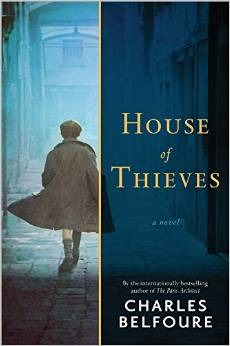
First up, the historical thriller, House of Thieves by Charles Belfoure.

At it’s essence this is the story of how a good, solid man turns to a life of crime, while still staying likable and good in our eyes.

Here is a tiny bit of set up.  It’s 1886 and the rich are VERY rich and the poor, very poor. NYC is run by respected crime bosses. They are criminals yes, but they also among the city's largest arts and political donors. They truly run the city. Our villain is Kent, a crime boss and his crew. Our “hero,” John Cross, is an architect for the very rich. But his son has a gambling problem. To resolve the large debt, Kent wants Cross to use his connections and knowledge to help him rob the homes of NYC’s richest residents.

But why you will like this book is how Belfoure writes it. What is so great here is how he managed to write a novel convincingly and accurately set in its historical time, while telling the story in a way today’s audiences like. He nailed both the historical and the thriller aspects.

For historical fiction fans, the novel has all the details of the time and place. It has a lot of information about being an architect to the rich at this time. And it has amazing descriptions of some spectacular homes. The streets, people, and places come alive.

And while I love historical details, sometimes, historical thrillers move to slow for me. I don’t know why I don’t mind it with regular historicals and do with thrillers, but I do and from our discussions in the crime fiction genre study and from my work with readers, I know I am not alone there [*cough cough* The Alienist]. But Belfoure has managed to use modern techniques like short chapters, fluid point of view shifts, and powerful action scenes to ratchet up the suspense and pacing.

Here are two examples that occur in the first 30 pages to illustrate what I am talking about.

First, the novel opens with an awesome bank robbery and explosion scene that then moves to the perspective of the crime bosses who are watching the scene unfold. The details set the historic tone, but the scene served the same purpose that today’s prologues in suspense novels do. We were thrown right into the middle of the story and are excited to keep reading to see what is going on and how our story will fit into this world.

And second [one of my favorite moments in the beginning of a book in a long time], at around page 30, we see the beginning of the day in a rich home. One of the things the wealthy of this time had were ice boxes. They were built into the side of the house with a door that opened to the outside so literal huge blocks of ice could be delivered to keep things in the ice box cold.  Well, what if you opened your ice box to find...A FROZEN SEVERED HEAD! That was pretty great.  Let’s you know this is not your typical historical thriller.

This novel is under 400 pages and has a moderate cast of characters who all get frequent turns to narrate with fluid and fast paced shifts in the point of view [the entire Cross clan, even the little 10 year old brother has a chance to narrate-- and that was good], yet it is moments like the two above throughout the story that keep the pacing high.

There is also social commentary and flashy fun here [a climax is at the top of the under construction Statue of Liberty!]. But what I loved the most was the ending. The decision Cross and his wife make about how they will live the rest of their lives after the ordeal under Kent’s thumb is over is what takes this book from good to awesome.

Three Words That Describe This Book: flashy fun, suspenseful, Gilded Age

Readalikes: I thought about Pete Hamil and his novel North River while reading this.  You can go to my review of North River, which also has readalikes [fiction and nonfiction]. The time period is different though (1934).

I also think the historical thrillers of Matthew Pearl are a good option here.  Both authors write compelling, historical thrillers with a solid amount of detail.  With Pearl the professional setting is usually book based. I have read a few of them.

But the nuanced characters and their surprising decisions reminded me more of the suspense novels of today.  Belfoure has much in common [protagonist wise] with Gillian Flynn or Tana French. I think House of Thieves is a great option for fans of those popular, literary, psychological suspense writer who want a bit more action and don’t mind the historical setting.

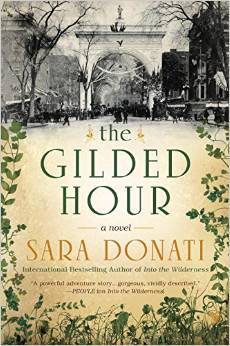
Next up is the medical framed, women’s lives, historical by Sara Donati, The Gilded Hour.

Here the date is 1883 and again we are in NYC. The story is about the forgotten people of this time.  It is about racial injustice, the suppression of women, medical advancements, and fertility issues.

Our main characters are two women, cousins, one who is half black, who are trying to provide birth control to women and how they were prosecuted by a real life Postal Inspector (who had a ton of political and legal power) and his crusade to suppress vice [The Comstock Act].

Okay first big difference here, the pacing. This is a 700 page, traditional historical. It moves at a much more methodical pace but one that is appropriate to the type of book; it is a pace that fans of a thick historical will expect and enjoy.

You know it will be a complex, historical because the families and major characters are listed in the front two pages and those who are real are noted. The novel also incorporates newspaper articles, telegraphs, and letters as a narrative device to keep up an authentic tone, as opposed to House of Thieves above, where things get a bit outrageous [but super fun] at times.  Again, same setting but two different readers.

This is a great read for people interested in the history of medicine, women's history [especially women in medicine], women's lives, and/or a history of women's health issues. There is a strong romance element here too.

There is suspense with the postal inspector trying to catch our heroes. There are many people [of all sexes and races] who help them along the way.  Things get tense and threatening but the overall story is not about the crime angle, it is more the issues I listed in the previous paragraph.


Three Words That Describe This Books: history of medicine, character centered, Gilded Age

Readalikes: The most obvious readalike is a TV series-- The Knick-- which I have written about at length with readalikes here.

Donati also mentioned the wonderful Destiny of the Republic by Candice Millard which I read here, for people who want more history of medicine detail from this era. I agree.

Another author who is similar to Donati is Jennifer Donnelly. Both write historicals featuring women and their lives with strong romance elemnts.  Interestingly, Donnelly has a very similar historical novel about social conscious female doctors, The Winter Rose.

Finally, a book I read which had a very similar feel, although is set in Brooklyn in 1700s and follows a woman who runs a gin still is Brookland by Emily Barton.  I highly suggest this for fans of a book like The Gilded Hour. You can click on the title for my full review.

Friday, June 6, 2014

TFiOS Movie Day-- Repost of My 2012 Review of the Book

Because everywhere else they are talking about it and I am feeling left out....

No seriously, I have stayed out of the TFiOS movie hype because I have already professed my love for John Green on this blog many times over a few years now.  I mean for goodness sake, we ate this cake with his picture on it back in 2012.

But, with the movie finally being released today, and considering the number of requests I am taking for the book, I thought it would be fitting to run my original 2012 review of TFiOs again. So enjoy. And DFTBA!

Oh, and if you want to play along at home, here is Book Riot’s TFiOS media BINGO card.

+++++++++++++++++++++++++++++++++++++++++++++++++

FRIDAY, JULY 6, 2012


What I'm Reading: The Fault In Our Stars

Ahh, John Green.  I think if the BPL RA desk could choose a mascot, we would pick John Green.  He embodies everything about us.  We are all proud nerds (come on, we choose to work as librarians for adult leisure readers; we know we are nerds) and he is one of the founders of the nerdfighters.  He loves reading and writing, and, hey, have you read this blog before; I shouldn't need to elaborate that one.  And he is from the Midwest.  Indy to our Chicago, but he shares our Midwest sensibility (everyone in the Dream Team but me is native to the area).  Finally, he LOVES libraries, and me and my fellow Dream Teamers...well, we are not in it for the money.

Remember this post about John and his brother Hank Green's vlog?  I subscribe and watch every video (2 per week).

But with the big news last month that the BPL RA Dream Team is taking over the Teen collection this fall, reading and talking about John Green incessantly is now considered part of our job.  We are still a bit too stalkerish, but hey, its for the teens of Berwyn.  (Or so we tell ourselves).

Way back in April, I read The Fault in our Stars, which is already showing up on just about every Best of the Year... So Far list.  It deserves to be there.

The plot sounds sappy, but the book is anything but.  This is why critics and readers love it.

Our protagonist is Hazel, a girl who is only alive because the last chance. experimental drug for her aggressive thyroid cancer seems to be working.  She should be dead, but somehow she keeps living.  Hazel is a color between green and brown and she is a girl between life and death.

Hazel took the GED a few years ago, but she is only 16.  She takes community college courses, but her only social outings are to the cancer support group she attends weekly.  There she has one real friend Isaac, who is going blind (but will live) because of his cancer.  Isaac in turn introduces Hazel to Augustus another cancer kid.  The two share a love of books and become close quickly.

Together they go on a journey, both existential (will I be remembered when I die?) and physical (to Amsterdam, but I won't give away why and how).  They fall in love, but when you have cancer, life is short.

This is a poignant story that forces the reader to contemplate big questions about the meaning of life, why we are here on earth, and the power of love.  But again, Green's talent is that he does this with a believable voice.  It is not sappy or schmaltzy.  It is real and rings true.

Hazel is sarcastic, but lovable.  Her mom is her best friend because, as she explains, when you are sick, who else is around.  She is level headed and smart.  She understands that she could get sick and die at any moment, but does not attack life in a cliche way.  She simply lives like a regular teenager.

Hazel and Augustus have some hysterical conversation about his favorite SF adventure series of books, but they also have some serious and some tender conversations.  They talk about life, death, love, and books.  There is lots of talk about books.  And a memorable trip to the Anne Frank house by kids who know they days are numbered.  The parallels between the 2 stories are clear.

And, I have to say this serious, tragic book also contains one of the funniest scenes ever in any book-- a newly blind Isaac playing a video game with Augustus and complaining that Augustus is playing badly.  That also summarizes a lot of the humor in this book.  If you find the humor in a sick blind kid playing video games, as Green does, you will love this book, as I did too.

Three Words That Describe This Book: sarcastic, poignant, existential

Readalikes:  John Green is the best example out there of an author who is a sure bet cross over from YA to Adult.  So, I will break up my read alike options into YA and Adult.  But please note, all are good for both audiences.

Adult Suggestions:

  • I just finished The Age of Miracles by Karen Thomason Walker. Even though the main character there, Julia, is not sick, the world she is living in is.  She narrates the book as a 23 year old looking back on when she was 12 and the earth's rotation started slowing, changing the world forever.  The ideas of living in the moment are very similar here.  Also the young love in a time of crisis is poignant and has a eerily similar ending.
  • Extremely Loud and Incredibly Close by Jonathan Safran Foer is also a great read alike here.  The narrator here is a young boy who has lost his father to the 9/11 attacks.  There is an existential journey in both books and the forging of a deep relationship that is destined to end badly, but be worth it all the same.
  • I also think City of Thieves by David Bennioff will appeal here.  Bear with me.  Although it is set in Russia during WWI, the young protagonist, his friend, their journey, and the tragic ending resonate here.  On paper these books look very different, but I have read read both and I can tell you the feel, the writing, the protagonists, the sense of awe when you read them, are the same.  Click here for my full review of City of Thieves.
YA Suggestions: I am less well read in the YA field but I will do what I can here.
As Green always says: DFTBA (Don't forget to be awesome).

Tuesday, September 18, 2012

BPL Book Discussion: The Madonnas of Leningrad

Yesterday, the group met to discuss The Madonnas of Leningrad (2006) by Debra Dean.  Here is the plot summary from the publisher:
One of the most talked about books of the year . . . Bit by bit, the ravages of age are eroding Marina's grip on the everyday. And while the elderly Russian woman cannot hold on to fresh memories—the details of her grown children's lives, the approaching wedding of her grandchild—her distant past is preserved: vivid images that rise unbidden of her youth in war-torn Leningrad.
In the fall of 1941, the German army approached the outskirts of Leningrad, signaling the beginning of what would become a long and torturous siege. During the ensuing months, the city's inhabitants would brave starvation and the bitter cold, all while fending off the constant German onslaught. Marina, then a tour guide at the Hermitage Museum, along with other staff members, was instructed to take down the museum's priceless masterpieces for safekeeping, yet leave the frames hanging empty on the walls—a symbol of the artworks' eventual return. To hold on to sanity when the Luftwaffe's bombs began to fall, she burned to memory, brushstroke by brushstroke, these exquisite artworks: the nude figures of women, the angels, the serene Madonnas that had so shortly before gazed down upon her. She used them to furnish a "memory palace," a personal Hermitage in her mind to which she retreated to escape terror, hunger, and encroaching death. A refuge that would stay buried deep within her, until she needed it once more. . . .

Seamlessly moving back and forth in time between the Soviet Union and contemporary America, The Madonnas of Leningrad is a searing portrait of war and remembrance, of the power of love, memory, and art to offer beauty, grace, and hope in the face of overwhelming despair. Gripping, touching, and heartbreaking, it marks the debut of Debra Dean, a bold new voice in American fiction.
On to the discussion:
  • 10 people liked the book, 4 were so-so, and 1 disliked it.
  • This dislike person said it was just too sad for her.  She was old enough to remember seeing the newsreels of the siege and the starving Russians.  She also wished the story had included some of Marina's good years, which she obviously had had in her life in America.  The story only focused on the siege and the final years of her life.  Another person agreed with this participants points, but said that Dean was able to counterweight the sadness by introducing us to Dima (Marina's husband) as an old man caring for her very early in the story.  This helped this reader to know the couple would find one and other in the end, and lighted the heaviness of the story for her.
  • Those who liked it had many different reasons. Here are some comments:
    • I loved how the paintings, and the descriptions of them helped to tell the story.
    • Normally I do not like when the book moves back and forth in time, but here I liked it.  It made a good juxtaposition of the horrible siege with the happiness of Marina's granddaughter's wedding.
    • I loved how memory itself was a character here.
    • I loved the historical fiction part of the book. I felt like I was there with them in the museum.
    • I had read this book when it first came out and didn't like it; but reading it again, years later, I was captivated.
    • I liked how the dementia angle was portrayed.  It was very intriguing to see how Marina was calm and knew exactly what she was doing in her own mind, but those around her were confused by her behavior.
    • Marina is why I loved this book.  She was generous, had dignity and integrity, and was able to understand the importance of art even when she was literally starving.
  • We moved onto a general discussion of the characters.  We began with Helen, with whom many of the participants felt a connection.  One said, Helen was an accurate portrayal of a 50 something woman who had not had her dreams fulfilled.  She was in the emotional roller coaster that is menopause (although this was never stated in the book, but as one lady said, "We all know what was happening with her body there.") They thought she showed a different view of disruption and uncertainty in life from Marina's extreme view.  Many were touched when she began drawing Marina; her art began to come out.  Still more mentioned how much they liked seeing Marina through Helen's eyes.
  • Marina of course took up a lot of our time.  I will list a few of the more memorable comments/discussion points here:
    • The way she took the young cadets through the empty museum recreating the paintings with their descriptions brought me to tears.
    • She took you through starvation at such a personal level.
    • Marina's life was traumatic, may be even too traumatic to remember until her memory is going.  This could explain why she did not let anyone in her family know what she went through.  People shared personal experiences with their own families and how these stories of life in the old country are often lost forever.
    • Marina became one of the Madonnas of Leningrad
  • We talked about all of the "miracles" in this book
    • Marina and Dima finding each other after the war, hiding their identities from Stalin, and making it to the new world with their son
    • The miracle of art and the power of its beauty.  Literally, the need to preserve a "memory palace" of the paintings kept Marina alive through the long winter.
    • The miracle of her baby being born just fine despite starvation conditions while she was pregnant.
    • It is mentioned that it is a miracle that Anya, who was so frail, and the one who taught Marina to memorize and save the paintings, survived the siege.
    • The miracles that imagination and memory can provide.
  • I purposely left out Marina's conception of her child in this list.  Marina imagines an immaculate conception for herself, but it could easily have been from her coupling with Dima before he was sent to the front.  But it could also just as easily have been a rape by a German solider at some point.  It is mentioned that the boy had golden curls which Dima did not. Young Marina dismisses her immaculate conception vision as a hallucination, but old Marina thinks Zeus is her son's father.  What is so interesting is that her vision is an embodiment of the Madonna paintings she is preserving in her memory, but as a non-Catholic herself, she turns to an explanation from a painting where Zeus is coming to a woman in bed.  I asked the group if it mattered that we do not ever find out who the father of Marina's miracle child is.  The group liked that we don't know.  It was said that it enhances the memory theme; that is doesn't matter if the real and the memory match up perfectly.
  • On a quick side note about the son.  Many people agreed that they did not like how Marina introduces Dima to their son when the two meet up again. We all wanted more here.
  • As mentioned throughout these notes, "MEMORY" is an important theme in this novel:
    • At the end, Marina's life has come full circle and she is remembering the people in the paintings as her friends.  Although this is technically wrong, how wrong is it really? They got her through the toughest point in her life.  That's what friends do.
    • Many of the mature women in my group agreed that as you age you cannot remember what you did yesterday but years ago is crystal clear.
    • "Memory is a coping mechanism for aging" This is why "retro" things are so popular.
    • The dichotomy between her past and the joy and abundance of her granddaughter's wedding in the present was too much for her damaged brain.  It forced her deeper into the past.
    • The memory palace, her drive to memorize every painting in the empty Hermitage, was her safe zone.  It gave her comfort and allowed her to transcend the short comings of her present.
    • As her memory gets worse at the end, the time frame and pov switches become less clear in the novel itself.  The confusion and overlapping in the storytelling was an appreciated writing choice. It made us as readers more muddled and confused; we stood in Marina's shoes, if only briefly.
  • The ending--there are really 2 endings here.  The first is the cadet tour she gives back in the 1940s story.  Marina is finally given the chance to see if her memory palace worked as she gives the cadets a tour of a museum with no paintings on its walls.  She is seeing the beauty of the paintings and passing it on.  The cadets can see the paintings and are moved by them based solely on her descriptions.  This is the culminating moment in her life.  Her reason for living through the siege is confirmed.  This ending to the 1940s story is coupled with the old Marina being found in a half finished home (reminiscent of a bombed out building in her state), and showing the carpenter who finds her the beauty all around them.  Whether it is the beauty of the art in her head or the amazing natural vista before them, she is right, it is all beautiful.  We all appreciated the double ending and through that it reconciled and unified Marina's story as told in the novel as a whole.
  • Finally, here are the words the group threw out at the end to describe the book:
    • selfless
    • memory
    • beauty
    • the power of art/the artist
    • miracles
    • imagination
    • survival
    • resilience
    • transcendence
    • teachers/guides

Readalikes: Let me first start with some author suggestions:
  • If you liked Dean's incorporation of art into a historical story, than you should try Susan Vreeland who is excellent in this respect
  • If you like Dean's intimate story telling technique-- how she made a huge moment in history very personal, you should try Geraldine Brooks.
  • Finally, if you like historical fiction set in Russia (which also describes Dean's new 2012 novel, The Mirrored World) you should try Robert Alexander.
In terms of specific title to title matches I have a few suggested directions to go here:
  • For those interested in more detail on the siege of Leningrad from a nonfiction viewpoint, I would suggest Leningrad: State of Siege by Michael Jones.
  • For those who want more historical fiction looks at the siege, I have 2 options.  First a book I read and loved, City of Thieves by David Benioff. This novel is also set during the siege of Leningrad, but does not fluctuate to the present and our protagonists are young boys. Click here and scroll down a bit to see my full review. Second, many resources suggest, The Siege by Helen Dunmore.  From NoveList: "Set against the turbulent backdrop of Leningrad in 1941, a novel of love and war follows the Levin family — twenty-two-year-old Anna, her young brother Kilya, and their father, Mikhail — as they struggle to survive during the German siege."  Both novels listed here like Madonnas of Leningrad were single out in multiple end of the year "Best Lists" when they first came out.
  • Finally, in the book format, I want to mention what happens to be our next book for book club, Still Alice by Lisa Genova.  Here the story is set only in the present. Alice is a Harvard psychologist who is diagnosed with early onset Alzheimer's.  The novel follows her as she deals with the news, and slowly loses her memory.
People who want to see the art at the Hermitage should head over to their website.  You can choose English on the first page.

Finally, check out the award winning film, Russian Ark which was shot in the Hermitage.  2 people in the group had seen it and highly recommended it.  Here is the review from Amazon:
Russian master Alexander Sokurov has tapped into the very flow of history itself for this flabbergasting film. Thanks to the miracles of digital video, Sokurov (and cinematographer Tilman Buttner) uses a single, unbroken, 90-minute shot to wind his way through the Hermitage in St. Petersburg--the repository of Russian art and the former home to royalty. Gliding through time, we glimpse Catherine II, modern-day museumgoers, and the doomed family of Nicholas II. History collapses on itself, as the opulence of the past and the horrors of the 20th century collide, and each door that opens onto yet another breathtaking gallery is another century to be heard from. The movie climaxes with a grand ball and thousands of extras, prompting thoughts of just how crazy Sokurov had to be to try a technical challenge like this--and how far a distance we've traveled, both physically and spiritually, since the movie began.
We do own this film in VHS at the BPL.

Thursday, April 29, 2010

BPL Book Discussion: The Good Thief

Last week, my group met to discuss Hannah Tinti's The Good Thief, and to prepare for our upcoming appearance in The Chicago Tribune.


First, to the important stuff. As I mentioned here, we were accepted to be featured as one of the Printers Row Chicagoland Bookclubs. To that end, I was asked to have the group answer some specific questions and take their picture. So thanks to Briana, here we are (minus 2 regulars).

Look for an announcement on this blog in the coming months to see when our feature is run, and, more importantly, to see what we have to say about how awesome the Berwyn Library's Monday Book Club is.

Now on to the discussion, which was a great one incidentally.  I first read The Good Thief  by Hannah Tinti back in October of 2008 and it was my favorite book I read that year also. Here is what I said about it back then:
"The Good Thief is, refreshingly, a traditional adventure story (with a historical background) in a literary landscape where adventure is being consumed by thrillers and terrorism plot lines. It is fast paced, the hero is resourceful and lucky (maybe unbelievable so, but that goes with the genre), and it has a resolved, happy ending. Tinti uses many of Dickens' own tricks and themes to propel her story along., including a wonderful cast of eccentric secondary characters such as a dwarf who lives on the roof, a murdering giant, and a hard of hearing landlady. The novel is appropriately funny, heart-warming, melodramatic, and bittersweet, with each occurring in the right place."
The novel is set in 19th Century, upper New England and follows the story of  an enchanting 12-year-old boy named Ren. Ren was left, missing his left hand, as an infant in an orphanage, he is finally adopted by a man claiming to be his brother, but who is quickly revealed as a con man. This historical adventure leads Ren on a Gothic inspired adventure in which his parentage is finally revealed and his future is secured.

I was concerned about doing one of my favorite books with the book club, but it worked out great.  I began, as usual, by going around the room and asking who liked, disliked, or felt so-so about the book. We had no "dislikes", many "loves," and only a few "so-so's." I have mention using this discussion starting trick before and highly recommend it to all book discussion leaders.  First, you get a sense of what you are up against. I always try to provide a balance of opinions in the discussion because when everyone agrees, the discussion is boring.  In this case, I knew I would need to be more critical of the novel, providing some counterpoints for their "Good Thief Love."

Second, this technique allows the discussion to begin naturally. After people pick a side, I call on someone from the majority opinion (in  this case, loved it) and ask why they felt this way. This gets the discussion going right away. You do have to make sure you get the other people (in this case, the so-so's) into the discussion too. In many cases, the reason one person loved the book is why another did not.

So, what did we discuss. The biggest thing I want to share about our discussion is how excited everyone was that we read a fun, fast-paced story. One participant said reading this novel reminded her of reading as a child: a book you couldn't put down, with characters you loved, great details of time and place, and a fun, adventurous story with a happy ending. This is important for long standing book clubs. We can get bogged down in serious books, so it is nice to have a chance to read a fun book with enough issues to discuss

Here is a list of some of the issues we discussed:
  • Ren was a wonderful protagonist. We loved his perspective, imagination, and his good heart
  • Tinti's beautiful language, engrossing descriptions, and eccentric characters were commented upon
  • One participant had us look at the intro pages for each of the novel's 3 parts.  Part One has a picture of a hand (in this part Ren is used for his lack of hand). Part Two has a picture of a skull (here Ren meets the Doctor and learns about anatomy). Part Three has a picture of a heart (here Ren finds a family)
  • We spent a lot of time talking about how similar to a Dickens novel this truly was. This otherness of time and place with a nod to great works of the past, allowed Tinti the leeway to create a story in which anything could (and does) happen.
  • The theme of redemption is big in this novel.
  • We spent time talking about all of the secondary characters. We evaluated their actions and motives. Although they are all different, all of the characters in the book are outcasts and most evolve, grow and change. This is a bunch of extreme characters too. They keep you on your toes.
  • My favorite question of the day, "Can you be a good thief?" This was a fun side discussion
  • The book was dark, but Ren was light.
  • Nature vs. Nurture
  • Ren and his religious upbringing.
  • In a book with a bunch of positive female characters, not one is a wife or mother. Hmmmmm.
Readalikes: Specific readalike titles would of course include anything by Dickens. But for more modern authors and titles, those interested could try The Story of Edgar Sawtelle by David Wroblewski which also has a disabled but plucky, young male protagonist (here he is mute), and a coming-of-age theme; it also loosely follows the plot of Hamlet. A less mainstream suggestion would be another well received first novel, When the Finch Rises by Jack Riggs. Here the reader follows two young boys in the 1960s South, their tough lives, their coming-of-age, and the strength of their friendship that pulls them through. It is important to note that this novel does have touches of magical realism. Finally one of my back list favorites that I would be a perfect match for readers who liked Ren is The Miracle Life of Edgar Mint by Brady Udall. I would also suggest The Graveyard Book by Neil Gaiman, and City of Thieves by David Bennioff.

Monday, December 21, 2015

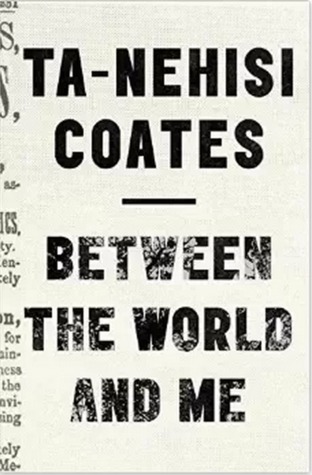
What I’m Reading: Delicious Foods and Between the World and Me

Today I have two reviews. Both are books that have been on many year end best lists. Both are two of my favorite reads of the year.  But why am I reviewing them together? Because each book resonated more with me because I read the other in conjunction with it.  So this will not be a traditional “What I’m Reading” post in that I will not separate my discussions of these two titles; however, this will be an extremely useful post for you to use as you help readers.

In fact, I would argue that this will be a MORE helpful review because I am pairing these books.  So much has already been said about  Between the World and Me that I almost didn’t write a review of it. I didn’t feel like I could add anything useful to the conversation. But in organizing the review in the fashion, I truly feel like I am helping you to help a reader.

For the record, that is always my goal with the reviews here on the blog. I try to give you something you cannot get from other review resources.  I think this is important to spell out since I have a lot of new readers. These posts are meant to be used to help a reader who either enjoyed the title I am reviewing to find more titles he or she would enjoy OR to help you to match this book with its best reader. I am not writing them to hear myself pontificate. Once these reviews stop being useful, I will stop writing them.

Enough preamble. Let’s get on with the information...

I want to start with Delicious Foods by James Hannaham, which is the book that most surprised me this year.  This was a novel that was clearly on my radar; I had heard it was good before it even came out. I ordered it for my library, and almost checked it out for myself a couple of times. But then, the combination of a review and a personal recommendation put this book on the top of my to-read list-- and they came from the same person.

My very good friend, Magan told me about how much she loved the audio of this novel. She loved it so much that not only did she give the audio a star in her Booklist review, but also she stood her ground and defended her choice to her editor, Joyce Saricks.  Well, it did get a star in the September 1st issue of Booklist, and then this novel went on to be on many year end best lists, many of which singled out the audio for its excellence.

Since it was Magan’s review that led me to listen to this novel, I am going to let her explain it to you more:
Hannaham’s stunning second novel (after God Says No, 2009) opens with 17-year-old Eddie’s desperate escape from Louisiana, driving a (stolen) car for the first time in his life, minutes after having both of his hands cleaved at the wrists under mysterious circumstances, in search of his aunt in Saint Cloud, Minnesota. It’s a hell of a tale: Eddie’s father was murdered when he was 6, and his mother, Darlene, completely shattered by her grief and guilt, spiraled downward into crack addiction, effectively abandoning Eddie long before she hopped into a minibus to work at Delicious Foods. She’s turned into a modern-day indentured servant in the hellish place, where Eddie eventually joins her. Author Hannaham narrates his harrowing novel and moves between unbelievable scenes of human suffering and dark, sly humor in so skillful a manner that belief is easily suspended while “Scotty,” Darlene’s name for crack, narrates events from his perspective. His voice characterizations bring to vivid life each of the sad collection of broken people at Delicious Foods, ratcheting up the horror without speeding through the plot, concluding with a realistic portrait of the aftereffects of suffering and perseverance on a family. Not to be missed.   — Magan Szwarek
 Before I add more of my own thoughts here, I want to say that this experience of being compelled to finally read this book because of the work of a librarian, AND having it turn out to be one of my favorites of the year reaffirmed for me why I work so hard to help all of you be better Reader’s  Advisors. This book was such a great read that I will always remember it, and I read it because of a librarian suggesting it to me. I am not lying when I tell you in trainings how powerful sharing a reading suggestion with a patron can be. People, you can be this person for someone out there!

I will suggest this novel for years to come to readers much like I do with The Miracle Life of Edgar Mint, The Good Thief, City of Thieves, Brief History of the Dead, and The Snow Child. No none of these are readalikes for each other, but they are all quirky, well constructed, thought-provoking, and emotionally moving stories that do not loose anything over time. While they are not sure bets for every reader who walks through the doors of the public library, they are great under the radar picks for a wide range of readers.

On the other hand, Between the World and Me by Ta-Nehisi Coates IS a sure bet.  I read a lot of books, and I see my fair share of hype about many books that are very good, but not as great as people want you to believe.  Between the World and Me is not that. It is one of the best books I have ever read. It will and should be read by every American at some point in their lives. It will become a classic that is read in schools.

Why? Because Coates takes his personal journey as a black man in America, and lays out the brutal truth, without judging or casting blame-- that is my favorite part about it, the nonjudgmental tone. This is a personal, emotional, and lyrical letter to his son about the truth of race in America, yet Coates takes what is a complex problem, and amazingly puts it into a deceptively short book without sacrificing anything.

Everyone should read this book, but in particular, all white America needs to read this, especially people who think that race is no longer an issue. For example, how many white people think about one of the facts Coates lays out early in the book-- that as a country, we have still had slavery longer than we have not!  Of course this is true, but it still shocked me to see it on the page. How can this fact not be at the front of my brain more often. Why have I never had this thought? Of course, someone like Coates lives this fact every day of his life.  As a Jewish person, I understand a very small sliver of what Coates is saying, but I can blend in my highly Catholic area. People don’t look at me and know immediately that I am not on team Jesus. Most of them just assume everyone is. When they find out I am not, I am a quaint example of “the other.”

Being black in America is hard enough, but being America’s "foremost public intellectual,” while being black could be soul crushingly impossible. The fact that Coates handles it so well and produced such an amazing book is awe inspiring.

Back to the first book...Delicious Foods is written by someone who didn’t need to read Coates’ book because it is obvious from the novel that he, James Hannaham, has lived in Coates’ shoes. Delicious Foods is proof of Coates’ brilliance, his truths, and the surprisingly succinct way he delivers such a complex message.

Because I read these two powerful and honest books back-to-back, I took more from each-- more knowledge, more enjoyment, more feeling. And yes, I meant to use the word “enjoyment." Despite how heart-wrenching and emotionally raw both books are, I enjoyed the experience of reading them.  Both were lyrical, beautiful and compelling. And while both were emotionally difficult to read, neither is “sad.” Both end with hope for a future that is better than today. If others read these books, maybe that better future will happen.

Three Words That Describe Delicious Foods: original, heart-wrenching, haunting

Three Words That Describe Between the World and Me: honest, lyrical, classic

Readalikes [for both]: Since I am reviewing fiction and nonfiction titles together here I have 3 of each to offer up as readalikes.

Fiction-- The 1980s slavery depicted in Delicious Foods reminded me so much of the masterful The Known World by Edward P. Jones which is a historical fiction novel based on the fact that there were black slave owners.  Both novels are inventive and original with a fluid use of time-line. But this is also a readalike for Between the World and Me. Both books are beautifully written while also taking a hard and honest look at America’s troubled history with race.

I am suggesting The Round House by Louise Erdrich because like both books here it looks at a tenuous and fraught history between Americans and those of a persecuted race, but with Erdrich it’s Native Americans.  But also, all three books have a coming of age theme. In all three the narrator is able to look back on his life to a critical moment (or moments), assess the racial injustice, and still move on without resorting to simple blame. All three works are also haunting and heartbreakingly beautiful.

My final fiction suggestion may sound a bit odd, but I think it works-- Station Eleven by Emily St. John Mandel. All three works are haunting, lyrical, and moving, with complex characters, that explore hard truths about humanity. In my review of Station Eleven I chose the word “disquieting” as one of my “three words.” This struck a chord with me when I was thinking about the two books being reviewed here. That word can apply to all three.

Nonfiction-- The Fire Next Time by James Baldwin. Actually, anything by James Baldwin. Coates openly admits to using Baldwin as an inspiration [not that he could hide it], but I also see much of Baldwin and his anger at injustice in Hannaham’s narrative voice too.

The Other Wes Moore by Wes Moore and/or Nickel and Dimed: On Not Getting By in America by Barbara Ehrenreich are both books I have read with my book club that elicited the following response-- “Every high school kid in America needs to read this book.” While Between the World and Me is much richer than these two offerings [they are a both much more of a simplistic look at similar, entrenched, American, societal problems],  but the themes are similar.  Also as readalikes to Delicious Foods, both of these suggestions take much of the class and race conflict from the novel and ground it in fact in a way that makes the novel even more realistic.

Thursday, May 30, 2013

While You Wait-- And The Mountains Echoed

The two big books of the month are now out and both have long holds queues.  Dan Brown's Inferno is a bit easier to find readalikes for as his brand of intellectual, historical, adventure thriller has been often duplicated.  Also, at the BPL we already have this list of Dan Brown readalikes posted online and available in print at the library.

Khaled Hosseini is a bit harder to match with suggestions while people wait for And The Mountains Echoed.  Hosseini crafts moving, character centered tales, with a strong emotional pull and a setting or frame in Afghanistan.  Some people read his books because of their Afghanistan frame, but many who were first drawn to him because of that current events frame have learned to love his storytelling style.

I have read both of Hosseini's previous titles, but only A Thousand Splendid Suns was read since the blog began.  Here is what I had to say about that title in March of 2008:
I also listened to the popular A Thousand Splendid Suns by Khaled Hosseini. Hosseini's follow-up to The Kite Runner tells to stories of two women, Miriam and Laila, as they live through three decades of war in Afghanistan. With his second novel, Hosseini has shown that he is an excellent storyteller who is here to stay. I especially enjoyed the detailed history lesson which this book provided. Mostly, I was riveted by the two women, their voices, and their stories. 
Those who like Hosseini's setting of Afghanistan should also try the current nonfiction best seller Three Cups of Tea: One Man's Mission to Promote Peace...One School at a Time by Greg Mortenson or the fiction title The Swallows of Kabul by Yasmina Khadra. Those who enjoyed learning about the history of Afghanistan may also want to delve into the Iranian Revolution (a neighbor of Afghanistan). Here I suggest The Complete Persepolis by Marjane Satrapi. In this accessible graphic novel, Satrapi tells her personal story of living through war and Islamic revolution in Iran. Much of her story resonates with that of Miriam and Laila's. Finally, those readers who found the women's friendship against all odds very appealing, I suggest Snow Flower and the Secret Fan by Lisa See. Although this novel takes place in China, the laotongrelationship between the two main characters has many similarities with Hosseini's novel.
Since Hosseini does not write quickly, people are literally clamoring for And the Mountains Echoed.  The reviews are also fabulous, pushing demand even higher. People want this book right now, and you are the one that has to tell them that they are not going to get it.

But look on the bright side.  Times like this are when you have a chance to shine.  Yes you will have to take the patron's hold for And the Mountains Echoed, but look at all of the other books that are sitting on your shelves just waiting to be read by someone at this very moment. You have the perfect opportunity to show these patrons another great title they can read while they wait. Do not let this captive audience leave without even offering to give them a title to read now.

That's where I come in.  Besides the titles I mentioned above and other books with a Afghanistan frame, here are some titles that are also intricately plotted stories, told with lyrical language, characters you care about, and a reflective tone.  Again, these are NOT your typical Middle East set suggestions.  Most importantly, these books will be on the shelf.  Links are to my reviews where possible:

There is no reason for your patrons to leave unsatisfied when they come in hoping to get a copy of And the Mountains Echoed because there is always another book they will like somewhere else in the stacks.

Feel free to add your own readalike suggestions in the comments.

Wednesday, February 5, 2014

Get Ready for the Olympics With a Book

I will admit, I am a sucker for the Olympics.  I will watch the Olympics, no matter the season, no matter the event.  Bring it on biathlon!

Add to this my recent re-reading of Crime and Punishment for the ARRT Genre Study tomorrow, and my listening to the amazingly, awesome Absurdistan by Gary Shteyngart [review soon] and I have Russia and Russian literature on the brain.

I know I am not the only one too.  Here are some suggestions to pair with your hours of viewing of the Russian landscape.
  • One of my all-time favorite books is The Master and Margarita by Mikhail Bulgakov. This magical realism tale, written during the terrible Stalinist years in which Bulgakov dared to satirize and criticize Soviet Communism is delivered in lyrical, moving, and compelling prose.  This book is not for everyone, but it is also one those who read it will never be able to forget.
  • I happen to love Russian literature.  I don’t know if it is my Russia Jewish genes peeking through or if I just get the sense of humor in these tales. One of my favorite more modern Russian novels that perfectly captures why I enjoy these novels is Death and the Penguin by Andrew Kurkov.  From the publisher: "Viktor is an aspiring writer with only Misha, his pet penguin, for company. Although he would prefer to write short stories, he earns a living composing obituaries for a newspaper. He longs to see his work published, yet the subjects of his obituaries continue to cling to life. But when he opens the newspaper to see his work in print for the first time, his pride swiftly turns to terror. He and Misha have been drawn into a trap from which there appears to be no escape. It may not sound like it from this summary, but I tell you, this novel is very funny (in a dark and twisted way).
  • If you want to read a historically set tale set in Russia that is filled with cold and snow, I highly recommend another one of my all-time favorites, City of Thieves by David Benioff. 
Well there are some books I have enjoyed that fit the bill, but what about others?  Many lists of what to read while enjoying the Sochi Olympics are appearing everywhere.  I would like to focus on those that reinforce the sense of place.  Books about the Olympics are much easier to find on your own:
I try to embrace the place where the Olympics is set as they come around every other year.  It is a great escape to learn about a new place while watching the world come together in peace. While this year’s setting is not without much controversy, I am not condoning the behavior of the hosts; in fact, quite the opposite, many of the books I have suggested are heart wrenching looks into the very serious problems that come with a Sochi setting.