RA FOR ALL...THE ROAD SHOW!

I can come to your library, book club meeting, or conference to talk about how to help your readers find their next good read. Click here for more information including RA for All's EDI Statement and info about WHY I LOVE HORROR.
Showing posts with label frame. Show all posts

Wednesday, November 18, 2015

What I’m Reading: The Gilded Age in Fiction-- Same Frame, Two Different Reading Experiences

This Fall I read two new books with the exact same setting-- The Gilded Age in New York City [1870-1900]. However, beyond the shared frame, these books have very little else in common in terms of traditional appeal factors.

I am grouping them together here because for some people, frame is very important. They will read anything with a specific frame.  So as not to repeat myself, I have a much longer piece on that issue here. For those people, I am making sure to put the frame in my "three words" for both books.

Now for others, frame is the not an important issue.  Instead pacing or storyline or character etc... is what makes a great read for them.  However, we may be tempted to match books when their frame is as similar as these two’s happen to be. You see “Gilded Age” listed for both and you might be tempted to think the books are readalikes for one and other, yet that may not be the case at all.

In fact, if you search either of these books on NoveList, the other appears in the readalike bar on the right.  Interestingly, they are computer, not people, created matches based on the shared genre, time period, and place. I do not disagree with this, as I said above, these three frames may be all someone needs to enjoy both books, but this reinforces what I am trying to do here-- suss out the nuances that matter. Because while I liked both, I clearly enjoyed one more than the other AND I have not suggested both to the same reader yet.

To that end these reviews are meant to illustrate the give and take inherent in this issue.  Both are very well executed novels that will appeal to a wide range of readers, but at their core’s these novels have a very different feel.
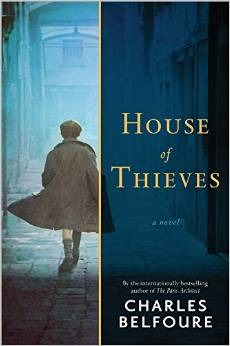
First up, the historical thriller, House of Thieves by Charles Belfoure.

At it’s essence this is the story of how a good, solid man turns to a life of crime, while still staying likable and good in our eyes.

Here is a tiny bit of set up.  It’s 1886 and the rich are VERY rich and the poor, very poor. NYC is run by respected crime bosses. They are criminals yes, but they also among the city's largest arts and political donors. They truly run the city. Our villain is Kent, a crime boss and his crew. Our “hero,” John Cross, is an architect for the very rich. But his son has a gambling problem. To resolve the large debt, Kent wants Cross to use his connections and knowledge to help him rob the homes of NYC’s richest residents.

But why you will like this book is how Belfoure writes it. What is so great here is how he managed to write a novel convincingly and accurately set in its historical time, while telling the story in a way today’s audiences like. He nailed both the historical and the thriller aspects.

For historical fiction fans, the novel has all the details of the time and place. It has a lot of information about being an architect to the rich at this time. And it has amazing descriptions of some spectacular homes. The streets, people, and places come alive.

And while I love historical details, sometimes, historical thrillers move to slow for me. I don’t know why I don’t mind it with regular historicals and do with thrillers, but I do and from our discussions in the crime fiction genre study and from my work with readers, I know I am not alone there [*cough cough* The Alienist]. But Belfoure has managed to use modern techniques like short chapters, fluid point of view shifts, and powerful action scenes to ratchet up the suspense and pacing.

Here are two examples that occur in the first 30 pages to illustrate what I am talking about.

First, the novel opens with an awesome bank robbery and explosion scene that then moves to the perspective of the crime bosses who are watching the scene unfold. The details set the historic tone, but the scene served the same purpose that today’s prologues in suspense novels do. We were thrown right into the middle of the story and are excited to keep reading to see what is going on and how our story will fit into this world.

And second [one of my favorite moments in the beginning of a book in a long time], at around page 30, we see the beginning of the day in a rich home. One of the things the wealthy of this time had were ice boxes. They were built into the side of the house with a door that opened to the outside so literal huge blocks of ice could be delivered to keep things in the ice box cold.  Well, what if you opened your ice box to find...A FROZEN SEVERED HEAD! That was pretty great.  Let’s you know this is not your typical historical thriller.

This novel is under 400 pages and has a moderate cast of characters who all get frequent turns to narrate with fluid and fast paced shifts in the point of view [the entire Cross clan, even the little 10 year old brother has a chance to narrate-- and that was good], yet it is moments like the two above throughout the story that keep the pacing high.

There is also social commentary and flashy fun here [a climax is at the top of the under construction Statue of Liberty!]. But what I loved the most was the ending. The decision Cross and his wife make about how they will live the rest of their lives after the ordeal under Kent’s thumb is over is what takes this book from good to awesome.

Three Words That Describe This Book: flashy fun, suspenseful, Gilded Age

Readalikes: I thought about Pete Hamil and his novel North River while reading this.  You can go to my review of North River, which also has readalikes [fiction and nonfiction]. The time period is different though (1934).

I also think the historical thrillers of Matthew Pearl are a good option here.  Both authors write compelling, historical thrillers with a solid amount of detail.  With Pearl the professional setting is usually book based. I have read a few of them.

But the nuanced characters and their surprising decisions reminded me more of the suspense novels of today.  Belfoure has much in common [protagonist wise] with Gillian Flynn or Tana French. I think House of Thieves is a great option for fans of those popular, literary, psychological suspense writer who want a bit more action and don’t mind the historical setting.
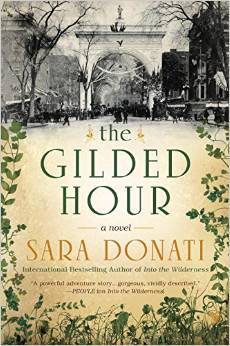
Next up is the medical framed, women’s lives, historical by Sara Donati, The Gilded Hour.

Here the date is 1883 and again we are in NYC. The story is about the forgotten people of this time.  It is about racial injustice, the suppression of women, medical advancements, and fertility issues.

Our main characters are two women, cousins, one who is half black, who are trying to provide birth control to women and how they were prosecuted by a real life Postal Inspector (who had a ton of political and legal power) and his crusade to suppress vice [The Comstock Act].

Okay first big difference here, the pacing. This is a 700 page, traditional historical. It moves at a much more methodical pace but one that is appropriate to the type of book; it is a pace that fans of a thick historical will expect and enjoy.

You know it will be a complex, historical because the families and major characters are listed in the front two pages and those who are real are noted. The novel also incorporates newspaper articles, telegraphs, and letters as a narrative device to keep up an authentic tone, as opposed to House of Thieves above, where things get a bit outrageous [but super fun] at times.  Again, same setting but two different readers.

This is a great read for people interested in the history of medicine, women's history [especially women in medicine], women's lives, and/or a history of women's health issues. There is a strong romance element here too.

There is suspense with the postal inspector trying to catch our heroes. There are many people [of all sexes and races] who help them along the way.  Things get tense and threatening but the overall story is not about the crime angle, it is more the issues I listed in the previous paragraph.


Three Words That Describe This Books: history of medicine, character centered, Gilded Age

Readalikes: The most obvious readalike is a TV series-- The Knick-- which I have written about at length with readalikes here.

Donati also mentioned the wonderful Destiny of the Republic by Candice Millard which I read here, for people who want more history of medicine detail from this era. I agree.

Another author who is similar to Donati is Jennifer Donnelly. Both write historicals featuring women and their lives with strong romance elemnts.  Interestingly, Donnelly has a very similar historical novel about social conscious female doctors, The Winter Rose.

Finally, a book I read which had a very similar feel, although is set in Brooklyn in 1700s and follows a woman who runs a gin still is Brookland by Emily Barton.  I highly suggest this for fans of a book like The Gilded Hour. You can click on the title for my full review.

Friday, June 19, 2015

Great Adult Reads Featuring Animals: A List and a RA Training Exercise

Later this morning my son will complete his 2 week theater camp with a performance of Doctor Doolittle Jr.  Over the last 2 weeks, we have talked a lot about the books upon which the production is based. It sadden and shamed me that my voracious reader son was not even aware of this series [so 100% my fault]. But besides talking about this series, for the last 2 weeks we have had numerous discussions about other books featuring animals which he has enjoyed.

Then at yesterday’s ARRT Steering committee two comments came up about books featuring animals.  One, had to do with whether or not a book featured violence towards animals. [On a side note, this is one of the most common limiters for adults and their leisure reading. In my experience, violence to animals trumps any violence (even to children) or sex restrictions]. The other was someone recommending H is for Hawk by Helen Macdonald, as she prefaced her recommendation with he words, “And I don’t even necessarily like Hawks, but I loved this book.”

And then again, this week marks the 100th Anniversary of the Battle of Waterloo.  On my dresser is the ARC of a debut novel, The Sage of Waterloo by Leona Francombe that tells the story of this epic battle through the eyes of the rabbits that live on the farm where the battle took place. I will be reading it soon.

This is all a roundabout way to say, although I thought I was the only one with animal books on the brain due to living and breathing Dr. Doolittle all week, I am not alone.  Adults love reading about animals as much as kids do.

Animals are a great example of a specific frame that many readers enjoy but do not always articulate.  As I wrote in a recent article for NoveList on this topic:
"I have found that there are some specific frames that I enjoy in my leisure reading. For example, as a transplanted but proud Jersey girl, I will read just about any book if it is set in New Jersey. I also love books with circuses, ones set on college campuses, titles with a Civil War background but which do not focus on the battles, and books with baseball in them. I will read any type of book in which these subjects appear -- fiction or nonfiction. Nine times out of ten, I will end up loving the book, even if it is not a genre or writing style I would normally enjoy. I can go against my appeal preferences if these frames are present because their presence in the story in and of themselves gives me great enjoyment."
In my experience, I have found this last statement to be very true of a large number of patrons when it comes to animals.

So, here are some of the books I had read and reviewed on this blog which feature animals prominently. Click on the link to read about the specific appeal of each book because they are from a very wide range of genre, tone, and style. However, don’t forget that for some people, just the fact that animals are at the center of these books may be all a reader needs to enjoy all of these books.

The act of just gathering a list of these widely differing titles united only by their shared frame has been a great exercise for me.  You should try it too.  Just think about books you know about or have read that fit this category too. Or, do it for any category by frame, not just animals.  It really helps to get the RA recommendation juices going.  Trying to to only match for example, The Sage of Waterloo and Watership Down because they both have rabbit narrators is okay RA service for your patron.  But considering The Art of Racing in the Rain or Dog On It, which feature dog narrators is great RA service. Different animal, but very similar storytelling techniques.

If nothing else, just reading this list will encourage you to think outside the box as you suggest books to patrons, books they may never have found on their own, books they may love.  That is the power you hold; the power to enrich someone’s life with a great read. What a great job we all have.

Books where animals are narrators:
Art of Racing in the Rain by Garth Stein
The Bees by Laline Paull
Watership Down by Richard Adams
Dog On It by Spencer Quinn (first in a series of mysteries)

Books which feature animals prominently
Seabiscuit by Laura Hillenbrand [nf]
The Big Year by Mark Obmascik [nf]
American Buffalo by Steven Rinella [nf]
Water for Elephants by Sarah Gruen
Life of Pi by Yann Martel
The Madman’s Daughter by Megan Shepherd (YA novel based on the Isle of Dr. Moreau)
His Majesty’s Dragons by Naomi Novik

Friday, April 24, 2015

New Issue of NoveList RA News Featuring an Article by Me

The May 2015 issue of the NoveList RA News e-newsletter is about "Pleasure Reading." Click here to access the entire issue.  But below I have reposted, with the direct link, my article on the importance of considering frame as we work with leisure readers.

I think frame is an often overlooked appeal factor that is WAY more important that people realize.  I use actual patron and colleague examples (all anonymously attributed) to illustrate this point.

So read on. Oh, and yes, I chose that cheesy title on purpose. [Now you all have an ear worm too.]

*******************************************************************

It's All About That Frame

by Becky Spratford

*This article originally appeared in the May 2015 issue of RA News.*

Librarians are well versed at asking about genre and appeal preferences. We remember to bring up issues like preferred pacing, desired tone, and favored writing style but we often forget one vital question as we talk to leisure readers: Are there any special topics, places, or things that you enjoy when you encounter them in a book? In RA terms this is how we ask about frame. 

Frame is all the details that enrich the backdrop and make the world of the novel come alive. Some of this is setting, but there is much more to frame than the simple geographic location of a story. The easiest example can be seen in genres or subgenres which include details of a specific profession, such as legal thrillers. Readers who enjoy legal thrillers want all the legal frame that comes with them. They crave talk of briefs, witnesses, cross examinations, law office politics, and criminal justice system minutiae.

That is an extreme example where the actual subgenre is defined by its frame but there are plenty of other books where interesting frames pop up and add to the appeal of the overall story. Nora Roberts is an expert at this. As Joyce Saricks writes in her NoveList Author Read-alike article on Roberts:
One of the features fans appreciate in Roberts' books is her interesting background frames. Antiques, art, magic, fairy tales and legends, treasure hunting, larceny, horse breeding and racing, all find space in her pages, and readers feel as if they've learned something about an intriguing or unlikely profession or activity. In fact, these background frames are a draw for many readers, who like a little extra in their books.
I have found that there are some specific frames that I enjoy in my leisure reading. For example, as a transplanted but proud Jersey girl, I will read just about any book if it is set in New Jersey. I also love books with circuses, ones set on college campuses, titles with a Civil War background but which do not focus on the battles, and books with baseball in them. I will read any type of book in which these subjects appear -- fiction or nonfiction. Nine times out of ten, I will end up loving the book, even if it is not a genre or writing style I would normally enjoy. I can go against my appeal preferences if these frames are present because their presence in the story in and of themselves gives me great enjoyment.

Now think about yourself. When I first mentioned asking readers if there is a special frame they enjoy I am sure your first reaction was, "No." But as I travel around the country doing RA training, one of the first things I make library staff do is sit down and think about their own reader profile. As they think about their leisure reading preferences, most are surprised to find they have at least a couple frames which they particularly enjoy. Asking them to think about their own reading habits can make them more sensitive to addressing future patrons' habits.

Until you really force yourself to think about it, however, these likes and dislikes tend to stay hidden in your subconscious. Bringing them to the forefront of your own mind can only make you better at drawing these appeal factors out of others as you assist them at the service desk. So now, I ask you again, "Are there any special frames you enjoy in your books?"

Here are some (anonymous) examples of the frame preferences of friends and colleagues that I have gathered over the years: anything that mentions Faberge eggs, any genre as long as it is set in Tudor times, dragons, vampires, anything British, the Amish, books with "pink" covers," and discussions of pottery or the making of it.

Frames can also be limiters. Yes there are things that if they appear in a book will make someone hate the title even if they liked everything else about it, and I mean things beyond typical sex and violence issues. Again, here are some real life (anonymous) examples of friends' and colleagues' frame restrictions: anything with a circus, even the mention of cancer, dragons, vampires, anything British, apocalyptical situations, books with pastel covers, and anything featuring "crafts."

Yes, I realize some of the same frame favorites of one reader can become frame kryptonite for another. You can also see how strong people feel about something that may only be in one scene of a book, or in some cases, it may only be on the cover. This just goes to show how important frame can be.
Here is an example where understanding frame mattered for me. I was helping a reader for whom Haruki Murakami would be the perfect author. She enjoyed surrealist and mystical fiction with interesting characters and experimental styles, like she found in two of her favorite authors Paul Auster and David Mitchell. However, when the RA conversation came to talking about frame, she mentioned that she could not read a book with talking animals, no matter how perfect the rest of the novel would be for her. Well, that is one of Murakami's trademarks, he almost always has a talking cat in his novels. Even though Murakami seemed perfect for her in theory, in practice, she would have ended up not enjoying his novels solely because of talking cats who might only appear in one or two scenes in a 500 page book.

So as you are out there in the RA trenches matching readers with books, remember to stop and ask about any special interests.  You can easily put those frames into NoveList as a keyword search and you will find a plethora of options, many of which you might not have considered without asking about frame in the first place. And don't forget to offer your own reading quirks as examples to break the ice because sometimes it really can be all about that frame.

PRO TIP
Use NoveList cataloging to provide recommendatiosn after identifying reader frames. Using Becky's example frame "New Jersey, " try typing "SU New Jersey" in the search box. 
Did you like this article? Tweet it out  
Want more articles like this one? Subscribe to RA News

Becky Spratford is a Readers' Advisor in Illinois specializing in serving patrons ages 13 and up.  She trains library staff all over the world on how to match books with readers through the local public library.  She runs the critically acclaimed RA training blog RA for All, and is on the Steering Committee of the Adult Reading Round Table.  Becky is also known for her work with horror readers and is a proud member of the Horror Writers Association.  You can share your favorite quirky frame with Becky on Twitter at @RAforAll. 

Wednesday, February 25, 2015

Let's Talk About Frame

I am currently working on an article for NoveList about the importance of considering frame when we help leisure readers.  As I was gathering my notes and thoughts, I came upon a post I wrote back in 2010 where I talked about the importance of frame.

I am also leaving in an hour for 2 days of RA training in Darien, CT where I will be talking about helping genre readers [more posts on that to come this week including slides]. While crafting those trainings, frame came into play frequently and will be a topic that I explore with the various groups.

So since I have "frame on the brain," I figured it was worth a re-post of some of my thoughts for everyone to think about.

And look for an entirely new article where I contemplate frame in the May 2015 issue of NoveList RA News.

******************************************************************
Monday August 16, 2010
Monday Discussion: What's Your Favorite Frame?
I am back from a 2 week vacation where I saw my baby sister get married in New England and visited my home state of New Jersey.  This got me thinking about the fact that since moving from Jersey to the Midwest, I will read anything-- fiction or nonfiction, any genre-- as long as it has New Jersey in it.

When I teach my students to write their Reader Profiles, I mention this reading quirk to them. I ask them to think about their reading habits. In the RA biz we call these special interest areas, "Frames."  "What special frames do you enjoy?" is the question I make them consider.

Most students look at me blankly at first, but once they go home to write their up their reader profiles they find they too have special frames which they will read about in any type of book. It is great exercise to make them think about their own reading habits, which can then make them more sensitive to addressing future patrons' habits. Until you force yourself to think about it, these likes and dislikes usually stay hidden in your subconscious. My goal is to make them "Super RA Librarians," and this is an important component tot heir training.

Here are some examples from students and friends of frames they love: Faberge Eggs, Tudor England, and I once had a student who would read any pink covered book. There are actual readers out there that will reading everything and anything that have these frames. You can click here to see some past student's reader profiles for more examples.

For me, other frames I greatly enjoy besides NJ are books with circuses, books that are set on college campuses, books with a Civil War background but which do not focus on the battles, and books with baseball in them. I will read any type of book in which these subjects appear and 9 times out of 10, will love it; even if it is a genre or type of book I normally hate. These special frames in and of themselves give me great enjoyment.

It is also important to note that some people's favorite frames are the same frame which another reader will avoid at all costs. For example, while I will read anything with a circus in it my colleague Joyce Saricksavoids circuses in her books at all costs. I also have patrons who love British Mysteries and others who refuse to read them. Literally, they refuse, even if I know they would love the book; they will not read British mysteries...period.

So today, let me know: What special frames do you like to have show up in your books? Also, what frames do you avoid at all costs? Today is the day to own up to your reading quirks.

And remember, you can use this link to follow past Monday Discussions.